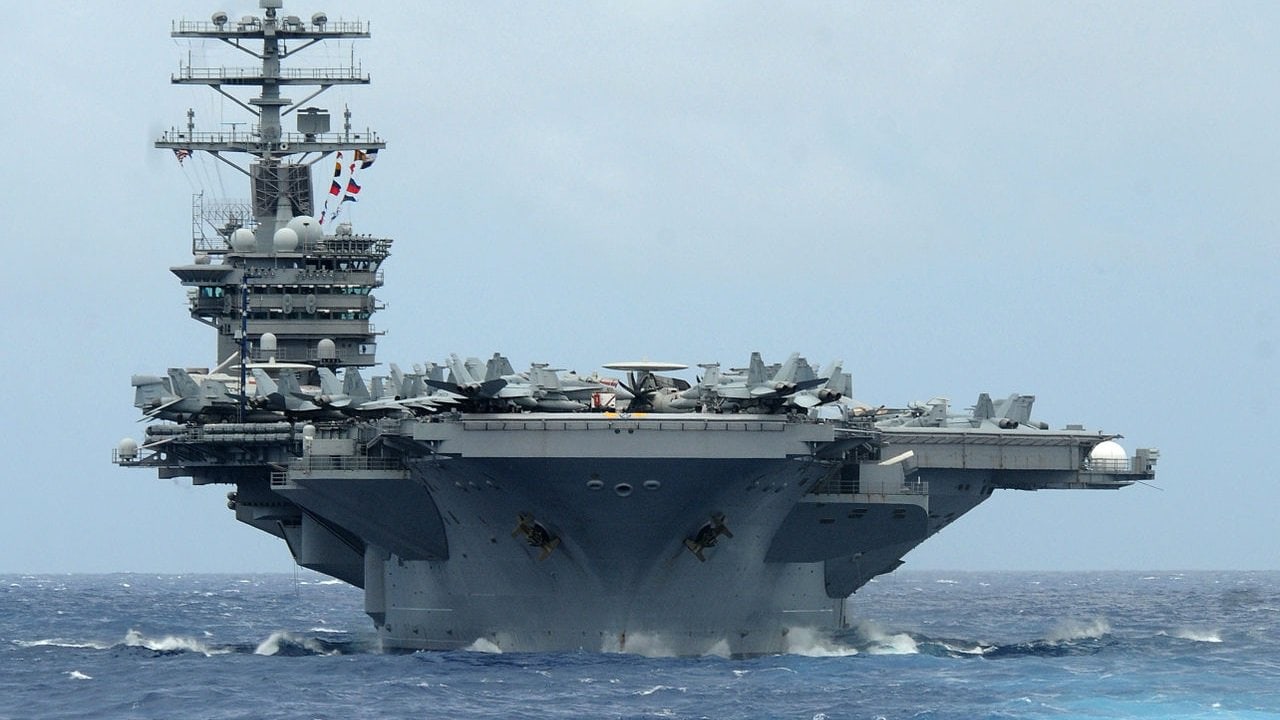
The aircraft carrier USS Nimitz is over 50 years old and on its third ‘final’ voyage. The Navy keeps canceling the retirement because the $13 billion replacement still can’t do the job.
USS Nimitz Never Can Retire, It Seems
Like the famous rock-and-roll band The Eagles, which has been on a decades-long Farewell Tour, the USS Nimitz (CVN-68) is on its third final cruise before the great ship is put into mothballs.
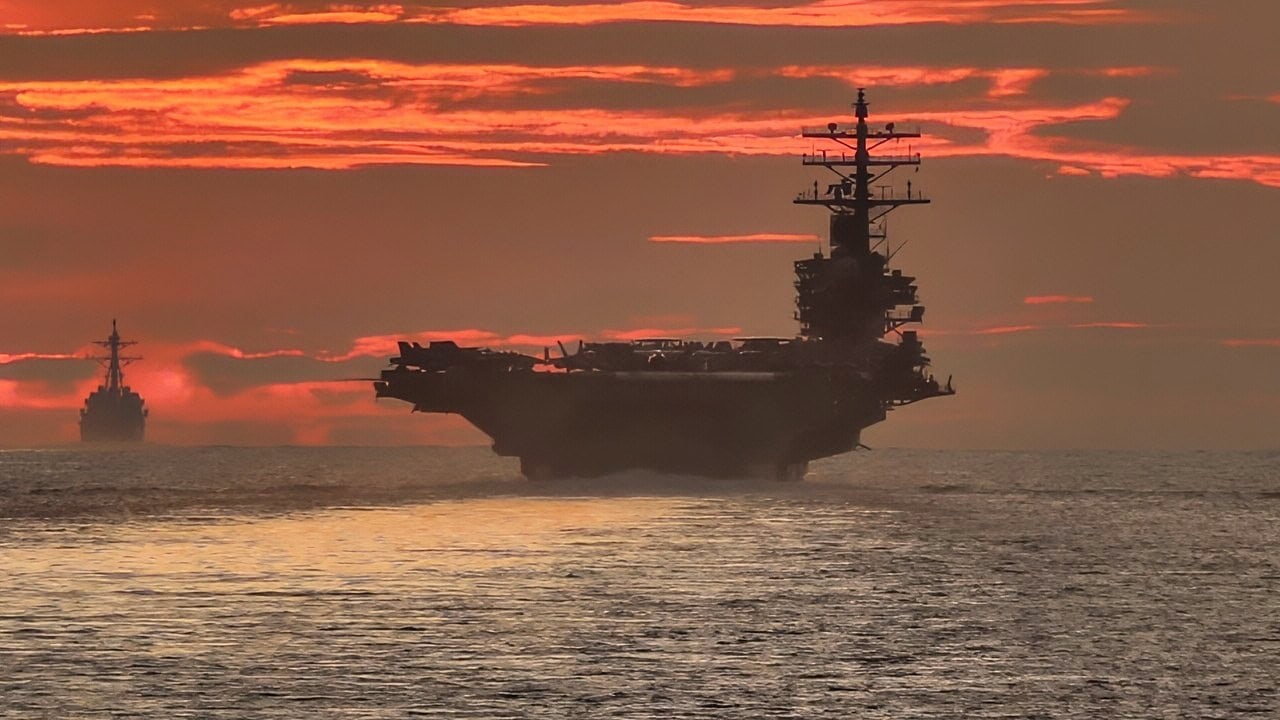
210618-N-JW440-2165 STRAIT OF MALACCA (June 18, 2021) As seen from the Ticonderoga-class guided-missile cruiser USS Shiloh (CG 67), the Navy’s only forward-deployed aircraft carrier USS Ronald Reagan (CVN 76) transits the South China Sea with the Arleigh Burke-class guided missile destroyer USS Halsey (DDG 97). The ships are part of Task Force 70/Carrier Strike Group 5, conducting underway operations in support of a free and open Indo-Pacific. (U.S. Navy Photo by Mass Communication Specialist 1st Class Rawad Madanat)
The fact of the matter is that the USS Nimitz, commissioned in 1975, may be America’s oldest aircraft carrier in service, but the United States Navy cannot seem to retire her.
Ford-class Failures Keep Nimitz Alive
Even though the Navy has spent tens of billions of tax dollars to build the new Ford-class aircraft carriers, the class has seriously underperformed and gone over budget.
That’s demonstrated by the namesake of the new class of carrier, the USS Gerald R. Ford, which has endured one expensive humiliation after another while on deployment.
With the current dangerous decline in US naval shipyard capacity and the high operational tempo the Navy is being forced to endure in hotspots around the world, the Navy cannot simply let even an old carrier, like the Nimitz, retire.
That’s why the Navy announced that it was postponing the Nimitz’s already delayed decommissioning to send her on one last mission for America.
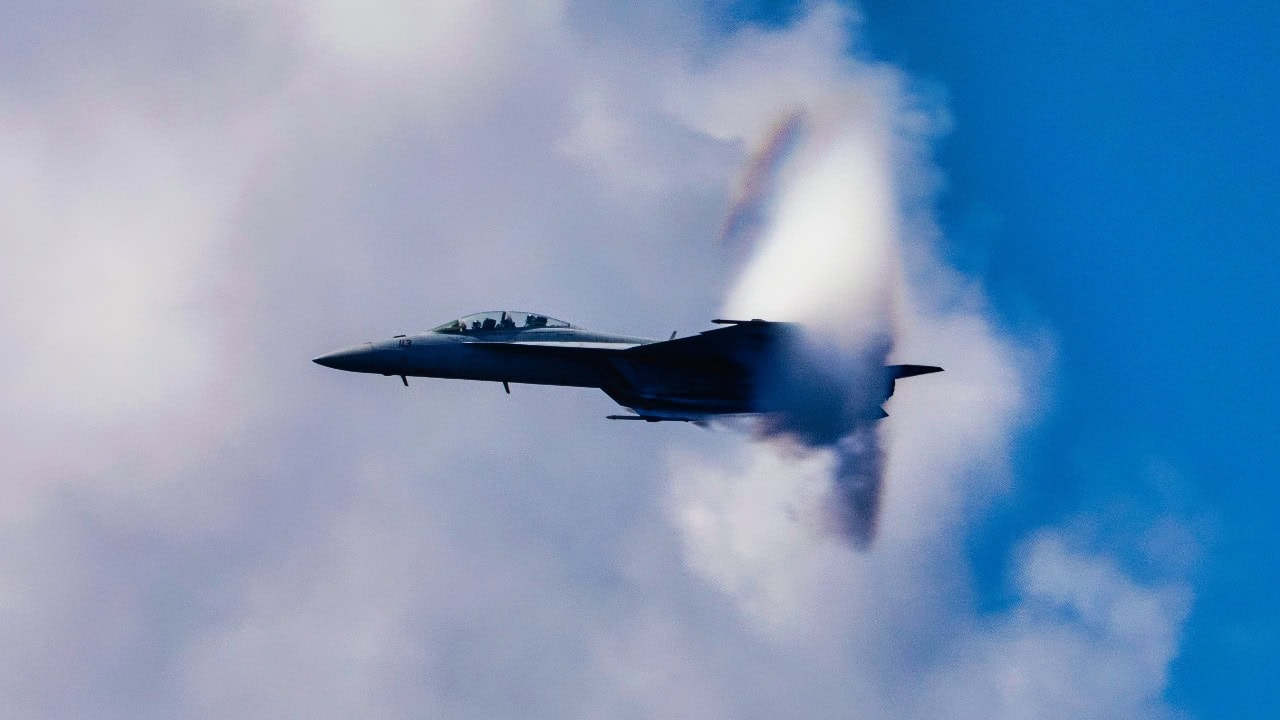
(June 18, 2023) An F/A-18F Super Hornet from the “Fighting Redcocks” of Strike Fighter Squadron (VFA) 22 breaks the sound barrier during flight operations near the aircraft carrier USS Nimitz (CVN 68). Nimitz is underway, conducting routine operations. (U.S. Navy photo by Mass Communication Specialist 3rd Class Kevin Tang)
Trump’s Western Hemisphere Strategy
Before getting bogged down in a costly and inconclusive war with Iran, the United States had shifted its focus to the often-neglected Western Hemisphere.
This had been a key campaign promise of Donald Trump and was tied to other policies he had championed in his bid to become the forty-seventh president in 2024.
Essentially, Trump strove to reassert US military dominance in the Western Hemisphere so that the United States could secure its vulnerable borders, curb illicit narcotics and human trafficking flows, expel Chinese, Russian, and Iranian influence from the hemisphere, and reshape the region’s trade paradigm to center it on the United States, as it had been for decades before Washington ignored its own backyard following the end of the Cold War.
Southern Seas 2026: The Mission
The Nimitz is being deployed to South America as part of the Southern Seas 2026 military exercises conducted by US Southern Command (USSOUTHCOM).
The core objectives of this training exercise are to strengthen US military partnerships across the region, improve interoperability with regional navies, and demonstrate US presence in the Western Hemisphere, even as US military operations have shifted from the Western Hemisphere to the Middle East.
By deploying the Nimitz, the White House believes it is simultaneously advancing diplomacy, deterrence, and advanced training.
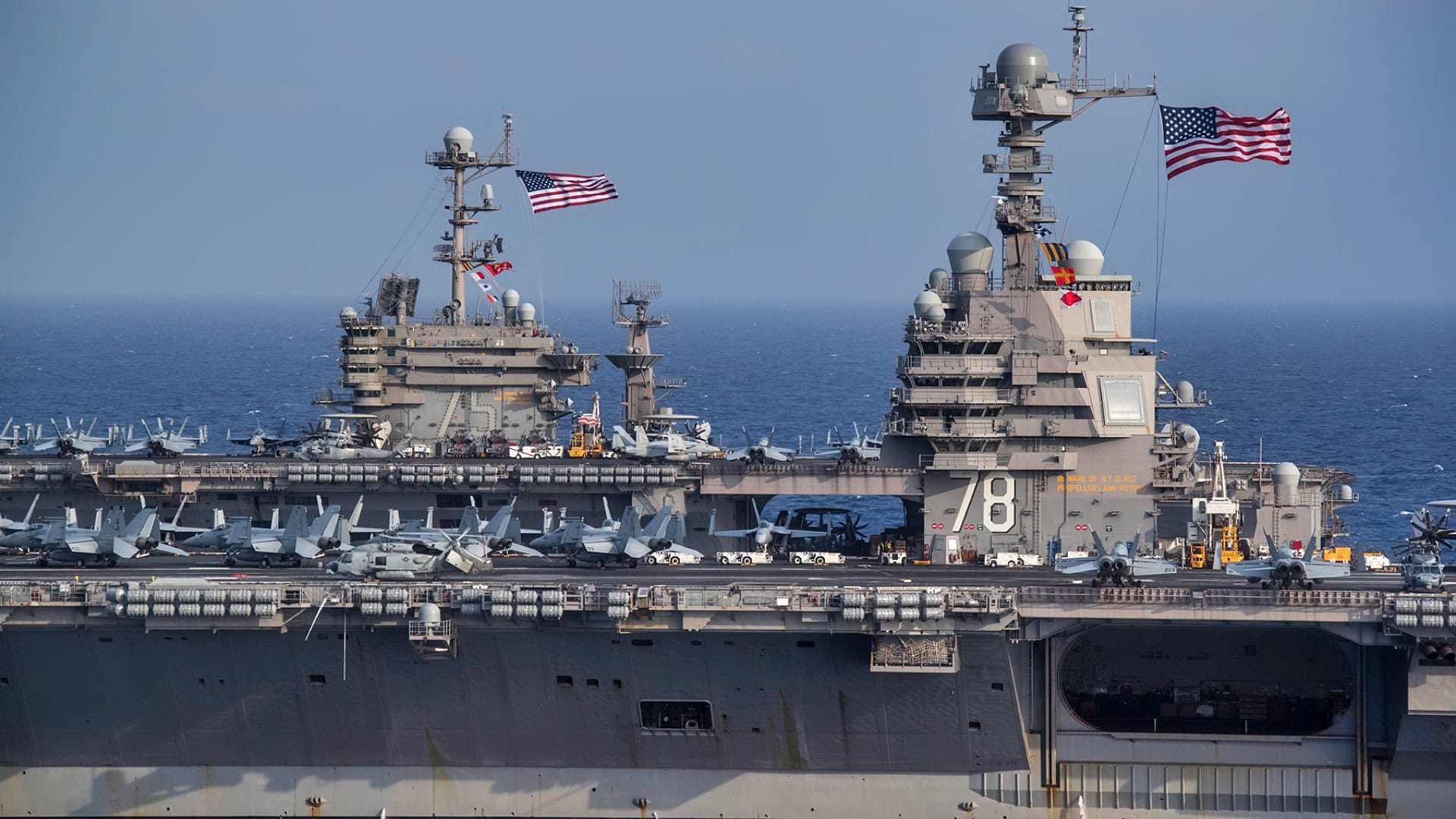
The Ford-class aircraft carrier USS Gerald R. Ford (CVN 78) and the Nimitz-class aircraft carrier USS Harry S. Truman (CVN 75) transit the Atlantic Ocean June 4, 2020, marking the first time a Ford-class and a Nimitz-class aircraft carrier have operated together underway. Ford is underway conducting integrated air wing operations, and the Harry S. Truman Carrier Strike Group remains at sea in the Atlantic as a certified carrier strike group force ready for tasking in order to protect the crew from the risks posed by COVID-19, following their successful deployment to the U.S. 5th and 6th Fleet areas of operation. (U.S. Navy photo by Mass Communication Specialist 2nd Class Ruben Reed)
Indeed, Latin American specialists have expressed concerns that moving the USS Gerald R. Ford out of the USSOUTHCOM area of responsibility (AOR) to support Middle East operations would leave US forces still in Latin America in a weaker position.
The Regional Chessboard: Venezuela, Mexico, Colombia, Panama
At this point, the regime in Venezuela remains pliant to American wishes and has even allowed Chevron to return and resume pumping key oil. Meanwhile, Mexico remains ambivalent about the Trump administration’s demands on its country.
But President Claudia Sheinbaum appears reluctant to fully challenge the Trump administration. And President Trump continues his pressure campaign on the left-wing government of Gustavo Petro in Colombia. Panama’s government is evicting the Chinese from their redoubt on both ends of the Panama Canal.
The most pressing news, however, is coming from Cuba. The communist island has been under an unofficial US Navy blockade since the start of the new year. Deprived of fuel and other vital resources by that blockade, the regime in Havana appears to be teetering on the brink of collapse.
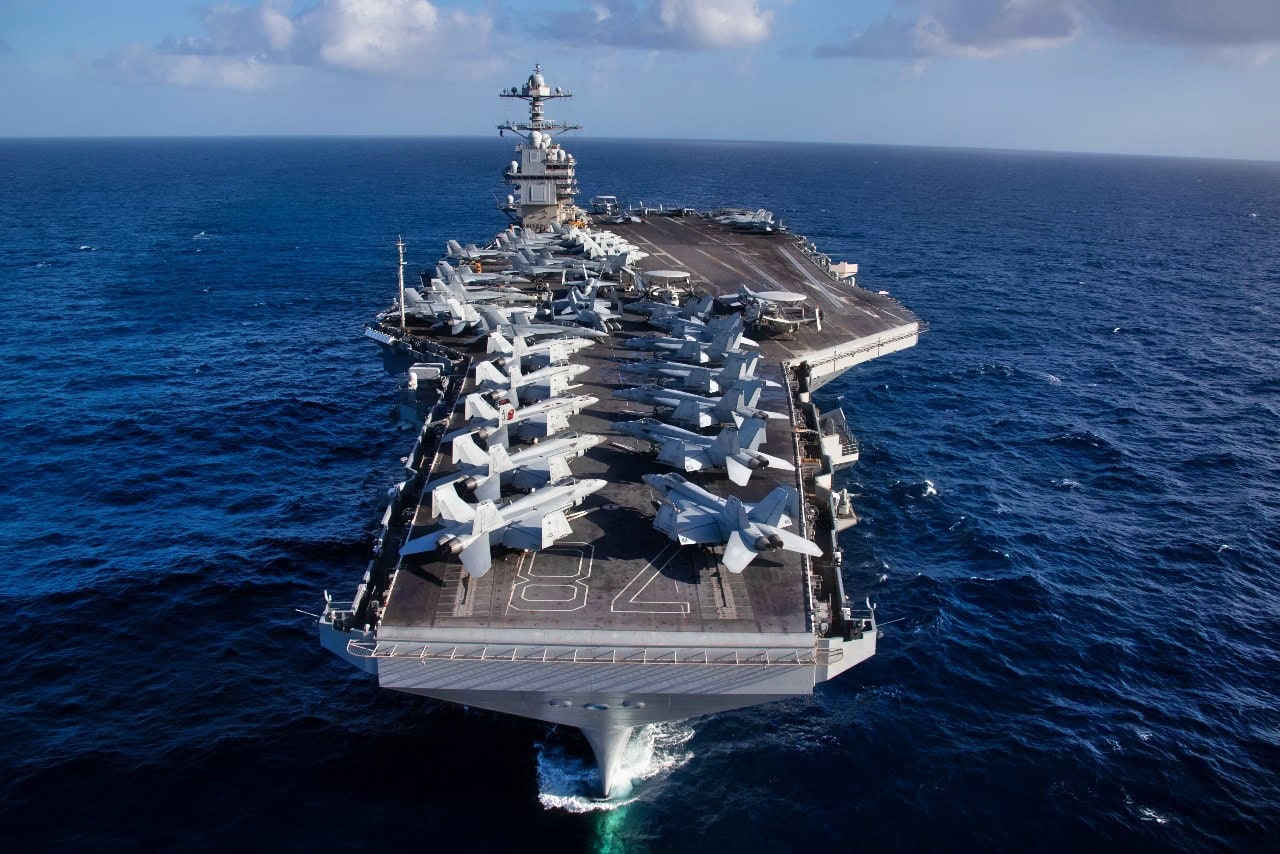
The world’s largest aircraft carrier USS Gerald R. Ford (CVN 78), steams in the Mediterranean Sea, Dec. 24, 2023. The Gerald R. Ford Carrier Strike Group is currently operating in the Mediterranean Sea. The U.S. maintains forward-deployed, ready, and postured forces to deter aggression and support security and stability around the world. (U.S. Navy photo by Mass Communication Specialist 2nd Class Jacob Mattingly)
So, having a US carrier in the region would help sustain the Trump administration’s extreme pressure campaign on the island.
Still a Lethal War Machine
Despite this being the Nimitz’s final mission (for the third time), the Nimitz deployment is not merely symbolic.
It is a fully operational carrier strike group. In fact, it may be more battle-ready than even the new USS Gerald R. Ford, which still cannot properly deploy F-35s from its flight deck.
The Nimitz is armed with an air wing comprising F/A-18E/F Super Hornets, EA-18G Growlers, and a variety of helicopters and support aircraft.
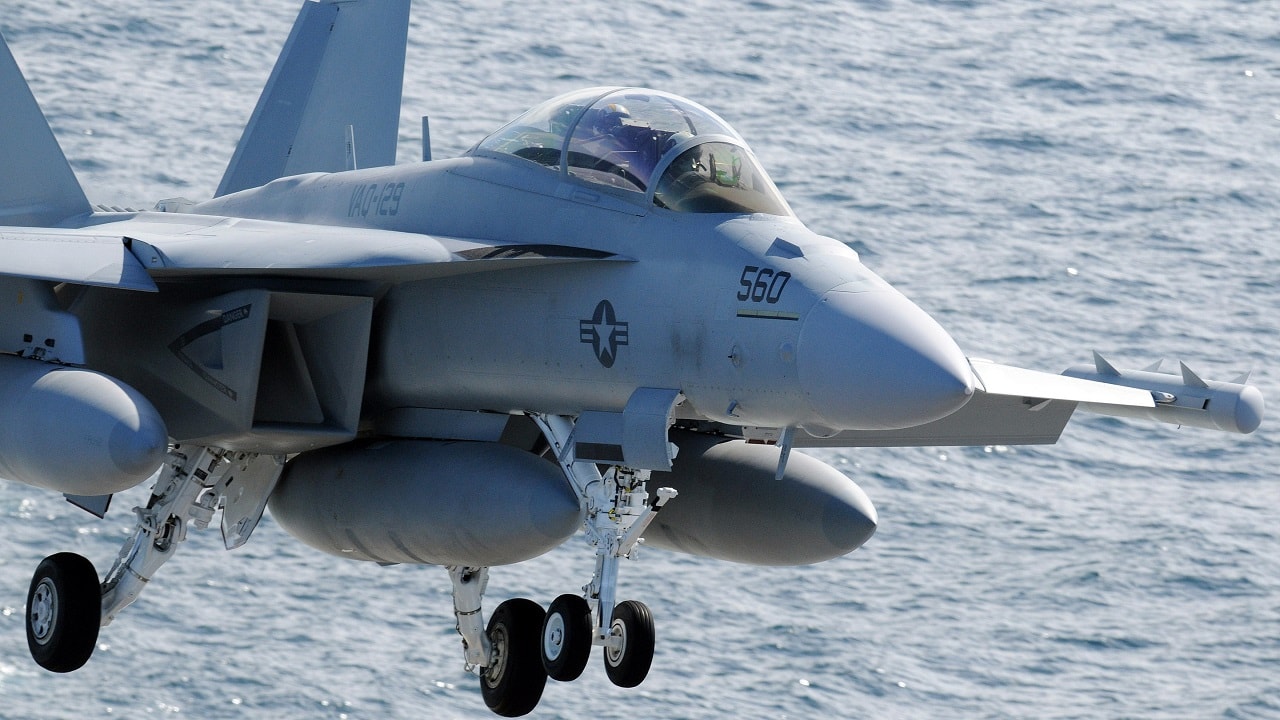
(Feb. 17, 2009) An EA-18G Growler assigned to the “Vikings” of Tactical Electronic Warfare Squadron (VAQ) 129 aligns itself for an at sea landing aboard the Nimitz-class aircraft carrier USS Ronald Reagan (CVN 76). The Growler is the replacement for the EA-6B Prowler, which will be replaced in the 2010 timeframe. Ronald Reagan is underway performing Fleet Replacement Squadron Carrier Qualifications in the Pacific. (U.S. Navy photo by Mass Communication Specialist 3rd Class Torrey W. Lee/Released).
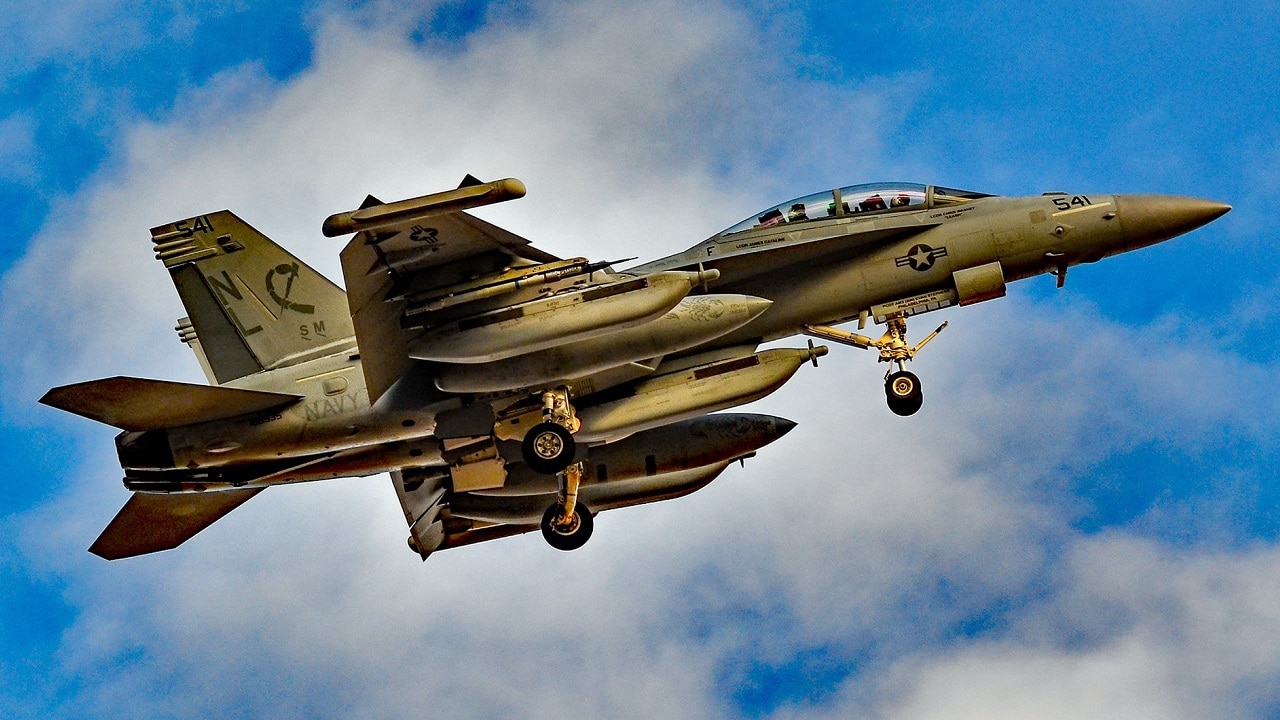
EA-18G Growler. Image Credit: Creative Commons.
The US Navy destroyer USS Gridley serves as an escort for the aging carrier. Nevertheless, the Nimitz is well past its prime, and this final journey might be the one that finally breaks the legendary carrier that has sailed the High Seas on behalf of the Navy for 50 years, especially if a major military incident erupts while she’s in-theater.
The Nimitz’s deployment is meant to signal that the US can still conduct multiple operations worldwide without missing a beat.
The Real Story: A Strained Aircraft Carrier Fleet
Yet it is a quiet indicator of how strained the carrier fleet is. While the US maintains a fleet of 11 aircraft carriers, only three to five are barely operational at any given time. Right now, the USS George H.W. Bush is inbound to the Middle East to support the USS Abraham Lincoln and USS Gerald R. Ford’s operations against the Islamic Republic of Iran. The USS Theodore Roosevelt and George Washington are focused on the Indo-Pacific.
By sending the aging Nimitz to Latin America, Washington is playing with the numbers by claiming it has five active carriers.
It’s a sly move. But it underscores the real problem facing the US military: it cannot sustain its current operations (or increased operations) under current industrial conditions. Thus far, little has been done to address this crisis.
About the Author: Brandon J. Weichert
Brandon J. Weichert is the Senior National Security Editor at 19FortyFive.com. Recently, Weichert became the editor of the “NatSec Guy” section at Emerald.TV. He was previously the senior national security editor at The National Interest. Weichert is the host of The National Security Hour on iHeartRadio, where he discusses national security policy every Wednesday at 8pm Eastern. He hosts a companion show on Rumble entitled “National Security Talk.” Weichert consults regularly with various government institutions and private organizations on geopolitical issues. His writings have appeared in numerous publications, among them Popular Mechanics, National Review, MSN, and The American Spectator. And his books include Winning Space: How America Remains a Superpower, Biohacked: China’s Race to Control Life, and The Shadow War: Iran’s Quest for Supremacy. Weichert’s newest book, A Disaster of Our Own Making: How the West Lost Ukraine, is available for purchase wherever books are sold. He can be followed via Twitter/X @WeTheBrandon.