
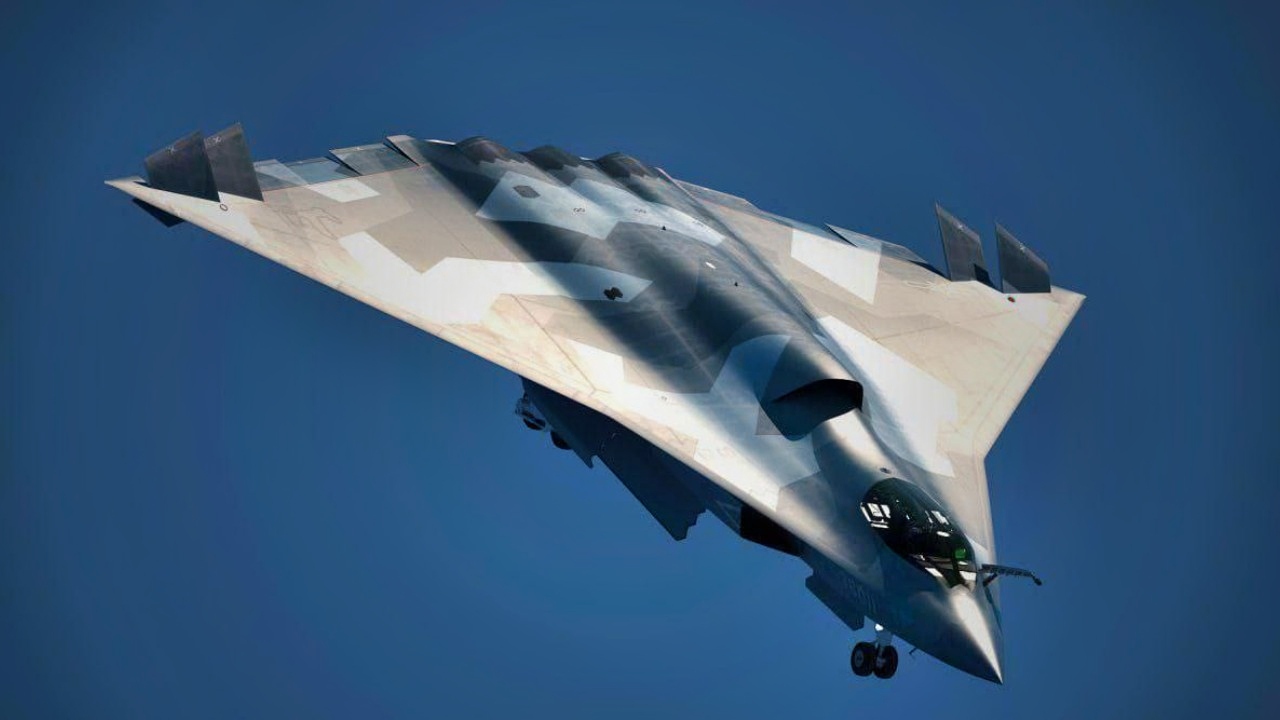
China just flew a second prototype of a J-36 stealth aircraft with no tail, three engines, and a design that changed dramatically in months. It doesn’t look like any fighter ever built — because it might not be one.
China’s J-36 Stealth Fighter Broke Cover
A second prototype of China’s J-36 stealth aircraft appeared late last year, showing significant design changes over the last known images of the same platform, offering the clearest indication yet that China is pushing ahead with the program and iterating rapidly.
The images, which were published in October 2025, showed major revisions to the aircraft’s exhaust configuration, air intakes, landing gear, and more. The changes are all significant enough to challenge earlier claims that the first prototype could have represented a near-production design.
The aircraft, widely referred to as the J-36, is believed to be part of China’s broader push toward sixth-generation combat air systems.
Unlike conventional fighters, it appears to prioritize stealth and range, and is expected to integrate modern networking systems to compete with American fifth-generation designs and the upcoming F-47 Next Generation Air Dominance (NGAD) fighter.
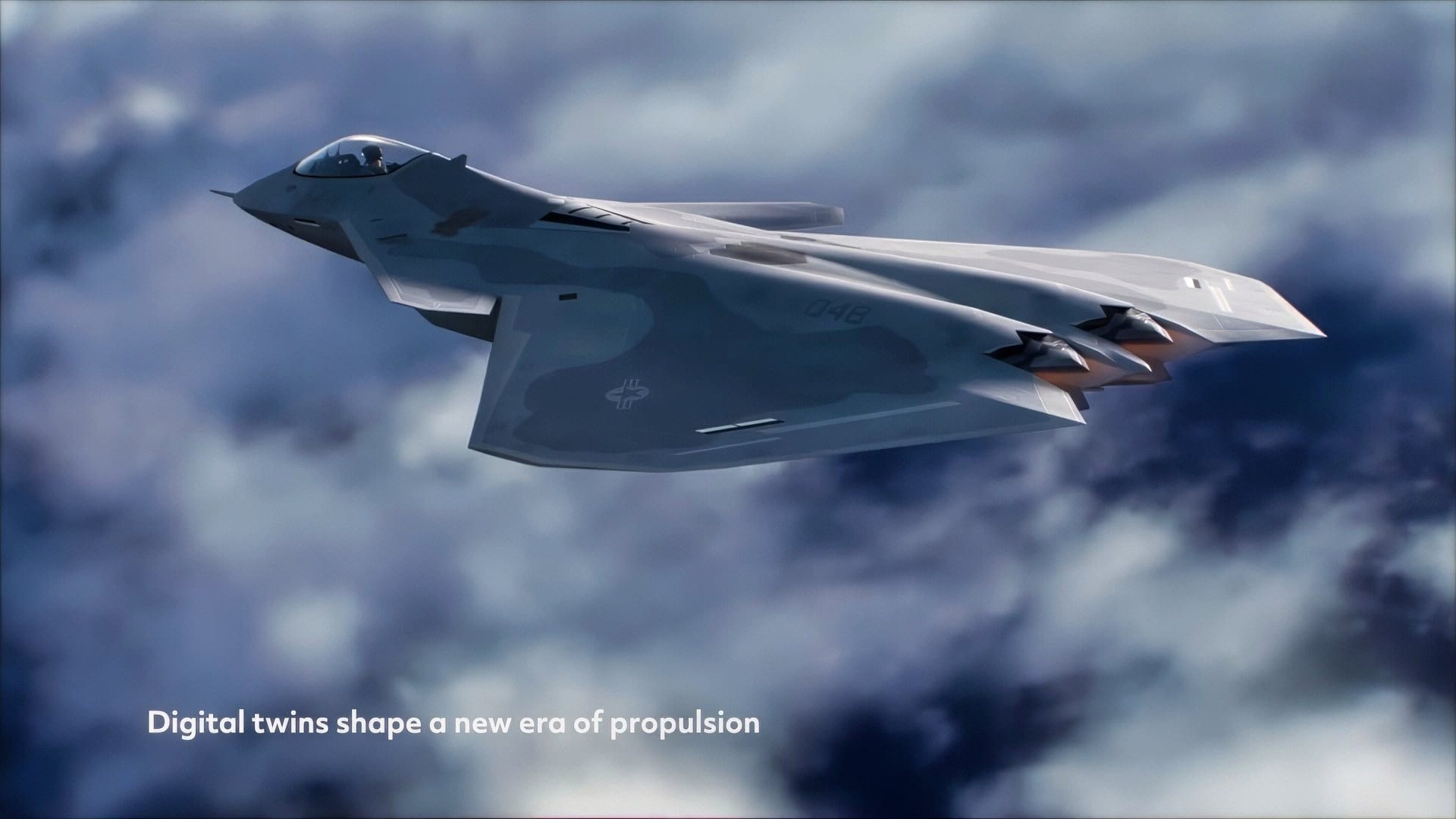
F-47 NGAD Fighter Possible Image. Image Credit: Screenshot.
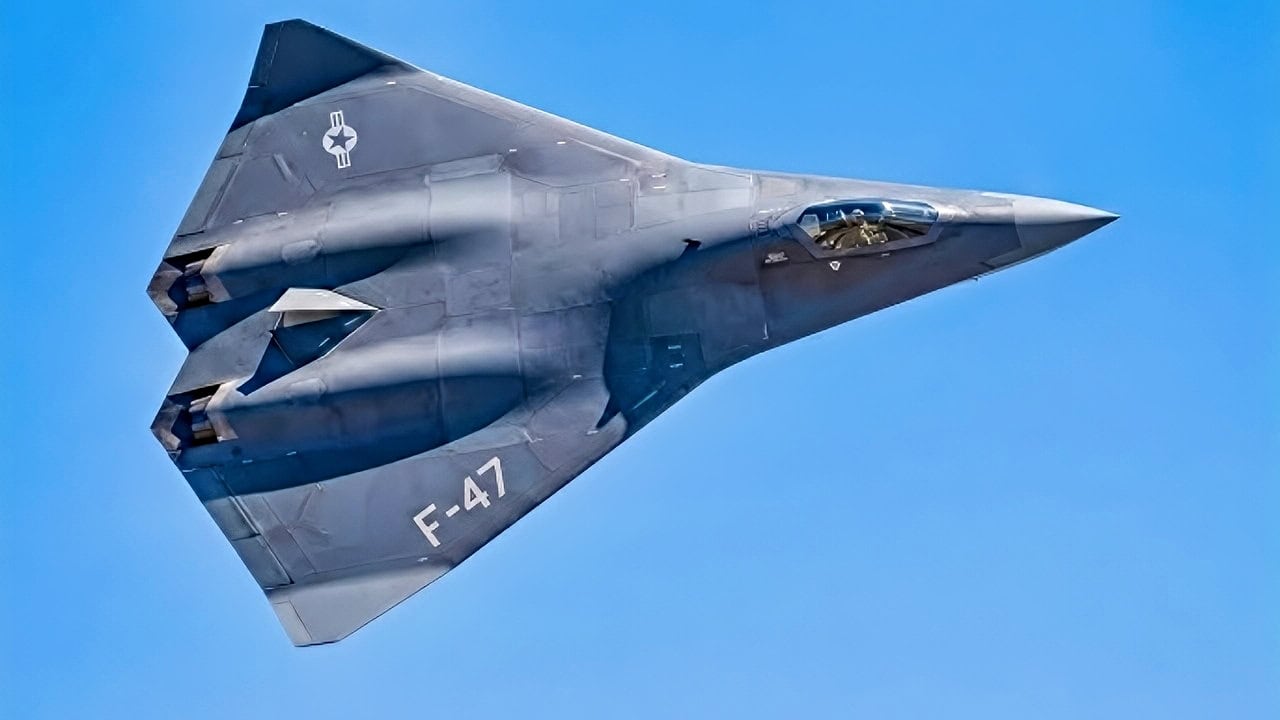
F-47 Fighter Computer Mock Up. Image Credit: Creative Commons.
And while many of its capabilities remain entirely speculative, its configuration and design elements, as seen in photographs that have gradually appeared online, suggest that China is preparing to field a long-range fighter capable of performing multi-role missions.
This may not be a traditional air superiority fighter, and it’s yet another sign that China is rapidly closing the technological gap with the United States.
China has already produced hundreds of fifth-generation stealth fighters and is expanding into new variants and mission sets.
Some assessments even suggest China could field up to 1,000 Chengdu J-20 aircraft by 2030, raising concerns about the balance of power in the Indo-Pacific.
The developments are particularly relevant now that a wargame assessment conducted by the Mitchell Institute for Aerospace Studies has suggested the U.S. Air Force could not reliably prevent a Chinese invasion of Taiwan before 2035.
What the J-36 Is
The J-36 appears to be a large, tailless stealth aircraft under development by China’s Chengdu Aircraft Corporation.
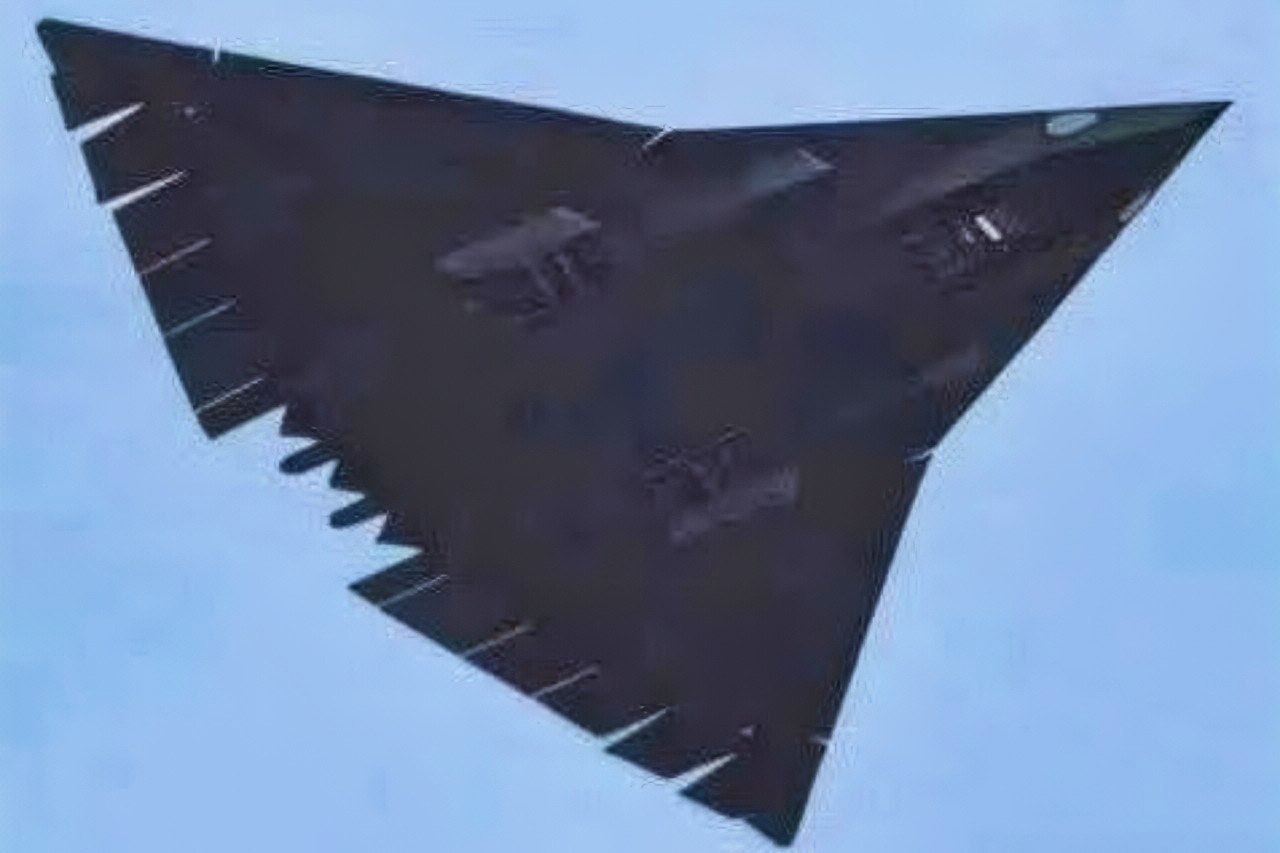
J-36 X Screenshot
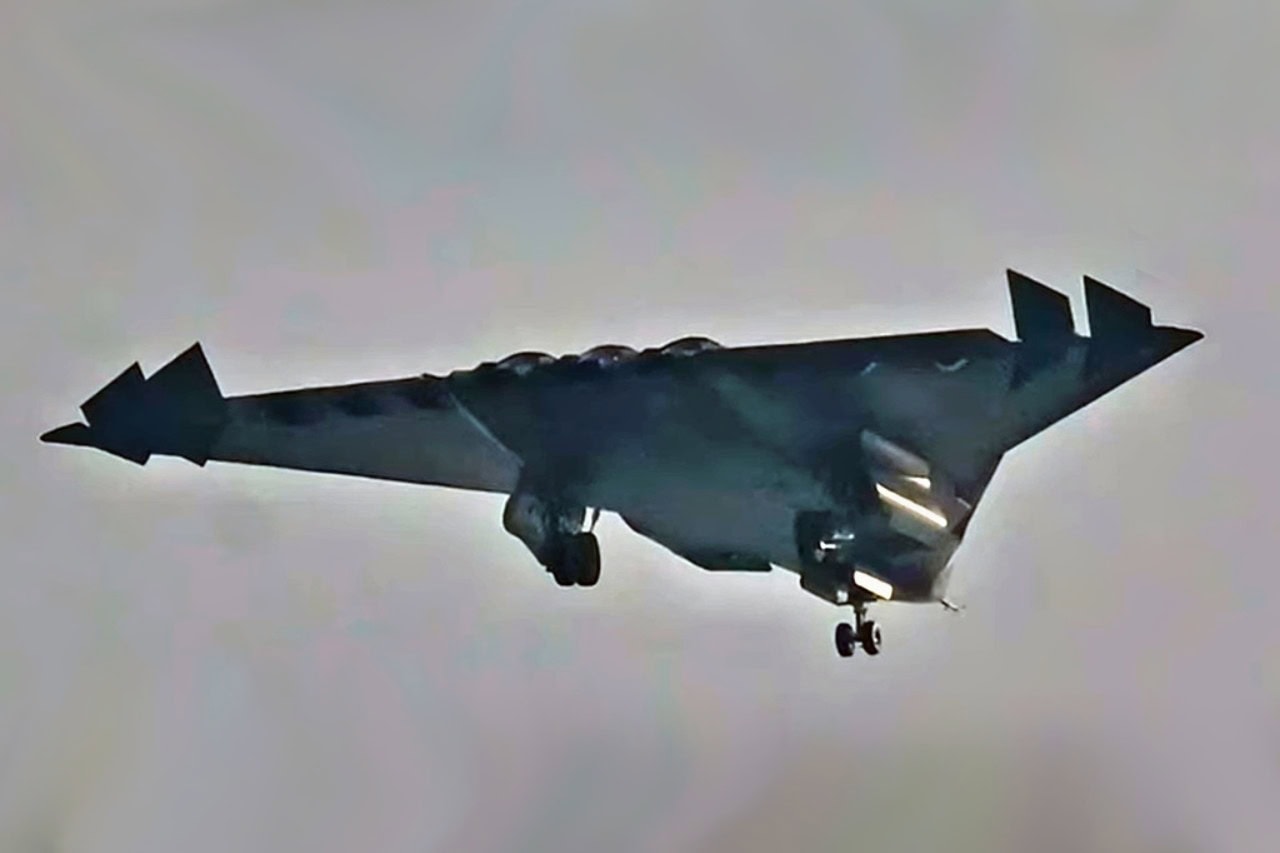
J-36 Fighter from China. Image Credit: Creative Commons.
Its configuration lacks vertical stabilizers and instead uses a blended, double-delta or flying-wing layout intended to reduce radar cross-section and improve aerodynamic efficiency.
One of the defining characteristics, based on what the world has seen so far, is its size.
Imagery from early test flights suggests it has a significantly larger airframe than typical fighter aircraft, reinforced by its original tandem landing gear configuration – an arrangement that’s more commonly associated with heavier aircraft carrying substantial payloads.
The aircraft is also believed to use a three-engine configuration, an unusual design choice that would provide increased thrust, range, and payload capacity. The layout also seems to be further evidence that the J-36 is not optimized for close-range aerial combat, but instead for long-endurance missions and potentially large internal weapons loads.
The characteristics observed in the first designs in the skies have sparked an ongoing debate among analysts over the platform’s intended role.
While often described as a “fighter,” the J-36 may arguably be closer in concept to a long-range strike platform or regional bomber, similar to earlier U.S. efforts to combine stealth and payload into a single platform. U.S. intelligence has previously used the designation JH-XX to describe a potential Chinese stealth fighter-bomber program with characteristics similar to those seen on the so-called “J-36.”
Compared to platforms like the F-22 Raptor, which are designed primarily for maneuverability and air superiority, the J-36 appears to reflect a completely different design philosophy – one centered on survivability and reach.

An F-22 Raptor performs an aerial demonstration at Naval Air Station Oceana, Virginia, Sept. 19, 2025. Rapid changes in angle of attack create visible vapor around the aircraft, providing a clear view of its aerodynamic performance. This demonstration highlights the F-22’s advanced maneuvering capabilities, showcasing its speed, agility, and thrust-vectoring performance. (U.S. Air Force photo by Staff Sgt. Lauren Cobin)
At this stage, however, its final role remains technically undefined – the aircraft is still undergoing testing, and the design changes spotted in recent flights suggest that a final design could still be far off.
How We Got Here
The J-36 program is part of a larger effort to revolutionize Chinese airpower, with Beijing adapting its strategy with the introduction of the Chengdu J-20 in 2017.
In less than 10 years, China has rapidly scaled up production of that aircraft, marking its entry into fifth-generation combat aviation.
The best estimates now indicate that hundreds of J-20s are in service, with output continuing to increase even as sixth-generation designs are underway. China appears to be preparing to field an enormous number of J-20s in anticipation of fielding them alongside newer sixth-generation designs.

J-20 Stealth Fighter. Image Credit: Creative Commons.
The strategy is similar, if not identical, to that of the United States, with the F-35 Lightning II forming the backbone not only of its own fighter fleet but also of Europe and more than a dozen allies worldwide.
And at the same time, China is expanding into other mission sets, focusing also on its naval power and reach.
The development of the Shenyang J-35 reflects its push into carrier-based operations, while the arrival of two-seat variants like the J-20S points toward future concepts involving drone control and coordinated strike operations. Fifth-generation power, it seems, will get the sixth-generation treatment.
The J-36 is just part of this evolution. Rather than replacing existing fighters, it is becoming part of a system-of-systems approach that integrates manned aircraft and unmanned platforms with advanced sensors.
A Rapid Pace of Change
The J-36 first entered the public eye on December 26, 2024, when images of a prototype aircraft began circulating online. The aircraft was observed flying near Chengdu, where the manufacturer is based, suggesting early-stage testing close to its development facilities.
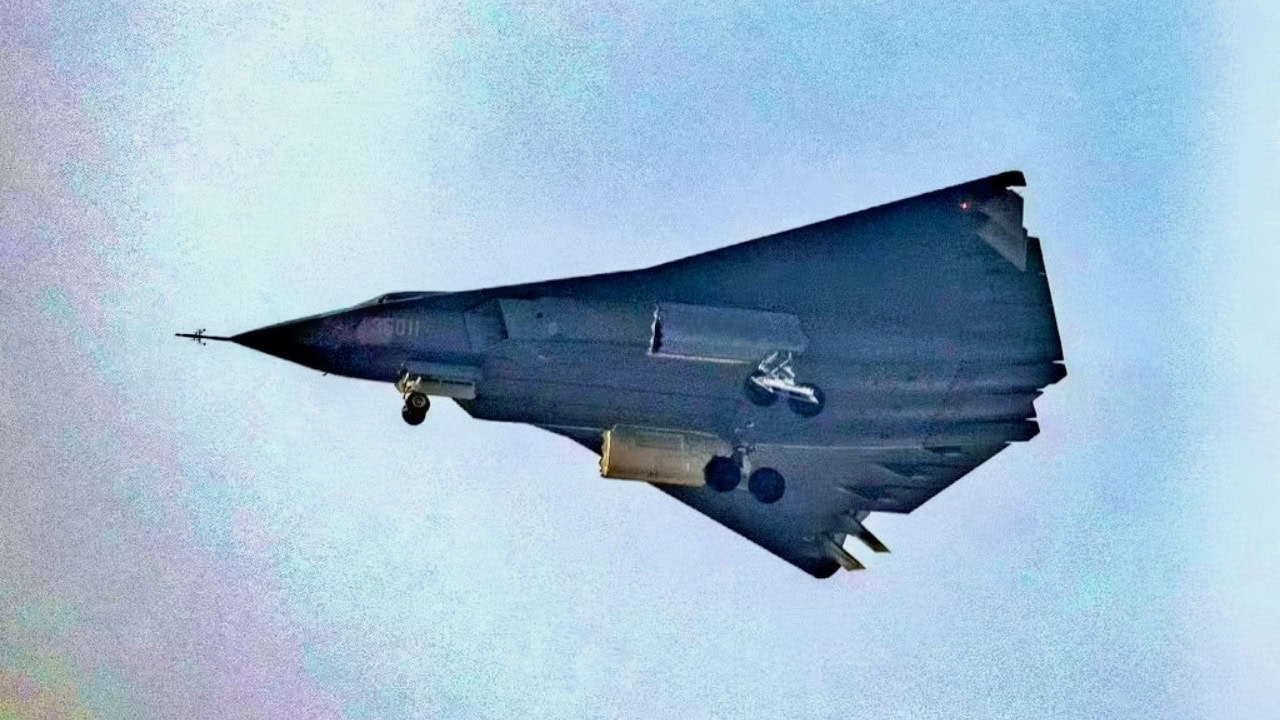
China J-36 Fighter. X Screenshot.
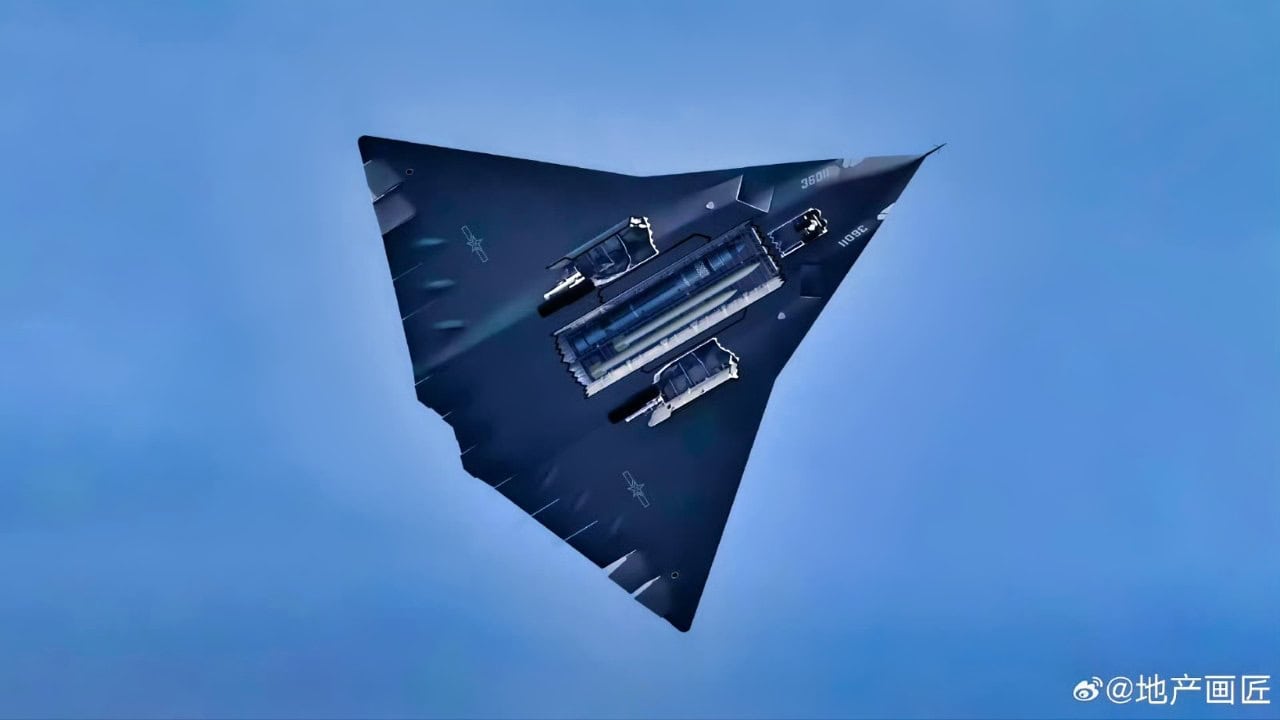
J-36 or JH-XX from China. Screenshot for Chinese Social Media.
Since then, there have been multiple sightings, typically shared via social media. The sightings resulted in civilian photography being shared on the internet, with no official disclosures yet made.
That seems to be an increasingly common occurrence in Chinese advanced aviation programs, with unofficial imagery serving as the primary source of information about their new and emerging systems.
The appearance of a second prototype less than a year later suggests that China is rapidly iterating on these designs. Rather than refining a single design over time, China could be testing multiple configurations in parallel, allowing engineers to evaluate different approaches to the aircraft’s design simultaneously.
But what may matter more, or at least just as much, as the aircraft itself is how it fits into China’s shift toward manned-unmanned teaming. The drones that are likely to accompany the J-20S and future sixth-generation fighters are already taking shape.
Systems like the Feihong FH-97A are designed to fly alongside manned aircraft, carry weapons, conduct reconnaissance, and absorb risk in contested environments. The world got a look at the drone in 2025 ahead of the Victory Day parade, with photographs taken during rehearsals near Tiananmen Square being shared online. The photographs suggested that the drone could have already entered active service at that point.
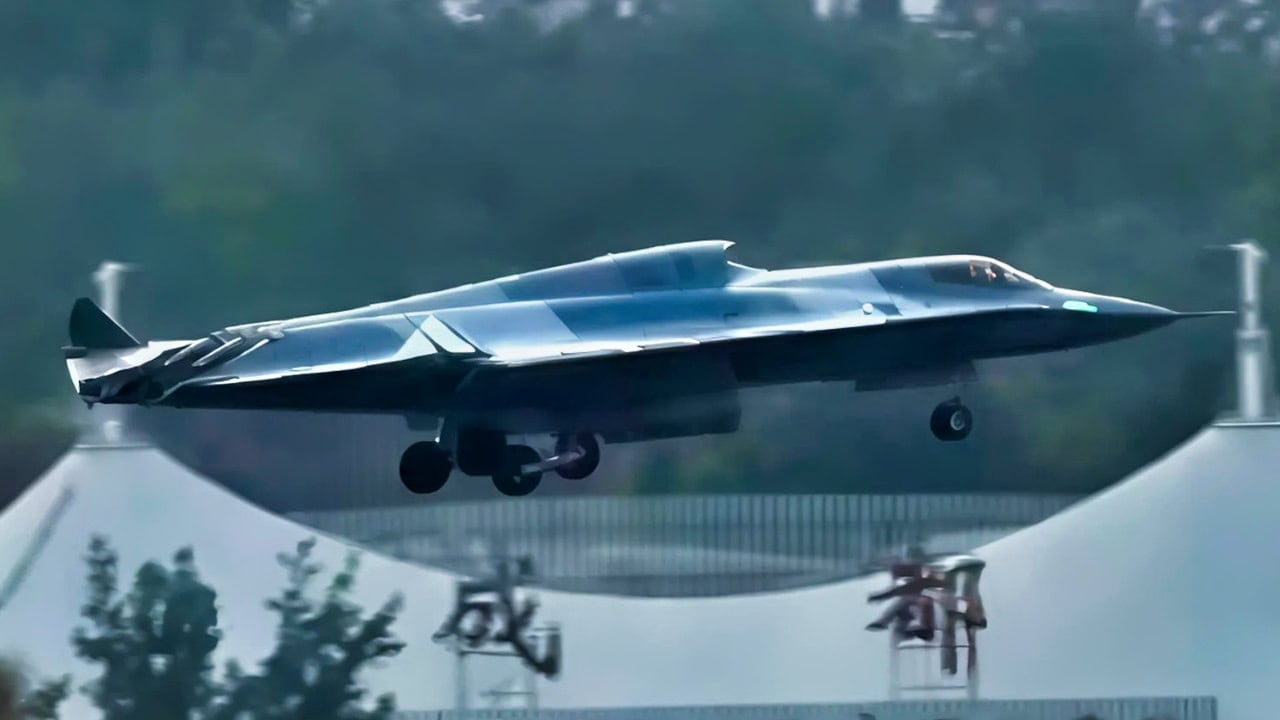
J-36 Fighter from X/Screenshot.
If the J-36 is any indication, China may not be waiting for a single finished sixth-generation fighter to usher in the new era of manned-unmanned teaming. It is testing concepts right now, refining them in flight, building out systems, and preparing to support them.
It’s unclear when China will make the leap, but it is clear the U.S. has competition.
About the Author: Jack Buckby
Jack Buckby is a British researcher and analyst specializing in defense and national security, based in New York. His work focuses on military capability, procurement, and strategic competition, producing and editing analysis for policy and defense audiences. He brings extensive editorial experience, with a career output spanning over 1,000 articles at 19FortyFive and National Security Journal, and has previously authored books and papers on extremism and deradicalization.