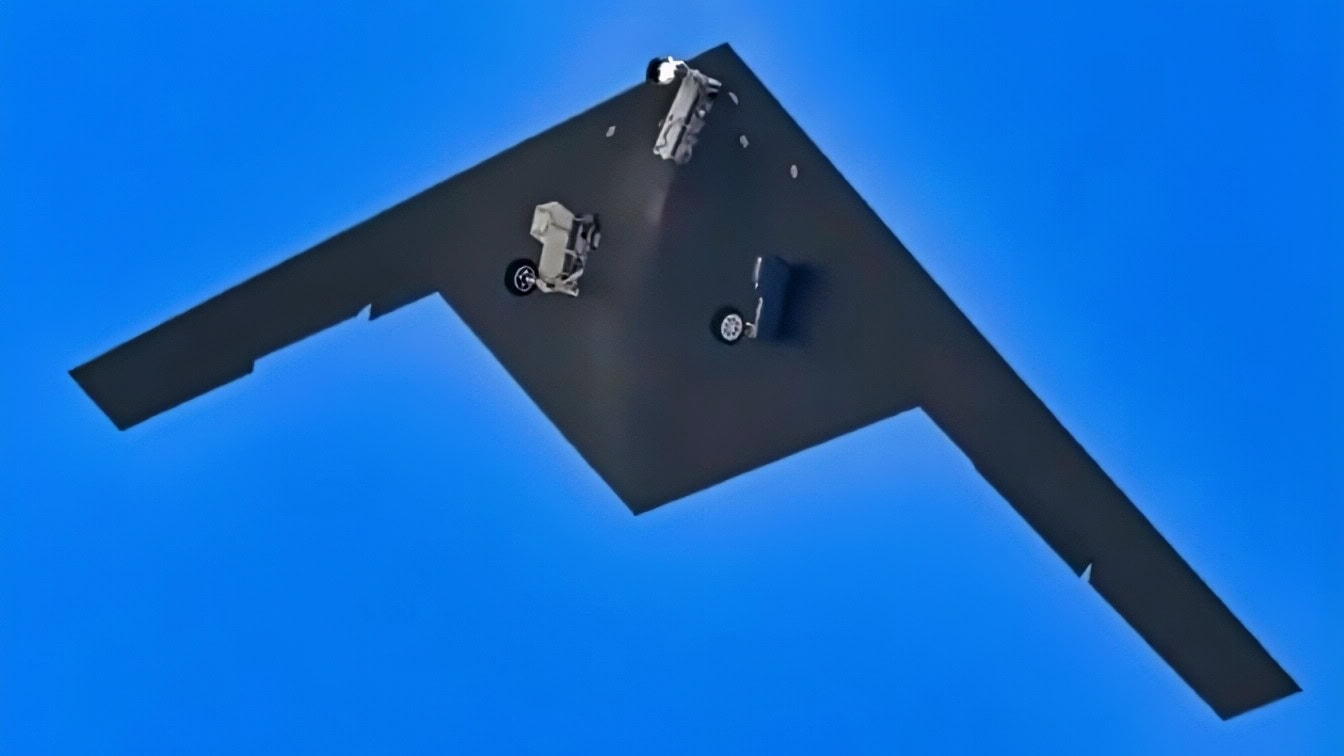
New photos of the mysterious RQ-180 offer a rare glimpse into one of the United States’ most secretive and rarely seen unmanned aircraft, or what we call drones in most military circles. Posted to X, formerly Twitter, footage of what appears to be the RQ-180 provided some of the most detailed evidence of that mysterious aircraft.
Noted along with the aircraft itself is what appears to be a sensor similar to those seen on a Scaled Composites aircraft, Proteus. Scaled Composites is a subsidiary of Northrop Grumman, which is believed to manufacture the RQ-180.
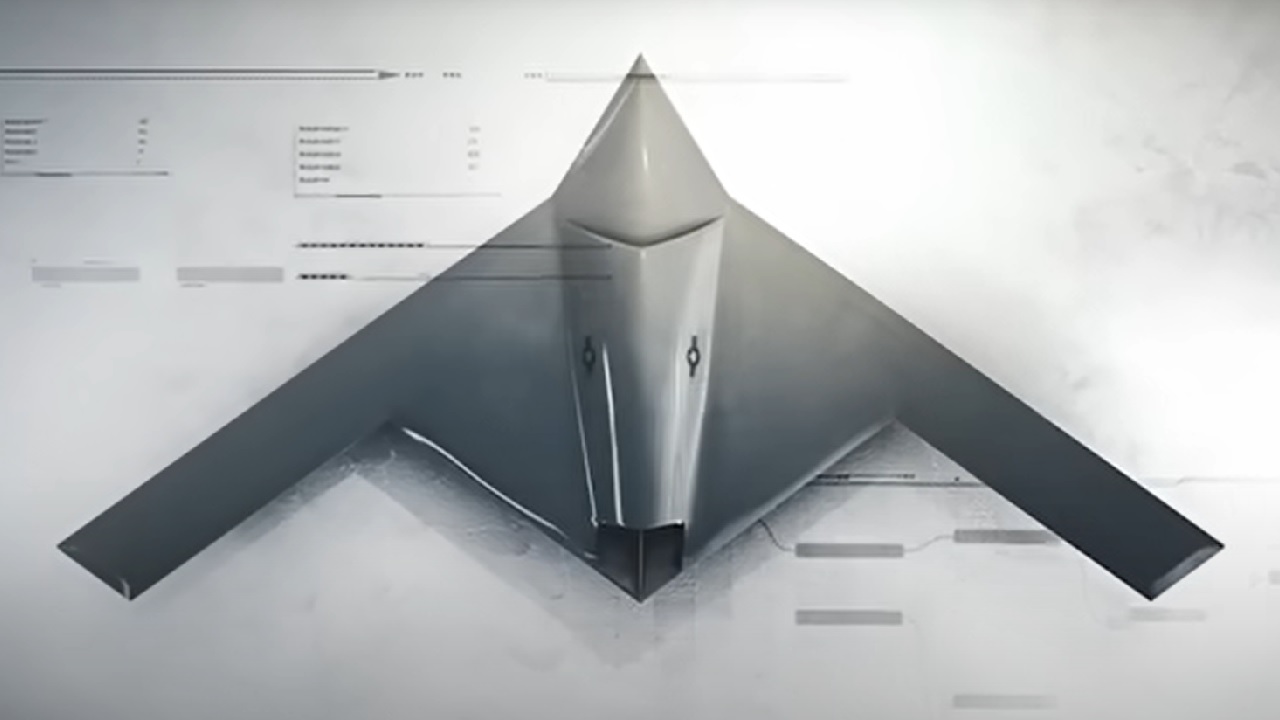
RQ-180 computer-generated image from U.S. Military video. Image Credit: YouTube Screenshot.
There are a few noteworthy aspects of the RQ-180 that can be inferred from the aircraft’s overall appearance, particularly its airframe and outwardly visible design features.
It is worth noting, however, that very little is known definitively about that platform, and much of it is speculation, best-guess estimates, or guesswork.
The Design
The RQ-180 is a flying-wing aircraft that is outwardly broadly similar to the design favored by the B-2 Spirit stealth bomber and the upcoming B-21 Raider, both of which are stealthy, long-range strategic bombers for the United States Air Force.
That design choice minimizes radar reflections and enhances the aircraft’s very low observability.
Lacking a tail assembly, the design is also noted for its high fuel efficiency, a consequence of its very low drag.
Combined with generous internal fuel volume, flying wing aircraft generally offer longer ranges than traditional aircraft designs.
But unlike many aircraft, the RQ-180 almost certainly carries its sensors internally, a measure that preserves its stealth characteristics.
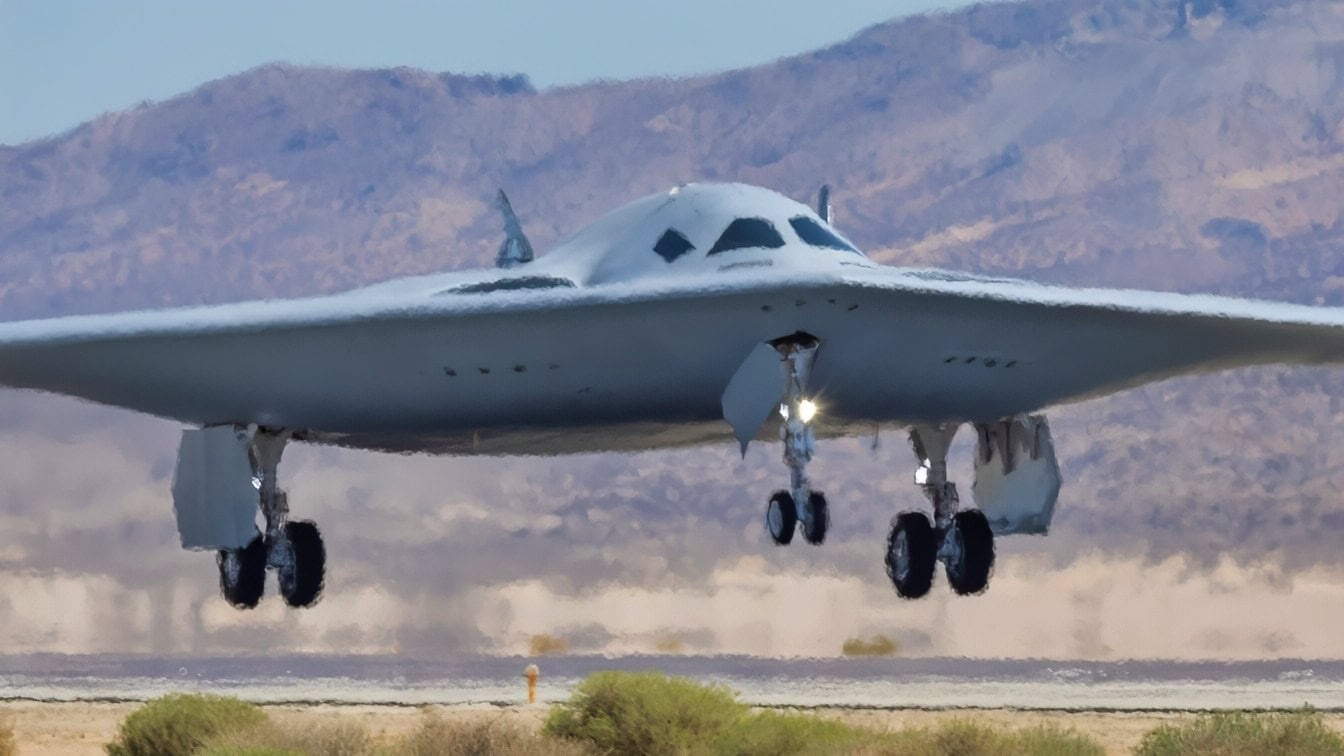
A B-21 Raider test aircraft lands at Edwards Air Force Base, Calif., during ongoing developmental flight testing, Sept. 11, 2025. The B-21 will be the backbone of the bomber fleet; it will incrementally replace the B-1 Lancer and B-2 Spirit bombers. (U.S Air Force photo by Todd Schannuth)
The Role
The RQ-180’s role, at its core, is thought to be a penetrating intelligence, surveillance, and reconnaissance aircraft.
Practically speaking, that would facilitate operations deep inside denied enemy airspace, for example, over China or Russia in a high-end conflict against a peer rival.
Like other ISR aircraft, the RQ-180 would no doubt act as a node in a broader sensor and communications network, relaying information gleaned about the battle space.
Important tasks such as mapping radar networks and tracking mobile missile systems could fall within the RQ-180’s purview.
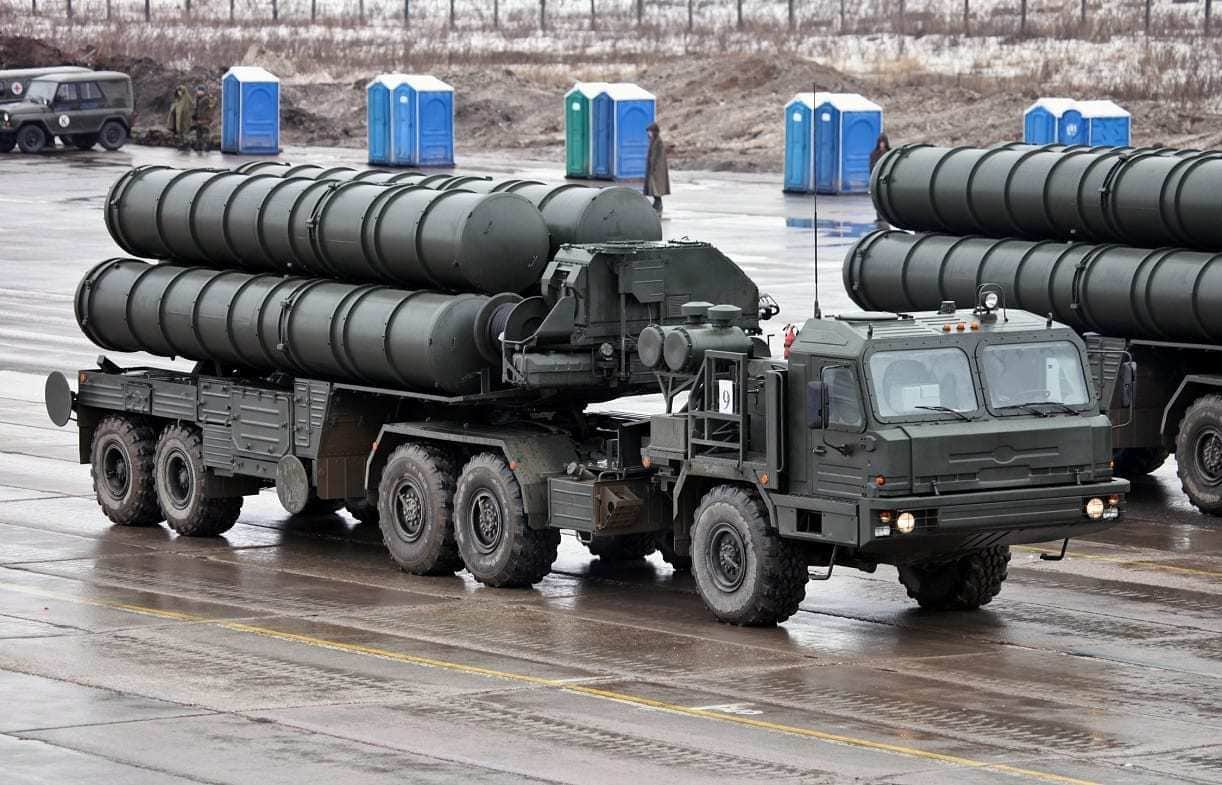
S-400. Image Credit: Creative Commons.
The Sensors, the Capabilities of These Drones
Though details about the RQ-180 are naturally classified, it could carry a mix of onboard and internally carried sensors.
Active electronically scanned array (AESA) radar for ground mapping and tracking, signals intelligence systems to detect and geolocate important points, and communications relay payloads can potentially allow the RQ-180 to act as a digital bridge between command and other information-gathering nodes.
It may be that the RQ-180 possesses organic electronic warfare capabilities to jam or spoof enemy radars, though this remains speculative.
Why RQ-180 Matters: The Stealth Drones
The RQ-180 reflects a shifted threat environment, one that is radically different from the one faced in Iraq or Afghanistan. Modern air defenses, like Russia’s S-400 or China’s layered defense network, can track high-altitude aircraft and engage said aircraft at extreme ranges.
With the United States having pivoted away from counterinsurgency operations against non-state actors and toward near-peer threats from China and Russia, platforms like the RQ-180 — high-end, stealthy aircraft — will increasingly take on intelligence-collection roles previously handled by earlier generations of non-stealthy aircraft, such as the Global Hawk.
Stealth, not just altitude, will be a key operational requirement.
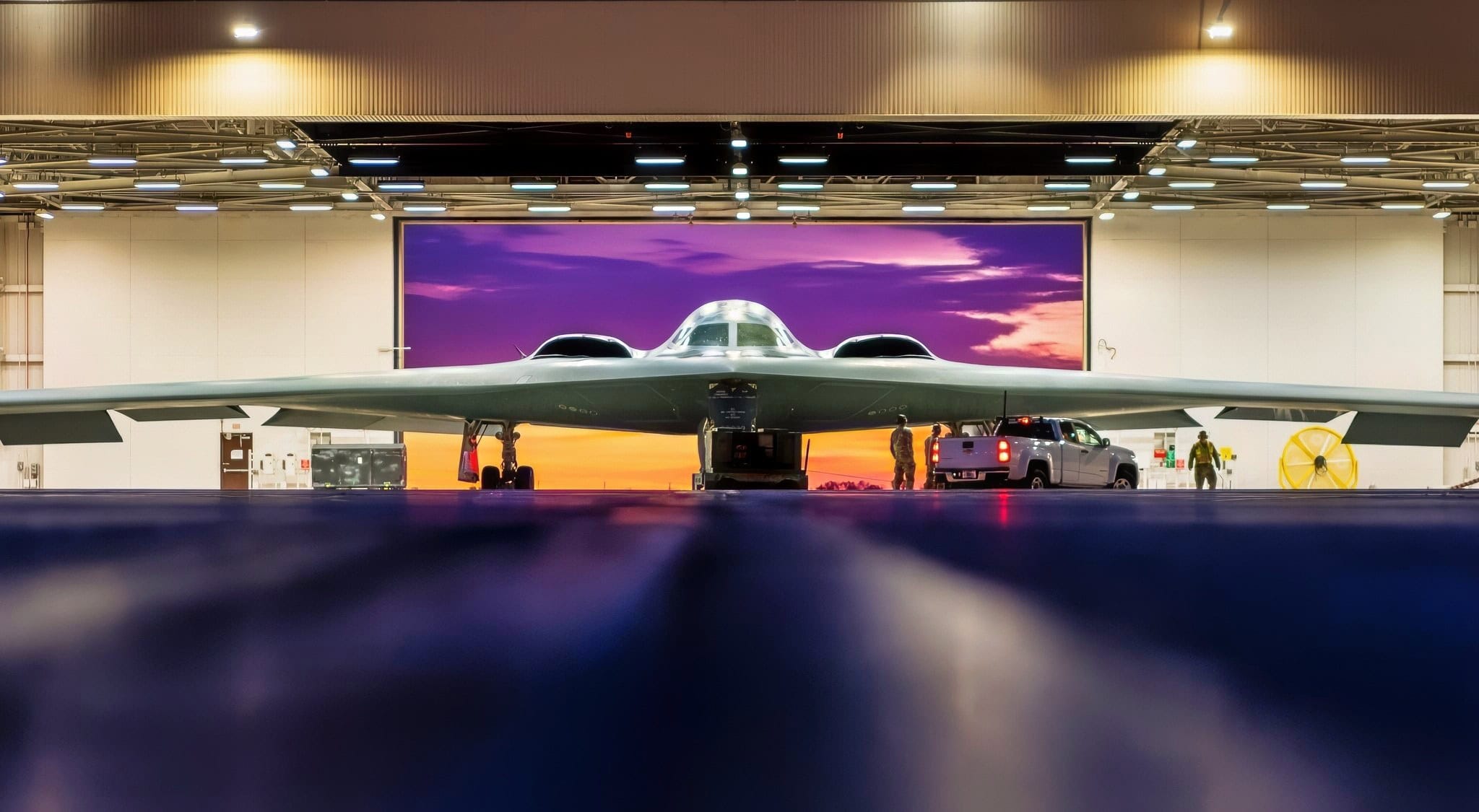
U.S. Airmen assigned to the 393rd Bomber Generation Squadron prepare a B-2 Spirit aircraft for flight during Exercise Global Thunder 26 at Whiteman Air Force Base, Missouri, Oct. 24, 2025. Global Thunder is an annual command and control exercise designed to train U.S. Strategic Command forces and assess joint operational readiness. (U.S. Air Force photo by Staff Sgt. Joshua Hastings)
Though the RQ-180 has never been officially unveiled, budget documents have hinted at the program’s existence.
Satellite imagery, photos, and video evidence from aviation buffs have documented a handful of RQ-180 sightings, lending credence to the assessment that the RQ-180 is operational rather than experimental.
The Bird’s Eye View
While precious little is known about the RQ-180 itself, the platform is emblematic of a sizable shift in how the United States collects intelligence.
Rather than relying on aircraft that served during the Global War on Terror in permissive, uncontested environments against adversaries with little to no air defenses, the U.S. Air Force, as well as other intelligence-collecting agencies in the United States, will increasingly rely on more sophisticated aircraft like the RQ-180.
In the future, platforms like the RQ-180, as well as other aircraft with similar drone properties that are currently unknown or not yet built, are anticipated to form the backbone of future ISR capabilities.
About the Author: Caleb Larson
Caleb Larson is an American multiformat journalist based in Berlin, Germany. His work covers the intersection of conflict and society, focusing on American foreign policy and European security. He has reported from Germany, Russia, and the United States. Most recently, he covered the war in Ukraine, reporting extensively on the shifting battle lines in Donbas and writing about the war’s civilian and humanitarian toll. Previously, he worked as a Defense Reporter for POLITICO Europe. You can follow his latest work on X.