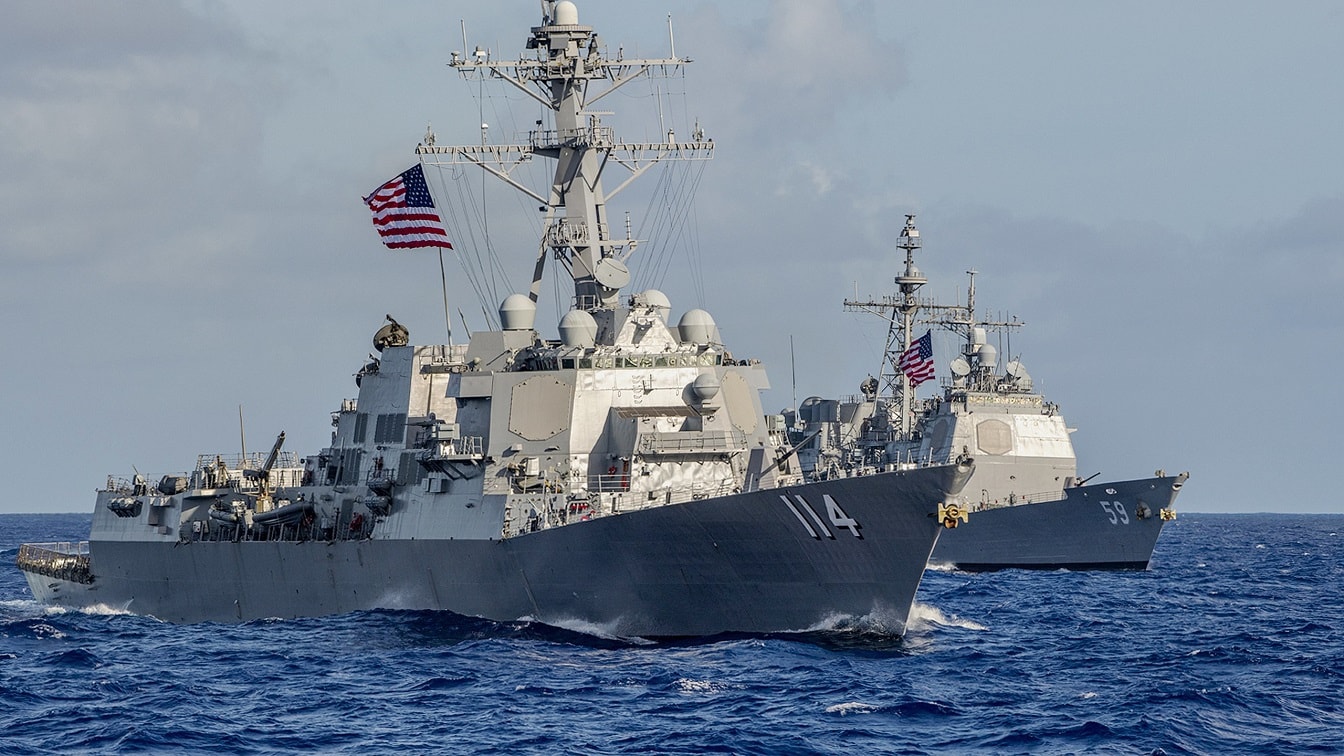
There is an old rule in medicine that applies with uncomfortable precision to war: never stop taking antibiotics halfway through the course. Do, and the infection doesn’t simply return; it comes back stronger, more resilient, and harder to defeat. What survives is not the original threat, but a more dangerous version of it. That is the risk now confronting the West as it faces Iran, especially in light of the newly announced ceasefire.
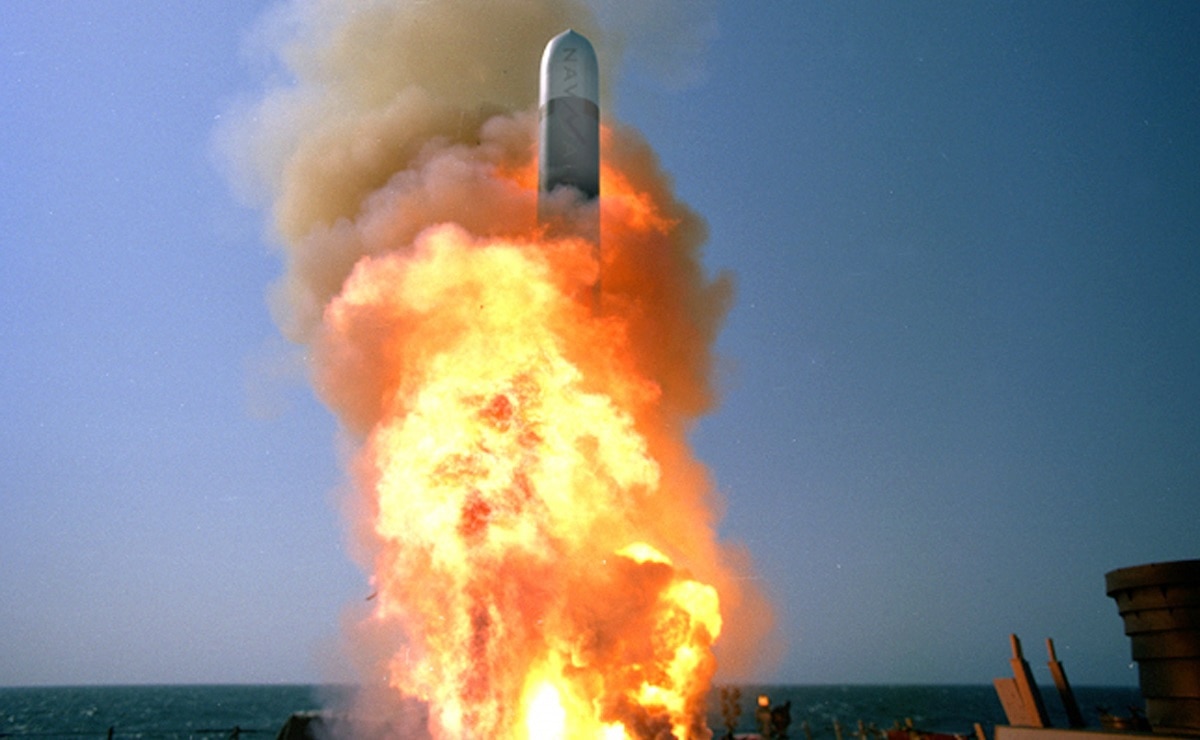
At sea aboard USS Stethem (DDG 63) Ð A Tactical Tomahawk Cruise Missile launches from the guided missile destroyer USS Stethem (DDG 63) during a live-warhead test. The missile traveled 760 nautical miles to successfully impact itÕs intended target on San Clemente Island, part of the Naval Air Systems Command (NAVAIR) test range in Southern California. The Tactical Tomahawk is the next generation of Tomahawk cruise missile, adds the capability to reprogram the missile while in-flight to strike any of 15 preprogrammed alternate targets, or redirect the missile to any Global Positioning System (GPS) target coordinates. It also will be able to loiter over a target area for some hours, and with its on-board TV camera, will allow the war fighting commanders to assess battle damage of the target, and, if necessary redirect the missile to any other target. Launched from the Navy’s forward-deployed ships and submarines, Tactical Tomahawk will provide a greater flexibility to the on-scene commander. Tactical Tomahawk is scheduled to join the fleet in 2004. U.S. Navy photo. (RELEASED)
At first glance, a pause in hostilities appears prudent. In reality, it risks entrenching the very dynamics that made this conflict unavoidable.
This is not a conventional war aimed at decisive battlefield victory, because few contemporary conflicts end that way. What is at stake instead is whether the next phase of confrontation is shaped by deterrence or by emboldened aggression.
Iran has structured its strategy around endurance. It is fighting a calibrated war of attrition, using missiles, drones, and a network of regional proxies to stretch conflict across multiple fronts while steadily raising the economic and political costs for its adversaries.
The objective is not to defeat the United States or Israel outright. It is to outlast them.
A ceasefire, under these conditions, does not end the conflict. It shifts it – on terms that risk favoring Tehran.
There is also a second, more consequential layer. Iran is positioning itself to strangle the arteries of the global economy.
Through its dominance of the Strait of Hormuz and its reach, via Houthi proxies, into the Bab el-Mandeb, Tehran sits astride two of the world’s most critical maritime chokepoints. Hormuz carries roughly a fifth of global oil supply. The Bab el-Mandeb is the gateway to the Suez Canal and a vital corridor linking Asia and Europe.
This is not simply a regional conflict. It is a contest over whether a revisionist regime can hold the global economy at risk.
The ceasefire does nothing to change that reality. If anything, it reinforces it.
Tehran has a long record of using negotiations and pauses not as pathways to resolution, but as instruments of strategy. Commitments are made to relieve pressure; violations follow once that pressure dissipates. Time is converted into capability.
It would be naïve to assume this instance will be different.
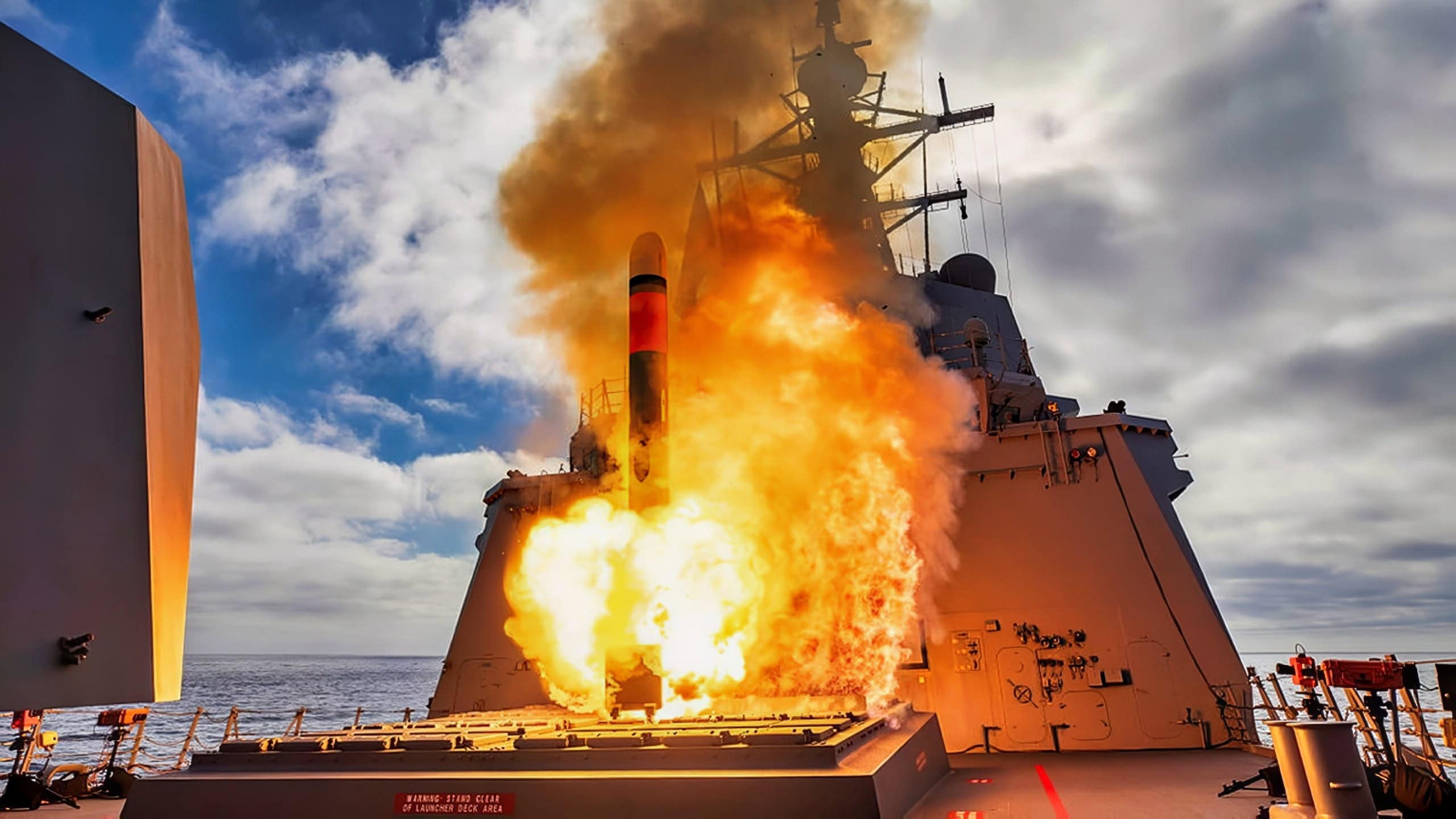
Tomahawk Missile Firing. Image Credit: Government of Australia.
Figures like Donald Trump may see a ceasefire as a demonstration of leverage or deal-making success. In Tehran, it is more likely seen as confirmation that pressure works – that escalation can produce restraint from the West.
Iran’s leadership is not a conventional negotiator. They are disciplined, patient, and highly skilled manipulators of time, perception, and political division. A pause in hostilities will almost certainly be used to:
- rearm and reposition assets,
- disperse or conceal enriched uranium stockpiles,
- harden infrastructure against future strikes,
- and recalibrate proxy operations across the region.
What is promised in the moment is rarely what is delivered over time.
The deeper problem is conceptual. The familiar binary between war and peace no longer holds. For Iran, conflict is part of a continuous state of competition. The ceasefire is not a step toward peace. It is an interval within an ongoing confrontation.
The question is not whether conflict resumes. It is under what conditions?
There are already warning signs. Iran has now introduced additional red lines into the equation, including constraints tied to Israel’s campaign against Hezbollah in Lebanon. This is not de-escalation. It is escalation by other means – an attempt to leverage the ceasefire to shape outcomes across multiple theatres.
Left unchecked, this approach will succeed.
A truncated campaign, whether paused or politically constrained, leaves Iran with intact ideological resolve, recoverable military capabilities, preserved proxy networks, and continued leverage over global energy flows.
That is not defeat. It is strategic validation.
And it will echo.
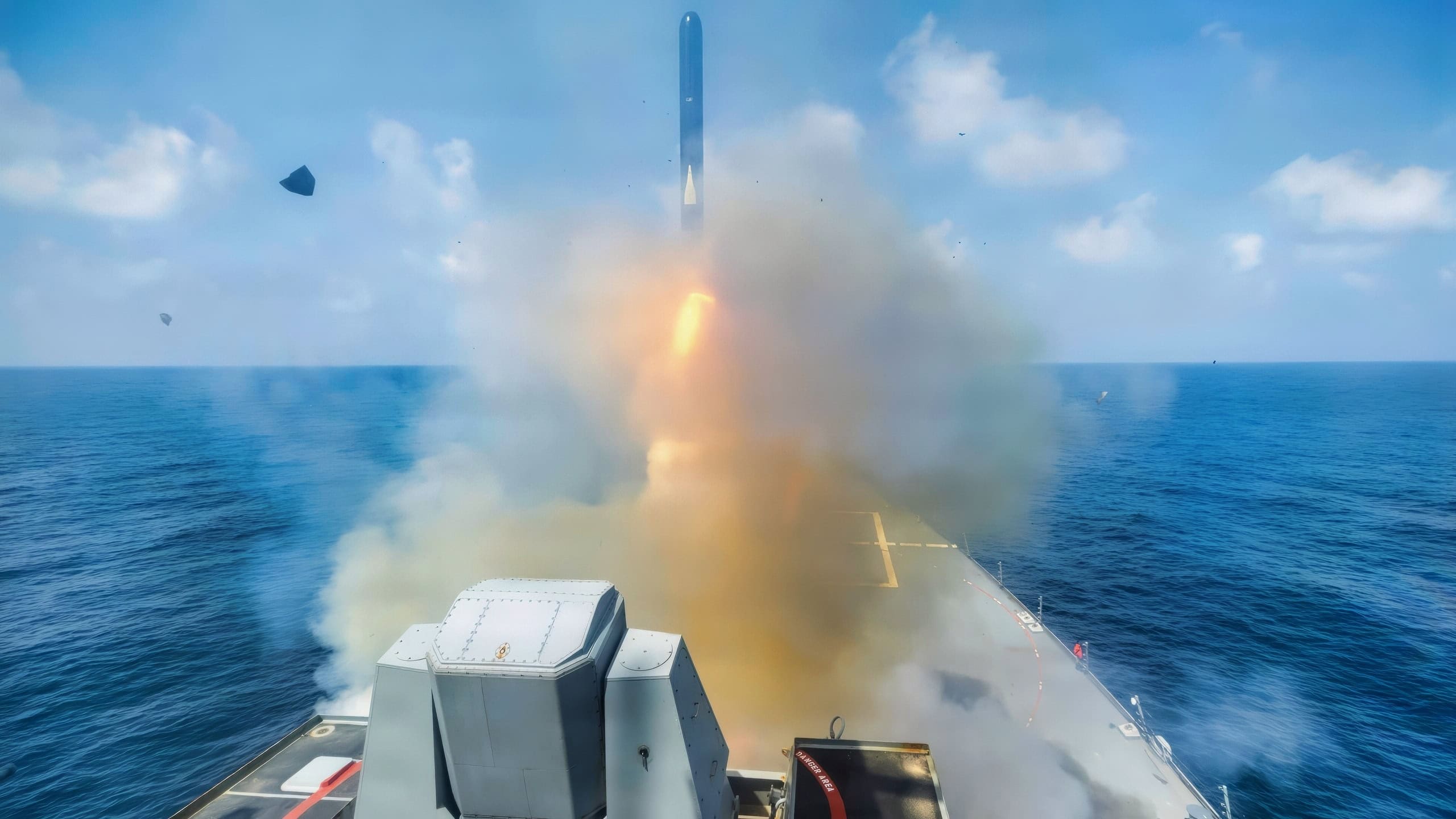
Arleigh Burke-class guided-missile destroyer USS Spruance (DDG 111) fires a Tomahawk Land Attack Missile (TLAM) in support of Operation Epic Fury, Feb. 28, 2026. (U.S. Navy photo)
If Iran demonstrates that it can absorb pressure, extract concessions, and emerge with its core capabilities intact, others will follow the same model. Endurance, disruption, and coercion will become the preferred strategy against Western power.
This is how a regional conflict metastasizes into a systemic one.
There is also a more immediate danger. A pause accelerates adaptation. Iran will use this time to refine missile and drone capabilities, deepen proxy integration, and reinforce its position along critical maritime corridors.
The next phase of conflict will not resemble the last. It will be more dispersed, more sophisticated, and more difficult to counter.
In other words, the “infection” will return as a superbug.
None of this argues for open-ended war. It argues for strategic coherence.
If the objective is deterrence, it must be re-established decisively, including ensuring that Iran cannot credibly threaten the free flow of energy through Hormuz or commerce through the Red Sea.
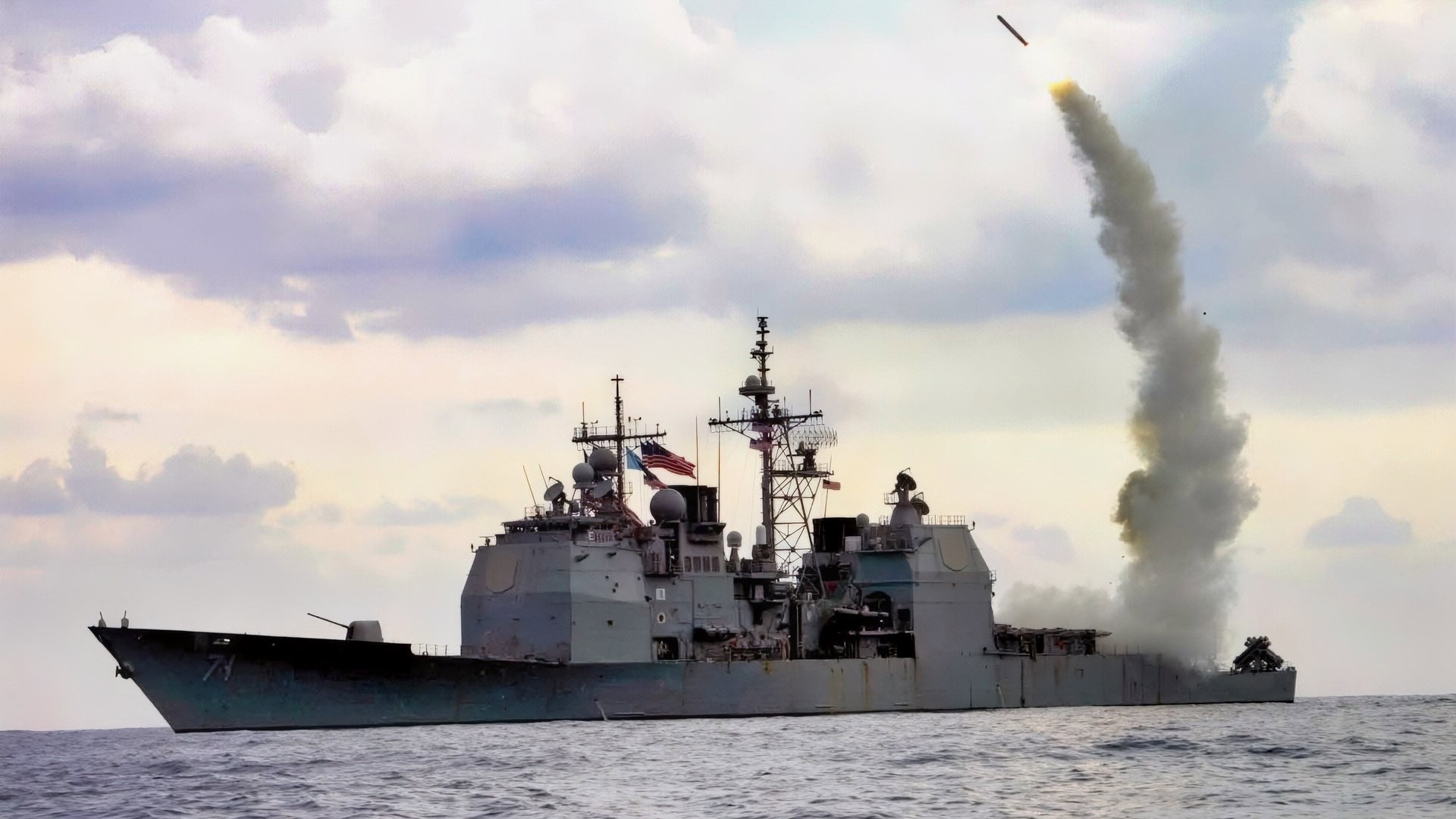
ABOARD USS CAPE ST. GEORGE (CG 71) AT SEA — A Tomahawk cruise missile launches from USS Cape St. George, operating in the eastern Mediterranean Sea in support of Operation Iraqi Freedom. (Photo by IS1 Kenneth Moll, USS Cape St. George) (Released by Sixth Fleet Public Affairs)
If the objective is degradation, it must be real, not symbolic.
And if the objective is to shape the next phase of this conflict, the costs imposed must be sufficient to constrain Iran’s ability to escalate, not merely pause it.
There is also an underutilized lever: energy.
The West, and particularly the United States, retains the capacity to blunt Iran’s coercive power by expanding supply and stabilizing prices. A sustained effort to drive down global energy costs – a de facto “made in America” price floor – would weaken Tehran’s ability to weaponize oil markets and reduce the strategic value of its geographic position.
What is untenable is the familiar middle ground: enough pressure to provoke, but not enough to prevail.
A ceasefire under these conditions risks becoming exactly that – a pause that strengthens the adversary.
The choice is not between escalation and restraint. It is between shaping the terms of an ongoing conflict or allowing those terms to be dictated by an emboldened regime.
The lesson is simple: if the course has begun, it must be finished.
But “finished” does not mean peace. It means ensuring that Iran cannot emerge from this phase of conflict stronger, richer, and more capable of coercion.
Because a half-fought war does not end the threat, it upgrades it.
If this ceasefire holds on Iran’s terms, the regime will declare victory, rebuild, and resume its campaign, with greater confidence and fewer constraints.
And the next confrontation will not only be harder. It will unfold on their terms, not ours.
About the Author: Alan H. Kessel
Alan H. Kessel served in the roles of assistant deputy minister for legal affairs and legal adviser at Global Affairs Canada. He headed the Canadian legal team suing Iran for the downing of Ukrainian Airlines PS752. He is now a senior fellow at the Macdonald-Laurier Institute.