
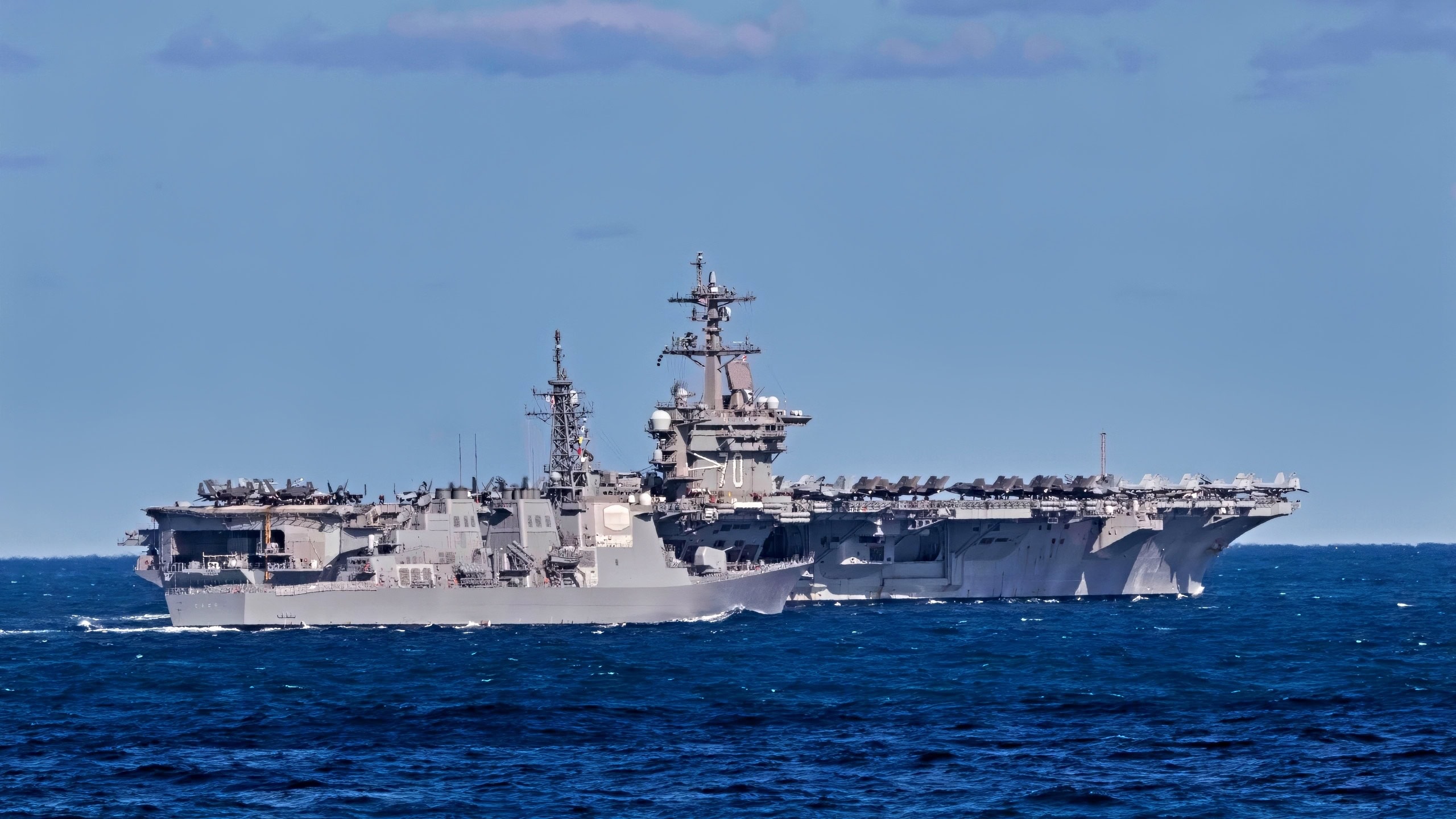
A nuclear-powered aircraft carrier, despite weighing over 100,000 tons, uses its massive nuclear reactors to move at speeds over 30 knots or almost 35 mph. In a reported incident, the USS Nimitz (CVN-68) supercarrier, running on only 3 out of 4 shafts (roughly 75 percent power), stayed neck-and-neck with a cruiser, showing that carriers can match the acceleration of smaller vessels.
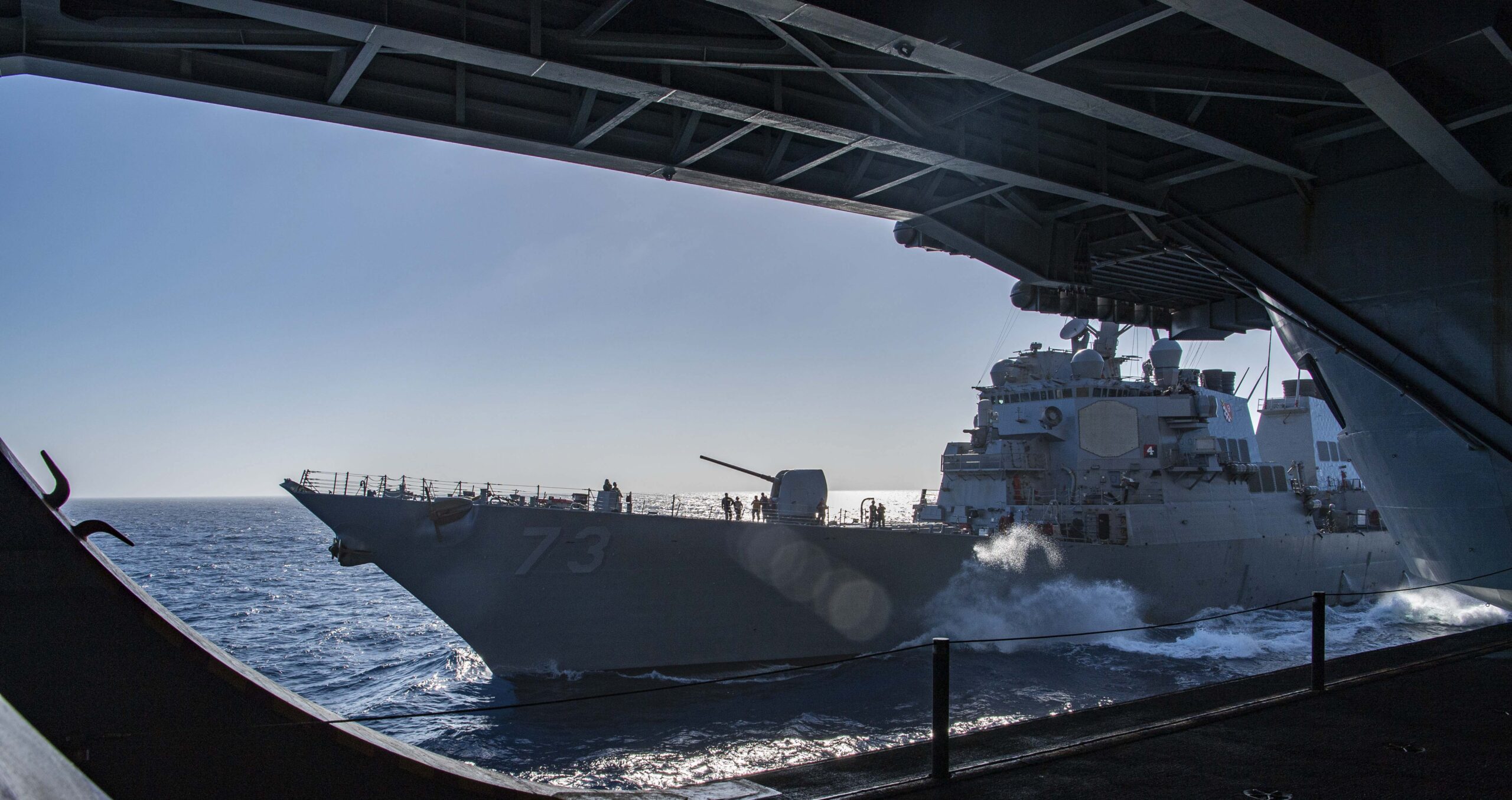
(Aug. 28, 2023) The Arleigh Burke-class guided-missile destroyer USS Decatur (DDG 73) steams alongside the aircraft carrier USS Nimitz (CVN 68) . Nimitz is underway conducting routine operations. (U.S. Navy photo by Mass Communication Specialist Seaman Tomas Valdes)
While cruisers are fast, carriers often have better speed stability in rough weather conditions, allowing them to outrun most surface ships.
A Drag Race While On A “Tiger Cruise”:
Dave Merk, a former US Navy Mass Communications/ Photographer aboard USS Nimitz aircraft carrier, recalled on Quora when the Nimitz and a cruiser engaged in a friendly drag race in the middle of the ocean.
It is the kind of experience that sailors will never forget.
“We were deployed aboard USS Nimitz on something called a Tiger cruise. That’s the last part of the deployment, when the ship invites family members aboard for the final leg between Hawaii and our home port on the West Coast.
“The cruise was very popular, and many family members came aboard. I want to remember over a thousand, and a lot of the crew were asked to start their leave early to make room for the ‘Tigers’.
Merk said the crew performed many drills for the guests on board, including air shows, mock gun battles, firefighting drills, and damage-control drills, and, near the end of the tour, a drag race between the Nimitz and the other ships in the carrier strike group.
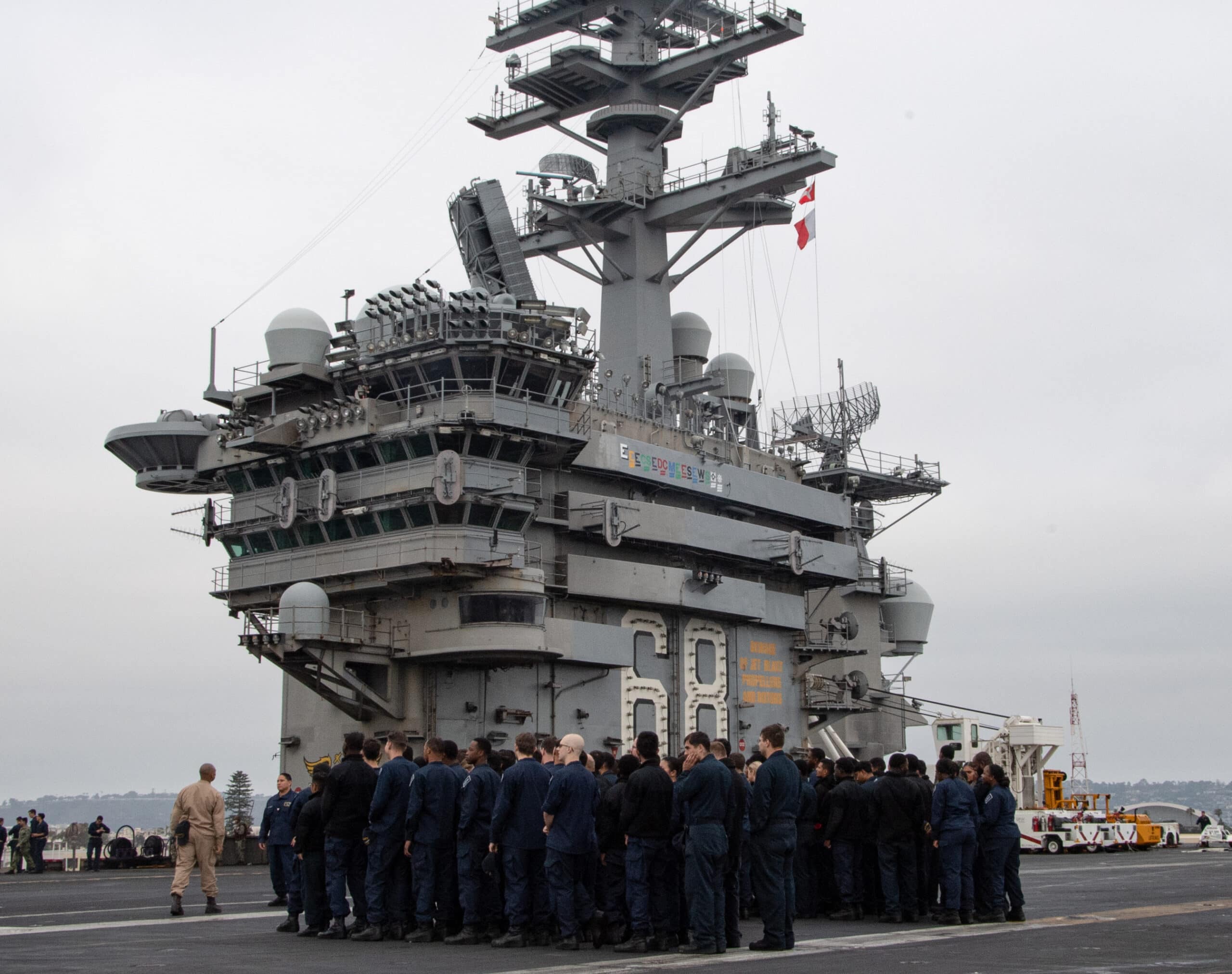
Sailors muster on the flight deck of the USS Nimitz (CVN 68) at Naval Air Station North Island, July 30, 2024. Nimitz is underway conducting routine operations. (U.S. Navy photo by Mass Communication Specialist Seaman Chad K. Hughes)
“Well, drag race, I guess if you replace sports cars with warships, and the quarter mile is actually more like a few miles, and we all had a slow running start, so the ships wouldn’t drift into each other. Most of the ships in our group participated.
The Cruiser Raced Out To A Lead:
“With everyone on the flight deck watching, someone said, ‘Go,’ and the cruiser took off fast. That was impressive. I suppose that if the race were only a quarter-mile, the cruiser would win every time.
“The cruisers being light and fast, powered basically by 2 shaft 4 engine power plants [the LM2500 gas turbine is the main engine, and there are 4 of them, 2 per shaft. Each engine is rated at 20,000SHP. For a total of 80,000SHP @ 1.3MfTlb of torque.
“Rather than using the thrust, they gear it to the shafts to turn their screws. But anyway, they get the best proverbial “0–60” quarter mile win, hands down. And this was an older Ticonderoga class. I imagine the newer Burkes might be even faster.
“However, after a couple of minutes, we could see that even though we were behind them, we were at least keeping up, if not slowly catching up with the other ships and sub safely behind us in the wake.” Submarines are actually faster submerged rather than on the surface, he noted.
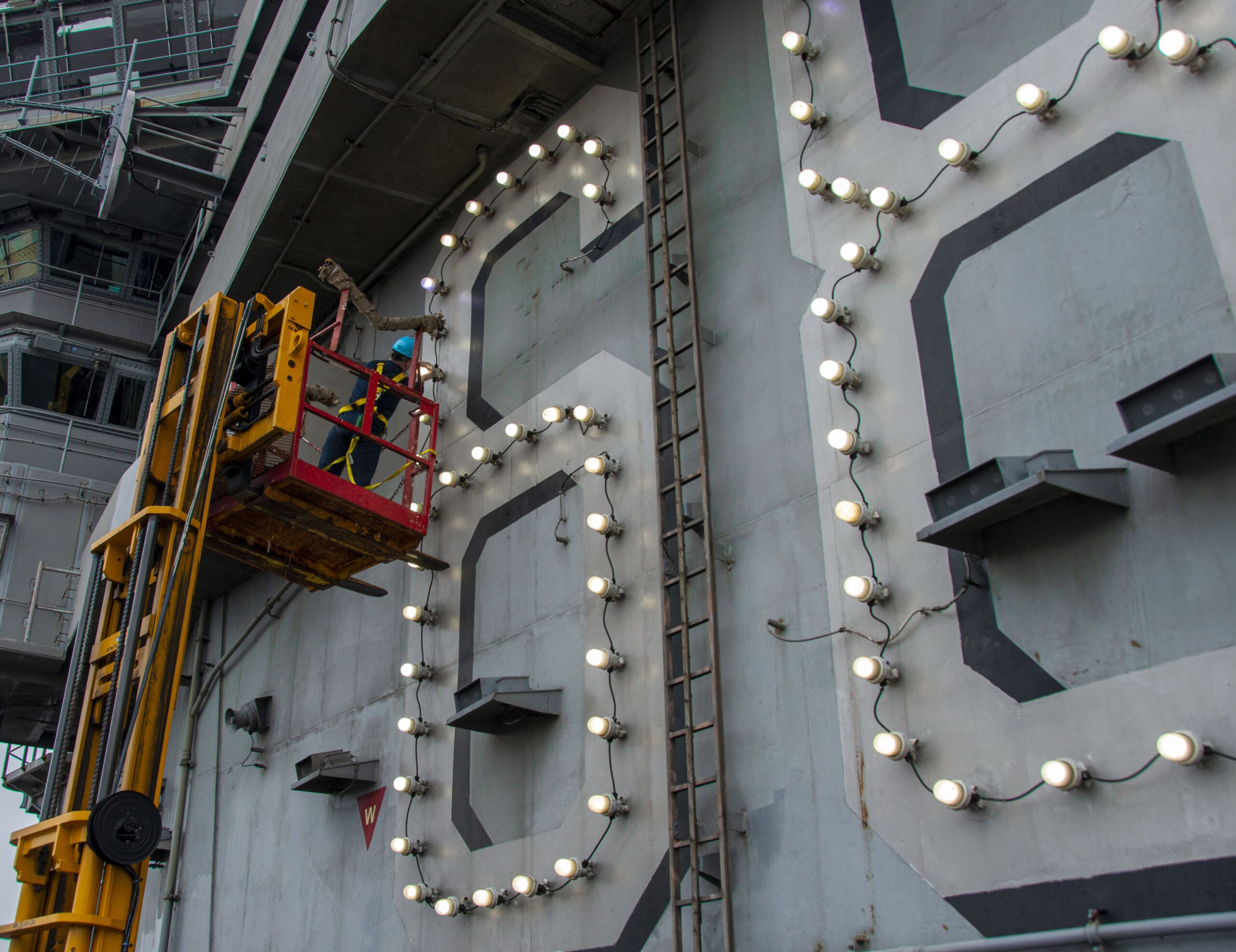
A U.S. Navy Sailor repairs lights on the flight deck of the aircraft carrier USS Nimitz (CVN 68) while in port at Naval Base Kitsap-Bremerton, Washington, Nov. 3, 2023. Nimitz is in port conducting routine operations. (U.S. Navy photo by Mass Communication Specialist Seaman Apprentice Joseph M. Paolucci)
The Nimitz, However, Was Only Using 75 Percent Power:
“Unfortunately for us, the race ended before we could catch them, so we took second place. But now the plot twist. The captain, over the intercom, then revealed that only 3 of our 4 shafts were running; those of us who didn’t already know learned that number 4 had been offline for much of the deployment.
The cruiser, at top speed, had raced out ahead, but the enormous Nimitz kept pace even while only running on 75 percent of its power. For a nearly 1,100-foot-long carrier, matching a lightning-fast cruiser, that is impressive indeed.
“I guess revealing something like that when the deployment had only a few days left wasn’t really a big deal and helped explain our second-place finish to those who were expecting us to win.”
Merk added, “If any other ship lost an entire shaft, it would be limping, while Nimitz kind of just shrugged off like an Olympic sprinter can shrug off a mildly sore ankle, and still claim a medal.
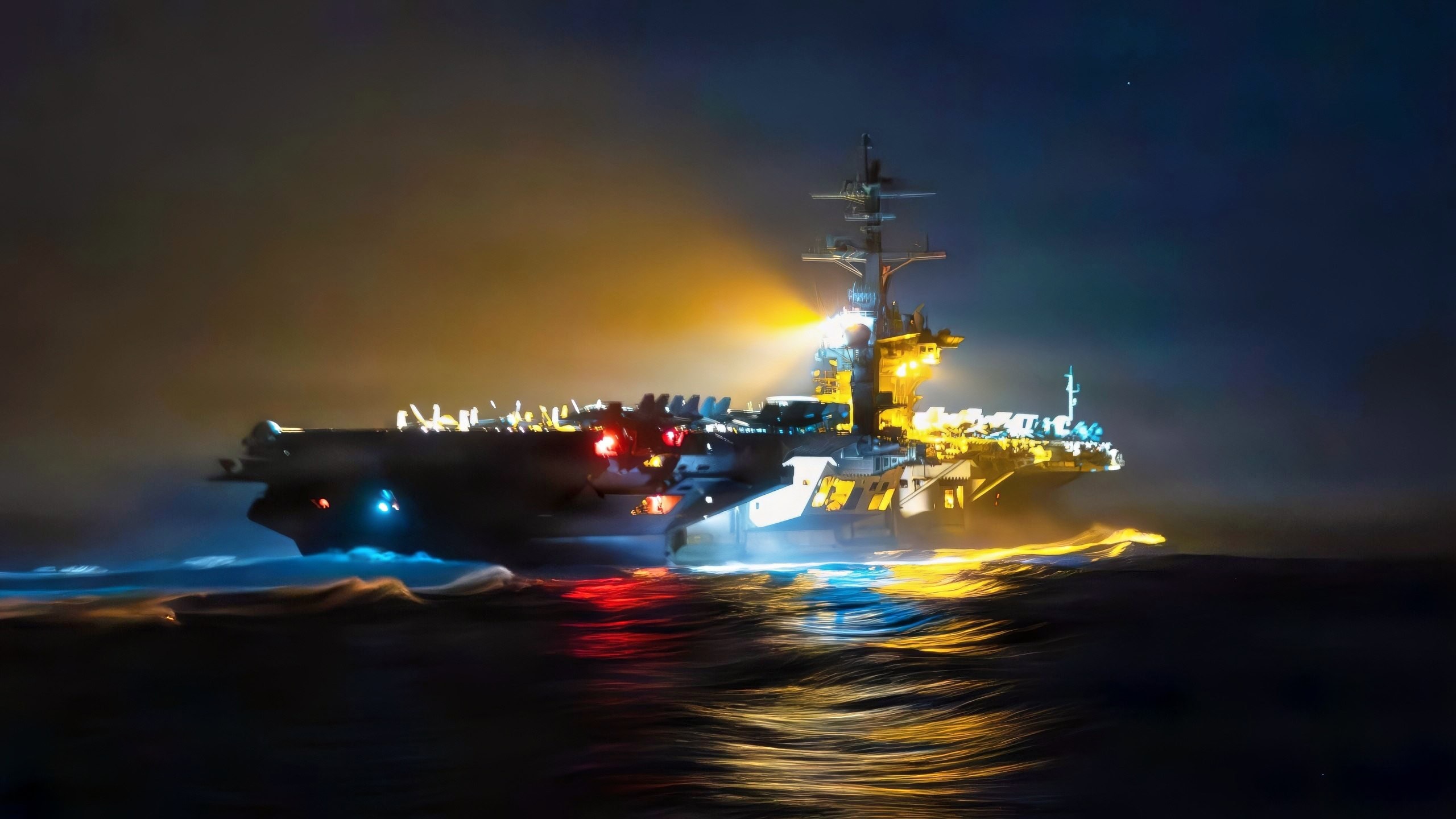
Nimitz-class aircraft carrier USS Abraham Lincoln (CVN 72) departs following a replenishment-at-sea with fleet replenishment oiler USNS Henry J. Kaiser (T-AO-187) during Operation Epic Fury, March 18, 2026. (U.S. Navy photo)
“So sorry, I couldn’t tell you if an aircraft carrier is the fastest ship (the actual top speed is classified anyway), but if it’s in a race anything longer than a quarter mile, I’m not betting against it.”
How Fast Actually Are US Carriers?
James O’Shea, in another Quora post, discussed the actual speed of US aircraft carriers.
“Due to their size and engine power, American nuclear-powered aircraft carriers can outrun virtually every surface ship in most sea states. The rougher it is, the more they will be able to outdistance other watercraft. There are watercraft that can go faster than carriers, in good weather.
“In bad weather, carriers will outrun almost everything afloat. An antisubmarine frigate can’t possibly keep up. A destroyer would have a better chance, but still would have problems. Since the old California-class nuclear cruisers were decommissioned, no American cruiser can keep up with a carrier. The Russian Kirov class battlecruisers might be able to stay with a carrier, maybe, but not for long, especially in bad weather.”

The Nimitz-class aircraft carrier USS George H.W. Bush (CVN 77) transits the Atlantic Ocean, Feb. 15, 2026. The George H.W. Bush Carrier Strike Group is at sea training as an integrated warfighting team. Composite Training Unit Exercise (COMPTUEX) is the Joint Force’s most complex integrated training event and prepares naval task forces for sustained high-end Joint and combined combat. Integrated naval training provides combatant commanders and America’s civilian leaders highly capable forces that deter adversaries, underpin American security and economic prosperity, and reassure Allies and partners. (U.S. Navy photo by Mass Communication Specialist 2nd Class Mitchell Mason)
O’Shea noted that the official top speed of American carriers is listed as “in excess of 30 knots” as the Navy doesn’t want to say.
“USS Kitty Hawk once made a sprint in which she averaged 42 knots by simple math. USS Enterprise (CVN-65) allegedly once hit 50 knots,” he said.
“The Navy refuses to say. CVN-65 is now decommissioned and was replaced by a Gerald R. Ford-class carrier, CVN-80, which is allegedly even faster than CVN-65,” he added.
About the Author: Steve Balestrieri
Steve Balestrieri is a National Security Columnist. He served as a US Army Special Forces NCO and Warrant Officer. In addition to writing on defense, he covers the NFL for PatsFans.com and is a member of the Pro Football Writers of America (PFWA). His work was regularly featured in many military publications.