
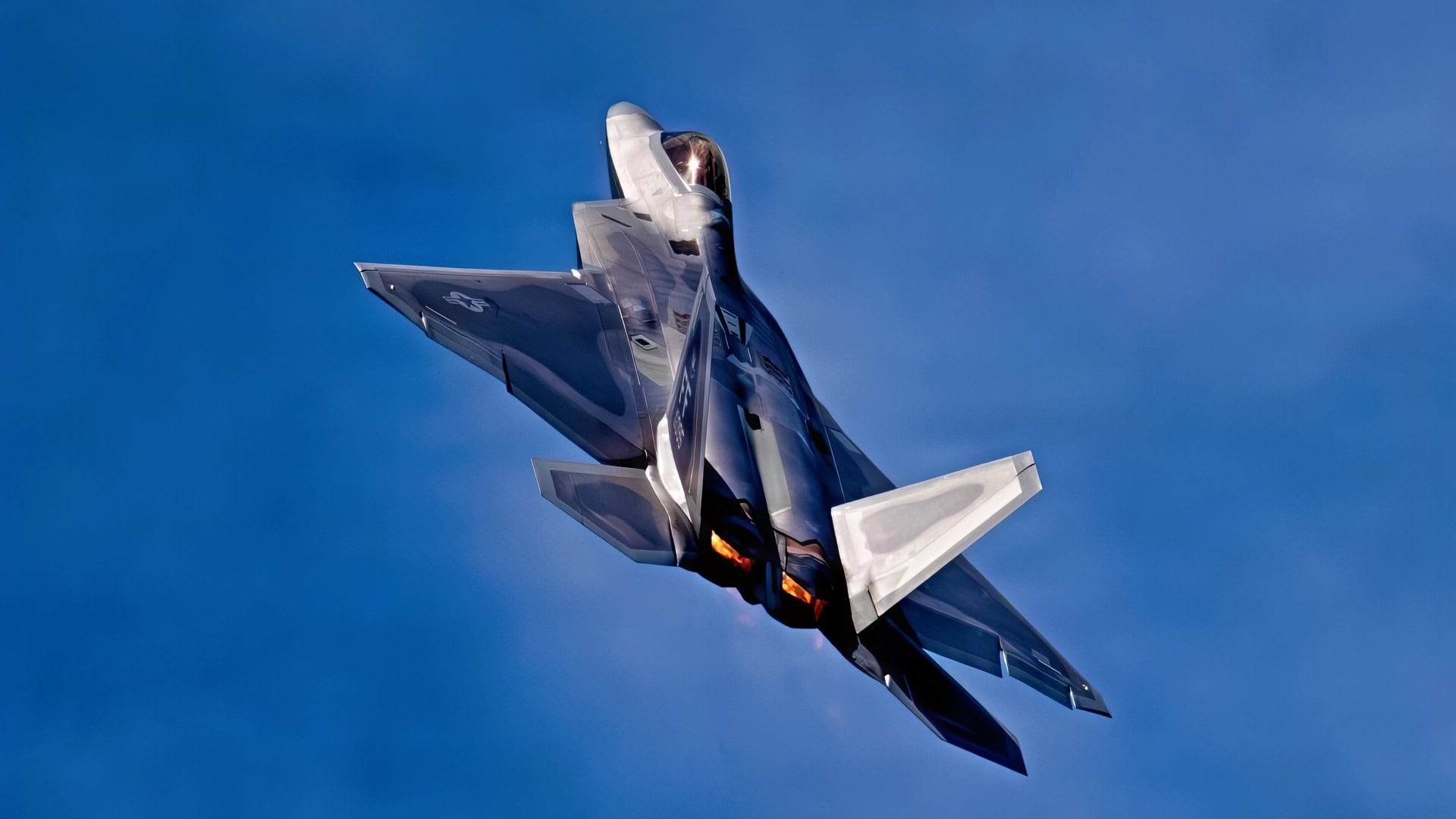
19FortyFive Gets Up Close with the F-22 Raptor Demonstration Team: The F-22 Raptor is often considered to be one of the most advanced dedicated air-superiority fighters in the world.
The aircraft’s aeroelastic design and thrust-vectoring engines enable it to achieve high maneuverability, making it ideal for both close-range and BVR combat conditions. The F-22’s aerial acrobatics also make it immensely enjoyable to watch at air shows and other demonstrations.
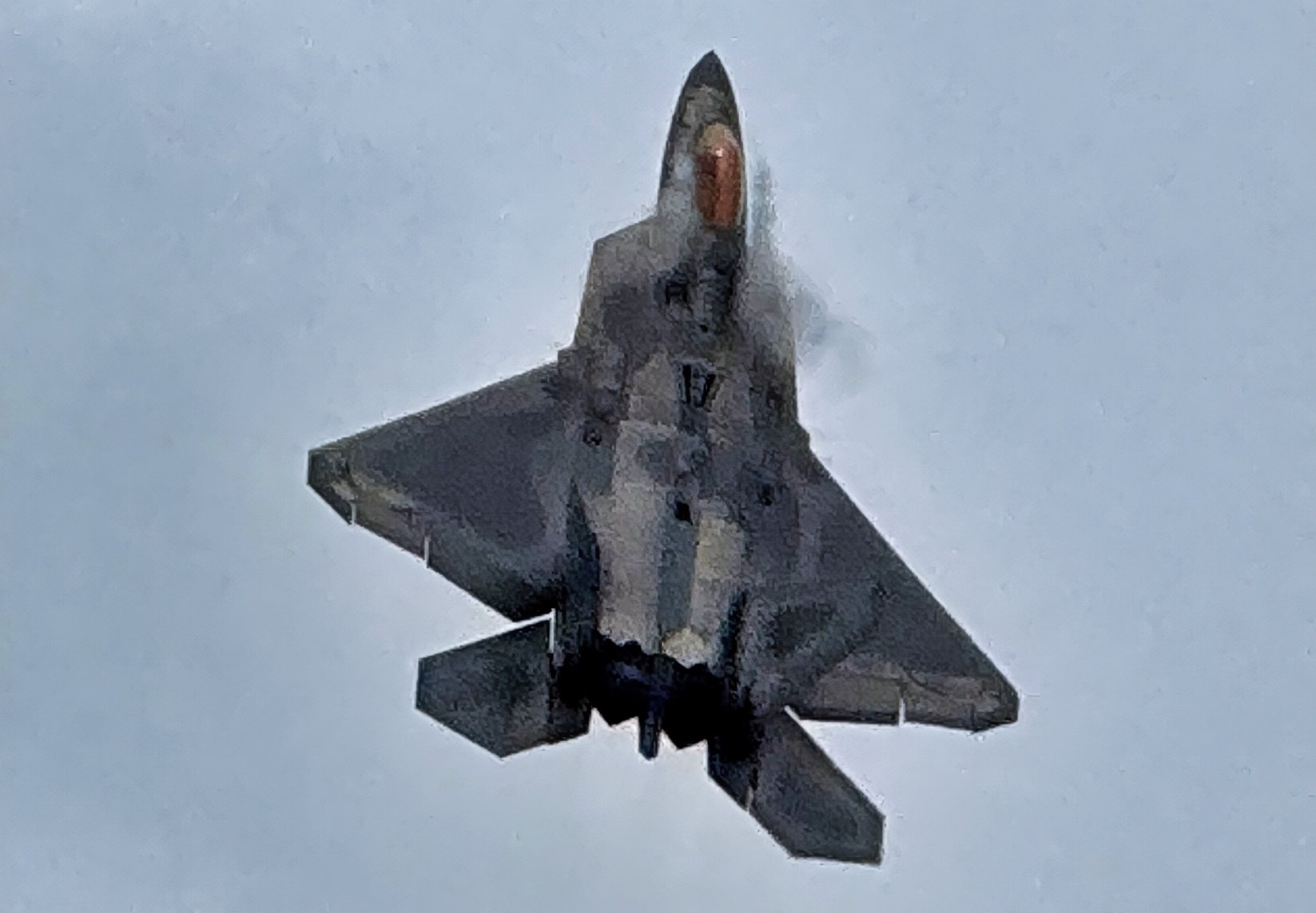
F-22 Raptor high in the sky. Image taken by Harry J. Kazianis in Lakeland, Florida on 4/19/2026.
The U.S. Air Force currently operates a dedicated demo team of F-22 Raptors to showcase the aircraft at domestic and international air shows.
The F-22 Raptor Demonstration Team continues to operate worldwide, inspiring countless onlookers with the aircraft’s incredible acrobatics. And 19FortyFive was able to catch the F-22 Demo Team firsthand in Lakeland, Florida, on Sunday. Pictures in this article in the text are from that event.
As our very own Editor-In-Chief, Harry J. Kazianis, explained, who was on hand for the event: “There is nothing like the F-22 Raptor. With thrust vectoring, it looks like it hit the brakes in mid-air. I have never seen anything like it in my life.”
What is the F-22 Demo Team?
The Raptor Demonstration team operates as part of the U.S. Air Combat Command based at Langley Air Force Base. Prior to 2007, the demonstration team fielded F-15C fighters for air shows and demonstrations.
As the Raptor became more readily available and the F-15C grew increasingly obsolete, the squadron officially transitioned to the F-22 Raptor in 2007.
Initially, the Air Force was hesitant to display the F-22 at airshows.
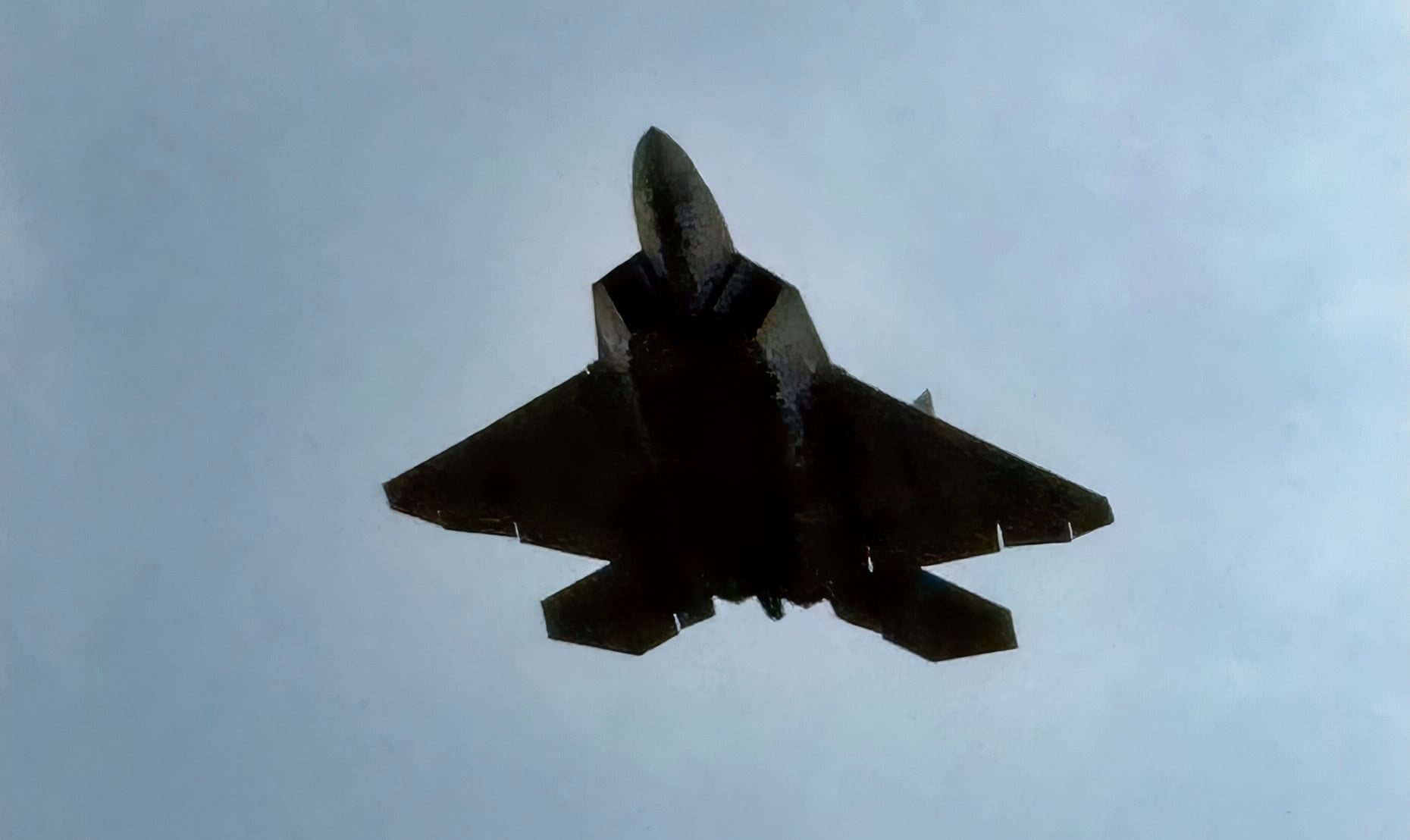
F-22 at Lakeland Air Show 2026. Taken on March 19, 2026, by 19FortyFive.com
Because of the aircraft’s sensitive nature and the limited supply of fighters, the risk of an accident or espionage was too great for public demonstrations.
As time went on, however, these restrictions were relaxed, and the fighter was sent to airshows both at home and abroad to demonstrate its impressive capabilities.
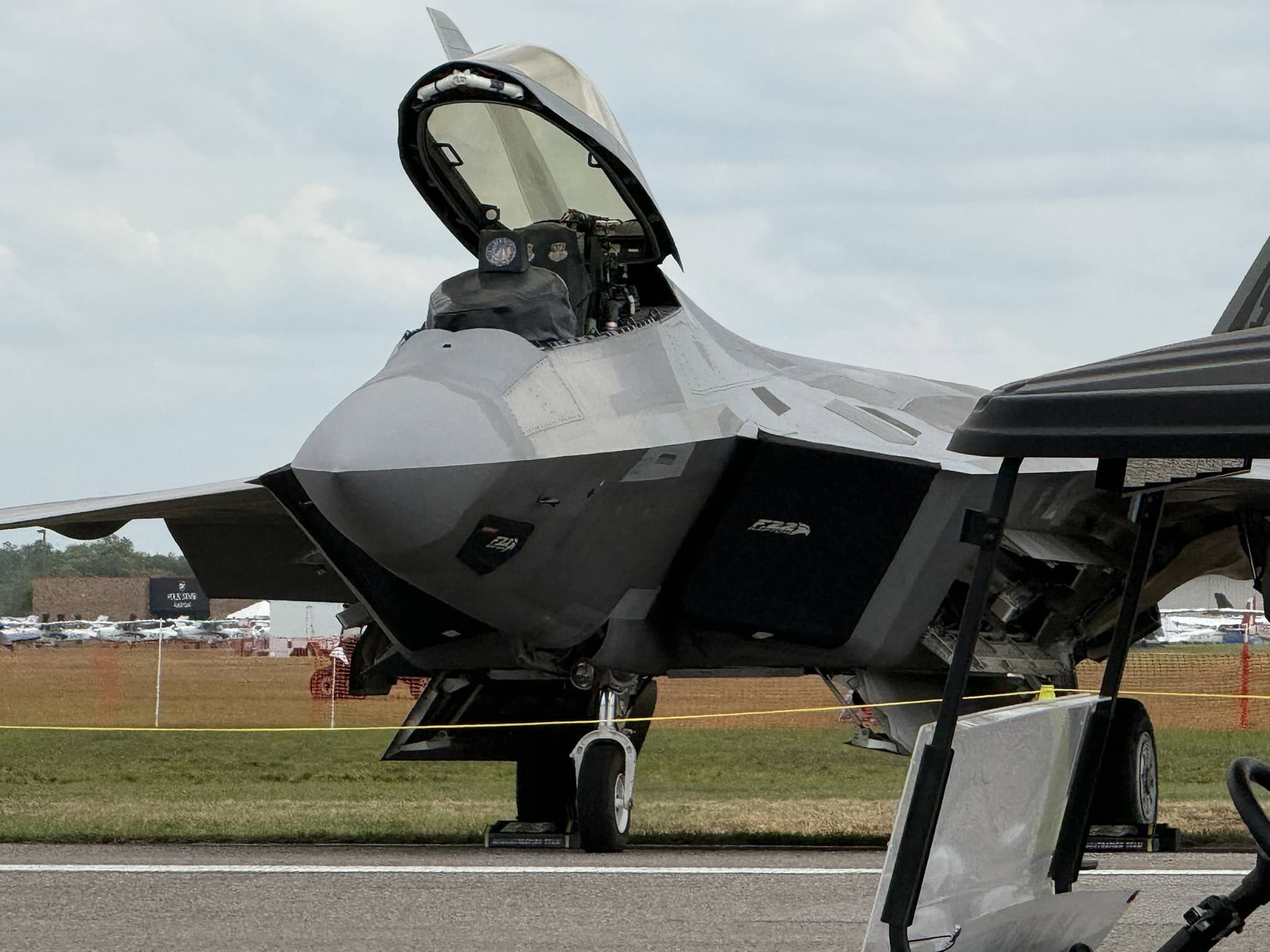
F-22 Raptor. Taken on 4/19/2026 by Harry J. Kazianis for 19FortyFive.com
The primary purpose of any airshow is to spark viewers’ interest and attract customers or potential recruits. For young viewers, many of whom may be seeing a modern fighter up close for the first time, the F-22 is the perfect demonstrator aircraft.
What resonates just as strongly as the aircraft itself is the professionalism of the people who fly and maintain it.
Most demo pilots routinely spend hours talking with students, aviation enthusiasts, and families, answering questions about training and potential career paths. These interactions, however brief they may be, can mean a lot for a humble aviation enthusiast or a young individual looking for a potential career path.
The Exhilarating Flight of the F-22
The heart of the demonstration is the flight profile itself. Anyone who has seen the F-22 perform, whether online or in person, can attest to its acrobatics. During each performance, the pilots perform a series of maneuvers, one of which is the high‑angle‑of‑attack flight.
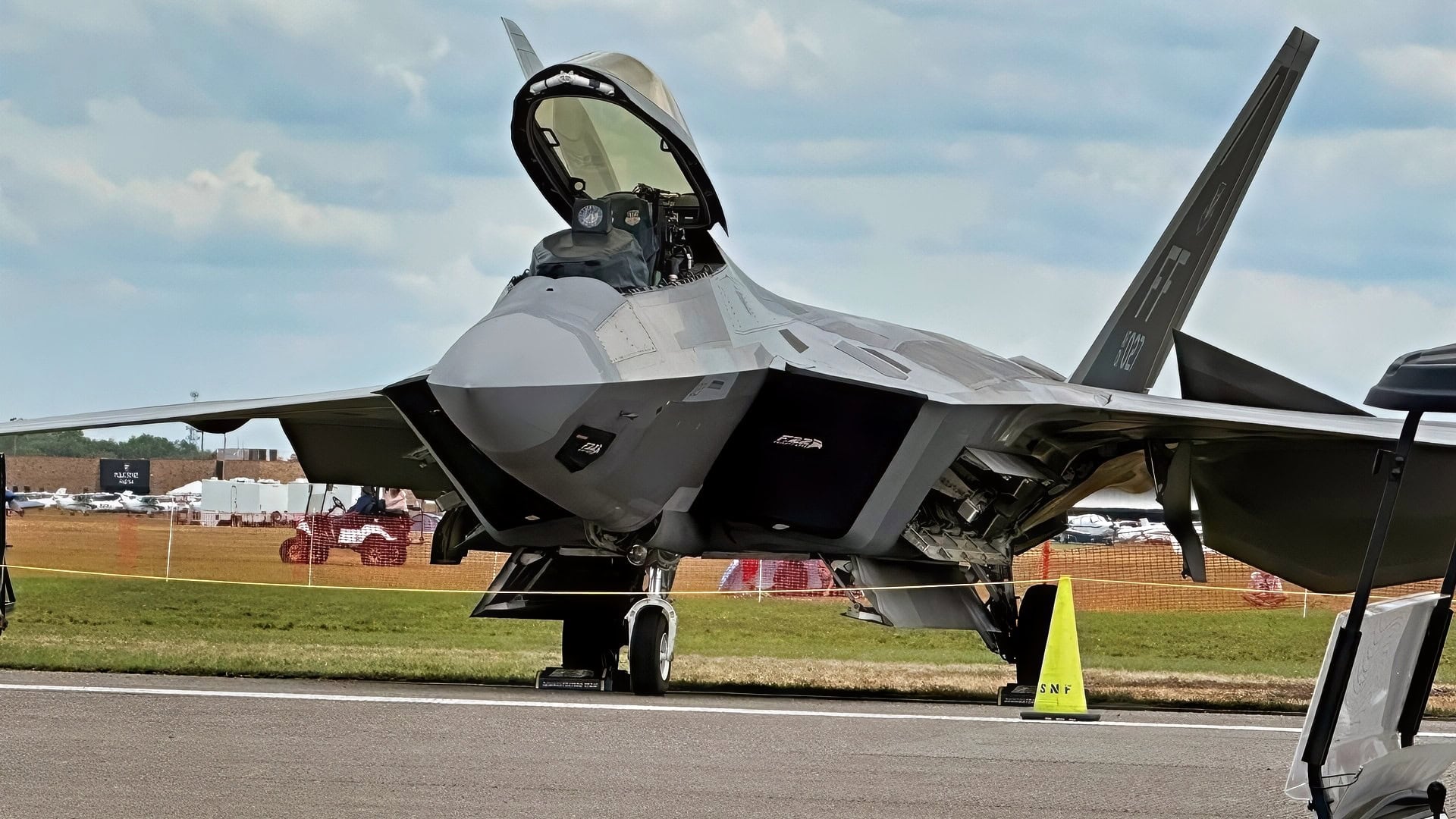
F-22 Raptor Lakeland Florida Airshow. Taken by Harry J. Kazianis on 4/19/2026.
During these maneuvers, the aircraft appears almost suspended in the air, its nose pitched aggressively while remaining fully under control. To observers unfamiliar with modern flight control systems, this can look unnatural, even impossible. In reality, it demonstrates the aircraft’s ability to remain effective in conditions that would render older fighters unstable or uncontrollable.
Throughout each performance, the aircraft performs tight, high-G maneuvers close to the ground. The Raptor routinely transitions from high‑speed passes into near‑vertical climbs, converting kinetic energy into altitude with remarkable efficiency.
Despite these highly demanding maneuvers, the aircraft remains perfectly stable with the pilot maintaining full control. What is impressive about these maneuvers is that they have real combat applications.
While close-range combat is rare these days, in some circumstances, pilots may still have to confront adversaries in close quarters. In these rare instances, high maneuverability is vital for survival, as an aircraft that can out-maneuver its opponent is certain to win.
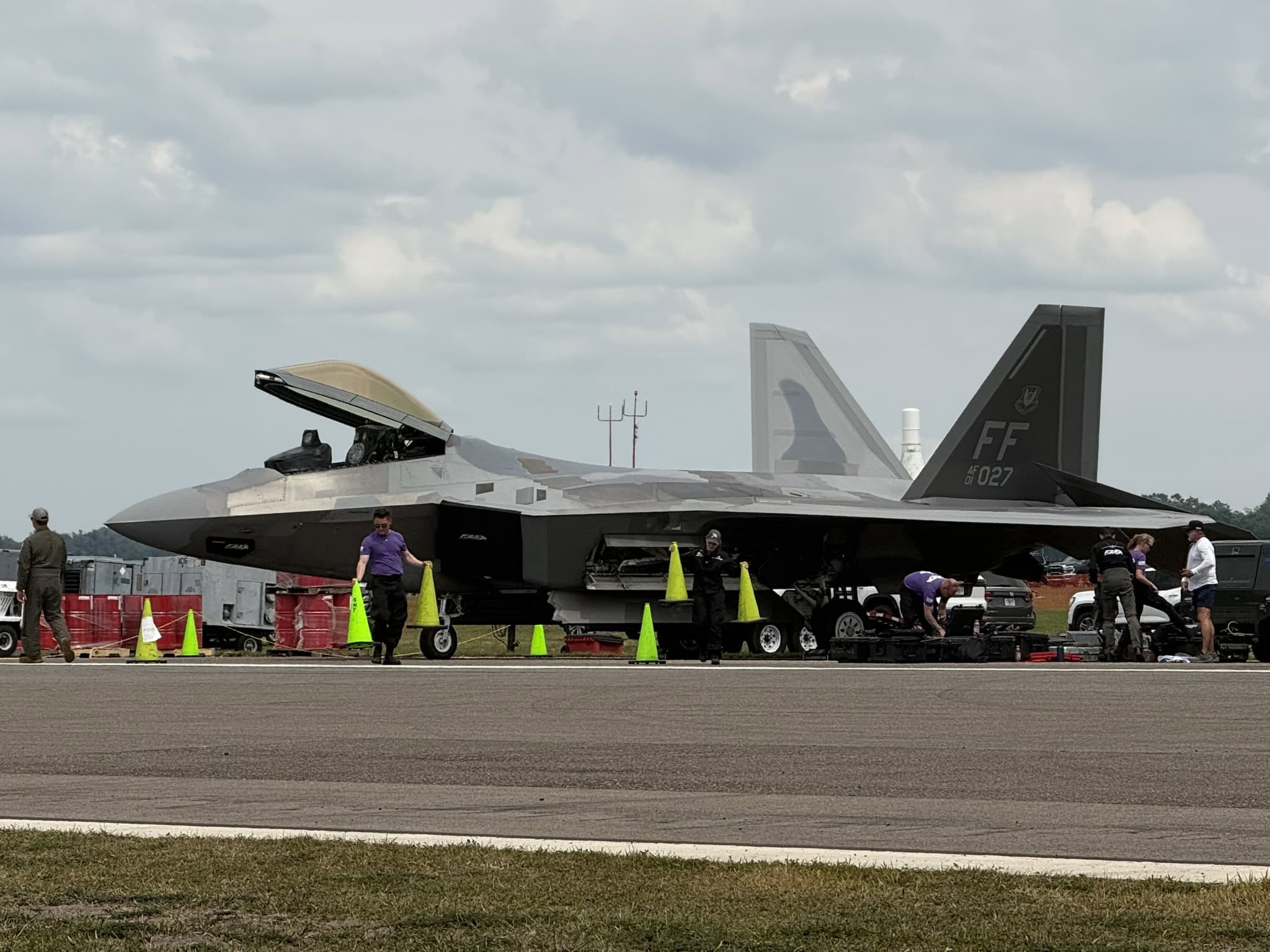
F-22 Raptor Lakeland Florida Airshow. Image Credit: 19FortyFive.com
Selecting the Right Pilots
The pilots who fly these demonstrations are carefully selected from the operational fighter squadrons. Typically, they are instructor pilots or flight leads with extensive experience and strong safety records.
Many have participated in major exercises or overseas deployments and are accustomed to operating in the harshest of conditions. Becoming a demo pilot requires months of preparation, including rigorous certification, emergency procedure rehearsals, repeated practice, and much more. The Air Force treats the flight demonstrations with the same seriousness as any operational mission, including strict weather minima and abort criteria. If the conditions are outside the limits, the demo does not fly.
Behind the scenes, maintenance crews assigned to the demo team carry an equally demanding responsibility. Maintaining a stealth fighter outside its normal operating environment presents unique challenges.
Airshows require operations from unfamiliar airfields, often under tight schedules and varying environmental conditions. Typically, stealth fighters do not receive full stealth coatings for demonstration flights (to reduce costs and ease maintenance), but all their other systems still need to be maintained.
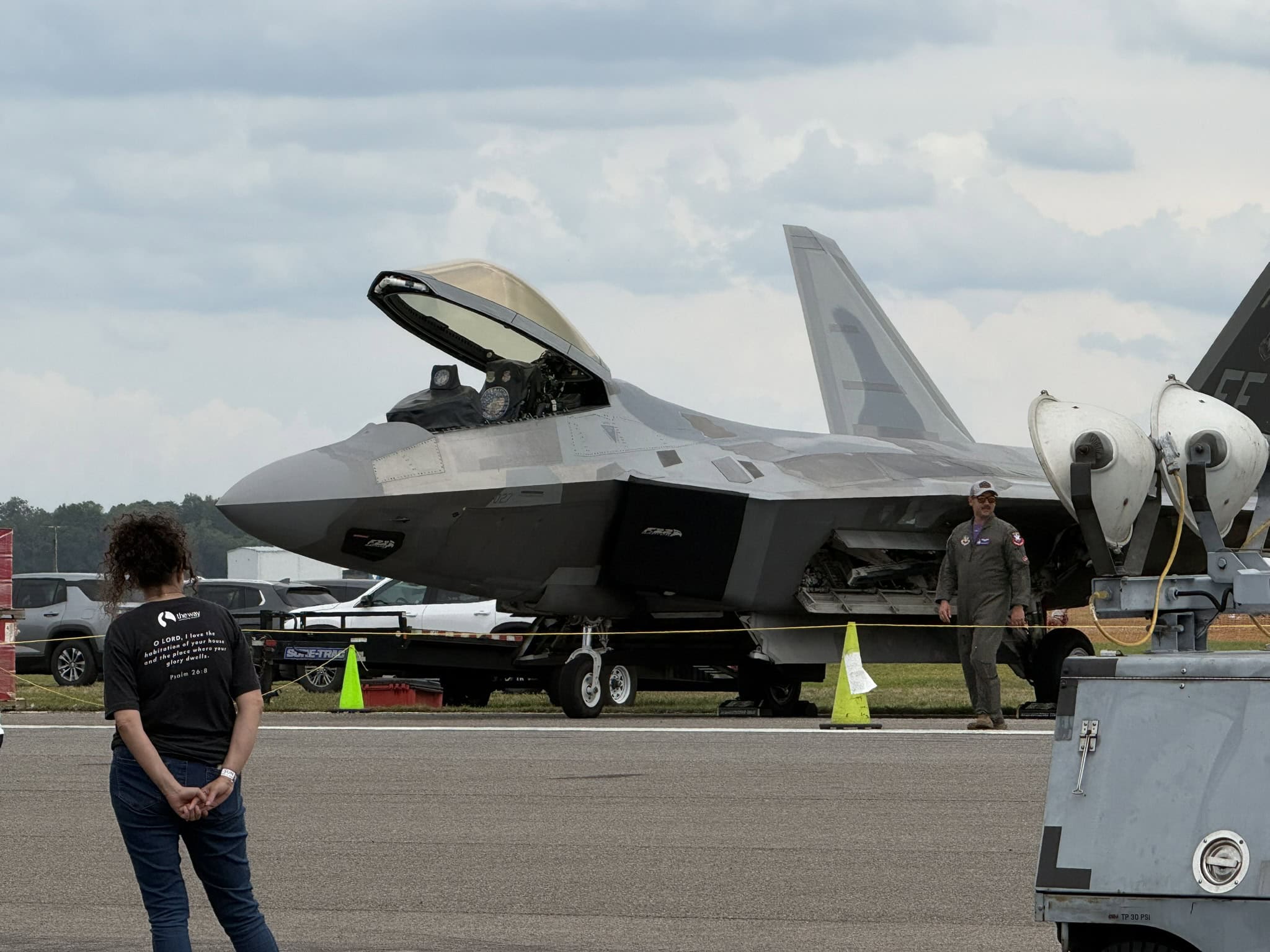
F-22 Raptor Lakeland, Florida Airshow. Taken on 4/19/2026.
Aside from relaxed stealth coatings, the aircraft flown in a demonstration is fully mission‑capable and could return to operational service immediately.
What Separates the F-22 Demo Team From Other Demo Teams?
The F‑22 Demo Team differs fundamentally from other Air Force aerobatic teams, such as the Thunderbirds and Blue Angels. Those teams focus more on coordination, using their tight formations to pull off impressive and visually appealing aerial stunts.
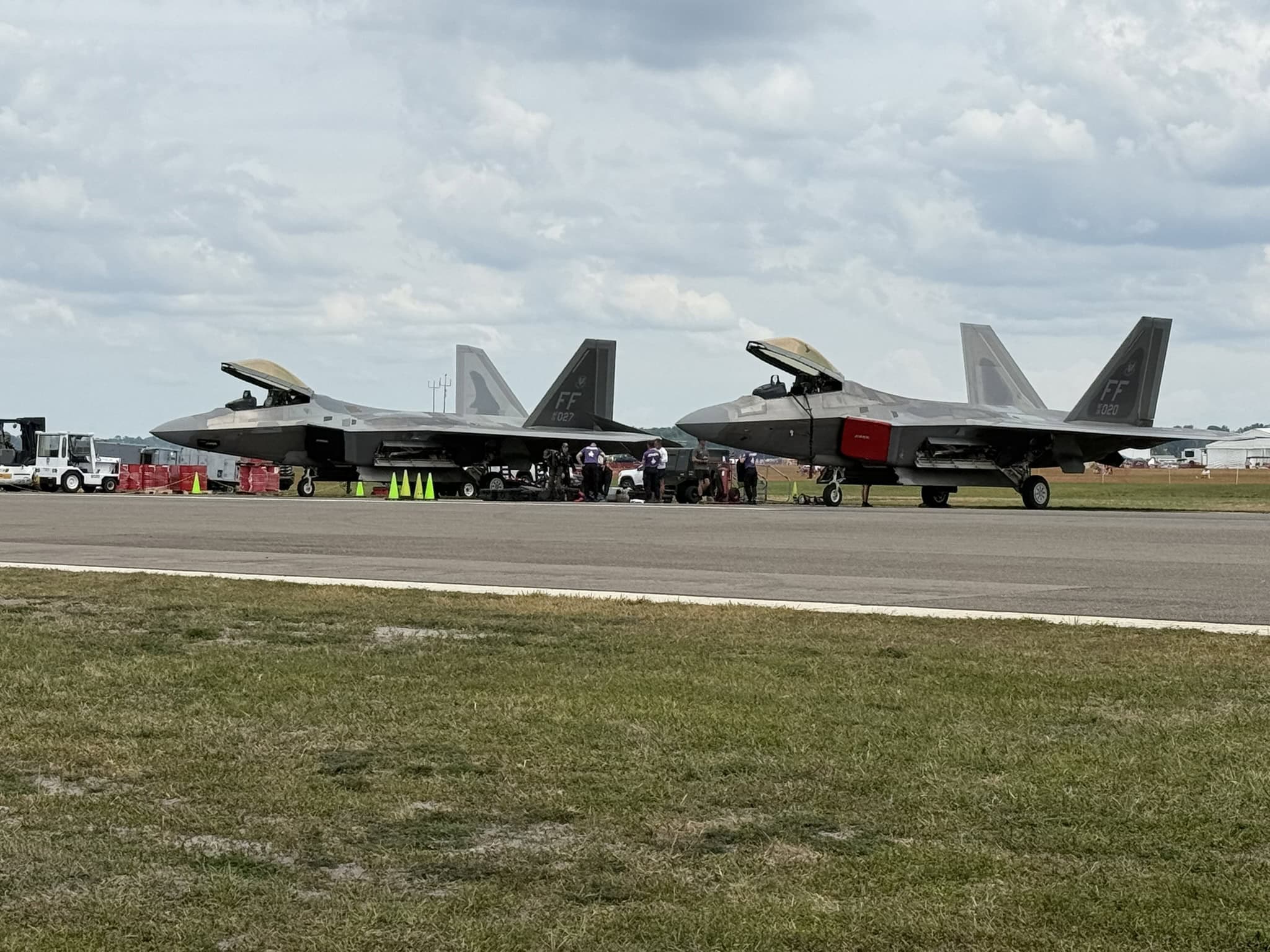
F-22 Raptors on the ground. 19FortyFive.com image taken in Lakeland, Florida, on 4/19/2026.
The Raptor demo, by contrast, showcases the capabilities of a single aircraft. Not to demean the Blue Angels or any other aerobatic teams, but when watching the F-22 at air shows, one gets the impression that these maneuvers may have real combat applications.
The aircraft doesn’t need a highly coordinated team; it simply takes off and lets its airframe speak for itself.
About the Author: Isaac Seitz
Isaac Seitz, a Defense Columnist, graduated from Patrick Henry College’s Strategic Intelligence and National Security program. He has also studied Russian at Middlebury Language Schools and has worked as an intelligence Analyst in the private sector.