
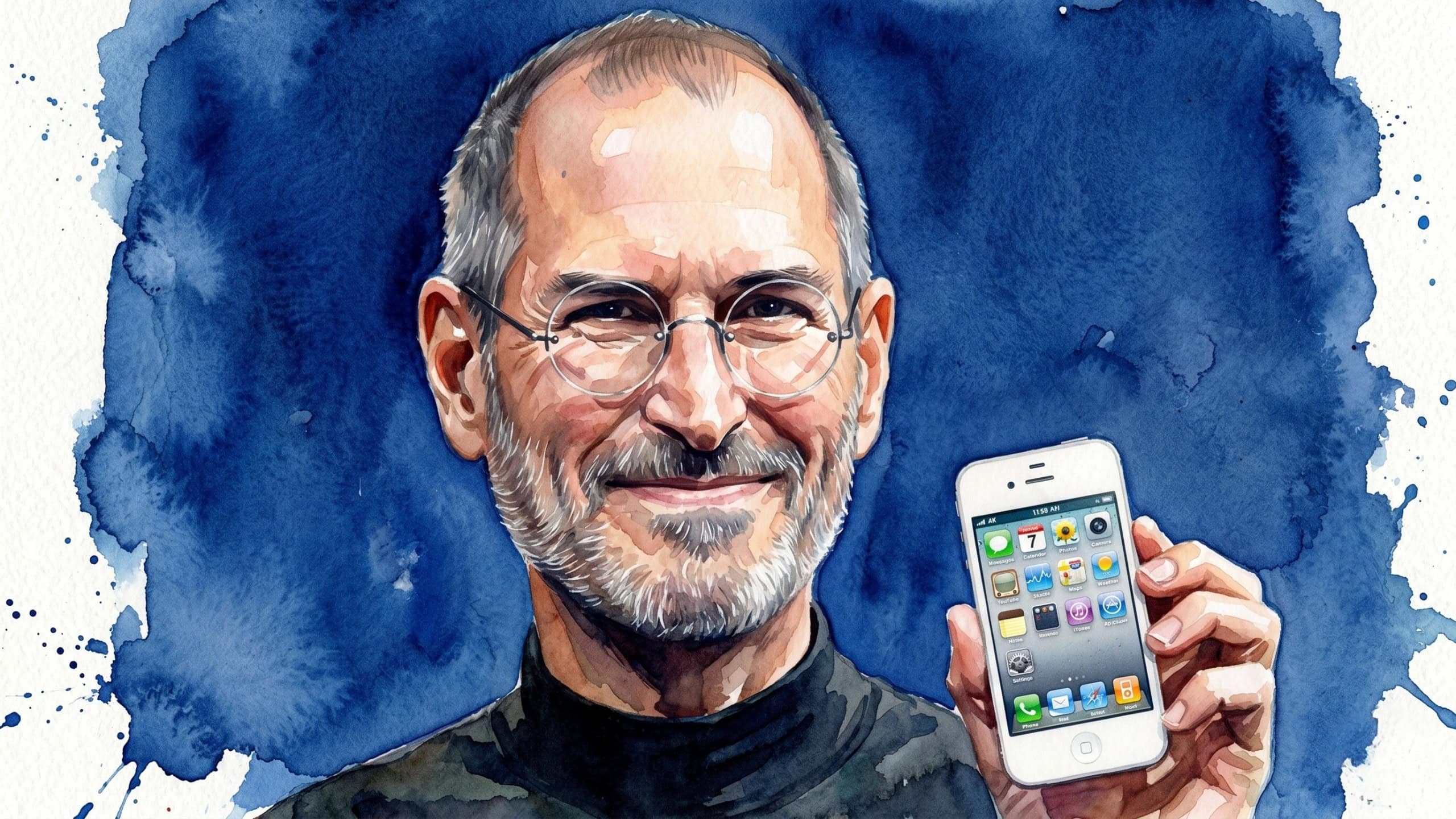
“Being the richest man in the cemetery doesn’t matter to me…Going to bed at night saying we’ve done something wonderful…that’s what matters to me…” – Steve Jobs
That quote belongs to the late great Steve Jobs, co-founder of Apple, Inc., and one of the truest tech geniuses and entrepreneurial success stories of all time.
This particular quote from Mr. Jobs stands out because it shows that, whilst material wealth is all well and good, it’s still secondary to the feeling of accomplishment.
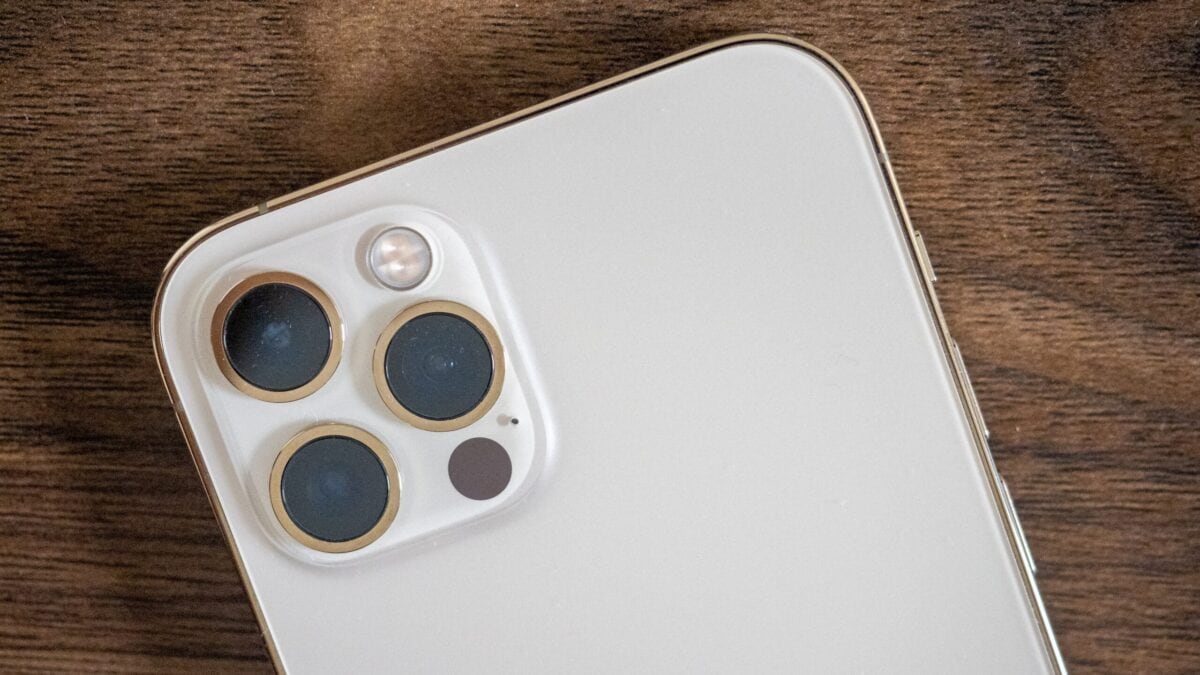
5G iPhone 12. Image: Creative Commons.
Accordingly, we shall now focus on what was his most lasting and impactful “wonderful something” prior to his untimely death at the way too young age of 56 (due to complications from a relapse of his previously treated islet-cell pancreatic neuroendocrine tumor): the iPhone.
Prelude to the iPhone
Apple Computer was born on April 1, 1976, co-founded by Jobs and his childhood friend Steve “The Woz” Wozniak.
The fortunes that stemmed from that modest beginning proved to be no mere April Fool’s joke, and just as 1976 marked the bicentennial of America’s Declaration of Independence, the foundation of Apple would set the two Steves on the path to financial independence.
In December 1980, barely four years after its founding, Apple went public via IPO, boosting Steve Jobs’s net worth to over $200 million at the age of 25.
Fast-forward five years to 1985, and alas, there was already trouble in paradise. Long story short, in May 1985, Steve Jobs was stripped of operational duties by the board of directors, though he still held the nominal title of chairman of the board, and he resigned from Apple and sold all but one of his Apple shares in disgust.
But, as the saying goes, “What goes around, comes around.”
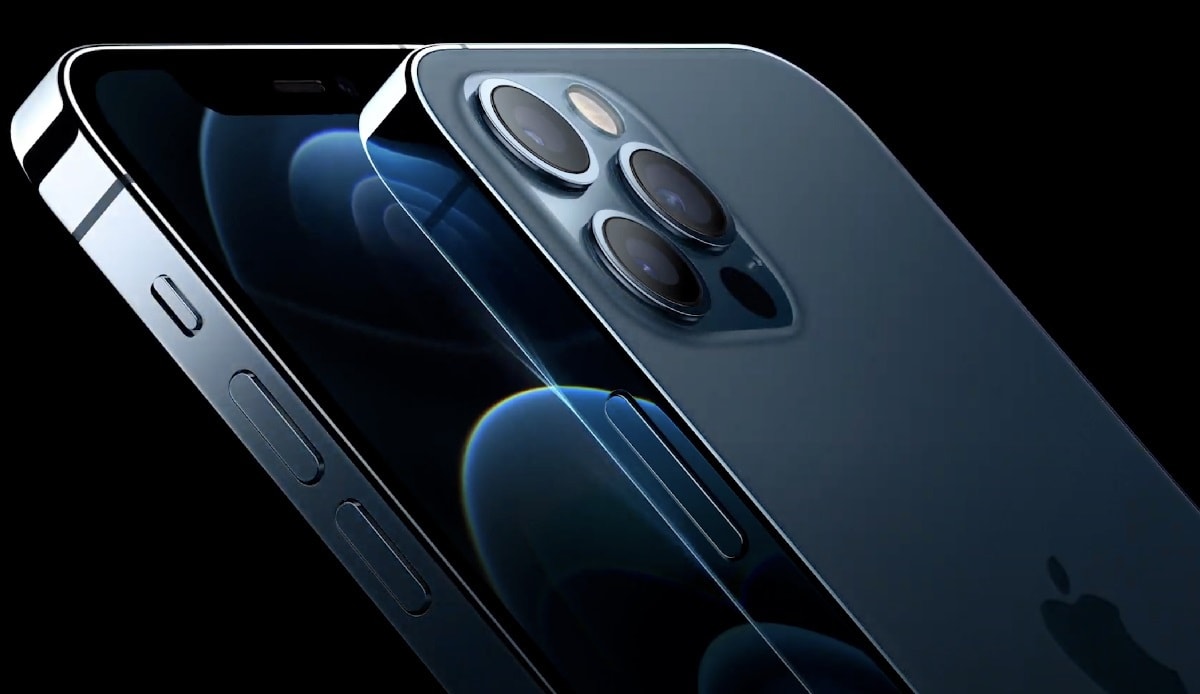
iPhone 12 Pro Max. Image: Apple.
By 1997, Apple was foundering, and the board of directors approached Jobs, hat in hand, to sweet-talk him into trying to resurrect the company that he had given life to in the first place.
In the ultimate comeback story—and a magnanimous display of the willingness and ability to let bygones be bygones—on September 16, 1997, Steve accepted the offer to become Apple’s interim CEO. Long story short again, the plan worked, and the proverbial phoenix had risen from the ashes one more time.
Thus, the stage was set for the phoenix to soar to even greater heights via the iPhone.
Infancy of the iPhone
That birth occurred a solid decade after Jobs’s triumphant return to Apple. According to Romain Moisescot of All About Steve Jobs.com, “After two more years of development, the iPhone was introduced at Macworld on January 9, 2007. This keynote is often considered the pinnacle of Steve Jobs’ career.”
That original iPhone was kind of a big deal, as it was the first mobile phone to use multi-touch technology, a quantum leap in user-friendliness over old-school flip phones, which required a lot of laborious thumb-busting and shifting on physical mini-keyboards to type a simple text message.
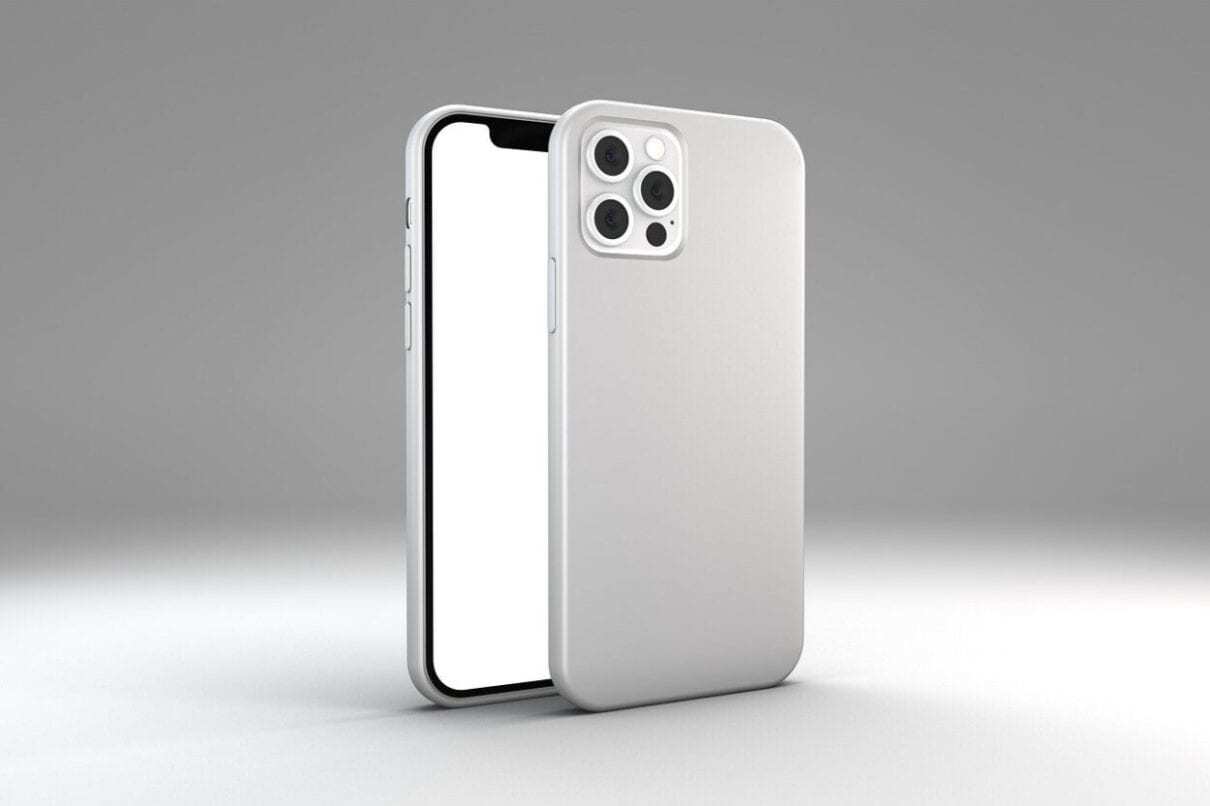
iPhone 12.
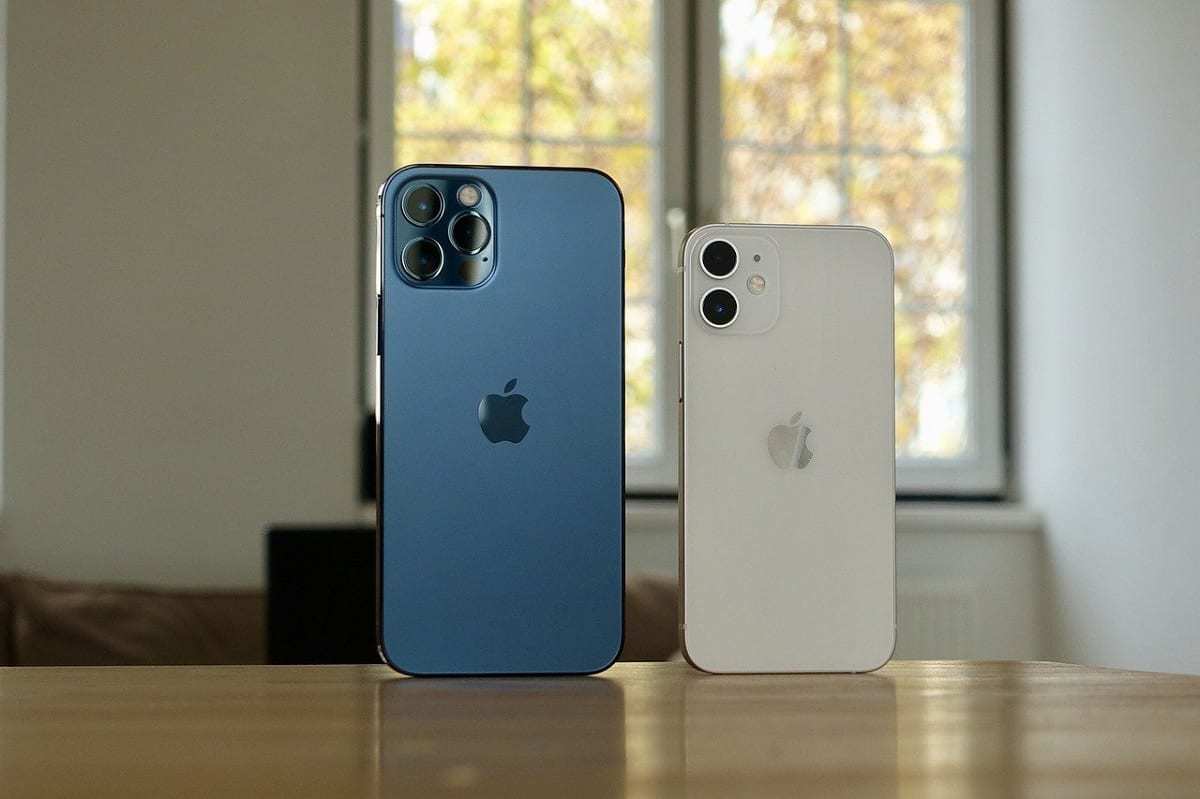
iPhone 12 from Apple.
Jobs described it as a “revolution” for the mobile phone industry, and he certainly wasn’t exaggerating or simply blowing his own horn; before the iPhone, smartphones were mostly used for texting, calls, and email; more advanced functions were harder to use and inconvenient on a small screen
They were also hard to develop for, and lacked a thriving app ecosystem like the App Store (released in 2008)
It is one of the two major smartphone platforms in the world, alongside Android, which debuted on September 23, 2008, with the HTC Dream (aka T-Mobile G1). Steve Jobs’s genius earned Apple major bragging rights by beating “Droid” to the punch by 1 year and 8 months.
A Genius Life Cut Tragically Short
Mr. Jobs’ aforementioned death took place at his home in Palo Alto, California, on October 5, 2011, barely four years after the iPhone’s debut. His wife, children, and sisters were at his side.
His final words were “Oh wow. Oh wow. Oh wow.”
Eschewing publicity, a private funeral was held two days later, and at his request, Steve was buried in an unmarked grave at Alta Mesa Memorial Park, the only nonsectarian cemetery in Palo Alto, California. Ironically enough, going back to the quote at the beginning of his article, it’s a fairly safe bet that Steven Paul Jobs indeed ended up as the richest man in that particular ceremony.
The Lasting Legacy of the iPhone
Chances are that a goodly-sized chunk of the American public, and indeed the rest of the world, would concur with Romain Moisescot’s assessment of the iPhone as being the pinnacle of its inventor’s career, as there are undoubtedly plenty of consumers out there who don’t own an Apple desktop or laptop but do own an iPhone nonetheless.
It is now Apple’s bestselling product, far outpacing the MacBook laptop or any of the company’s myriad desktops.
By 2011, coincidentally the same year as Steve Jobs’s untimely passing, Apple had become one of the world’s most valuable publicly traded companies.
The billionth iPhone was sold, and by this past July, the worldwide sales figure reached 3 billion.
To put that in perspective for you, the current world population as these words are being typed is just shy of 8.3 billion.
Android is the only other smartphone platform that’s stayed competitive; Nokia, BlackBerry, and Motorola all faltered along the way.
RIM, Symbian, and Microsoft all attempted to develop more modern operating systems to compete with the iPhone, such as Maemo, Windows Phone, and BlackBerry 10; none succeeded.
There’ve been more iterations and upgrades to the iPhone than you can shake a stick at.
As of October 2025, 51 iterations of the iPhone have been released since its inception 18 years ago.
A quick peek at the Apple website shows the latest & greatest version to be the iPhone 17e, which sells for a mere $599 and is touted thusly: “Packed with the same enhanced scratch resistance of Ceramic Shield 2, the latest-generation A19 chip, a 48MP Fusion camera, fast MagSafe wireless charging, USB‑C, and storage starting at 256GB. It’s a whole lot of iPhone. For a lot less.”
It’s also a sobering reminder that this writer needs to get with the program, as he’s still stuck on an iPhone SE 2nd Generation, which came out back in April 2020.
About the Author: Christian D. Orr
Christian D. Orr is a Senior Defense Editor. He is a former Air Force Security Forces officer, Federal law enforcement officer, and private military contractor (with assignments worked in Iraq, the United Arab Emirates, Kosovo, Japan, Germany, and the Pentagon). Chris holds a B.A. in International Relations from the University of Southern California (USC) and an M.A. in Intelligence Studies (with a concentration in Terrorism Studies) from American Military University (AMU). He is also the author of the book “Five Decades of a Fabulous Firearm: Celebrating the 50th Anniversary of the Beretta 92 Pistol Series,” the second edition of which was recently published.