
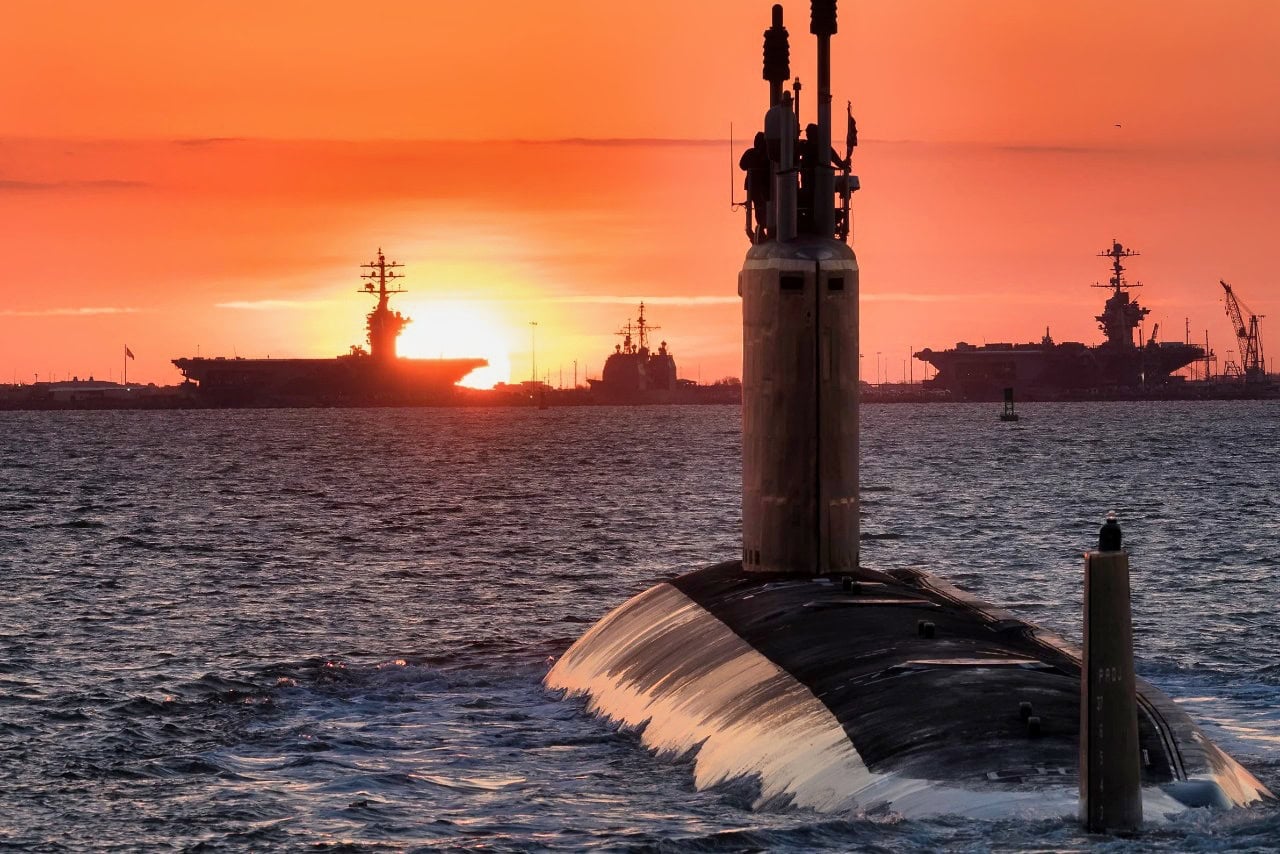
One of the first things a U.S. Navy sailor learns in boot camp is how to fight fires onboard ships. This is deadly serious business, and new recruits spend around 40 hours in training to make sure a blaze does not spread on vessels – a contingency that can kill shipmates and render a vessel dead in the water. This is especially dangerous for nuclear-powered ships and submarines, where the flames could damage a nuclear reactor.
All Sailors Become Firefighters When the Worst Happens
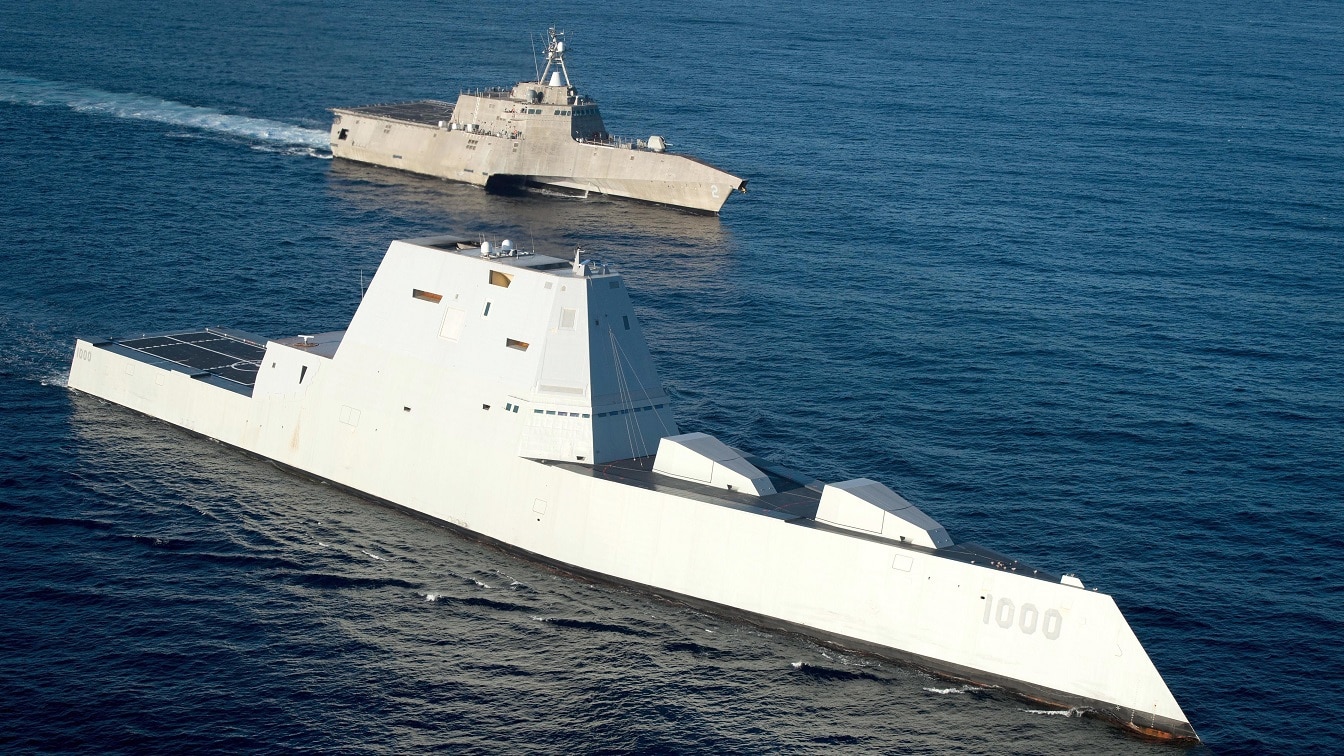
PACIFIC OCEAN (Dec. 8, 2016) The guided-missile destroyer USS Zumwalt (DDG 1000), left, the Navy’s most technologically advanced surface ship, is underway in formation with the littoral combat ship USS Independence (LCS 2) on the final leg of its three-month journey to its new homeport in San Diego. Upon arrival, Zumwalt will begin installation of its combat systems, testing and evaluation, and operation integration with the fleet. (U.S. Navy photo by Petty Officer 1st Class Ace Rheaume/Released)161208-N-SI773-0401
Recruits are to “Keep fighting. Keep fighting,” when it comes to extinguishing fires. “Every sailor is a firefighter,” said Damage Controlman 2nd Class Amanda Copas, one of the instructors responsible for firefighting training. “Recruits first develop firefighting and damage control skills here at boot camp, so they will be ready to respond in an emergency,” according to a Navy news release.
Practice Extinguishing Blazes
New sailors hone their firefighting skills on a decommissioned ship, where they get live training on how to respond to shipborne blazes. “It is important that recruits start learning these skills during basic training,” Copas said. “We teach them how to respond to emergency situations, and we test them under considerable stress. They quickly learn that if they work together and keep fighting, whether it is against fire or flooding, they can overcome the toughest situation,” the news release noted.
USS Gerald R. Ford Supercarrier Had a Fire
Fires on warships have been in the news lately.
The USS Gerald R. Ford endured a non-combat blaze sparked in the aft laundry room on March 12, and it scarred numerous crew quarters so badly that sailors had to sleep on tables. Hundreds of mattresses were destroyed, and many sleeping quarters were damaged. Three shipmates were examined for injuries, and several others had to be treated for smoke inhalation. The nuclear power plant was not in danger.
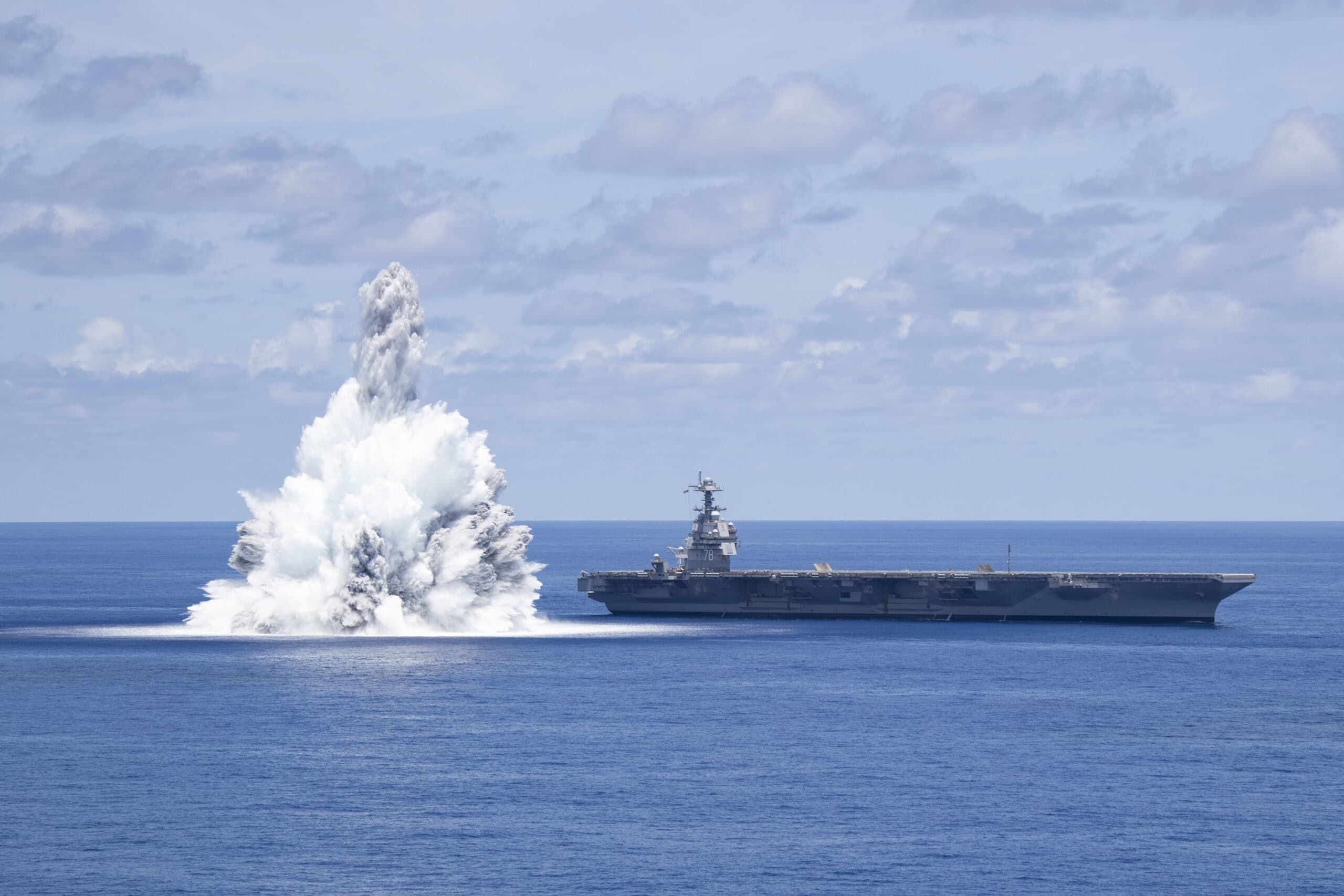
USS Gerald R. Ford (CVN 78) successfully completed the second of three scheduled explosive events for Full Ship Shock Trials (FSST), July 16, 2021. The shock trials are designed to demonstrate the ship’s ability to withstand the effects of nearby underwater explosion and retain required capability. Ford is underway in the Atlantic Ocean for required inspections and preparation for the third FSST explosive event, scheduled for later this month. (U.S. Navy Photo by Mass Communications Specialist Seaman Jackson Adkins)
USS Dwight D. Eisenhower Experienced a Small Blaze
In mid-April, a fire started on the USS Dwight D. Eisenhower at Norfolk Naval Shipyard. The blaze was not large.
Sailors and shipyard workers were able to quickly extinguish it. However, three shipmates were injured.
They recovered and returned to duty. This led some to wonder whether U.S. carriers were susceptible to fires and whether the Navy had plans to address systemic issues. This shows that a blaze could crop up at any moment and that sailors must fully use their firefighting skills learned in basic training.=
USS Bonhomme Richard
Some fires are lengthy and damaging. In July 2020, the USS Bonhomme Richard caught fire. There was a stubborn blaze on the lower vehicle deck of the amphibious assault ship. This burned for four days before it was put out. More than 63 sailors and workers at the maintenance yard were hurt. It was going to take seven years and $3.2 billion to fix the ship. The Navy decided to retire the Bonhomme Richard and sell it for scrap. It was the most costly peacetime fire in Naval history.
USS Inchon
A deadly fire on the USS Inchon in 2001 killed one sailor and injured seven others. It happened at Naval Station Ingleside during maintenance. The minesweeper was engulfed in a serious blaze, and one person stood out for heroism.
The sailor who perished was awarded the Navy and Marine Corps medal posthumously for fighting the fire and saving his shipmates. Petty Officer Third Class Ronnie Palm was the hero on board. The blaze was probably fueled by petroleum or another flammable agent.
USS Dahlgren
In February 1992, the guided-missile destroyer USS Dahlgren caught fire. It started in the engine room and killed two sailors and wounded four others.
A bolt that was not fastened well quickly shot out and struck an oil receptacle, sparking flames that rapidly spread through the forward engine room. They put it out in 20 minutes, but the severe heat and smoke were deadly. The blaze caused $824,000 in damage.
USS Iwo Jima
In 1990, the USS Iwo Jima was a victim of another blaze. The Iwo Jima was taking part in amphibious landing exercises to rehearse for Operation Desert Storm.
A steam valve burst, causing flames to spread swiftly. The “valve supplied steam to one of the ship’s turbine-driven electrical generators,” the Navy said. Ten crew members died.
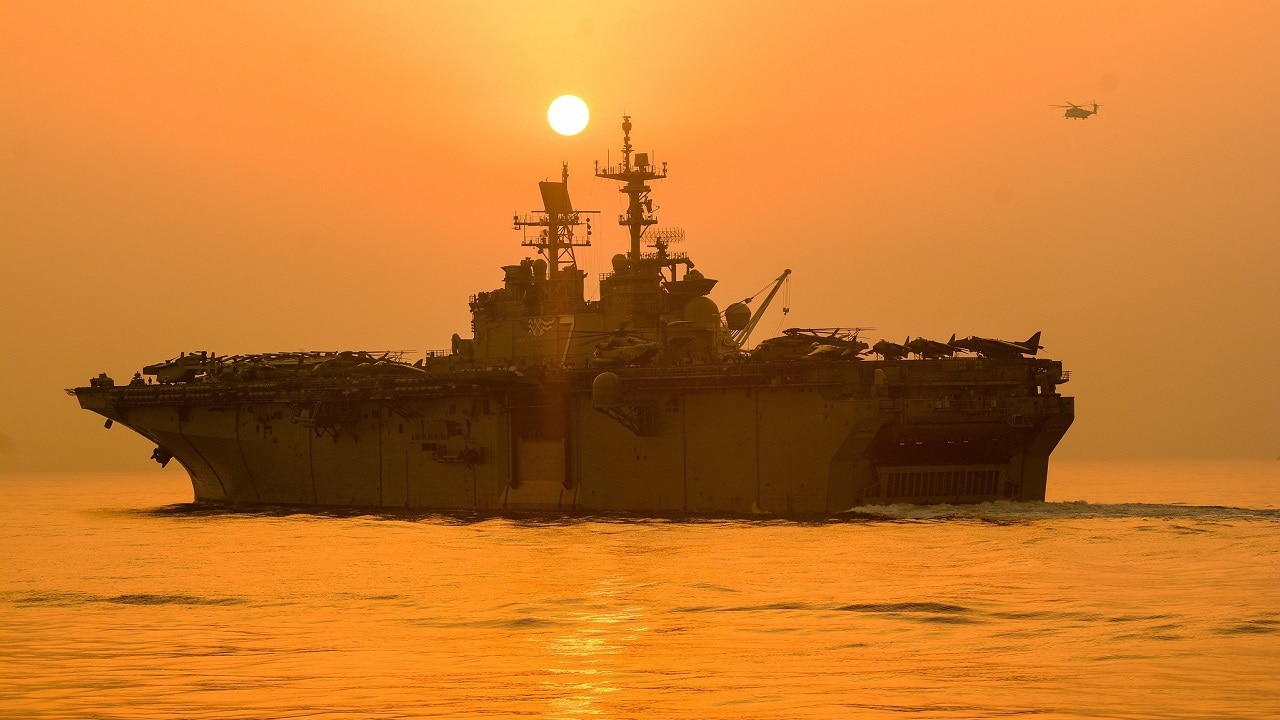
(Aug. 4, 2021) The Wasp-class amphibious assault ship USS Iwo Jima (LHD 7) transits the Strait of Hormuz, Aug. 4, 2021. Iwo Jima is deployed to the U.S. 5th Fleet area of operations to ensure maritime stability and security in the Central Region, connecting the Mediterranean and the Pacific through the western Indian Ocean and three strategic choke points. (U.S. Navy photo by Seaman Logan Kaczmarek)
Sailors on the Iwo Jima had to fight another fire in 2019 at Naval Station Mayport, Florida. There was smoke in a cargo hold, and the flames readily spread. Eleven crewmen were injured. It took firefighters from the Jacksonville Fire Department and sailors from the nearby guided-missile destroyer The Sullivans to help put out the blaze.
USS Conyngham
The 1990 fire aboard the USS Conyngham burned for almost 24 hours at Norfolk Naval Station. One officer was killed, and 18 sailors were injured.
The fire was so hot its decks were “bubbling.” The Roanoke Times wrote that “masks on firefighting gear that melted onto the faces of his shipmates.” The Navy considered fixing the guided-missile destroyer afterward, but the damage was so severe that the service gave up and sold the ship for scrap.
USS Iowa
One of the worst fires happened aboard the battleship USS Iowa in 1989. The Iowa was engaging in gunnery rehearsals off the coast of Puerto Rico.
There was a large blast in the Number 2 16-inch gun turret of the battleship. Forty-seven shipmates died, and another 11 were wounded.
The U.S. Navy’s Fire Challenge
You can see how dangerous fires can be on warships. This is one of the worst things that can happen on a ship. While the crew is well-trained to fight a blaze, these incidents are unpredictable and can happen at anytime.
Look for renewed emphasis on firefighting training in boot camp. The blaze can ruin a ship and kill and maim sailors, and it takes a brave crew to react quickly to shipborne fires.
About the Author: Dr. Brent M. Eastwood
Author of now over 3,500 articles on defense issues, Brent M. Eastwood, PhD, is the author of Don’t Turn Your Back On the World: A Conservative Foreign Policy and Humans, Machines, and Data: Future Trends in Warfare, plus two other books. Brent was the founder and CEO of a tech firm that predicted world events using artificial intelligence. He served as a legislative fellow for US Senator Tim Scott and advised the senator on defense and foreign policy issues. He has taught at American University, George Washington University, and George Mason University. Brent is a former US Army Infantry officer. He can be followed on X @BMEastwood.