
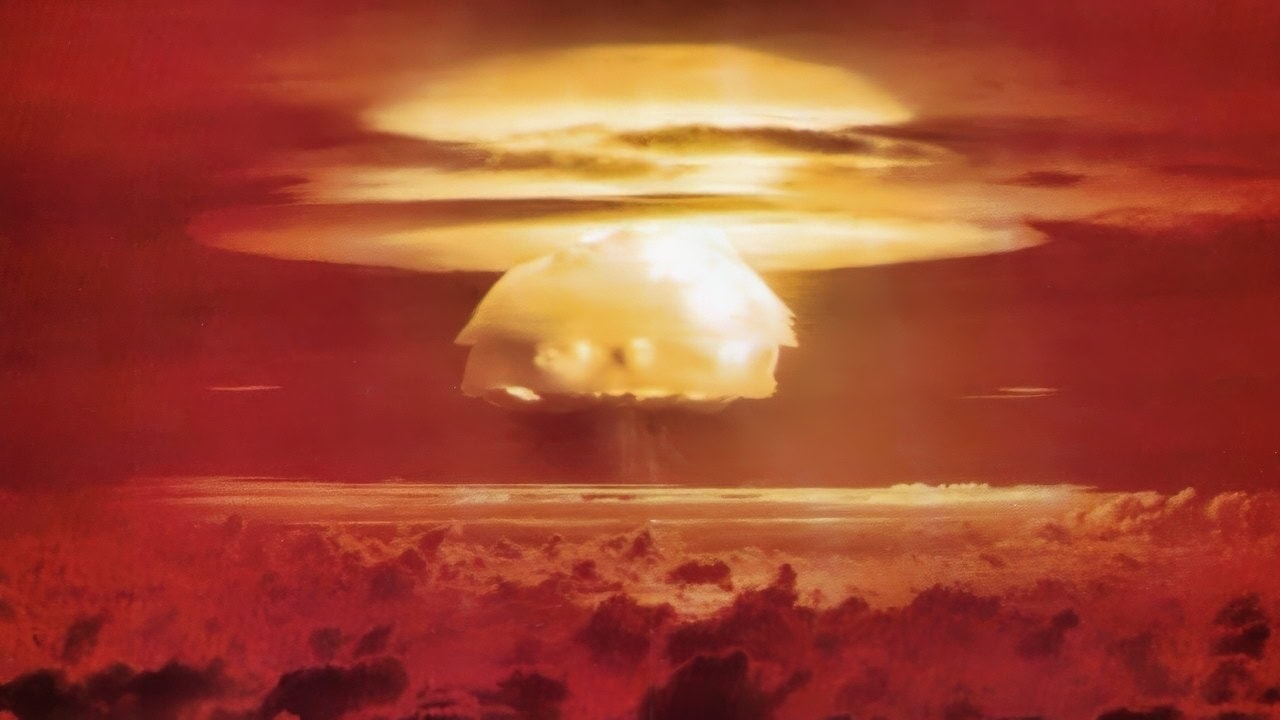
Summary and Key Points: The Tsar Bomba is still the largest nuclear device ever detonated: a 50-megaton blast over the Arctic that outstripped every weapon fired in the Second World War combined — and one its own designers had planned to build twice as powerful.
A Nuclear Bomb Like No Other
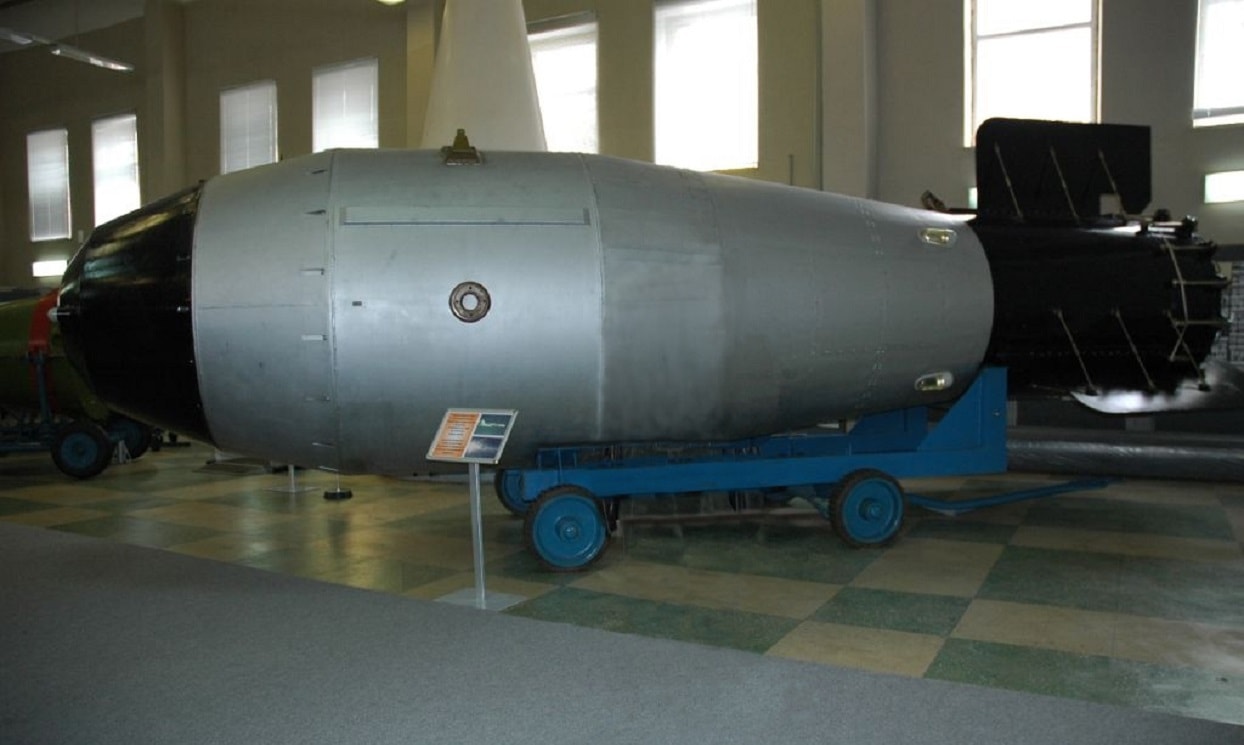
Image: Creative Commons.
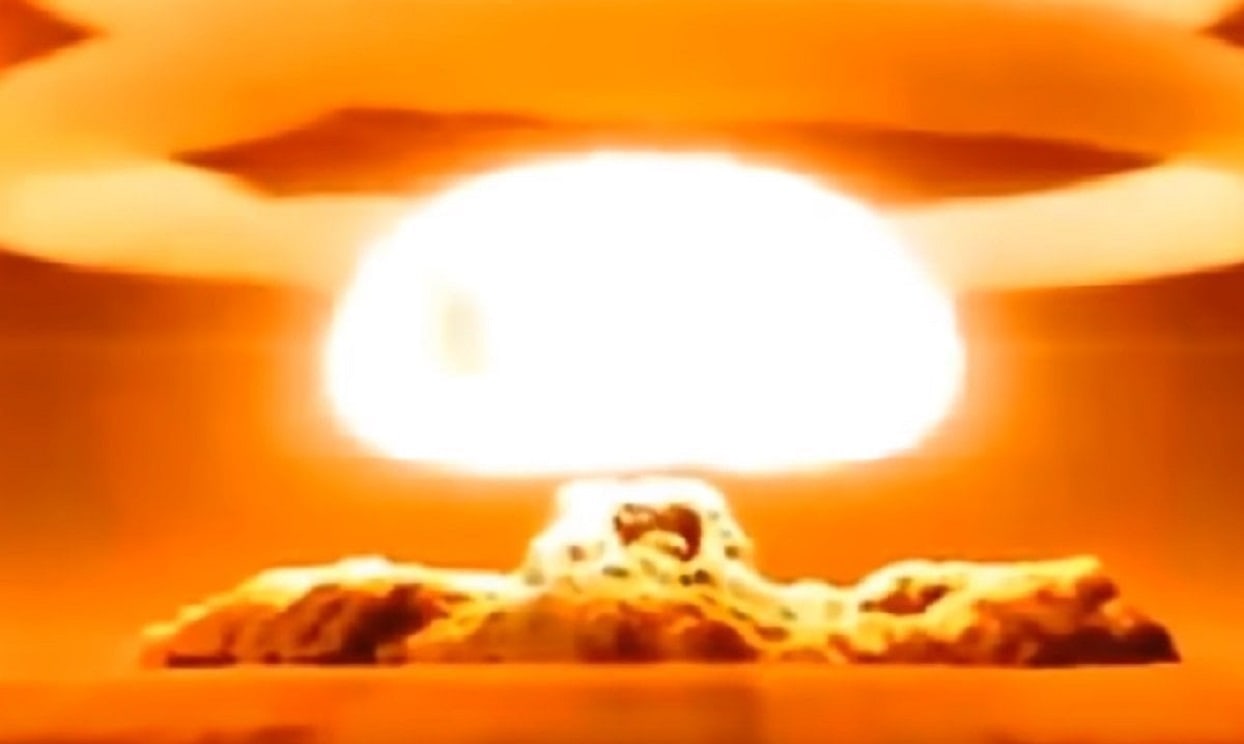
Image: Creative Commons.
“Bomba” is both the Spanish and Italian word for “bomb, which is not surprising as they are both Romance languages and therefore share a lot of similarities. Meanwhile, although Russian is a Slavic language rather than a Romance language, its word for “bomb” is also “bomba [бомба].” In addition to being used as the word for “bomb” in the general sense, the Soviets used it to form one half of the official moniker bestowed upon an explosive device that made history by producing the largest nuclear detonation ever: the Tsar Bomba.
Tsar Bomba Historical Backdrop
As for the “Tsar” portion of this behemoth-blasting bomb, there’s no small irony that it was conjured up during the Cold War/Soviet era, considering that the whole motivation for the Bolshevik Revolution that created the Union of Soviet Socialist Republics (USSR or Soviet Union for brevity; Soyuz sovetskikh sotsialisticheskikh respublik [CCCP] or Sovetskiy Soyuz for brevity) in the first place was the overthrow of the tsarist (nowadays usually spelled as “czarist”) system of governance!
In any event, the Tsar Bomba made its literal and figurative impact on October 30, 1961.
To put that in perspective against the backdrop of history, it had been 15 years since the first atomic bombs—”Fat Man” and “Little Boy”—were dropped on Hiroshima and Nagasaki, 12 years since the Soviets obtained the “A-bomb” (thanks in no small part to the treachery and treason of the Rosenbergs as well as spies such as Klaus Fuchs), nine years since the Americans conducted the first successful hydrogen bomb test via the Ivy Mike project; the Soviets followed suit on the “H-bomb” in 1953 at the Semipalatinsk test site in Kazakhstan. John Fitzgerald Kennedy and Nikita Sergeyevich Khrushchev were serving as the respective heads of state of the United States of America and the USSR, and the Cuban Missile Crisis was still one year away.
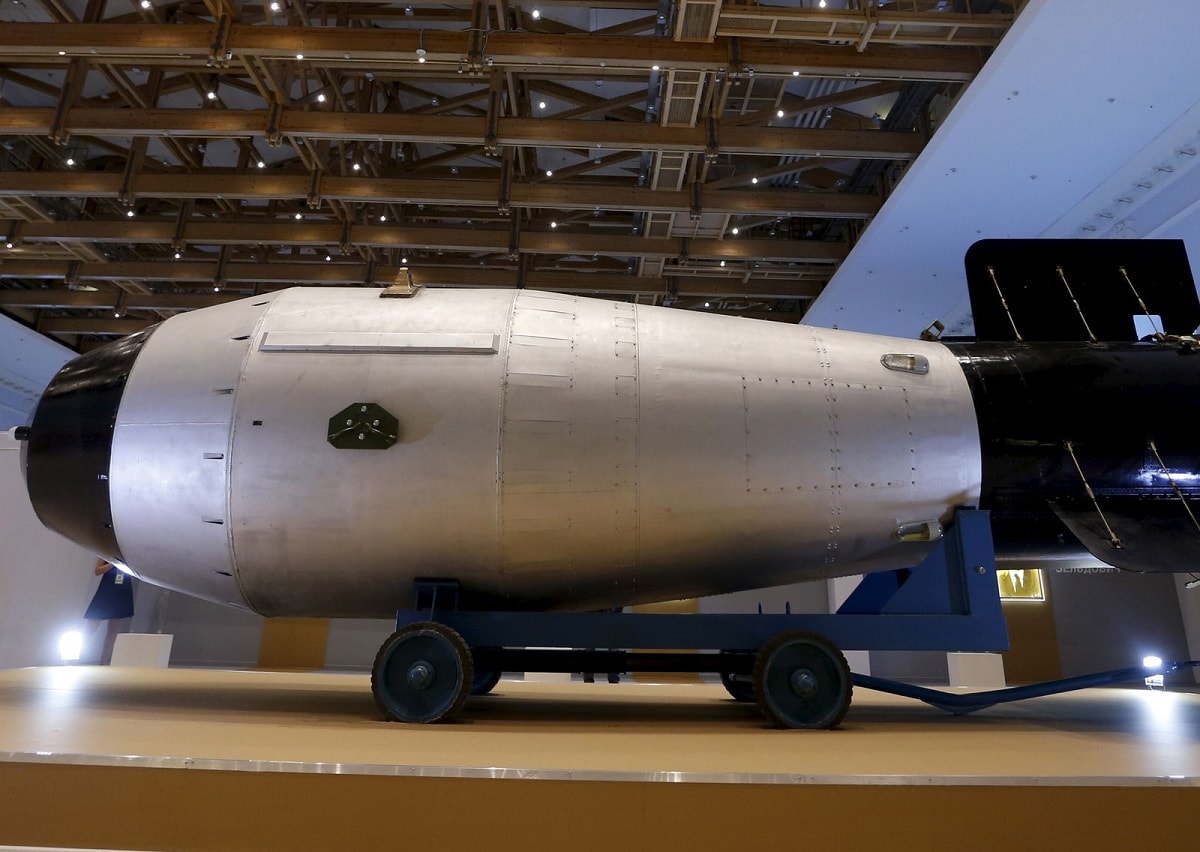
Image: Creative Commons.
Tsar Bomba Basics
The Cold War arms race was very much a game of tit-for-tat one-upmanship (“keeping up with the Joneses,” as a common slang phrase from the era put it), in both conventional and unconventional weapons.
When it came to nukes, whilst the Americans prioritized perfecting accurate delivery systems for small to medium-sized atomic devices, the Soviets concentrated on building larger and larger devices of almost unimaginable power; more bang for the buck, or perhaps more appropriately, more roar for the ruble. It was this latter mentality that inspired the creation of the Tsar Bomba.
This device was 26 feet (8 meters) long, 6 feet 11 inches (2.1 meters) in diameter, and weighed roughly 60,000 pounds (27,000 kilograms). Most impressively, the blast yield was 50 megatons (210 petajoules); as impressive as that figure was, the designers had initially conceptualized doubling down on that, i.e., a **100-megaton** blast yield!!
For the basis of comparison, America’s present-day Minuteman III ICBM has a blast yield of 300 to 475 kilotons per warhead (three MIRVs—Multiple Independently Targetable Reentry Vehicles). Meanwhile, Russia’s current most powerful nuke, the SR-28 Sarmat—unofficially nicknamed “Satan 2” by NATO—which can carry 10-16 MIRVs delivering a combined yield frequently estimated around 50 megatons.
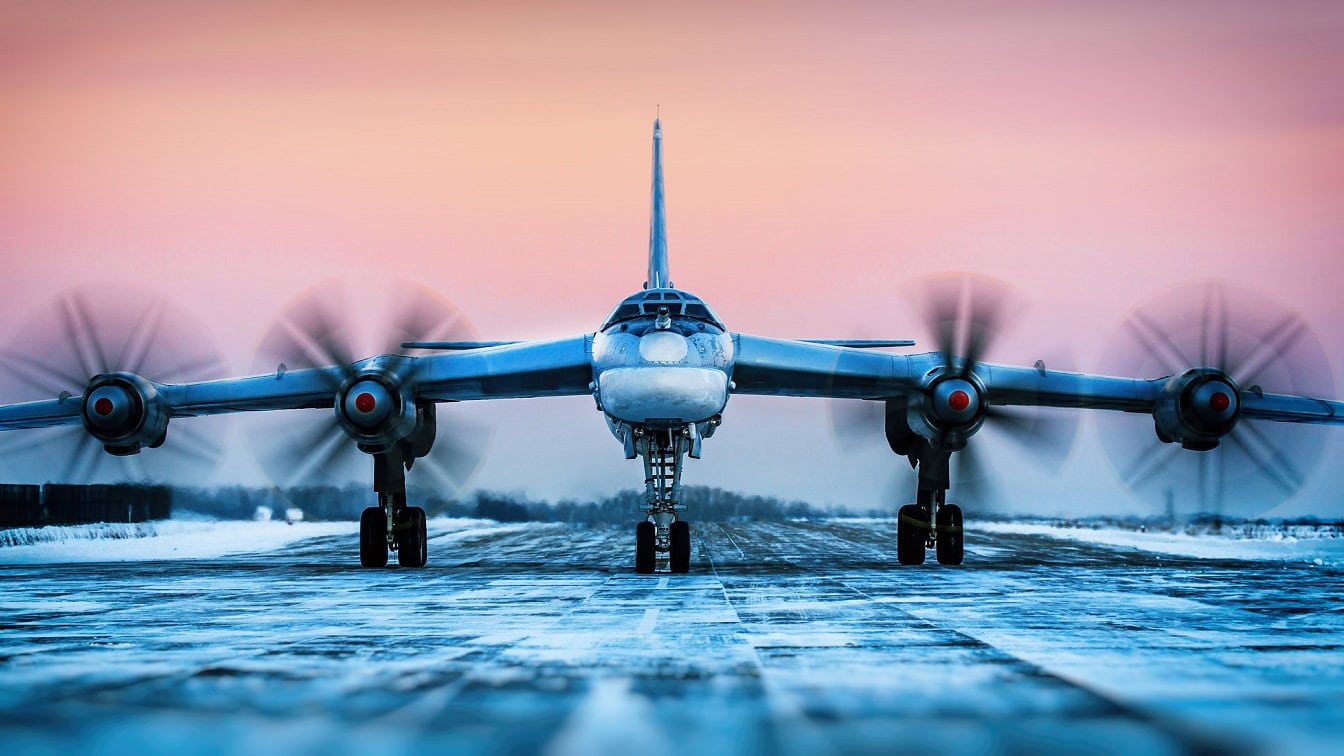
Tu-95. Image Credit: Creative Commons.
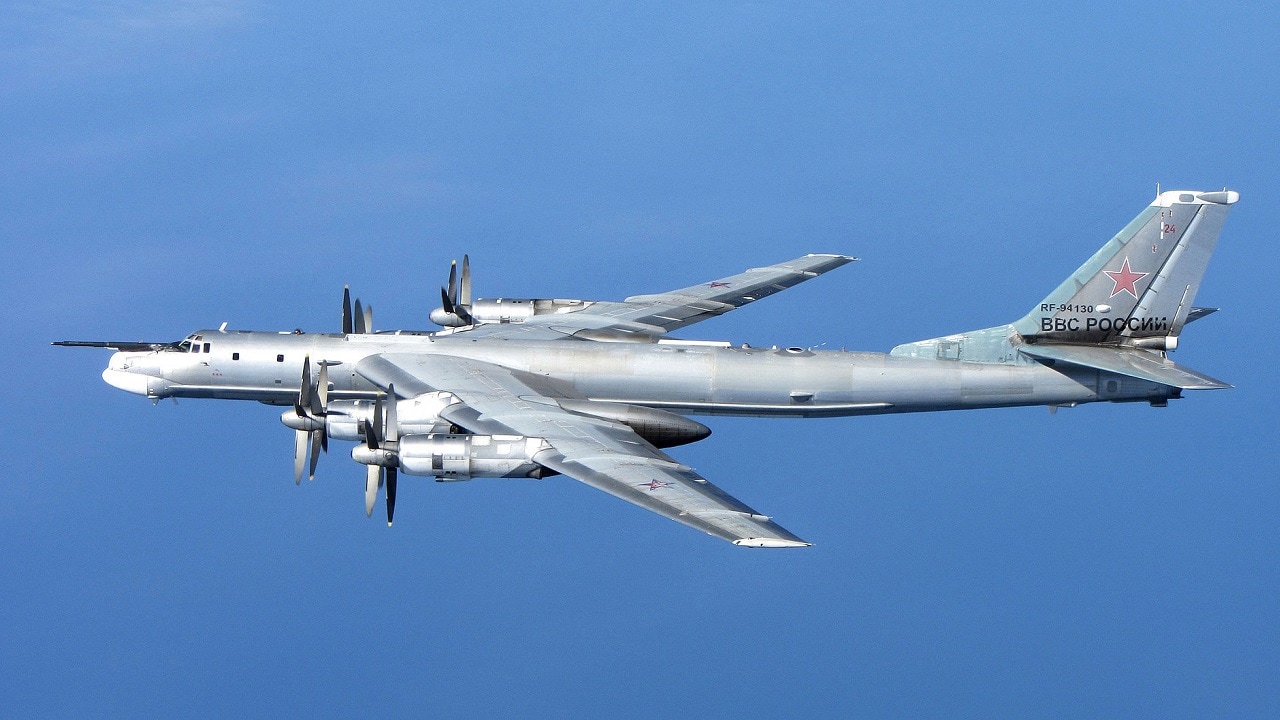
A Russian Tu-95 Bear ‘H’ photographed from a RAF Typhoon Quick Reaction Alert aircraft (QRA) with 6 Squadron from RAF Leuchars in Scotland. RAF Typhoon Quick Reaction Alert aircraft were launched from RAF Leuchars to determine the identity of unknown aircraft that approached the NATO Air Policing Area north of Scotland and could not be identified by other means. The aircraft were subsequently identified as Russian military reconnaissance (Bears). The Russian Bears aircraft remained in international airspace as they are perfectly entitled to do. Organization: RAF Object Name: LEU-OFFICIAL-20140423-0326-0015 Category: MOD Supplemental Categories: Equipment, Aircraft, Foreign Aircraft Keywords: QRA, Russia, Russian, Bear, Aircraft, Quick Reaction Alert, Intercept Country: Scotland
It was to be dropped from a Tupolev Tu-95 (NATO reporting name “Bear”) strategic bomber at an altitude of 34,000 feet (10,363 meters), attached to a parachute to slow its descent to detonation at 13,000 feet (3.962 meters), employing a pressure altimeter, aka barometric altimeter, as the detonating device. This slowdown would notionally give the Bear crew and their Tu-16 “Badger” escort additional time to escape to a distance of at least 30 miles (48.2 kilometers, 26 nautical miles) before the eruption; however, the crew was giving the brutally frank assessment ahead of time that they only had a 50/50 chance of survival.
In another touch of irony, one of the Soviet scientists who contributed significantly to the design of the Tsar Bomba was eventual political dissident and 1975 Nobel Peace Prize laureate Andrei Dmitrievich Sakharov, who, prior to his bold political epiphany, had already gained fame as the “father of the Soviet hydrogen bomb.”
Tsar Bomba is Tested
The test site for this massive device was Mityushikha Bay on Severny Island in the Arctic Circle. Suffice it to say that the test worked. Just how powerful was the resultant blast?
-It was over 1,570 times more powerful, in fact, than the *combined* two A-bombs dropped on Japan in August 1945, and ten times more powerful than *all* of the ordnance exploded during the entirety of World War II.
– The mushroom cloud was 25 miles (40.2 kilometers) wide at its base and almost 60 miles (96.5 kilometers) wide at its top, penetrating the stratosphere at 40 miles (64.3 kilometers) high.
– Everything within three dozen miles of the impact was vaporized, but severe damage extended to a 150-mile radius; windows in buildings as far away as Norway and Finland were shattered by the shockwave.
What about that Bear bomber crew that dropped the device and the Badger crew that escorted them (in addition to recording blast data and footage)? Well, those 50 percent survival odds proved to be a sufficient supply of “shislevo (good luck),” but just barely, as both warbirds sustained radiation flash damage.
One of those lucky aircrew members described the apocalyptic scene thusly, as quoted by Dr. Ed Lengel in an August 29, 2020, article for the National World War II Museum (located in New Orleans, Louisiana): “The ball was powerful and arrogant like Jupiter… It seemed to suck the whole Earth into it. The spectacle was fantastic, unreal, supernatural.”
The altitude of the explosion proved fortuitous; the accompanying 5-mile-wide (8 kilometers) fireball was repelled away from the surface by the force of its own shockwave and did not make contact with terra firma, thus greatly reducing the amount of radioactive fallout.
Aftermath
A blast of this magnitude simply could not be kept secret for long. To put it another way, the proverbial political fallout proved greater than the literal physical fallout. Tsar Bomba’s test was condemned, not just by the U.S. and its NATO allies, but by the entire world community. The silver lining behind the nuclear mushroom cloud was that it catalyzed the Limited Test Ban Treaty of August 5, 1963, signed by the U.S., the USSR, and the U.K.
About the Author: Christian D. Orr
Christian D. Orr is a Senior Defense Editor. He is a former Air Force Security Forces officer, Federal law enforcement officer, and private military contractor (with assignments worked in Iraq, the United Arab Emirates, Kosovo, Japan, Germany, and the Pentagon). Chris holds a B.A. in International Relations from the University of Southern California (USC) and an M.A. in Intelligence Studies (with a concentration in Terrorism Studies) from American Military University (AMU). He is also the author of the book “Five Decades of a Fabulous Firearm: Celebrating the 50th Anniversary of the Beretta 92 Pistol Series,” the second edition of which was recently published.