
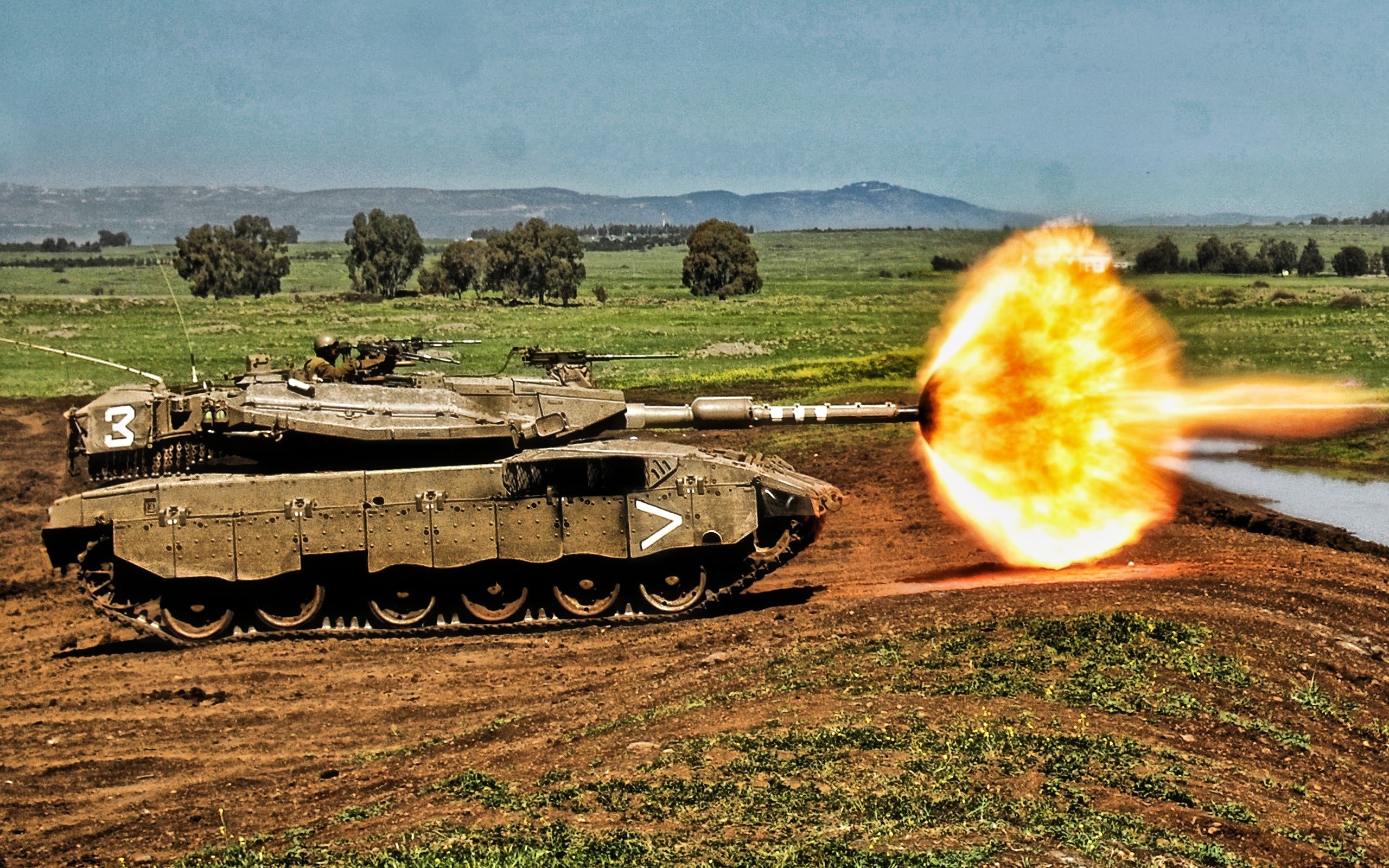
In the last ten years, the world’s major military powers have been unveiling their next-generation main battle tanks. Russia has its T-14 Armata, the U.S. has the M1E3, the UK has the Challenger 3, and so on. All of these tanks include the newest sensors, battle management systems, active protection systems, and the best that current manufacturing has to offer. However, the war in Ukraine and other recent conflicts have shown that tanks are extremely vulnerable to small unmanned aerial systems and other contemporary anti-tank systems. Are these next-generation MBTs worth their increasingly high costs, or are they wasting everyone’s time and money?
The Growing Tank Trend of Unmanned Turrets
An increasingly common, though not yet universal, feature of new-generation tanks is the unmanned turret. Tanks have experimented with unmanned turrets since the 1980s, but the T-14 Armata was the first tank with an unmanned turret to enter active service. Since then, more Western tanks have adopted the feature, including the M1E3, Leopard 2 A-RC 3.0, the KF-51 CUT, and others.
The unmanned turret has several advantages, especially in modern warfare. It significantly increases crew safety by positioning everyone away from any live ammunition and, in theory, ensures crew survival in the event of ammunition cookoffs. This is a helpful feature in the drone age, when unmanned FPV systems can pinpoint ammunition compartments on armored vehicles.
Not every tank needs an unmanned turret.
The Leopard 2A8 and the Challenger 3, for example, both retain traditional manned turrets and manual loading systems. There are advantages and disadvantages to both configurations; however, it is the author’s humble opinion that the unmanned turret provides significantly better protection against contemporary anti-tank systems.
Active Protection Systems: Are They Enough?
Active Protection Systems (APS) are another common feature of next-generation MBTs. Pretty much every tank designed since the 2020s has included some form of APS.
The Israelis were the pioneers of modern APS and were the first to validate their system in live combat conditions.
The Rafael Trophy system is currently the most combat-tested APS in the world and has been finely tuned to counter modern anti-tank munitions, including kinetic penetrators and small unmanned aerial systems (UAS).
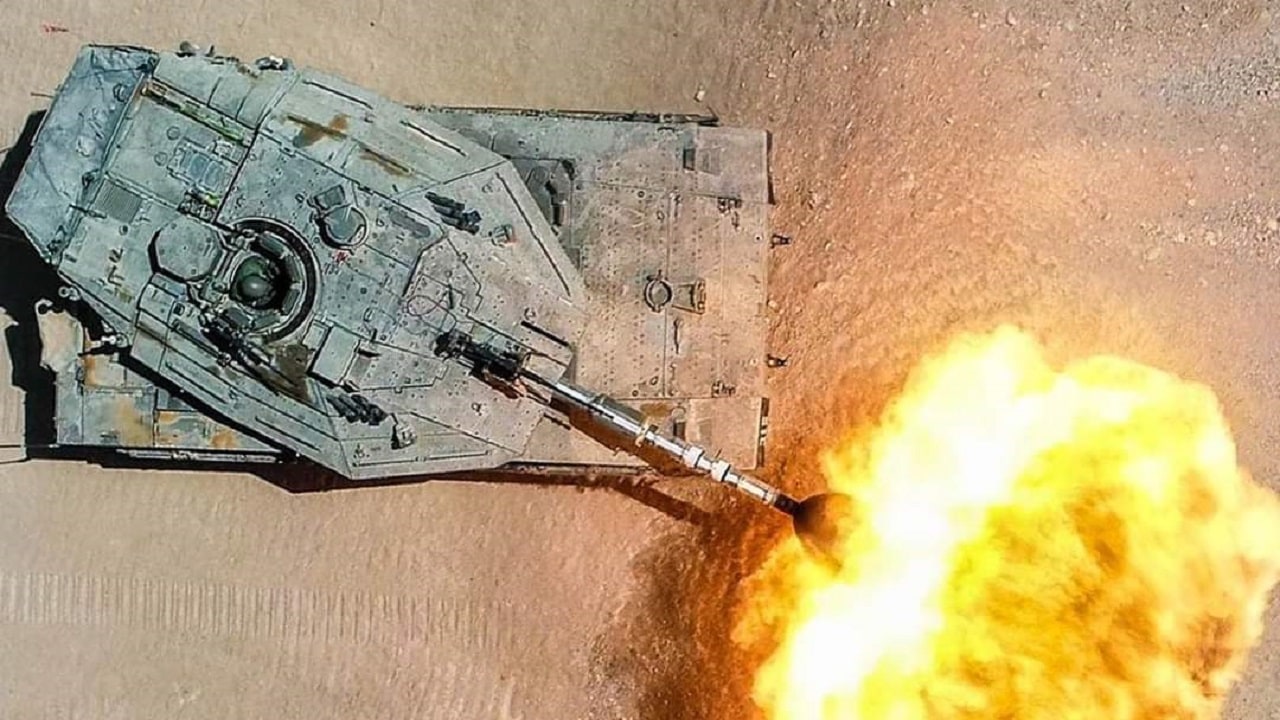
Israel’s Merkava IV tank. Image Credit: Creative Commons.
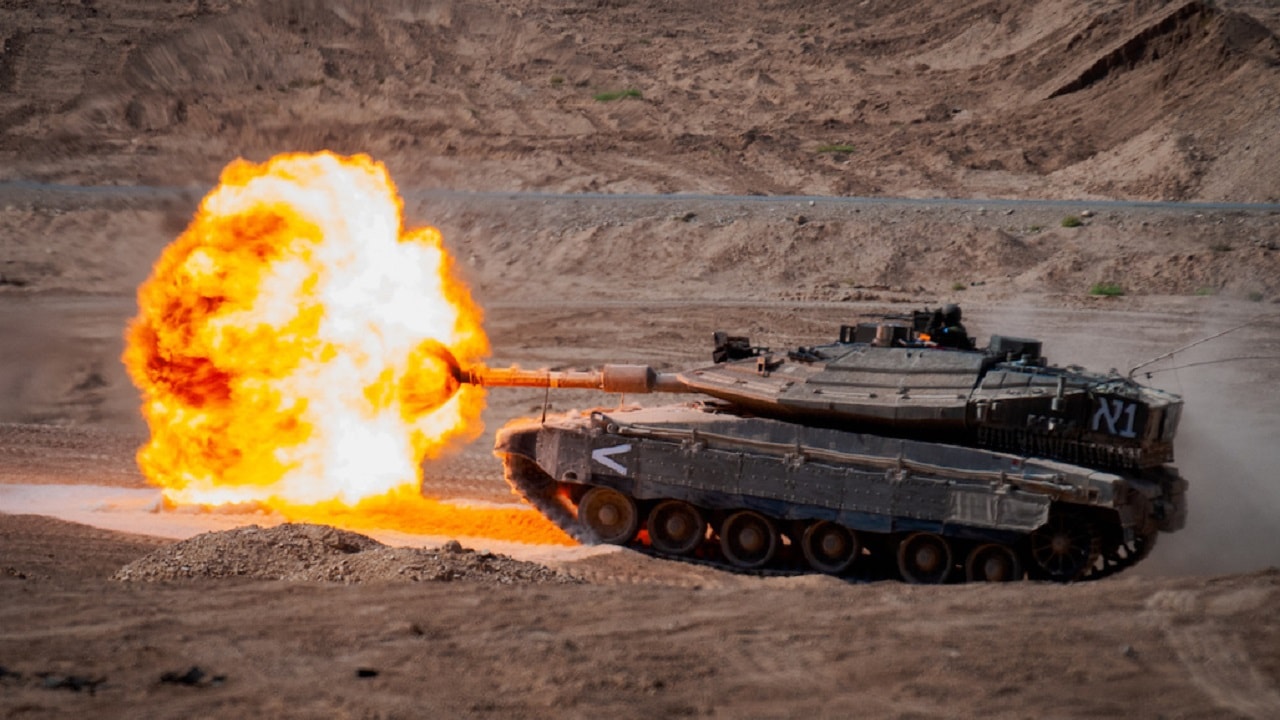
An Israeli Defense Forces Merkava Mark 4 tank fire 120mm canon shell.
Many nations around the world now utilize Israeli systems for their own tanks. The Challenger 3, for example, includes the Trophy system, while the M1E3 includes the Elbit Systems Iron Fist.
The T-14, meanwhile, includes the domestically made Afganit system, which has since reportedly been modified to counter UASs.
Active protection systems are vital for surviving against modern anti-tank threats, but they do not offer perfect protection. APSs can be overwhelmed after multiple attacks, and their protection against UAS is still far from perfect.
In Israel’s most recent campaign in Lebanon, multiple Hezbollah-operated drones managed to strike and damage Israeli Merkava tanks, which were equipped with Trophy systems. The problem is that UASs are still a relatively new battlefield development, and protection systems have yet to adapt to the new threats.
In time, APS systems will likely be able to intercept drones with ease, but that still does not erase the problem of saturation. On the battlefield, there will always be more drones than a single APS can cope with. Future MBTs will therefore have to rely on multiple defensive measures to survive in this harsh environment.
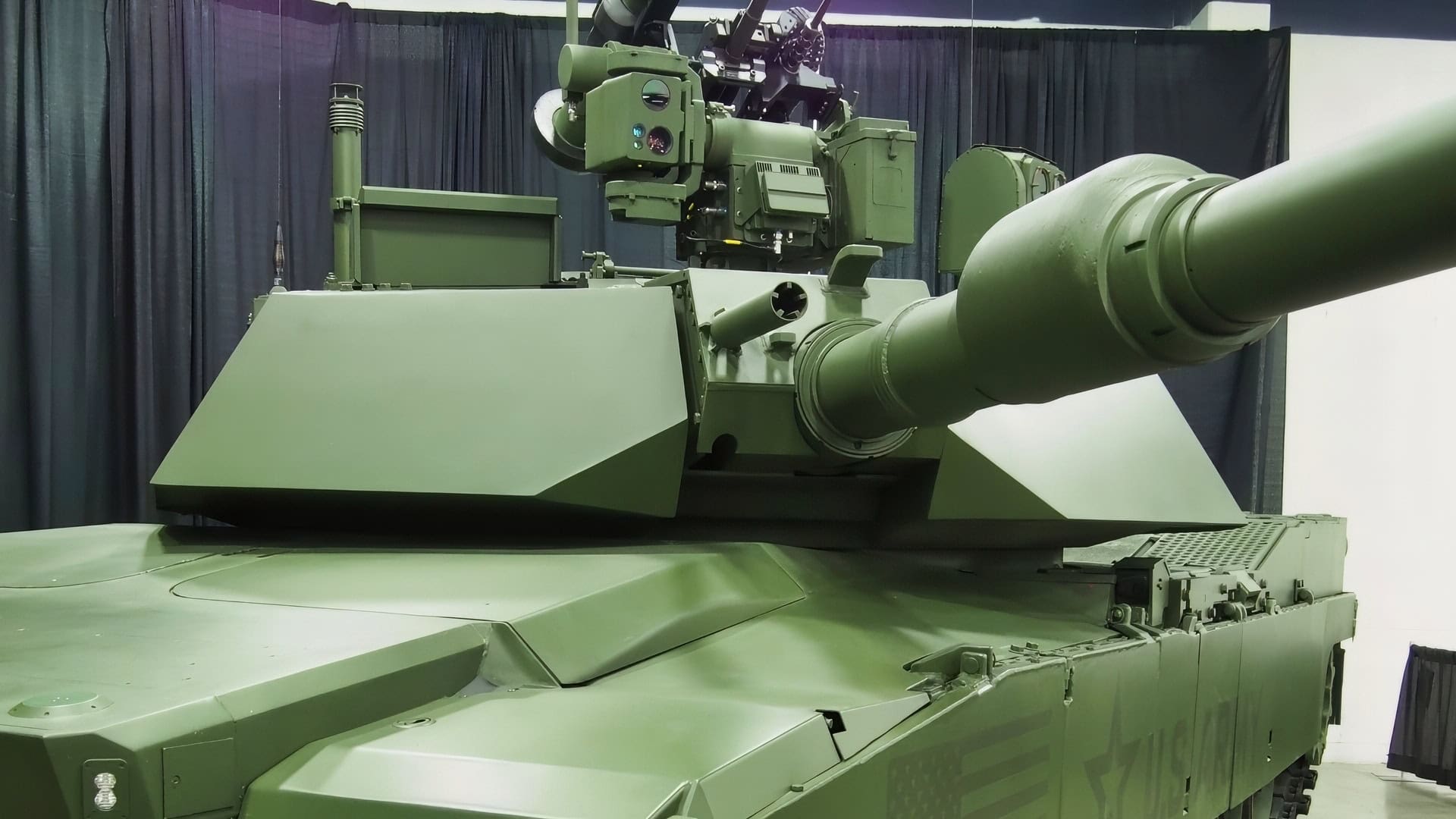
M1E3 Abrams Tank at the Detroit Auto Show. 19FortyFive.com Original Image.
Networking and Digital Systems
“Knowledge is power” is a centuries-old saying that applies as much to tanks as it does to anything else.
While cutting-edge firepower and state-of-the-art APS are essential, information is essential to the tank’s mission. Pretty much every next-generation MBT is incorporated with advanced battle management systems and networking capabilities to ensure seamless data sharing between multiple battlefield systems.
This is to ensure that the tank’s crew knows everything they need to know before they depart on their mission and remains informed about any battlefield developments while in combat.
The Challenger 3 program, for example, places particular emphasis on improving the tank’s digital and networking systems to ensure it always has an information advantage over its adversaries.
This is especially important in the drone age, as drones can effectively perform reconnaissance and collect battlefield information that many other assets cannot.
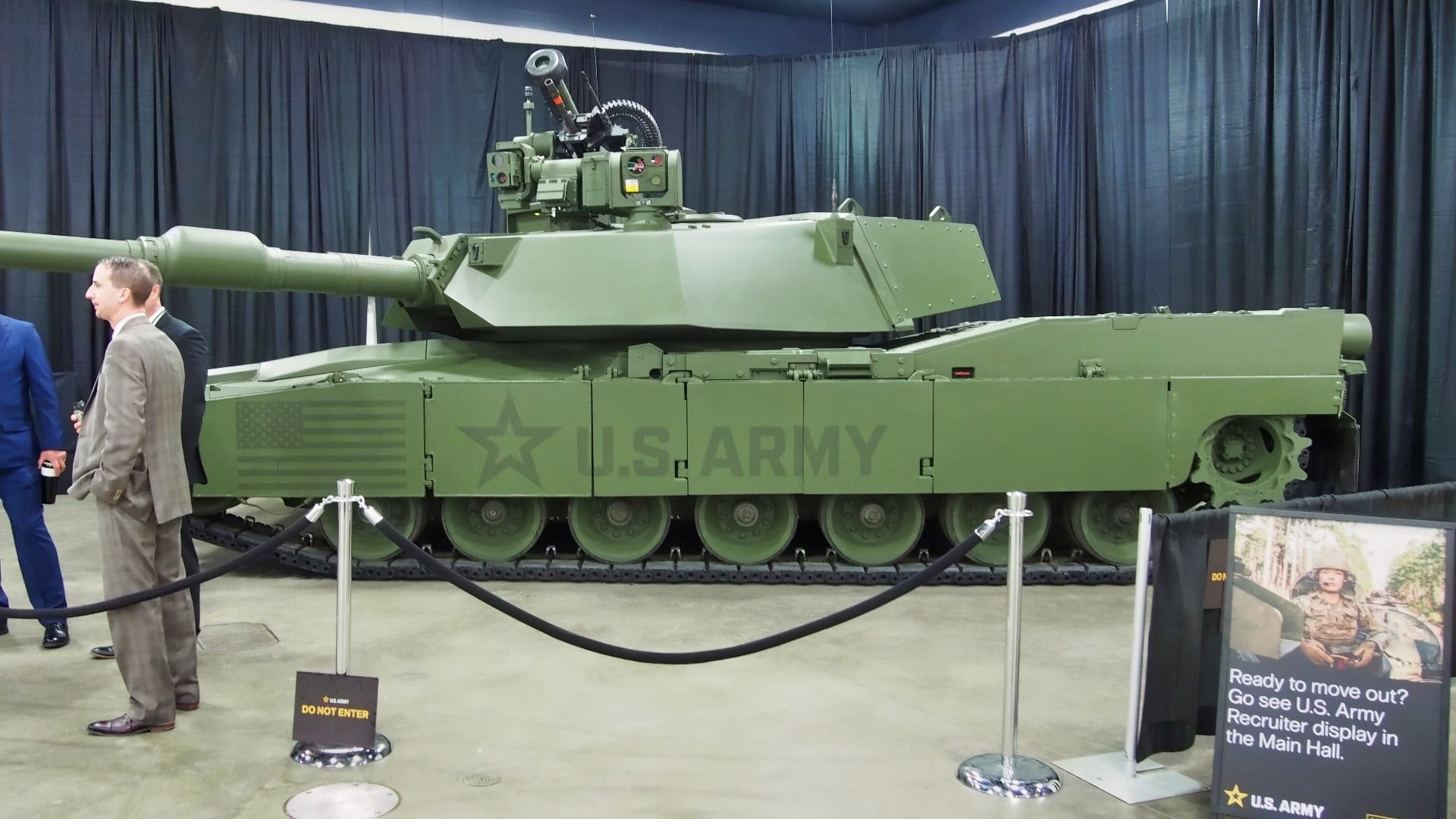
M1E3 Abrams Tank. Taken by 19FortyFive.com
Next-generation MBTs can see more clearly than any tank ever could before. In addition to the battle management systems that fuse data from outside sources, modern tanks are now equipped with top-of-the-line thermal imagers, sensors, and fire-control systems.
These help ensure that, even in environments heavily saturated with enemy EW systems, the tank’s crew can maintain a wide field of view and operate effectively. Other MBTs include capabilities such as automatic leading and tracking, as well as automatic targeting, to reduce decision-making time.
A Word of Caution…
With all that in mind, there is a propensity among modern tank designers to overdesign their tanks. While it is great to include the latest and greatest systems, the law of diminishing returns still holds true. Too many advanced systems and sensors have the potential to dramatically raise costs, which in turn diminishes battlefield deployment.
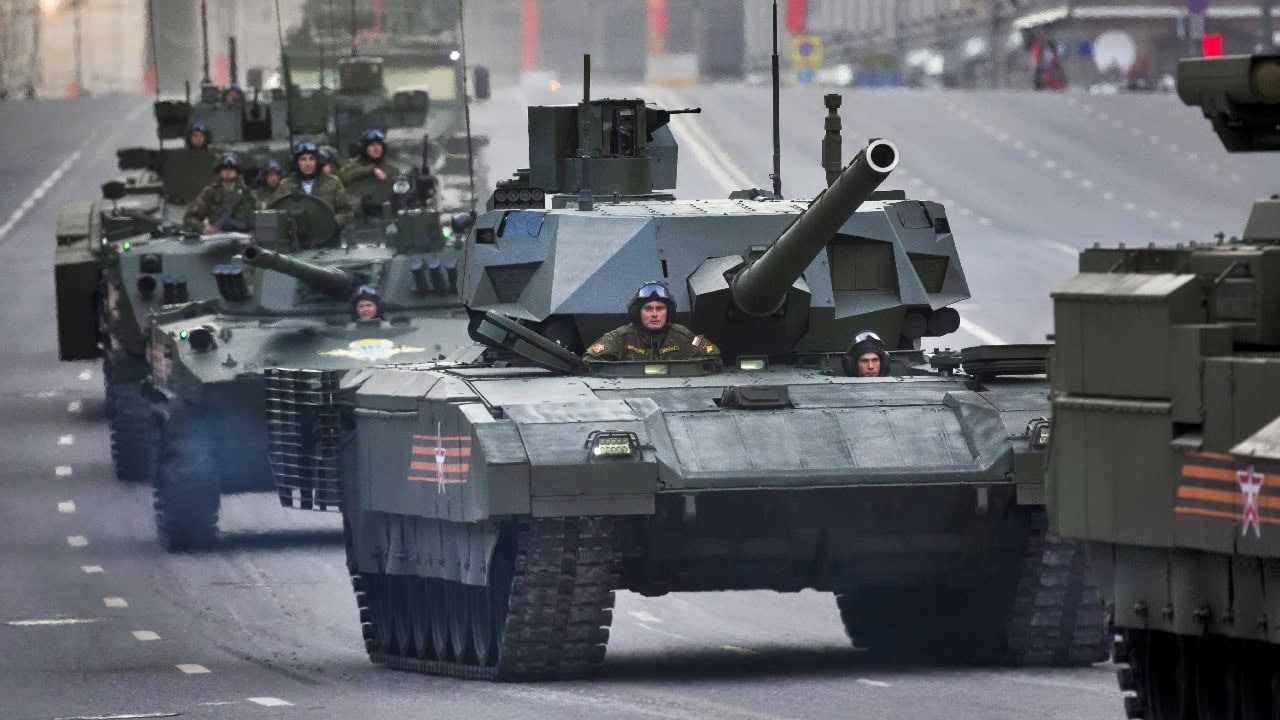
T-14 Armata Tank from Russia. Image Credit: Creative Commons.
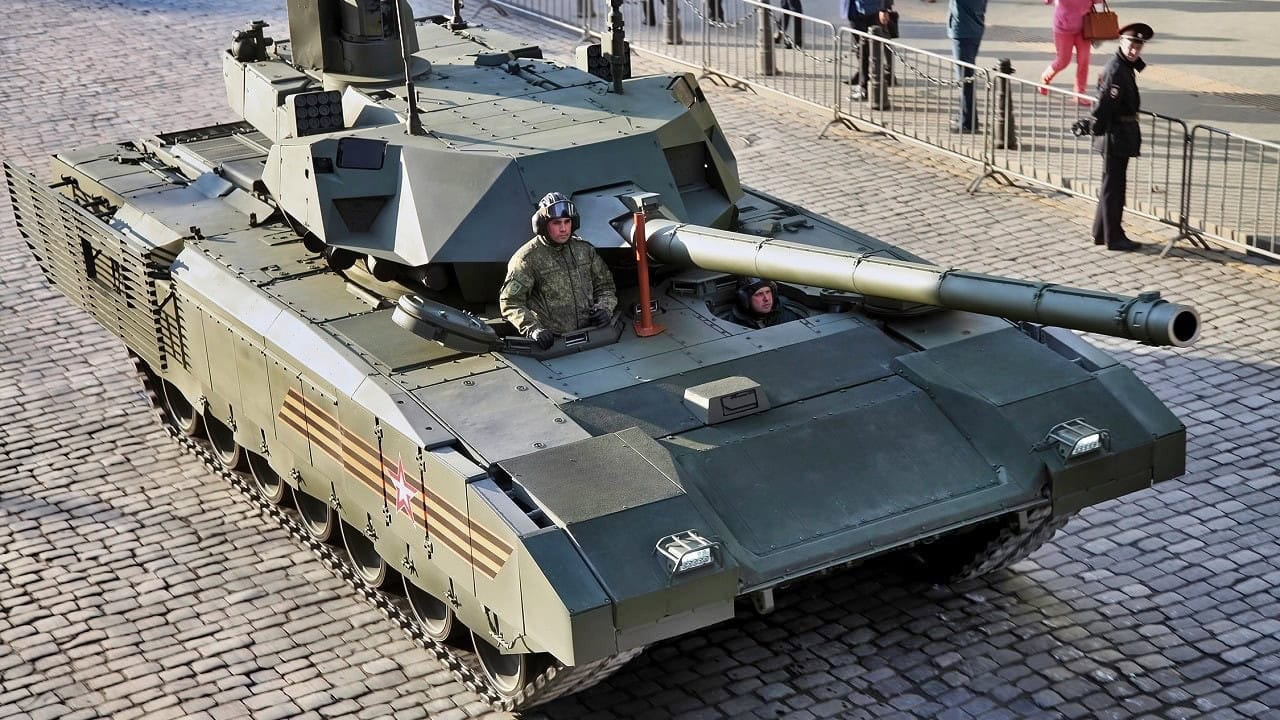
T-14 Armata Tank.
The Russians discovered this the hard way with the T-14. While the Armata includes all the best systems Russia has to offer, the trade-off is that the tank is too expensive for the Russians to produce and field in large numbers.
The U.K. has a similar problem with the Challenger 3. With only 148 tanks slated to be converted to the new standard, Britton’s Challenger 3 fleet is smaller than the total number of tanks Ukraine used in its ill-fated Kursk operation.
As tanks become more advanced, they also become much more expensive. In a war of attrition, quantity is just as important as quality.
With today’s sophisticated anti-tank tools, 90 higher-quality but super expensive tanks may be preferable in counterinsurgency operations, but in a high-intensity war, 10,000 cheap, low-quality armor are more likely to achieve victory in the end.
About the Author: Isaac Seitz
Isaac Seitz, a Defense Columnist, graduated from Patrick Henry College’s Strategic Intelligence and National Security program. He has also studied Russian at Middlebury Language Schools and has worked as an intelligence Analyst in the private sector.