
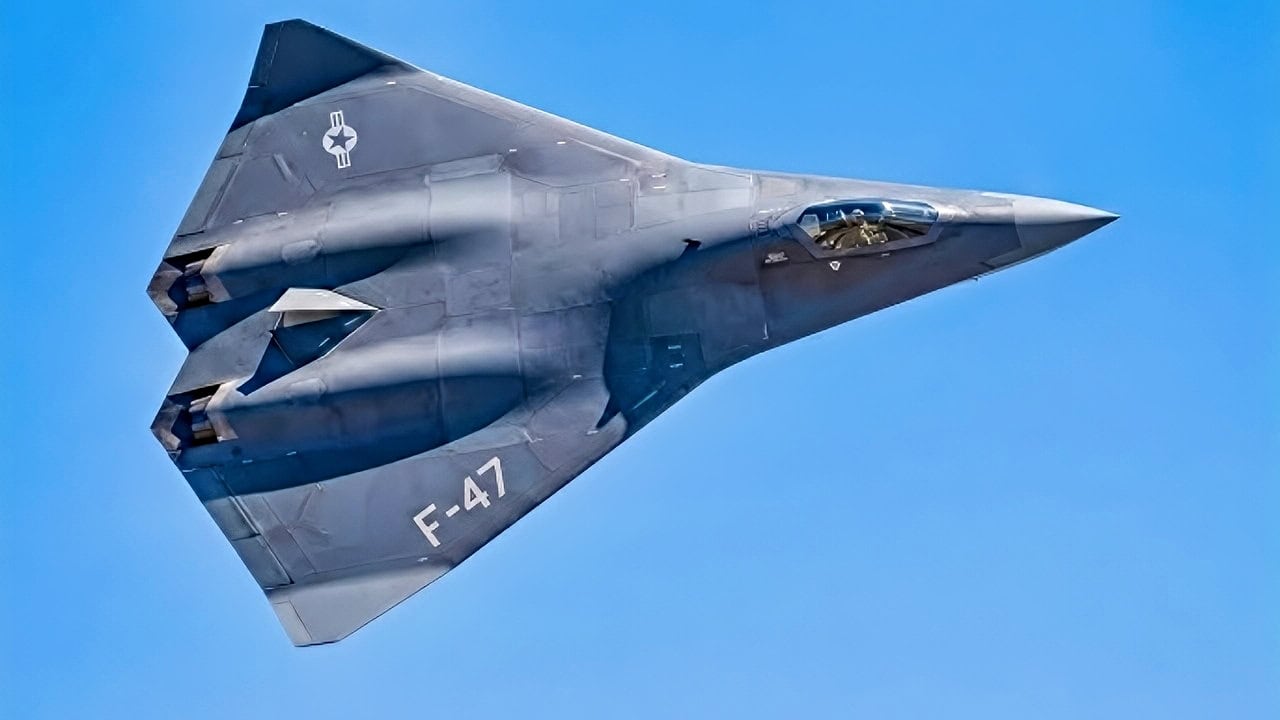
The F-47: America’s Sixth-Generation Fighter May Have Just Been Caught On Camera Over Area 51: In the first days of June, a YouTube channel called Project Fear released thermal footage shot at night from public land overlooking the Nevada Test and Training Range — the airspace the world knows as Area 51. The recording shows a compact, tailless aircraft with cranked-kite wings, a sharp nose, possible canards, a sawtooth trailing edge, and no visible infrared exhaust plume, flying a profile no publicly known aircraft matches. Within hours, the aviation world converged on an answer. The thermal-optics specialist who reviewed the capture called it likely “the first public sighting of the 6th Gen NGAD tech demonstrator”, and The War Zone’s analysts noticed something better than any leak: the official F-47 unit patch, released with the program’s artwork, carries inside its firebird motif an exaggerated planform of the very shape in the footage — canards forward, tapered fuselage, rear-set swept wings drooping at the tips, no tails. The silhouette of America’s next fighter had been hiding in plain sight on an embroidered badge, and now something wearing it may have crossed a thermal scope in the desert.
The sighting is unconfirmed, the footage was reportedly recorded months before its release, and what flew that night may be a years-old experimental aircraft rather than anything resembling a production jet.
The questions it raises, though, have hard answers, because the program behind that shape is the most consequential aircraft effort in America — and as of this week, the most expensive fighter story in the world is moving fast.
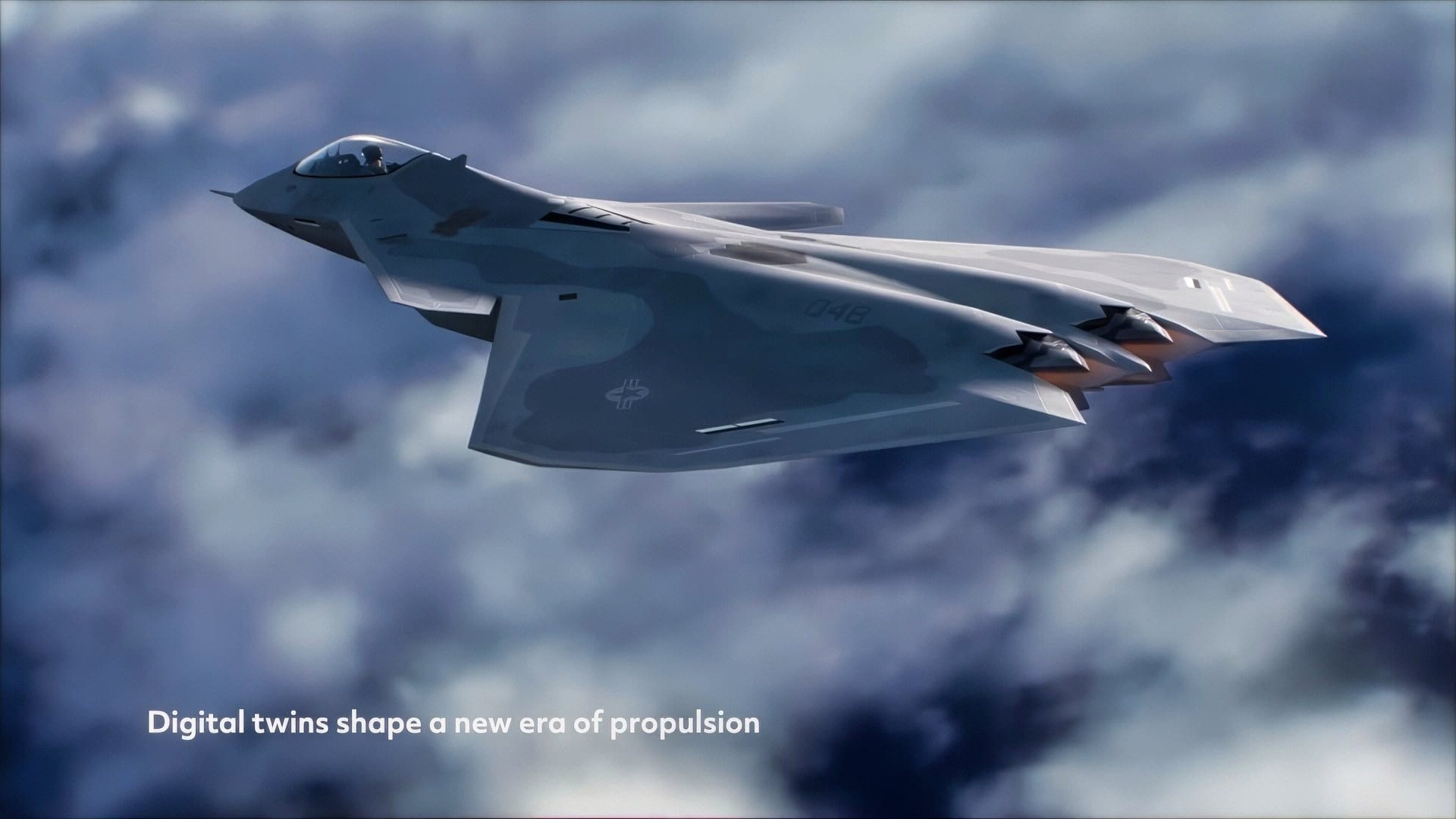
F-47 NGAD Fighter Possible Image. Image Credit: Screenshot.
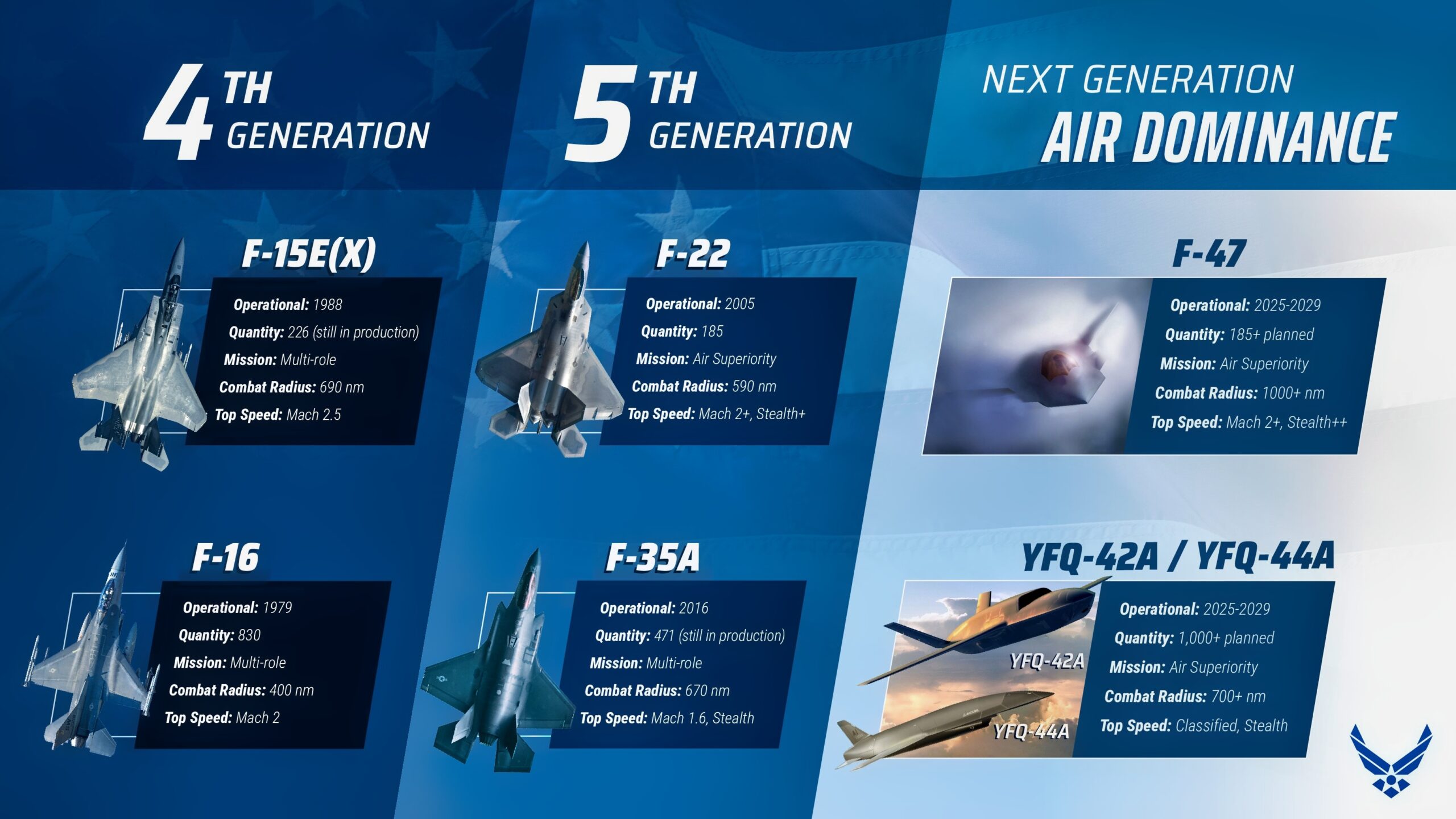
F-47 Infographic. Image Credit: U.S. Air Force
NGAD: The Secret Program That Flew Before Anyone Knew It Existed
The F-47 emerged from Next Generation Air Dominance, a program that spent most of its life in the black. Conceived in the mid-2010s as the answer to the F-22’s eventual sunset, NGAD ran its competition behind closed doors — no public fly-off, no rollout ceremonies — until September 2020, when the Air Force stunned the aviation world by disclosing that a full-scale demonstrator had already flown.
Both Boeing and Lockheed Martin flew classified X-planes as risk reduction in the years that followed —aircraft whose whereabouts have never been disclosed and which most analysts assume live at Groom Lake—the precise reason the June footage is plausible rather than fantastical. Northrop Grumman dropped out of the competition in 2023 to focus elsewhere, leaving the two old rivals from the Joint Strike Fighter wars to fight the rematch in secret.
The requirement underneath it all is the arithmetic this column has traced for months. The F-22 fleet was capped at 187 aircraft when its production line closed in 2011, and the survivors are aging into the 2030s with no replacement.
China is producing J-20s at rates several times American fifth-generation output, and in December 2024, it flew two distinct sixth-generation prototypes — the tailless designs that turned a theoretical race into a visible one.
Above all sits the Pacific range problem: the F-22 was built for European distances, and a fight over Taiwan demands legs the Raptor never had. NGAD was conceived as the family of systems that answers all three — a long-range crewed fighter commanding drone wingmen, with adaptive engines and stealth, a generation beyond anything flying.
The 2024 Pause That Nearly Killed The Program
The program nearly died of its own price tag. In the summer of 2024, the Air Force paused NGAD outright to recheck its requirements and affordability — an extraordinary step for an effort that had been the service’s top priority, taken after cost estimates that ran as high as a Congressional Budget Office figure of $300 million per airframe.
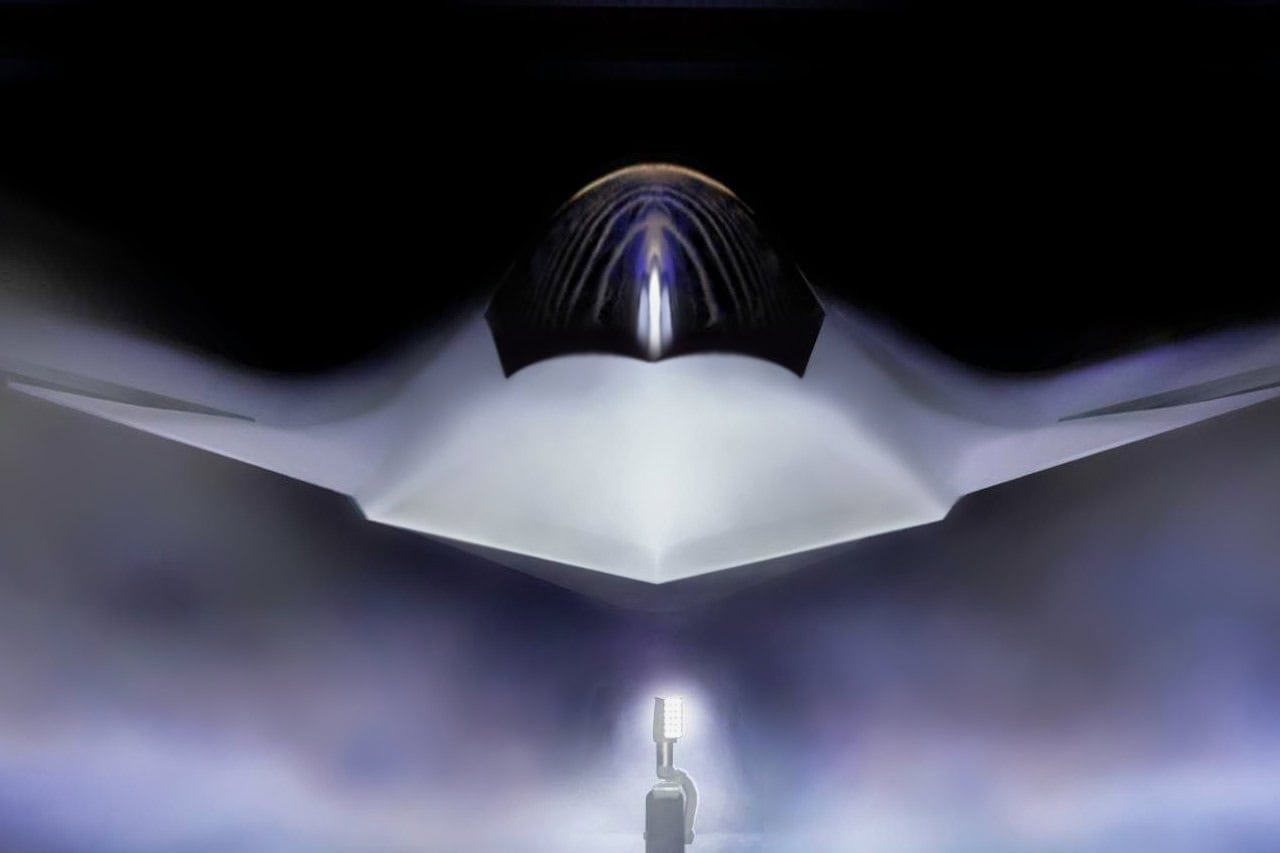
Shown is a graphical artist rendering of the Next Generation Air Dominance (NGAD) Platform. The rendering highlights the Air Force’s sixth generation fighter, the F-47. The NGAD Platform will bring lethal, next-generation technologies to ensure air superiority for the Joint Force in any conflict. (U.S. Air Force graphic)
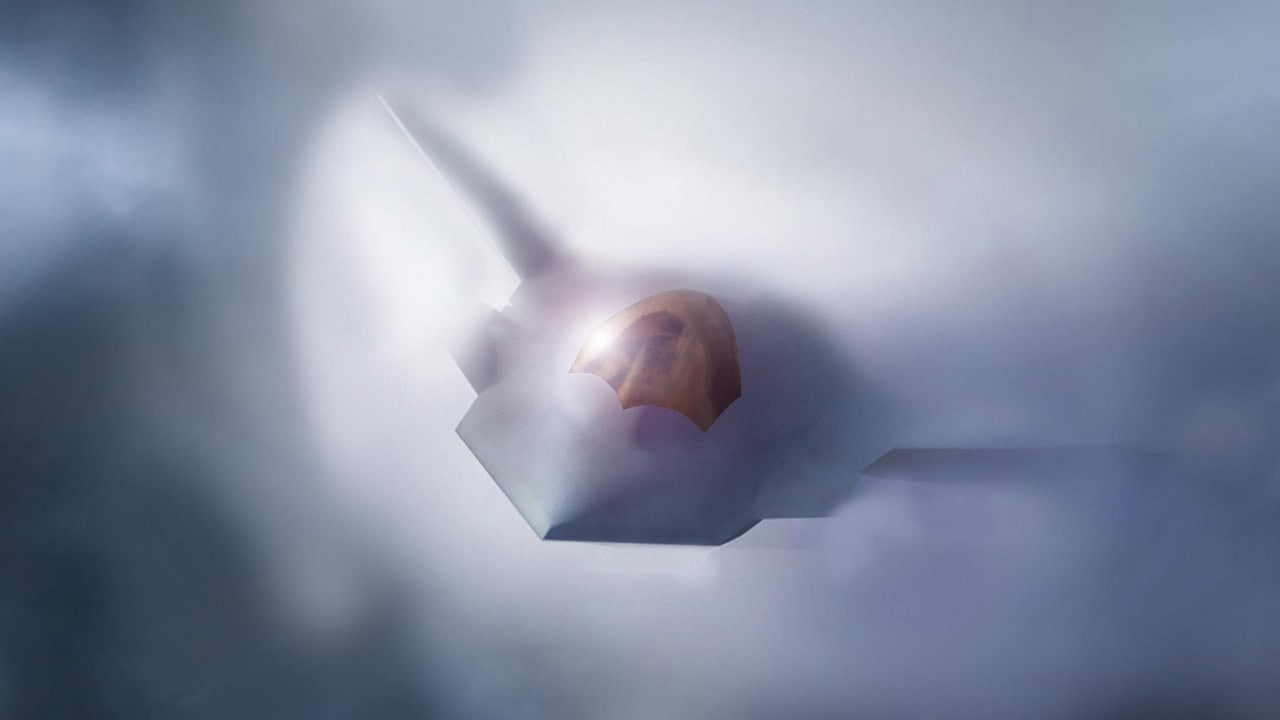
F-47 Fighter. Image Credit: U.S. Air Force.
Congress had been appropriating roughly $8.2 billion a year for NGAD development from 2022 through 2025, and the question on the table was whether a manned fighter that expensive still made sense in a world of cheap drones and deep magazines.
The review ran through the 2024 election, the program’s future became one of the new administration’s first major defense decisions, and the answer arrived in the most theatrical venue available.
March 21, 2025: Trump, Boeing, And The Fighter Named For The 47th President
President Trump announced Boeing’s victory from the Oval Office, flanked by Defense Secretary Hegseth and Air Force Chief of Staff General David Allvin, in a moment that rearranged American military aviation twice over. The award — an engineering and manufacturing development contract worth some $20 billion, the gateway to a program expected to run to hundreds of billions — ended Lockheed Martin’s status as the sole Western builder of stealth fighters, a monopoly running from the F-117 through the F-22 and F-35. For Boeing, bleeding from years of fixed-price disasters, the win was a corporate lifeline aimed directly at St. Louis, where the Super Hornet line was approaching closure.
Then there was the name. The Air Force’s official explanation honors the P-47 Thunderbolt of the Second World War and 1947, the year the service was founded, and nobody in the room pretended the number didn’t also belong to the 47th president announcing it. The F-47 is the first American fighter whose designation doubles as a political signature, a fact that ensures the program’s fortunes remain welded to Trump’s, for better or worse.
The political scaffolding around it is genuine: Senate Armed Services Chairman Roger Wicker had championed NGAD for years, visiting the St. Louis plant and arguing publicly that drone investments must not come at the fighter’s expense — meaning the F-47 entered development with the White House, the Pentagon, and the Senate’s defense gatekeeper all invested in its success.
Programs with that alignment get funded. They also become impossible to cancel quietly when trouble comes.
1,000 Nautical Miles, Mach 2, And 185 Jets: What The Air Force Says It Is Buying
The capability claims came from the chief himself. Allvin framed the F-47 as exceeding the F-22 in range, stealth, sustainability, and availability, and his May 2025 infographic attached numbers rare for a classified program: a combat radius beyond 1,000 nautical miles, speed above Mach 2, stealth rated a generation past the fifth, and a planned buy of 185-plus — pointedly one more than the Raptor fleet it succeeds.
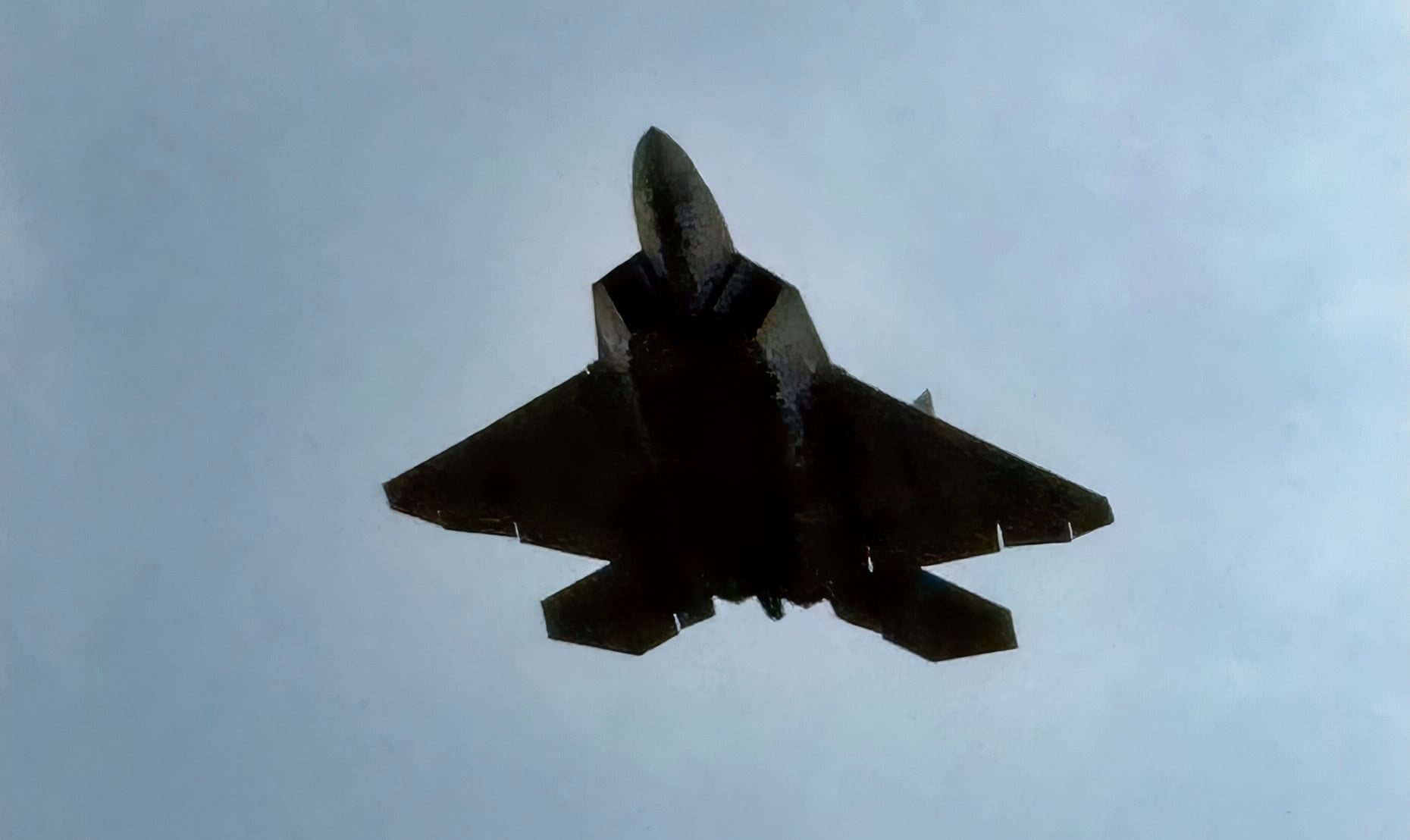
F-22 at Lakeland Air Show 2026. Taken on March 19, 2026 by 19FortyFive.com
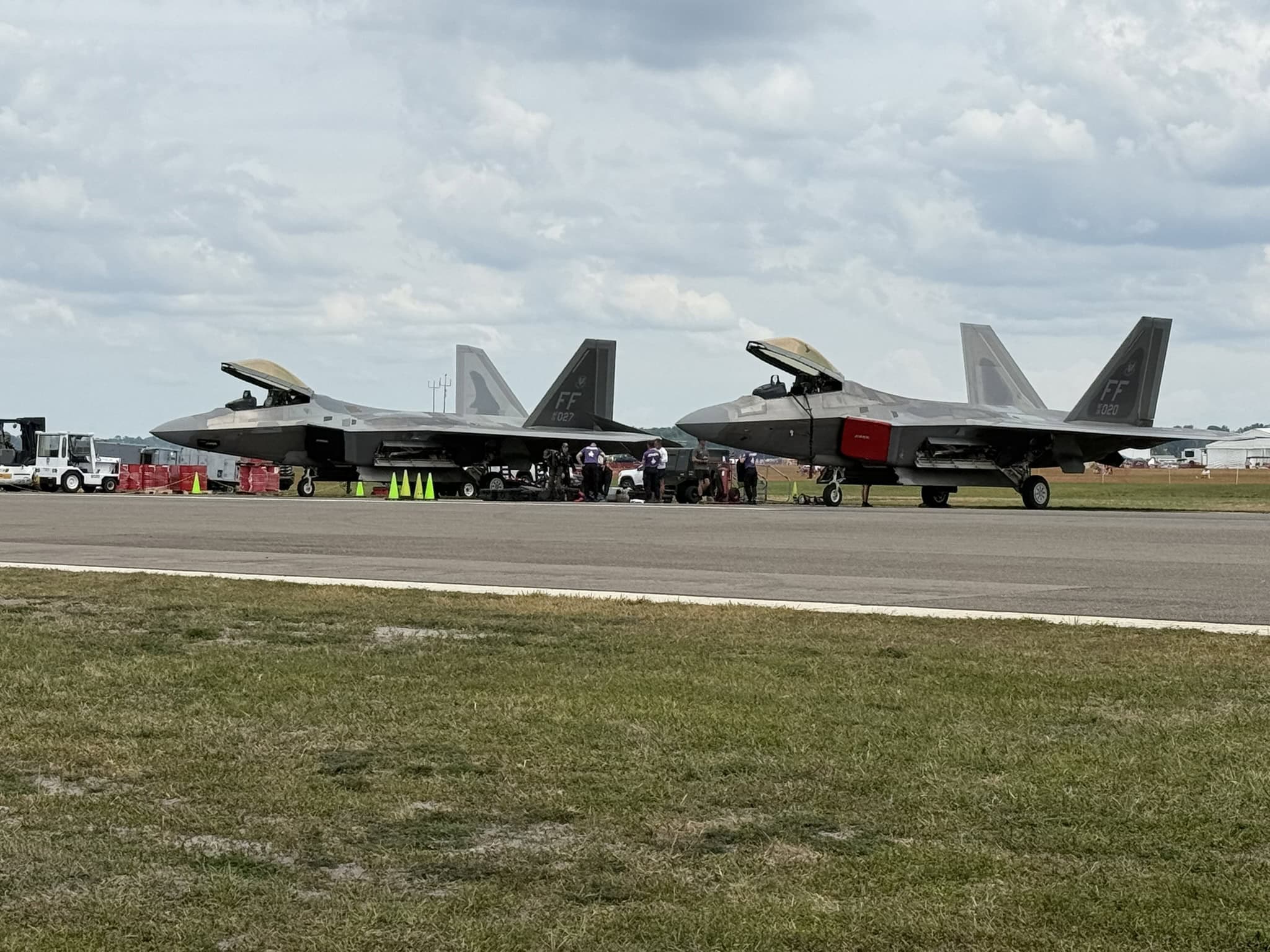
F-22 Raptors on the ground. 19FortyFive.com image taken in Lakeland, Florida on 4/19/2026.
The radius figure is the strategic heart of the airplane. A thousand-plus nautical miles is Pacific geometry, the difference between a fighter chained to tankers inside Chinese missile rings and one that fights from outside them, and it answers the exact deficiency that has haunted the F-22’s relevance to a China war.
The F-47 is also explicitly not a lone airplane. It anchors a family: the collaborative combat aircraft — the YFQ-42A and YFQ-44A drone wingmen already in flight test — with former Secretary Kendall’s planning sketch envisioning roughly 200 next-generation fighters quarterbacking a thousand drones, and the F-22 serving as the first platform integrated with the drones while its successor matures.
Adaptive-cycle engines under the parallel propulsion program supply the range, and the whole architecture assumes the thing the Ukraine and Iran wars keep teaching: mass matters, and the crewed jet buys its keep by multiplying the unmanned mass around it.
From Assembly Floor To 2028: Where The F-47 Stands On June 12, 2026
The program’s current state, as of today, is genuinely unusual for American fighter procurement: ahead of the noise. I
n September 2025, Allvin announced that Boeing had begun manufacturing the first F-47 in St. Louis, with first flight targeted for 2028 — six months after contract award to first metal, a pace no recent fighter program has approached. The fiscal 2027 budget request released in April reaffirmed the 2028 first-flight target, with operational entry aimed at 2029, while the Navy’s parallel F/A-XX lags behind, kept alive largely by congressional intervention. And the budget trajectory tells its own story: the request seeks more than $5 billion in F-47 development funding for 2027, up from $3.5 billion, with spending projected to peak in 2028 and decline after — the financial signature of a program planning to finish development and move toward production rather than one quietly slipping.
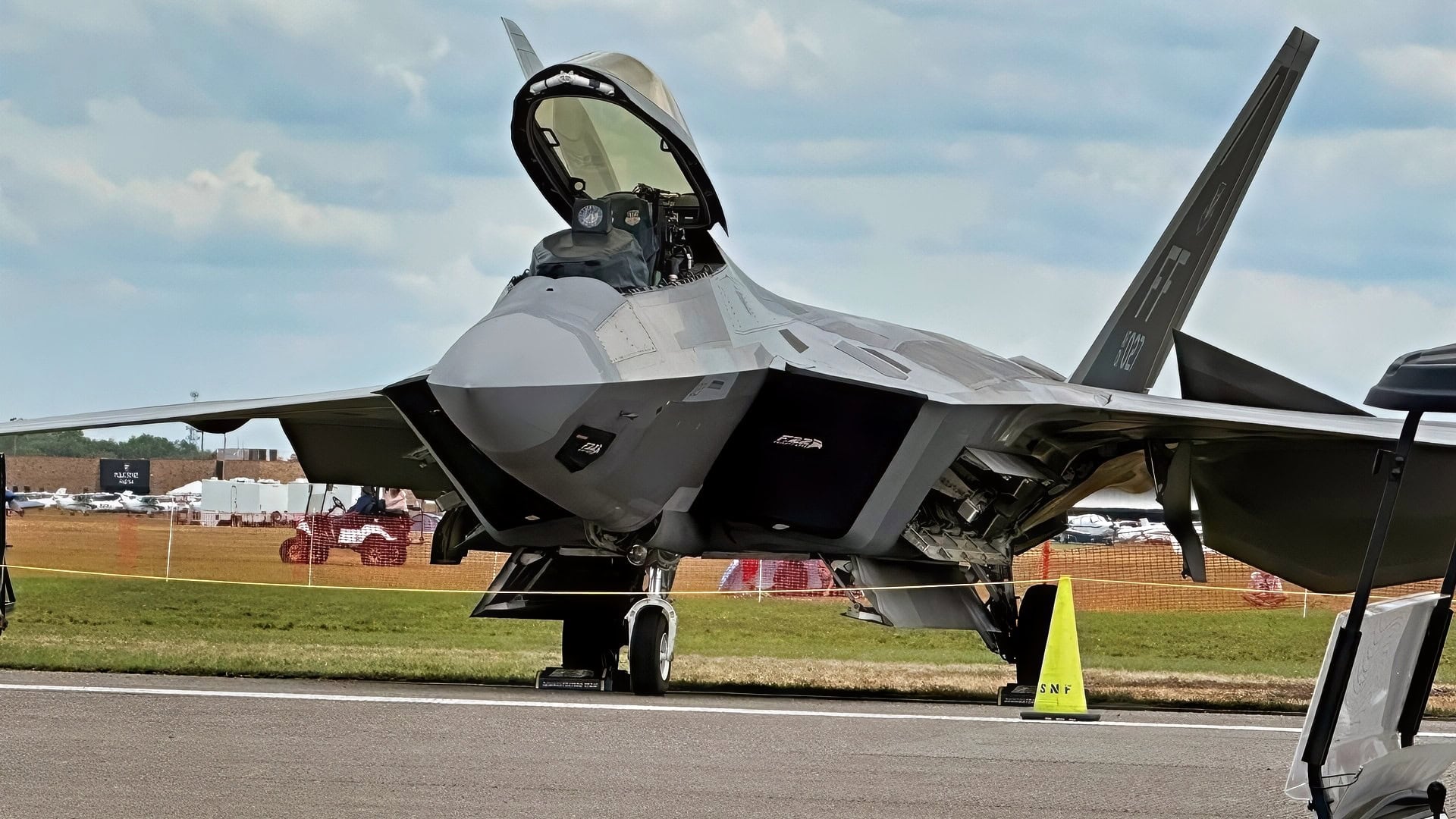
F-22 Raptor Lakeland Florida Airshow. Taken by Harry J. Kazianis on 4/19/2026.
The honest caveats belong in full view. Boeing’s recent record on fixed-price defense programs — the tanker, the trainer, the presidential aircraft — is a catalog of losses and delays, and the F-47 is the company’s redemption bet, not its proven form.
A 2028 first flight for a sixth-generation fighter, awarded in 2025, would be the fastest such timeline in modern history, and announced schedules in this business are already opening bids. Furthermore, nobody outside the program knows what the Nevada footage actually showed: the gap between an X-plane demonstrator that has flown since 2020 and a production-representative F-47 is measured in years and in billions, and the patch-matching silhouette over the desert could be either. The Air Force has every incentive to let the mystique build, and mystique is not a flight-test report.
The footage holds one conclusion regardless of which airframe crossed the scope. Somewhere over the Nevada desert, the shape on the F-47’s patch is flying — at night, years before the public was supposed to see it, while the first jet wearing the designation takes form on a St. Louis assembly floor against a 2028 deadline the budget now bets real money on.
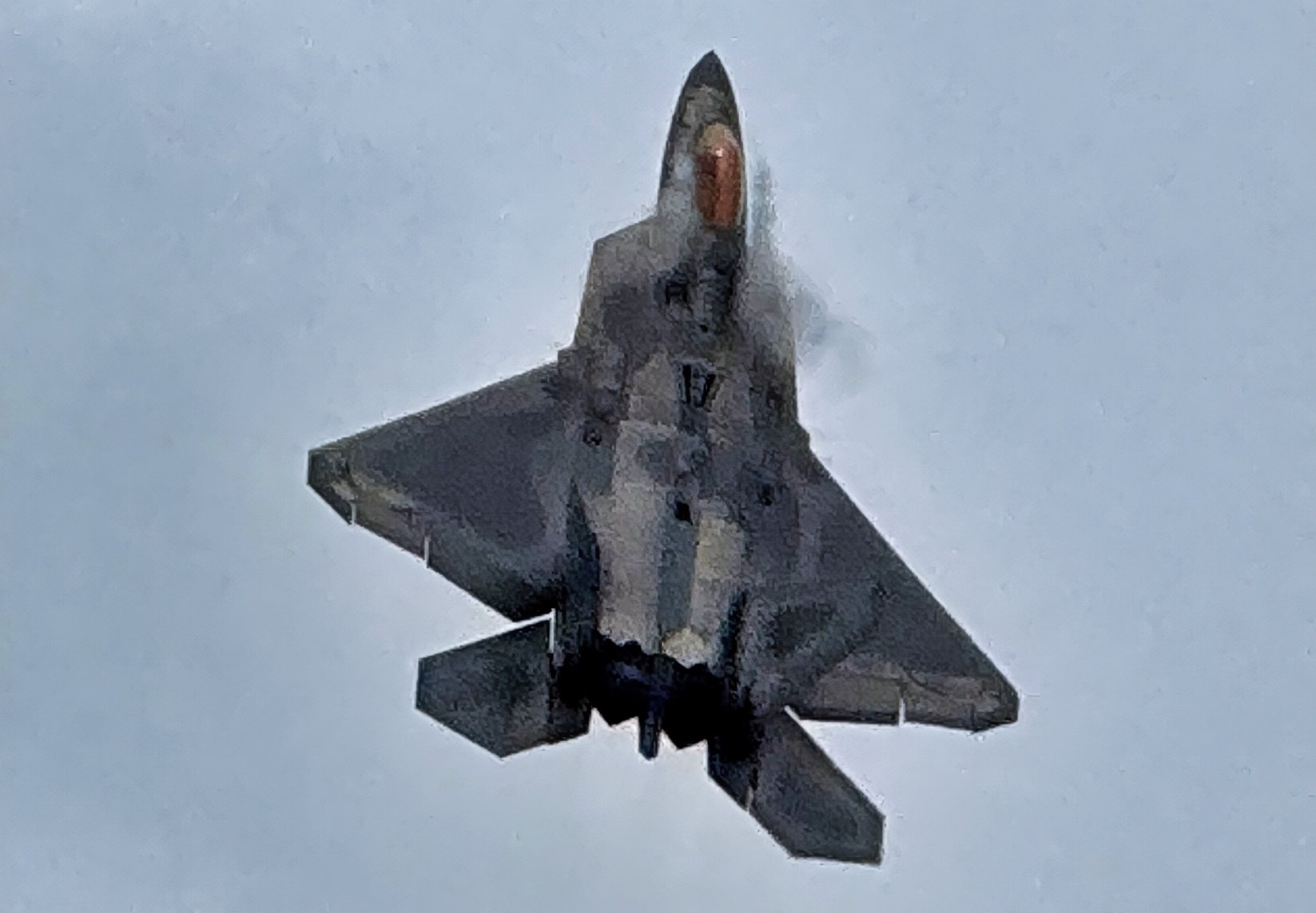
F-22 Raptor high in the sky. Image taken by Harry J. Kazianis in Lakeland, Florida on 4/19/2026.
China’s prototypes fly in daylight for the cameras. America’s flies where only a thermal scope can find it, and as of June 12, 2026, the race the F-47 was named into is being run in earnest on both sides of the Pacific.
About the Author: Harry J. Kazianis
Harry J. Kazianis (@Grecianformula) was the former Senior Director of National Security Affairs at the Center for the National Interest (CFTNI), a foreign policy think tank founded by Richard Nixon based in Washington, DC. Harry has over a decade of experience in think tanks and national security publishing. His ideas have been published in the NY Times, The Washington Post, The Wall Street Journal, CNN, and many other outlets worldwide. He has held positions at CSIS, the Heritage Foundation, the University of Nottingham, and several other institutions related to national security research and studies. He is the former Executive Editor of the National Interest and the Diplomat. He holds a Master’s degree focusing on international affairs from Harvard University.