
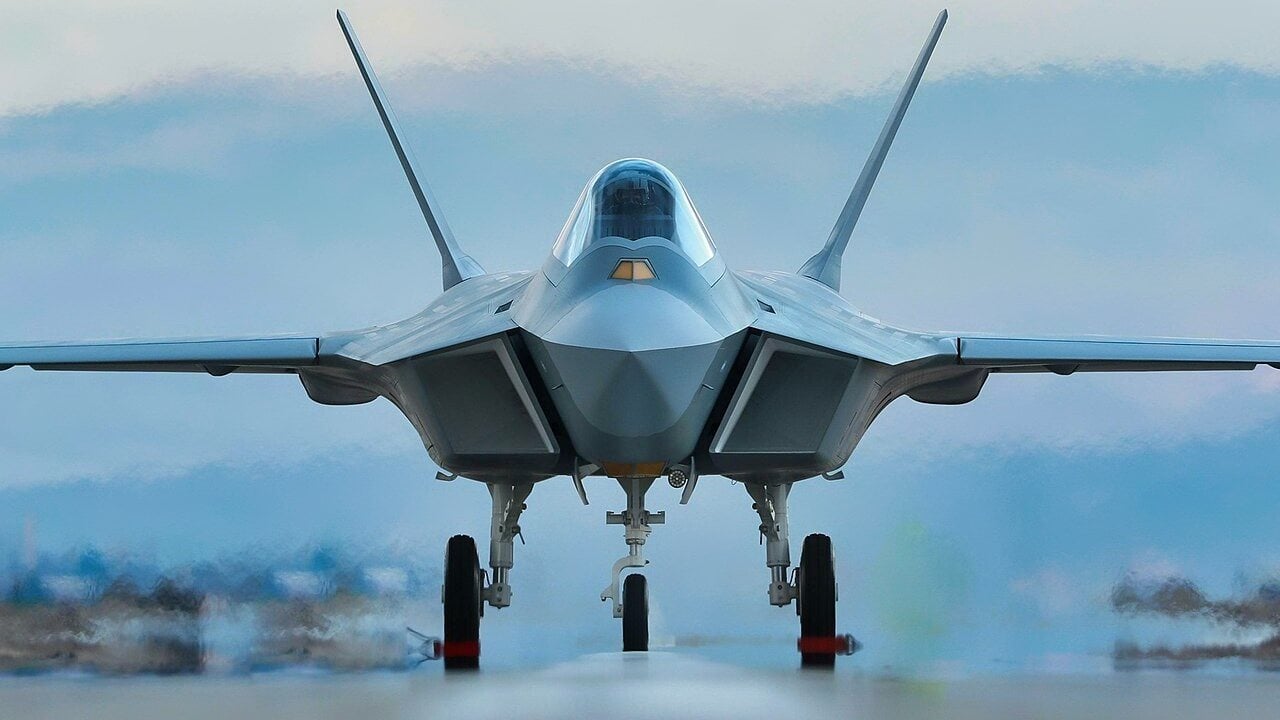
Turkey built the Kaan as a declaration of independence from American airpower. Kicked out of the F-35 program in 2019, Ankara poured a decade and billions of dollars into an indigenous fifth-generation stealth fighter so it would never again depend on Washington’s permission to field frontline aircraft. The jet has flown, it looks the part, and it has already landed a marquee export customer. But there is a catch at the heart of the program: the Kaan runs on an American engine — the same General Electric F110 that powers late-model F-16s — and the Turkish engine meant to replace it will not be ready until the 2030s.
The fighter built to escape American control still depends on an American powerplant that Washington can restrict, and that single fact shapes the program’s timeline, its export prospects, and the question of whether its independence is real or aspirational.
What The Kaan Is And Where It Stands
The Kaan, formerly designated the TF-X, is Turkey’s indigenous twin-engine, fifth-generation stealth fighter, developed by Turkish Aerospace Industries with stealth shaping, internal weapons bays, and modern sensor fusion.
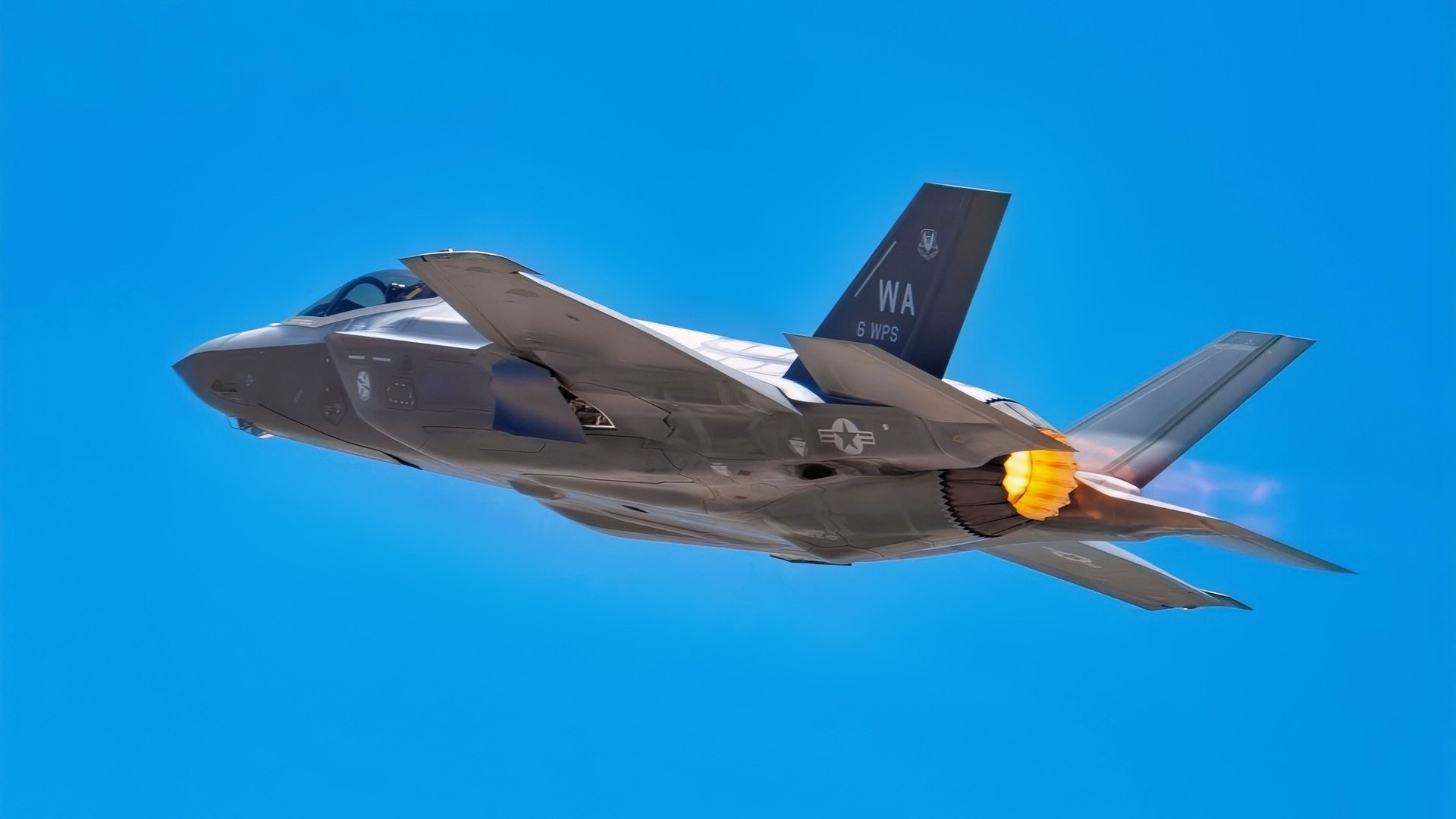
An F-35A Lightning II fighter jet, 6th Weapons Squadron (WPS), takes off from Nellis Air Force Base, Nev., July 18, 2019. The 6th WPS is the only squadron under the U.S. Air Force Weapons School exclusively training on the F-35A. (U.S. Air Force photo by Airman 1st Class Bryan Guthrie)
The program dates to 2010 under the name Milli Muharip Uçak, or National Combat Aircraft. The aircraft was formally named Kaan — Turkish for “ruler” — on May 1, 2023, and the development agreement with Turkey’s defense-procurement authority was signed in 2016. It is built to replace the Turkish Air Force’s aging fleet of more than 200 F-16s beginning in the 2030s, and Turkey’s entry into fifth-generation fighter development places it among a small group of nations — the United States, Russia, China, and now South Korea — pursuing homegrown stealth fighters.
The aircraft has flown, and that point should be stated plainly. The first prototype, an engineering demonstrator designated P0, made its maiden flight on February 21, 2024, staying airborne for 13 minutes and reaching 8,000 feet at 230 knots, followed by a second flight on May 6, 2024. That demonstrator validated the basic aerodynamics and is now restricted to ground and systems testing.
The milestone that matters next is different: TAI is building three dedicated flight prototypes, and the first production-representative aircraft, designated P1, carries most of the mission systems planned for the operational fighter, unlike the P0 demonstrator.
TAI’s chief executive, Mehmet Demiroğlu, said in January that this first true flight prototype was scheduled to fly by May or, at the latest, June 2026, after the late-April target slipped. As of mid-June 2026, that flight had not yet occurred: the official date has not been announced, with reports pointing to a maiden flight later in 2026, and one symbolic option floated being Turkey’s August 30 Victory Day. So a version of the Kaan has flown, while the production-representative prototype that better reflects the eventual fighter remains, for now, on the ground.
The Pivot That Created It: Expelled From The F-35
The Kaan exists because Turkey lost access to America’s stealth fighter. Ankara was a deep partner in the F-35 program, including at the industrial level, with plans to buy around 100 of the jets, until Turkey was expelled from the program in 2019 over its purchase of Russian S-400 air-defense systems.
Washington judged that operating the S-400 alongside the F-35 risked compromising the stealth fighter’s secrets, and the expulsion was part of a broader rupture that also saw Ankara’s request to buy additional F-16s initially turned down. The lesson Turkey drew was about dependence: a country that relies on another for its frontline fighters can have that supply cut off over a political dispute.
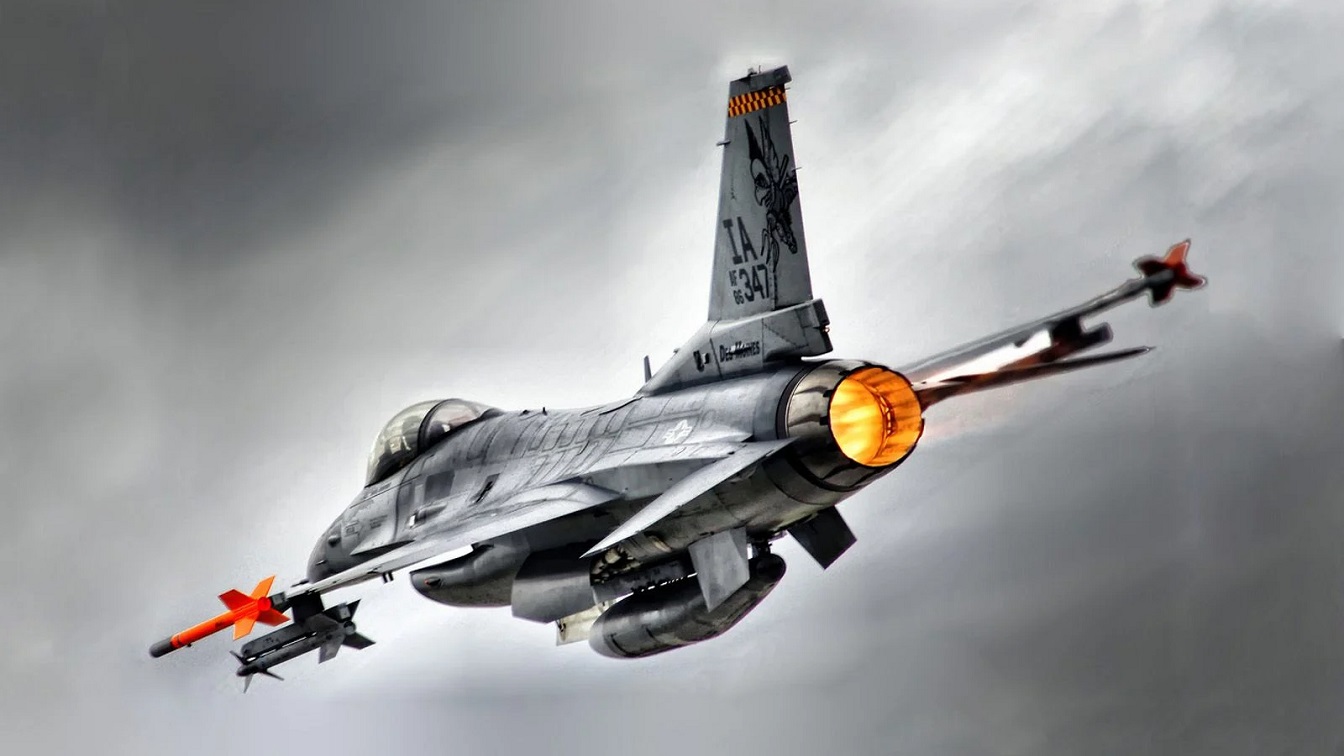
F-16 fighter. Image Credit: Creative Commons.
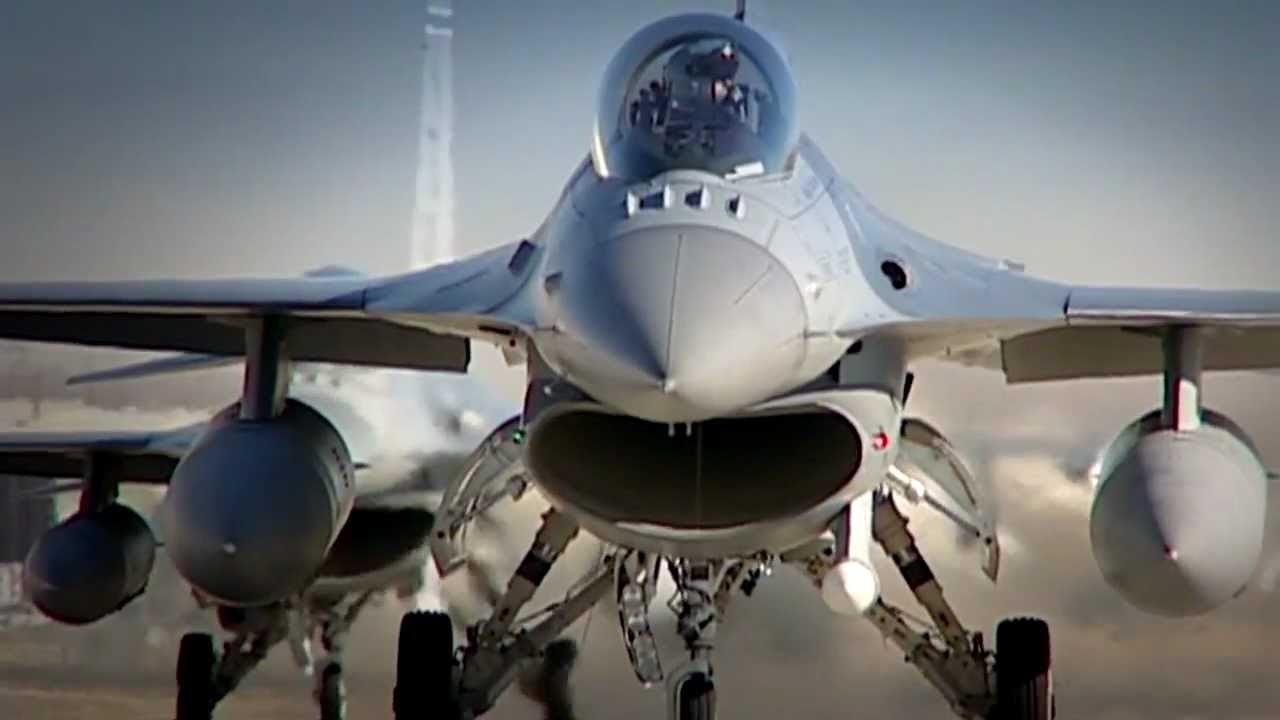
F-16 Viper. Image Credit: Lockheed Martin.
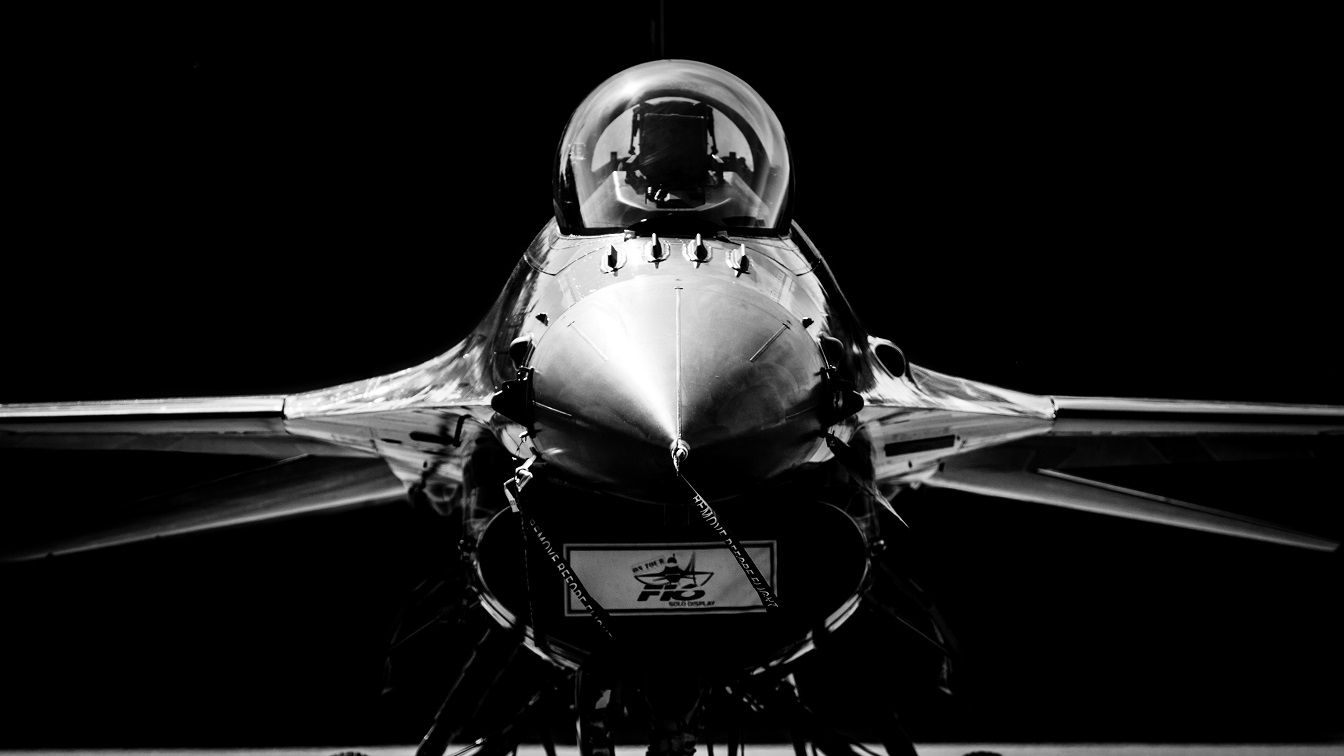
F-16. Image Credit: Creative Commons.
The Kaan became Ankara’s answer, a bid for technological sovereignty that would ensure it would never again need anyone’s approval to field an advanced aircraft. The irony is that the answer to American leverage was built around an American engine.
The Engine At The Center Of Everything
The Kaan’s prototypes and early production aircraft are powered by two General Electric F110-GE-129 engines, the same powerplant family used in late-model F-16s, and Ankara has always described the F110 as a temporary solution.
The numbers explain why it is only a stopgap. The F110 delivers thrust in the 29,000-to-30,000-pound range, while the program’s long-term requirement is roughly 35,000 pounds. The F110 was not designed for stealth, lacking the infrared suppression and nozzle shaping that a low-observable aircraft ideally wants. Between 20 and 40 Kaans are planned to fly on the F110 before any switch to a domestic engine.
The replacement is years away. The indigenous engine, the TF35000 turbofan, is being developed by Turkey’s TEI and TR Motor to deliver around 35,000 pounds of thrust with supercruise capability, but it remains in the design phase: Turkey hopes to field the TF35000 in Block 30 and Block 40 Kaans from 2032, with ground testing beginning in 2026, and a Kaan flying on the domestic engine is not expected in service until roughly 2036.
That timeline should be read as a plan, not a guarantee. Indigenous jet-engine development is among the hardest tasks in aerospace — outside the United States, only the United Kingdom, France, Russia, and China can build a fighter engine from start to finish — and such programs routinely slip, which means the dependence on the F110 could last even longer than the official schedule suggests.
The dependence is not theoretical; recent events have proved it. Turkey has received only 10 F110 engines, and negotiations for 80 additional powerplants face obstacles tied to Ankara’s S-400 purchase. The restrictions stem from the Countering America’s Adversaries Through Sanctions Act, the same sanctions law that followed the S-400 deal and contributed to Turkey’s removal from the F-35 program.
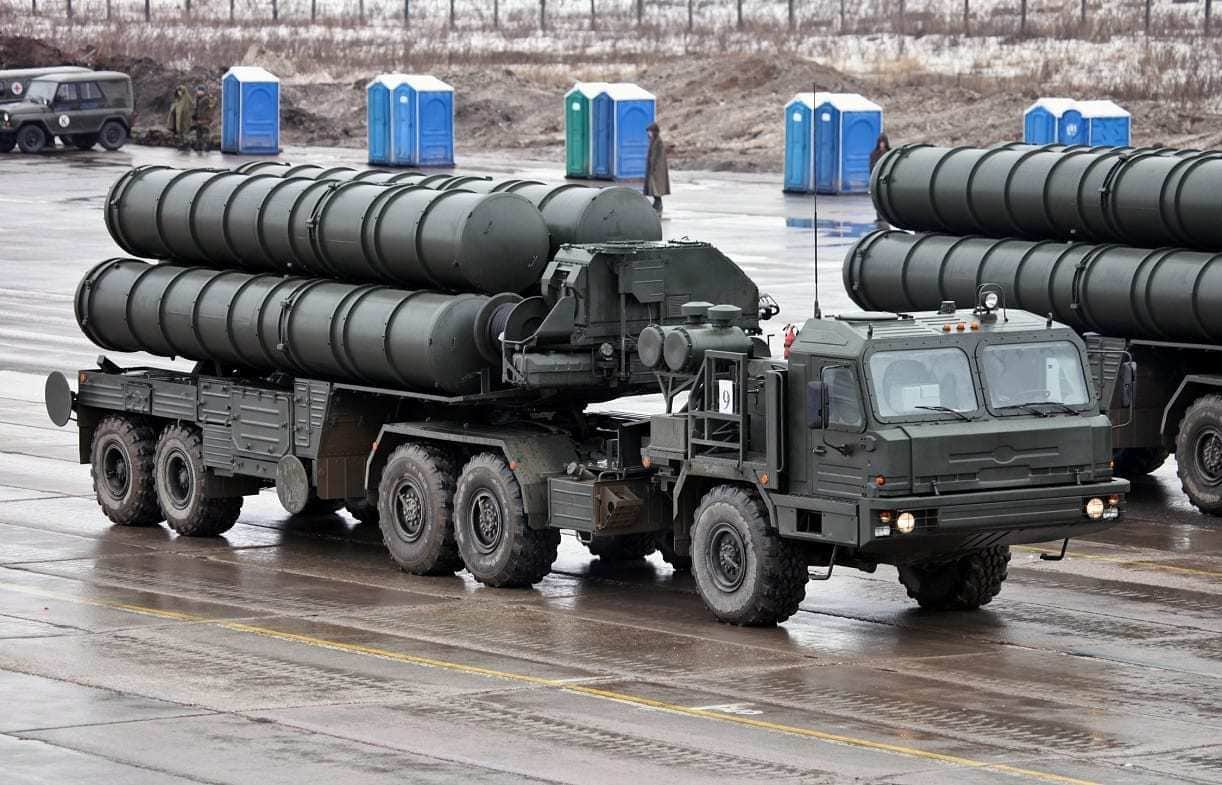
S-400. Image Credit: Creative Commons.
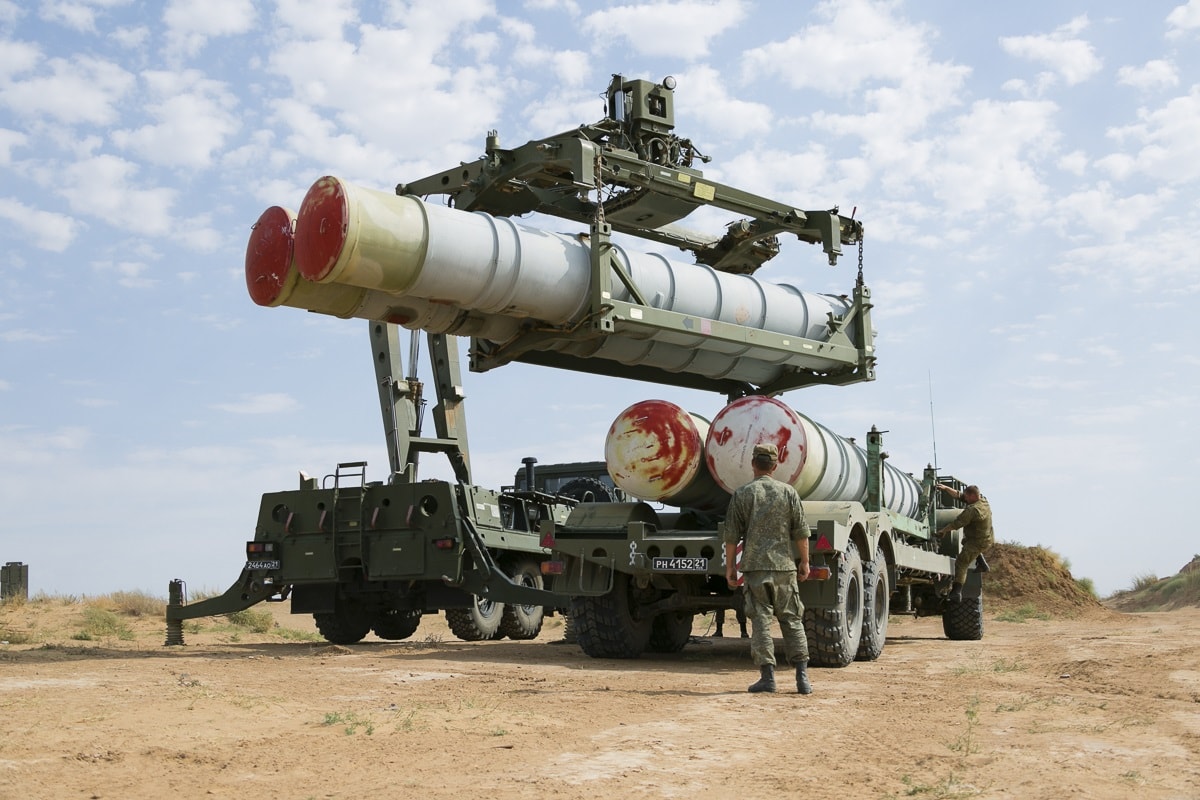
Russia’s S-400 Air Defense System. Image: Russian Military.
The point was made at the highest level: Turkish Foreign Minister Hakan Fidan, speaking on the sidelines of a Trump-Erdogan meeting in New York on September 26, 2025, said Kaan’s engines were “waiting for approval in the US Congress” and that licenses had been suspended. Turkey’s defense minister, Yaşar Güler, confirmed the split to parliament: 10 engines delivered under the first contract, with 80 more under negotiation with the US government. Washington can throttle the supply of the engines that make the Kaan fly, which is exactly the leverage the program was built to escape.
The Export Deal And Its Catch
The Kaan has already won a marquee customer, and the engine shapes that deal with it, too. Indonesia became the first export buyer, with the two countries signing a government-to-government framework agreement on June 11, 2025, and a commercial implementation contract on July 26 covering 48 aircraft, two İstif-class frigates, and local aerospace infrastructure in Indonesia.
The fighter deal itself is reported at around $10 billion, while TAI has described a broader three-phase framework valued at roughly $15 billion, structured around the acquisition. For Turkey, it is the largest defense-export agreement in its history and proof that Kaan can compete on the international market.
The catch is what Indonesia is waiting for. Jakarta has made clear it will only proceed with a Kaan that is free of components subject to US International Traffic in Arms Regulations, viewing exposure to American export control as a strategic vulnerability rather than a technical detail — a requirement that, enforced strictly, would push deliveries to the mid-2030s at the earliest.
TAI’s Demiroğlu has confirmed that Indonesia has requested a fully ITAR-free Kaan with an indigenous engine and will wait for that configuration before taking delivery, aligning its acquisition with serial production of the TF35000 around 2032.
The marquee customer, in other words, wants precisely the version of the Kaan that does not depend on Washington — and that version does not yet exist. Other interests have been linked to Spain, Saudi Arabia, and Gulf states, drawn to the Kaan as an alternative to Western platforms, but the flagship sale is conditioned on an engine still in design.
The Honest Picture: A Real Bid For Independence, Not Yet Achieved
The achievement is genuine and should not be understated. Turkey has joined a small club of nations developing a homegrown fifth-generation fighter. The Kaan is further along than many skeptics expected, the ITAR-free ambition is a serious strategic goal, and the program has already produced flying prototypes, a domestic weapons package, and a multibillion-dollar export deal.
The Turkish Air Force has contracted for its first batch of 20 Block 10 aircraft, with prototype production expected to start in 2027 and serial aircraft entering service between 2028 and 2029, powered by American engines. Turkey now even talks about a sixth-generation fighter to follow.
The gap between that ambition and present reality is the engine, and it is wide. Until the TF35000 matures sometime in the 2030s, every Kaan will fly on an F110 that Washington can restrict, as the stalled engines and Foreign Minister Fidan’s own words have already shown. The domestic engine is still in design and early testing; the serial-production timeline holds its 2028 target only with the American powerplant; and the flagship export deal is conditioned on a configuration years from now.
There is also a capability caveat worth stating: the Kaan is a stealth-shaped fifth-generation design on paper, but it is early, in flight testing rather than operational, with its sensors, weapons integration, and the all-important engine still works in progress, and it is not yet a proven peer to the F-35 or the J-20.
Turkey built the Kaan to end its dependence on American airpower, and the program is a serious, credible bid to do exactly that.
MORE – Russia Soon Might Be a Navy with No Aircraft Carriers
For now, though, it runs on the very dependence it was built to escape, and whether the Kaan becomes a truly sovereign fighter rests on an engine that will not arrive until the 2030s.
About the Author: Harry J. Kazianis
Harry J. Kazianis (@Grecianformula) was the former Senior Director of National Security Affairs at the Center for the National Interest (CFTNI), a foreign policy think tank founded by Richard Nixon based in Washington, DC. Harry has over a decade of experience in think tanks and national security publishing. His ideas have been published in the NY Times, The Washington Post, The Wall Street Journal, CNN, and many other outlets worldwide. He has held positions at CSIS, the Heritage Foundation, the University of Nottingham, and several other institutions focused on national security research and analysis. He is the former Executive Editor of the National Interest and the Diplomat. He holds a Master’s degree focusing on international affairs from Harvard University.