
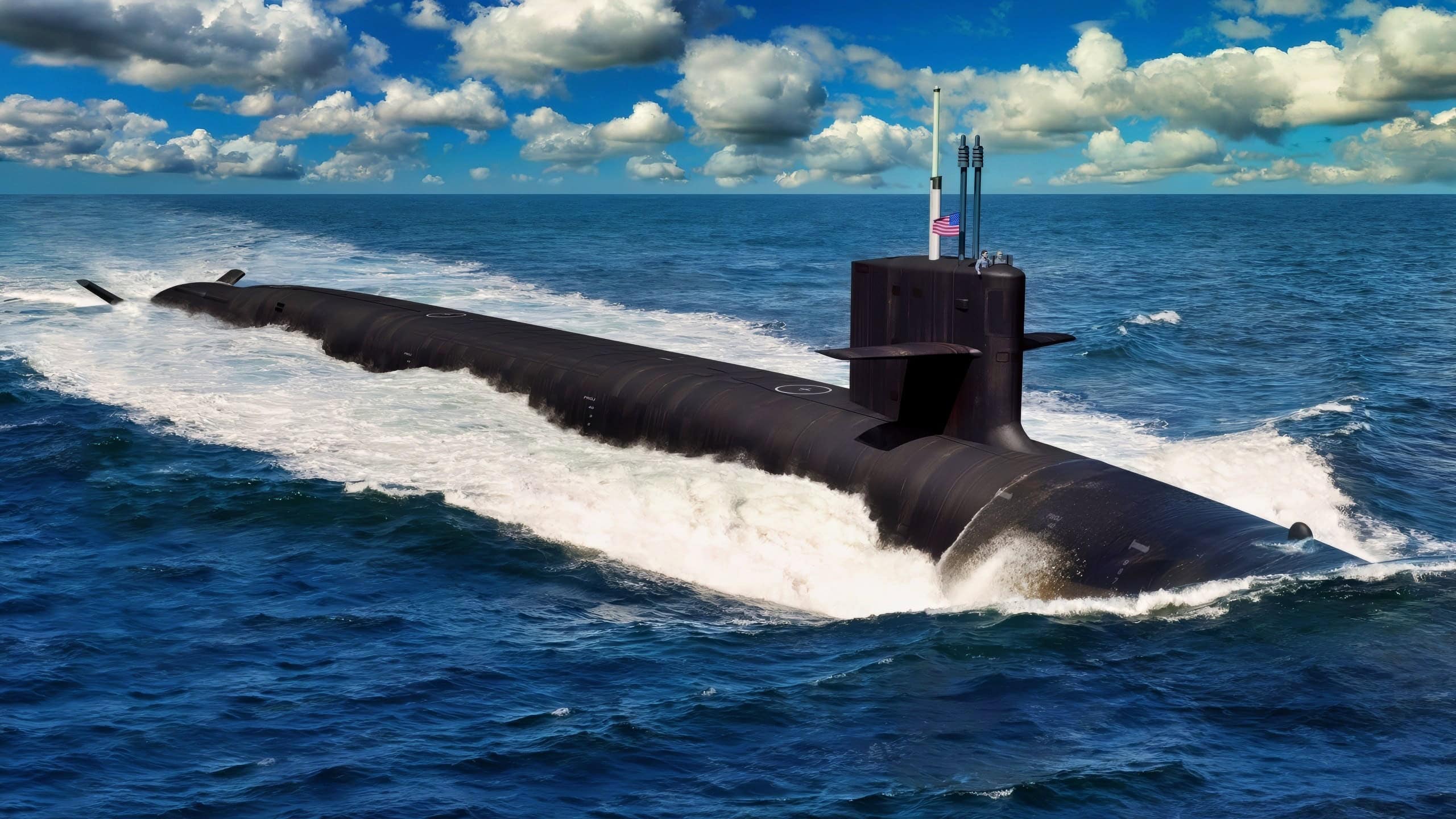
How Many Nuclear Warheads Does A Columbia-Class Submarine Carry, And How Does It Stay Hidden?
A single Columbia-class submarine carries 16 Trident II D5 ballistic missiles, each able to deliver multiple independently targeted nuclear warheads — enough concentrated firepower in one hull to hold an entire nation at risk — and the whole point of the boat is that no adversary will ever find it. The Columbia is not interesting because it is the largest or most expensive submarine the United States has ever built. It is interesting because of what it carries and why it can never be located. The arsenal makes it the most lethal machine America builds. The silence is what makes that arsenal a deterrent rather than a target. Together, they make the Columbia the cornerstone of the U.S. nuclear triad, the survivable leg on which roughly 70 percent of the country’s deployed nuclear deterrent will ride.

The Ohio-class guided-missile submarine USS Florida (SSGN 728) departs Naval Submarine Base Kings Bay. Florida will perform routine operations while at sea. (U.S. Navy photo by Mass Communication Specialist 1st Class James Kimber/Released)
The Arsenal: 16 Missiles, Many Warheads, One Hull
The Columbia’s main armament is 16 Trident II D5 submarine-launched ballistic missiles, carried in 16 launch tubes, backed by Mk48 heavyweight torpedoes for self-defense.
The D5 is a three-stage, solid-fuel, inertially guided missile, and its reach is intercontinental: the missile can carry multiple W76 or W88 thermonuclear reentry vehicles to ranges measured in thousands of miles, using a guidance system that combines inertial navigation with stellar updates for accuracy. Each missile uses MIRV technology — multiple independently targetable reentry vehicles — so a single missile can strike several separate targets, and a single submarine can therefore hold many targets at risk at once.
The destructive power deserves to be stated plainly, and in the terms that actually matter for strategy. Each D5 typically carries several warheads and can carry more by design, with actual loadouts limited by arms-control arrangements such as the New START treaty rather than by the missile’s capacity.
The point of that concentrated firepower is not the number of cities a single boat could destroy; it is that the retaliation is assured. An adversary contemplating a first strike against the United States has to know that even a successful surprise attack could not prevent a devastating response, because a Columbia hidden somewhere in the ocean would survive to launch it.
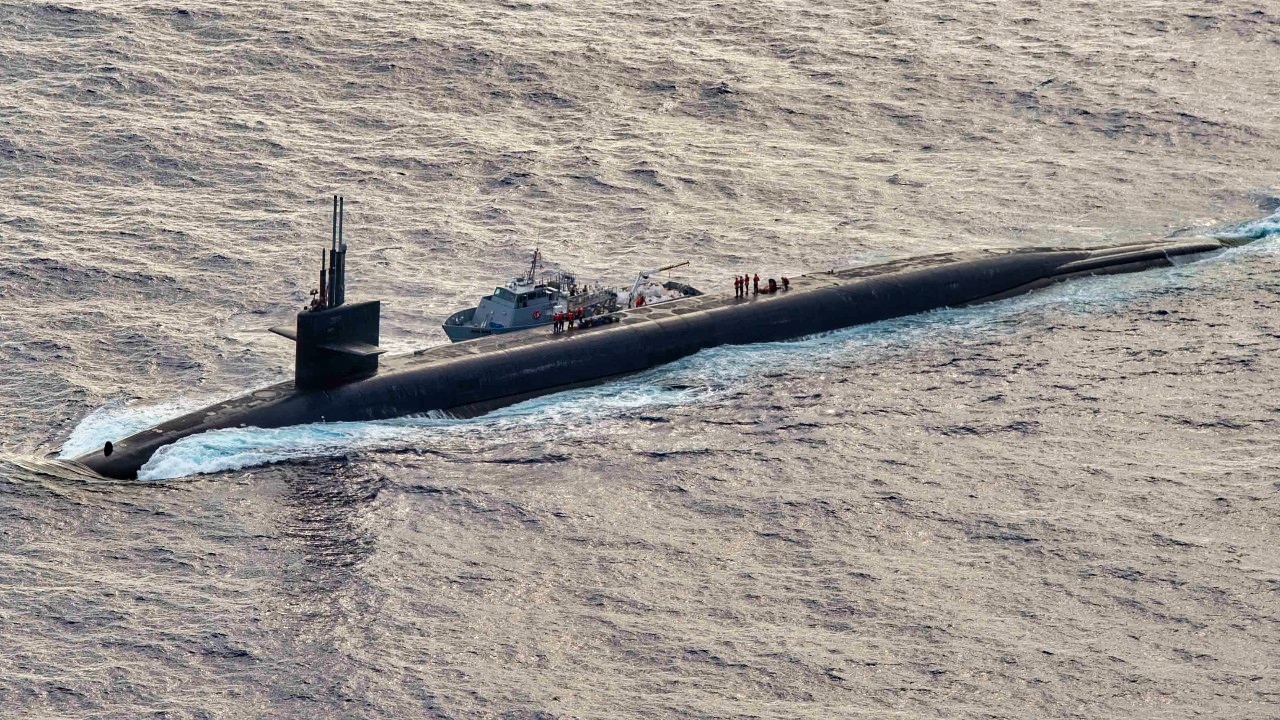
The Ohio-class ballistic missile submarine USS Kentucky (SSBN 737) sails alongside a submarine support vessel during a routine armed air escort (AAE) exercise, April 24, 2025. AAEs are designed to improve interoperability between our services, increasing lethalitythrough multi-domain integration.. Commander, Submarine Group (SUBGRU) 9, exercises administrative control authority for assigned submarine commands and units in the Pacific Northwest providing oversight for shipboard training, personnel, supply and material readiness of submarines and their crews. SUBGRU-9 is also responsible for nuclear submarines undergoing conversion or overhaul at Puget Sound Naval Shipyard in Bremerton, Washington. (U.S. Navy photo by Mass Communication Specialist 1st Class Ryan Riley)
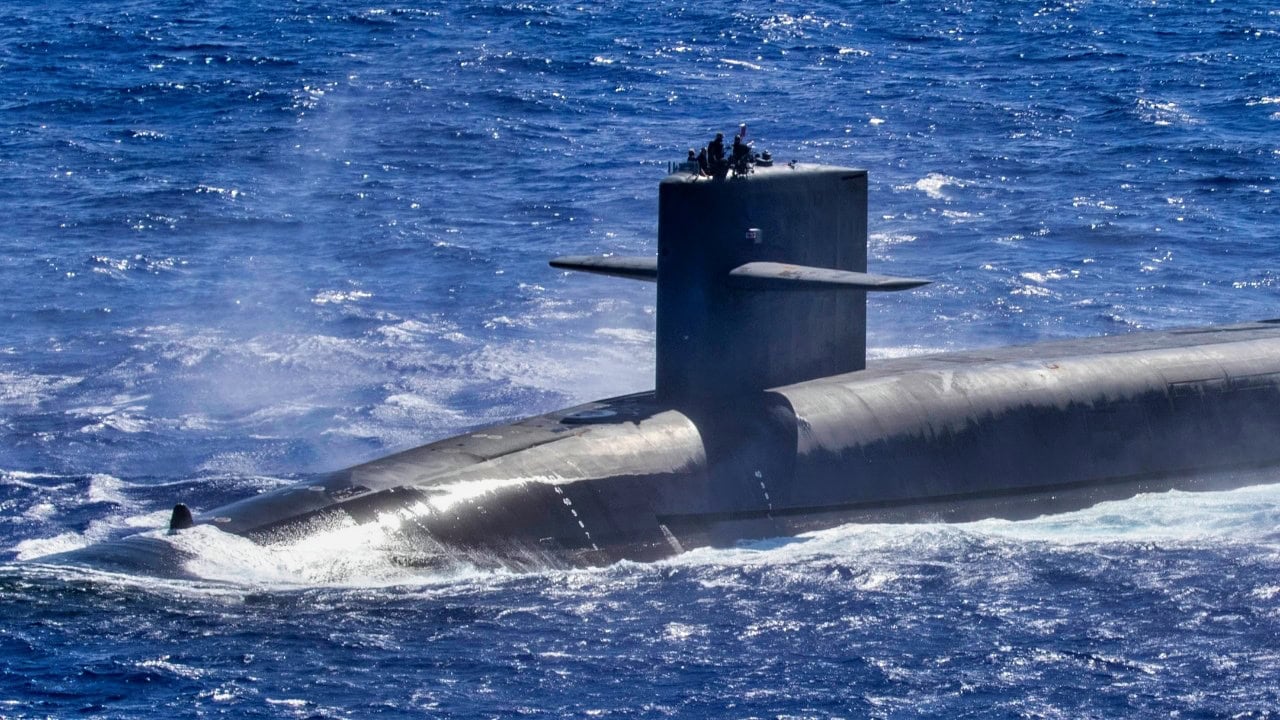
PACIFIC OCEAN (June 28, 2024) – An AS-332 Super Puma assigned to the Lewis and Clark-class dry cargo ship USNS Cesar Chavez (T-AKE 14) delivers supplies to the Ohio-class ballistic missile submarine USS Louisiana (SSBN 743) during a vertical replenishment at sea, June 28, 2024. The presence of the SSBN in the Pacific demonstrates the flexibility, survivability, readiness, and capability of the U.S. Navy submarine forces and complements the many exercises, training, operations, and other military cooperation activities conducted by Strategic Forces to ensure they are available and ready to operate around the globe at any time. Homeported in Bangor, Washington and currently assigned to Submarine Squadron 17, Louisiana is an undetectable launch platform for submarine-launched ballistic missiles, providing the United States with its most survivable leg of the nuclear triad. (U.S. Navy Photo by Mass Communication Specialist Seaman Andrew McPeek)
That is the entire logic of the sea-based deterrent: enough assured second-strike capability in one undetectable hull that aggression can never escape a reply. The arsenal exists to make a first strike pointless, and it works only if the boat carrying it cannot be found.
The Silence: Why The Boat Can Never Be Located
The Columbia derives its combat power not from visibility but from concealment, and the entire design is built around staying hidden. The missile tubes allow it to strike from vast stretches of ocean, while its quieting, its sensors, and its torpedoes are there to help it survive against hostile submarines, patrol aircraft, and undersea surveillance long before any launch order would ever be contemplated.
Navy developers describe it as the quietest and most survivable submarine the United States has ever built, a 560-foot boat designed to lurk silently through decades of deterrent patrols. The conceptual heart of the program is simple: the weapon only works if the boat is never found.
The quieting comes from specific engineering. The Columbia uses an electric-drive propulsion train rather than the mechanical drive used on earlier U.S. submarines: the nuclear reactor still generates heat to make steam and turn turbines, but the electricity those turbines produce drives an electric motor rather than passing through the reduction gears that translate turbine speed into propeller rotation on conventional boats.
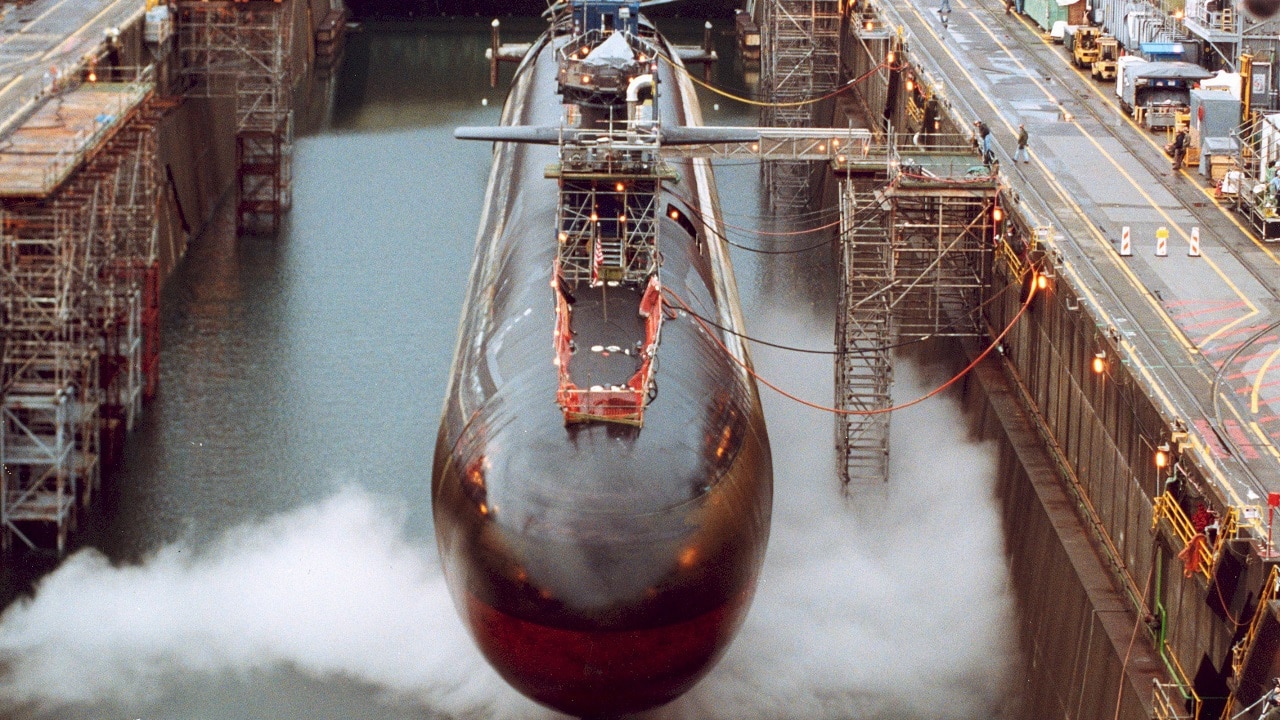
Puget Sound Naval Shipyard, Wash. (Aug. 14, 2003) — USS Ohio (SSGN 726) is in dry dock undergoing a conversion from a Ballistic Missile Submarine (SSBN) to a Guided Missile Submarine (SSGN) designation. Ohio has been out of service since Oct. 29, 2002 for conversion to SSGN at Puget Sound Naval Shipyard. Four Ohio-class strategic missile submarines, USS Ohio (SSBN 726), USS Michigan (SSBN 727) USS Florida (SSBN 728), and USS Georgia (SSBN 729) have been selected for transformation into a new platform, designated SSGN. The SSGNs will have the capability to support and launch up to 154 Tomahawk missiles, a significant increase in capacity compared to other platforms. The 22 missile tubes also will provide the capability to carry other payloads, such as unmanned underwater vehicles (UUVs), unmanned aerial vehicles (UAVs) and Special Forces equipment. This new platform will also have the capability to carry and support more than 66 Navy SEALs (Sea, Air and Land) and insert them clandestinely into potential conflict areas. U.S. Navy file photo. (RELEASED)
Removing those gears removes a source of noise. The boat also uses a quieting pump-jet propulsor in place of an open propeller, and it adopts an X-shaped stern configuration to restore the maneuverability that submarines lost as they moved from propellers to quieter propulsors, with its 16 missile tubes running 44 feet long. On patrol, the electric drive softens the mechanical harmonics that sonar listens for, letting the boat sit beneath ambient ocean noise and transit chokepoints with greater discretion.
A large-aperture bow sonar array, flank arrays, and a towed array let it hear threats before they hear it.
Why Quiet Matters Now: China’s Undersea Deterrent Arrives
The investment in silence is not abstract because the era of uncontested American undersea dominance is ending. Quieter propulsion grows more vital as potential adversaries acquire advanced sonar and new methods of detecting submarines, an edge the United States is in danger of seeing narrow.
The clearest driver is China. The commander of U.S. Strategic Command, Air Force Gen. Anthony Cotton, told Congress that China’s six Jin-class ballistic missile submarines are being equipped with the new JL-3 missile, capable of reaching the continental United States, a third-generation weapon with a range estimated at more than 10,000 kilometers and the ability to carry multiple warheads.
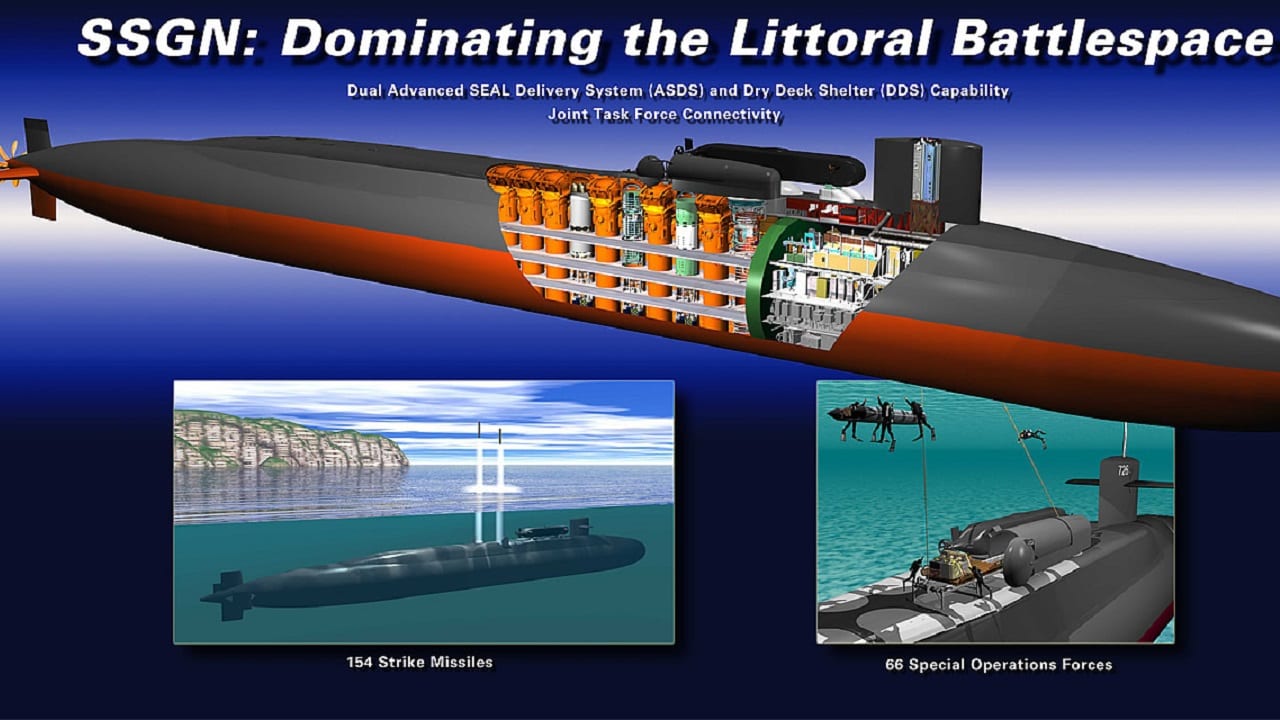
Ohio-class SSGN. Image Credit: US Military.
The significance is that China is building exactly the survivable sea-based deterrent that the Columbia-class represents. China’s current Type 094 boats are acoustically inferior — by one assessment, noisier than a Soviet submarine first launched in 1976 — which has confined them to defended waters near home, but the JL-3’s reach means they no longer need to sail into the open Pacific to threaten the U.S. mainland, and the coming Type 096 is being designed for far better stealth.
The Pentagon assesses that China could field eight to ten ballistic missile submarines, combining Type 094 and Type 096 boats, by around 2030. As adversaries field quieter boats and longer-range missiles, the premium on the Columbia’s own silence rises, because the survivability of the American deterrent depends on staying ahead in a contest that is closing.
Columbia-Class Strategic Weight: 70 Percent Of The Deterrent
The reason schedule risk on this program is treated as a national-security risk is the share of the arsenal that depends on it. U.S. Strategic Command has described strategic submarines as accounting for about 70 percent of America’s deployed nuclear arsenal, which is why the Columbia-class is the Navy’s highest-priority acquisition program and why the funding behind it is enormous.
The Trident missiles the boats carry are themselves being modernized: the FY2027 budget includes $5.24 billion for Trident II modifications, and a more advanced missile variant, the D5LE2, is planned to replace the current version beginning with the ninth Columbia hull in fiscal 2039, combining the proven solid-rocket-motor design with updated electronics and guidance.
The Columbia will carry that deterrent further into the future than almost any weapon system in the arsenal. The boat is powered by an S1B reactor designed to last its full 42-year service life with no mid-life refueling, eliminating the years-long overhaul that pulls older submarines out of service and saving an estimated tens of billions across the fleet. The reactor’s life-of-the-ship core, combined with improved availability, is why the Navy expects 12 Columbia boats to maintain the at-sea presence that 14 Ohio-class submarines provide today, and the boats are built to serve into the 2080s.
The Program Reality: Racing An Aging Fleet From Strained Yards
The Columbia is being built against the clock and through an industrial base under strain. The 12 boats are replacing 14 Ohio-class submarines that have already served for decades, and the timing is tight: the first boat is targeted for delivery in 2028, with a first strategic patrol around 2031, just as the oldest Ohio boats reach the absolute limit of their ability to continue patrolling. The 12-replace-14 math leaves no slack, and the Navy plans to carry the deterrent on fewer hulls only because the Columbia’s reliability and reactor life are meant to keep more of them at sea.
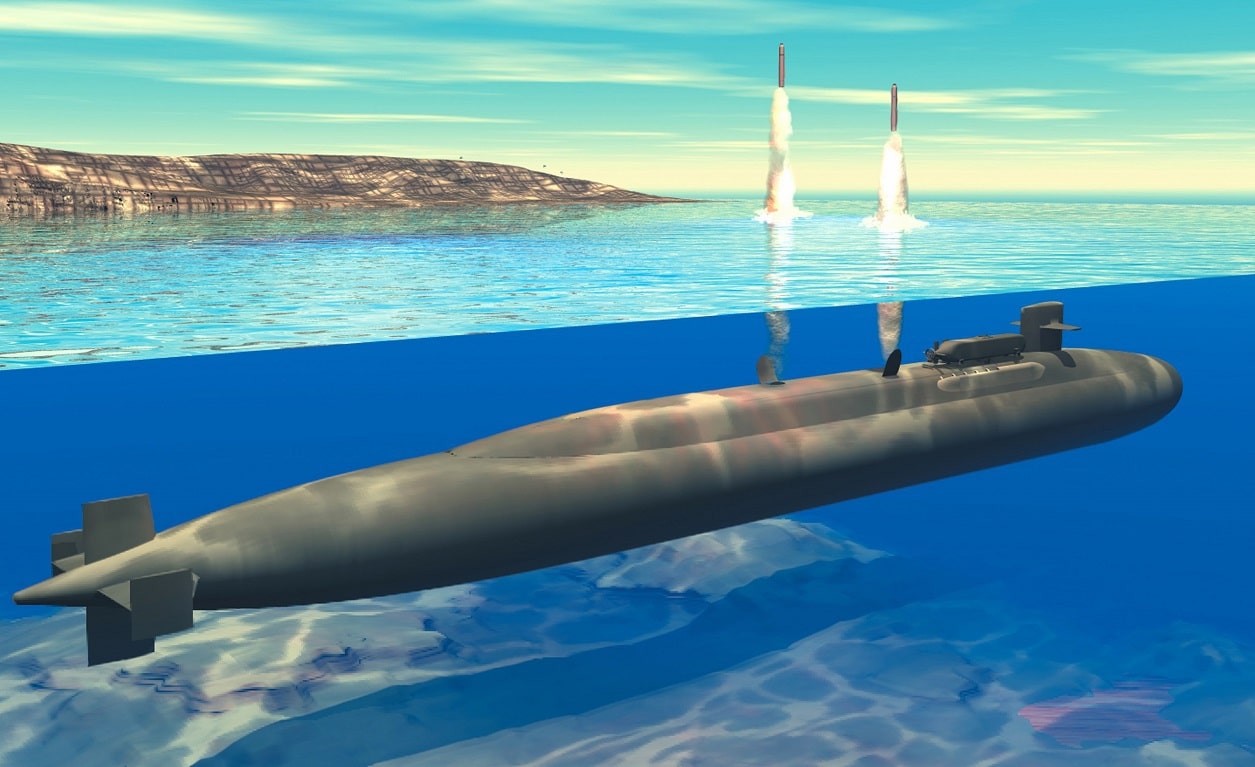
Ohio-Class Ballistic Missile Submarine. Image Credit: US Navy
The build itself reflects both progress and pressure. The lead boat, USS District of Columbia, was about 65 percent complete as of early 2026, with all 26 of its modules delivered to final assembly in Groton, Connecticut, and the Navy driving toward that 2028 delivery, though government oversight has warned of persistent design, material, quality, and schedule problems, and the lead boat has run roughly 17 months late.
The greater difficulty is that the Columbia competes for the same welders, nuclear-qualified trades, castings, forgings, and design labor needed for the Virginia-class attack submarines, straining a submarine-industrial base already stretched thin.
A March 2026 contract modification awarded General Dynamics Electric Boat $15.38 billion for Columbia design, lead-yard support, and sustainment, with work running to 2035. Because of the 70 percent figure, the Columbia-class gets first call on that scarce capacity: it is the one program the Navy protects above all others, even when doing so squeezes the attack-submarine fleet competing for the same resources.
Columbia-Class: The Cornerstone Of The Triad
The Columbia-class matters because it concentrates two things in one hull: the most destructive arsenal the United States fields, and the concealment that turns that arsenal into a guarantee rather than a target.
A boat carrying 16 Trident missiles and many warheads, hidden somewhere in the ocean and effectively impossible to find, is the reason an adversary cannot rationally hope to disarm the United States in a first strike — and that assurance is the foundation of strategic deterrence. The weapon and the silence are inseparable; neither works without the other. The whole design exists so that the boat can wait, unseen, for an order that the entire point of its existence is to ensure never has to come.
What gives the program its urgency is that the contest is no longer one-sided. China is fielding longer-range submarine-launched missiles and building quieter boats to carry them, the United States is replacing an aging fleet through shipyards stretched to their limits, and the margin in the undersea domain that America long took for granted is narrowing.
The Columbia-class is the answer to that pressure: 12 boats meant to carry 70 percent of the nation’s deterrent into the 2080s, built around the principle that the most powerful retaliatory weapon ever put to sea is only as credible as its ability to disappear.
The first of them is taking shape in Groton now, and the assurance it is meant to provide rests on a simple, demanding requirement — that no one will ever hear it coming.
About the Author: Harry J. Kazianis
Harry J. Kazianis (@Grecianformula) was the former Senior Director of National Security Affairs at the Center for the National Interest (CFTNI), a foreign policy think tank founded by Richard Nixon based in Washington, DC. Harry has over a decade of experience in think tanks and national security publishing. His ideas have been published in the NY Times, The Washington Post, The Wall Street Journal, CNN, and many other outlets worldwide. He has held positions at CSIS, the Heritage Foundation, the University of Nottingham, and several other institutions related to national security research and studies. He is the former Executive Editor of the National Interest and the Diplomat. He holds a Master’s degree focusing on international affairs from Harvard University.

