
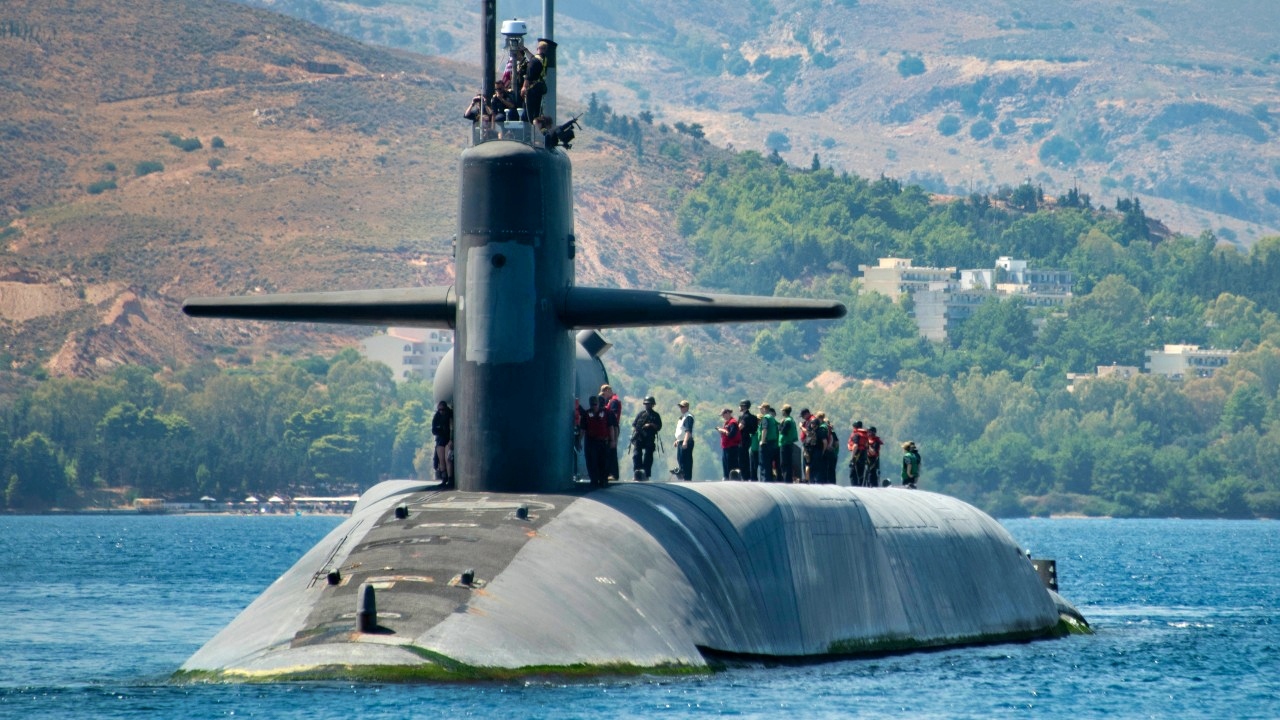
Why Is The U.S. Navy Keeping Its Ohio-Class SSGN Submarines Instead Of Retiring Them?
The U.S. Navy is keeping its four Ohio-class guided-missile submarines past their planned retirement because nothing in the fleet can replace what each one does: carry 154 Tomahawk cruise missiles, insert dozens of special operators clandestinely from underwater, and loiter off a hostile coast for months as a hidden strike-and-command node.
All four were supposed to begin retiring in 2026. Then the boats went to work in the strikes on Iran, and the Navy discovered there is no replacement for any of those three capabilities arriving anytime soon.
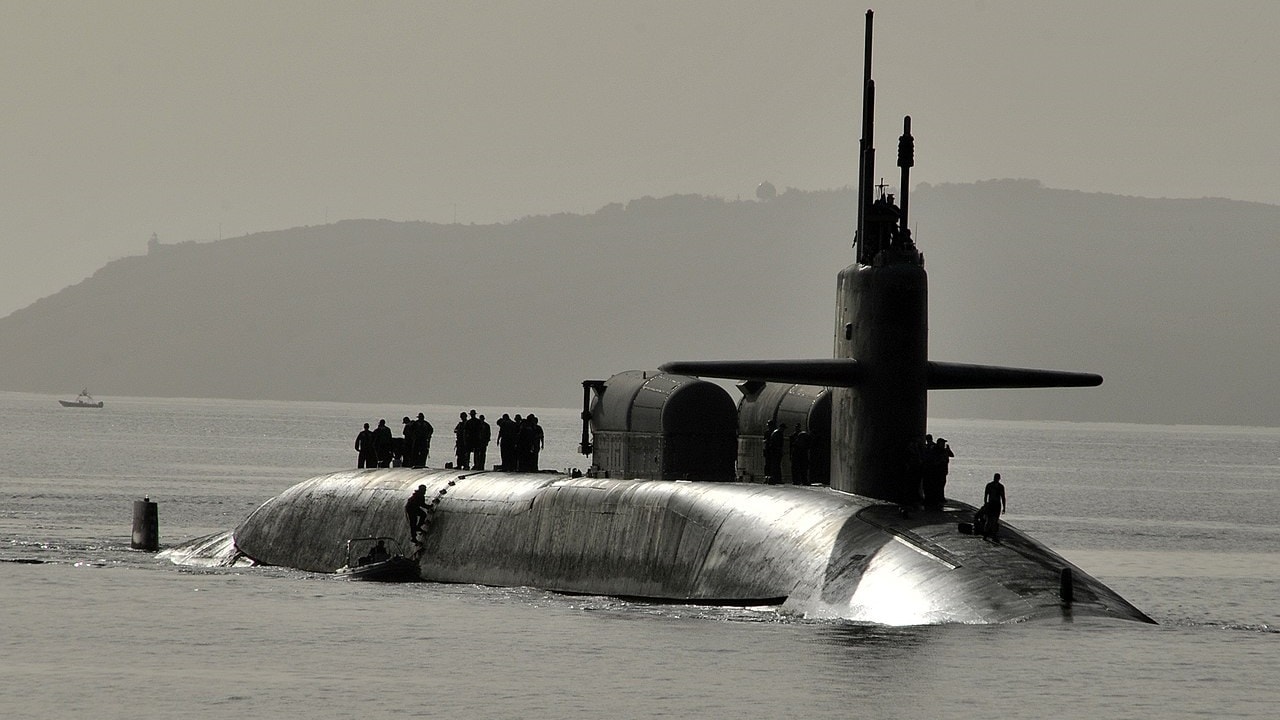
SOUDA BAY, Greece (May 21, 2013) The Ohio-class guided-missile submarine USS Florida (SSGN 728), gold crew, arrives in Souda harbor. Florida is homeported in Kings Bay, Ga., and is deployed conducting maritime security operations and theater security cooperation efforts in the U.S. 6th Fleet area of responsibility. (U.S. Navy photo by Paul Farley/Released) 130521-N-MO201-047
Now the retirement is slipping, the Navy is studying extensions for hulls it had already written off, and the whole episode has become the clearest measure of how thin the American undersea force has grown.
What Makes The Ohio-Class SSGNs Irreplaceable
The four boats — USS Ohio, USS Michigan, USS Florida, and USS Georgia — were built in the 1980s as ballistic-missile submarines and converted between 2002 and 2007 into guided-missile submarines, or SSGNs.
The conversion was transformative. The Navy took the 24 tubes that once held Trident nuclear missiles and modified 22 of them to carry seven Tomahawk cruise missiles each, for a total of 154, while reconfiguring the remaining tubes to support special operations forces. The result is the most heavily armed conventional submarine ever put to sea, a single hull capable of launching a barrage of 154 precision cruise missiles from a position no surface ship can reach.
The strike capacity is only the first of three things these boats do that no other ships do. They are also among the Navy’s premier platforms for special operations, configured to carry and clandestinely insert combat divers.
And because they are nuclear-powered, they can stay submerged and on station for months at a time, serving as hidden forward bases and underwater command nodes far from any friendly port.
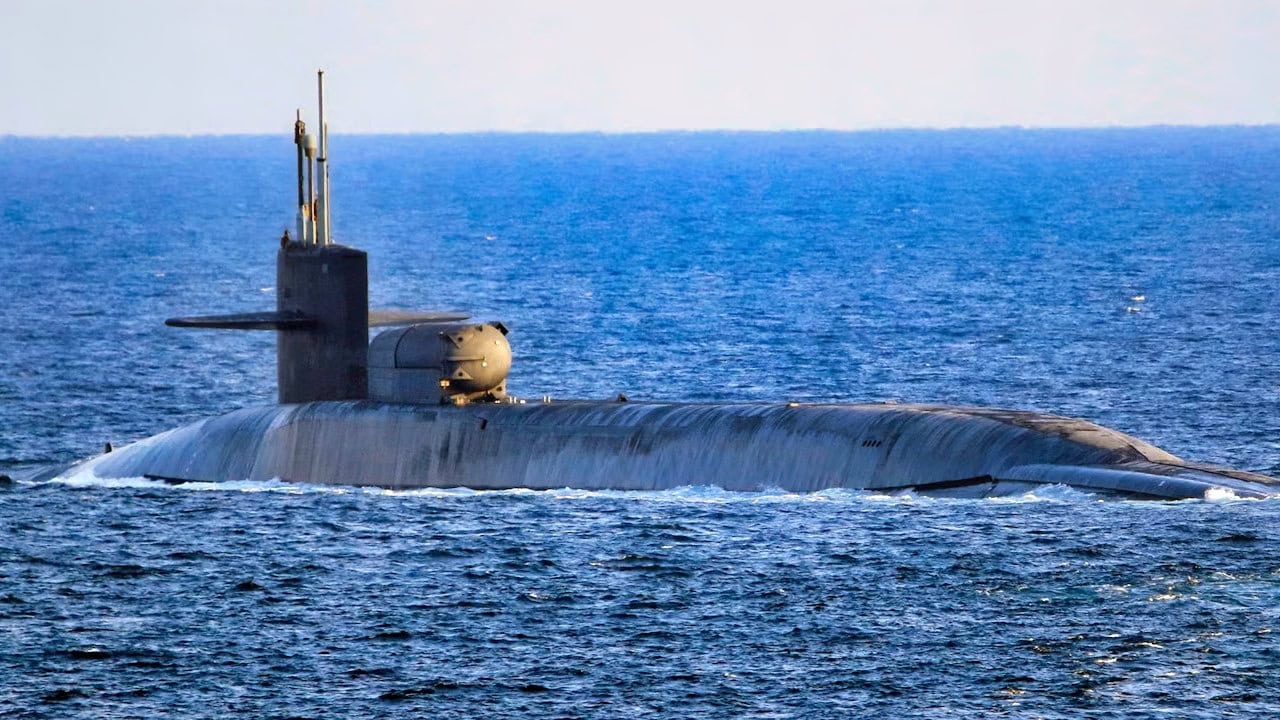
Ohio-Class SSGN Submarine U.S. Navy.
The proof of that endurance is concrete: USS Florida once completed a deployment lasting more than a year, returning to Kings Bay after spending over twelve months forward-deployed. Three distinct and hard-to-replace capabilities — mass strike, clandestine special operations, and months-long hidden presence — live in each of these four aging hulls, and the Navy planned to give up all of them at once.
Part One: The 616-Missile Hole
The first capability lost in retirement is the one easiest to count, and the number is stark.
Four boats carrying 154 Tomahawks each means 616 vertical launch cells, and retiring all four removes those 616 cells from the fleet with no cell-for-cell replacement.
The closest substitute is the Virginia-class Block V attack submarine, which adds a section called the Virginia Payload Module. That module carries 28 additional Tomahawks, bringing a Block V boat’s total cruise-missile capacity to roughly 40 — less than a third of what a single SSGN holds. The math is unforgiving: by the Navy’s own accounting, it would take 22 Virginia-class submarines equipped with the payload module to regain the missile capacity that the four SSGNs provide today.
Those 22 boats do not exist yet and will not for a long time, and the dedicated replacement is further off still. The Navy’s planned Large Payload Submarine — a next-generation, large-diameter boat meant to take over the SSGN mission — would not be ordered until 2036, with the Navy buying one every three years thereafter toward a planned five by 2049, meaning the capability does not meaningfully arrive until the 2040s.
The loss is not theoretical to the broader fleet, either: a March 2026 Navy fleet review found that the four SSGNs and a dozen retiring Ticonderoga-class cruisers together would shed more than 2,000 vertical launch cells in a single wave, the largest concentrated loss of naval strike capacity since the Cold War, with the submarines alone accounting for 616 of them.
In an era when opening salvos against a heavily defended adversary like China would require massed precision fires, that concentrated undersea magazine depth is not merely useful but, in the near term, irreplaceable.
Part Two: The Underwater Commando Mothership Nothing Else Replaces
The second capability receives the least attention and may be the hardest to reconstitute.
The Ohio-class SSGNs are purpose-built motherships for special operations forces, and they do it at a scale and with a stealth no other submarine matches. During the conversion, the two forward-most missile tubes were permanently converted into lockout chambers that allow clandestine insertion and recovery of special operators while the boat stays submerged, and the boats were fitted to carry Navy SEALs or Army Green Berets — up to four platoons, or 66 operators.
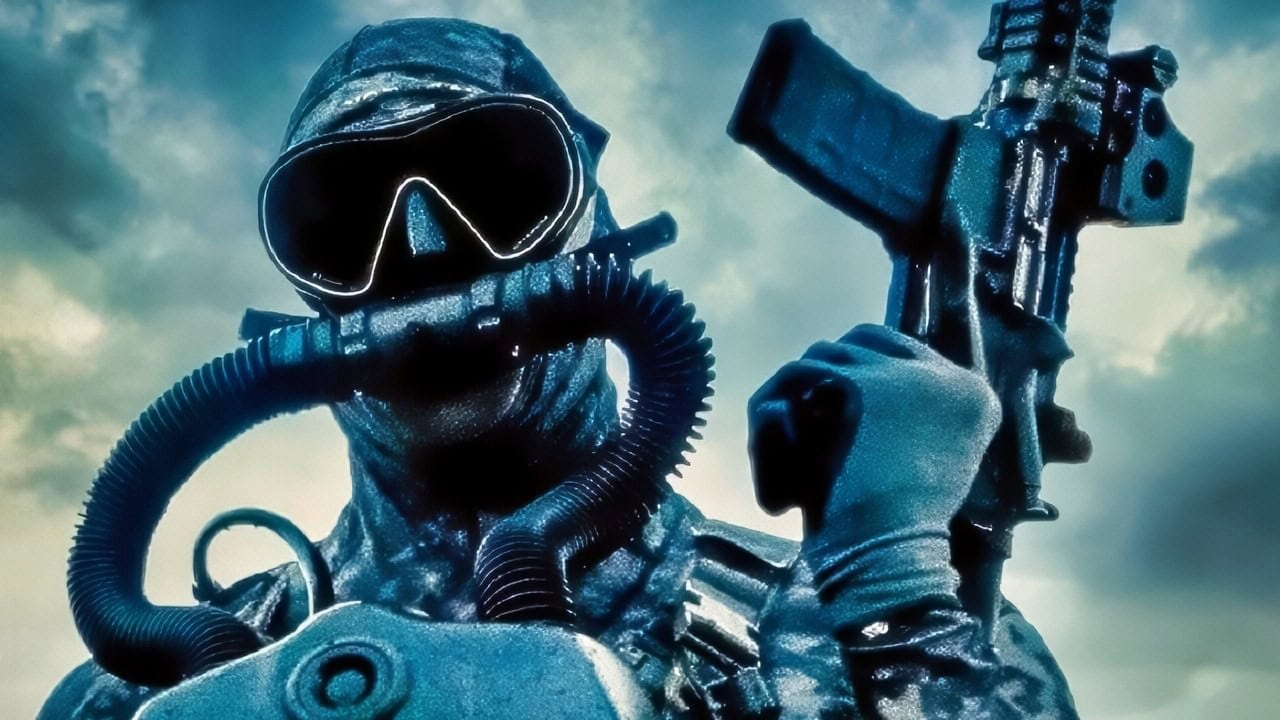
U.S Navy Seals Photo. Image Credit: Creative Commons.
Each boat would normally carry that force of 66 for roughly 90 days and could surge to as many as 100 operators for short periods, deploying them via Dry Deck Shelters and SEAL Delivery Vehicles, the wet mini-submarines that ferry combat divers into shallow water near a hostile coast.
Nothing else in the fleet does this at the same scale. The boats act as underwater command-and-control and intelligence-fusion centers, able to support reconnaissance, sabotage, and direct-action missions while hiding beneath the waves, which makes them uniquely suited to covert operations.
Some Virginia-class submarines are assigned special-operations roles and carry Dry Deck Shelters, but as one detailed assessment notes, their configuration is not nearly as specialized as that of the larger Ohio SSGNs.
Retiring the four boats does not just subtract 616 missiles; it removes the only submarines that can put a SEAL platoon ashore from underwater at this scale, and the smaller attack boats meant to absorb the role cannot carry the same force or serve as the same kind of forward base.
Part Three: The Retirement That Started Slipping
The third thread is the reversal itself, and it is the proof that the first two are real. The original plan was firm: USS Ohio and USS Florida would retire in fiscal 2026, with USS Michigan and USS Georgia following in 2028, the four oldest boats in the Ohio class, all past 40 years of service.
Then the schedule began to slip. The first visible sign came when USS Ohio and USS Florida were omitted from an internal Navy inactivation memorandum that circulated in mid-September 2025, indicating a potential service-life extension beyond 2026, with planners actively developing new operational concepts built around the boats’ mass Tomahawk salvos and special-operations support.
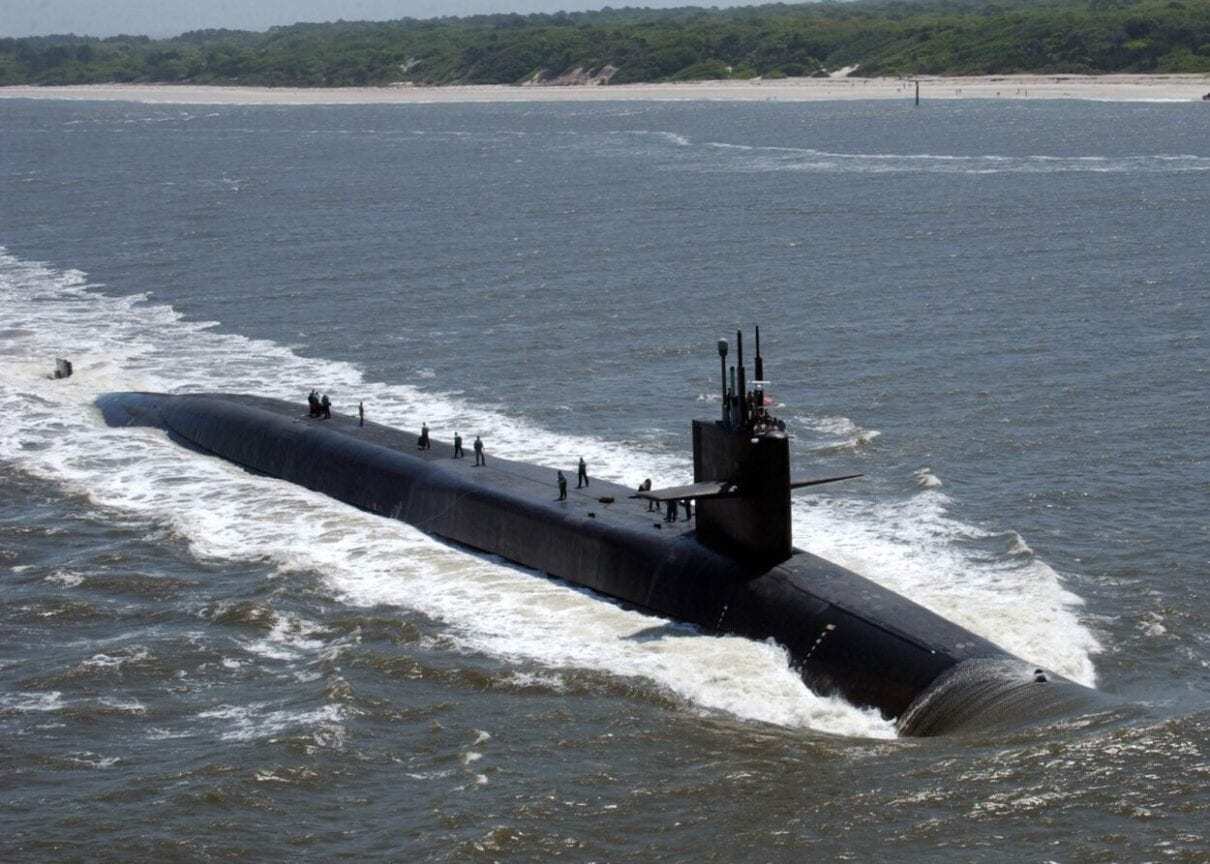
The guided missile submarine Florida (SSGN-728) makes her way through Cumberland Sound to Naval Submarine Base Kings Bay, 11 April 2006. Florida will be officially welcomed to her new home in Kings Bay with a return to service ceremony scheduled for May 25, 2006 in Mayport, Fla. Ohio-Class
The reason traces directly to the failures of the programs meant to replace the undersea fleet. With the Columbia-class ballistic-missile submarine and the Virginia-class Block V both running behind schedule, the Navy has been forced to study keeping its oldest boats in service as a hedge.
Rear Adm. Scott Pappano, the program executive officer for strategic submarines, confirmed the Navy is evaluating individual-hull life extensions for up to five Ohio-class ballistic-missile submarines, and said that as part of that effort, the Navy would also evaluate the SSGNs, which he called “more of a challenge” because those boats are operated more vigorously than the missile submarines.
Until the Virginia payload modules come online in sufficient numbers to supplant the SSGN inventory, Pappano said, the Navy wants to keep the missile-shooter capability in the SSGNs for as long as possible.
The honest status is not that the retirement has been formally canceled — no official change to the schedule has been announced — but that it is slipping and under active evaluation, with the Navy reluctant to give up boats it suddenly cannot do without.
Notably, the riskiest stretch, Pappano has warned, falls in the 2030s, exactly as the new Columbias arrive and the old Ohios go out.
The Trigger: Iran Put The Boats To Work
What turned a paper retirement plan into “we cannot lose these yet” was a war.
In June 2025, during Operation Midnight Hammer — a coordinated U.S. strike on Iran’s nuclear facilities — an Ohio-class guided-missile submarine launched roughly 30 Tomahawk cruise missiles at the nuclear site at Isfahan as part of a broader package that also sent B-2 bombers against the enrichment sites at Natanz and Fordow with bunker-busting bombs.
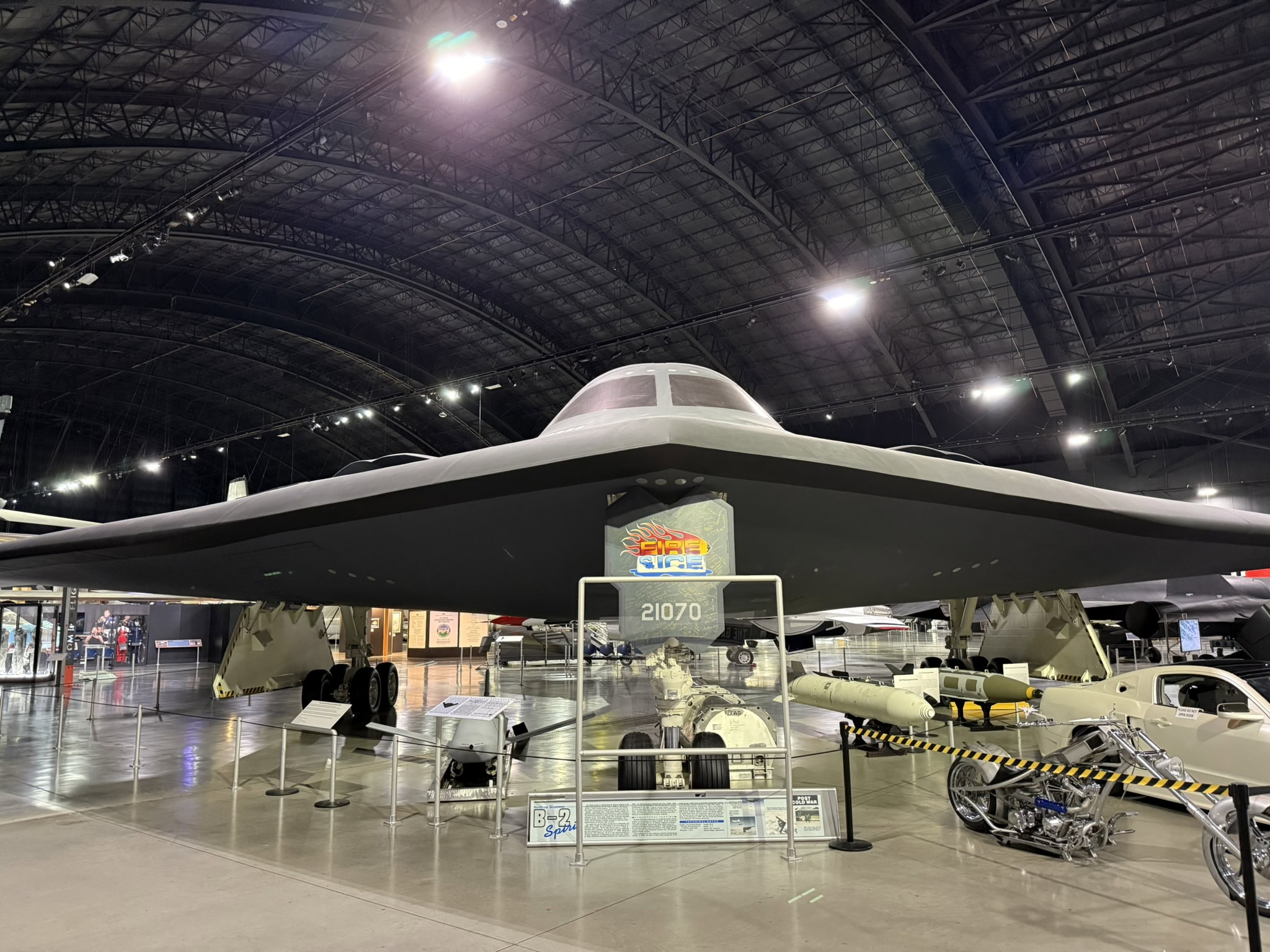
B-2 Spirit Stealth Bomber. 19FortyFive.com Photo from National Museum of the U.S. Air Force Visit in 2025.
Defense officials confirmed a submarine fired the missiles, though the Pentagon did not officially name the boat; the platform was widely reported to be USS Georgia, which had entered the region months earlier. Other reporting and corroborating accounts described the same coordinated strike, with the submarine-launched Tomahawks hitting Isfahan after the bomber runs.
President Trump and his defense secretary characterized the strikes as having obliterated Iran’s nuclear program, a battle-damage assessment that independent analysts have treated with caution, given the depth of the targeted sites. That June 2025 strike preceded the September decision to keep Ohio and Florida, and it demonstrated in combat exactly what the boats offer.
A separate and larger campaign reinforced the point. Operation Epic Fury, a distinct operation that began on February 28, 2026 against the Iranian regime in the U.S. Central Command region, has consumed Tomahawk cruise missiles in great quantity, with the SSGNs and surface ships firing massed salvos to suppress Iranian air defenses ahead of follow-on strikes.
The scale of that expenditure has raised broader concerns about whether the Navy has enough cruise missiles for a major war, and it has made the prospect of removing 616 launch cells from the fleet seem reckless. Between the June 2025 nuclear-facility strike and the 2026 campaign, the boats the Navy had scheduled for the scrapyard proved themselves the backbone of American undersea strike, and the case for keeping them wrote itself.
The Verdict: A Reprieve, Not A Fix
The Ohio-class SSGN saga is the clearest single measure of how thin the U.S. undersea force has become. Three irreplaceable capabilities — 616 cruise-missile cells, the only underwater special-operations mothership at scale, and months-long hidden forward presence — were all scheduled to disappear at once, on the bet that newer submarines would fill the gap.
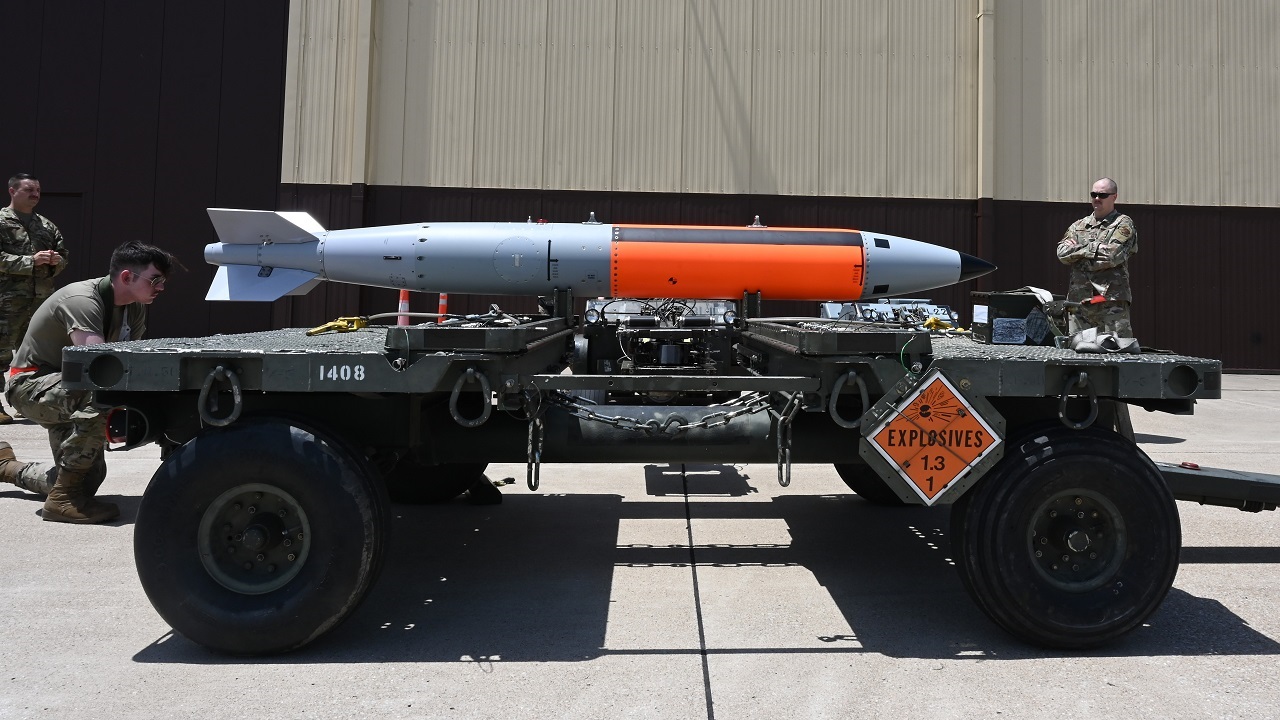
The 72nd Test and Evaluation Squadron test loads a new nuclear-capable weapons delivery system for the B-2 Spirit bomber on June 13, 2022 at Whiteman Air Force Base, Missouri. The 72nd TES conducts testing and evaluation of new equipment, software and weapons systems for the B-2 Spirit Stealth Bomber. (U.S. Air Force photo by Airman 1st Class Devan Halstead)
They will not, not for years: the Columbia-class is behind schedule, the Virginia Block V arrives too slowly and carries too few missiles, and the dedicated Large Payload Submarine is a 2040s prospect. So the Navy is keeping exhausted 40-year-old boats it had already written off, because it has nothing else.
The honest close is that the extension buys time, not a solution. These hulls and reactors genuinely are near the end of their lives — that is why they were slated to retire in the first place — and Pappano has been candid that extending the hardest-worked boats in the class is a real engineering challenge with limits.
Keeping them in service a few years longer postpones the reckoning rather than resolving it; the underlying problem is a submarine-industrial base that cannot build replacements fast enough, the same strain that is delaying the Columbia and starving the attack-submarine fleet. The four boats will fight on for now because Iran proved they cannot yet be spared, and the day the Navy finally retires them, the hole they leave — in missiles, in commandos, and in hidden presence — will still be waiting to be filled.
About the Author: Harry J. Kazianis
Harry J. Kazianis (@Grecianformula) was the former Senior Director of National Security Affairs at the Center for the National Interest (CFTNI), a foreign policy think tank founded by Richard Nixon based in Washington, DC. Harry has over a decade of experience in think tanks and national security publishing. His ideas have been published in the NY Times, The Washington Post, The Wall Street Journal, CNN, and many other outlets worldwide. He has held positions at CSIS, the Heritage Foundation, the University of Nottingham, and several other institutions related to national security research and studies. He is the former Executive Editor of the National Interest and the Diplomat. He holds a Master’s degree focusing on international affairs from Harvard University.

