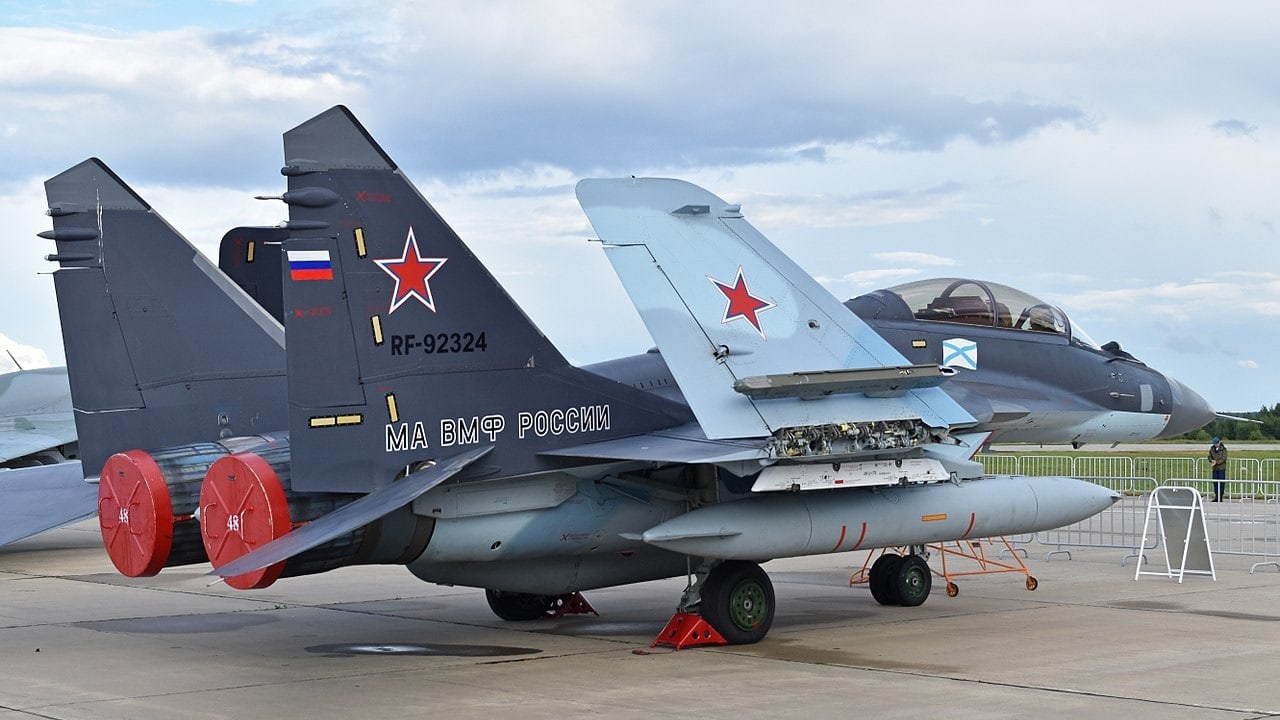
The MiG-29K (NATO designation Fulcrum-D) is Russia’s carrier-based version of the famous MiG-29 fighter. Think of it as Russia’s answer to the American F/A-18 Hornet or the French Rafale M.
It is a multirole fighter designed to operate from aircraft carriers while still performing air-superiority, strike, anti-ship, and fleet-defense missions.
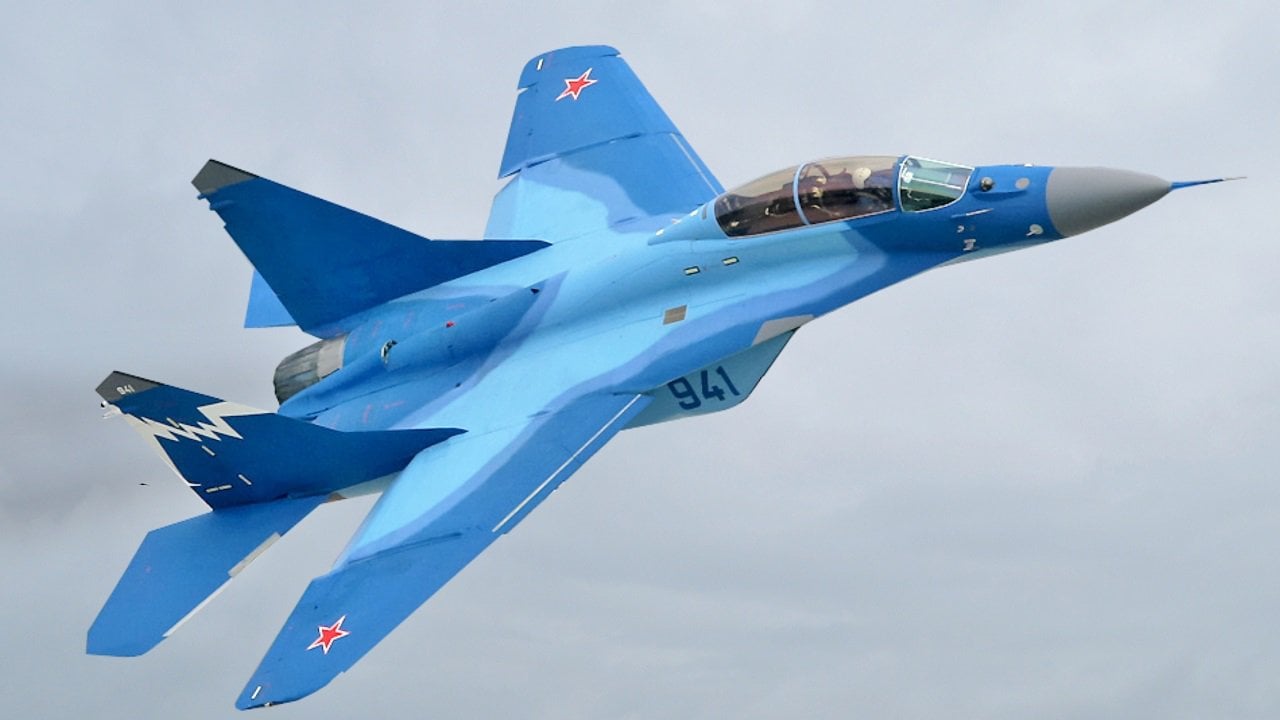
MiG-29K. Image Credit: Creative Commons.
What Makes the MiG-29K Different?
A standard MiG-29 was designed as a land-based fighter. So, to operate at sea, the legendary Mikoyan Design Bureau had to redesign the MiG-29 extensively.
So, the iconic Soviet-era aerospace firm reinforced landing gear for hard carrier landings and added an arresting hook for carrier recovery.
Mikoyan made the carrier variant of their MiG-29 with folding wings for storage aboard ships. The firm had to protect against saltwater corrosion.
They then needed to increase internal fuel capacity, air-to-air refueling capability, and the ability to serve as a “buddy tanker” for other aircraft.
The result was a substantially different aircraft from the original Cold War Fulcrum.
Specifications
The MiG-29K had a maximum takeoff weight of around 24,500 kilograms and could reach speeds exceeding Mach 2. Meanwhile, the MiG-29K had two RD-33MK turbofan engines, giving it a combat radius of around 850 kilometers.’
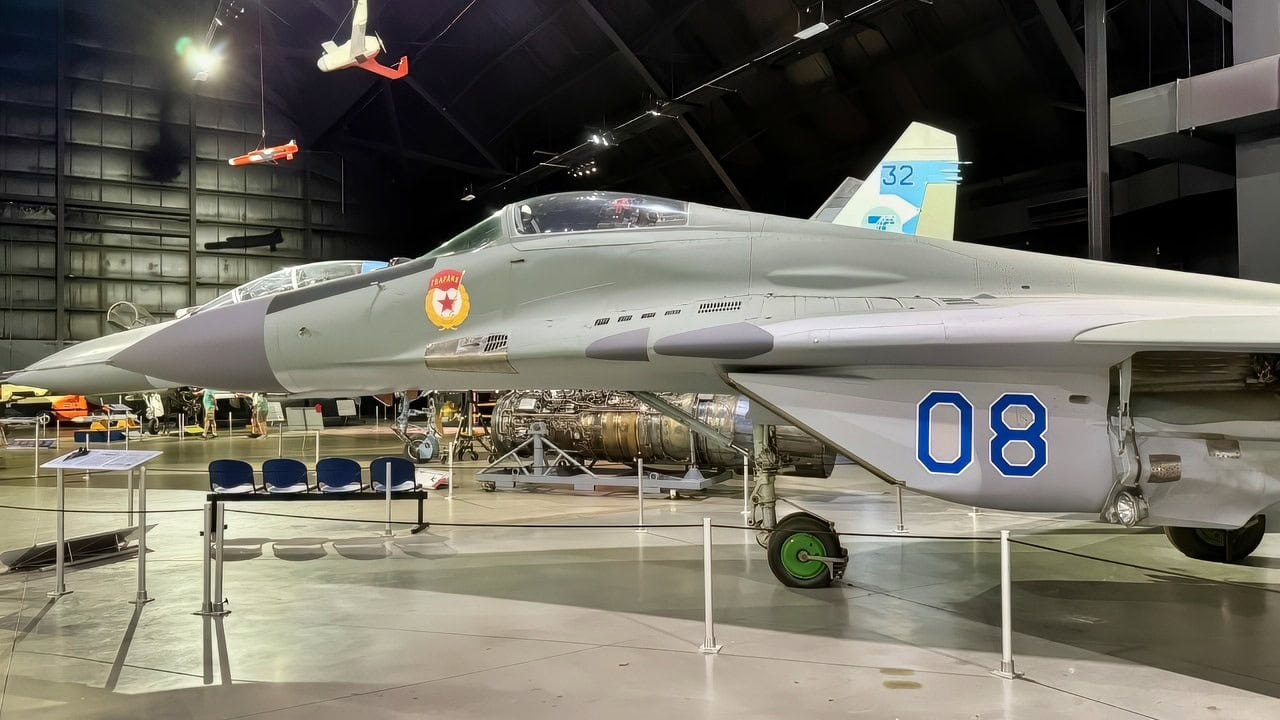
Real MiG-29 at USAF Museum in Dayton. Image Credit: 19FortyFive.com
MiG-29K Fulcrums had a ferry range of more than 2,000 km (with tanks).
Over time, the MiG-29K was upgraded to newer RD-33MK engines, which provide 7% more thrust than earlier MiG-29 engines and are optimized for naval operations.
Weapons Load
One of the most impressive aspects of the MiG-29K is its versatility. The bird could fire R-73 short-range missiles, R-27 medium-range missiles, and R-77 (RVV-AE) active radar-guided missiles.
A MiG-29K’s loadout included the Kh-25, Kh-29, guided bombs, and rocket pods.
Because it was a navalized warplane, its designers fitted it with Kh-31A and Kh-35 anti-ship missiles, as well as anti-radiation weapons such as the Kh-31P.
A 30mm GSh-30-1 cannon was mounted internally.
MiG-29Ks could conduct a range of missions essential for any modern aircraft carrier. Those mission sets included fleet defense, strike missions, suppression of enemy air defenses (SEAD), and maritime attack.
Avionics
The modern MiG-29K is far more advanced than the Soviet-era Fulcrums many Westerners remember. A glass cockpit might seem rudimentary, but back when the MiG-29K was coming online, it was a highly desired feature on warplanes everywhere.
In fact, the plane had some unique features that were quite advanced for its time, such as digital fly-by-wire controls.
The flight controls were configured as a Hands-On Throttle and Stick (HOTAS) setup.
That’s an important feature because it places all critical flight, weapon, and menu commands directly on the joystick and throttle, so you never have to take your hands off the controls.
There was a helmet-mounted sight for the pilot. Again, this was an advanced feature for this era. What’s more, the electronic warfare (EW) suite was top-of-the-line for its day.
MiG-29Ks had a Zhuk-ME multimode radar, allowing the plane to track multiple aerial targets simultaneously and to operate in maritime and ground-attack modes.
Why India Bought It
Interestingly, the MiG-29K probably owes its existence to India. After the collapse of the Soviet Union, Russia largely abandoned the MiG-29K program in favor of the larger Su-33.
After all, the MiG-29K was primarily designed as a carrier-based plane. The only problem for Moscow was that they were never truly an aircraft carrier power–especially after the collapse of the Soviet Union.
The aircraft might have died entirely if India had not acquired the former Soviet carrier Admiral Gorshkov (now commissioned as INS Vikramaditya).
With India becoming an aircraft carrier power, it required planes smaller than other Russian designs it had; the MiG-29K had lower acquisition costs, more aircraft could fit aboard the carrier, and it was much better suited to India’s STOBAR (“ski jump”) carrier design.
In fact, India has become the largest operator of the type.
Russia’s Experience
Russia initially chose the Su-33 for carrier aviation but eventually opted for the MiG-29K as a replacement due to the aging Su-33 fleet’s lower operating costs.
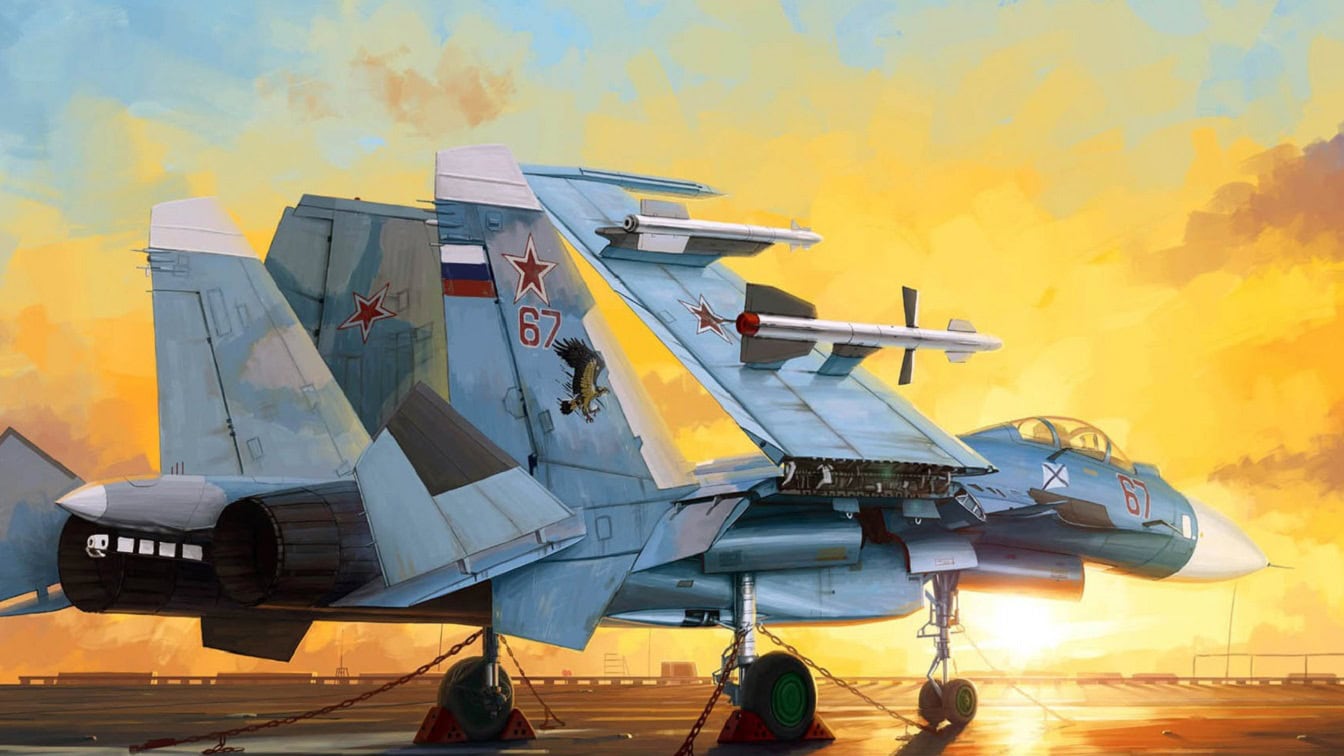
Su-33. Image Credit: Artist Rendering.
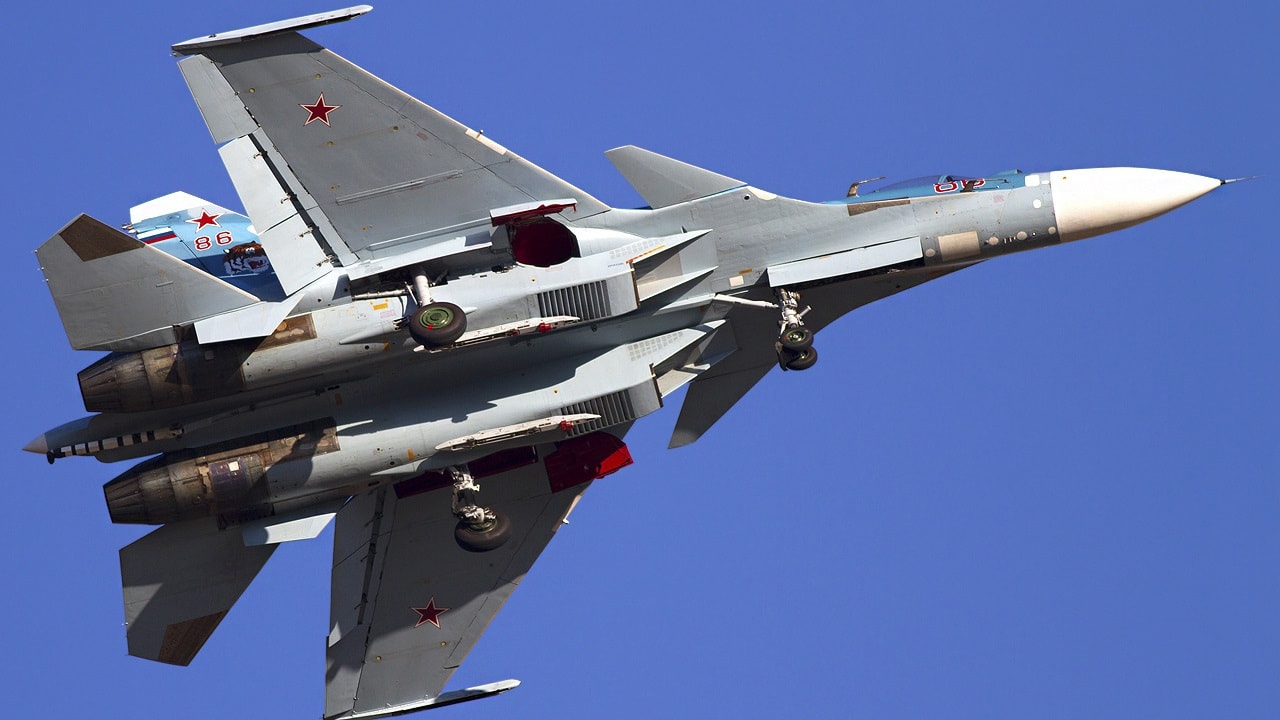
Russia’s Su-33 fighter. Image Credit: Creative Commons.
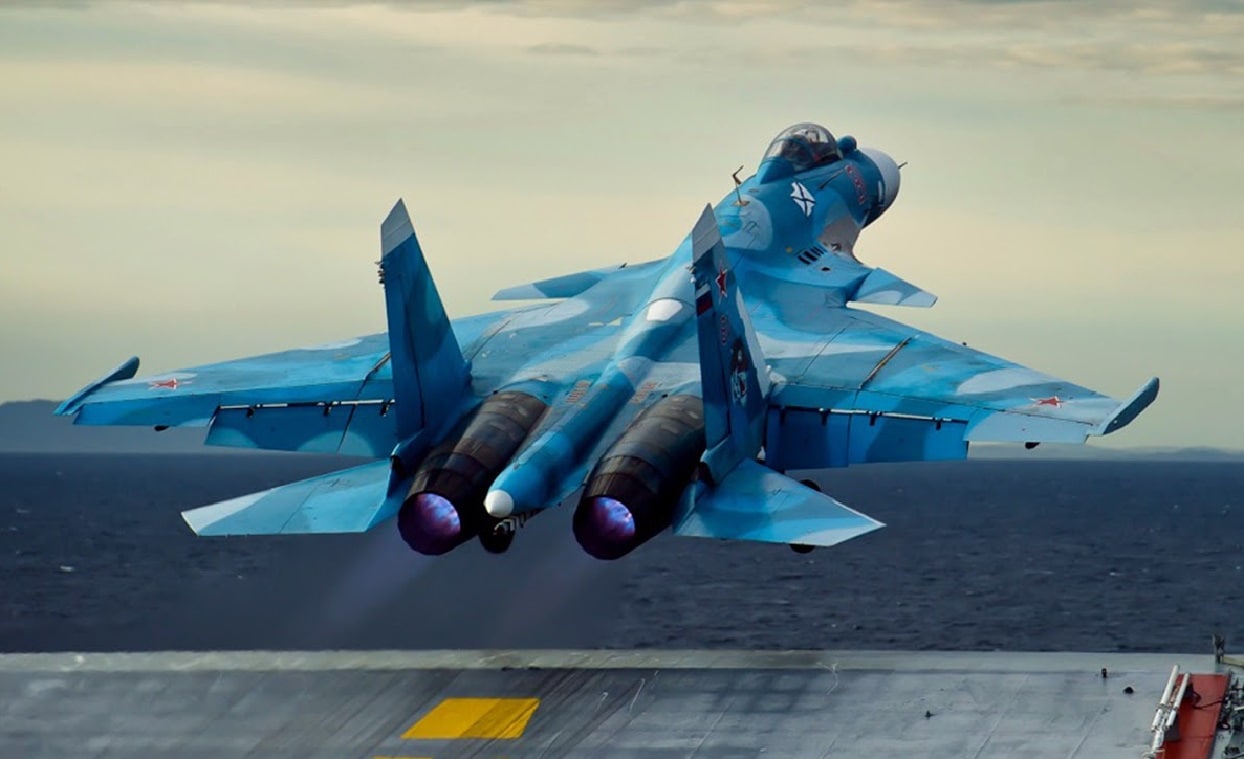
Su-33 Image: Creative Commons.
The aircraft has operated from Russia’s only carrier, Admiral Kuznetsov, although that vessel’s chronic maintenance issues have limited carrier operations.
With the limitations of the Admiral Kuznetsov, Russia’s MiG-29Ks eventually became just another ground-based warplane, as was demonstrated when the Admiral Kuznetsov was forced back to port when it was supposed to conduct an air campaign against Islamic terrorist groups in Syria during the Syrian Civil War.
Before being towed back to port, the Admiral Kuznetsov offloaded its MiG-29K fleet to the Russian airbase in Latakia, Syria, where they were stationed and waged air war from that facility.
Reliability?
On paper, the MiG-29K looks excellent.
In practice, however, the Indian Navy has frequently complained about the plane’s engine reliability, spare parts shortages, maintenance difficulties, and lower-than-desired mission-capable rates.
These concerns have been significant enough that India has explored alternatives for future carrier aviation, including the French Dassault Rafale M.
Indeed, recent Indian efforts to indigenize MiG-29K subsystems and maintenance suggest ongoing concerns about dependence on Russian support.
What This Shows
Mikoyan’s MiG-29K is significant because it illustrates a recurring Russian problem: yes, Russia can design highly capable tactical aircraft.
But sustaining those birds at sea and supporting them through long-term logistics remains far more difficult.
The aircraft itself is respectable. The larger question is whether Russia’s carrier aviation ecosystem can support it effectively.
India’s experience suggests that the aircraft’s operational support system is its weakest link.
And that’s partly because Russia, and its predecessor, the Soviet Union, were never truly an aircraft carrier power.
It’s no surprise that these shortfalls arose.
From a pure combat perspective, one should consider a MiG-29K fourth-generation warplane, in the same milieu as a late-model F/A-18C/D or early Super Hornets–dangerous, flexible, and heavily armed, but no longer at the cutting edge against fighters like the F-35C, J-35, or next-generation naval aircraft.
The MiG-29K ultimately embodies the strengths and weaknesses of Russia’s military-industrial complex (an industrial base that no one in the West should write off).
As a combat aircraft, the MiG-29K remains a capable and versatile multirole fighter, able to defend fleets, strike ground targets, and threaten enemy warships with a diverse arsenal of weapons.
Yet the aircraft’s history also reveals the limits of Russian naval aviation.
A carrier fighter is only as effective as the carrier force and logistics network supporting it.
In India, the MiG-29K has struggled with maintenance and readiness issues. In Russia, the aircraft has spent most of its service life operating from land because chronic problems have plagued the country’s sole aircraft carrier.
The MiG-29K is therefore more than just a fighter jet–it is a symbol of Russia’s enduring ambition to field a world-class carrier aviation capability and of the persistent challenges that have prevented that ambition from being fully realized.
About the Author: Brandon J. Weichert
Brandon J. Weichert is the Senior National Security Editor at 19FortyFive.com. He also manages The Weichert Brief on Substack. Weichert also hosts “National Security Talk” on Rumble. He is the author of four bestselling national security books, the most recent of which is A Disaster of Our Own Making: How the West Lost Ukraine (Encounter Books). Follow him via Twitter/X @WeTheBrandon.