
India has built roughly 30 of its newest homegrown fighter jets, flown them, and tested them — and not one has been formally handed to the Indian Air Force, because the aircraft are waiting on American engines that keep arriving late. The image that captured the problem came earlier this year, when the state manufacturer released a publicity photograph of 18 finished Tejas Mk1A fighters, and observers noticed that only about eight of them appeared to have engines fitted. This is the same country, and the same aerospace establishment, now promising to design, fly, and field a fifth-generation stealth fighter — the AMCA — within roughly a decade. The honest question is not whether India can build advanced combat aircraft. It is what the four-decade struggle to get its light fighter into squadron service tells us to expect from the far harder stealth leap, and what India would have to fix to beat its own history. The answer, in a word, is engines.
The 40-Year Tejas Saga
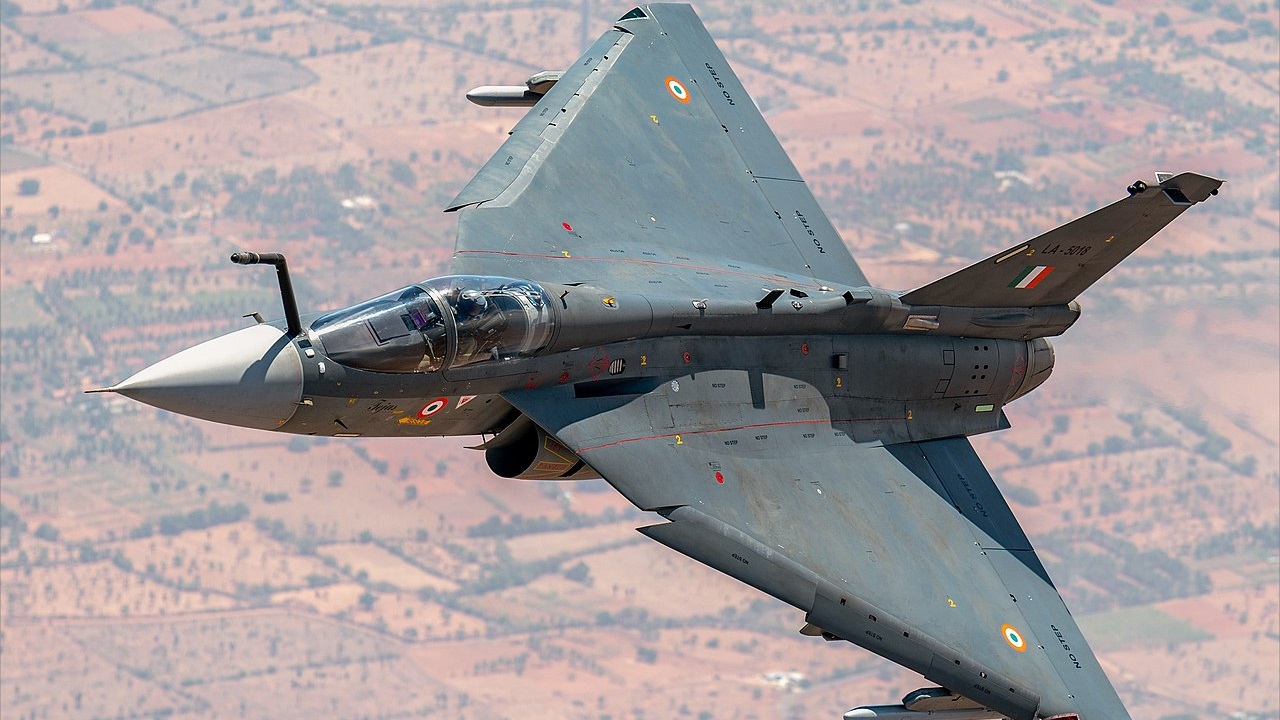
Tejas fighter plane. Image Credit: Creative Commons.
The Tejas began as the Light Combat Aircraft program in the early 1980s, conceived to replace the Soviet-era MiG-21 that formed the backbone of the Indian Air Force. The first prototype did not fly until 2001, and the jet did not reach even limited squadron service for another 15 years, when the IAF’s No. 45 Squadron, the “Flying Daggers,” began operating the first Tejas Mk1 aircraft from 2016. About 40 of those original Mk1 jets are now in Indian service.
From the program’s sanction to that first operational squadron took more than three decades, and the full conception-to-frontline arc runs to roughly 40 years — a timeline that has made the Tejas a standing example of how long India’s defense-industrial complex takes to turn a design into a deployed weapon.
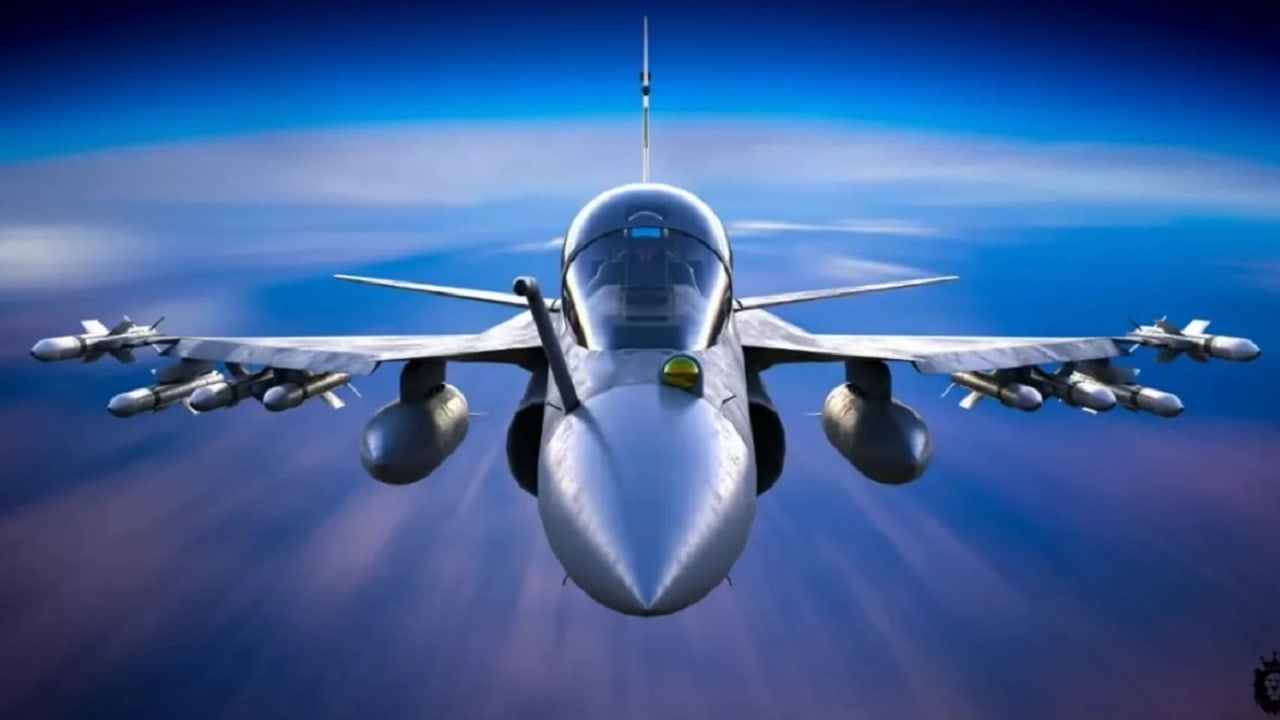
The current version, the Tejas Mk1A, is the one meant to arrive in numbers. It is a substantially upgraded jet, adding an active electronically scanned array radar, a digital electronic-warfare suite, an in-flight refueling probe, and the ability to carry a wider mix of precision and beyond-visual-range weapons.
The IAF has ordered 180 of them in two tranches — an initial 83 jets under a roughly ₹48,000 crore contract signed in 2021, and a further 97, more recently cleared at around ₹67,000 crore, a second batch worth about $7.5 billion. The production-configuration Mk1A made its first flight, an 18-minute sortie designated LA-5033, on March 28, 2024. More than two years later, the deliveries have not started.
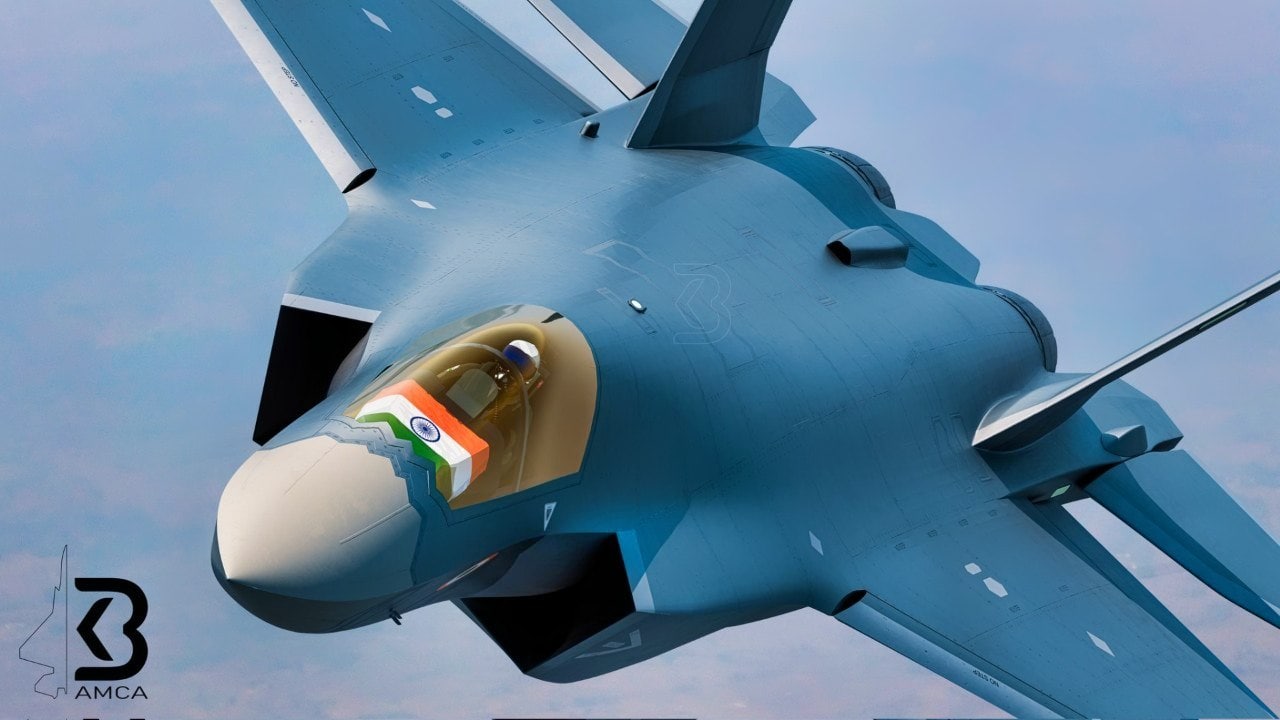
AMCA Fighter India. Image Credit: Industry Handout.
Why Even The Finished Jets Are Stuck
The bottleneck is propulsion, and it is almost entirely a foreign-supply problem. The Tejas Mk1A is powered by the General Electric F404-IN20 engine, an American powerplant producing about 85 kilonewtons of thrust, and HAL cannot deliver a fighter without a certified engine.
The trouble traces back years: GE had shut down its F404-IN20 production line around 2016 after completing an earlier order, and when India returned in 2021 with a contract for 99 more engines worth roughly $716 million, the company had to restart a dormant manufacturing line — reassembling tooling, suppliers, and trained workers that had dispersed. Deliveries originally due in 2023 slipped badly. Only about four engines from that first order had arrived by late 2025, according to Reuters reporting, and India’s defense secretary acknowledged the Mk1A schedule had slipped by almost a year.
To keep the program moving without engines in hand, HAL took an unusual step: its engineers fitted completed airframes with Category-B developmental F404 engines — units designated for testing and certification rather than combat — so that the jets could be flown and validated while the production-grade engines were still missing. That workaround is how the company could report, during its most recent quarterly earnings call, that it had built, flown, and evaluated around 30 Mk1A aircraft that nonetheless could not be handed over.
Of those, only a handful were fully ready with proper engines installed; nine more had been built and test-flown, awaiting powerplants; and roughly 19 were in various stages of assembly. The delivery target slid from late 2025 to March 2026 and then again, with HAL now aiming for a first batch later in 2026 and the chairman, D.K. Sunil, declining to commit to a firm date, saying the jet was “hardware-ready” while the focus stayed on integrating its systems. The integration of the radar, the electronic-warfare suite, and the weapons software has added its own delays on top of the engine shortage, and the Tejas fleet was briefly grounded in early 2026 over a software issue, while a Mk1A crashed at the Dubai air show in November 2025, killing the pilot.
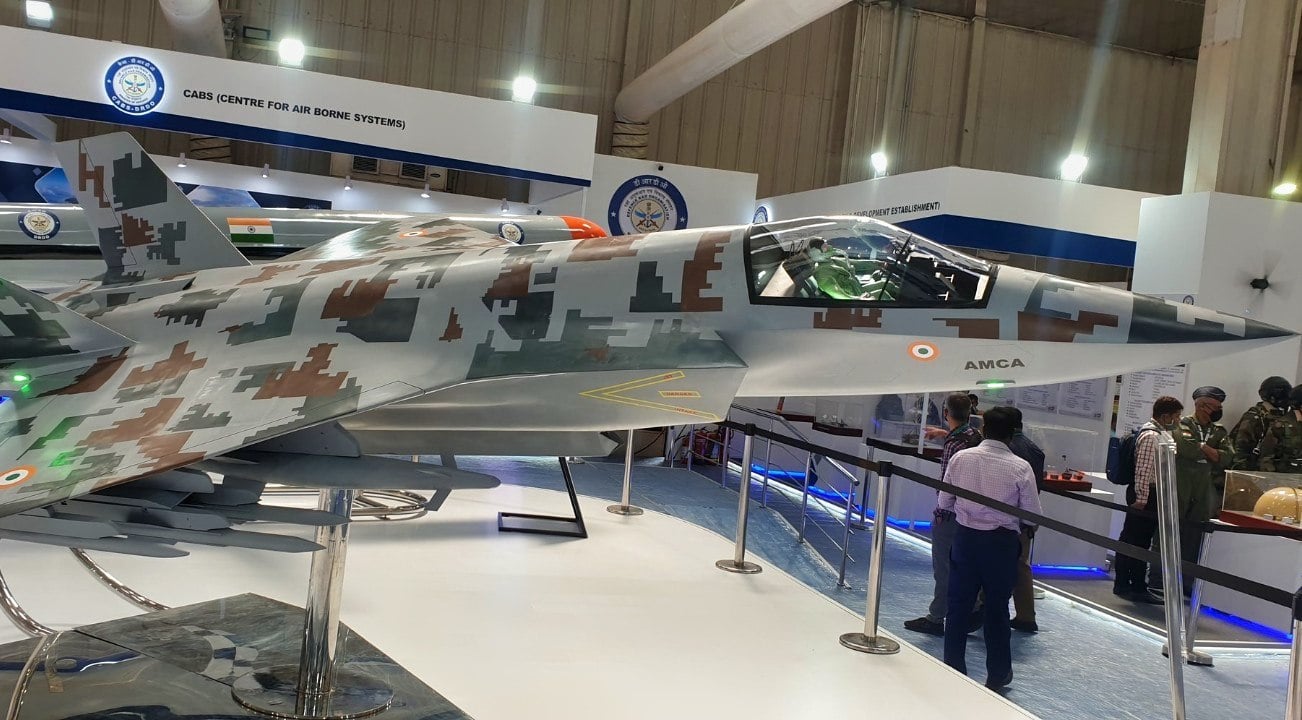
India AMCA Fighter. Image Credit: Creative Commons.
The urgency behind all this is a genuine readiness crisis. The Indian Air Force is down to roughly 29 to 30 fighter squadrons against an authorized strength of 42, even as it retires its aging MiG-21, MiG-29, and Jaguar fleets, and the Tejas Mk1A is the jet meant to arrest that decline.
The gap is severe enough that India has been considering stopgap measures, including reported interest in acquiring Russia’s Su-57E stealth fighter while its own programs mature. Each engine that arrives late pushes squadron activation further to the right, and the delays cascade directly into the IAF’s ability to field enough combat aircraft for a two-front contingency against China and Pakistan.
The AMCA Stealth Promise
While the Tejas struggles to reach squadrons, India has committed to a far more ambitious project. The Advanced Medium Combat Aircraft, or AMCA, is a planned twin-engine, fifth-generation stealth fighter designed by the Aeronautical Development Agency for low radar cross-section and supercruise, intended to become the first stealth fighter to enter Indian service and eventually supplant the Su-30MKI.
In May 2025, the Defence Ministry cleared the AMCA program execution model, opening the development to private as well as state-owned industry partners, with reported development costs in the range of ₹15,000 crore. The official roadmap targets a prototype rollout around 2028-29, a first flight in roughly the same window, and service entry by about 2034-35, with serial production from 2035.
Those are targets, not a track record, and the people closest to such programs are openly skeptical of the dates. A retired test pilot involved in Indian fighter development told Defense News that 2040 or later is a more realistic estimate for the AMCA reaching service than the official 2035. India is also hedging at the high end, exploring participation in sixth-generation programs even as it pursues the indigenous stealth jet, and treating the Tejas Mk2 — a larger, more capable derivative — as a bridge between the Mk1A and the AMCA.
The Thread That Connects Them: Foreign Engines
The single factor that links the Tejas delays to the AMCA risk is engine dependence, and it runs through every Indian fighter program. The reason India must import engines for a jet it calls homegrown is the failure of its own Kaveri engine, the indigenous turbofan that was originally meant to power the Tejas.
Kaveri never reached the thrust or durability a frontline fighter demands, suffering repeated problems, and Indian propulsion officials acknowledge the country still lacks the industrial base to build advanced fighter engines on its own — needing more than a thousand modern turbofans across its programs by 2035. That failure forced the Tejas to rely on the American F404 from the start, and the dependence only deepens from there.
The Tejas Mk2 and the first version of the AMCA are both designed around GE’s larger F414 engine, with India and GE having agreed to co-produce it. The definitive AMCA Mk2 is meant to use a more powerful 120-kilonewton engine, co-developed with France’s Safran, a deal that gives India full intellectual property rights but whose validation timeline stretches into the late 2030s — which is itself part of why the AMCA Mk2’s service date may slip toward 2040.
In other words, the same propulsion dependence that has left 30 finished Tejas sitting without engines runs straight through the stealth program: F404 for the Mk1A, F414 for the Mk2 and the early AMCA, and a still-unbuilt Safran engine for the AMCA that matters most. To keep its delivery commitments, India even signed a fresh $1 billion deal with GE in November 2025 for 113 more F404 engines, to be delivered between 2027 and 2032, with GE committing to ramp up to 24 engines in the coming fiscal year and around 30 per year thereafter.
The Honest Counterweight: India Is Building A Real Aerospace Base
The skeptic’s case is strong, but it is not the whole story, and writing India off would be a mistake. The momentum behind the Tejas program is real: 180 Mk1A jets are on firm order, a third assembly line opened at Nashik in October 2025 to push annual output toward 16 and eventually two dozen aircraft, the Mk2 prototype is more than half built and approaching its first flight, and India has integrated indigenous systems and weapons while pushing the localization of the airframe toward 80 percent.
The government expects 18 to 24 Mk1A jets to be ready by the end of 2026 as engine supply stabilizes, and GE has resumed deliveries after the worst of the disruption.
The deeper point is that the true value of the Tejas may be less the individual jet than the industrial capability it forced India to build — the design bureaus, the assembly lines, the supplier networks, and the engineering experience that did not exist when the program began.
A country that can manufacture roughly 80 percent of a modern fighter, integrate an indigenous radar and electronic warfare suite, and stand up multiple production lines is building the foundation for everything that comes next, including the AMCA. The honest framing is not that India cannot do it. It is that India is climbing a steep learning curve in real time, and the question is whether it can compress that curve fast enough.
The Verdict: The Engine Problem Is The Crux
The gap between the Tejas reality and the AMCA promise is the story worth watching, and the engine is what determines how it ends. India spent four decades getting a light fighter from concept to limited service, and even now its newest examples sit grounded for want of an imported powerplant — while the country promises a stealth fighter on a timeline that the people who build these aircraft privately call optimistic by half a decade.
The stealth leap is harder than the Tejas in every dimension: lower observability, more complex systems, tighter integration, and a propulsion requirement that India still cannot meet domestically.
MORE – The B-2 Spirit Stealth Bomber Crisis Is a Math Problem
MORE – MiG 1.44: Russia’s F-22 Raptor
MORE – China’s Aircraft Carriers Have an Escort Problem
None of that makes the AMCA impossible, and India’s genuine industrial progress means the skepticism should be measured rather than dismissive. But the lesson of the Tejas is specific and unforgiving — a fighter is only as deliverable as its engine supply, and India does not yet control its own.
Until it solves the propulsion problem left by the failed Kaveri program, every Indian fighter, from the light Tejas to the stealthy AMCA, will fly on someone else’s engine and slip on someone else’s schedule.
About the Author: Harry J. Kazianis
Harry J. Kazianis (@Grecianformula) was the former Senior Director of National Security Affairs at the Center for the National Interest (CFTNI), a foreign policy think tank founded by Richard Nixon based in Washington, DC. Harry has over a decade of experience in think tanks and national security publishing. His ideas have been published in the NY Times, The Washington Post, The Wall Street Journal, CNN, and many other outlets worldwide. He has held positions at CSIS, the Heritage Foundation, the University of Nottingham, and several other institutions related to national security research and studies. He is the former Executive Editor of the National Interest and the Diplomat. He holds a Master’s degree focusing on international affairs from Harvard University.