
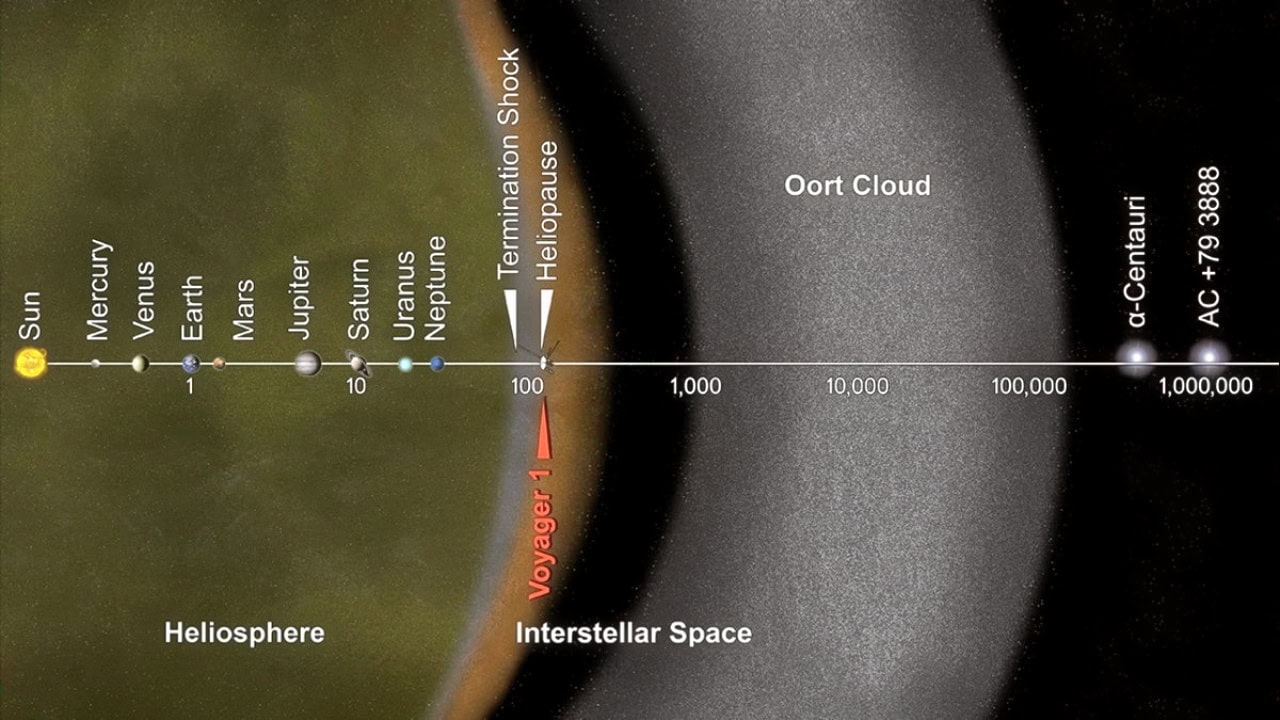
Nearly a half-century after it launched from Earth, NASA’s Voyager 1 spacecraft is now approaching an extraordinary milestone: in November 2026, the craft will reach a distance of one light-day from Earth. That means any signal transmitted from Voyager will take a full twenty-four hours to reach its home planet.
That’s an incredible milestone for humanity. It is not only representative of the immense scale of space, but it also shows how a spacecraft built 50 years ago can somehow survive the brutal conditions of space and continue to do a job that it was never designed to do for this long. Voyager 1 is the most distant human-made object ever made, and it continues to send data back to Earth despite being more than 16 billion miles from home. It’s one of NASA’s greatest successes, but how did a spacecraft launched during the Carter administration become one of humanity’s most important scientific instruments?
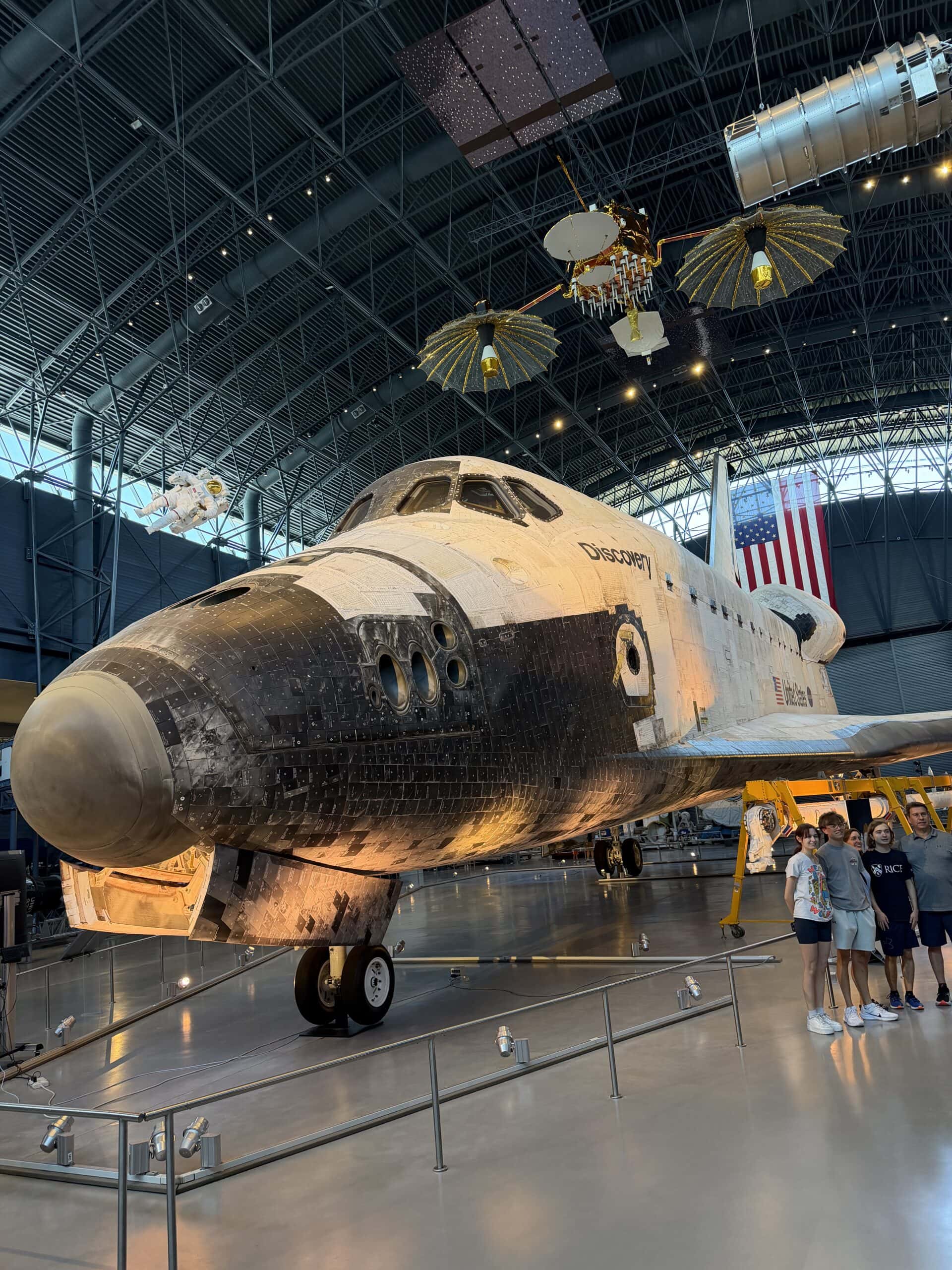
NASA Shuttle Discover 19FortyFive Smithsonian Visit on 6/30/2026
A New Milestone Fifty Years in the Making
When Voyager 1 officially reaches the one-light-day milestone later in the year, it will be almost 26 billion kilometers from Earth. The spacecraft is traveling at roughly 38,000 miles per hour and continues to traverse the vast emptiness of interstellar space toward the constellation Ophiuchus. That distance is so vast that it is difficult for humans, even scientists, to comprehend. For example, Neptune, the outermost major planet in our Solar System, orbits around 2.9 billion miles from the Sun. Voyager 1, by comparison, is now more than five times farther away from Neptune and continues to move further away every second.
The distance is one thing, but the fact that this spacecraft is still functioning is astounding. Despite suffering a number of technical problems in recent years, including a computer problem that caused it to send meaningless data back to scientists in 2023, NASA engineers continue to communicate with the aging spacecraft. Through various workarounds, those engineers have restored communications and continued the mission.
The decades-old spacecraft is collecting information from a region of space that no human-made object had ever reached before 2012.
So, reaching the one-light-day milestone is huge and just another chapter in NASA’s journey.
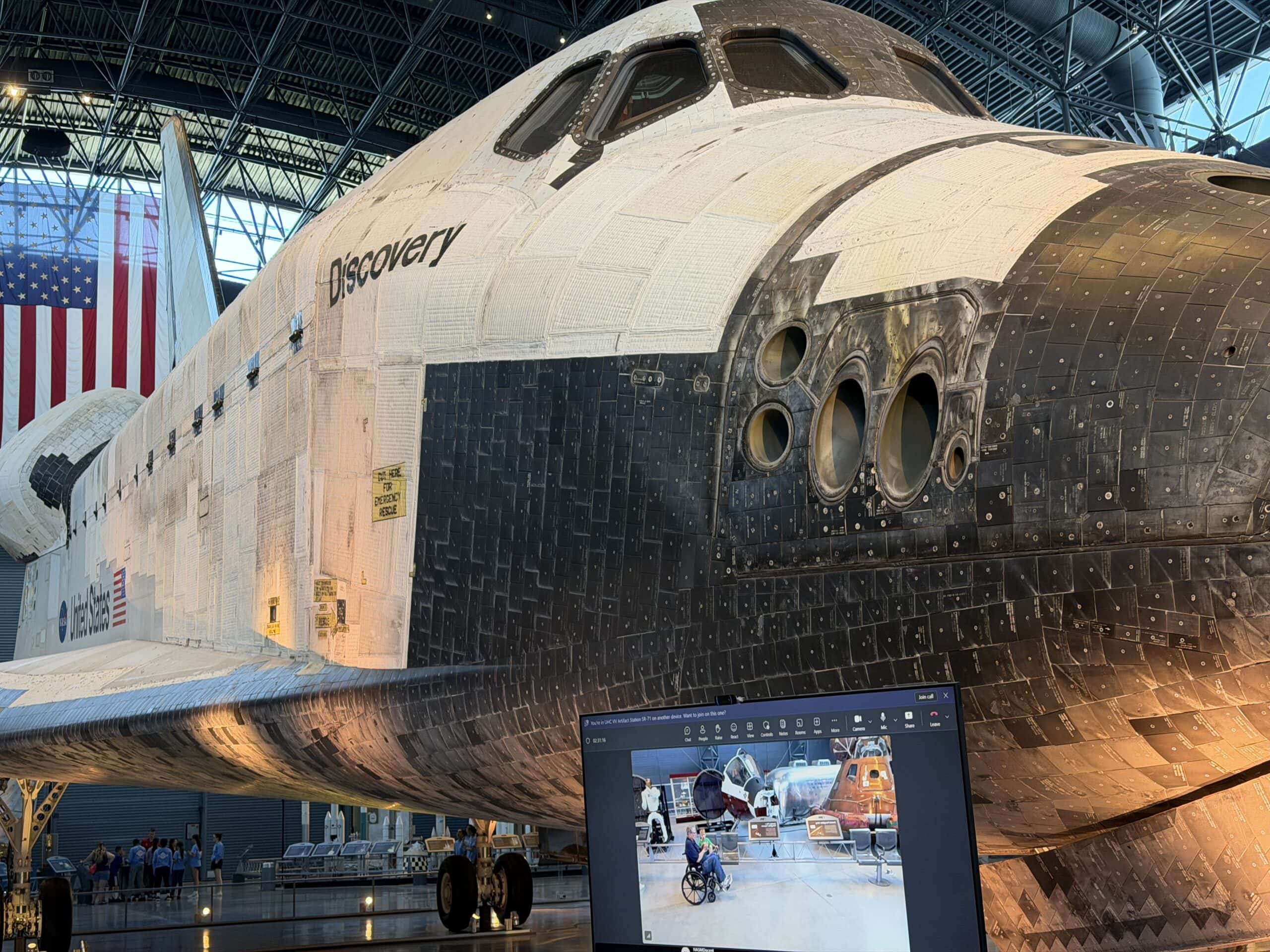
NASA Shuttle Discover 19FortyFive Smithsonian Archive. Taken on June 30, 2026.
Why Voyager Was Built
Launched on September 5, 1977, Voyager is truly a product of another time. The spacecraft was one of the centerpieces of the ambitious Voyager program, designed to take advantage of a rare planetary alignment that occurs only once every 176 years.
Engineers built a spacecraft that would exploit the alignment of Neptune, Uranus, Saturn, and Jupiter, routing its trajectory to take advantage of the planets’ gravity. The spacecraft used what’s known as “gravitational assists,” whereby it flies close enough to the planets to change its trajectory and effectively be “thrown’ towards the next planet.
The program built two spacecraft: Voyager 1 and Voyager 2. And although Voyager 2 launched first, Voyager 1 followed a different and faster trajectory that allowed it to reach Jupiter before its sister probe did.
During its 1979 flyby of Jupiter, Voyager 1 transformed how scientists understood the Solar System.
It was at this stage of the journey that the spacecraft documented active volcanoes on Jupiter’s moon Io, the first volcanic activity ever observed outside Earth. The spacecraft also revealed new details about Europa, Callisto, and Ganymede – Jupiter’s moons.
A year later, Voyager 1 passed Saturn, and in doing so, it discovered a number of previously unknown moons. It studied the complex rings surrounding the planet and provided the first detailed look at Titan, a moon with a dense nitrogen atmosphere.
Interstellar Travel
Voyager 1 continued to send insights back to Earth well beyond the four or five years it was expected to last. Once the spacecraft had finished exploring Jupiter and Saturn, scientists expected that it would no longer function well enough to return useful data. But it just kept going.
After completing its mission, Voyager 1 kept on moving toward the edge of the Solar System, and in 2004, it crossed the “termination shock,” where the solar winds began to slow down.
The spacecraft began experiencing pressure from the interstellar medium, and on August 25, 2012, Voyager famously crossed the heliopause, becoming the first spacecraft to enter interstellar space.
That was a huge breakthrough, and researchers could, for the first time, measure conditions in the space between the stars and their solar systems.
And ever since then, Voyager has continued to send back incredible insights that would not have been possible without the monumental effort launched in the 1970s.
Voyager 1 continues to study magnetic fields in space, sends back valuable information about charged particles, and provides insight into plasma waves.
The data that has been returned has been used to improve scientists’ understanding of how the Solar System interacts with the rest of the galaxy – and its journey continues to this day.
About the Author: Jack Buckby
Jack Buckby is a British researcher and analyst specializing in defense and national security, based in New York. His work focuses on military capability, procurement, and strategic competition, producing and editing analysis for policy and defense audiences. He brings extensive editorial experience, with a career output spanning over 1,000 articles at 19FortyFive and National Security Journal, and has previously authored books and papers on extremism and deradicalization.