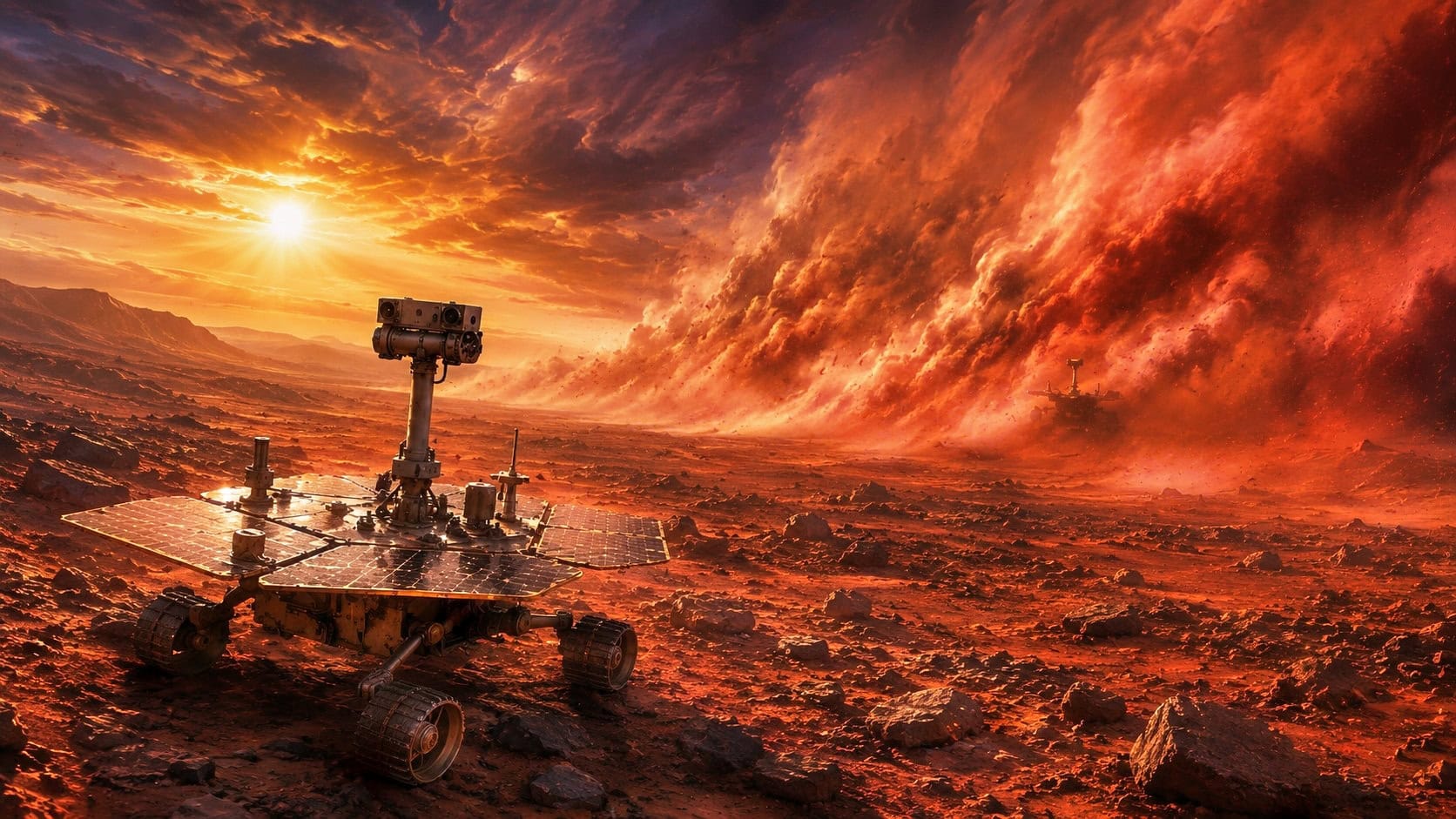
The story of NASA’s twin Mars Exploration Rovers–Spirit and Opportunity–is one of the greatest engineering success stories in the history of spaceflight.
They were designed to survive for just 90 Martian days (sols). Instead, one operated for more than six years, the other for nearly 15.
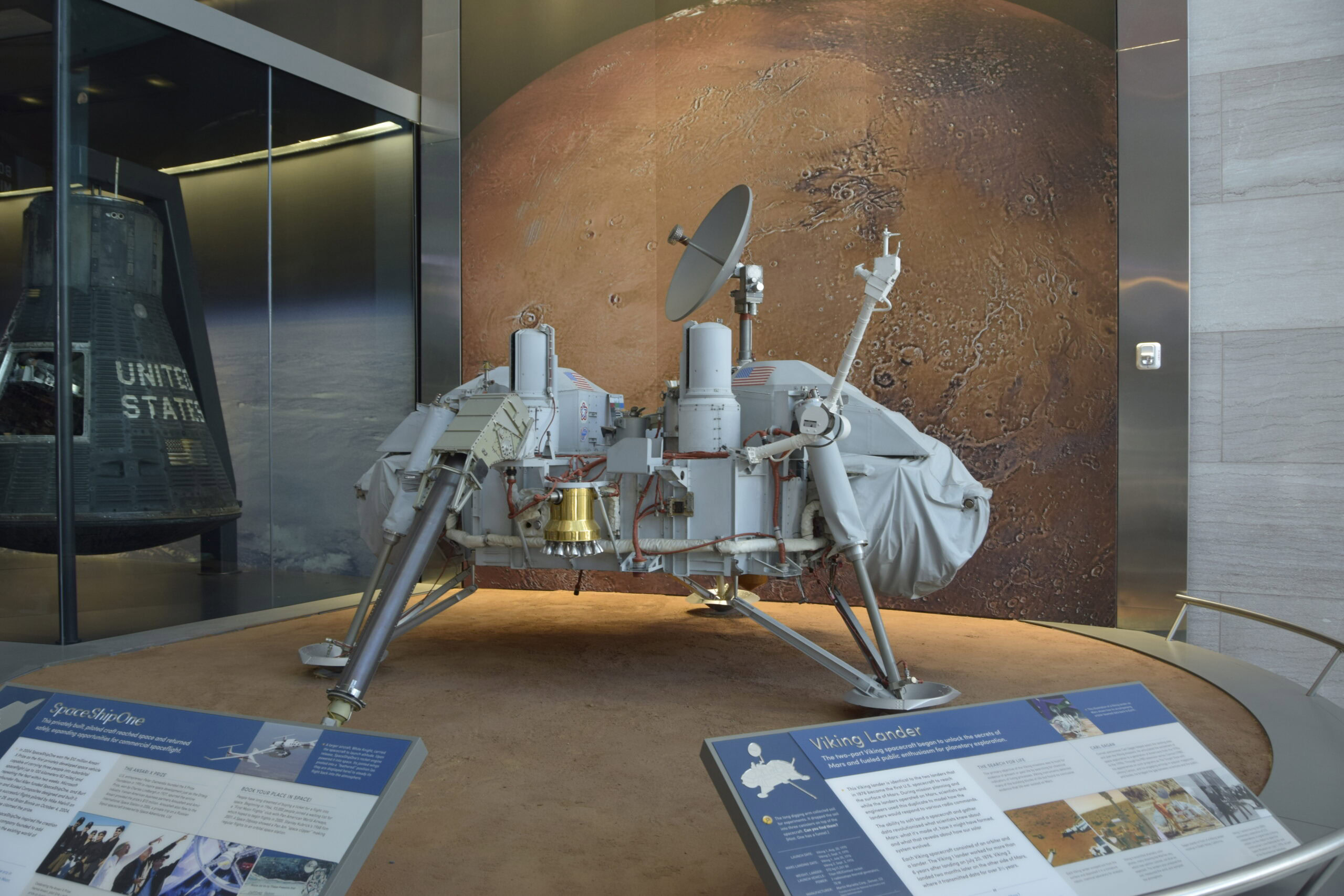
Viking NASA Lander at the Smithsonian. Image taken on 6/24/2026.
Together, they transformed humanity’s understanding of Mars and fundamentally changed how NASA explores other worlds.
Following the disappointing loss of NASA’s Mars Polar Lander and the Mars Climate Orbiter, America’s space agency needed a reliable, relatively inexpensive Mars mission.
The result was the Mars Exploration Rover (MER) program.
NASA built two nearly identical six-wheeled solar-powered robotic geologists. One of those systems was MER-A, or Spirit, and the other was MER-B, Opportunity.
Each rover cost roughly $400 million, including development and operations, and together represented an $800 million mission. They launched in the summer of 2003 and landed on opposite sides of Mars in January 2004.
The mission objective was straightforward: seek out potential water sources on Mars as a pathway to potentially discovering some form of life on the Red Planet.
Specifically, scientists wanted to know whether Mars had once possessed long-lived environments capable of supporting life.
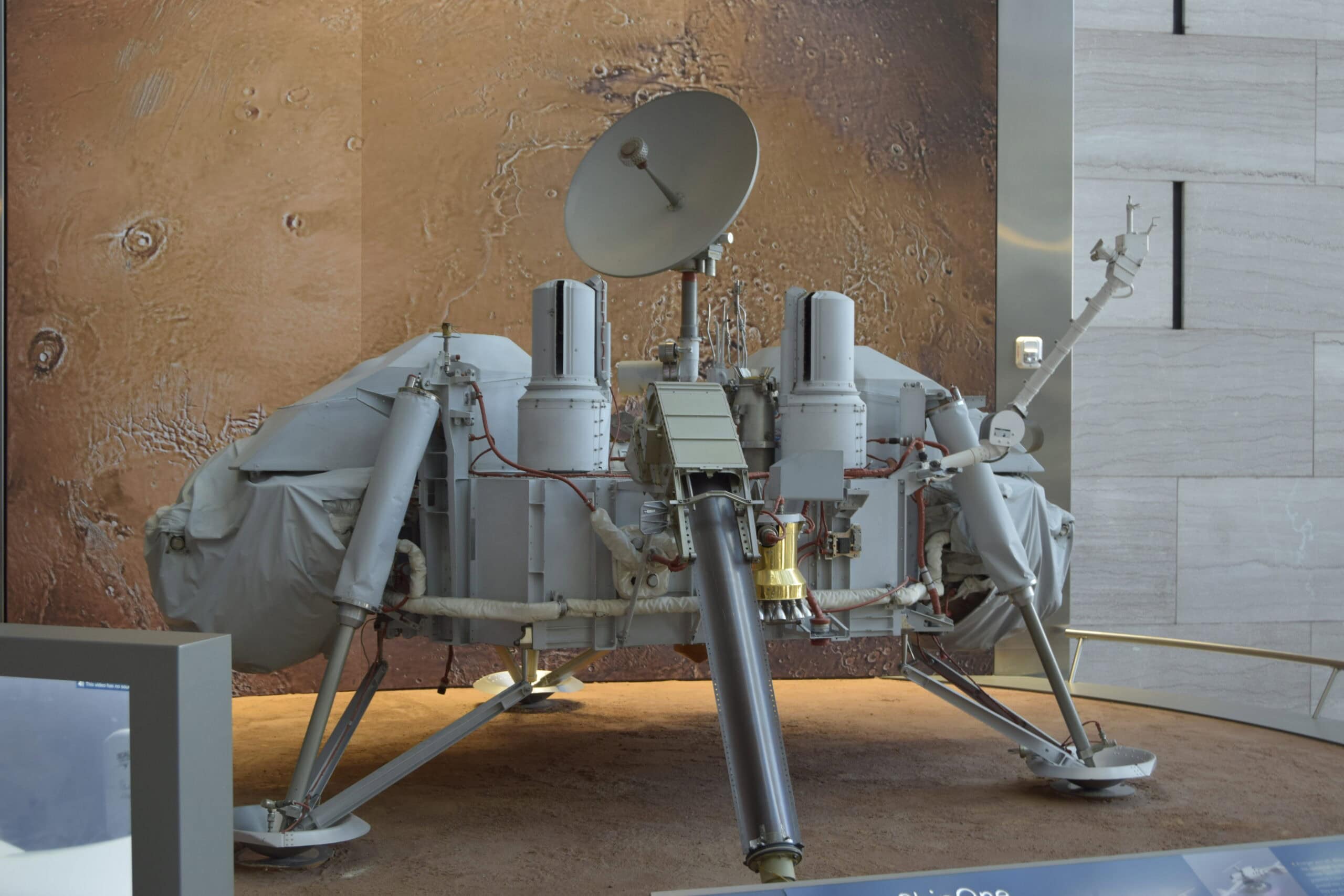
Viking NASA Lander at the Smithsonian. Image taken on 6/24/2026.
Why Two Rovers?
NASA deliberately chose two different landing sites. The Spirit rover was deployed within Gusev Crater, which is believed to have once been home to an ancient lake fed by a river.
Meanwhile, NASA dropped the Opportunity rover off at Meridani Planum, where orbiters had detected unusual concentrations of hematite (which often forms in the presence of water).
Scientists hoped Spirit would find lake sediments at the Gusev Crater.
Instead, they initially encountered volcanic rock. That seemed disappointing. At least it was disappointing until Spirit rolled into the nearby Columbia Hills.
And as for the Opportunity rover deployed to Meridiani Planum, NASA confirmed that hematite was abundant there.
Spirit Changed Everything
Spirit’s greatest discoveries came after leaving its landing site. Among its most important findings was evidence of hot springs. Spirit discovered nearly pure silica deposits.
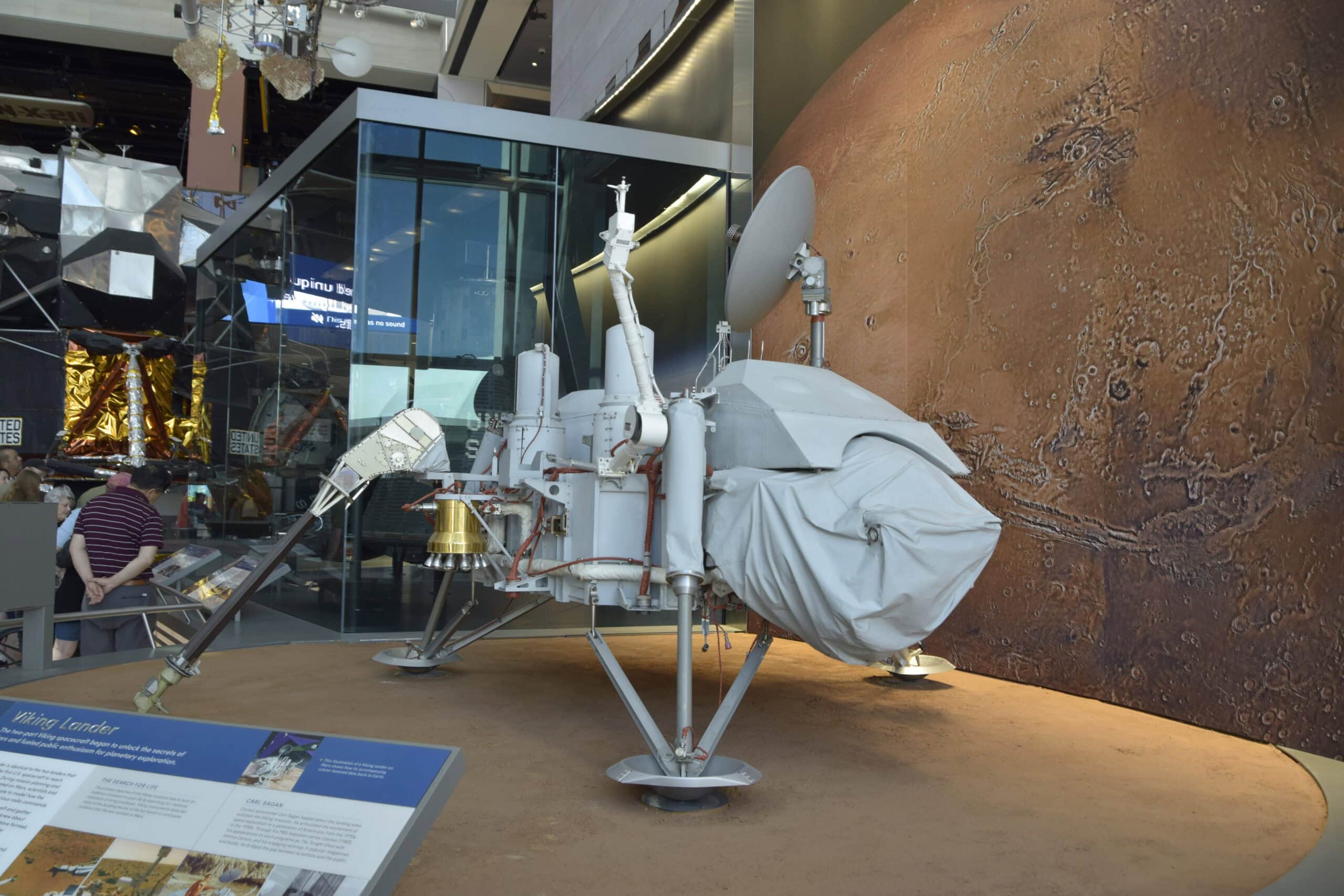
Viking NASA Lander at the Smithsonian. Image taken on 6/24/2026.
On Earth, similar deposits are commonly formed around hydrothermal systems such as Yellowstone. These environments are considered some of the best habitats for microbial life.
It was one of the strongest indications yet that ancient Mars possessed habitable environments.
Ancient Water
Spirit found minerals that could only have formed after prolonged interaction with liquid water. This showed Mars was not simply wet for brief moments after impacts. Water existed long enough after the rocks.
Volcanic History
Spirit also revealed that Gusev Crater possessed a far more complicated volcanic history than scientists expected. Mars had experienced repeated cycles of volcanism, groundwater movement, and chemical alteration.
Opportunity Found Ancient Seas
Opportunity discovered that Mars once possessed shallow bodies of water. Its discoveries included spherical hematite concentrations all over the surface. Scientists nicknamed these formations “blueberries.” They form through groundwater movement. They became one of the iconic images of Mars exploration.
Opportunity found layered rocks deposited by flowing water, too. This demonstrated that liquid water once persisted over long periods.
Ancient Acidic Seas
Chemical analysis suggested some of these ancient waters were acidic and salty. Not ideal for life, but unquestionably wet.
The debate shifted from whether Mars ever had water to how long it remained habitable.
And that last question is very important, as the long-term objective has always been to establish permanent human colonies on Mars in some form.
The Dust Devils That Saved the Mission
One of the great surprises involved Martian weather.
Both rovers relied entirely upon solar panels. Engineers assumed dust accumulation would gradually reduce available power until the missions ended. Instead, Martian winds repeatedly cleaned the panels.
NASA nicknamed these “cleaning events.” Without them, Spirit and Opportunity would have died within months. Instead, nature continually gave them new life.
Spirit Gets Stuck
In 2009, Spirit drove into what appeared to be ordinary soil. Instead, it encountered soft sulfate–rich sand hidden beneath a thin crust.
The rover became hopelessly embedded. For months, NASA engineers attempted increasingly creative escape maneuvers.
They even built a full-scale test bed on Earth to simulate Martian conditions and practiced recovery procedures before transmitting commands across space.
Eventually, NASA accepted reality. In January 2010, Spirit was officially converted from a rover into a stationary science platform.
The plan became simply keeping it alive through the coming winter.
Winter Killed Spirit
Mars winters are brutal. Spirit needed to tilt its solar panels toward the sun.
Because it was trapped on relatively flat ground, it could not achieve the proper angle. Its batteries gradually weakened. Internal heaters eventually deactivated.
Communication ceased in March 2010. NASA spent more than a year trying to reestablish contact before officially ending the mission in May 2011. Spirit still sits exactly where it became trapped.
Opportunity Just Wouldn’t Quite
Opportunity proved even tougher. It survived wheel failures, memory problems, numerous dust storms, freezing winters, and more than 28 miles of driving.
It became the longest-traveling vehicle ever operated on another world, eventually surpassing the Soviet Lunokhod 2 on the moon.
Opportunity even completed the equivalent of a marathon on Mars.
The Great Dust Storm
Everything changed in June 2018. A planetary dust storm engulfed Mars. Sunlight reaching Opportunity’s solar panels collapsed.
The rover entered emergency low-power mode. Its final message became famous among engineers: “My battery is low, and it’s getting dark.”
NASA spent eight months sending more than a thousand recovery commands. Nothing ever answered.
February 13, 2019, marks the day that NASA officially ended Opportunity’s mission.
Their Greatest Legacy
The two rovers fundamentally reshaped planetary science. Before Spirit and Opportunity, scientists suspected ancient water existed on Mars.
The two rovers proved that Mars once possessed entire lakes. The planet had groundwater due to altered rocks. Scientists determined, thanks to the rovers, that hydrothermal environments existed.
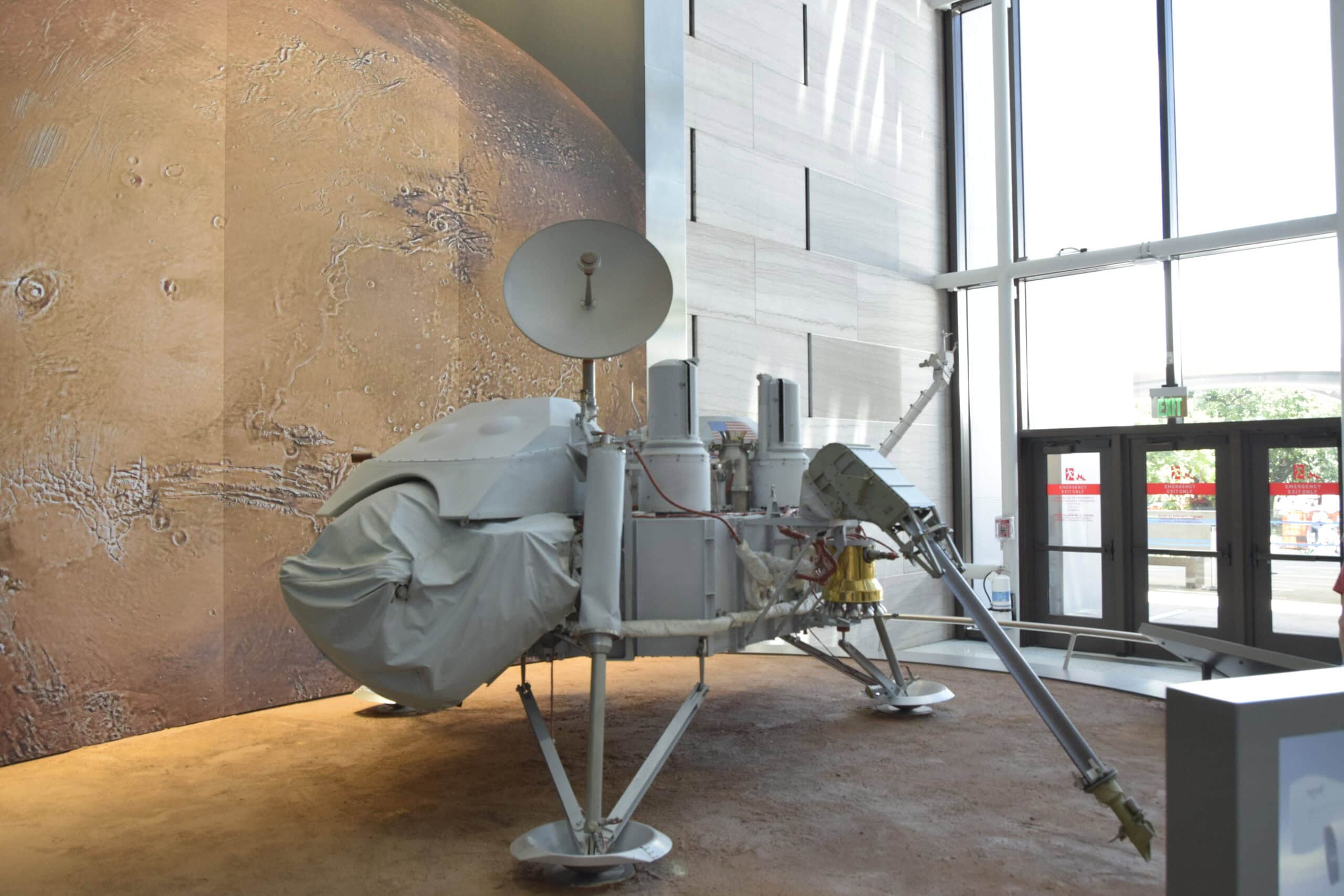
Viking Lander at the Smithsonian. Image Taken by 19FortyFive on 6/24/2026.
Scientists also knew that long-lasting habitable conditions once existed on the world.
Those discoveries directly influenced later missions such as Mars Science Laboratory and Mars 2020, which shifted from simply asking whether Mars had water to investigating whether the planet once supported life.
Why They Matter
Spirit and Opportunity represent a true turning point in robotic exploration.
These two little rovers that could demonstrated that inexpensive robots could accomplish world-changing science through durability, intelligent operations, and a measure of luck.
Their unexpectedly long lives also validated NASA’s strategy of incremental exploration: each mission built directly on the discoveries of the last.
Today, both rovers remain exactly where they finished their journeys.
Spirit rests silent in the sands of Gusev Crater, while Opportunity stands at the edge of Perseverance Valley and Meridani Planum.
Though their radios are silent, their findings continue to shape every major Mars mission that follows, including humanity’s eventual ambitions to send astronauts to the Red Planet.
About the author: Brandon J. Weichert
Brandon J. Weichert is the Senior National Security Editor at 19FortyFive.com. He also manages The Weichert Brief on Substack. Weichert also hosts “National Security Talk” on Rumble. He is the author of four bestselling national security books, the most recent of which is A Disaster of Our Own Making: How the West Lost Ukraine (Encounter Books). Follow him via Twitter/X @WeTheBrandon.