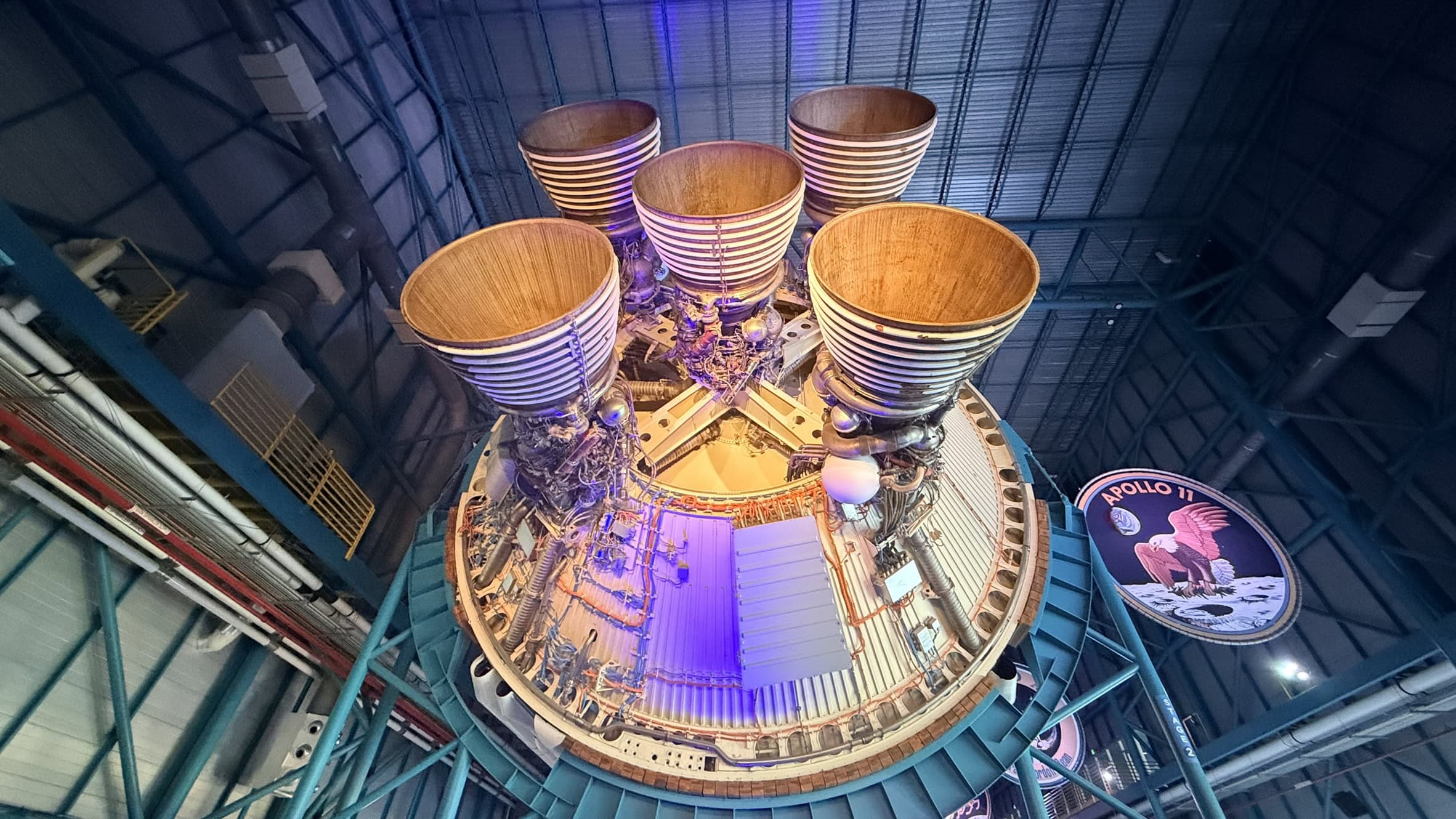
By July 1969, the Soviet Union understood that it had effectively lost the race to land humans on the moon.
Their massive N1 Moon rocket had suffered repeated catastrophic failures, making a crewed lunar landing impossible in time to compete with Apollo 11.
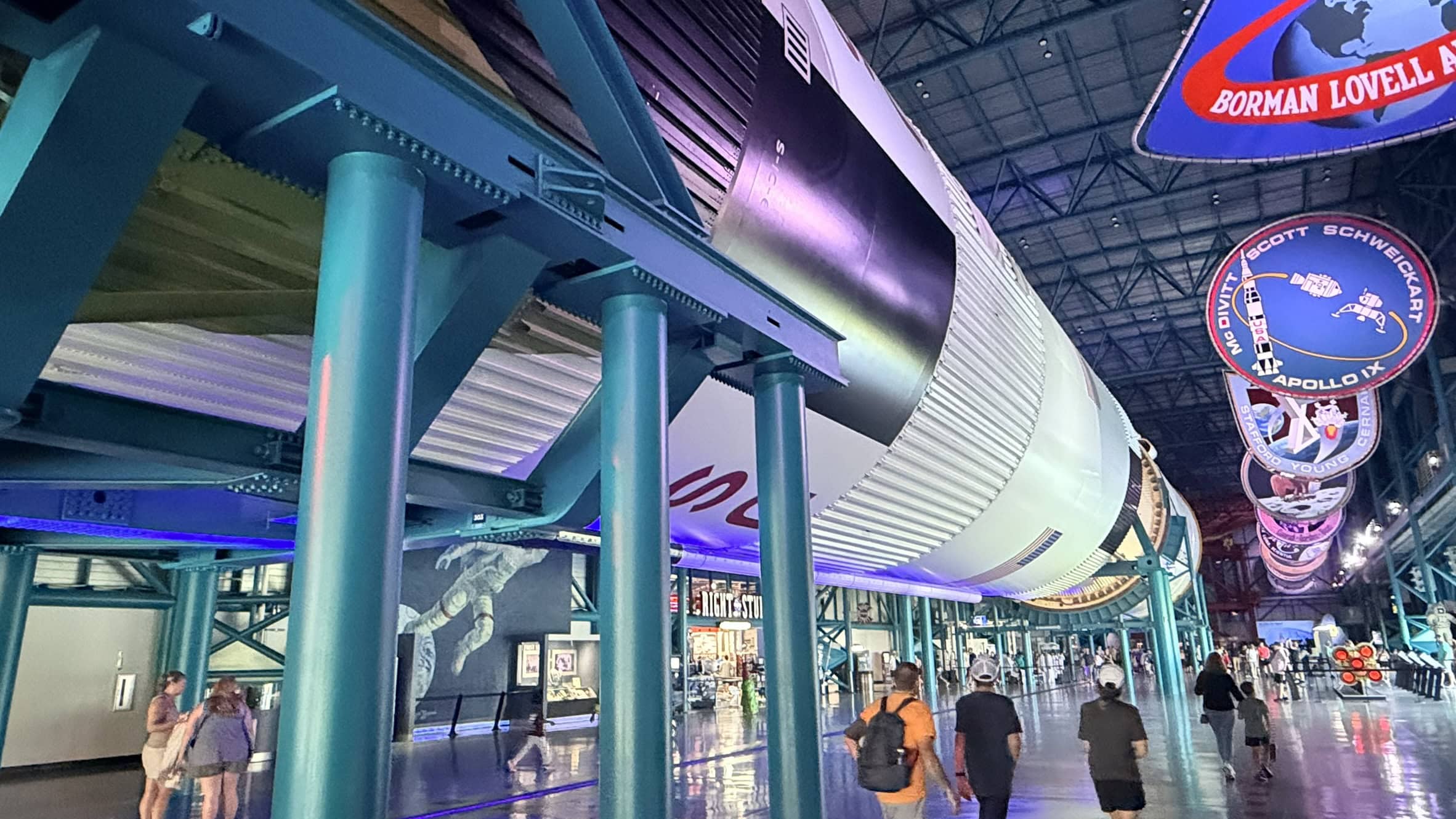
Saturn 5 Rocket. Image from NASA Kennedy Space Center, taken on 6/28/2026. Taken by Harry J. Kazianis for 19FortyFive.com
So, Soviet planners wanted to gain some acclaim–and enhance their own capabilities–by focusing on a robotic mission to the moon instead.
Luna 15 was the result of that decision to abandon their manned lunar program.
According to the mission parameters for the uncrewed mission to the Moon, Luna 15 would land, collect lunar soil, and return the samples safely to Earth.
If Luna 15 could bring back moon rocks before Apollo astronauts returned to the Earth, Moscow could still claim an important scientific victory and take some of the limelight from the Americans, who’d be reveling in the historic achievement of placing their people on the moon before anyone else could.
Over the course of eight days in 1969, the Cold War played out on and over the moon. You see, on July 13 of that year, the Soviets launched Luna 15.
Three days thereafter, the Americans launched Apollo 11. A day after Apollo 11 launched from Cape Canaveral, Fla., Luna 15 entered lunar orbit.
Two days later, Apollo 11 initiated its orbit around the moon. On July 20, Neil Armstrong and Buzz Aldrin landed in the Sea of Tranquility on the lunar surface.
For several days, two rival spacecraft–one American and one Soviet–orbited or operated around the moon simultaneously.
That was one of the most dramatic moments of the Cold War. At the time, however, very few people knew this was happening.
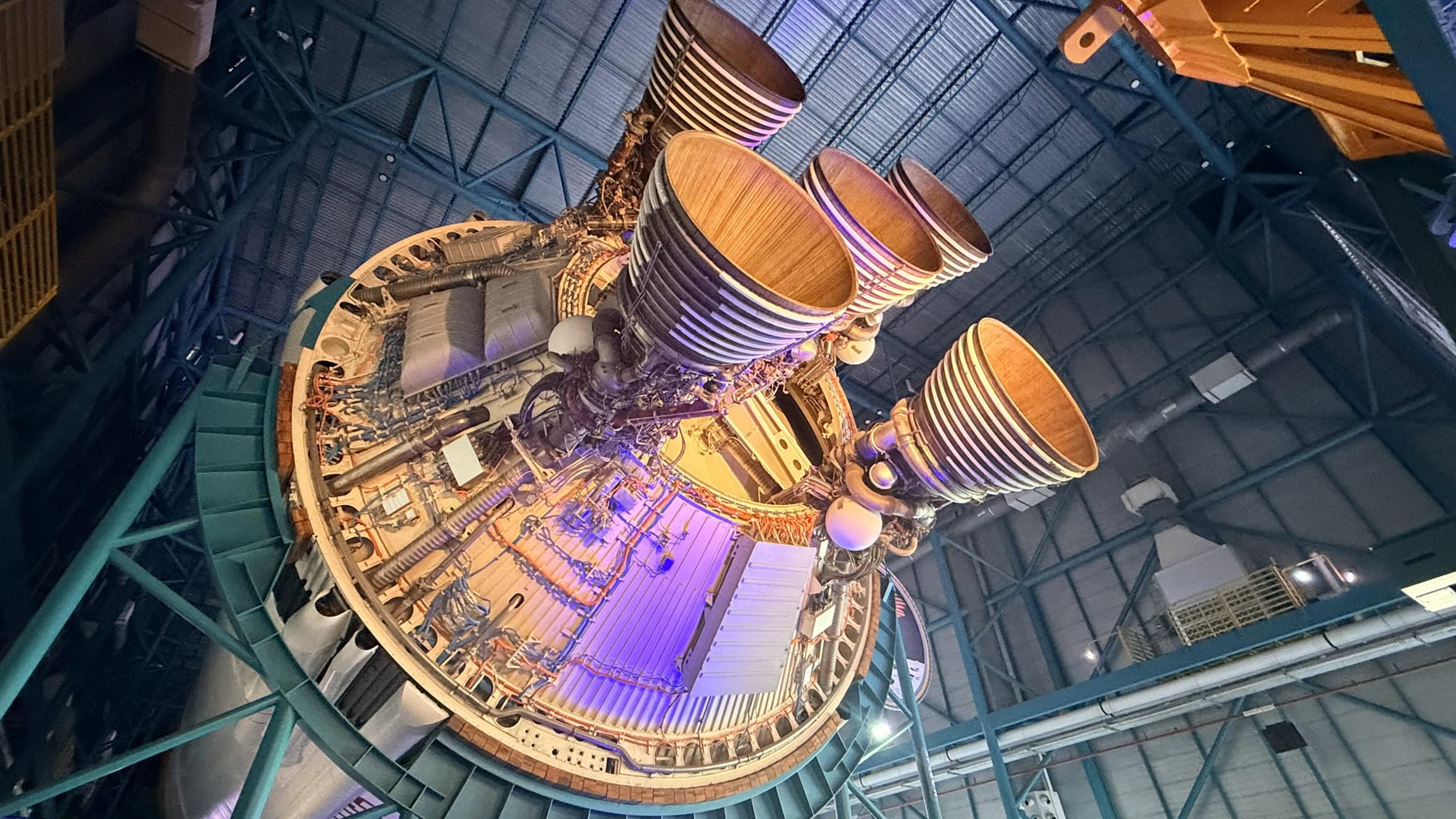
Saturn 5 Rocket. Image from NASA Kennedy Space Center, taken on 6/28/2026. Taken by Harry J. Kazianis for 19FortyFive.com
Apollo 11 Didn’t Know at First
ABC News reports that the Apollo astronauts were unaware of the purpose of the Soviet Luna 15. There were fears that the Soviet mission was intended to complicate the American moon landing.
CIA elements were convinced it was a mission of sabotage against the Americans. Regardless of the true purposes, NASA leaders at the time feared what might befall the astronauts if they accidentally crossed paths with the Soviet system.
Interestingly, in what became a rare moment of peaceful engagement during the Cold War, Soviet scientists shared Luna 15’s orbital data with NASA to avoid unnecessary complications for US astronauts en route to the lunar surface.
The Soviet Plan Fell Apart
The Soviet timetable called for Luna 15 to land shortly after Apollo 11.
Instead, controllers delayed the landing attempt because the intended landing area proved more hazardous than originally anticipated.
That delay proved decisive, though.
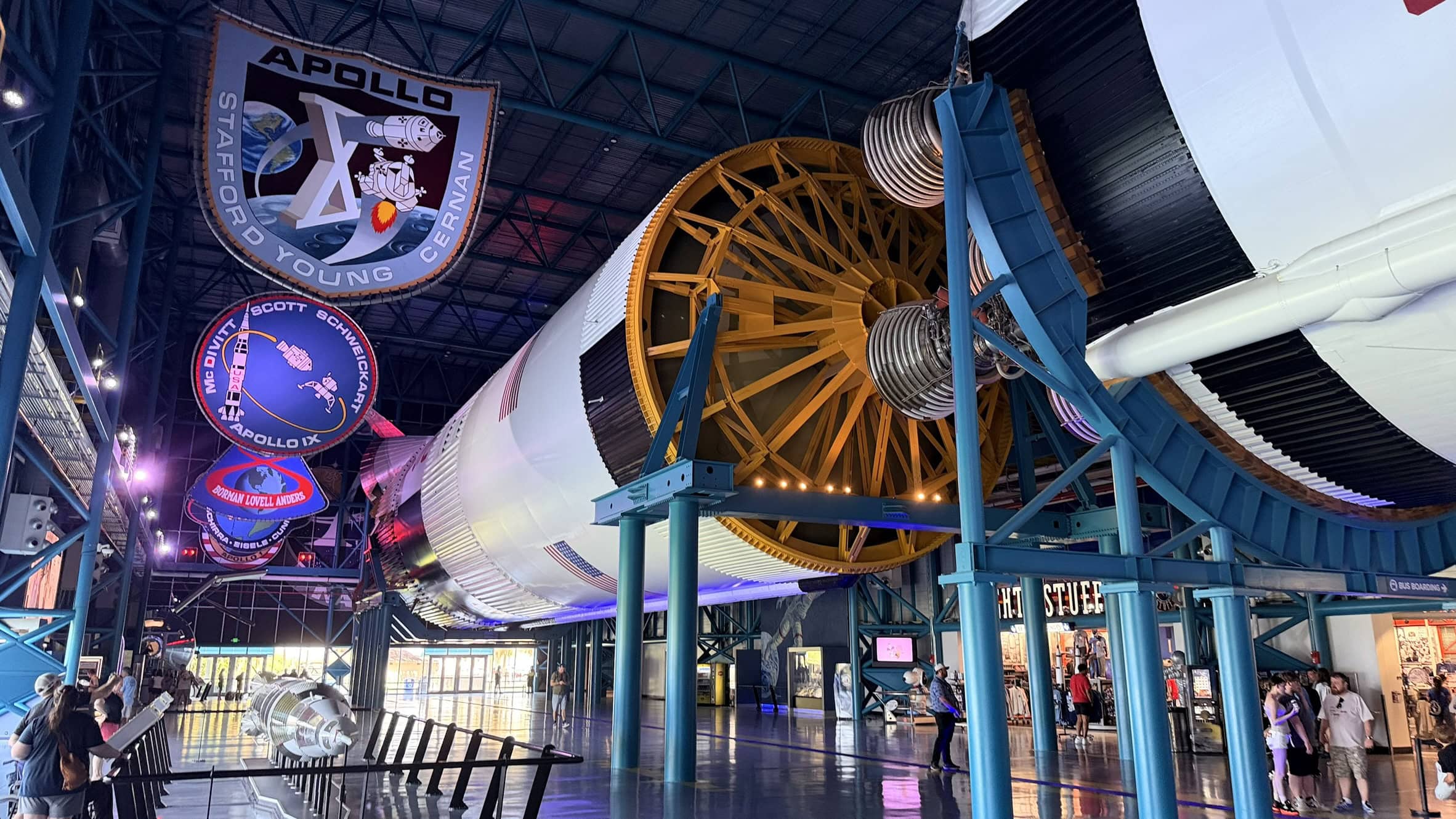
Saturn 5 Rocket. Image from NASA Kennedy Space Center, taken on 6/28/2026. Taken by Harry J. Kazianis for 19FortyFive.com
During the time that Soviet engineers searched for a safe descent path, Armstrong and Aldrin completed humanity’s first Moonwalk.
The Americans gathered roughly 48 pounds of lunar samples. They then returned safely to their Lunar Module.
The Americans finished their historic mission before Luna 15 even began its final descent.
Luna 15 Crashed
On July 21, 1969, roughly two hours before Apollo 11 departed the lunar surface, Luna 15 started descending. The unmanned system crashed. Soviet controllers lost radio contact with the craft.
NASA later concluded that Luna 15 struck the side of a mountain after descending at an incorrect angle.
Meanwhile, British astronomers at the Jodrell Bank Observatory were monitoring the Soviet mission in real time and became the first outside observers to know that the probe had crashed.
Neil Armstrong’s Perspective
Armstrong viewed the moon race as an intensely competitive but ultimately peaceful contest between the United States and the Soviet Union.
Armstrong believed the competition pushed both countries toward extraordinary scientific and technological achievements.
Essentially, Armstrong concluded that the space race provided both superpowers with a constructive outlet for their rivalry.
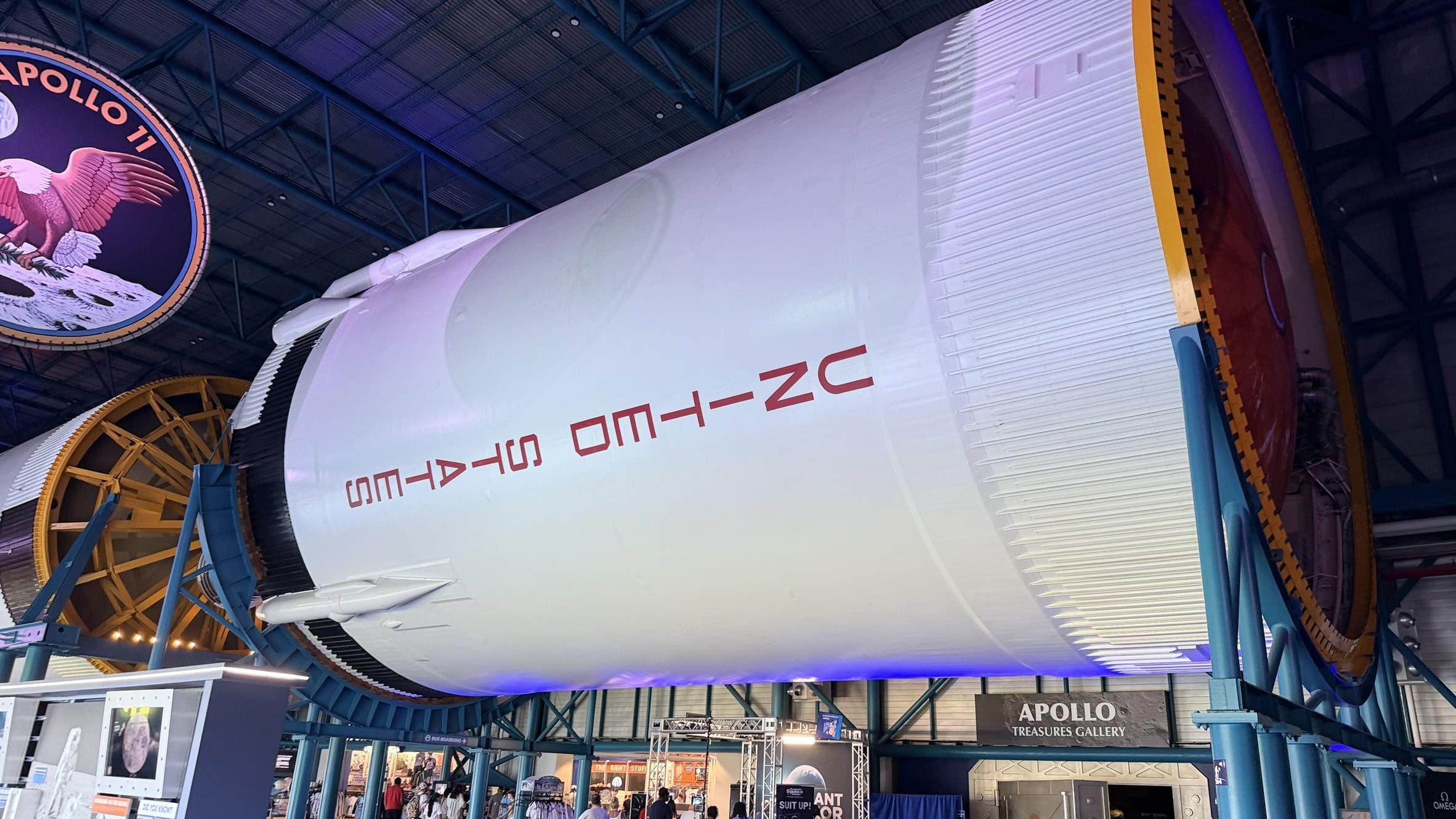
Saturn 5 Rocket. Image from NASA Kennedy Space Center, taken on 6/28/2026. Taken by Harry J. Kazianis for 19FortyFive.com
Why Luna 15 Matters
Luna 15 is often overshadowed by Apollo 11. Still, historically, it remains significant because it represented the USSR’s final realistic attempt to score a major win in the moon race before Apollo 11 stole the limelight.
It was also one of the earliest examples of US-Soviet cooperation in space, through the exchange of orbital information.
What’s more, it was the culmination of the Cold War moon race, with two competing lunar missions unfolding simultaneously.
Ironically, the USSR eventually achieved the objective that Luna 15 failed to accomplish.
In September 1970, the robotic mission Luna 16 successfully landed on the moon, collected around 101 grams of lunar soil, and returned the samples safely to Earth–the world’s fully automated lunar sample-return mission.
About the Author: Brandon J. Weichert
Brandon J. Weichert is the Senior National Security Editor at 19FortyFive.com. He also manages The Weichert Brief on Substack. Weichert also hosts “National Security Talk” on Rumble. He is the author of four bestselling national security books, the most recent of which is A Disaster of Our Own Making: How the West Lost Ukraine (Encounter Books). Follow him via Twitter/X @WeTheBrandon.