
The 5 Biggest Armies on Earth by Active-Duty Manpower: A Raw-Numbers Look at Who Has the Most Troops in Uniform – Rank the world’s militaries by the number of full-time troops in uniform, counting active-duty personnel across every branch and setting aside reserves and paramilitary forces, and the result rests on the most basic measure of military scale there is.
Manpower is a crude yardstick. It says nothing about training, equipment, or whether a force could actually win a war, and it produces an order that looks very different from a ranking by firepower or budget.
The number of people a country keeps under arms is still a real signal of its priorities, its sense of threat, and the scale of force it is willing to pay for, and that is what this ranking measures, counting down from five to one.
How This Ranking Counts Soldiers, and Why Manpower Is a Crude Measure
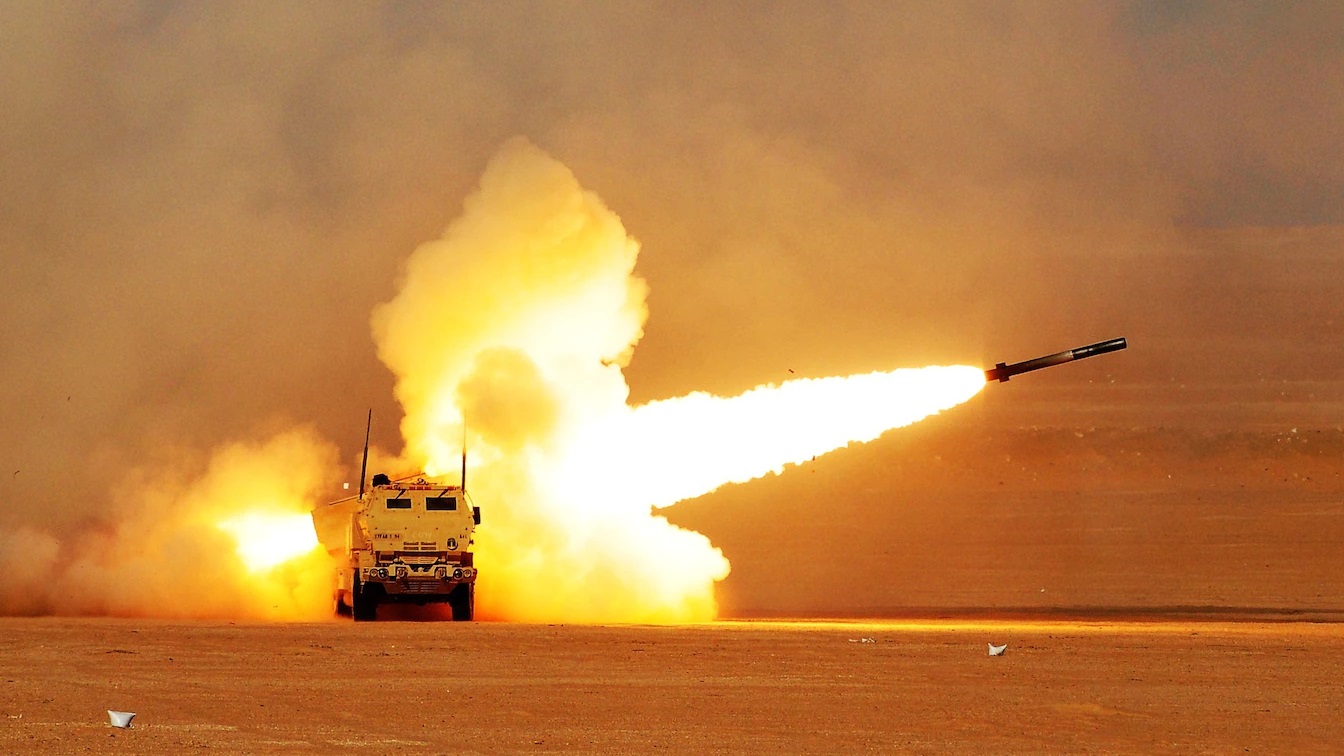
M142 HIMARS. Image Credit: Creative Commons.
The method matters as much as the result, so it is worth stating plainly before the list. I wrote this in a way for all of us who study military affairs to put our collective thinking caps on.
Please. No. Hate. Mail. Thanks.
This ranking counts active-duty military personnel only, the full-time, currently serving members of a country’s armed forces across all branches, not just the land army. It deliberately excludes two large categories: reserves, who train but hold civilian jobs until called up, and paramilitary forces, the organized security formations that sit outside the regular military.
That choice changes everything because adding those categories completely reorders the list. By total personnel, including reserves and paramilitary forces, small active forces with enormous reserve systems leap to the top; Bangladesh ranks first in the world with nearly seven million, despite fielding only a couple of hundred thousand active troops, and Vietnam climbs the same way. Counting active duty alone strips that out and measures immediate, standing strength.
The figures here come with two unavoidable caveats. First, the numbers are estimates that vary by source and by date, drawn principally from the International Institute for Strategic Studies, whose Military Balance is the standard order-of-battle reference, alongside national figures and, for the raw tallies, open-source trackers such as Global Firepower. Second, and more important, headcount is a poor guide to actual power. The same Global Firepower index that supplies many of these manpower numbers ranks overall military strength in almost the reverse order, placing the United States, Russia, and China at the top on the strength of technology, equipment, and budget rather than bodies.
Two facts make the gap concrete and run through the entries below: North Korea fields nearly as many active troops as the United States on a population a fraction of the size, which overstates its real reach, while the United States ranks only third by manpower despite being the most capable and best-funded military on earth. Read the list as a measure of scale, not of who would win.
Number 5: Russia and Its Wartime Expansion
Russia rounds out the top five, and it is the most complicated entry on the list because its number is a moving target tied directly to the war in Ukraine.
On paper, Russia’s active-duty force is among the largest in the world. A decree signed on March 4, 2026, set the authorized strength of the armed forces at roughly 2.39 million personnel, of which 1,502,640 are active-duty servicemen, and a further decree in June 2026 nudged the active figure to around 1,510,000. The increases trace back to an order issued by President Vladimir Putin in September 2024 to expand the military to 1.5 million active troops, the third such expansion since the full-scale invasion began in 2022.
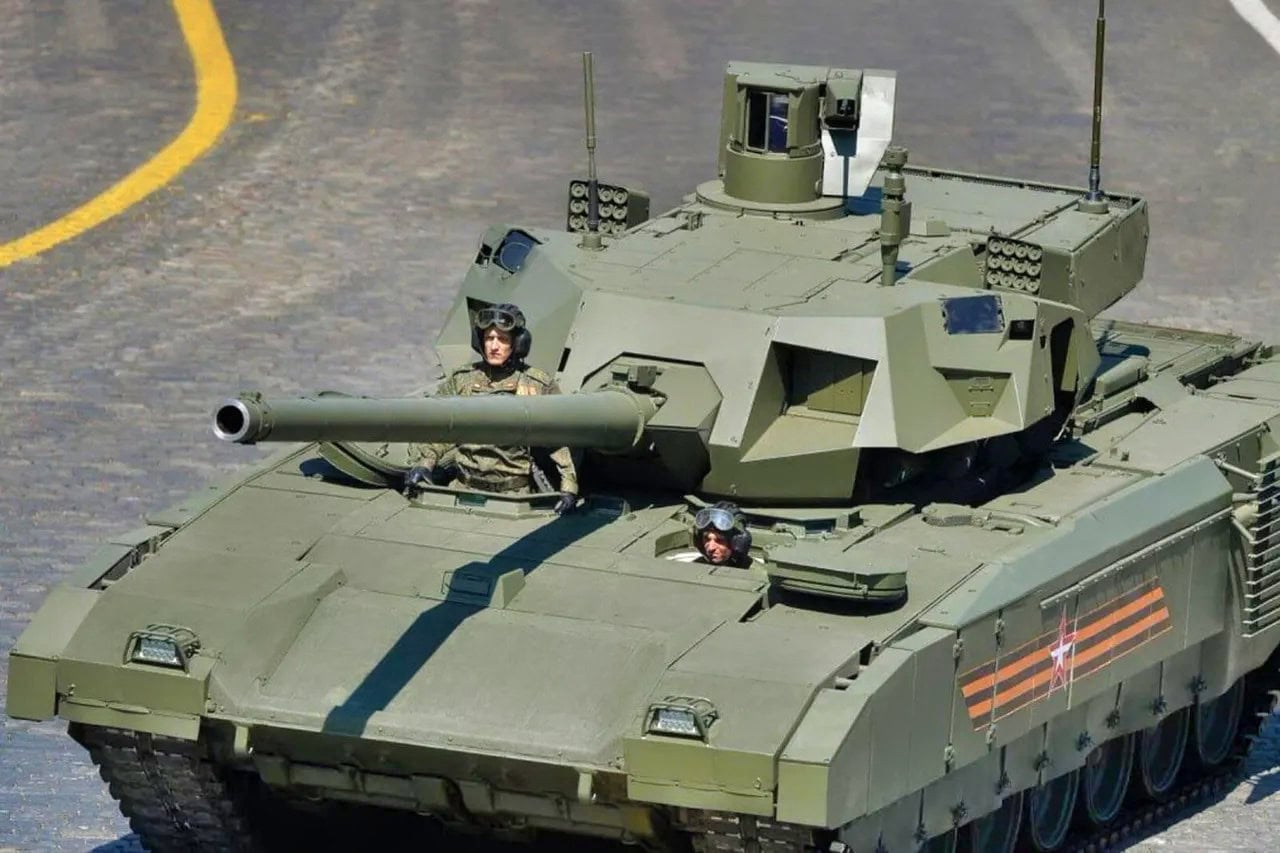
Russian T-14 Armata Tank. Image Credit: Social Media Screenshot.
By that authorized figure, the Congressional Research Service and the IISS note that Russia’s active force would rank second in the world, behind only China.
There is a large gap between the authorized number and reality, which is why Russia sits at five here rather than higher. The decreed strength is a target, not a confirmed headcount of soldiers actually serving, and the fielded force is not really growing because losses are outpacing recruitment.
Ukrainian figures, which broadly align with Western estimates, put Russia’s 2025 intake at roughly 406,000, against losses of around 419,000, with front-line attrition hovering near 30,000 a month. Analysts describe the pattern of small, repeated increases in the number of decrees as a creeping mobilization meant to quietly replenish the ranks without the political risk of another mass call-up like the one that sent draft-age men fleeing the country in 2022. Russia has leaned on contract recruitment with large signing bonuses, raised the conscription age, and moved to year-round conscription in 2026, with a spring draft target of 160,000.
The decree that lifted the authorized force to 1.5 million would, by IISS data cited at the time, leapfrog the United States and India on authorized active strength, though the Congressional Research Service notes that heavy casualties among professional soldiers and junior officers, paired with high-casualty tactics and a rigid command structure, have eroded the quality of the force even as its authorized size has grown.
Number 4: North Korea’s Korean People’s Army
North Korea is the entry that most clearly shows why raw manpower misleads, just as a coastal patrol fleet distorts a count of warships. By active-duty headcount, the Korean People’s Army is the fourth-largest military in the world, with most estimates, including those compiled by IISS, putting its active strength at roughly 1.28 to 1.3 million troops. What makes that figure striking is the population behind it.
North Korea fields nearly as many active personnel as the United States despite having a population of around 26 million, roughly a tenth the size, which means close to 5% of the entire country is in uniform, one of the highest ratios of any nation on earth.
That scale is a product of decades of militarization and the doctrine of a society organized around military readiness, but it buys far less real capability than the number suggests. The bulk of the force is a conscript army equipped with aging, largely obsolete hardware, much of it Soviet-era or Chinese-derived and decades out of date, and the country’s chronic shortages of fuel, spare parts, and modern equipment raise persistent questions about training and readiness.
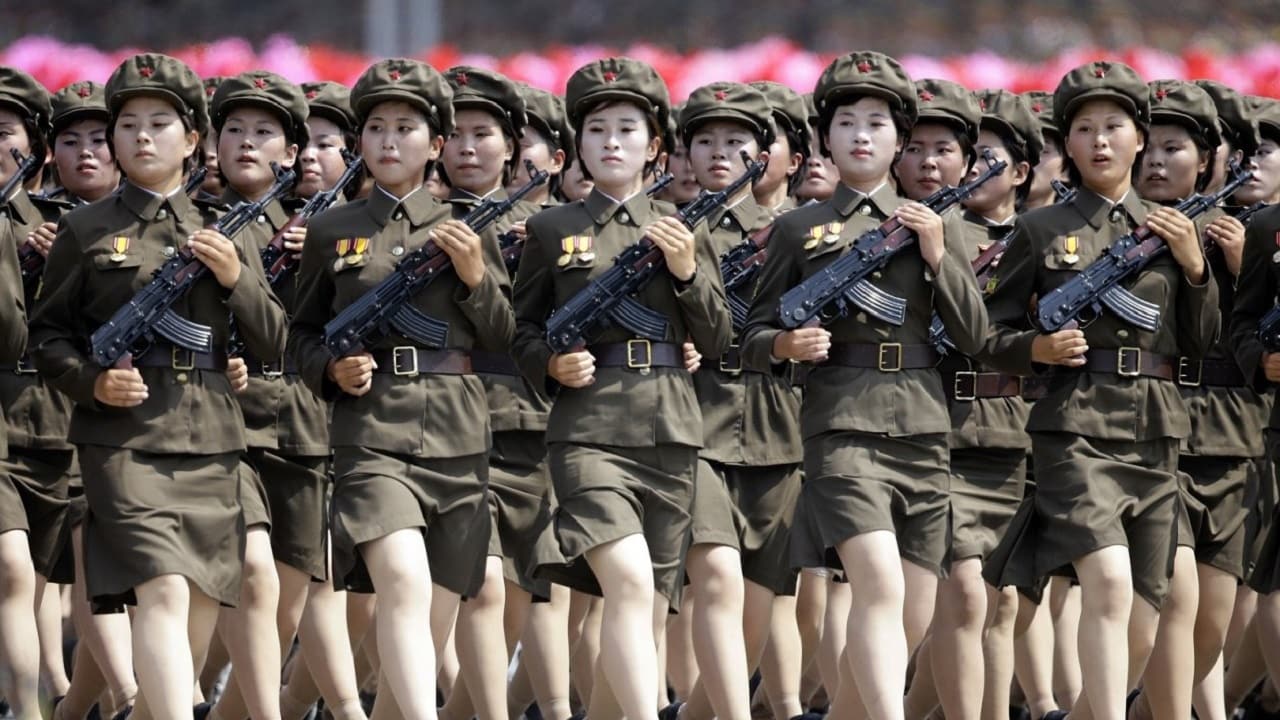
North Korean Type 88 Rifle. Image Credit: Creative Commons.
North Korea has poured effort into a handful of high-end programs, its nuclear weapons and ballistic missiles above all, but the conventional mass that lifts it to fourth on this list is a force built for defending territory and sheer numbers rather than projecting power. It is a genuinely enormous standing army by headcount and a far more limited one by modern capability, which is exactly the distinction this ranking is built to expose. Counting the reserves and paramilitary that North Korea can theoretically mobilize would push its total into the millions, but on active-duty strength alone, it already sits among the largest forces in the world.
Number 3: The United States Armed Forces
The United States ranks third by active-duty manpower, with roughly 1.32 million personnel spread across the Army, Navy, Marine Corps, Air Force, Space Force, and Coast Guard. The active-duty levels are set each year by Congress through the National Defense Authorization Act. As with the navy ranking by hull count, this placement understates American military power rather than reflecting it, because the United States bases its dominance on capabilities and spending rather than on headcount.
The gap between manpower rank and actual strength is enormous. The United States spends more on defense than any other country by a wide margin, with figures from the Stockholm International Peace Research Institute putting its 2024 outlay near 997 billion dollars, roughly 37% of all global military spending and more than the next several nations combined, and the 2026 budget is expected to top a trillion dollars.

Basic Combat Training, also known as “boot camp,” is the process in transforming civilian volunteers into Soldiers. Over 10 weeks, trainees will go through four phases that cover Army core values, physical training, first aid, hand grenades, obstacle course, basic rifle marksmanship, navigation, and three separate field exercises. Basic training produces Soldiers that are disciplined, resilient, physically fit and competent in their basic skills who can successfully contribute as members of a team when they arrive at their first unit of assignment. (US Army photo by Robin Hicks)
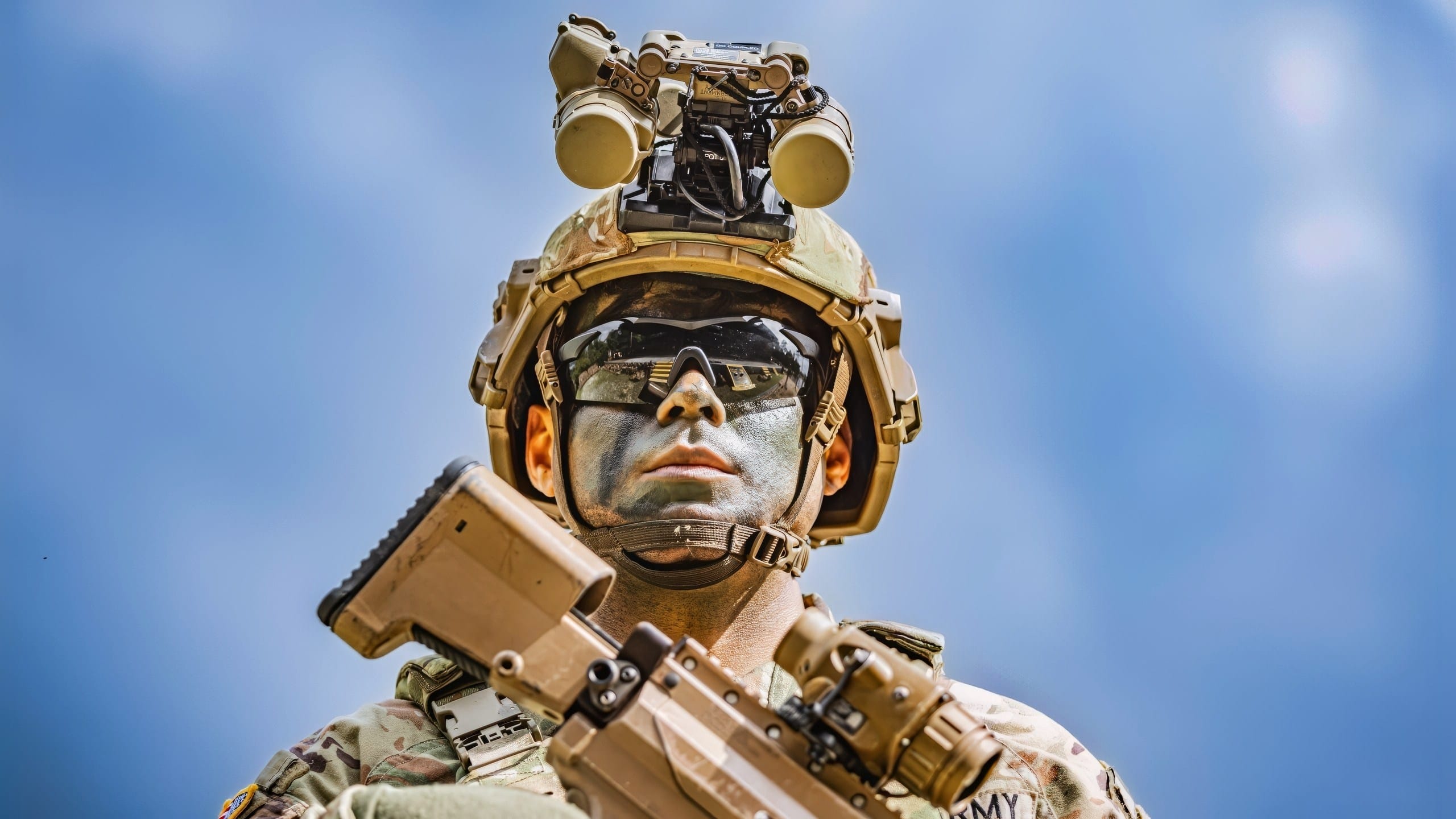
Soldiers, family and friends attend the Rangers in Action demonstration and graduation for class 08-25 Aug. 08, 2025, at Victory Pond on Fort Benning, Georgia. (U.S. Army photo by Capt. Stephanie Snyder)
That money funds the qualitative edge that manpower counts miss entirely: 11 nuclear-powered aircraft carrier groups, the most advanced air force in the world, the largest network of overseas bases, the most capable special operations forces, and a nuclear triad. The active force is also a fully professional, all-volunteer one, with reserves and National Guard components that can expand it considerably when needed. The third-place finish here reflects a deliberate choice to field a smaller, far more capable and expensive force rather than a mass army, and it is the clearest case on the list of why counting troops alone tells you little about who holds the advantage. By every measure other than raw numbers, the United States sits at the top.
Number 2: India’s Armed Forces
India holds second place with an active-duty force of roughly 1.43 to 1.48 million personnel, a scale reflected in World Bank personnel data. Unlike most militaries near the top of this list, it maintains that scale entirely through voluntary service, making it the largest all-volunteer military in the world. India maintains no conscription, which means every one of those troops is a full-time professional, an unusual achievement for a force of that size.
India’s manpower reflects both its vast population and a security environment that pushes it to keep a large standing army, with disputed and militarized borders against both Pakistan and China demanding substantial ground forces.
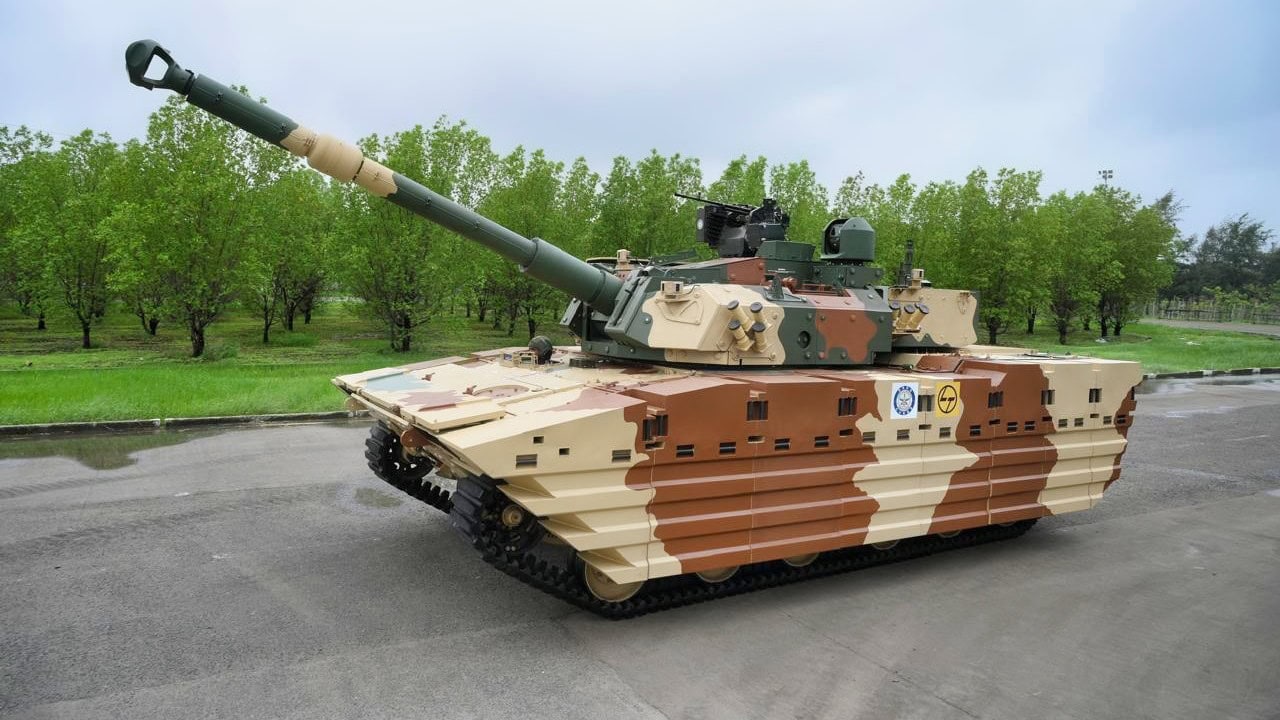
DRDO conducts successful Field Firing Trials of Indian Light Tank ‘Zorawar’ on September 13, 2024.
The army is the dominant branch, structured around large infantry and armored formations oriented toward those land frontiers, while the navy and air force are smaller in personnel but expanding as India pursues blue-water naval ambitions and modernizes its air fleet. India also maintains very large reserves and paramilitary establishments alongside its active force, including extensive border and internal-security formations numbering in the millions, though these are not included in the active-duty count.
The country has been steadily modernizing, increasing its defense budget and pursuing a mix of domestic production and foreign purchases, and its position near the top of the manpower table is durable given its population and its strategic circumstances. India is one of the few countries that combines genuine scale with a professional, volunteer force, which sets it apart from several of the larger conscript armies elsewhere on the list.
Number 1: China’s People’s Liberation Army
China fields the largest active-duty military in the world, with the People’s Liberation Army numbering approximately two million personnel, a figure the Congressional Research Service uses in its assessment of the PLA’s structure and that open-source trackers put more precisely at around 2.03 million. That total makes China the clear leader in raw active manpower, well ahead of India and the United States, and it sits atop a force that has been transformed by two decades of modernization.
The PLA is organized into four services: the PLA Army, PLA Navy, PLA Air Force, and the PLA Rocket Force, along with support arms responsible for space, cyber, electronic, and logistics functions. What distinguishes China’s manpower from North Korea’s is that its numbers are accompanied by rapid qualitative improvement rather than an aging mass. China now builds more warships and submarines each year than the United States, has fielded advanced fighters and missiles, and is pursuing a sweeping modernization program with a milestone target around 2027, all of it backed by the world’s second-largest defense budget, which the Stockholm International Peace Research Institute estimated at more than 300 billion dollars in recent years.
The force is no longer the largely infantry-heavy army of past decades, having shifted toward a smaller but more capable and technologically advanced structure even as it remains the biggest in the world by headcount. China’s enormous population gives it a mobilization base measured in the tens of millions, and among the major powers, it is one of the few capable of sustaining a prolonged large-scale conflict on manpower alone. It tops this ranking by the raw measure, and unlike some others near the top, it is closing the gap on capability as well.
What Active-Duty Numbers Do and Do Not Show
Counting troops is a poor way to judge who would prevail in a war, which is why the manpower order here inverts so sharply against any ranking by capability.
The United States sits third on this list yet first on virtually every measure of real military power, while North Korea sits fourth on headcount and far lower on what its forces could actually accomplish. Several countries fall just outside the top five on active manpower and would reorder the list again under different rules, among them Pakistan, Iran, South Korea, and Vietnam, the last of which vaults near the top of any ranking that includes reserves.
What a raw active-duty count does capture is standing scale and national priority, the size of the force a country chooses to keep fully manned at all times.
For China and India, that scale reflects huge populations and serious regional security pressures.
For North Korea, it reflects a society organized around the military to a degree almost no other country matches. And for Russia, it reflects a wartime expansion that exists more firmly on paper than in the field. The numbers are worth knowing, as long as they are read for what they are.
About the Author: Harry J. Kazianis
Harry J. Kazianis (@Grecianformula) was the former Senior Director of National Security Affairs at the Center for the National Interest (CFTNI), a foreign policy think tank founded by Richard Nixon based in Washington, DC. Harry has over a decade of experience in think tanks and national security publishing. His ideas have been published in the NY Times, The Washington Post, The Wall Street Journal, CNN, and many other outlets worldwide. He has held positions at CSIS, the Heritage Foundation, the University of Nottingham, and several other institutions related to national security research and studies. He is the former Executive Editor of the National Interest and the Diplomat. He holds a Master’s degree focusing on international affairs from Harvard University.