
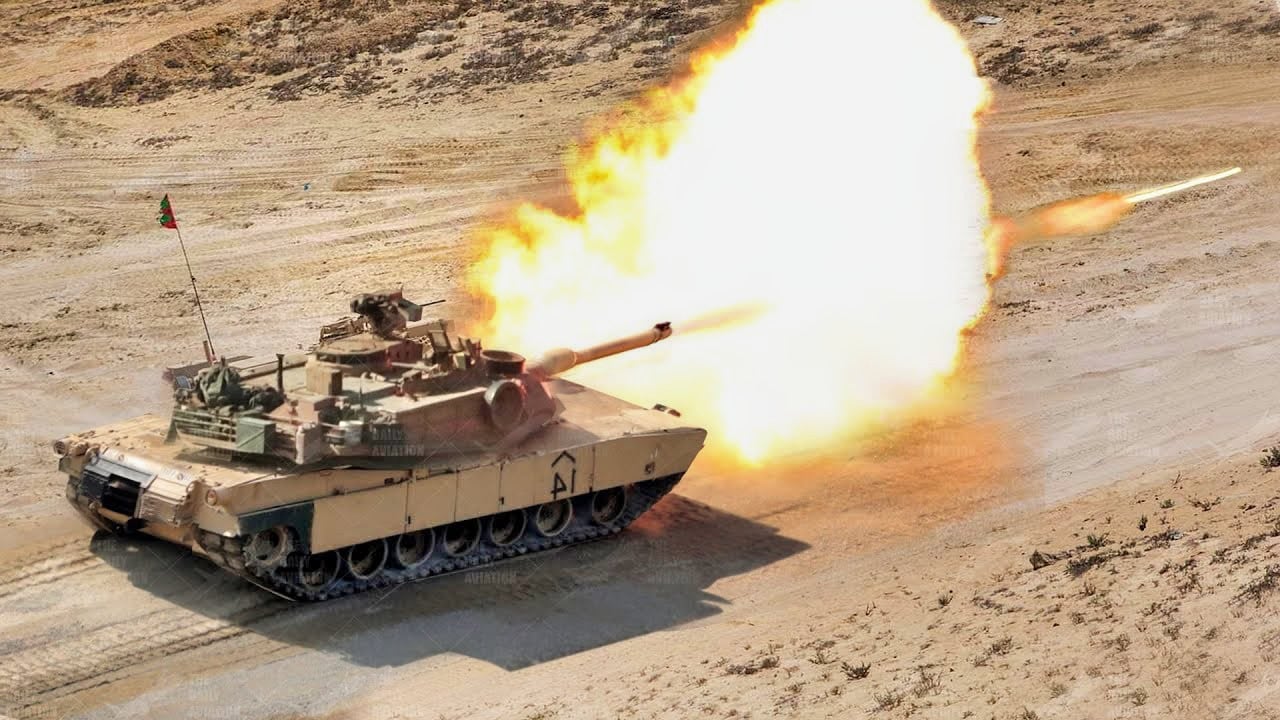
Meet the M1 Abrams Tank: The tank is named for Gen. Creighton Abrams, the World War II armor commander who later ran the Army, and it entered service in 1980 as the centerpiece of a force built to stop Soviet armor in Germany. That war never came. The wars that did come put the Abrams through five different kinds of combat across 35 years, and each one rewrote the threat it faced. The record of what happened, engagement by engagement, is more instructive than any spec sheet.
Desert Storm 1991: 73 Easting, Medina Ridge, and a Reputation Built in 100 Hours
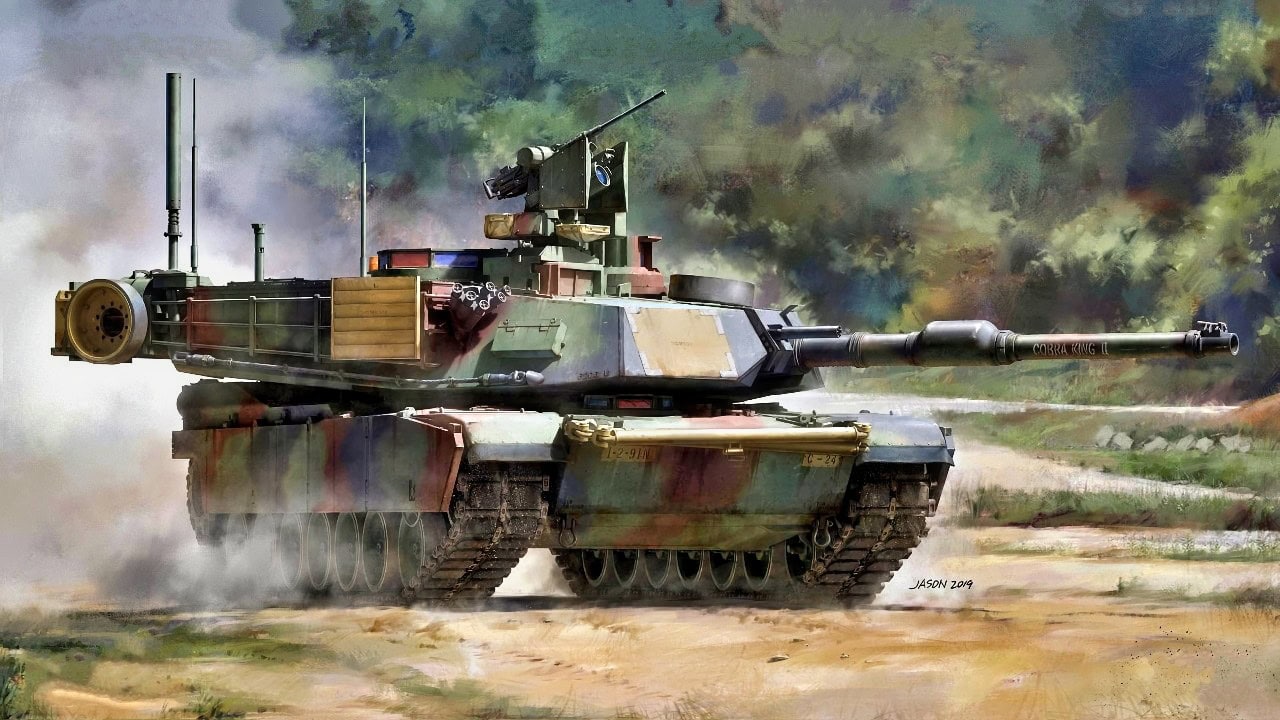
M1 Abrams Tank. Image Credit: Creative Commons.
The Abrams met enemy armor for the first time in February 1991, and the results were so lopsided they distorted expectations for a generation. The Army shipped roughly 2,200 Abrams and Bradleys to the Gulf, and GAO’s assessment afterward found crews rated the tanks’ reliability, lethality, and survivability as very good, with limited range and spare parts as the main complaints.
The combination that mattered was thermal sights, a stabilized 120mm gun firing depleted-uranium sabot rounds, and armor Iraqi rounds could not defeat. American crews saw Iraqi tanks through sandstorms and darkness, engaged from beyond 2,000 meters, and killed them before most defenders located the source of the fire.
At the Battle of 73 Easting on February 26, the nine M1A1s of Eagle Troop, 2nd Armored Cavalry Regiment, under then-Captain H.R. McMaster, destroyed 28 Iraqi tanks, 16 personnel carriers, and 30 trucks in 23 minutes without losing a vehicle.
A day later at Medina Ridge, the 1st Armored Division fought the largest tank engagement of the war against the Republican Guard’s Medina Division and shattered it.
Across the whole campaign, not one Abrams was destroyed by Iraqi tank fire. The tanks that were lost fell to mines, to friendly fire in the confusion of fast-moving night engagements, or to American demolition of disabled vehicles that could not be recovered. The duel record started at 0 losses and would remain there for 33 years.
Baghdad 2003 and the IED War: The Abrams Meets Enemies Without Tanks
The 2003 invasion of Iraq gave the M1 Abrams its second conventional war and its first city. On April 5 and April 7, the 3rd Infantry Division ran armored columns straight into Baghdad, the raids that became known as the Thunder Runs, absorbing rocket-propelled grenade fire that would have shredded lighter vehicles.
One tank was lost on Highway 8 when a recoilless rifle round set its engine compartment burning; the crew walked away, and the Army destroyed the disabled tank rather than let it be captured. As proof of survivability under fire from every direction, the Thunder Runs were the Abrams at its best.
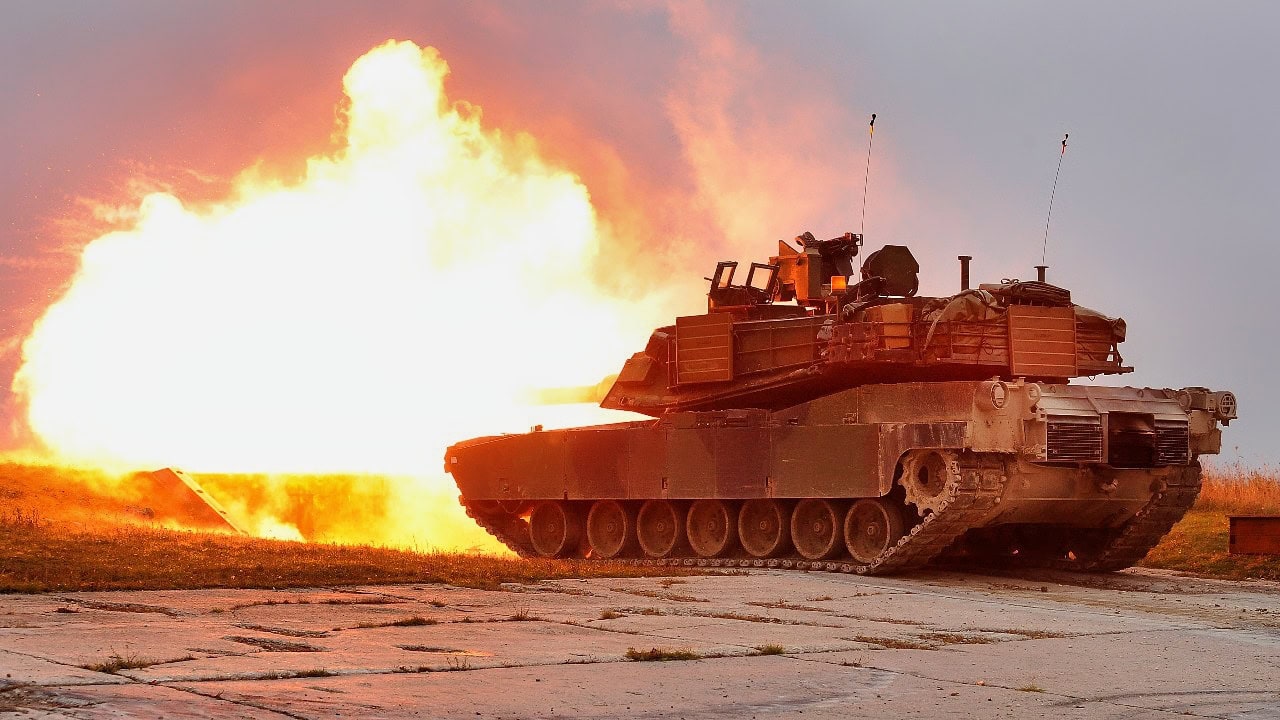
U.S. Soldiers, assigned to the 1st Battalion, 64th Armor Regiment, 1st Armored Brigade Combat Team, 3rd Infantry Division, conduct gunnery with M1A2 Abrams tanks during exercise Combined Resolve V at 7th Army Joint Multinational Training Command in Grafenwoehr, Germany, Oct. 8, 2015. Combined Resolve is designed to exercise the U.S. Army’s regionally aligned force to the U.S. European Command area of responsibility with multinational training at all echelons. Approximately 4,600 participants from 13 NATO and European partner nations will participate. The exercise involves around 2,000 U.S. troops and 2,600 NATO and Partner for Peace nations. Combined Resolve is a preplanned exercise that does not fall under Operation Atlantic Resolve. This exercise will train participants to function together in a joint, multinational and integrated environment and train U.S. rotational forces to be more flexible, agile and to better operate alongside our NATO Allies. (U.S. Army photo by Visual Information Specialist Gertrud Zach/released)
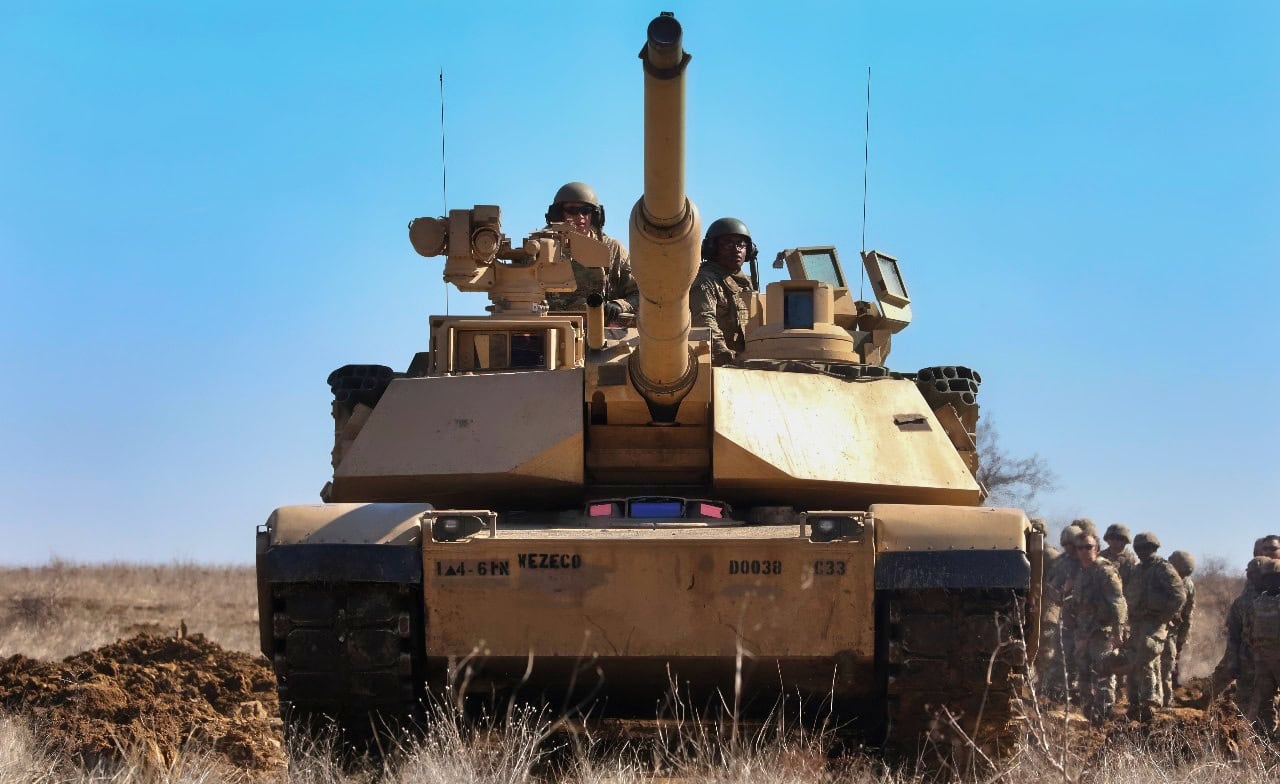
A U.S. Army M1 Abrams, assigned to 4th Battalion, 6th Infantry Regiment, 3rd Armored Brigade Combat Team, 1st Armored Division, fully emerges from the tank firing point to engage the simulated enemy at Novo Selo Training Area, Bulgaria, March 5, 2025. 1st Armored Division, a rotational force supporting V Corps, conducts training with engineers and tank operators in the European Theatre to maintain readiness and instill fundamental Soldier skills that are vital in maintaining lethality. (U.S. Army photo by Spc. Kyle Kimble)
The years that followed were something else. The insurgency did not offer tank battles.
It offered buried bombs, and the improvised explosive devices and explosively formed penetrators that spread after 2004 attacked the Abrams where it carries the least armor, from below and behind. Dozens of tanks were shipped home for rebuilding within the first two years of the occupation, and crews began dying in a vehicle that no enemy gunner in 1991 had managed to kill.
The Army answered with TUSK urban-survival kits, belly armor, and gun shields. The lesson was already the one that would define the next 20 years: the tank’s dominance was tied to a kind of war its enemies had stopped agreeing to fight.
Iraqi and Saudi Abrams Against ISIS and in Yemen: The Export Wars
The next two chapters belong to other armies. The Iraqi Army’s M1A1s could not stop the ISIS offensive that took Mosul in June 2014, and abandoned Abrams tanks were captured and turned against their former owners, with a few later photographed in the hands of Iran-backed militias, a development that soured Washington on further support.
In Yemen, Saudi Arabia’s M1A2S fleet went to war against the Houthis in 2015, and videos of Saudi Abrams being destroyed by Iranian-supplied anti-tank guided missiles began circulating within months. The tally was never official, but in August 2016, the State Department approved a sale of up to 153 replacement tanks for Riyadh, and the notice itself listed 20 of them as battle damage replacements. The US government’s own paperwork conceded what the videos showed.
The export wars carried an important caveat that aggregation coverage usually drops. These were not American crews, American maintenance, or American combined-arms doctrine, and the export tanks lacked the depleted-uranium armor package that US tanks carry.
What Yemen and Mosul proved was narrower than the videos suggested: an Abrams handled poorly, positioned statically, and left unsupported dies like any other tank, and modern guided missiles had put that death within reach of infantry and militias.
M1 Abrams in Ukraine 2024 to 2026: FPV Drones, One T-72, and an 80-Tank Rebuild
Ukraine is where the two threads met: a first-rate tank, a non-American operator, and a battlefield more saturated with drones than any army had faced before. The 31 M1A1s Washington sent entered combat in February 2024 in the defense of Avdiivka and started dying within days. By that April, US officials told the Associated Press the tanks were being pulled back from the front line while tactics were rethought, with roughly a sixth of the fleet already gone. The losses kept mounting after the tanks returned with added armor.
Open-source counts this spring put visually confirmed losses of the original 31 at 25, between destroyed, abandoned, damaged, and one captured and hauled back to Russia for display and study. Kyiv Post reporting on the fleet found drones and top-attack strikes behind every loss but one; the exception, the only one of its kind in the tank’s 35 years of combat, was a kill by the gun of a Russian T-72B3. That single tank-on-tank loss stands against a casualty list otherwise filled by weapons cheaper than the Abrams’ own fuel load.
Ukraine’s answer was not to give up on the tank. Australia sent 49 retired M1A1s, with Canberra confirming the final dozen delivered in December 2025, bringing the total pledged fleet to 80. The survivors and replacements now fight under welded cope cages, Soviet-pattern reactive armor, and electronic warfare jammers, and Ukrainian units report crews surviving multiple FPV drone hits in the modified vehicles.
The tank still works. It simply no longer works alone, unmodified, or cheaply.
Trophy, Survivability Money, and the M1E3: What the US Army Took From All of It
The US Army watched all five chapters and moved. Its current budget allocates more than $107 million to survivability upgrades for roughly 400 of its Abrams, including belly armor and top-attack protection, a line item that reads as a direct response to Ukraine.
The bigger answer came in September 2023, when the Army canceled its planned incremental upgrade and launched the M1E3, a redesign its own program executive justified bluntly: Maj. Gen. Glenn Dean said the Abrams “can no longer grow its capabilities without adding weight.”
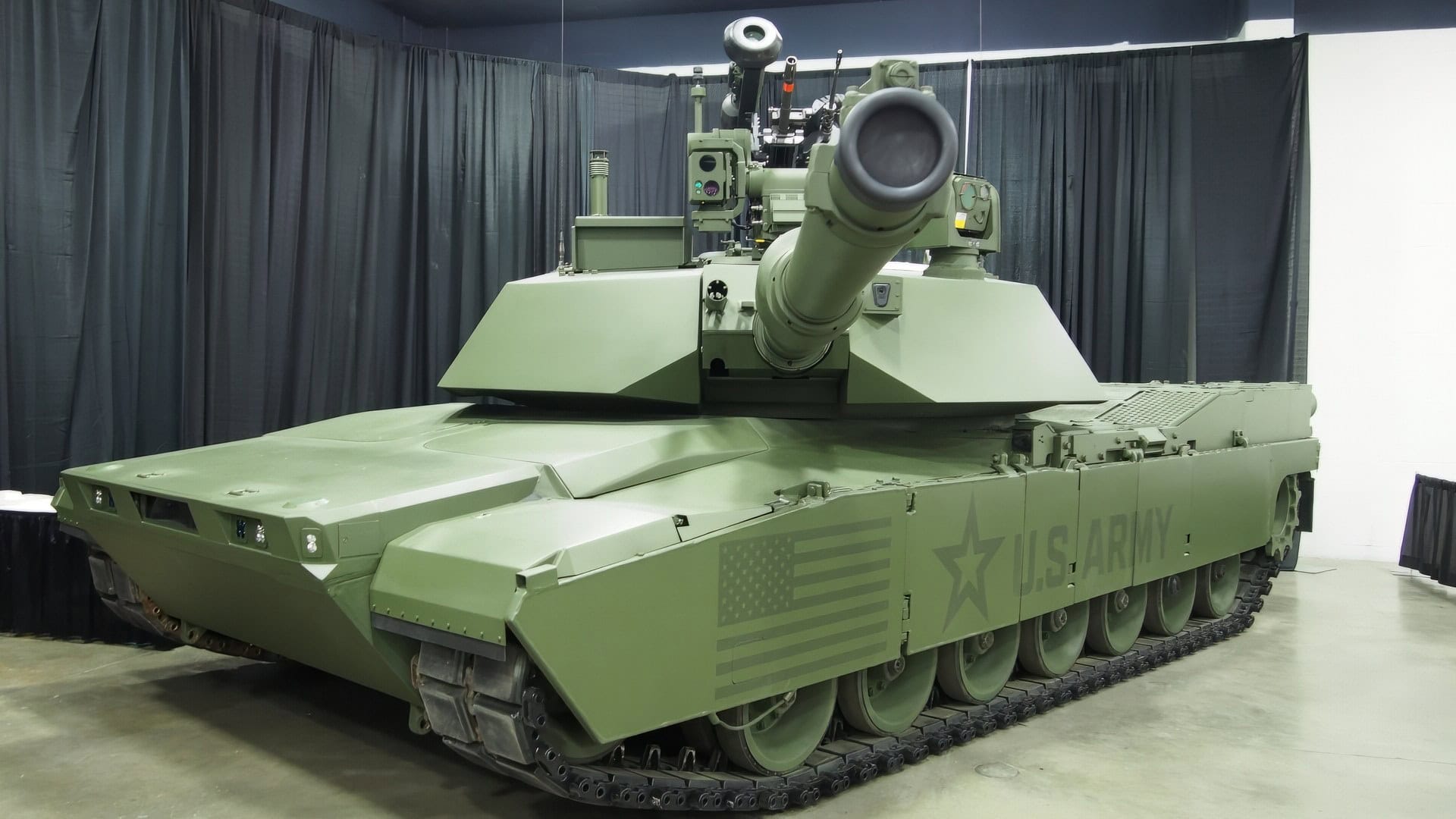
Photo taken on 1/17/2026 of the M1E3 Tank at the Detroit Auto Show. Image by 19FortyFive, All Rights Reserved.
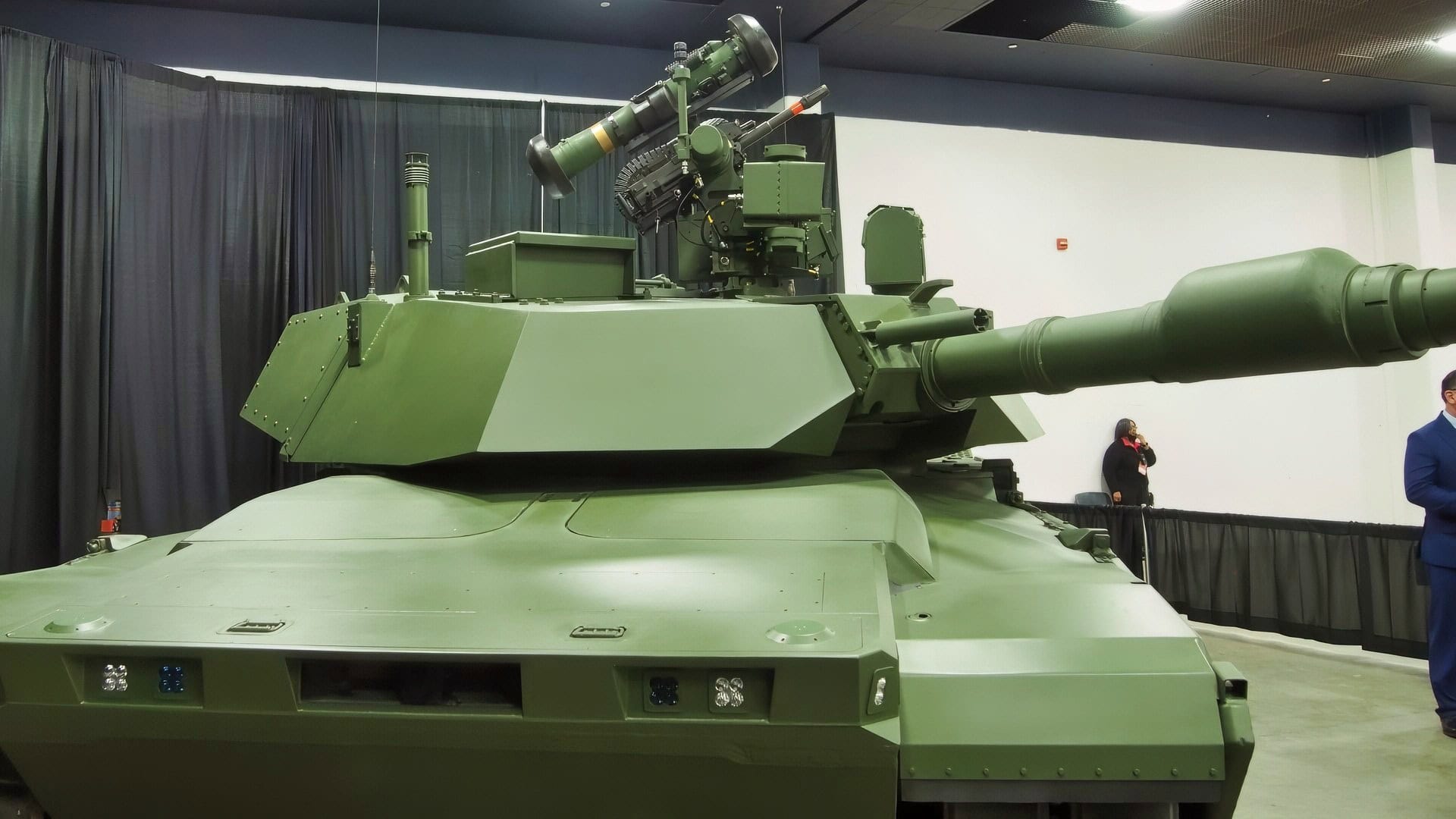
M1E3 Tank from the Detroit Auto Show. Photo Taken By 19FortyFive Staff on 1/17/2026.
The M1E3 targets roughly 60 tons, compared to the 70-plus of today’s tanks, with a hybrid-electric drive, an autoloader, and the crew moved out of the turret into the hull. The first prototype reached the Army in December 2025; soldiers at Fort Hood began operational testing with prototype platoons this summer, and the Army hopes to start production as early as next year, years ahead of the original schedule.
As of today, the ledger stands where 35 years of combat left it: one Abrams ever lost to an enemy tank, hundreds lost or rebuilt because of mines, missiles, bombs, and drones, a modified fleet still fighting in Ukraine, and a redesigned successor being driven by soldiers in Texas this summer because of everything the original’s battle history taught.
About the Author: Harry J. Kazianis
Harry J. Kazianis (@Grecianformula) was the former Senior Director of National Security Affairs at the Center for the National Interest (CFTNI), a foreign policy think tank founded by Richard Nixon based in Washington, DC. Harry has over a decade of experience in think tanks and national security publishing. His ideas have been published in the NY Times, The Washington Post, The Wall Street Journal, CNN, and many other outlets worldwide. He has held positions at CSIS, the Heritage Foundation, the University of Nottingham, and several other institutions related to national security research and studies. He is the former Executive Editor of the National Interest and the Diplomat. He holds a Master’s degree focusing on international affairs from Harvard University.

