
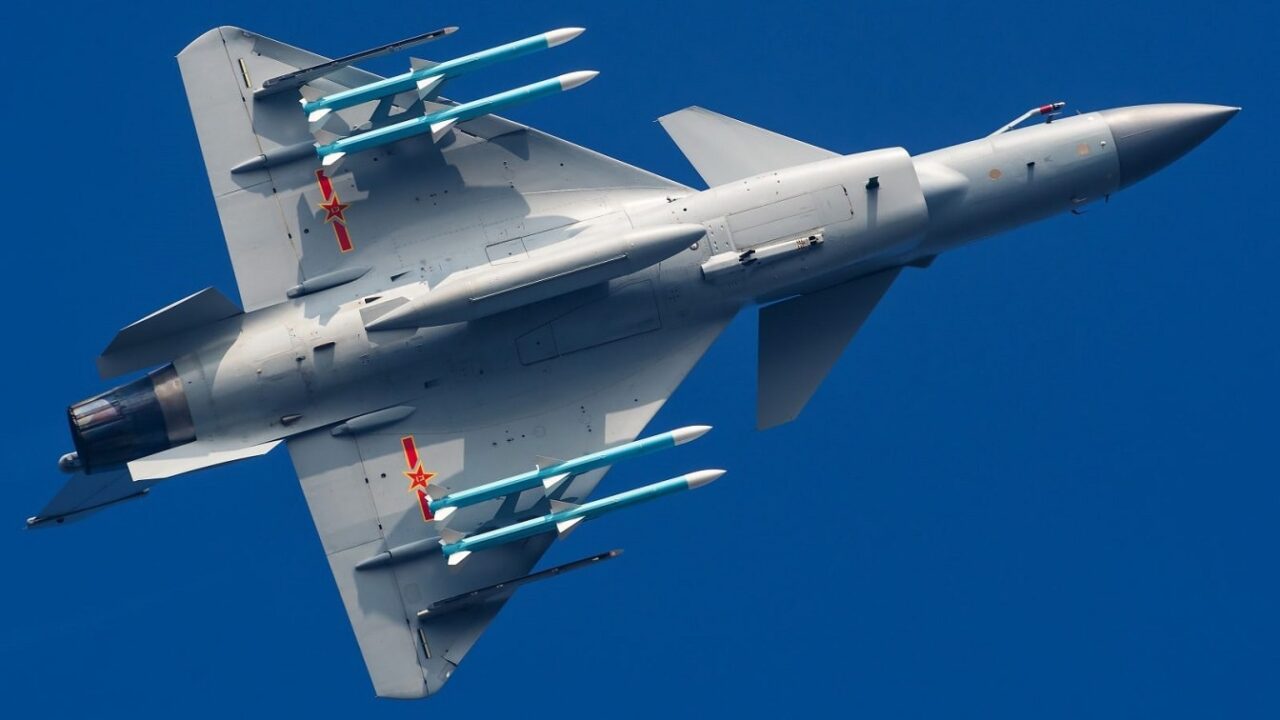
Summary and Key Points: China’s Chengdu J-10 fighter traces directly to the J-9, an ambitious Mach 2.4 interceptor that the country spent 16 years trying to build before canceling it in 1980 without a single flight. Chief designer Song Wencong carried the J-9’s canard delta layout into Project No. 10, which was approved by the State Council in 1986, and the J-10 first flew on March 23, 1998, a date Song adopted as his official birthday. More than 600 J-10s now serve China’s air force and naval aviation, the newest flying on the domestic WS-10B engine after two decades on Russian powerplants, and the design’s canard lineage runs through the J-20 to the J-36.
How the J-10 Fighter Was Born: An Introduction
More than 600 J-10s now serve China’s air force and navy; Pakistan flies three dozen; Indonesia has committed to 42; and in January, Beijing did something it had never done in its history: officially confirm combat results by an exported Chinese fighter. None of it began with the J-10. It began with the J-9, a Mach 2.4 interceptor China spent sixteen years failing to build, canceled in 1980 without a single flight — and with the designer who carried its canard wings out of the wreckage and made them the signature of Chinese airpower, from the J-10 to the J-20 to the J-36. He was so bound to the jet that he changed his birthday to the date it first flew.
On March 23, 1998, a canard-delta fighter lifted off from Chengdu for the first time, and the engineer watching it turned 68 years old that very day. Song Wencong changed his official birthday that same evening — born March 23, 1930, he declared the jet’s first flight and his own birth to be the same anniversary, and kept it that way until his death in 2016. Song had spent 1937 hiding in air-raid shelters as Japanese aircraft worked over Yunnan unopposed, an experience he later described as the lesson that falling behind invites blows. The aircraft that flew that day in 1998 was his answer, and its story is really the story of how China learned to build fighters at all. It begins with an airplane that never flew.
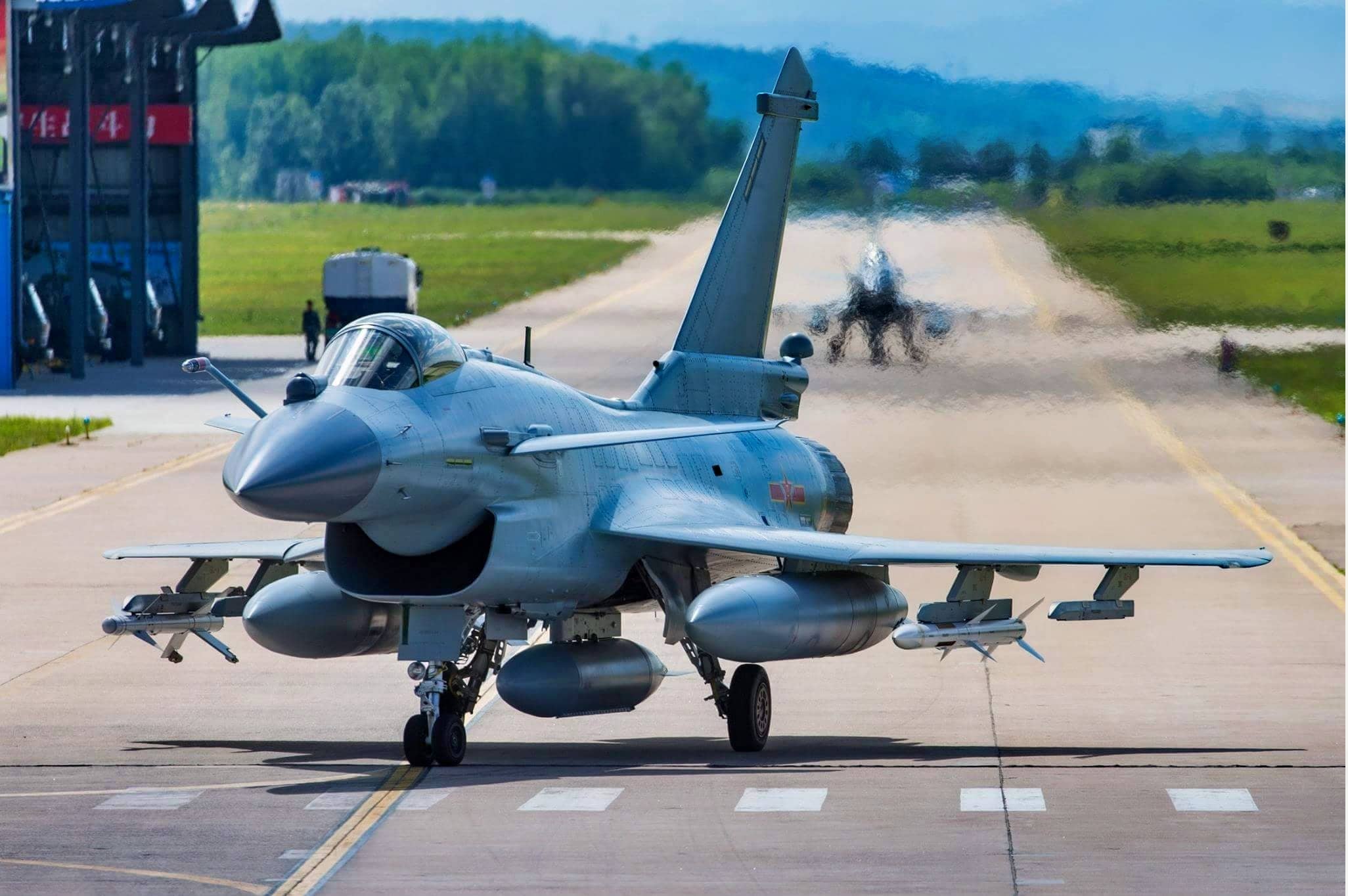
J-10C Fighter from China. Image Credit: Creative Commons.
Aerospace Ancestry: The J-9, the Fighter China Couldn’t Build Yet
In 1964, China launched two fighter programs to move beyond its MiG-21 copies. The safe one, Shenyang’s twin-engine J-8, eventually flew. The ambitious one, the J-9, was a clean-sheet single-engine interceptor chasing specifications the country’s industry could not remotely support: Mach 2.4 above 66,000 feet, with the requirements revised upward in 1970 and again in 1975 as the demands kept escalating. The program was battered by the Cultural Revolution, and its development was transferred to a newly built design house in Chengdu, the 611 Institute, which was in effect created around the airplane. There, the design converged by 1975 on something genuinely ahead of its time: a canard-delta with 60-degree sweep and variable side intakes, a Type 205 radar, and an armament of four PL-4 radar-guided missiles, making the J-9, by the institute’s own account, China’s first fighter designed around beyond-visual-range combat in an era when its contemporaries still treated guns as primary. Five prototypes were approved in 1975 for a first flight around 1980. The engine never came right, the money never held, and in 1980, the program was canceled with nothing built to fly.
China itself has lately taken to celebrating this ghost. In interviews with the state-run Global Times last year, institute veterans recounted the canard work as homegrown invention — “Ours was an original innovation,” researcher Xie Pin said of the layout, allowing only Sweden’s fixed-canard Viggen as a distant cousin — and relayed the verdict of the man who mattered most: Song Wencong, who worked on the J-9 and became the J-10’s chief designer, held that without the J-9 there would have been no J-10 at all.
Defense Program: Project No. 10 and the Ten Thousand Wind-Tunnel Tests
The successor began as a budget line. In 1981, air force commander Zhang Tingfa proposed a new-generation fighter to Deng Xiaoping for 500 million yuan, and the program that followed became the first Chinese aircraft program managed on modern lines, its developer answerable to the buying service rather than to a ministry. In February 1984, Chengdu’s proposal, a canard-delta derived straight from its dead J-9, beat Shenyang’s F-16-like design and Hongdu’s swing-wing entry; Song became chief designer, and the State Council approved “Project No. 10” in 1986.
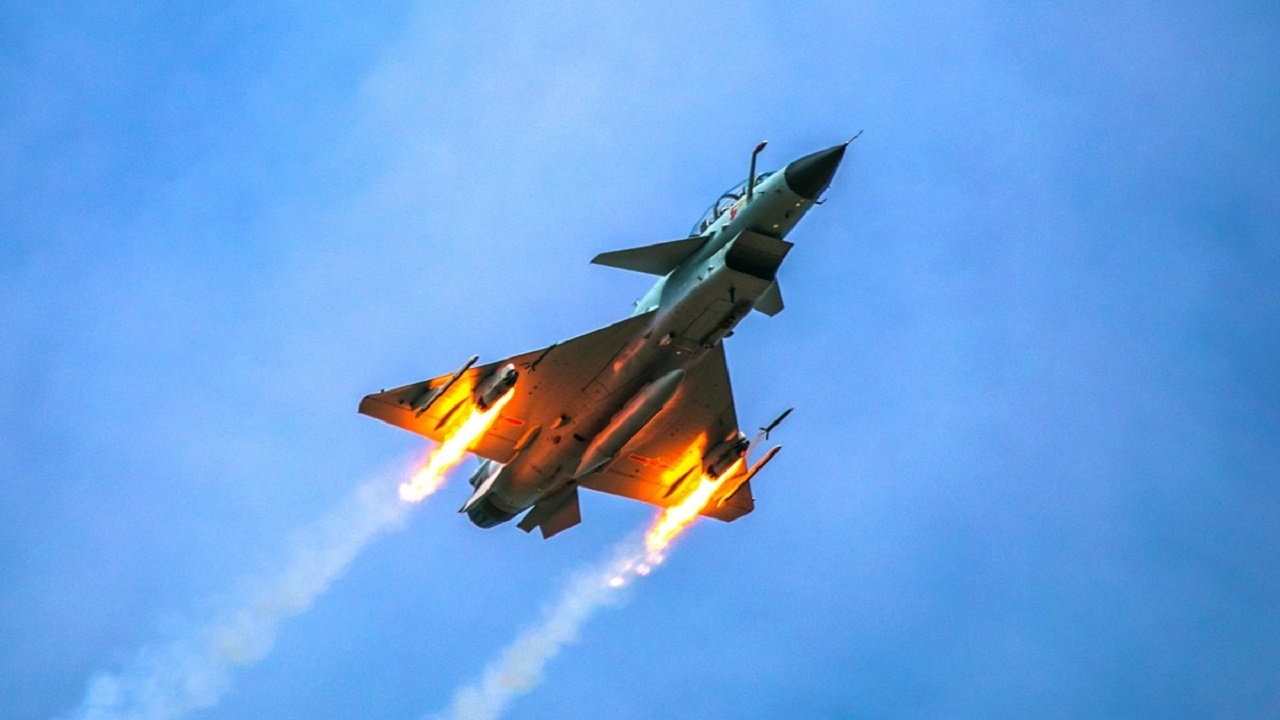
J-10 Fighter. Image Credit: Creative Commons.
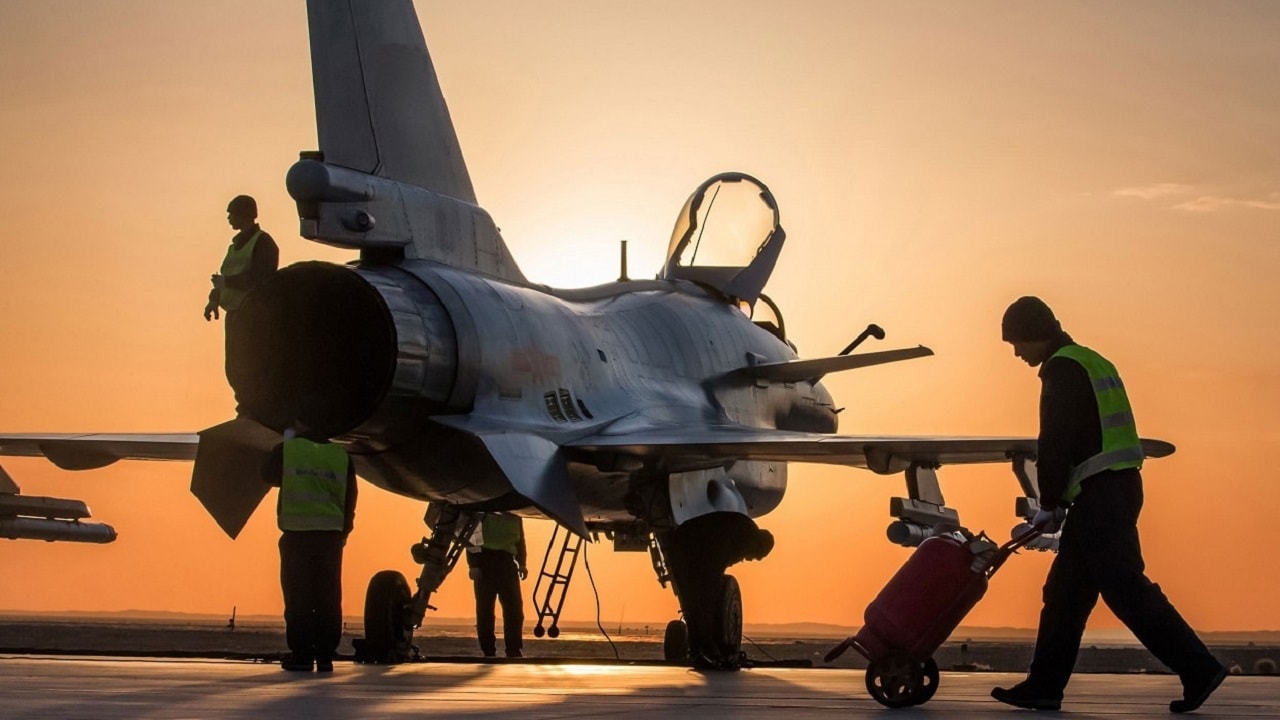
Chinese J-10 fighter. Image Credit: Creative Commons.
The development legend the Chinese tell is one of brute-force empiricism: more than ten thousand wind-tunnel tests in a single year, and a weight-control campaign the program’s chroniclers credit, by their own accounting, with a world record. Funding delays stretched the schedule throughout the 1990s; the first flight occurred in 1998, and the People’s Liberation Army Air Force confirmed the J-10’s operational status by releasing official photographs on December 29, 2006.
One paragraph of this history is permanently contested, and honesty requires stating that. Western trade-press reports of the early 1990s described Israeli cooperation with Chengdu drawing on the canceled, largely American-funded Lavi fighter, and the J-10’s resemblance to that jet has fueled the allegation ever since. Song denied any connection to his dying day, PLAAF Maj. Gen. Zhang Weigang has publicly rebutted the copying charge, and the counter-evidence is the J-9 itself: a Chengdu canard-delta predating the Lavi by a decade. The claims were never substantiated, Washington never imposed a penalty, and the question has never been resolved. It sits in the record as an asterisk; both sides find it useful.
Engine Reality: The Twenty-Year Russian Crutch
The J-10’s quietest drama was the one inside the fuselage. A new Chinese engine, the Shenyang WS-10, was selected for the fighter in 1983, but it was not ready for decades. Every early J-10 flew on the Russian AL-31FN instead: an indigenous fighter with an imported heart, and a dependency that gave Moscow quiet leverage over Chinese production and exports alike, since Russia had little interest in powering a competitor’s jets in markets where it hoped to sell its own.
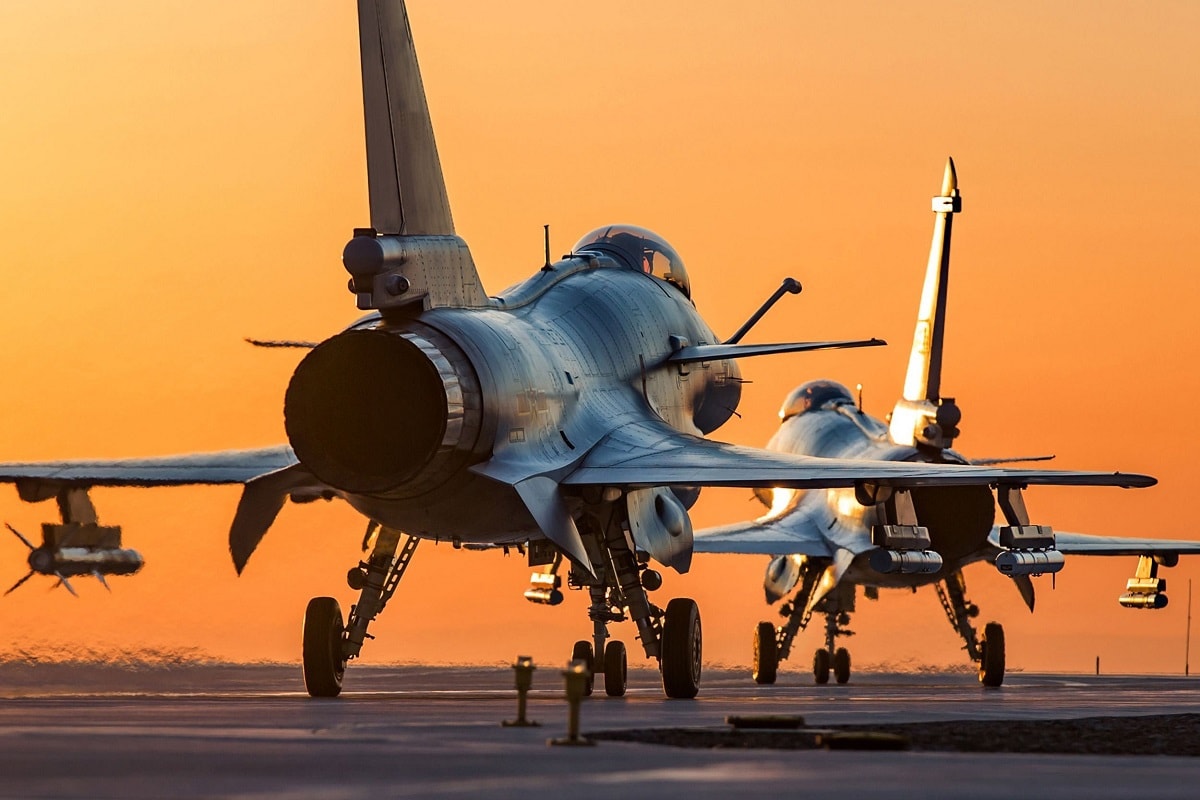
J-10 Fighter. Image: Creative Commons.
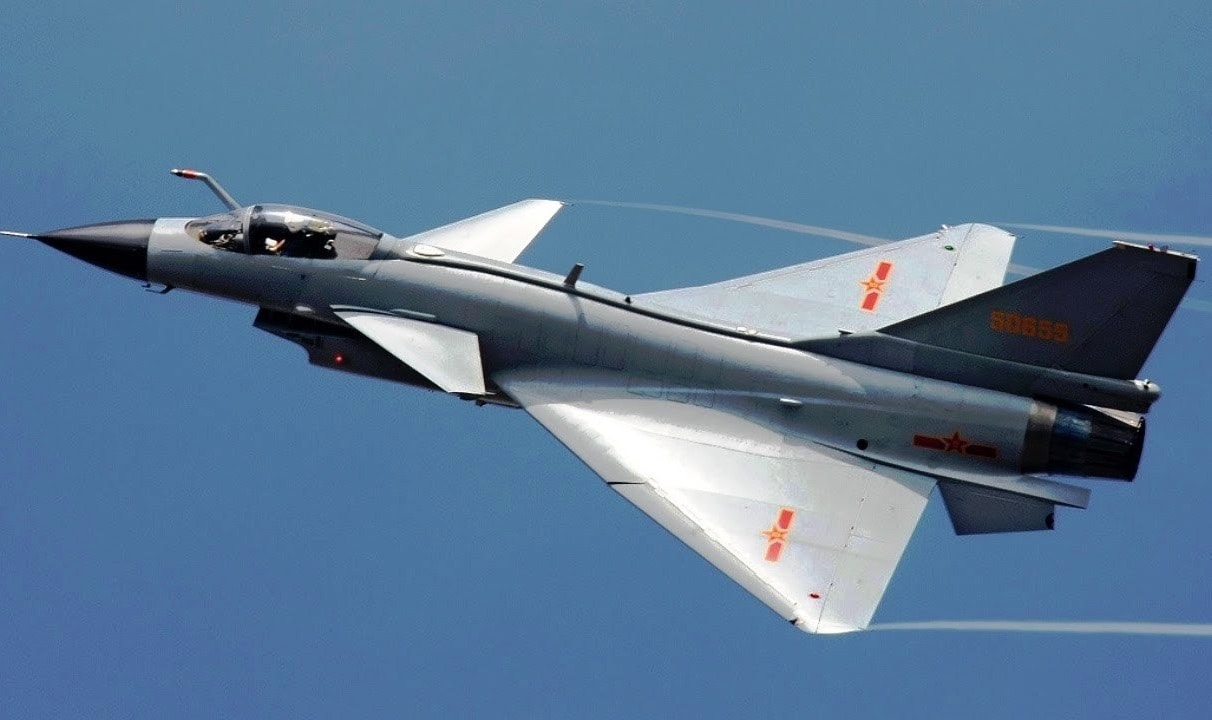
J-10 Fighter. Image Credit: Creative Commons.
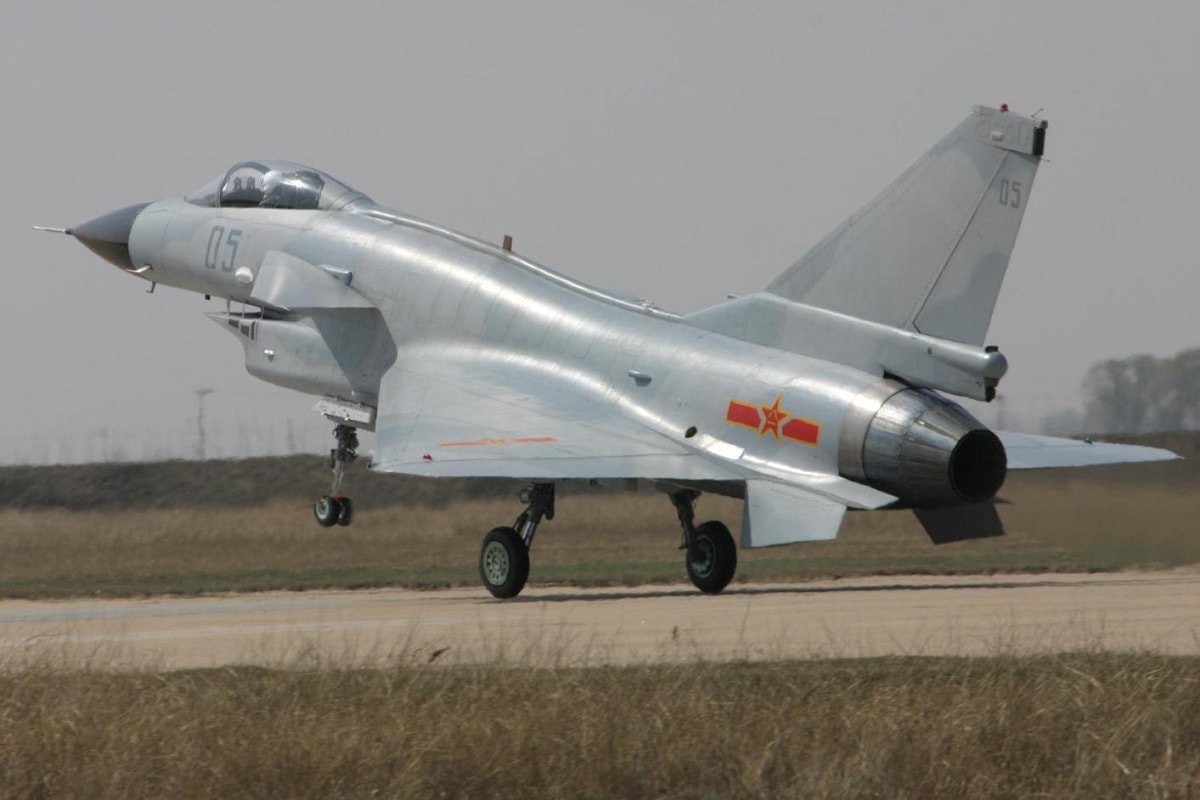
A Chengdu J-10 fighter of the People’s Liberation Army Air Force.
The WS-10’s slow maturation reversed that, and the reversal is now complete in the most telling place possible: the J-10Cs China builds today, including the export jets delivered to Pakistan, fly on the domestic WS-10B. The airplane that spent twenty years dependent on a foreign engine outlived the dependency, and the engine independence it forced along the way now underwrites every Chinese fighter program behind it.
Fleet and Export Ledger: From MiG-21 Copies to State-Confirmed Kills
The production ledger states the domestic outcome plainly: the Pentagon’s December 2025 China report counts more than 600 J-10s built, serving both the air force and naval aviation, with the J-10C standard now the backbone of Chinese tactical airpower. The export ledger states the transformation. For half a century, China’s most successful fighter export was the F-7, a MiG-21 built under license; 488 of them reached a dozen countries, by Cirium’s count.
The J-10C is the first Chinese fighter to compete upmarket: the same Pentagon report confirms 36 delivered or delivering to Pakistan under orders running since 2020, with the first jets arriving in March 2022 and the fleet completing early this year. Pakistani J-10CEs flew combat in the May 2025 clash with India, where Islamabad claimed multiple kills, including Rafales, claims New Delhi disputes, and independent accounting has never settled. What changed in January was Beijing’s own posture: on January 9, China’s defense-industry regulator SASTIND officially confirmed that the exported J-10CE had achieved combat outcomes in 2025, the first state-level acknowledgment of combat outcomes by an exported Chinese fighter in the country’s history.
The order book responded. Indonesia moved toward Chinese fighters through the summer (“will fly in Jakarta soon,” Defense Minister Sjafrie Sjamsoeddin said) before committing in October to 42 J-10s, described as China’s largest fighter-export deal, though reporting has since differed on whether Jakarta receives new-build J-10Cs or refurbished J-10Bs.
Bangladesh is preparing a reported $2.2 billion purchase of twenty, per the Business Standard, and reported interest runs from Egypt to Uzbekistan to Azerbaijan. None of it approaches the F-16’s four-thousand-plus global fleet, but that was never the standard; the standard was the F-7, and the distance from license-copied MiG-21s to a state-confirmed combat record is one aircraft generation.
The Counterpoints: A Middleweight in a Heavyweight Era
The honest limits belong in the ledger too.
The J-10 is a single-engine 4.5-generation fighter in a world moving to fifth and sixth; at home, it is overshadowed by the J-20, and abroad, the United States effectively bars Chinese jets from the wealthiest markets, a structural ceiling analyst Siemon Wezeman has noted, no combat record lifts. The export cascade remains mostly commitments rather than deliveries, and the combat reputation rests heavily on one contested week of fighting, filtered through claims neither side can fully prove. All true, and all beside the point, the airframe was built to make.
The J-10’s assignment was never to be the best fighter on Earth. It was to teach a country that could only copy MiGs how to conceive, design, power, and mass-produce its own modern fighter.
Measured that way, the returns run past 600 airframes.
The institute founded around a fighter that never flew now fields the J-10 in the hundreds, builds the J-20 in the hundreds, and is flying the J-36. The canard surfaces that Chengdu’s engineers first drew for the doomed J-9 have become the visual signature of Chinese airpower across three generations.
Song Wencong did not live to see the sixth-generation prototypes; he died in 2016, at 85, his official birthday still March 23 — the day his fighter flew, and the day the J-9’s long failure finally finished turning into something else.
About the Author: Harry J. Kazianis
Harry J. Kazianis (@Grecianformula) was the former Senior Director of National Security Affairs at the Center for the National Interest (CFTNI), a foreign policy think tank founded by Richard Nixon based in Washington, DC. Harry has over a decade of experience in think tanks and national security publishing. His ideas have been published in the NY Times, The Washington Post, The Wall Street Journal, CNN, and many other outlets worldwide. He has held positions at CSIS, the Heritage Foundation, the University of Nottingham, and several other institutions related to national security research and studies. He is the former Executive Editor of the National Interest and the Diplomat. He holds a Master’s degree focusing on international affairs from Harvard University.

