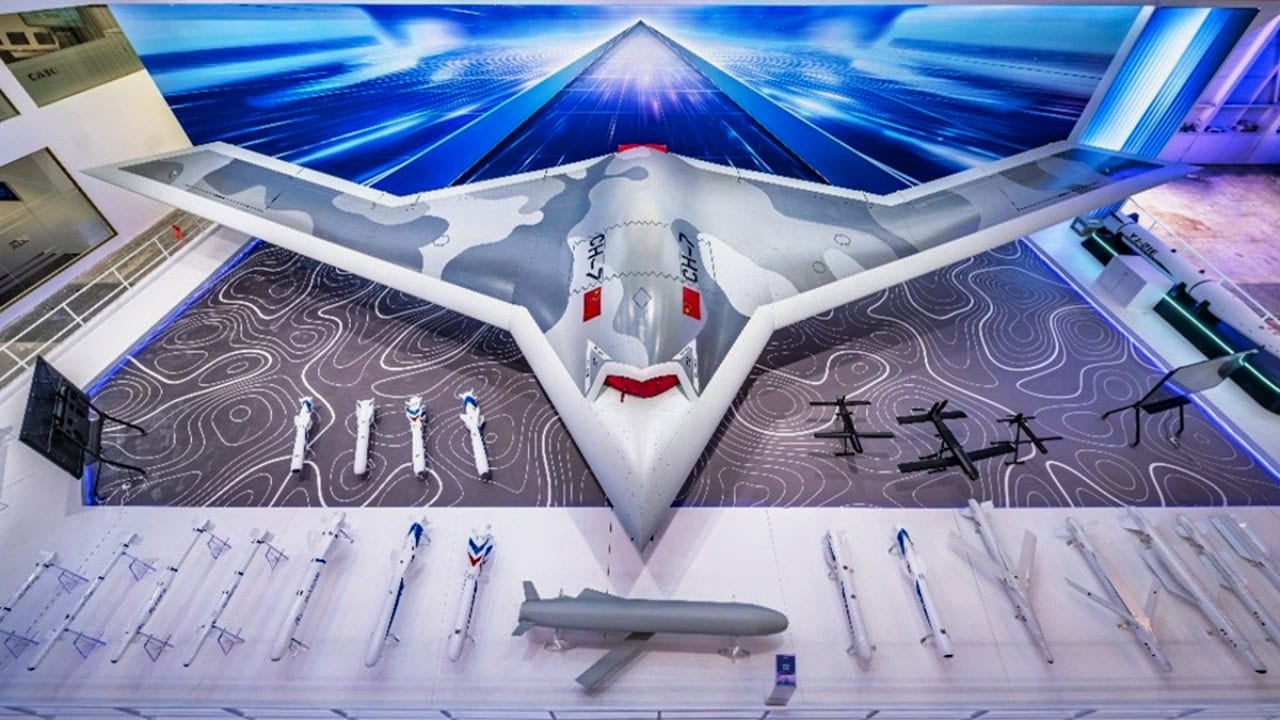
Summary and Key Points: China has conducted the maiden flight of the Jiutian, a jet-powered heavyweight drone mothership built by the state-owned Aviation Industry Corporation of China. The aircraft is designed to carry up to 100 smaller drones and release them in coordinated swarms, and it features eight under-wing hardpoints for air-to-surface and air-to-air munitions, a top speed of roughly 378 knots, a ferry range of about 4,349 miles, and a ceiling near 49,000 feet. The system reflects a broader Chinese emphasis on cheap, mass-produced, expendable drones intended to saturate and exhaust an opponent’s air and missile defenses, a development with significant implications for how the United States positions forces across the Indo-Pacific.
China’s Military Rise Is Making History
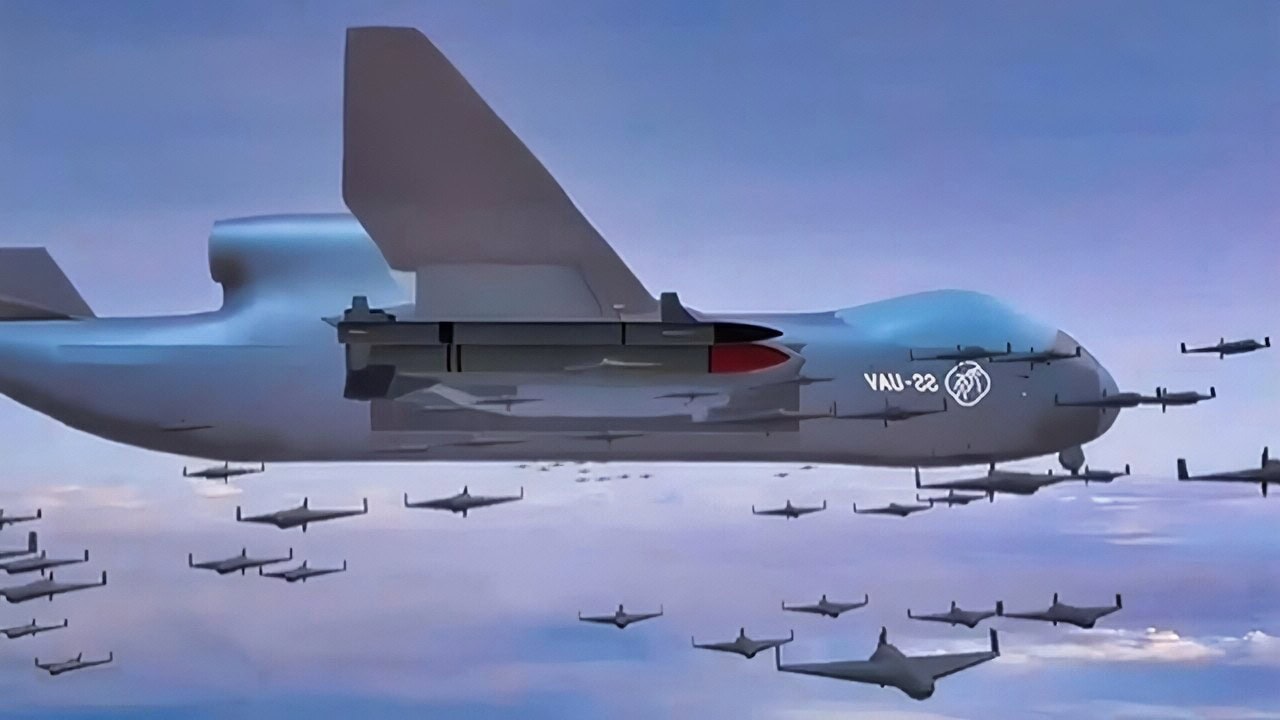
China Drone Aircraft Carrier. Image Credit: X Screenshot.
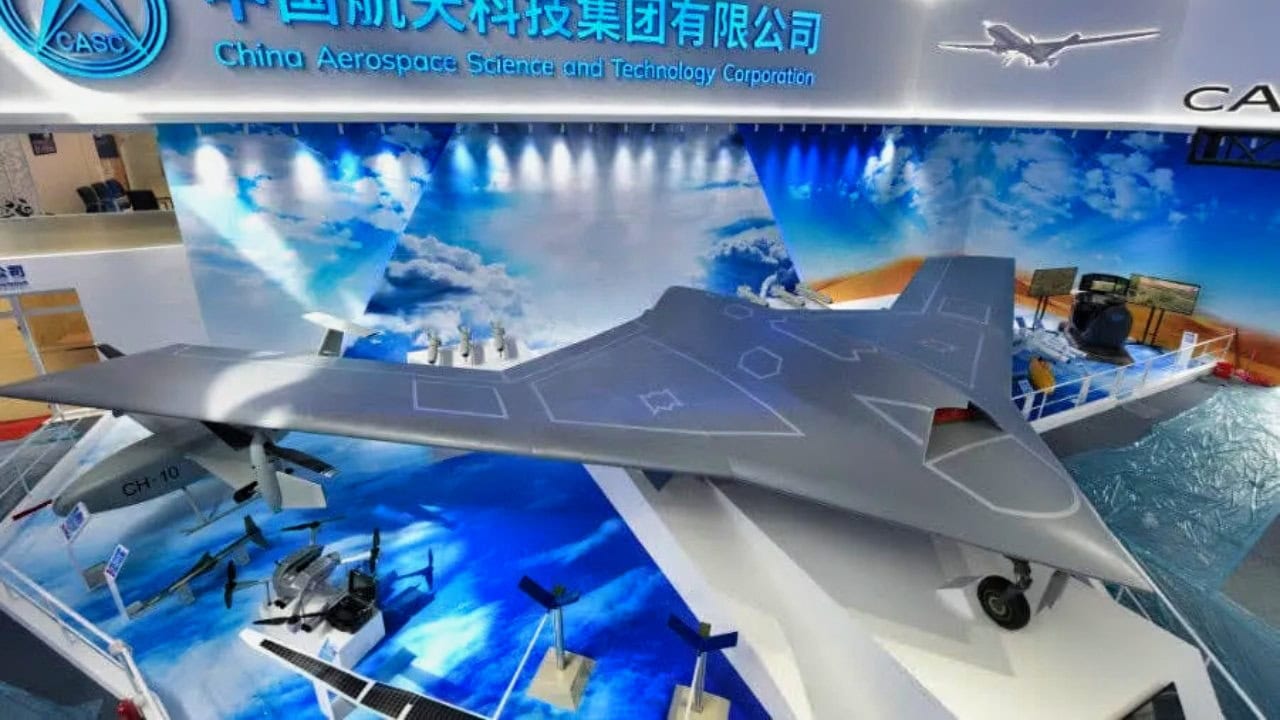
CH-7 Drone from China. Image Credit: X Screenshot.
If there’s one thing that the current war in the Middle East should have taught the United States military, it’s how useless forward-deployed bases are when facing a modern enemy. Iranian missiles and drones wreaked havoc on the US military facilities ringing Iran in neighboring Gulf Arab states. The damage was so profound, even with a vast array of air defenses, that the idea the United States would restore those damaged and destroyed bases in the Middle East seems counterproductive.
Looking farther afield, though, broader questions abound about the efficacy of the US military facilities that ring China in what’s known as the First Island Chain (the territories extending from the Kamchatka Peninsula down through Japan and Taiwan, all the way to the Philippines and the South China Sea).
If the Islamic Republic of Iran did as much damage to US military bases in the Middle East over the course of a 100-day war, how could US bases in the Indo-Pacific, especially within the First (and even Second) Island Chains, survive against China, which possesses a far larger and more advanced missile, drone, and hypersonic weapons arsenal than does Iran?
China’s Drone Strategy Changes Everything
And when it comes to China’s impressive drone threat, that alone should force a deep reassessment of Washington’s commitment to maintaining these military facilities throughout the First Island Chain. China’s drones are cheap, increasingly sophisticated, and expendable. In this new age of modern warfare, those three features make China’s drones the single greatest and most difficult-to-defend-against threat US forces face in the First Island Chain.
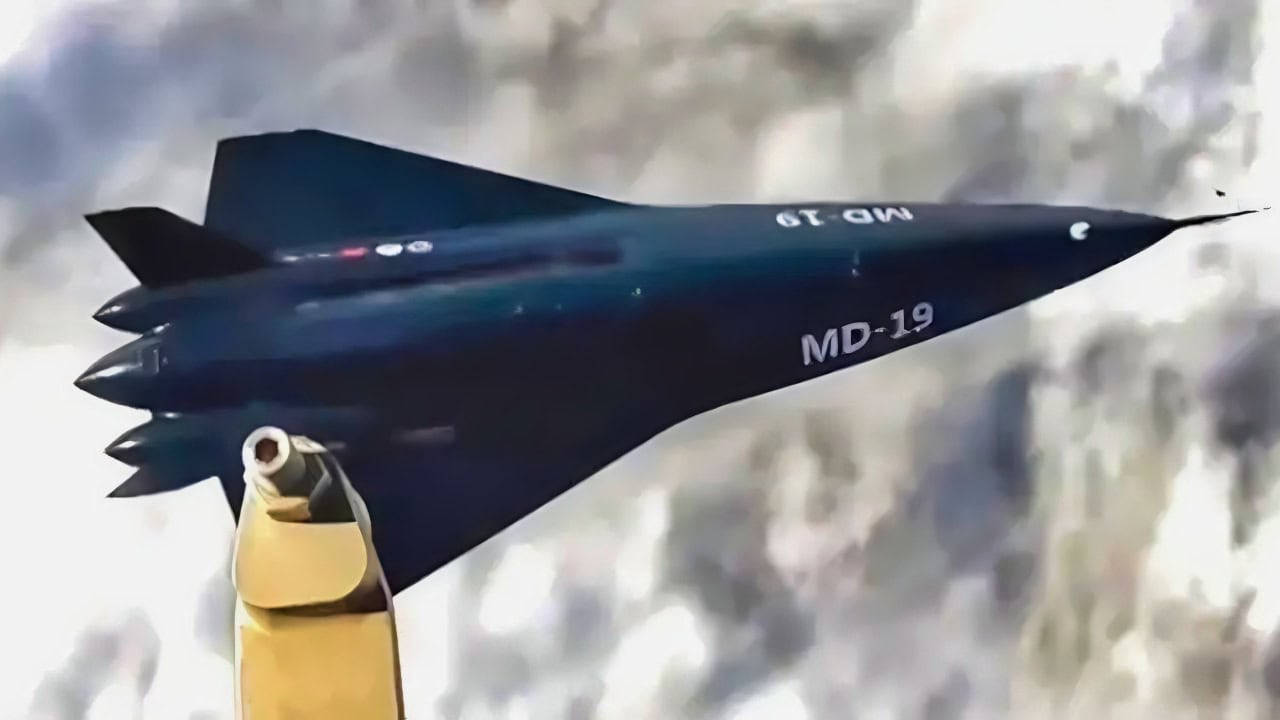
MD-19 Drone from China. Image Credit: Creative Commons.

Image: Creative Commons.
The purpose of drone saturation attacks is not necessarily to destroy sensitive targets at US bases. Chinese missiles and hypersonic weapons do those jobs. Of course, if the drones can get a lucky shot in at the Americans, that’s all the better from Beijing’s perspective. But the main mission of those drones is to force the expensive, finite number of critical air-and-missile defense systems to be expended on those cheap drone swarms rather than on expensive Chinese missiles, hypersonic weapons, and warplanes.
The First Island Chain Is Increasingly Vulnerable
Plus, the US forces arrayed in the First Island Chain, in places like Japan and Guam, are both stationary and well within the range of China’s anti-access/area-denial (A2/AD) weapons.
What’s more, Beijing has articulated a strategy of destroying US runways at those key American military facilities within the First Island Chain as part of a broader plan to stymie the power projection of the US Air Force.
Swarms of drones deployed ahead of any main Chinese attack force targeting those critical US bases would prove decisive (for China) in waging war with the United States military.
Further, those A2/AD systems that China will undoubtedly rely upon to decimate American military facilities nearby would also be employed against any US Navy warships approaching the First Island Chain.
In that instance, Chinese drones would again be brought to bear to overwhelm the anti-missile defenses of US surface warships–including the vaunted aircraft carriers–before the more complex, expensive missiles and hypersonic weapons were fired at the American warships within range.
China’s Drone Motherships Expand the Threat
Beijing clearly understands the immense opportunity that low-cost, mass-produced, expendable drone swarms present to its armed forces when facing conventional US military power within the First Island Chain.
China is wasting no time in exploiting its comparative advantages in creating an arsenal of those drones to fire at the Americans.
What’s more, China is developing a coterie of new drone motherships, some of which will fly, others of which will operate at sea.
The idea, though, is to maintain a continuous presence–and capacity–to launch increasing numbers of drones, at once, to overwhelm the sensitive, nearly irreplaceable, American missile-and-air defense systems.
Once those defensive systems are depleted by the cheap Chinese drones, American bases and carriers will then be vulnerable to Chinese missile and hypersonic weapons attack.
One such system that the Chinese are developing is the jet-powered, heavyweight Jiutian drone mothership.
This system, which recently completed its maiden flight in Pucheng, Shaanxi Province, is manufactured by the state-run Aviation Industry Corporation of China (AVIC).
An incredible weapons platform, this drone mothership can carry up to 100 smaller drones. It features a top speed of around 378 knots, a ferry range of 4,349 miles, and an operational ceiling of 49,212 feet.
On top of that, Jiutian comes equipped with eight under-wing hardpoints capable of carrying air-to-surface and air-to-air missiles (or 1,000-kilogram guided bombs.
This system will be hard to track, will provide persistent coverage of contested regions within the First Island Chain, and will prove itself a true threat to the safe operation and survivability of US military facilities arrayed throughout the First Island Chain.
America Needs a New Indo-Pacific Strategy
Washington has attempted to overcome these threats through a strategy known as “defense by denial,” which distributes US forces across smaller, more remote islands.
This new American strategy also relies upon US drones and stealth bombers because they can be deployed farther beyond the ranges of China’s A2/AD network.
But this, of course, begs the question of why the US is even wasting its time and money maintaining such expensive bases well within the range of Chinese A2/AD systems?
China’s drone swarm threat is only increasing. It is not going away.
And the Iran War has demonstrated to the world how utterly useless it is for the US military to maintain large, forward bases in contested regions.
Given the way warfare has evolved in the last decade alone toward a method that favors longer-range, unmanned combat, Washington should cut its losses in the First Island Chain and reposition its forces well outside the increasing ranges of Chinese drones, missiles, and hypersonic weapons.
Such a move would not only save US taxpayers some money. Still, it would likely also preserve the lives and key equipment of US Armed Forces, while possibly even de-escalating what has become a tense (and untenable) situation in the Indo-Pacific.
About the Author: Brandon J Weichert
Brandon J. Weichert is the Senior National Security Editor at 19FortyFive.com. He also manages The Weichert Brief on Substack. Weichert also hosts “National Security Talk” on Rumble. He is the author of four bestselling national security books, the most recent of which is A Disaster of Our Own Making: How the West Lost Ukraine (Encounter Books). Follow him via Twitter/X @WeTheBrandon.