
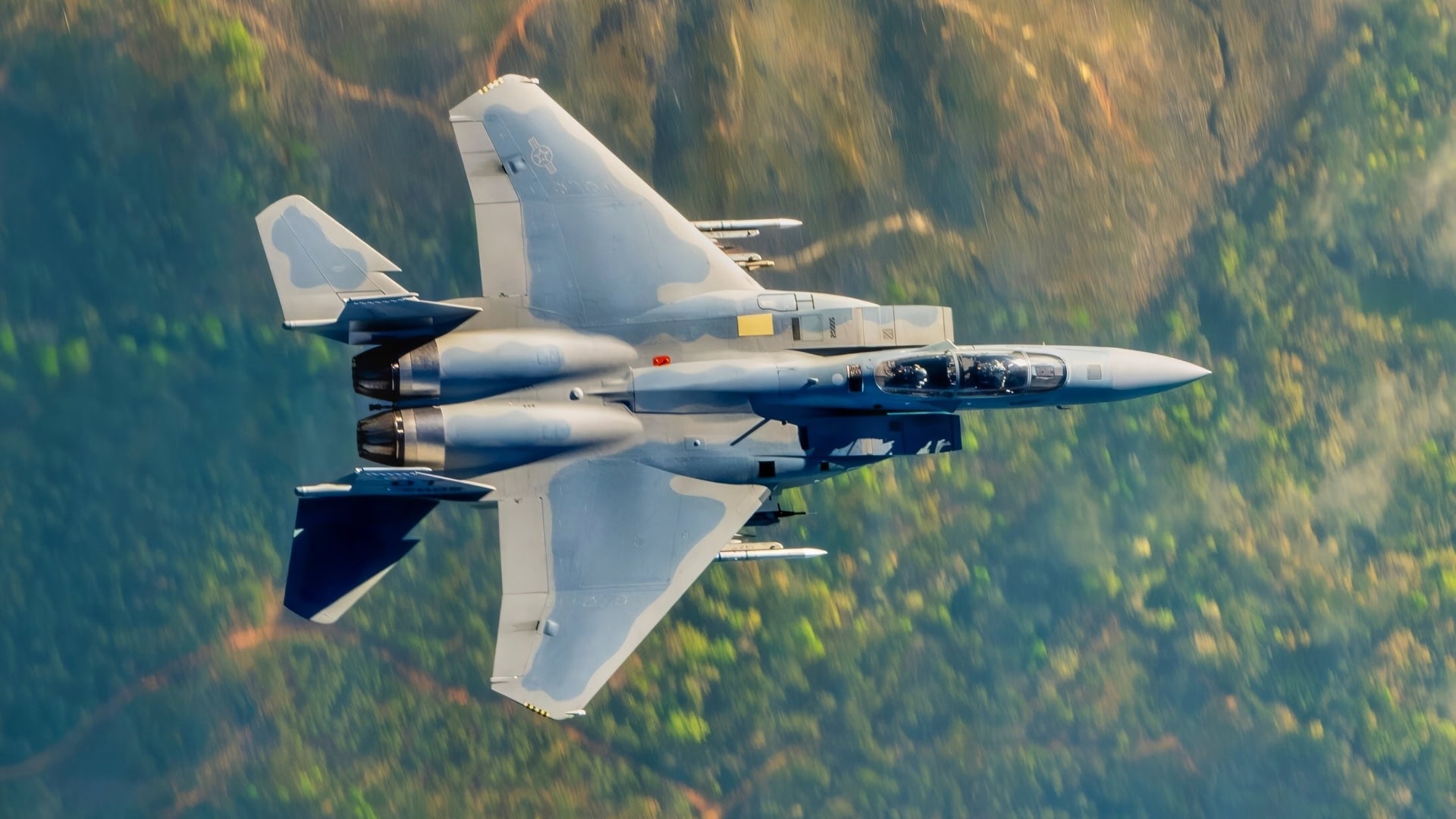
Summary and Key Points: The United States Air Force’s F-15EX Eagle II is nearly indistinguishable from the F-15 that first flew in 1972, but beneath the familiar shape, it is a fundamentally different aircraft. It is the first Eagle built with digital fly-by-wire flight controls, which unlock two outboard weapon stations that older F-15s carried but could never use, raising the air-to-air loadout from eight missiles to twelve. The Eagle II also introduces the APG-82 active electronically scanned array radar, a new mission computer and touchscreen cockpit, the EPAWSS electronic-warfare suite, and a redesigned airframe rated for 20,000 flight hours, roughly double that of a legacy Eagle. Several of those changes, above all the fly-by-wire and the new structure, could never be retrofitted onto an older jet.
The F-15EX Eagle II Looks Just Like a 1970s F-15. Here’s What Actually Makes It a Completely Different Fighter
From the outside, the Air Force’s newest fighter is nearly indistinguishable from the Eagle that first flew in 1972, same twin tails, same big wing, same unmistakable silhouette. Underneath, almost everything that matters has changed: the first fly-by-wire controls on any F-15, a rebuilt airframe, a new radar, computer, and cockpit, and two weapon stations that older Eagles were never allowed to use. The result is not an upgraded F-15. It’s a new aircraft that happens to wear an old shape.
Park a brand-new F-15EX Eagle II next to an F-15C built in the 1980s, and, to almost any observer, they are the same airplane. The twin tails, the enormous wing, the boxy intakes, the bubble canopy, all of it is instantly recognizable as the McDonnell Douglas Eagle that entered service in 1976 and whose air-to-air record is among the most lopsided in the history of aerial combat. That external sameness is exactly why the F-15EX is so often misunderstood, and why it draws fire as a fifty-year-old design bought in a stealth age. The truth is more interesting. Beneath a nearly identical skin, the Eagle II is a fundamentally different machine from every F-15 that came before it. Here is what actually changed, and why each change matters.
It Begins With Fly-by-Wire
The single most important difference is the one you cannot see at all. The Eagle II is the first F-15 ever built with digital fly-by-wire flight controls. Every previous Eagle, from the original F-15A through the F-15E Strike Eagle, flew on a hydro-mechanical system in which the pilot’s inputs were transmitted via physical rods and linkages to hydraulic actuators. It worked, and it made the Eagle a superb dogfighter, but it was crude by modern standards.
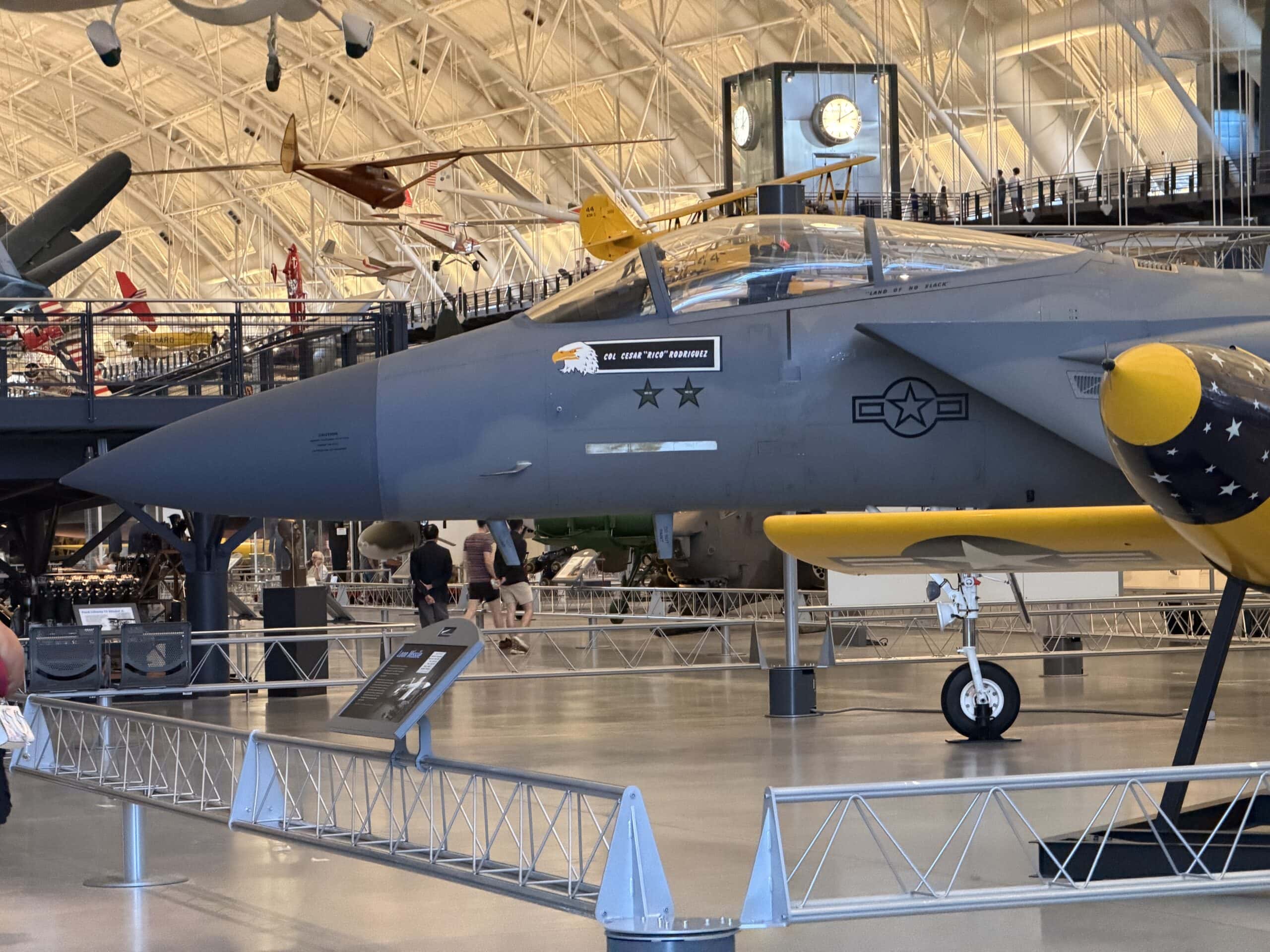
F-15C. Taken at the Smithsonian by 19FortyFive.com staff.
A Boeing test pilot described to The War Zone how the old system was rigged by hand, with mechanics adjusting the length of a control rod to within about half a turn, while the F-15EX’s digital controls are set to four decimal places of precision, carry quadruple redundancy on the stabilizers, and proved so departure-resistant in testing that engineers could not make the jet spin even with heavy weapons loaded on just one wing. The pilot noted that an Eagle once flew home missing an entire wing on the old flight-control system, and judged the new one “at least 10 times better.”
Fly-by-wire matters on its own, for handling and reliability. But its real significance is that it is the key that unlocks much of what makes the Eagle II different, starting with its weapons.
The Two Weapon Stations That Were Always There
Look under the wing of an old F-15, and you will find hardpoints at the outer stations, numbers 1 and 9, that were built into the jet but disabled. Older Eagles were not allowed to carry weapons there because doing so risked dangerous aerodynamic flutter that the mechanical flight controls could not tame. The F-15EX’s fly-by-wire system automatically damps that flutter, which frees those two stations for use for the first time. The Aviationist has reported that this specific capability traces directly to the fly-by-wire work the Royal Saudi Air Force funded during development of its own Advanced Eagle, meaning American taxpayers got the benefit of a foreign customer’s investment.
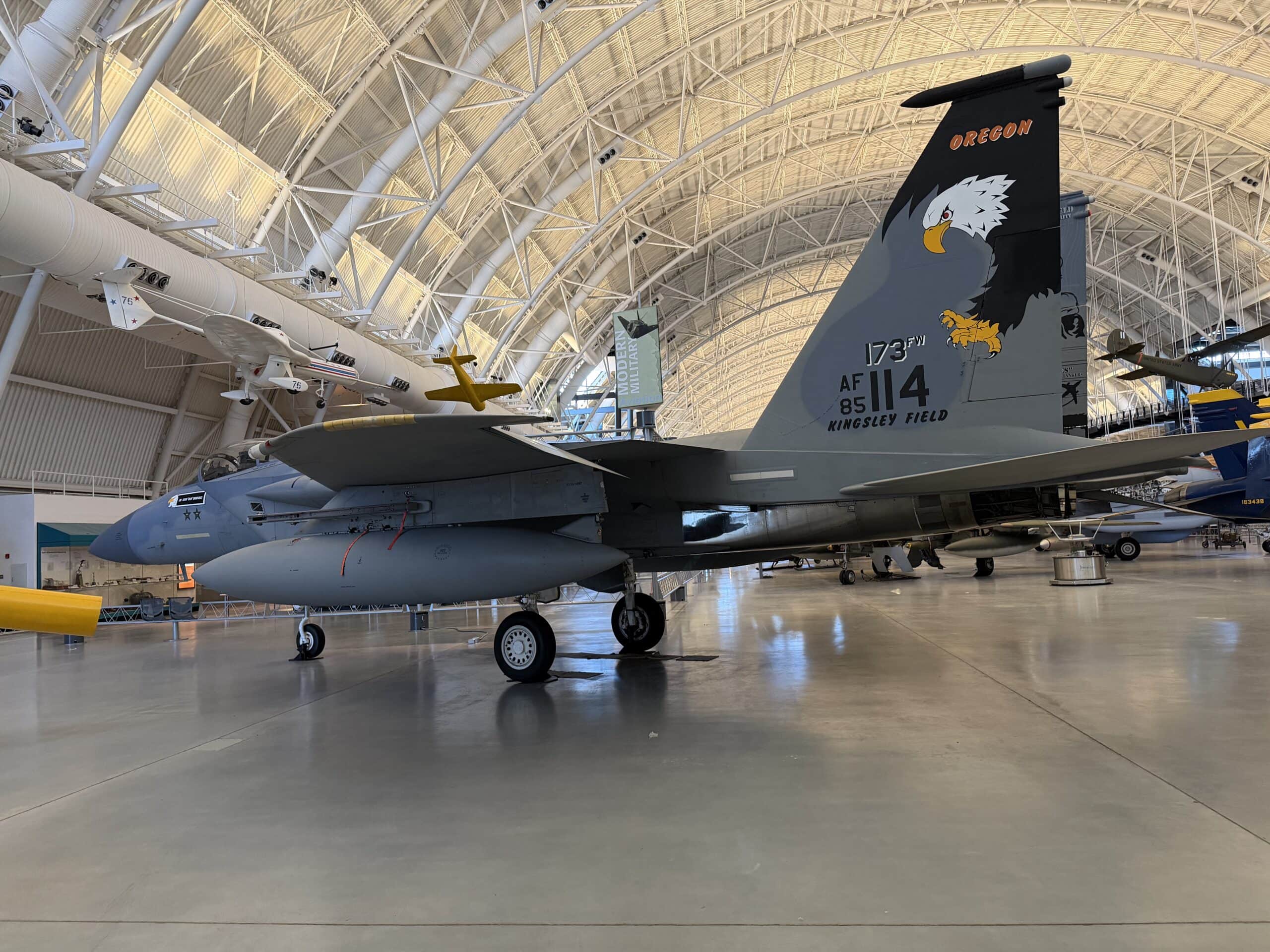
F-15C. Taken at the Smithsonian by 19FortyFive.com staff.
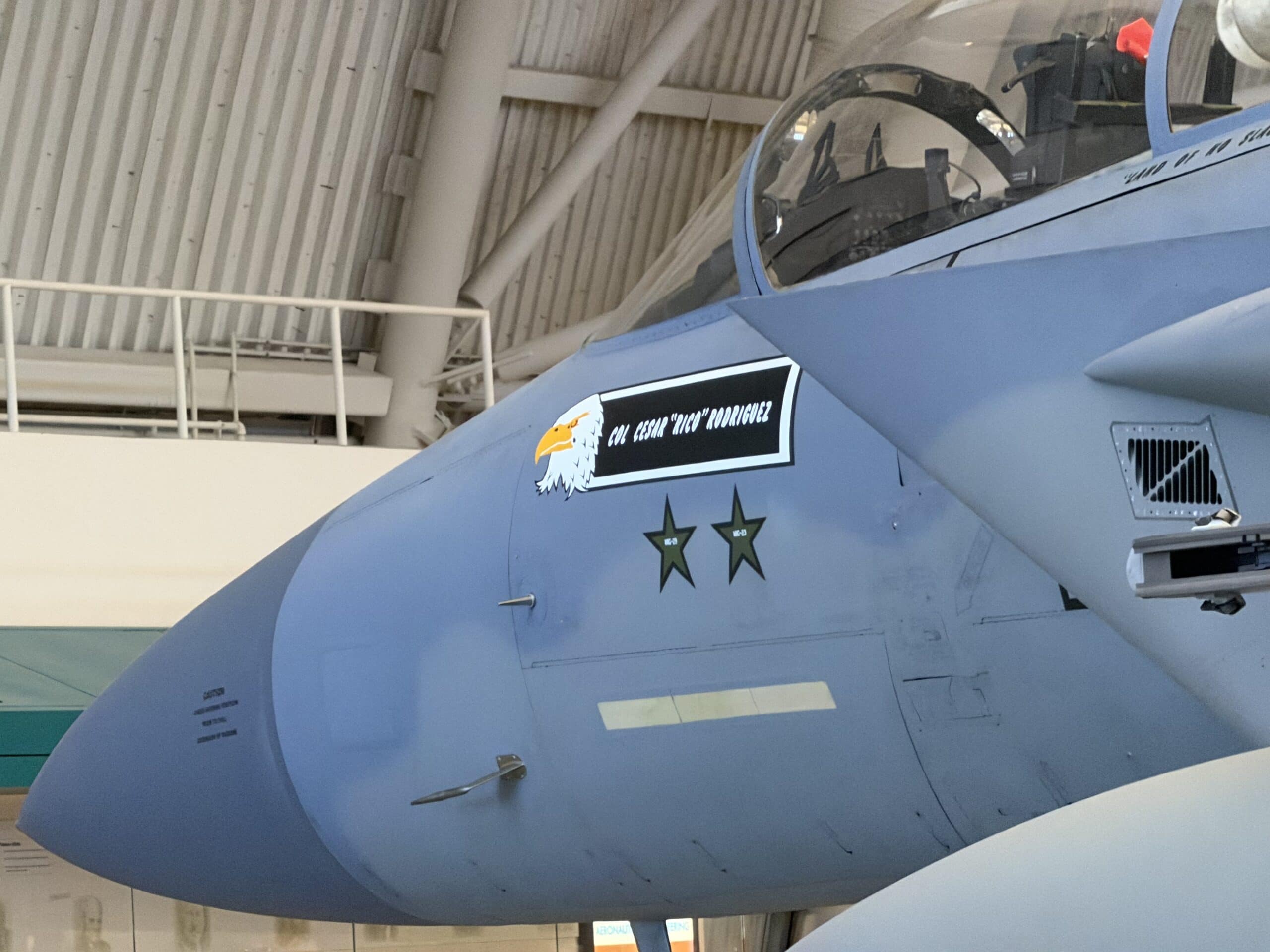
F-15C. Taken at the Smithsonian by 19FortyFive.com staff.
The payoff is firepower. With those outboard stations active, the standard air-to-air loadout jumps from eight missiles to twelve, and Boeing has flight-demonstrated a full dozen AMRAAMs on the jet. Proposed multi-missile racks could push that number higher still, though those figures remain untested and unfunded for now. As one F-15EX test officer put it, the point is the sheer number of missiles you can bring to a fight, a way for a smaller force to match a larger one shot for shot. This is the origin of the Eagle II’s nickname, the “missile truck”: with a maximum external load of 29,500 pounds, it can haul more ordnance than a stealth fighter can when forced to hide its weapons in a small internal bay.
A New Radar, a New Brain, and a New Cockpit
The Eagle II also sees, thinks, and is flown differently. Its primary sensor is the Raytheon APG-82 active electronically scanned array radar, a fixed antenna that steers its beam electronically rather than swiveling a mechanical dish, as the APG-70 of the F-15E or the APG-63 of the F-15C did. Built from the same radar family as the Navy’s Super Hornet, the APG-82 scans faster, resists jamming far better, reaches farther, and is more reliable, with fewer moving parts to break.
Behind it sits a new mission computer, the ADCP II, described as among the fastest ever installed in a fighter and vastly more capable than the processors in any legacy Eagle, running an open-architecture software backbone that lets the Air Force add new weapons and capabilities in months rather than years.
All of that new information has to be shown to the crew, which is why the cockpit was rebuilt around a single large-area touchscreen display, ten inches by nineteen, for each seat. Where an old Strike Eagle pilot stared at cramped, monochrome screens that aviators derided as “steam gauges,” the Eagle II crew configures a high-resolution color display to show the radar, targeting feeds, and sensor picture however they like. It is the difference between a 1980s instrument panel and a modern tablet.
The Survivability Leap: EPAWSS
Perhaps the most consequential upgrade for actually surviving a modern war is the Eagle II’s electronic-warfare suite. Legacy F-15s carried the Tactical Electronic Warfare System, a capable but decades-old package for detecting and jamming threats.
The F-15EX replaces it with the Eagle Passive Active Warning Survivability System, or EPAWSS, a fully digital system that provides radar warning, threat geolocation, jamming, and countermeasures in one integrated suite.
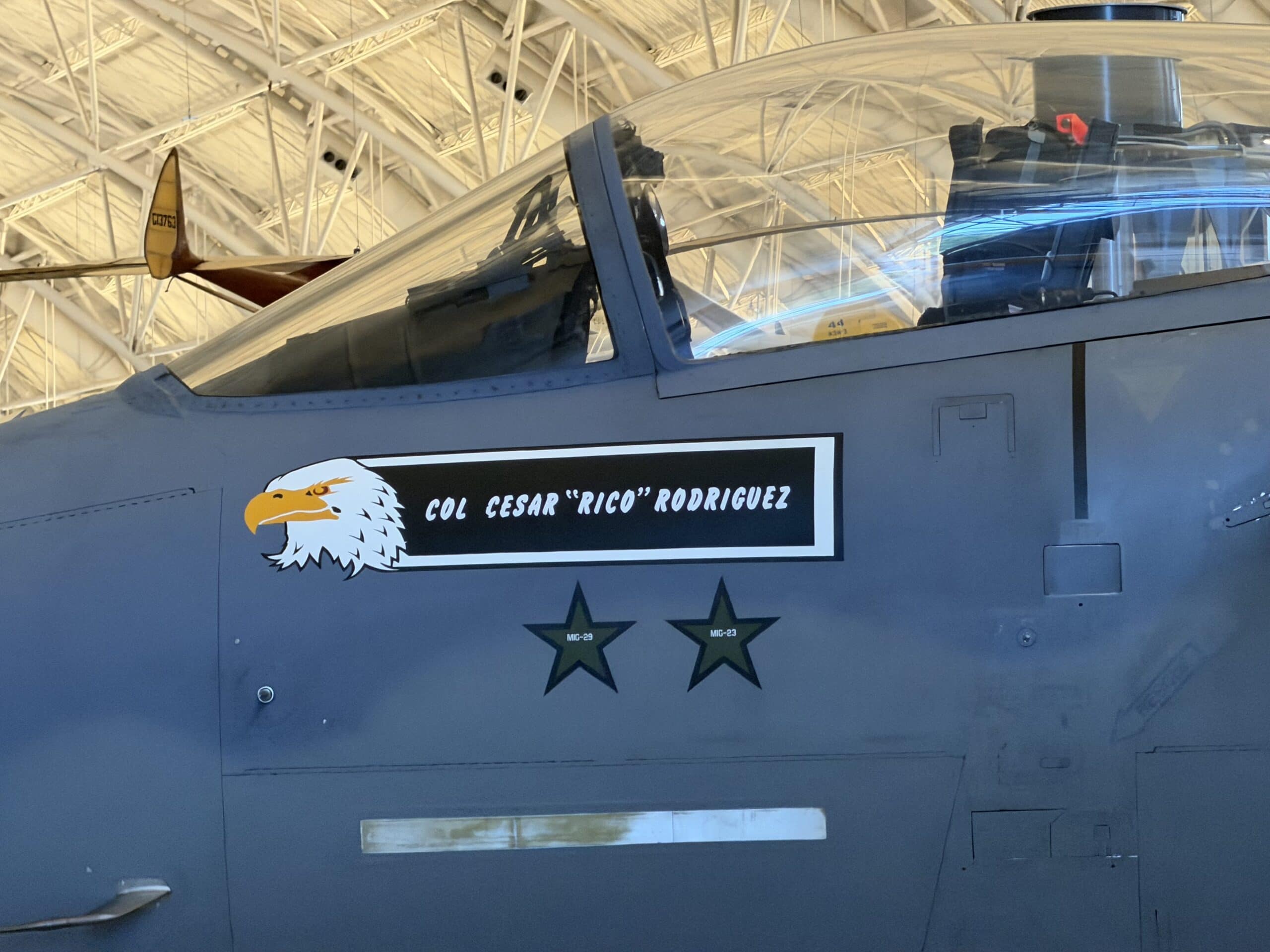
F-15C. Taken at the Smithsonian by 19FortyFive.com staff.
Critically, it includes “cognitive” electronic warfare, the ability to identify and respond to threats it has never encountered before in real time, a capability demonstrated against novel signals in a major 2023 exercise. For a non-stealthy jet that must survive by defeating enemy radars and missiles rather than hiding from them, this is the single biggest step forward, so significant that the Air Force is now retrofitting EPAWSS onto the older F-15E fleet as well.
An Airframe Built to Last Twice as Long
Underneath the new systems is a physically different structure. The Eagle II is built to a redesigned airframe rated for 20,000 flight hours, roughly double the service life of a legacy F-15C, which is a large part of why the Air Force can justify buying new Eagles in the 2020s at all. One F-15EX will outlast more than two of the old jets it replaces, and its cost, spread across all those extra decades of service, produces one of the lowest cost-per-flight-hour figures of any fighter in its class. A new airframe with a proven design is a rare combination of low risk and long life.
What a Legacy Eagle Can Never Get
There is an honest complication worth confronting because it is where most comparisons get lazy. Several of the Eagle II’s headline systems, the AESA radar, EPAWSS, and the Legion infrared search-and-track pod, are also being fitted to older F-15C/Ds and F-15Es under separate upgrade programs. The Legion pod is, in fact, already flown by legacy F-15C units today. So the sharpest version of the question is not “Eagle II versus a 1980s Eagle,” but “Eagle II versus a fully upgraded old Eagle.”
Even by that tougher standard, the F-15EX stands apart because the things that truly set it apart are ones a legacy airframe can never receive. You cannot retrofit fly-by-wire flight controls, a fundamentally rebuilt 20,000-hour structure, two extra weapon stations, or an open-systems software architecture onto a jet that was not designed for them from the start. An old Eagle with a new radar is a better old Eagle.
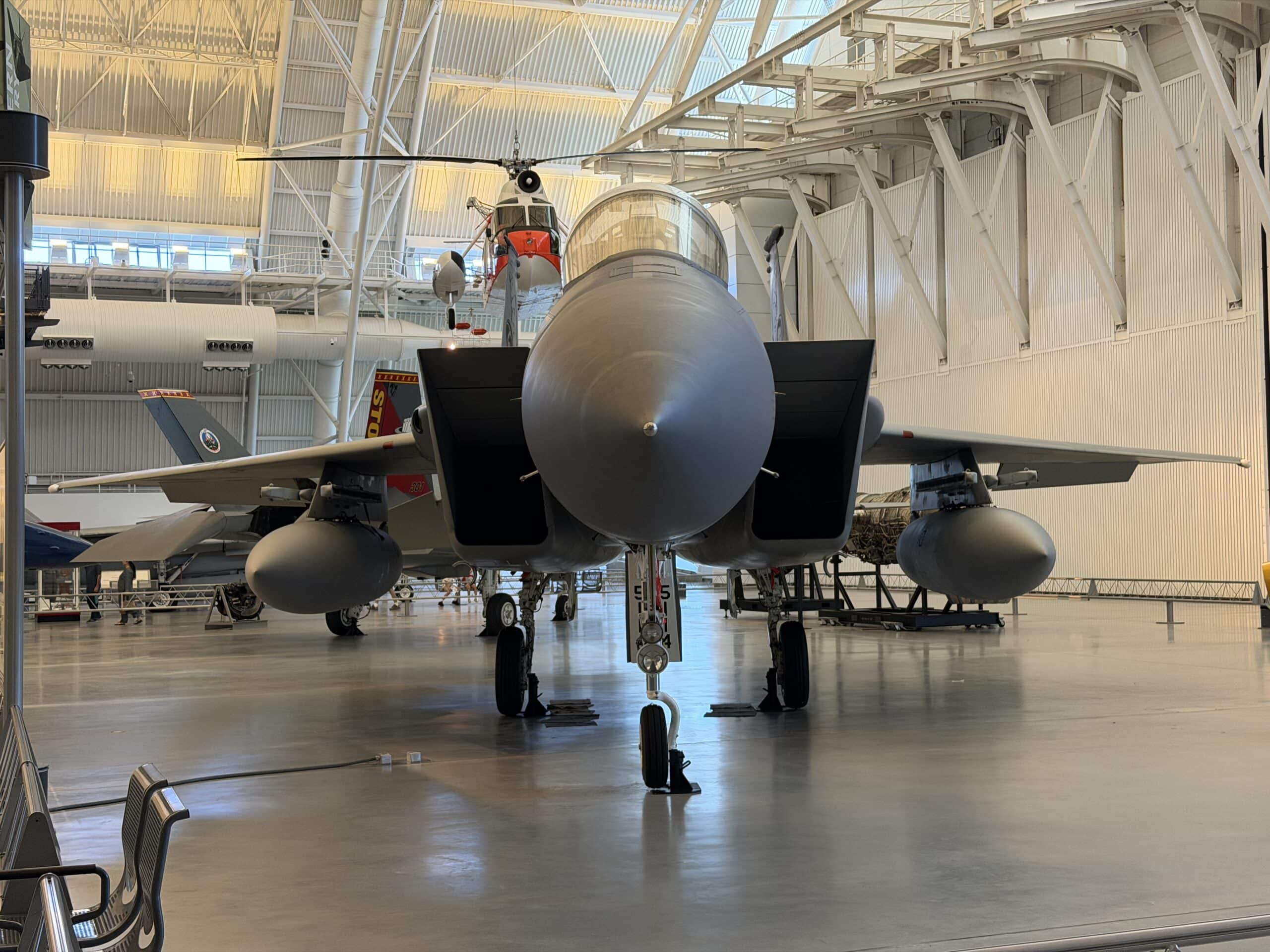
F-15C. Taken at the Smithsonian by 19FortyFive.com staff.
The Eagle II is a new airplane. That distinction is not marketing; it is the line between bolting new electronics onto legacy hardware and building a new aircraft on a familiar shape. It helps that the whole package was substantially de-risked by export customers, with Saudi Arabia funding the fly-by-wire on the F-15SA and Qatar the new cockpit and computer on the F-15QA, so the Air Force bought a design that had already been flown and tested on someone else’s budget. Pilots feel the difference immediately: a C-model aviator can transition to the Eagle II in about two weeks, and those who have flown both describe the jump in radar and avionics as a generational one.
The F-15EX Looks Like a Gamechanger
So what makes the F-15EX so much better than the Eagles before it?
Not any single feature, but the fact that nearly everything beneath the familiar skin is new. The flight controls, the structure, the radar, the mission computer, the cockpit, the electronic-warfare suite, and the usable weapons load have all changed, and several of them, above all the fly-by-wire and the airframe, could never have been added to an existing jet. What remains constant is the shape, the enormous payload it enables, and a lineage of air-to-air dominance stretching back half a century.
The result is an aircraft ideally suited to a specific and valuable job. The Eagle II is not meant to sneak past modern defenses; that is what stealth fighters like the F-35 and the coming F-47 are for.
It is meant to be the heavy hitter behind them, a two-seat “missile truck” and airborne controller that carries an enormous magazine of long-range weapons, directs drones, and defends American skies, while stealth jets fight forward.
Judged as what it is rather than what it looks like, the F-15EX is not an old fighter kept on life support.
It is one of the newest aircraft in the Air Force, yet it wears one of the oldest silhouettes in the sky.
As one retired former U.S. Air Force pilot told me: “There’s nothing like it.” I agree.
About the Author: Harry J. Kazianis
Harry J. Kazianis (@Grecianformula) was the former Senior Director of National Security Affairs at the Center for the National Interest (CFTNI), a foreign policy think tank founded by Richard Nixon based in Washington, DC. Harry has over a decade of experience in think tanks and national security publishing. His ideas have been published in the NY Times, The Washington Post, The Wall Street Journal, CNN, and many other outlets worldwide. He has held positions at CSIS, the Heritage Foundation, the University of Nottingham, and several other institutions related to national security research and studies. He is the former Executive Editor of the National Interest and the Diplomat. He holds a Master’s degree focusing on international affairs from Harvard University.