
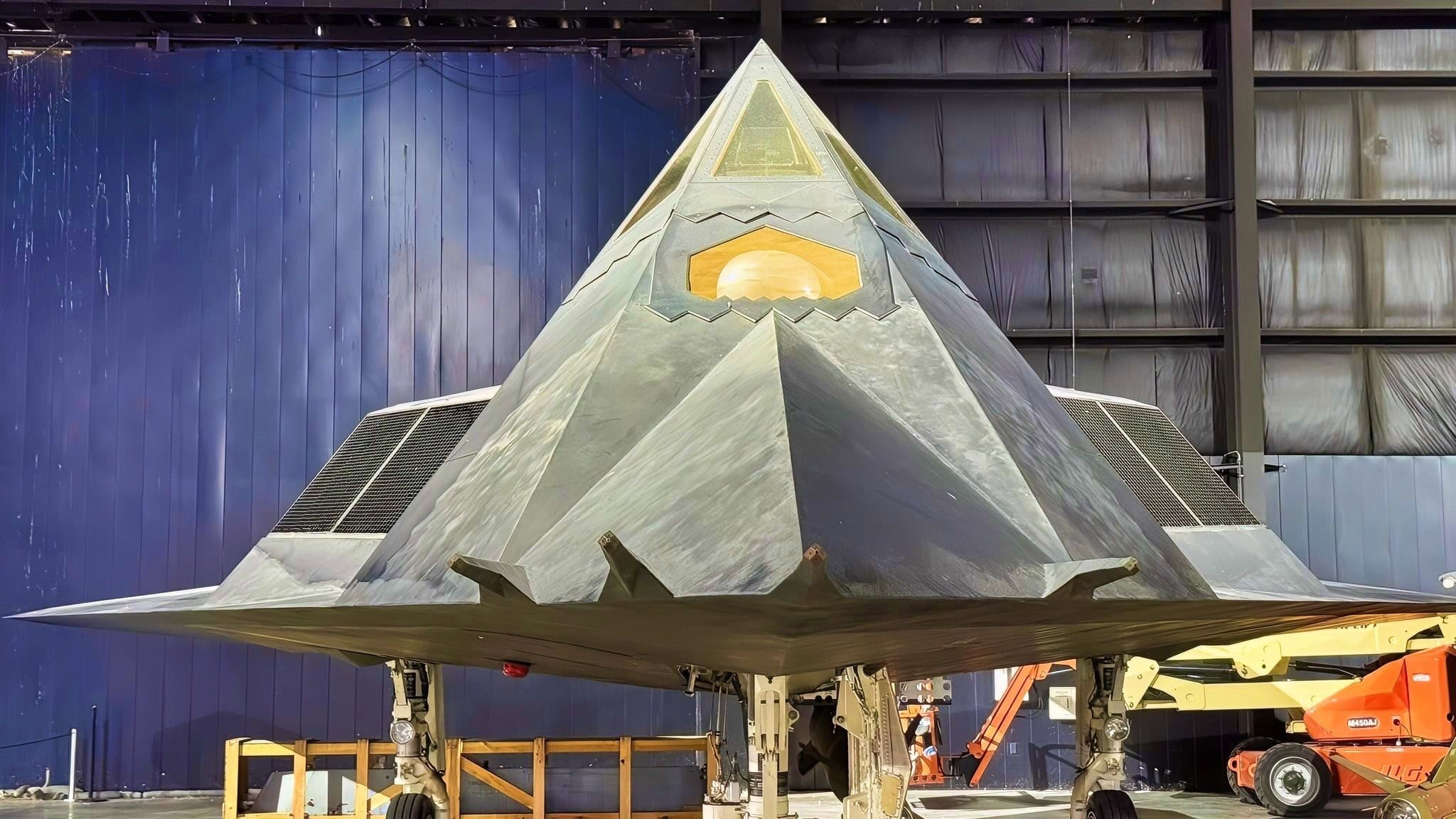
America’s first stealth fighters, the F-117 Nighthawk and early F-22 Raptors, sit in museums the public can walk through and photograph from every angle. And we know this for a fact, as many of the photos in this article are from a recent Smithsonian trip that literally showcases the F-35.
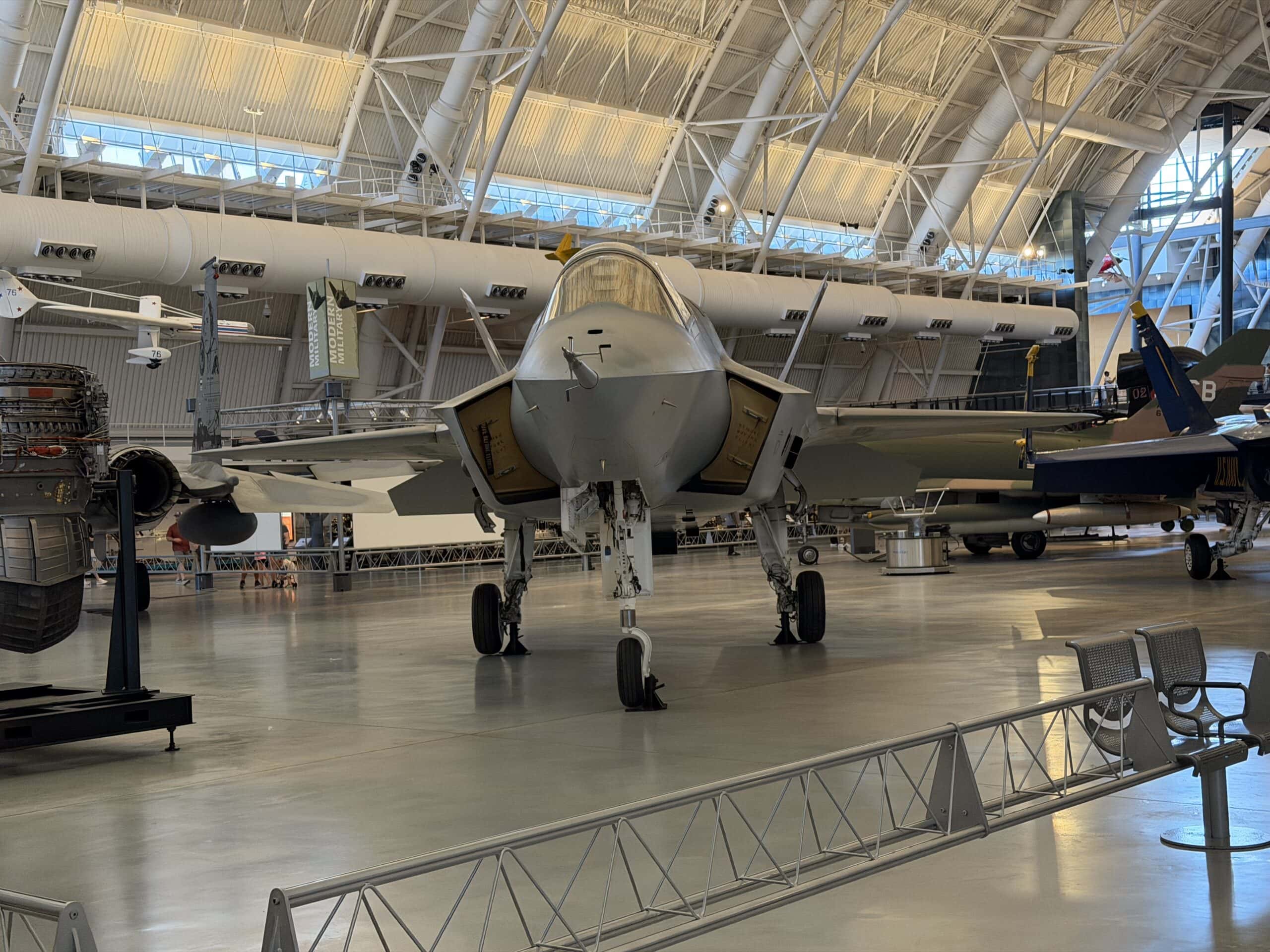
F-35 at the Smithsonian 19FortyFive Photo
It doesn’t help anyone build one. The classified radar-absorbing coating was stripped off before the jets went on display because the shape was never the real secret.
Twenty years after the F-22 entered service, only three nations on Earth have managed to field a true fifth-generation fighter, and the reason is everything you can’t see in a museum: the coatings, the engines, and the software that take a generation and a fortune to master.
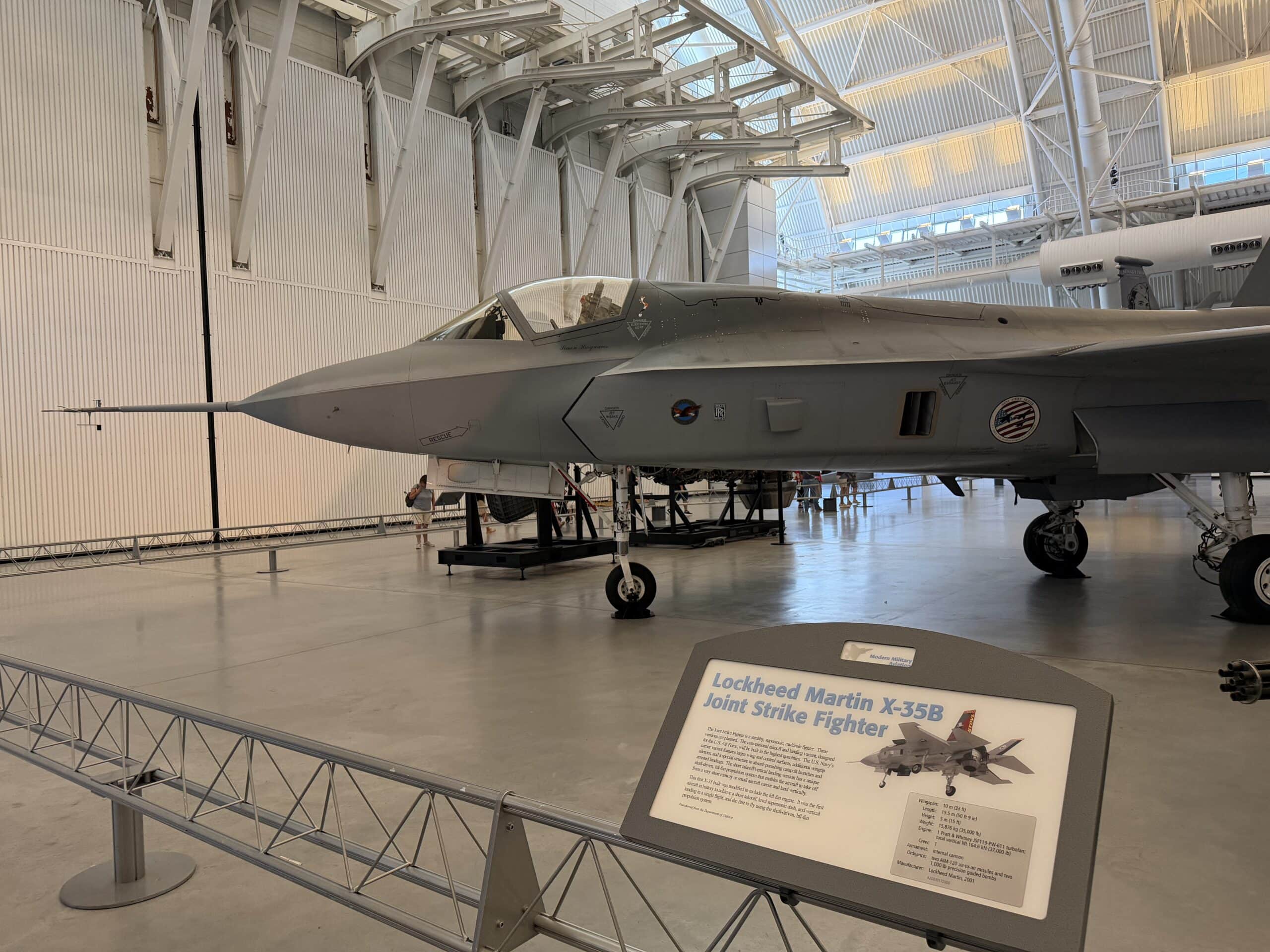
F-35 at the Smithsonian 19FortyFive Photo
At the National Museum of the U.S. Air Force in Dayton, Ohio, you can stand a few feet from a Lockheed F-117 Nighthawk, the world’s first operational stealth aircraft, and study every facet of its strange, angular skin. We know, we did it.

F-117 Nighthawk at National Museum of Air Force 19FortyFive Photo
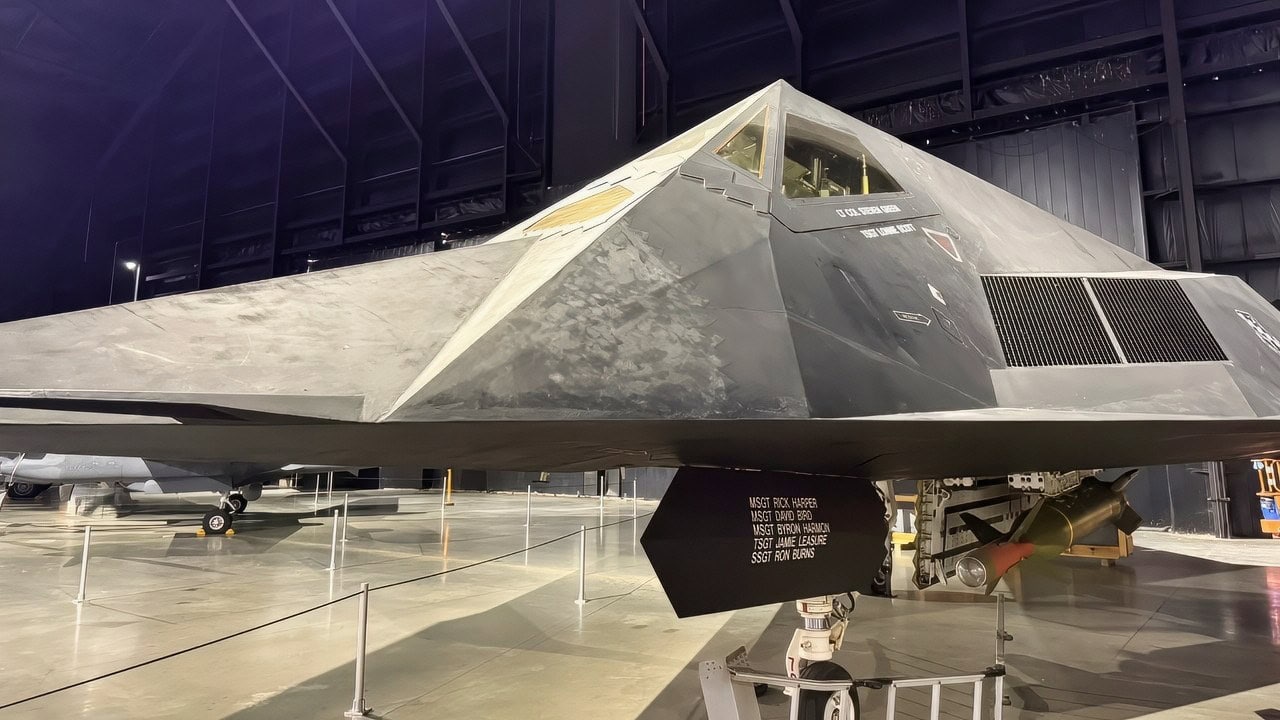
F-117A Nighthawk at USAF Museum. Image taken by 19FortyFive Owner, Harry J. Kazianis.
Others sit on display at the Reagan Library in California and the Hill Aerospace Museum in Utah. For a jet that flew in total secrecy for years before the Air Force would admit it existed, that openness seems astonishing until you learn what was done to the aircraft first.
Each had its radar-absorbing coating stripped away before the public was allowed near it, because the exact composition of that material remains classified to this day. You can photograph the shape of a stealth fighter all you like.
You still cannot build one. That gap, between the silhouette anyone can see and the secrets almost no one can reproduce, explains one of the most striking facts in modern airpower.
A Club of Three
More than two decades after the F-22 Raptor first entered service in 2005, only three countries have fielded genuine fifth-generation fighters, aircraft combining stealth, sensor fusion, and networked combat.
The United States has two: the F-22 and the F-35. China has two: the J-20 and the newly operational J-35, which entered service in September 2025. And Russia has one, the Su-57, which most analysts count only reluctantly, given its large radar signature, single-digit annual production, and complete absence of impact over Ukraine. That is the entire list.
Everyone else is still trying and has been for a long time. India has poured national prestige into its AMCA stealth fighter for years, yet the prototype is not expected to fly until 2028 or to enter service until the mid-2030s.
Turkey’s KAAN made a triumphant first flight in 2024, but it did so on American-made engines because Turkey cannot yet build a suitable one of its own. South Korea’s KF-21 is a genuine achievement that is nonetheless still, by most definitions, only a “4.5-generation” jet, lacking the internal weapons bay that true stealth requires. Serious, wealthy, technically advanced nations have spent a decade or more and still not crossed the finish line.
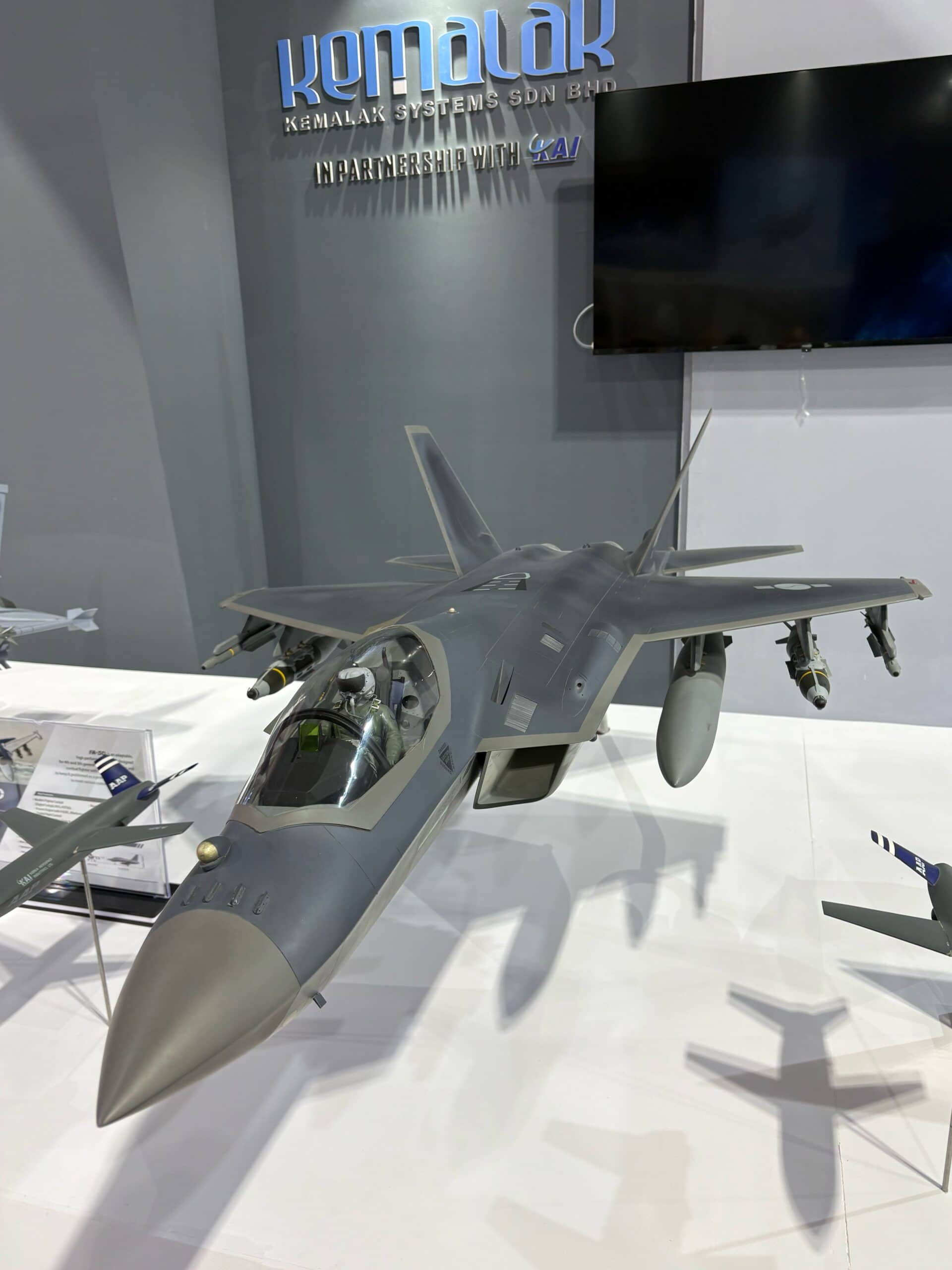
KF-21 Fighter Model. 19FortyFive Original Image.
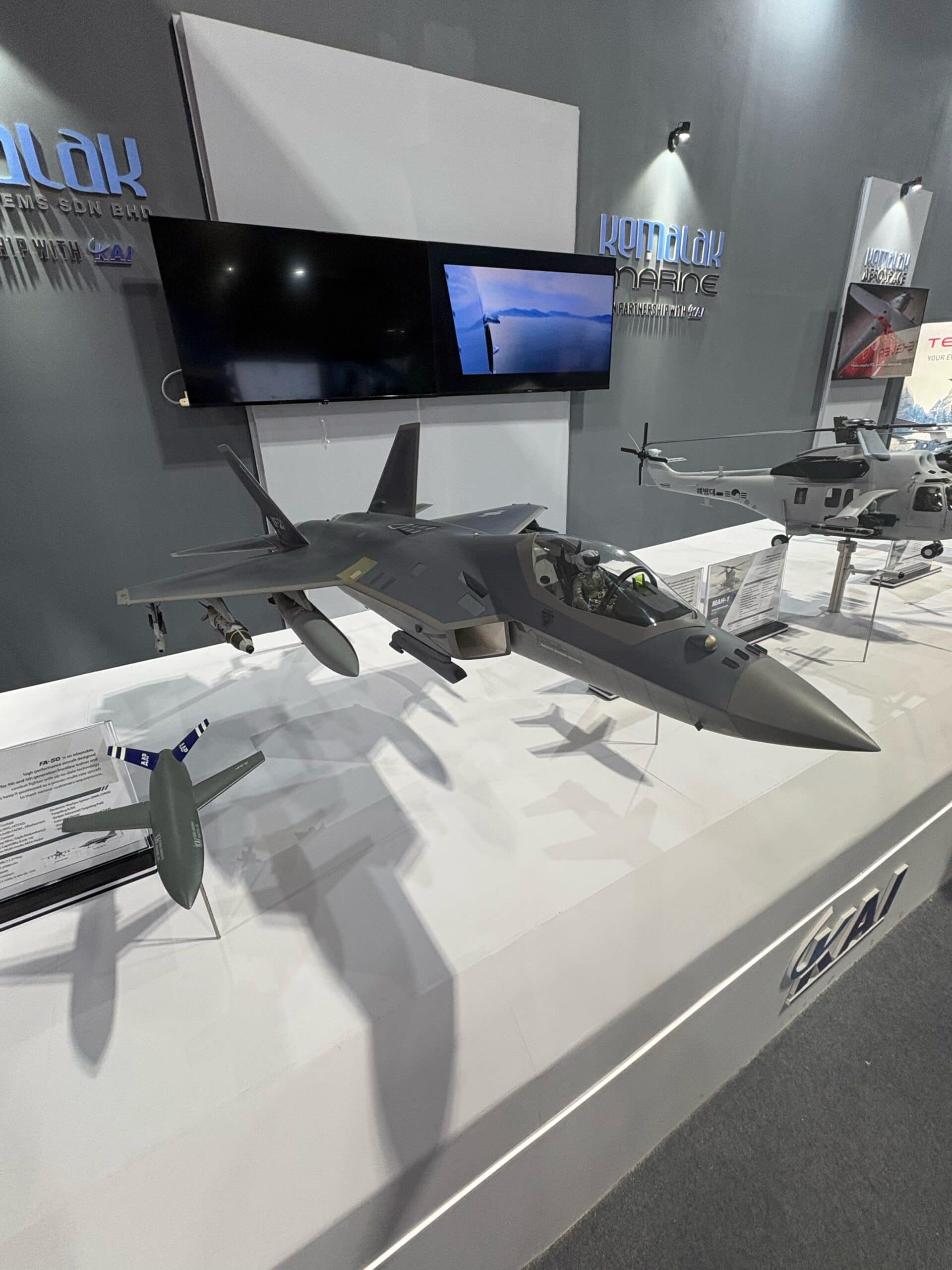
KF-21 Fighter Model. 19FortyFive Original Image.
The Hard Part Is the Part You Can’t See
The reason is that almost nothing that makes a fifth-generation fighter work is visible in its shape. The faceted or blended contours that scatter radar are the easy part to copy; the hard parts are hidden. The radar-absorbing materials and coatings, as the stripped-down museum jets quietly attest, are among the most closely guarded secrets in the American arsenal, the product of decades of chemistry and manufacturing know-how that cannot be reverse-engineered from a photograph.
Then there are the engines, which are the single most stubborn bottleneck in the field. A modern stealth fighter needs a powerful, efficient, reliable engine, and building one is an art only a handful of nations have mastered. It is why Turkey’s new fighter flies on American power plants, why India’s program has been repeatedly slowed by engine questions, and why even China spent years struggling to field a domestic engine good enough for its own jets.
Hardest of all is what the analyst Justin Bronk of the Royal United Services Institute has called the “unbearable weight” of the software and systems integration that fuse a fighter’s sensors into a single coherent picture for the pilot.
That capability, he notes, was bought with tens of billions of dollars spent over decades across multiple American programs. It cannot be rushed, purchased off a shelf, or stolen from a museum exhibit. The F-35 program’s roughly $1.7 trillion lifetime cost is not just extravagance; it is a measure of how expensive it is to invent and mature that invisible machine.
The clearest proof of the difficulty is Russia. A nuclear superpower with one of the proudest aviation traditions on the planet built the Su-57 and still ended up with an aircraft that carries a larger radar signature than its rivals, rolls off the line in tiny numbers, and reportedly lacks some of its own advertised systems because it cannot source the necessary components.
If a country that put the first satellite and the first man in space finds fifth-generation flight this hard, the barrier is real, and it has nothing to do with the shape of the jet.
The Museum Says It All
Which brings the story back to Dayton. For years now, anyone with the price of admission has been able to walk around a genuine American stealth aircraft, camera in hand, examining the exact angles that defeat radar.

F-22 Raptor Exhibit Explainer 19FortyFive Photo. Taken By Harry J. Kazianis in July 2025 at the National Museum of the Air Force.
The F-22 on display there is one of only nine engineering jets ever built, sitting in the same stealth gallery as the SR-71 and the B-2. None of that public access has let any rival nation skip a single step.
The silhouette has been visible for a generation; the coatings, the engines, and the software that make it deadly have not.

F-22 Raptor at the National Museum of the Air Force. Photo Taken by Harry J. Kazianis for 19FortyFive Back in July 2025.
A fifth-generation fighter is not a shape you copy. It is a decade of work and a mountain of money you cannot see, which is why the aircraft sitting quietly in an Ohio museum still represents a club almost no one else has managed to join.
MORE – Thanks, F-35: Why the Eurofighter Typhoon Is Selling Like Hot Cakes
About the Author: Harry J. Kazianis
Harry J. Kazianis (@Grecianformula) was the former Senior Director of National Security Affairs at the Center for the National Interest (CFTNI), a foreign policy think tank founded by Richard Nixon based in Washington, DC. Harry has over a decade of experience in think tanks and national security publishing. His ideas have been published in the NY Times, The Washington Post, The Wall Street Journal, CNN, and many other outlets worldwide. He has held positions at CSIS, the Heritage Foundation, the University of Nottingham, and several other institutions related to national security research and studies. He is the former Executive Editor of the National Interest and the Diplomat. He holds a Master’s degree focusing on international affairs from Harvard University.

