
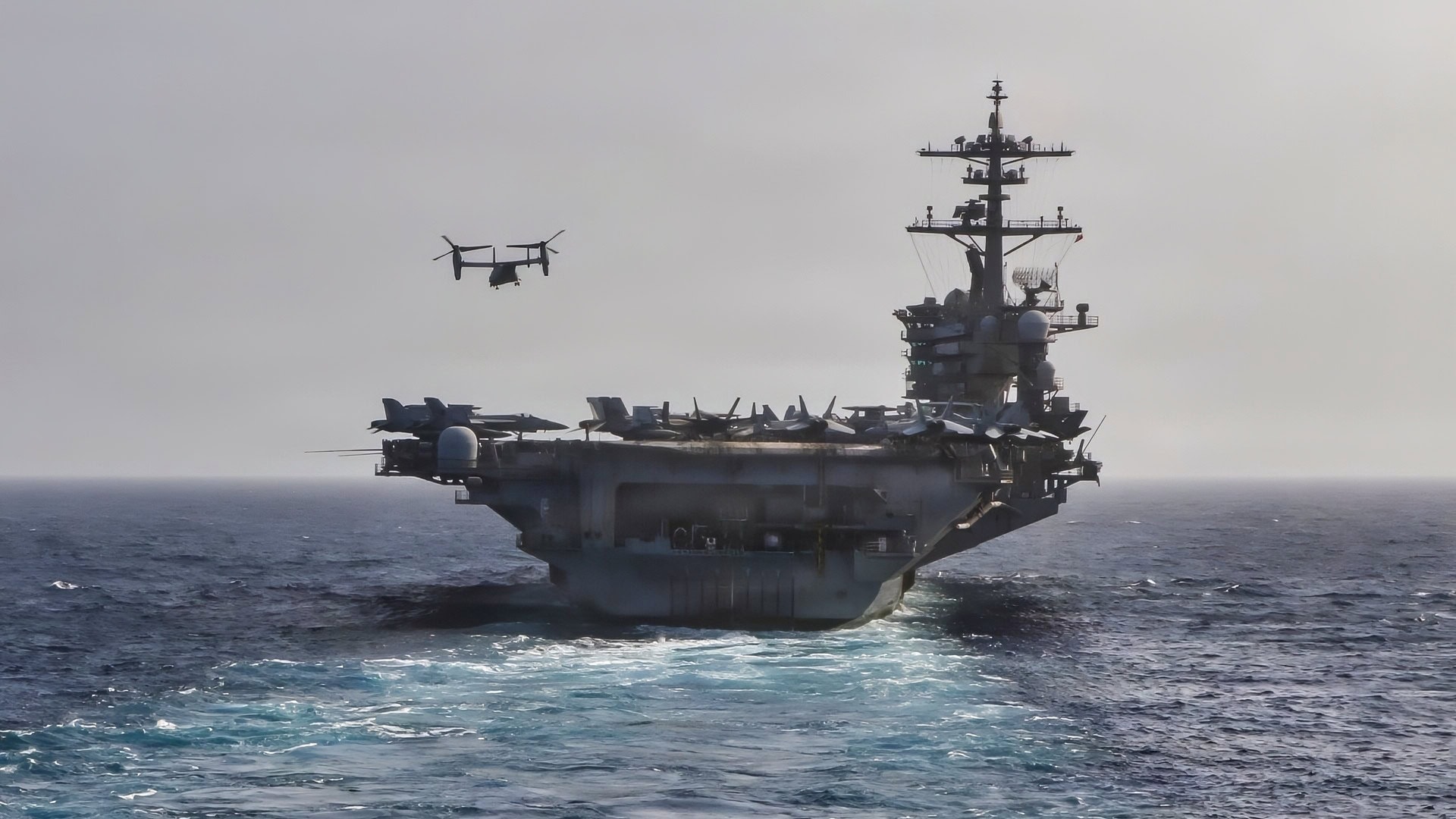
Iran has no navy capable of contesting the U.S. Navy and no air force able to match American aircraft, yet it has managed, twice in thirteen months, to make the Pentagon draw down one of its scarcest interceptor stockpiles. The Iran war is making a slower option look more attractive to Beijing: a maritime quarantine that keeps American forces engaged and pushes commercial shipping away from Taiwan. It also avoids presenting the concentrated amphibious target set that U.S. plans are designed to punish.
That matters because the United States has gone back to war with Iran before the first round of fighting had faded from memory. Washington resumed strikes this week and restored its blockade of Iranian ports. During the 2025 Twelve-Day War, the United States reportedly fired more than 150 THAAD interceptors, roughly a quarter of the stock funded up to that point. The larger 2026 conflict cut into American air- and missile-defense inventories again.
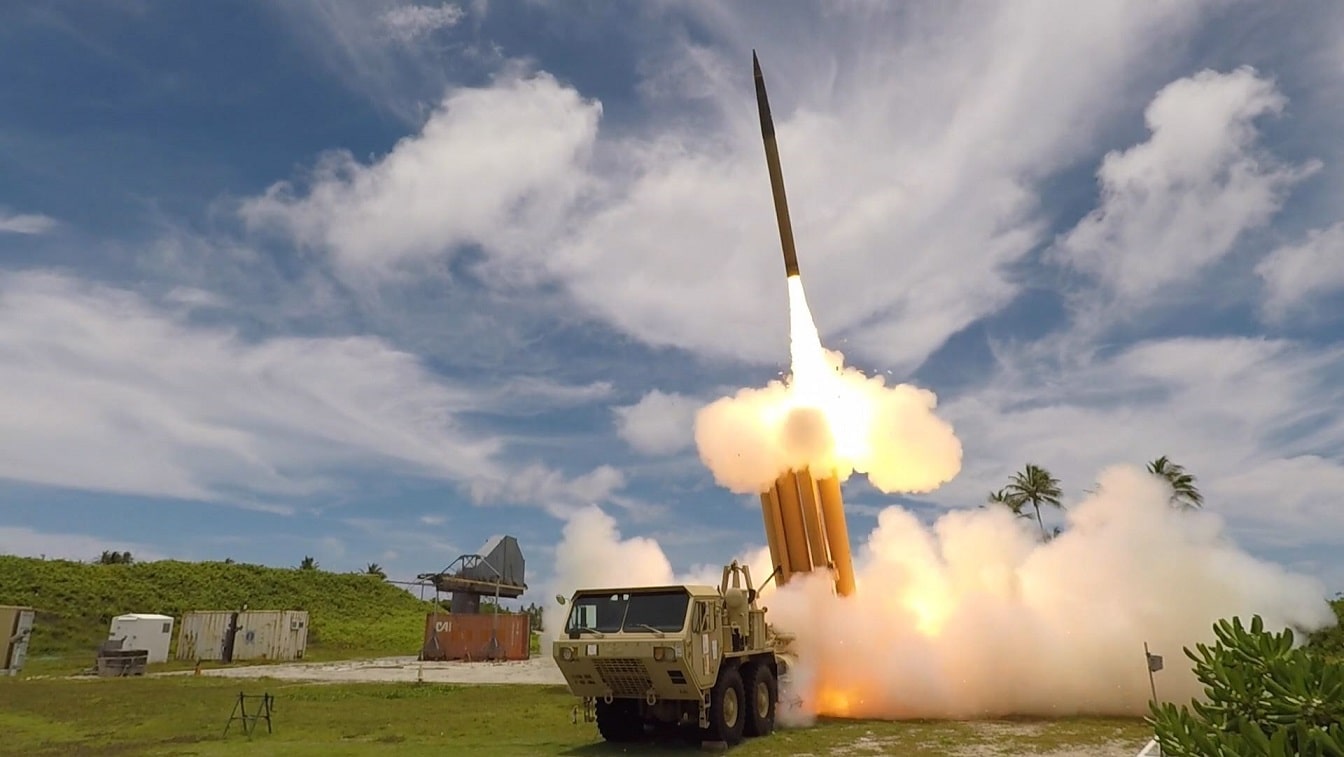
THAAD Missile Defense Battery Firing. Image Credit: Lockheed Martin.
The usual answer is already visible. Congress will appropriate more money. Contractors will promise higher output, then explain why some missiles cannot be replaced for years. More production is necessary. It does not remove the strategic choice exposed by Iran: the United States keeps drawing from finite stocks in theaters Washington insists are secondary to China.
Iran Showed What Endurance Costs
Iran cannot challenge the U.S. Navy in a conventional contest. Tehran can still keep the Gulf dangerous and threaten American bases with recurring missile attacks. Commercial carriers make their own calculation and stay away. The United States can hit Iran far harder than Iran can hit back, yet the campaign still pulls American forces into a costly defensive posture.
The weapons involved are not interchangeable. THAAD and SM-3 intercept ballistic missiles. Submarines and anti-ship weapons would be used against an invasion fleet. A Pacific war would draw on both sets of inventories, as well as aircraft and ships already demanded elsewhere. American war plans depend on scarce weapons and specialized platforms that cannot all be committed at once.
Washington has been reluctant to admit that. Its strategy documents identify the Indo-Pacific as the priority, while deployments continue to treat Europe and the Gulf as obligations that require immediate American reinforcement. The contradiction is easy to miss until several demands arrive together.
China does not have to predict the day an American magazine reaches zero. Its planners can see assumptions about availability being weakened by crises that have little to do with Taiwan.
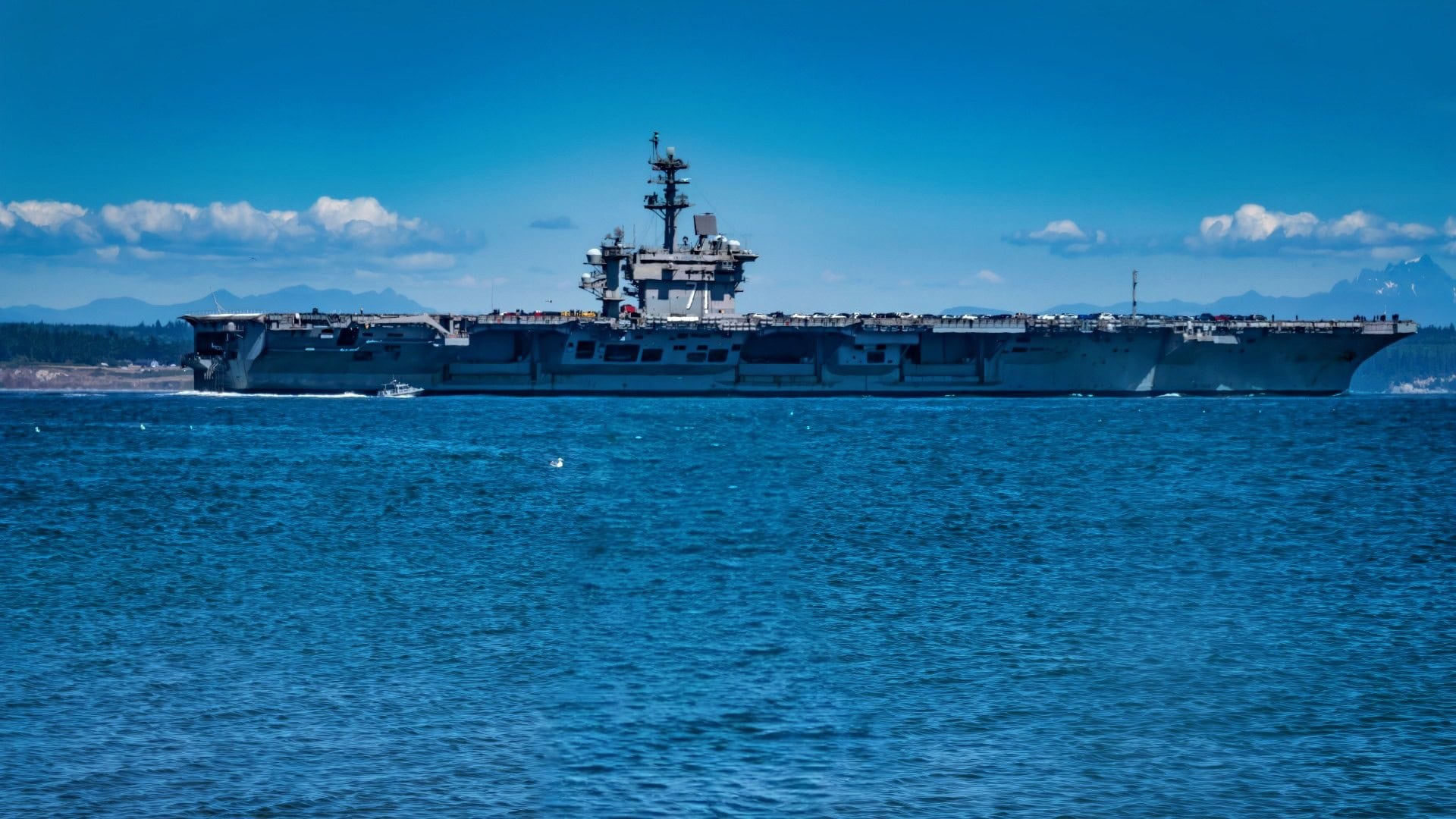
Aircraft carrier USS Theodore Roosevelt (CVN 71) passes Fort Worden before its arrival at Naval Base Kitsap in Bremerton, Washington, July 22, 2021.
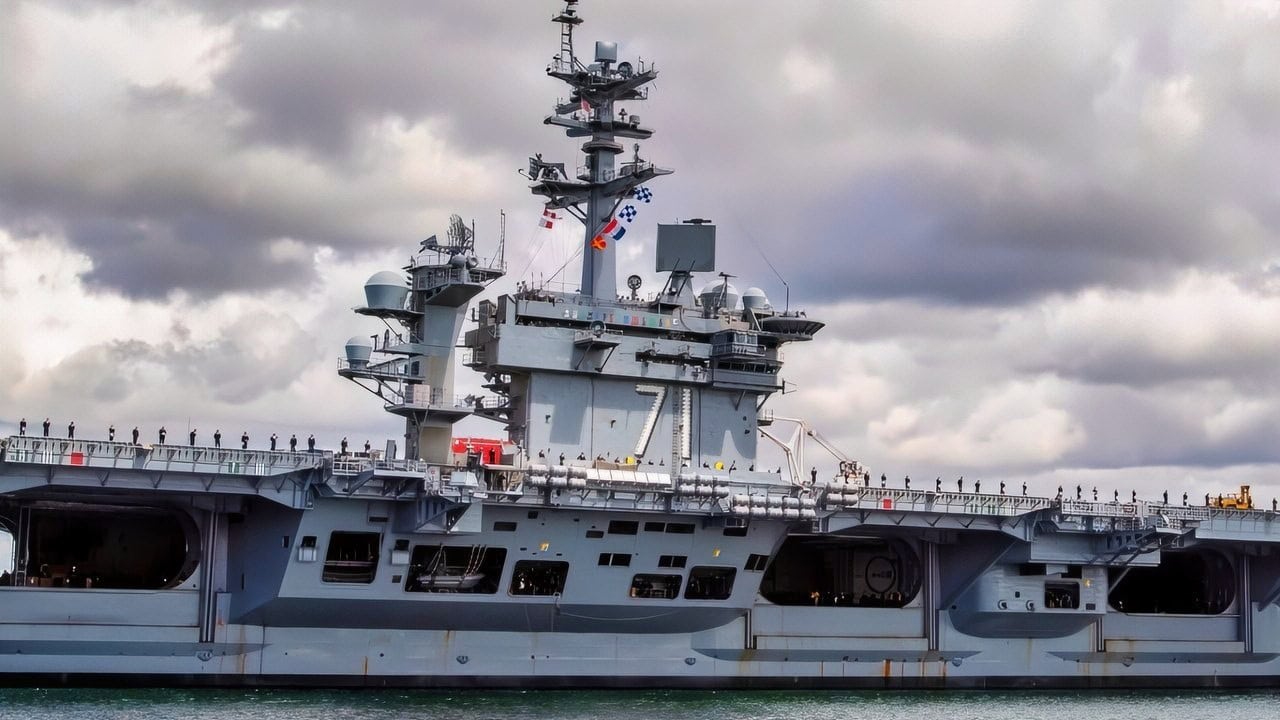
(March 23, 2023) Nimitz-class aircraft carrier USS Theodore Roosevelt (CVN 71) returns to Naval Air Station North Island following a regularly-scheduled maintenance availability and completion of sea trials, March 23. The ship changed its homeport from Bremerton to San Diego after completing an 18-month docking planned incremental availability in Bremerton, Washington, during which the ship received extensive restorations and upgrades to support the F-35C Lightning II, E-2D Advanced Hawkeye, and CMV-22B Osprey, as well as future platforms such as the MQ-25 Stingray unmanned aircraft system. (U.S. Navy photo by Mass Communication Specialist 2nd Class Keenan Daniels)
A Quarantine Would Create a Different War
An invasion of Taiwan would be terrible, but it would also be illegal. Amphibious ships would have to cross the strait. Chinese forces ashore would depend on a vulnerable flow of ammunition and fuel. The battle would begin with a clear target set and a political decision that could not easily be disguised.
A quarantine could start under another name. Beijing might announce customs inspections or temporary safety zones. The China Coast Guard could take the lead, with the People’s Liberation Army farther back. Some vessels might be boarded while others are delayed. China has already conducted “law-enforcement” patrols near Taiwan and claimed to inspect shipping. Taiwan’s government recently practiced a scenario in which Beijing imposed declarations and inspections, followed later by boardings or seizures.
That ambiguity might last long enough to matter. Does the United States fire on a Coast Guard cutter diverting a tanker? Does Japan enter before Chinese missiles strike Japanese territory? Commercial carriers and insurers will answer some of those questions before governments do. Sailings will be canceled, and Taiwan’s reserves will begin to shrink.
The first weeks might consume a few American interceptors. Pressure would come through shipping schedules and Taiwan’s dependence on imported energy. If Washington later organized escorts, Beijing could raise the stakes with mines or selective missile attacks. The United States would then face a campaign built around keeping sea lanes open for months rather than destroying an invasion force in days.
That is a harder contest for a military that has spent most of its planning energy on the opening battle.
Strategy Has to Start Before the Shooting
Taiwan’s own endurance becomes central in such a war. Taipei needs larger reserves of fuel and food. Medical stocks and parts for essential infrastructure matter too. An island that begins to feel desperate after a few weeks gives Beijing leverage before Washington has agreed on what it is willing to do.
American planning also needs a blockade-breaking concept that is not simply an invasion-defense plan stretched over a longer timeline. Mine clearance and convoy escort would matter. So would the dull work of repairing ports and arranging merchant shipping. These capabilities would determine whether Taiwan could remain connected to the outside world while Beijing kept the crisis below the threshold of general war.
The alliance problem is uncomfortable. Japan and Australia cannot serve mainly as bases while the United States supplies nearly every scarce capability. Europe and the Gulf will have to take on more responsibility at home. Otherwise, each crisis will continue to draw on the force Washington says must be ready in the Pacific.
Restraint becomes concrete here. Prioritizing China means declining some missions elsewhere. The Pentagon can buy more missiles, but production will not erase the political habit of treating every regional emergency as an American military obligation.
China has had years to study the invasion scenarios that dominate U.S. war games. It has also watched Washington struggle when maritime pressure unfolds slowly, and the legal threshold for action remains unclear. The next Taiwan crisis may begin with inspections and canceled sailings rather than a missile barrage against Guam.
By the time Washington agrees that the war has started, the question may already be whether Taiwan can endure another month and whether the United States is prepared to keep the sea lanes open. American strategy still has a serious answer for the invasion fleet. It has a much thinner answer for the campaign that never offers one.
About the Author: Dr. Andrew Latham
Andrew Latham is a professor of international relations and political theory at Macalester College in Saint Paul, MN. You can follow him on X: @aakatham.