
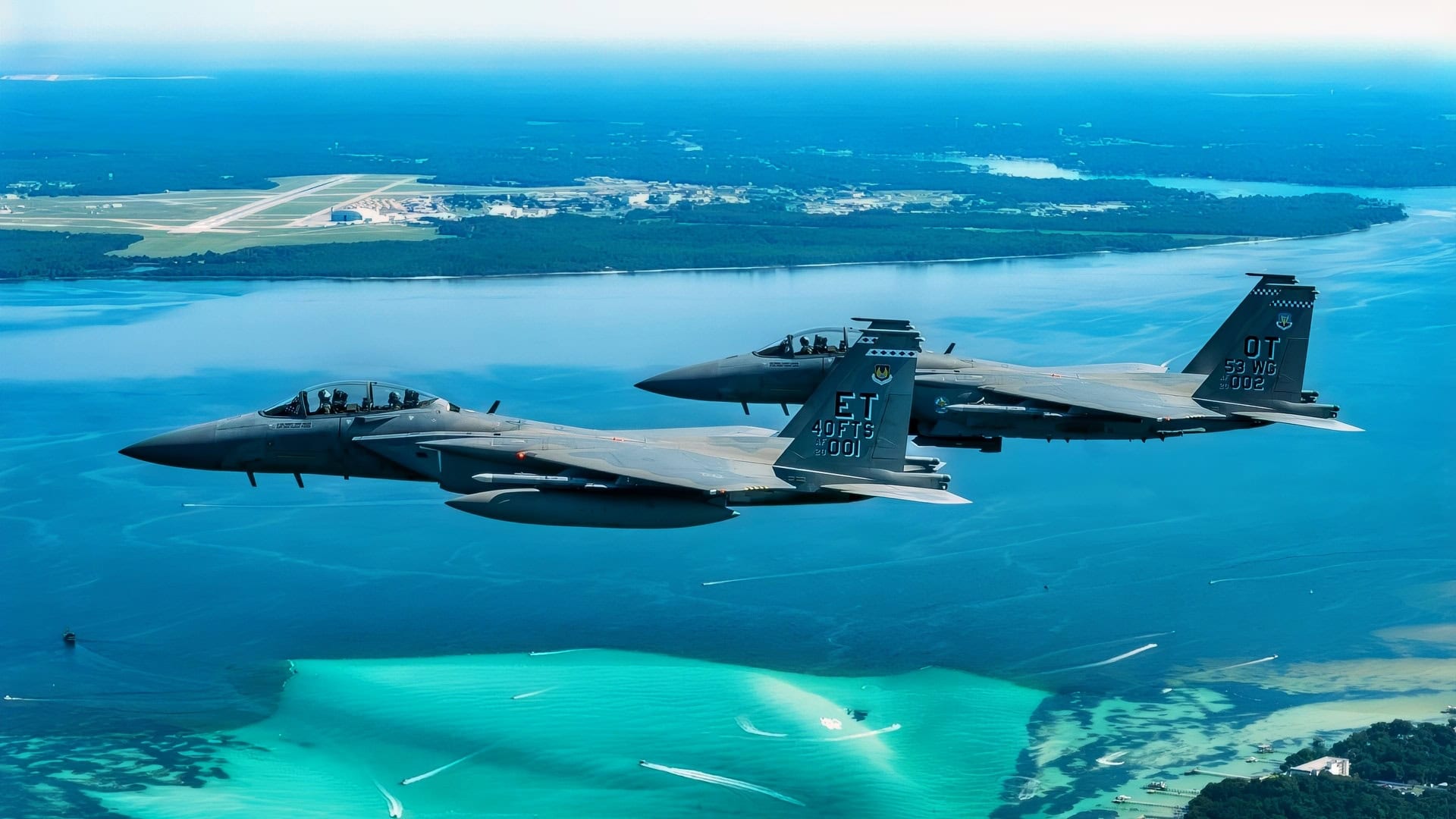
The U.S. Air Force just made one of the largest fighter-buy reversals in recent memory, more than doubling its planned F-15EX Eagle II fleet from 129 aircraft to 267 in a single budget cycle. The move is a vote of confidence in a non-stealth, fourth-generation-plus fighter at a moment when the rest of the world is chasing stealth, and the logic behind it is sound. But it also quietly buries the argument that first sold the jet. The Eagle II was pitched as the affordable, low-risk complement to the F-35. It is no longer especially affordable. A non-stealth Eagle now costs roughly what a stealth Lightning II does, and the Air Force is buying it in bulk anyway, for reasons that have nothing to do with saving money.
The scale of the reversal is striking on its own. In the Fiscal Year 2027 budget request, revealed at the Pentagon in April 2026, the Air Force set a new F-15EX program of record of 267 aircraft, more than double the 129 it had planned just one year earlier. The number has whipsawed for years, falling from an original ceiling of 144 to a low of 80 in 2023 before climbing back through 98 and 129, and now leaping to 267. Between the domestic surge and a stack of foreign orders, Boeing’s St. Louis line is now booked well into the next decade. For a fighter first flown by the Air Force in 1976, it is a remarkable second life.
Boeing F-15EX Eagle II: Why the Sudden Doubling
The immediate driver is a problem with the other jet. The F-35 has been dogged by delays to its Technology Refresh 3 and Block 4 software upgrades, to the point that new Lightning IIs have been delivered without fully operational radar while the fixes are sorted out. Lieutenant General David Tabor, the Air Force’s deputy chief of staff for plans and programs, told a Senate subcommittee in May 2026 that those setbacks left the service with a fighter-capacity shortfall it had to address, and the F-15EX was the fastest way to close it. When the fifth-generation jet stumbles, the Air Force reaches for the one modern fighter it can buy off a hot production line right now.
The second driver is age. The Eagle II was originally meant to replace the geriatric F-15C and D fleet, but the expanded buy now reaches further, into recapitalizing the F-15E Strike Eagle force, of which the Air Force operates more than 200, many worn down by decades of continuous combat. Behind all of it sits a capacity crisis the service has been open about: an Air Force study mandated by the 2025 defense authorization act concluded it needs 1,558 combat-coded fighters, nearly 300 more than it has, and that buying both the F-15EX and the F-35A in larger numbers is the way to get there by the end of the decade. The doubling is a capacity decision first and foremost.
The expansion also rests on an industrial base finally ready to deliver it. Boeing plans to double monthly F-15EX output at its St. Louis plant from one aircraft to two by early 2027, pushing the line toward full-rate production after a fifteen-week machinists’ strike stalled deliveries in 2025. Foreign orders keep that line busy well into the 2030s: Israel signed an $8.5 billion contract for 25 F-15IA jets with an option for 25 more, a customized Eagle II variant, joining export customers Qatar, Saudi Arabia, Japan, South Korea, and Singapore. The Eagle II has quietly become one of the most sought-after non-stealth fighters in the world, which is part of why the Air Force can count on it being there.
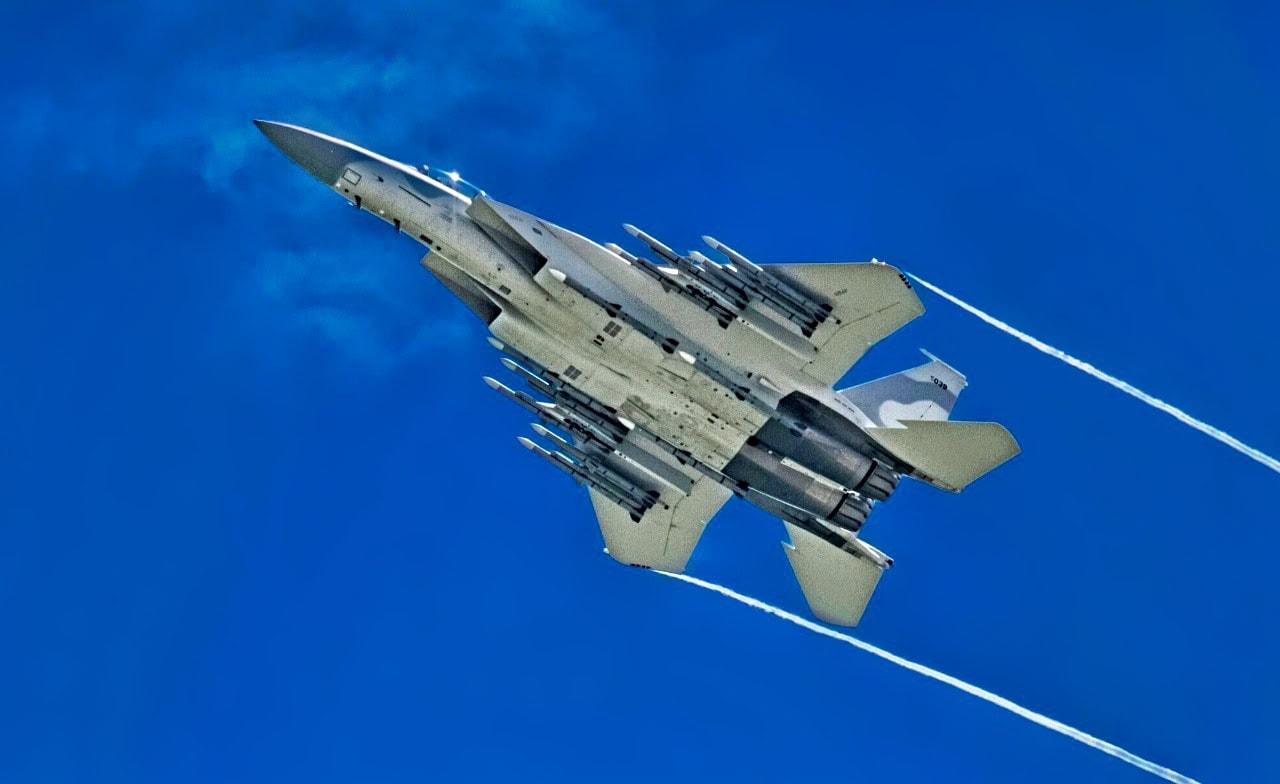
F-15EX Eagle II from U.S. Air Force
Industrial Questions: The Business Bargain That Wasn’t
Here is where the original story falls apart. When the program launched around 2020, part of the pitch was financial: the Eagle II would be a cost-effective complement to an all-F-35 force, a known quantity at a competitive price. The early numbers backed it up. The first production lot came in at $80.5 million per aircraft, broadly comparable to the F-35A at the time, which made the affordability argument credible.
That argument has since eroded. According to Breaking Defense, which confirmed the figures with an Air Force spokesperson, the F-15EX’s per-unit flyaway cost rose to roughly $90 million for Lot 2, climbed to about $97 million for Lot 3, and dipped to around $94 million for Lot 4, a jump of nearly 20 percent from where it started. The F-35A, meanwhile, averaged $82.5 million in flyaway cost across its most recent production lots. On those headline numbers, the non-stealth Eagle now costs more than the stealth fighter.
The comparison deserves an honest asterisk, because it cuts the other way too. The F-35A’s often-quoted figure excludes its F135 engine, which is contracted separately and adds roughly $20 million per jet, pushing the true flyaway cost of the latest F-35As past $100 million. Count the engine and the Lightning II is again the pricier aircraft. The precise ranking depends on what one includes. But the direction is what matters, and it is unambiguous: the two jets now cost about the same. A fourth-generation-plus fighter with no stealth is priced in the same bracket as a fifth-generation stealth aircraft, and the clean unit-cost advantage that helped justify the Eagle II has vanished.
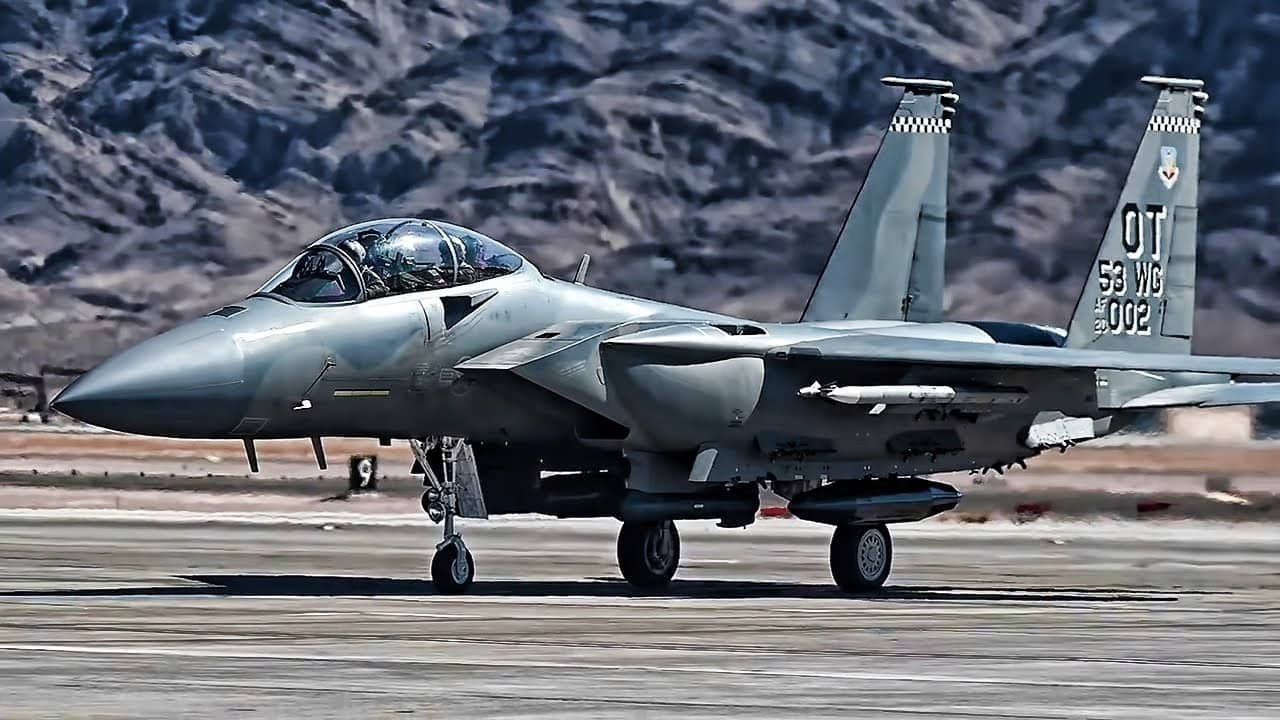
F-15EX Eagle II. Image Credit: Creative Commons.
Aerospace Power: What the Money Still Buys
None of that makes the doubling a mistake, and the honest case for it is strong, just different from the original one. The most concrete argument is longevity. The F-15EX is built to a 20,000-hour airframe life, against roughly 8,000 hours for the F-35, which means it would take about two and a half Lightning IIs to match the total flying life of a single Eagle II. Measured over a lifetime rather than a sticker, the Eagle still looks cheap.
Then there is the mission the Eagle II does that the F-35 cannot. With nearly 30,000 pounds of payload and more than 20 weapons stations, it is a flying magazine that can haul more air-to-air missiles, and larger standoff and future hypersonic weapons, than any stealth fighter designed around a cramped internal bay. In the emerging concept of operations, the F-35 penetrates contested airspace and finds the targets while the Eagle II stands off and launches the weapons, a division of labor that lets each aircraft do what it does best.
The Pentagon’s own testing office, in its 2025 annual report, rated the F-15EX operationally effective across its air-superiority roles, and judged its electronic-warfare suite effective in counter-air missions even against advanced stealth designs like Russia’s Su-57 and China’s J-20, a notable finding for a jet with no low-observable shaping of its own.
That capacity is being aimed squarely at the Pacific. The Air Force plans to station Eagle IIs at Kadena Air Base in Okinawa, a linchpin of the First Island Chain, and the Navy’s air systems command is integrating the long-range AGM-158C anti-ship missile onto the F-15E and F-15EX, turning the Eagle into a maritime-strike platform that can threaten warships from standoff range. A future fight in the Western Pacific could demand hundreds of long-range missiles fired across enormous distances, exactly the volume a fleet of flying magazines is built to deliver while stealth fighters handle the targets that require getting close.
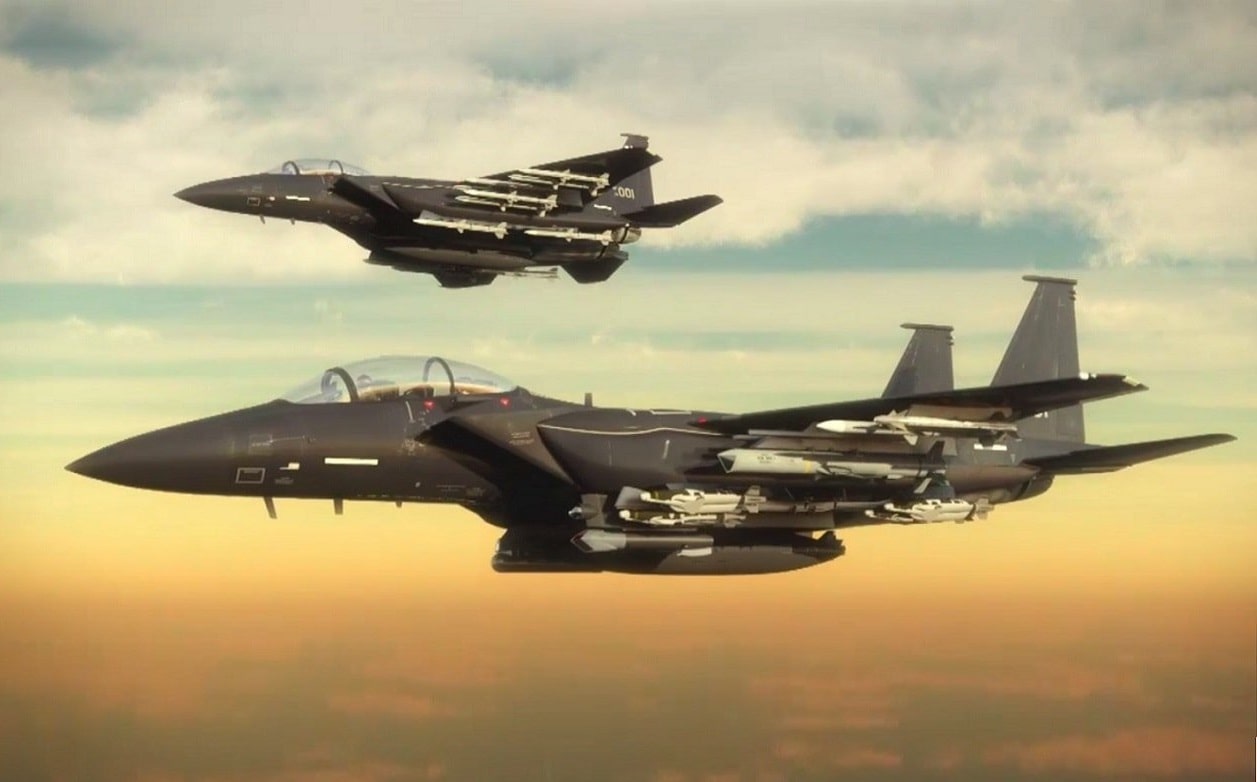
F-15EX Eagle II. Image Credit: Boeing.
The Real Case for Both
So the doubling makes sense, but not for the reason the program was sold. The Air Force is not buying 267 Eagle IIs because they are cheap. It is buying them because it needs fighter capacity now, because the F-35 line cannot fill the gap alone while its software matures, because the Strike Eagle fleet is wearing out, and because a jet that flies for 20,000 hours and carries an enormous magazine complements a stealth force that flies fewer hours and carries less.
Those are good reasons. They are simply not the affordability reasons that first justified the jet.
That is the honest bottom line on the largest fighter reversal in years.
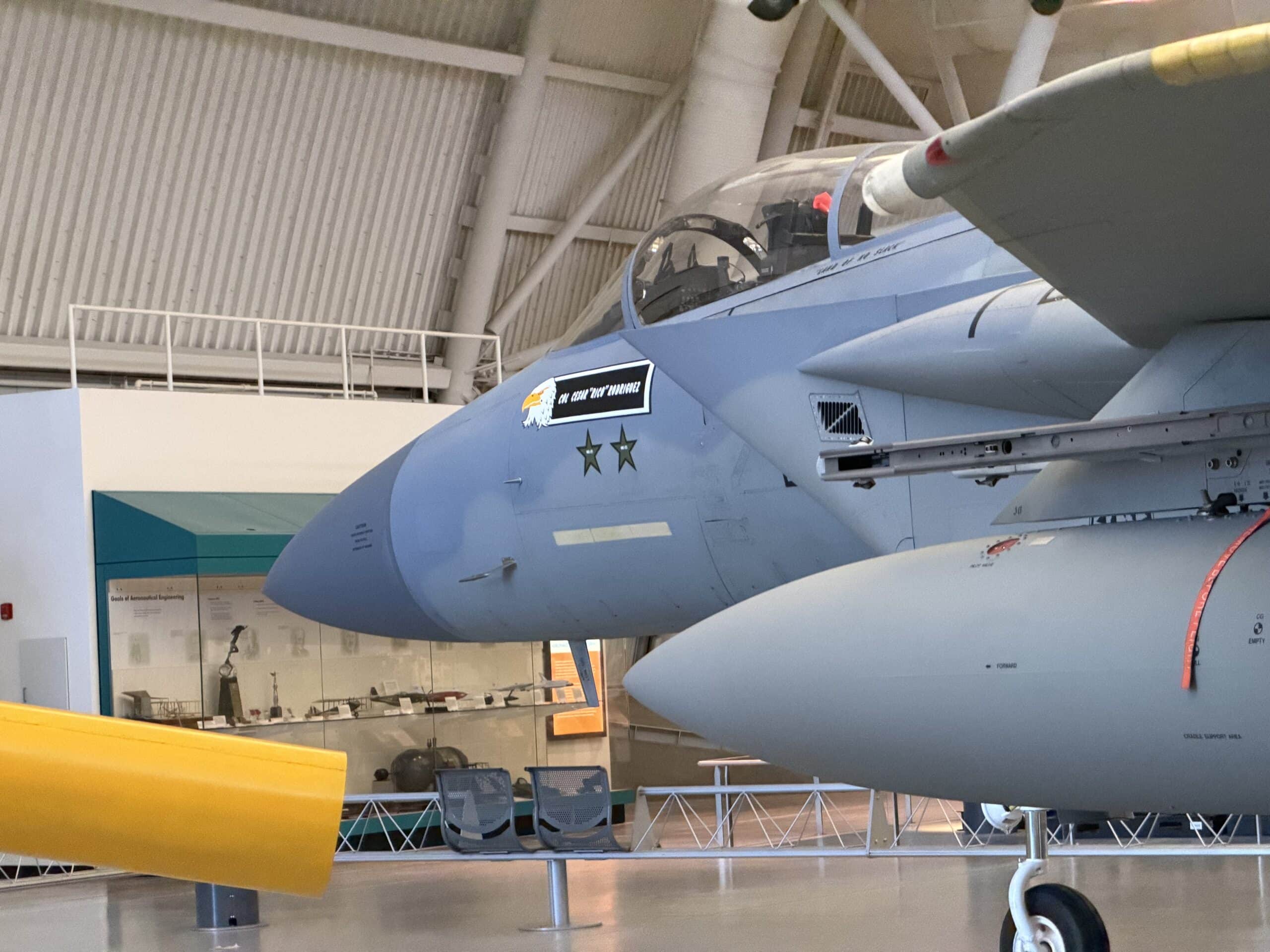
F-15C at the Smithsonian. 19FortyFive Image.
The F-15EX is a capable, sensible, and probably necessary aircraft, and the case for a mixed fleet of stealth penetrators and non-stealth magazines is sound.
But the Air Force is now paying stealth-fighter prices for a non-stealth fighter, and betting that its flying life and its payload are worth the money even though its old cost advantage is gone. For a service short on both fighters and dollars, that is a defensible bet. It is not the bargain anyone was promised.
About the Author: Harry J. Kazianis
Harry J. Kazianis (@Grecianformula) was the former Senior Director of National Security Affairs at the Center for the National Interest (CFTNI), a foreign policy think tank founded by Richard Nixon based in Washington, DC. Harry has over a decade of experience in think tanks and national security publishing. His ideas have been published in the NY Times, The Washington Post, The Wall Street Journal, CNN, and many other outlets. He has held positions at CSIS, the Heritage Foundation, the University of Nottingham, and several other institutions related to national security research and studies. He is the former Executive Editor of the National Interest and the Diplomat. He holds a Master’s degree focusing on international affairs from Harvard University.