
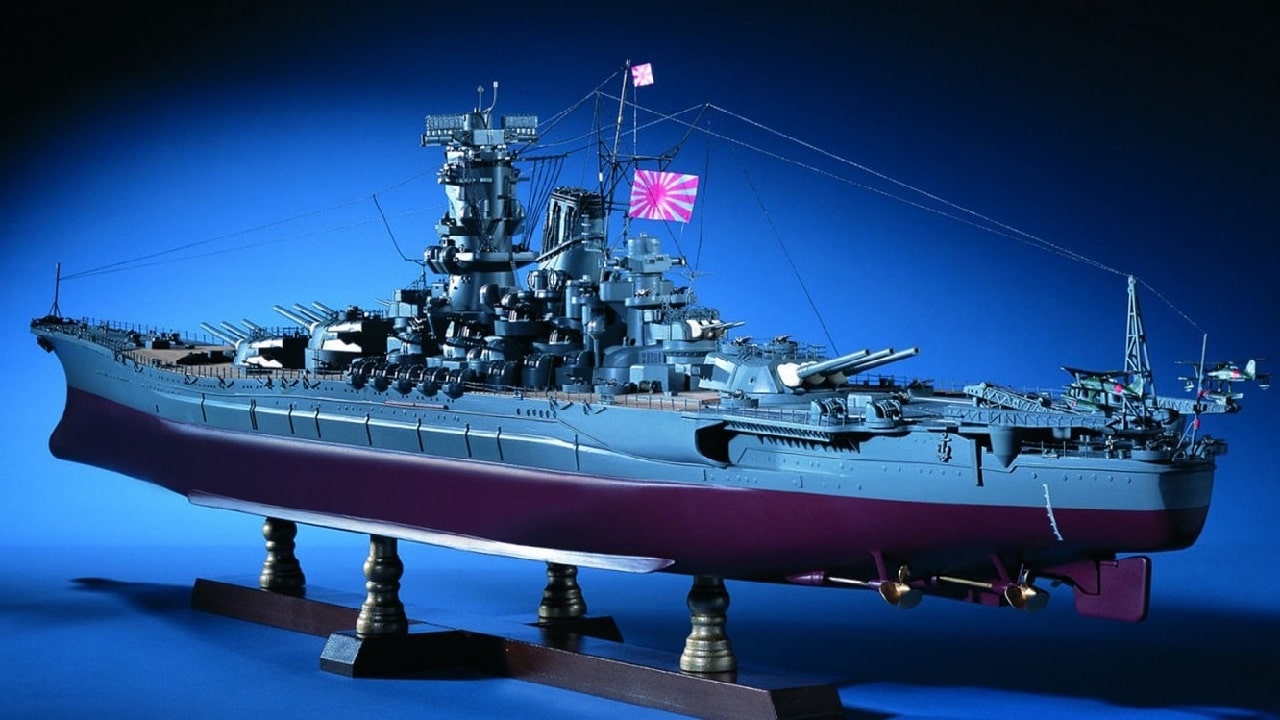
Japan Planned a Super Yamato With 20.1-Inch Guns. It Never Built One: Japan began studying a successor to the Yamato class before the Yamato had entered service. The project, known as Design A-150 and later nicknamed the “Super Yamato,” was intended to carry guns so large that no American battleship could answer them.
The exact ship is difficult to reconstruct because Japanese authorities destroyed many naval records at the end of World War II. Early studies examined a battleship approaching 90,000 metric tons with eight or nine 51-centimeter guns. The more mature A-150 design appears to have been closer to a slightly enlarged Yamato carrying six 51-centimeter, or 20.1-inch, guns in three twin turrets.
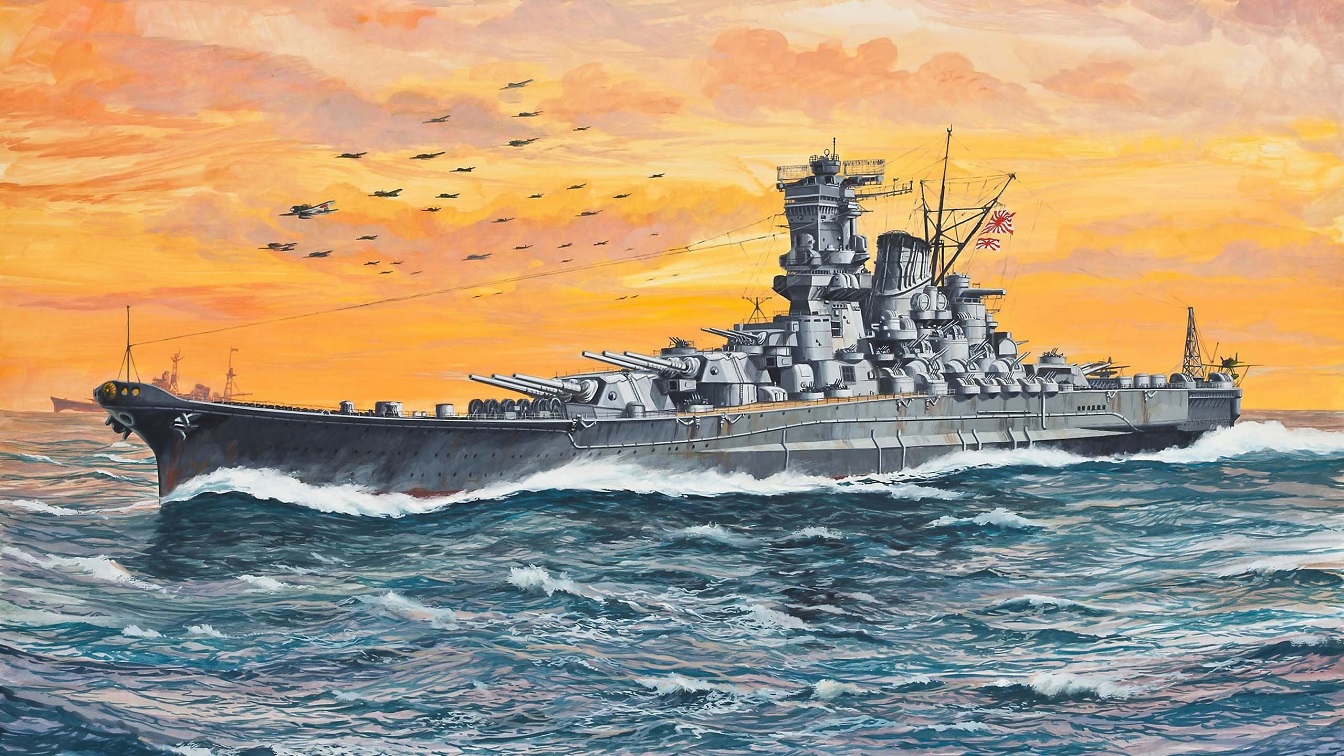
Yamato-Class Battleship/Artist Rendition. Image Credit: Creative Commons.
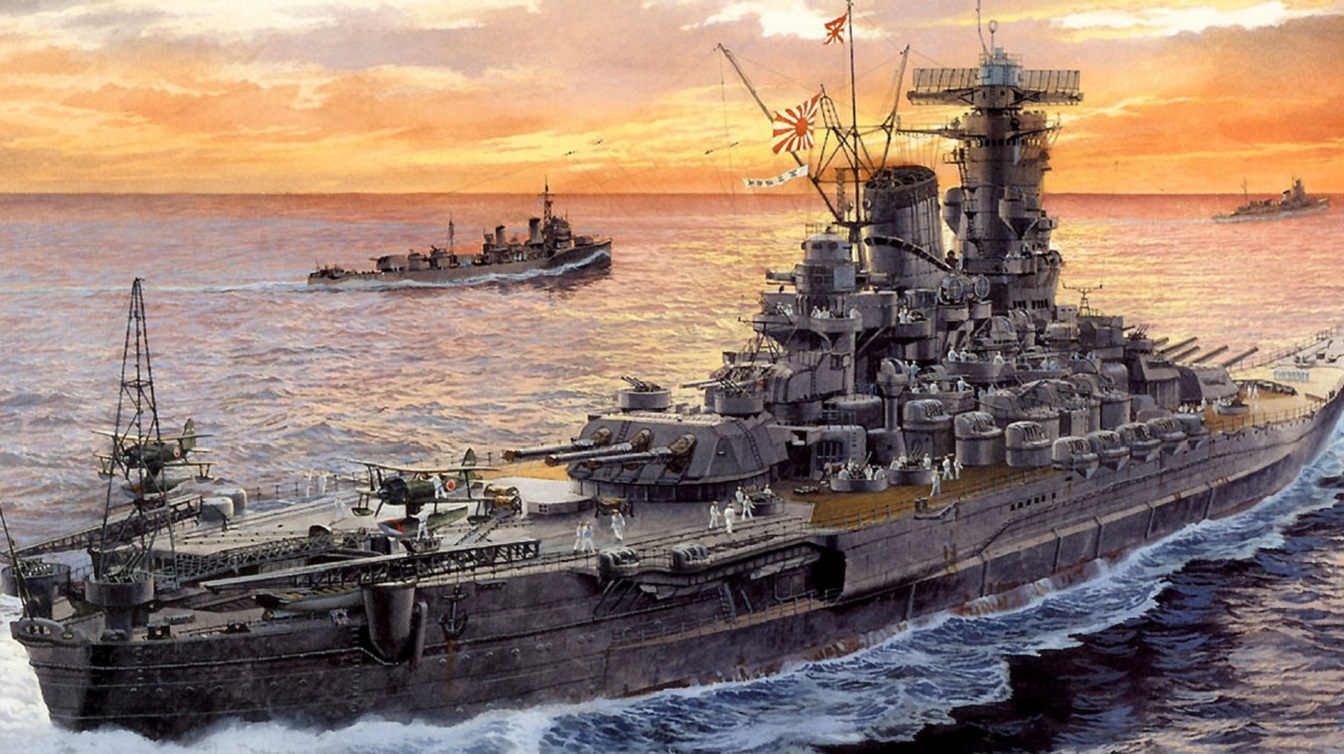
Battleship Yamato. Image Credit: Creative Commons.
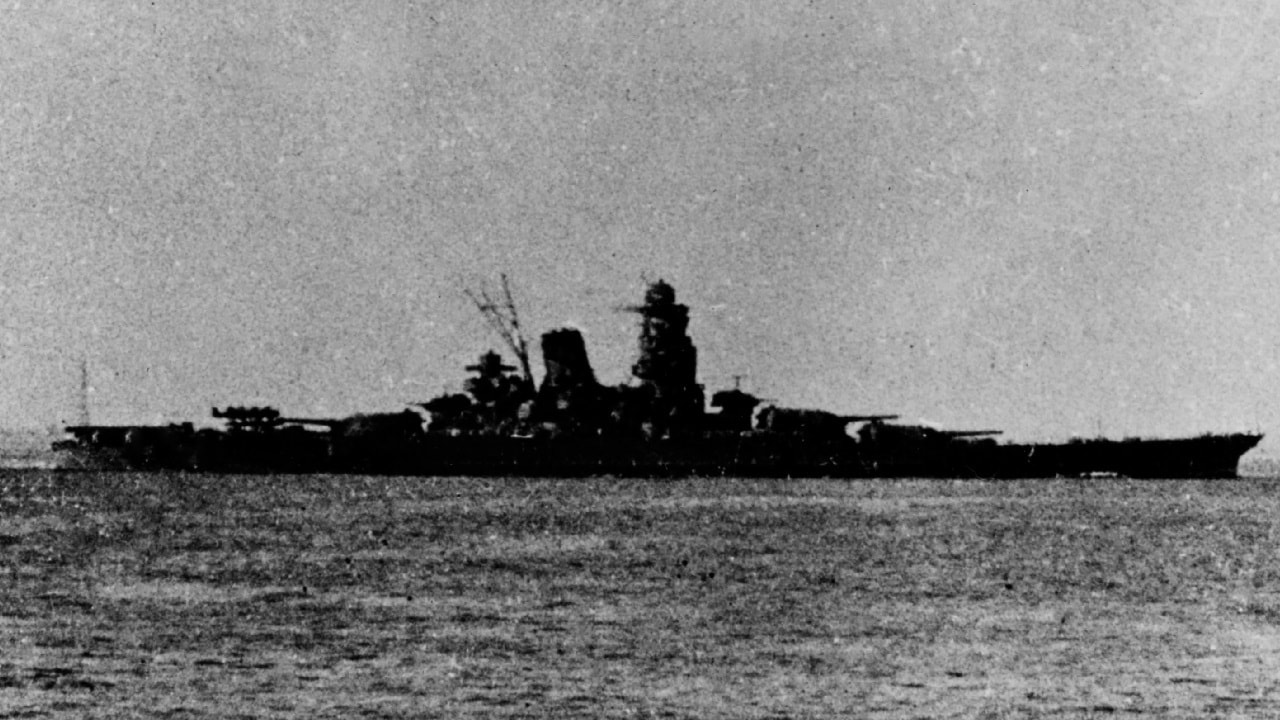
Yamato-class battleship Yamato. Image Credit: Creative Commons
A-150 followed the same logic that created Yamato. Japan knew it could not match the United States ship for ship. Its answer was qualitative superiority: build fewer battleships, but make each one powerful enough to defeat several American opponents. The secrecy surrounding Yamato’s true size and armament shows how seriously Tokyo protected that advantage.
The gun program moved beyond a drawing board. Two 51-centimeter guns and one mounting were ordered from Kure Naval Arsenal in June 1941. One barrel was reportedly receiving its breech, the second had reached partial construction, and much of the mounting existed in unfinished form when work stopped.
Japan Built A-150 Around an Industrial Disadvantage
Japan’s postwar naval armament history describes the arithmetic directly. The Imperial Japanese Navy lacked the facilities, material, time and money to raise its battleship numbers to American levels. Yamato and Musashi were supposed to offset that gap through individual power.
A-150 extended the same idea. Each gun would have weighed about 227 metric tons and fired an armor-piercing shell weighing roughly 1,950 kilograms. A twin turret was projected at about 2,780 metric tons, close to the weight of Yamato’s three-gun turret despite carrying one fewer weapon. The scale also highlights why gun caliber alone did not determine battleship effectiveness.
The ship would have been terrifying in the battle Japan hoped to fight: a surface engagement in which long-range gunfire broke the American battle line. The problem was that Japan’s fixation on a decisive surface battle was producing the ultimate instrument for a contest that was disappearing.
The Pacific War Did Not Wait for the Super Yamato
A-150 was never formally ordered and no keel was laid. By late 1941, Japan was preparing for immediate war rather than a future battleship competition. Existing capital ships needed repairs and combat preparation. Armor production was limited. Shipyards faced urgent demands for carriers, destroyers, submarines and transports.
Japanese records say construction on battleships other than the nearly completed Yamato and Musashi was suspended. The fourth Yamato-class hull stalled. Shinano, the third hull, was eventually converted into an aircraft carrier. The decision reflected the same strategic weakness that left the completed Yamato-class ships with enormous power but few useful missions.
This was not a sudden discovery that aircraft mattered. Japan had built one of the world’s strongest carrier forces and used it at Pearl Harbor. The change came from scarcity. A battleship still years from service could not compete with immediate demands for aircraft, escorts, merchant shipping and trained crews.
Midway Made the A-150 Impossible
The Battle of Midway in June 1942 removed any realistic path back to the project. Japan lost four fleet carriers in one day. Its revised construction program put carriers and naval aviation at the center of the rebuilding effort, canceled battleship work and accelerated conversions.
The war then became an attritional struggle across the South Pacific. Japanese planners demanded more destroyers and submarines because convoys, reinforcement missions and contested sea lanes consumed ships continuously. Captured wartime documents show how Japanese shipbuilding priorities shifted under combat pressure.
One A-150 would have occupied a major slipway, absorbed huge quantities of armor and machinery and required escorts Japan already lacked. The United States reached a related conclusion when it canceled the Montana-class battleships and concentrated industrial capacity on ships that could influence the Pacific sooner.
The 20.1-Inch Guns Could Not Defeat Aircraft
A completed A-150 might have been the strongest battleship in a gun duel. Its six main guns would have overmatched most opponents, while its armor would have been intended to resist the heaviest naval shells.
None of that guaranteed the enemy would offer a gun duel. Carrier aircraft could attack from hundreds of miles away. Submarines could wait along its route. A ship with unmatched artillery still needed air cover, reconnaissance, fuel and secure bases.
Yamato and Musashi demonstrated the difference between tactical strength and strategic usefulness. Both were difficult to sink, but American carrier aircraft destroyed Musashi in the Sibuyan Sea and overwhelmed Yamato before she reached Okinawa. Yamato never fought the decisive battleship engagement for which Japan had built her. The world’s largest completed battleship was eventually destroyed without firing on an American battleship.
Japan Needed Many Ships More Than One Bigger Ship
By 1942, Japan’s naval problems were not a shortage of gun caliber. It lacked enough carriers to replace Midway, enough escorts to protect merchant shipping, enough trained pilots to rebuild naval aviation and enough fuel to operate its largest ships freely.
A-150 would have worsened each tradeoff. It offered concentrated power in a fleet increasingly punished for placing scarce resources in a few valuable hulls. Even if completed, the ship would have entered a war dominated by aircraft, submarines, logistics and industrial replacement rates. Yamato’s final destruction by waves of carrier aircraft showed what those replacement rates meant in combat.
At Kure, the partially completed 51-centimeter guns and mounting were left unfinished. Their final fate is uncertain, although they were probably destroyed in 1945. Warships 798 and 799 never received keels.
More – China’s J-20 Stealth Fighter Has Arrived
About the Author: Harry J. Kazianis
Harry J. Kazianis (@Grecianformula) was the former Senior Director of National Security Affairs at the Center for the National Interest, a foreign policy think tank founded by Richard Nixon in Washington, D.C. Harry has more than a decade of experience in think tanks and national security publishing. His ideas have been published in The New York Times, The Washington Post, The Wall Street Journal, CNN and many other outlets worldwide. He has held positions at CSIS, the Heritage Foundation, the University of Nottingham and several other institutions related to national security research and studies. He is the former Executive Editor of The National Interest and The Diplomat. He holds a master’s degree focusing on international affairs from Harvard University.

