
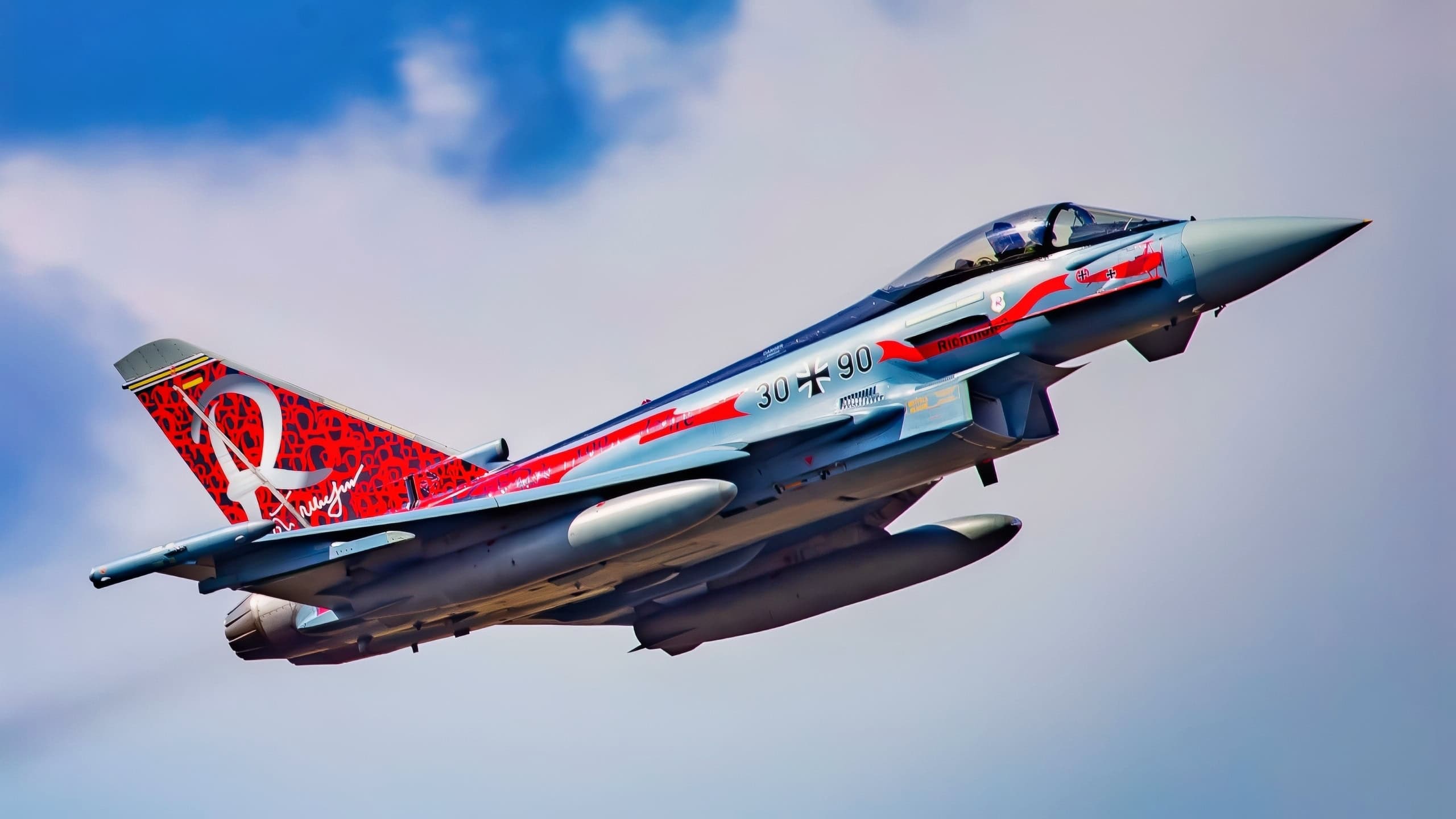
The Eurofighter Typhoon is a single-seat, multirole fighter developed by a multinational consortium comprising Airbus, BAE Systems, and Leonardo.
Although it was originally designed during the Cold War, it remains an important staple of many air forces in Europe and around the world.
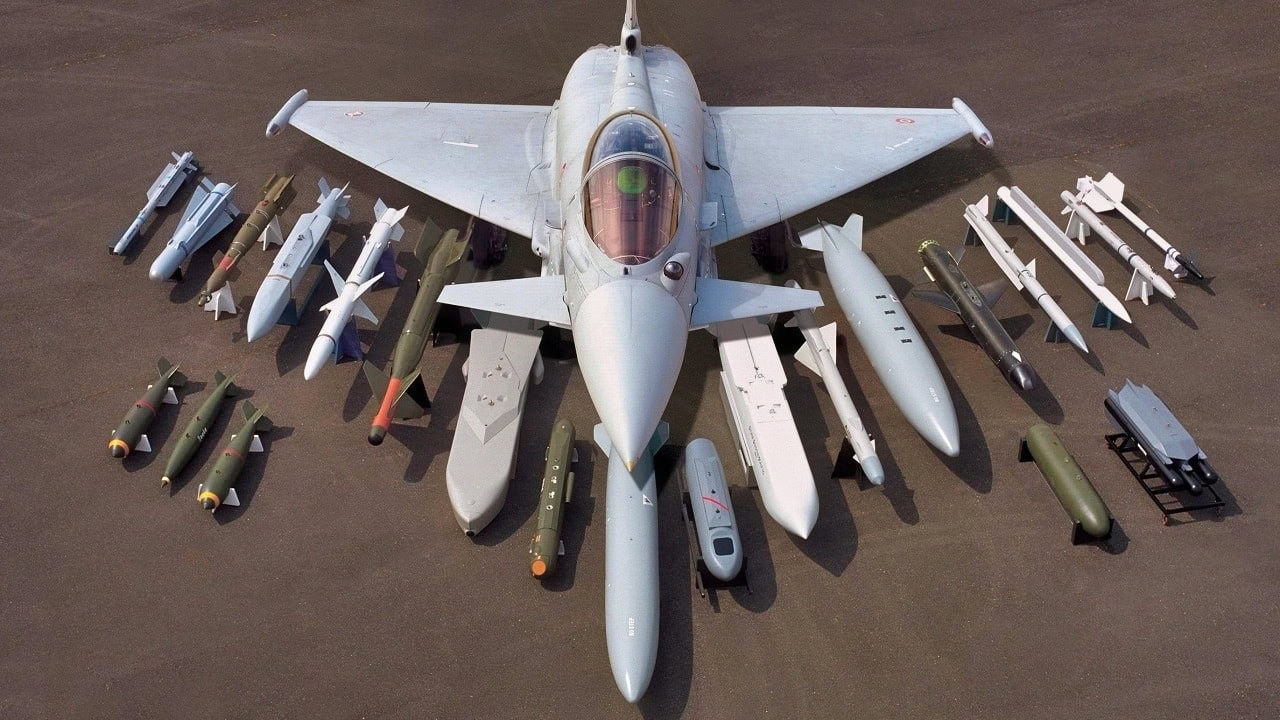
Eurofighter Typhoon. Image Credit: Creative Commons.
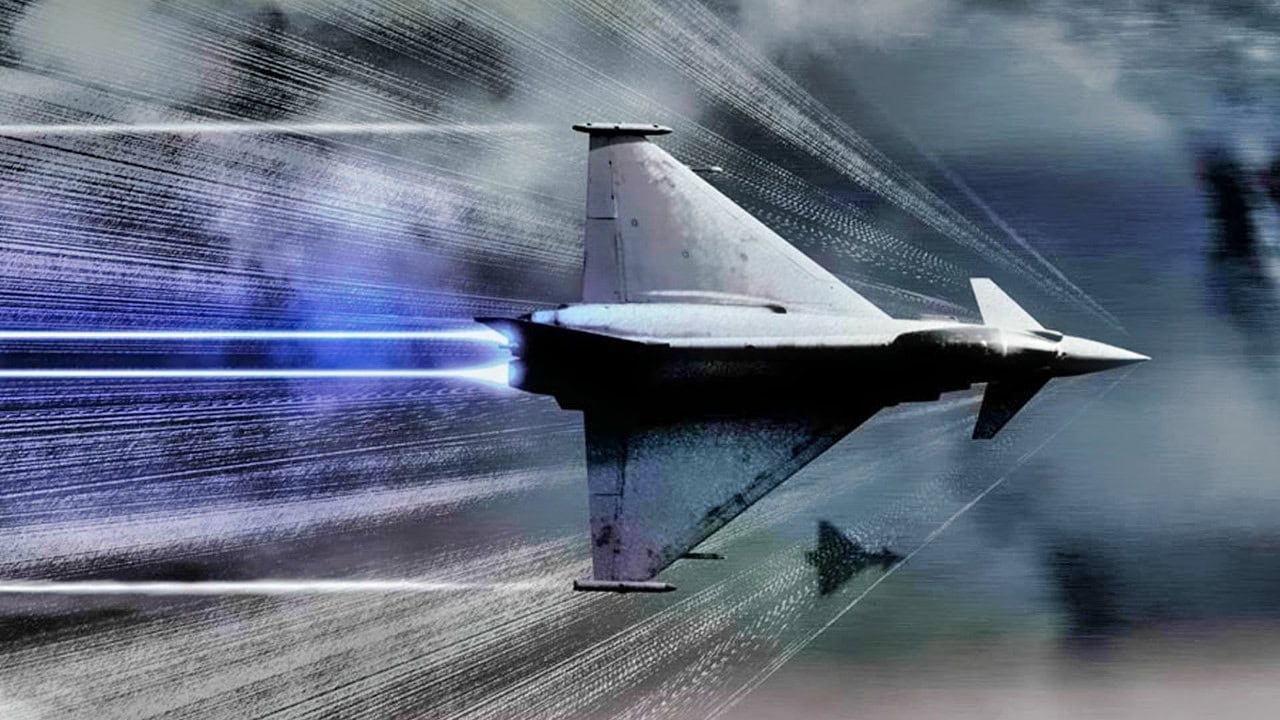
Eurofighter Typhoon Fighter. Image Credit: Creative Commons.
The Eurofighter was originally designed as a dedicated air-superiority fighter but gradually evolved into a highly capable multi-role aircraft.
Despite the current fixation on fifth- and sixth-generation aircraft, the Eurofighter is expected to remain in service well into the 2060s.
Currently, the Tranche 4 is the most advanced variant of the aircraft in operation, with orders already underway for the new Tranche 5 variant.
What We Know About the Eurofighter Tranche 5
Not much is currently known about the upcoming Tranche 5 variant. From what we know, it retains many of the same features as the Tranche 4 aircraft. According to Airbus, the new variant is expected to be equipped with the European Command Radar System (ECRS) Mk 1/2 AESA radar.
This new system is described as one of the latest and most advanced, though few details are known about it.
The ECRS Radar replaces the previous Captor-E AESA radar, which was a perfectly capable system in its own right.
The new Tranche 5 seems to place particular emphasis on electronic warfare capabilities, with German orders including the Arexis sensor suite, developed by Saab in Sweden.
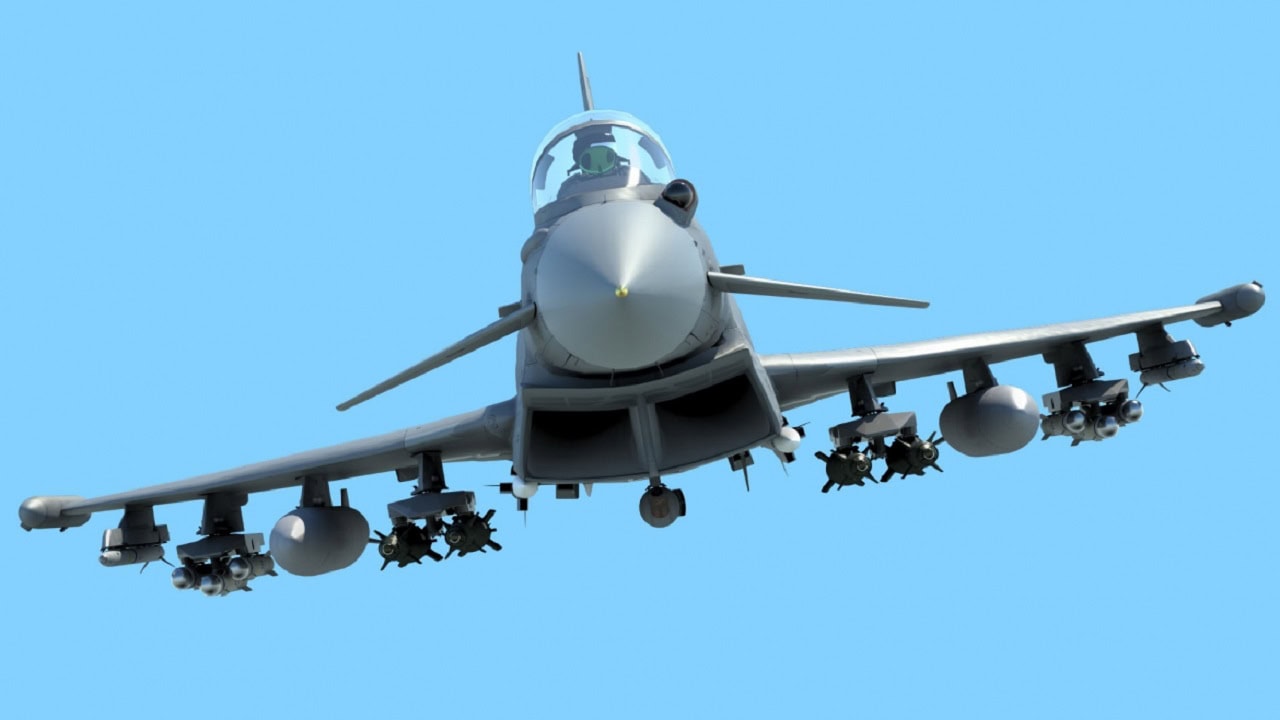
Typhoon fitted with the common launcher (computer generated image: for illustrative purposes only)
Other known upgrades include an improved cockpit interface and enhanced Radio Frequency Interoperability (RFIO).
The aim seems to be to transform the Eurofighter into an EW and SEAD/DEAD aircraft, giving it better air-to-ground capabilities and enhanced survivability in contested environments.
The aircraft is intended to act as both a stopgap and a testbed for fifth- and sixth-generation technologies. As Mike Schoellhorn, CEO of Airbus Defense and Space, explained, “The continued evolution of the Eurofighter serves as an essential technological and operational bridge to a Future Combat Air System (FCAS), ensuring a seamless transition to the next generation of air power.
With these additional Eurofighters, Germany strengthens its ability to conduct surveillance of its airspace and secure NATO’s skies, supporting Germany in its role as a reliable partner for collective security.”
Current Orders
So far, 89 orders have been placed for Tranche 5 Eurofighter Typhoons. Germany was the first to place an order for the new aircraft, followed by Spain, Italy, and Turkey, which signed a deal for two sets of 20 aircraft. “The order ensures production continuity, preserves critical capabilities along the entire supply chain and strengthens Europe’s defense capability for the coming decades,” said Jorge Tamarit-Degenhardt, the CEO of Eurofighter GmbH.
“With a planned service life well beyond 2060, the Eurofighters will be fully integrated into the future European air combat environment.” The German Luftwaffe plans to operate Tranche 5 Eurofighters alongside American-made F-35 fifth-generation stealth fighters.
Delivery of Tranche 5 aircraft is set to begin in 2031 and end in 2034.
In Germany, the aircraft are expected to replace Germany’s aging Panavia Tornado fighters, which have been in service with the Luftwaffe since the 1970s.
The aircraft are also set to replace older Tranche 1 variants, which are still in service in some NATO air forces. Germany had originally partnered with France and Spain to develop FCAS.
However, in June, the project was officially canceled due to disputes between France and Germany.
With no other options, the Germans are left with no better option than to double down on the Eurofighter for the future of its air force.
Other reports suggest that Berlin may be interested in joining the Global Combat Air Program (GCAP) with the UK, Japan, and Italy.
The Eurofighter vs Fifth-Gen Fighters
There is a conversation to be had over what exactly the Eurofighter Typhoon’s place is on a battlefield that is gradually shifting in favor of low-observable platforms.
There are a couple of things to note in this regard. First, fifth-generation capabilities do not guarantee survival in today’s battlefield. This was firmly demonstrated over the skies of Iran when an F-35 was struck by a MANPADS missile. While the aircraft managed to make it back to base by all accounts, it still sustained heavy damage and is “unlikely to return to combat” anytime soon.
Fourth-generation aircraft are still heavily utilized in both the war in Ukraine and the war in the Middle East. They are (sometimes) cheaper to maintain than their fifth-generation counterparts and are still perfectly capable enough for modern combat operations.
The Eurofighter Typhoon is not a bad aircraft by any means, even with its lack of comprehensive stealth systems.
Its twin EJ200 engines allow it to exceed Mach 2.35 and supercruise at Mach 1.25. Likewise, the aircraft is decently maneuverable. Originally designed as an air superiority fighter, the Eurofighter’s canard-delta configuration allows it to perform sharp turns, which is good for both close-range and BVR combat.
While it is not an F-35, its avionics are still advanced, especially on Tranche 4+ aircraft. Is it as good as a fifth-generation aircraft?
In some ways, no, but in most ways, it can perform as well in air-to-ground roles as some newer fighters.
MORE – Battleship USS California Came Back from Being Sunk
About the Author: Isaac Seitz
Isaac Seitz, a Defense Columnist, graduated from Patrick Henry College’s Strategic Intelligence and National Security program. He has also studied Russian at Middlebury Language Schools and has worked as an intelligence Analyst in the private sector.