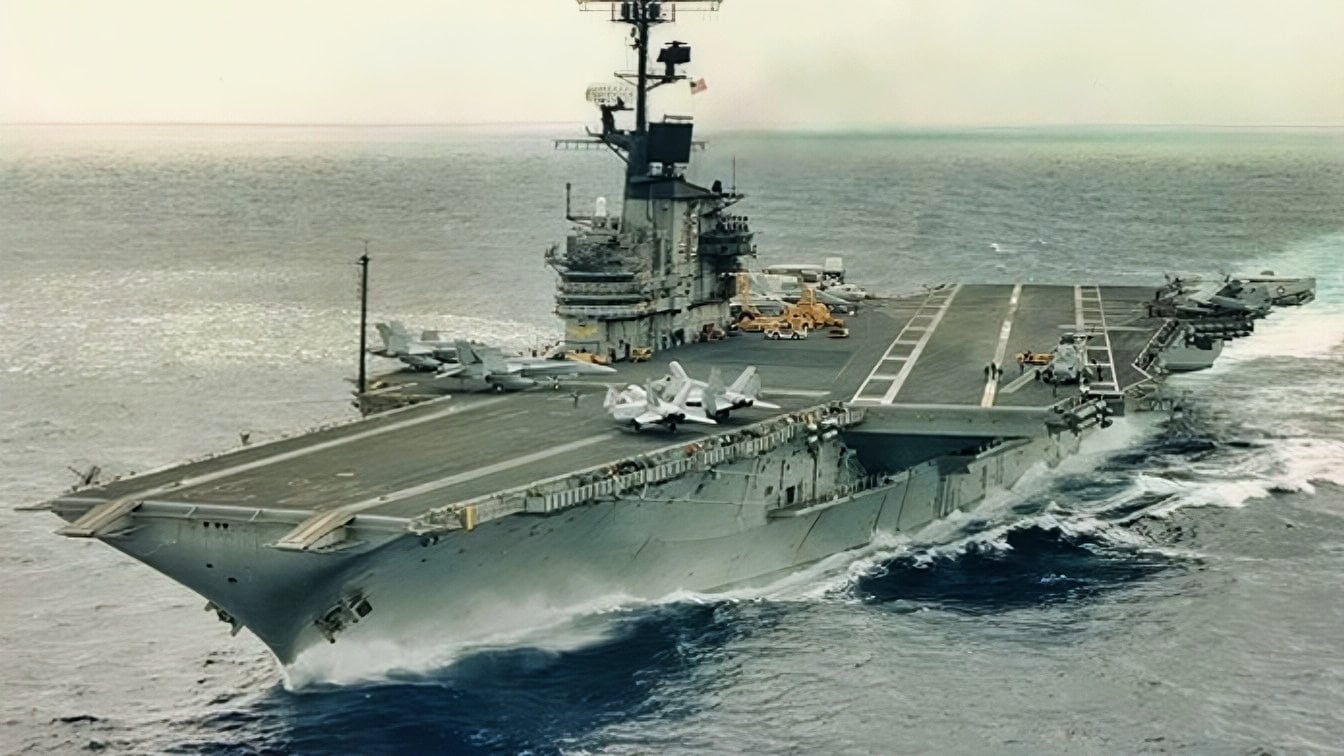
File this under “They don’t make them like they used to.” The Midway-class aircraft carriers were among the most iconic and widely used carriers of the United States Navy.
Designed in the Second World War, ships belonging to this class served for decades.
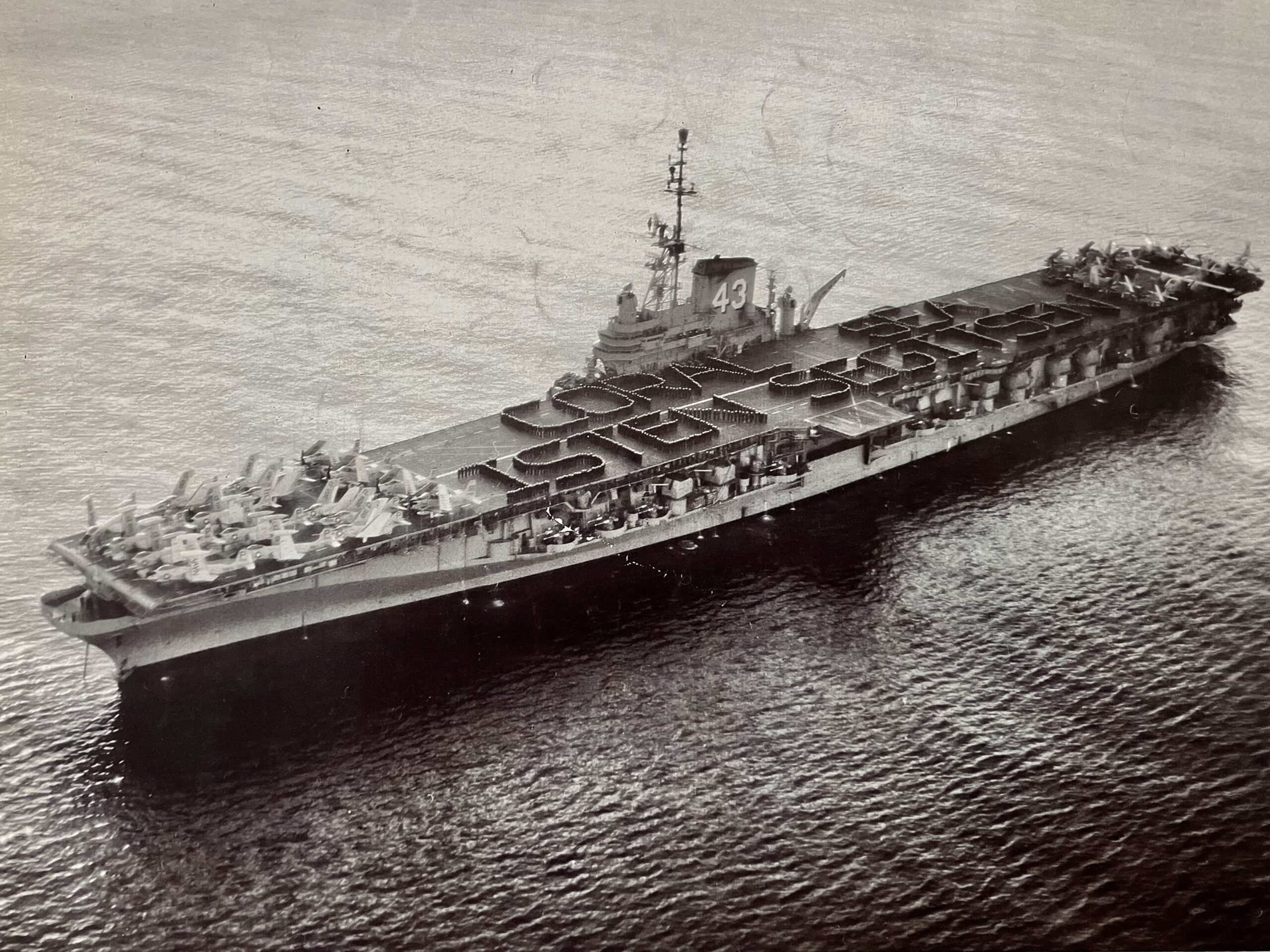
- USS Coral Sea Creative Commons Photo.
These ships participated in Cold War deterrence missions, fought in the Vietnam War, assisted during the Iran hostage crisis, and some even made it long enough to launch F/A-18 Hornets from their flight deck.
Understanding the Coral Sea
One ship, in particular, stands out. The USS Coral Sea (CV-43). She was completed too late to participate in World War II, but the carrier went on to serve for more than 40 years.
Construction of Coral Sea started in 1943. Newport News Shipbuilding and Drydock Company in Newport News, Virginia, was her birthplace.
The carrier’s keel was laid on July 10, 1944, launched on April 2, 1946, and commissioned on October 1, 1947.
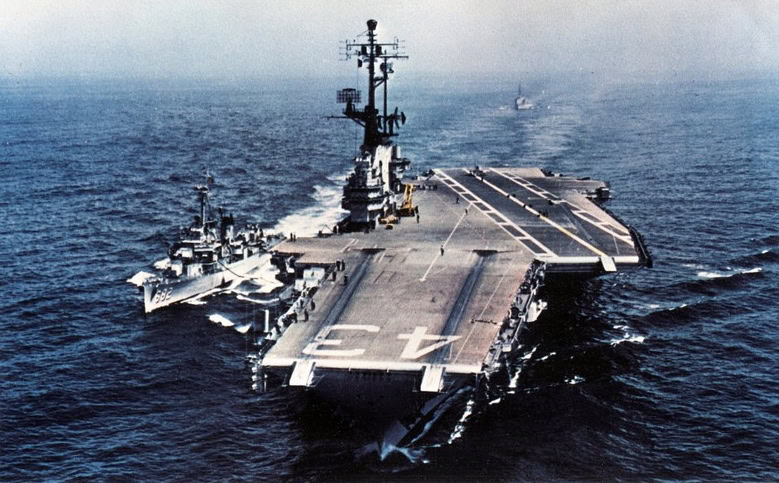
- USS Coral Sea Creative Commons Photo.
Named after the legendary Battle of the Coral Sea, which was fought by America’s then-nascent carrier force against the Imperial Japanese Navy in 1942, this carrier lived up to its namesake.
Coral Sea displaced about 45,000 tons (standard) and 60,000 tons when fully loaded.
She measured about 968 feet long, making the Coral Sea one of the largest warships in the world when commissioned and representing the culmination of American carrier design during World War II.
Midway-class aircraft carriers featured an armored flight deck with greater aircraft capacity that did not slow the ship down.
An Incredible History
The earlier Essex-class carriers lacked these features, and the Midway-class was a real improvement in that way.
Ships of the Midway-class were powered by four steam turbines that produced 212,000 shaft horsepower, which pushed the ship to speeds of about 33 knots.
Coral Sea spent its time with the US Navy’s Sixth Fleet based out of the Mediterranean in its first years.
She was repeatedly deployed to demonstrate US naval power during the early phases of the Cold War.
Coral Sea participated in numerous NATO exercises and supported America’s nuclear deterrence missions before ballistic missile submarines became the primary platform of America’s strategic deterrent during the Cold War.
In fact, Coral Sea was there during the Suez Canal Crisis. She assisted in the evacuation of American civilians from the region while remaining on station as tensions between Egypt, Britain, France, and Israel escalated.
From 1957 to 1960, the USS Coral Sea underwent significant modernization in what was known as the Navy’s SCB-110A Program.
Engineers installed an angled flight deck and steam catapults to make the launching of warplanes at sea more efficient.
They added deck-edge elevators, too. Engineers then placed an enclosed “hurricane bow” on the ship that allowed the carrier to safely operate what was at that time the newer, heavier jet planes in the Navy’s fleet.
Once her refit in 1960 was completed, Coral Sea became one of the Navy’s most advanced attack carriers. That modernization, in fact, extended the operational lifespan of the USS Coral Sea another 30 years!
She made it out of refit just in time to join the Pacific Fleet, becoming a key player at sea in the Vietnam War.
Between 1965 and 1972, the carrier completed six combat deployments to Southeast Asia.
Aircraft from the ship flew thousands of strike missions against North Vietnamese military targets; they supported ground operations, and participated in the infamous Operation Rolling Thunder.
The USS Coral Sea helped position naval mines at Haiphong Harbor as part of Operation Pocket Money, which was designed to disrupt North Vietnam’s maritime shipping routes in 1972.
The US eventually lost the Vietnam War, and by 1975, the remaining US forces in the country needed evacuation.
Operation Frequent Wind was the codename for the hasty US withdrawal from the capital of South Vietnam, Saigon. USS Coral Sea was one of the primary ships the Americans evacuated to.
Not long after the Vietnam War ended, the knock-on effects in neighboring Cambodia ensnared the USS Coral Sea.
Gone, But Not Forgotten
You see, the revolutionary Khmer Rouge government in Cambodia seized an American merchant vessel, the SS Mayaguez. Aircraft from the carrier conducted devastating airstrikes against Cambodia while US Marines landed to rescue the captured crew. This was the last US military operation of the Vietnam era.
Coral Sea was one of America’s primary warships supporting the doomed Operation Eagle Claw, which was the Carter administration’s attempt to rescue the US embassy hostages in Tehran in 1980.
From there, the Navy made Coral Sea the first aircraft carrier to deploy an air wing built around the F/A-18 Hornet strike fighter, marking the technological shift that Coral Sea was part of.
Indeed, Coral Sea has the honor of being the first Navy vessel to initially deploy the F/A-18 Hornet and the mighty AGM-88 High-Speed Anti-Radiation Missile (HARM) in combat.
That was during Operation El Dorado Canyon in 1986. By 1990, the Coral Sea, despite her hero status in the Navy, was showing her age. After more than 42 years of service, the Coral Sea highlighted the brilliance of the Midway-class aircraft carrier design.
She’s viewed today as an engineering fulcrum point in the design and development of the US Navy from the days of propeller-driven air wings on carriers to jet-powered ones.
Her 42 years of service overlap with what many consider to have been the most dynamic period in US naval history.
About the Author: Brandon J. Weichert
Brandon J. Weichert is the Senior National Security Editor at 19FortyFive.com. He also manages The Weichert Brief on Substack. Weichert also hosts “National Security Talk” on Rumble. He is the author of four bestselling national security books, the most recent of which is A Disaster of Our Own Making: How the West Lost Ukraine (Encounter Books). Follow him via Twitter/X @WeTheBrandon.