
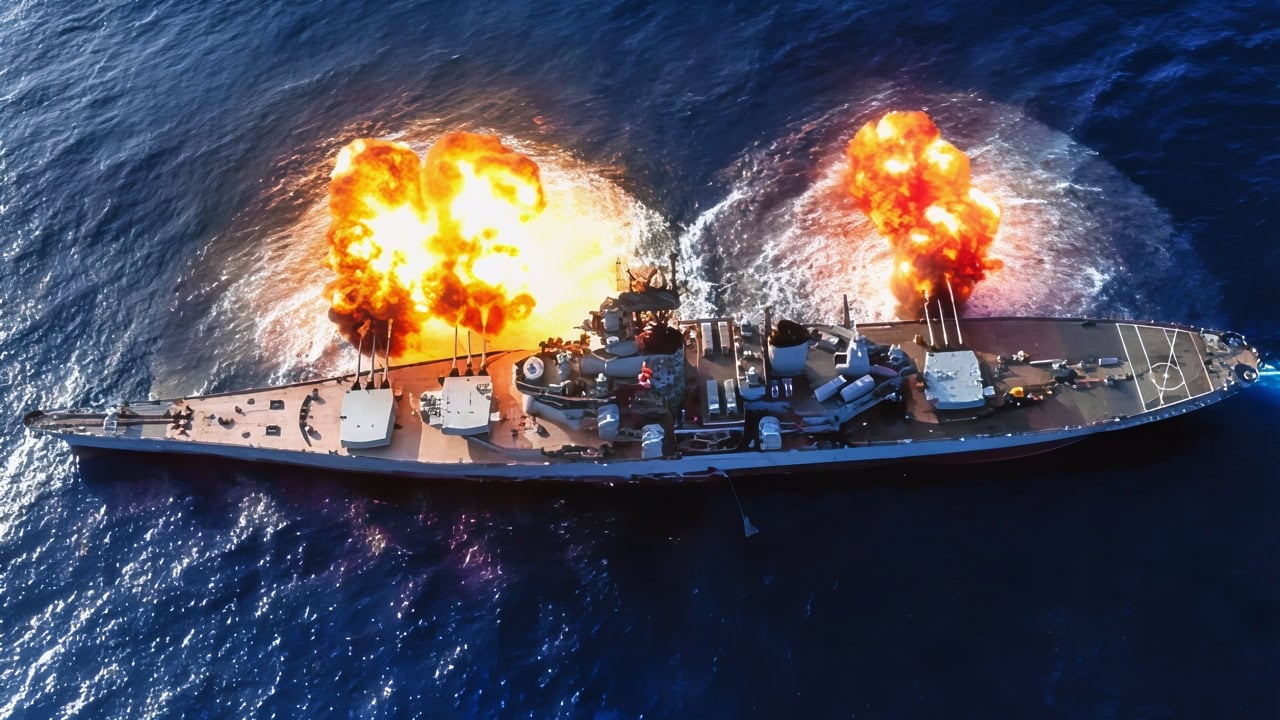
The US Navy Spent $21,500,000 to Bring USS New Jersey Back for Vietnam. She Fired 5,688 16-Inch Shells in 120 Days: On September 30, 1968, USS New Jersey opened fire near the Vietnamese Demilitarized Zone and sent 16-inch shells into communist positions for the first time since the Korean War. The only American battleship to serve in Vietnam had returned from the reserve fleet for one purpose: to deliver more naval gunfire than any cruiser or destroyer could put ashore.
The price was $21.5 million in 1967 and 1968 dollars. Philadelphia Naval Shipyard restored machinery, overhauled the guns, installed new communications and electronic-warfare equipment, and prepared a ship out of commission since August 21, 1957. Roughly $6 million of the reactivation bill paid for updated equipment.
Secretary of Defense Robert McNamara ordered a study on May 31, 1967, and approved the return of one Iowa-class battleship on August 1. New Jersey was selected because she was in the best material condition. The Navy needed heavier fire support around the DMZ, where North Vietnamese defenses made air strikes costly and bad weather limited aviation.
New Jersey recommissioned at Philadelphia on April 6, 1968. She left the shipyard on May 16, trained off California, and sailed for the western Pacific in September. Her third commission lasted less than 21 months. Her combat deployment was shorter still.
USS New Jersey Returned as a 57,000-Ton Artillery Battery
The Iowa-class had been designed to fight fast enemy capital ships, but none of the four battleships ever fired a shell at another battleship. Off Vietnam, New Jersey found a mission better suited to her weapons. Her nine 16-inch/50-caliber Mark 7 guns gave commanders a mobile heavy-artillery battery protected by armor and supplied by magazines deep inside the ship.
A high-capacity 16-inch shell weighed about 1,900 pounds and reached targets more than 20 miles inland. New Jersey also carried twenty 5-inch guns for shorter-range missions. Aircraft and ground observers corrected her salvos against bunkers, artillery positions, supply areas, caves, troop concentrations, and coastal traffic.
New Jersey reached the gunline on September 29. The next day, she fired 29 16-inch rounds near the DMZ. On October 1, reported damage included six bunkers, an anti-aircraft position, and a truck. The ship also covered the recovery of two Marines from a spotting aircraft forced down at sea.
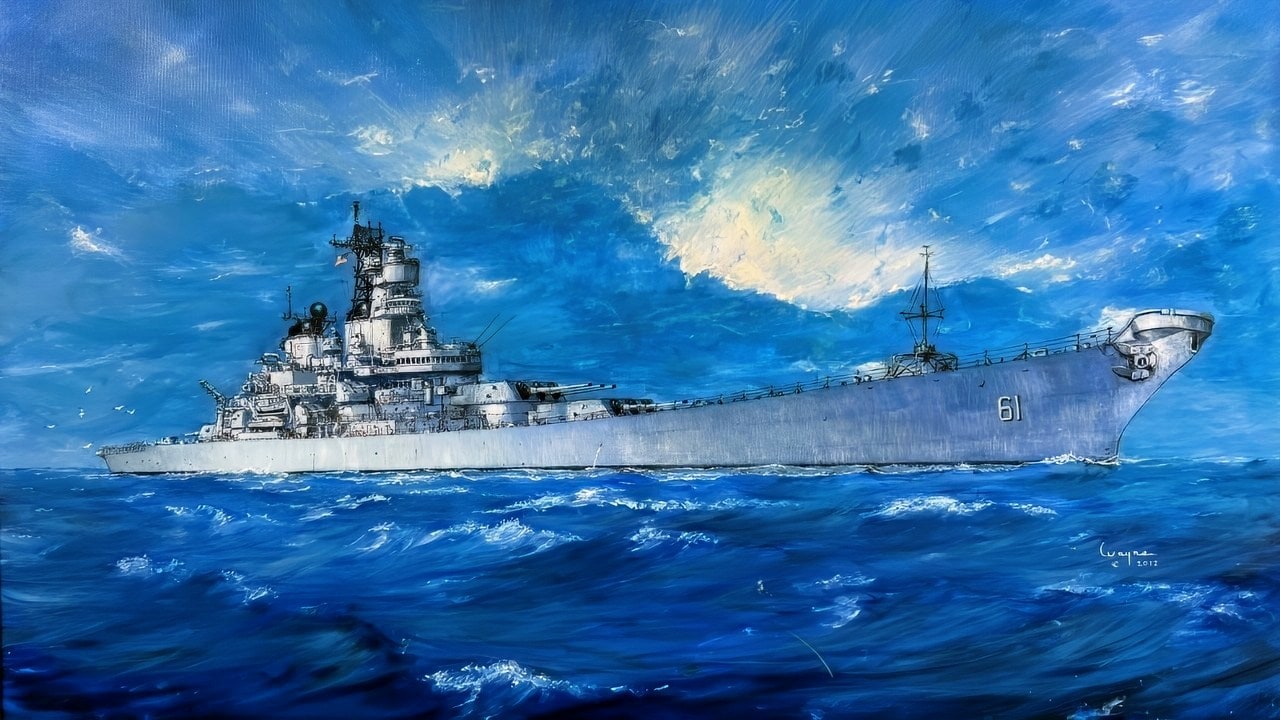
Image taken by Harry J. Kazianis aboard the USS Iowa on August 15, 2025. Image is of a painting of the USS Iowa of the Iowa-Class. USS New Jersey is also a Iowa-Class battleship.
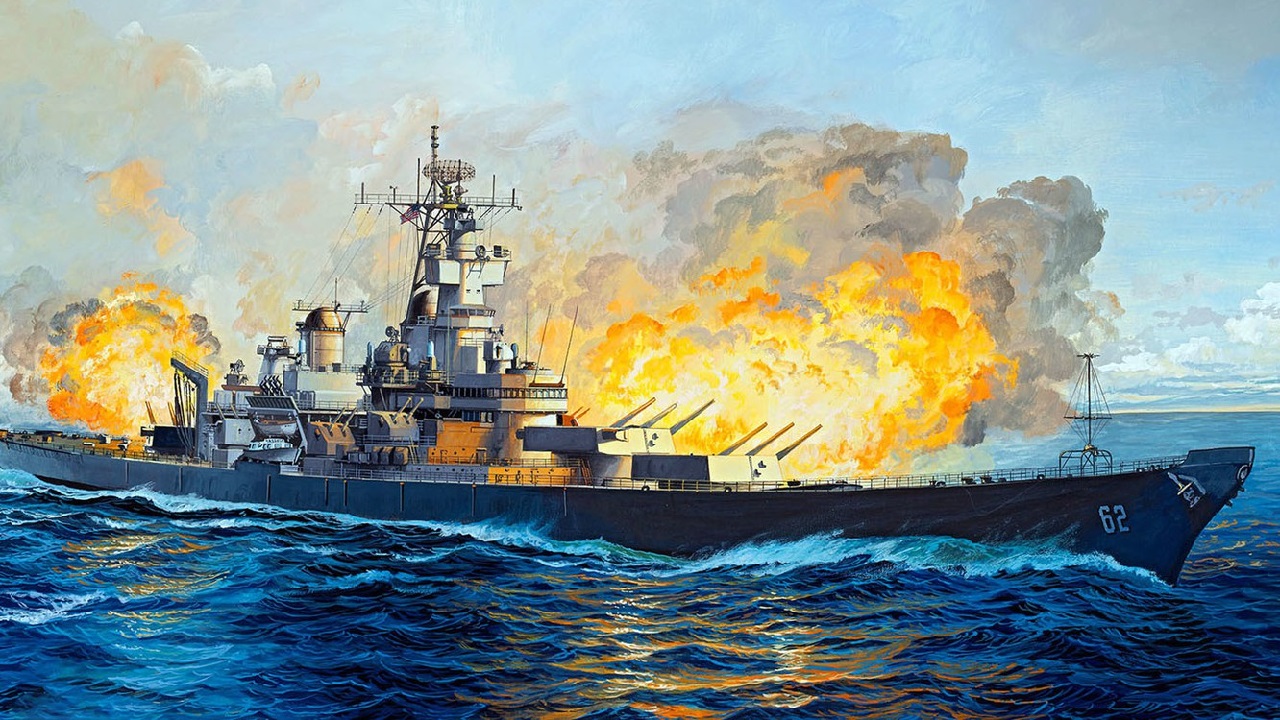
Iowa-Class Battleship USS New Jersey. Image Credit: Creative Commons.
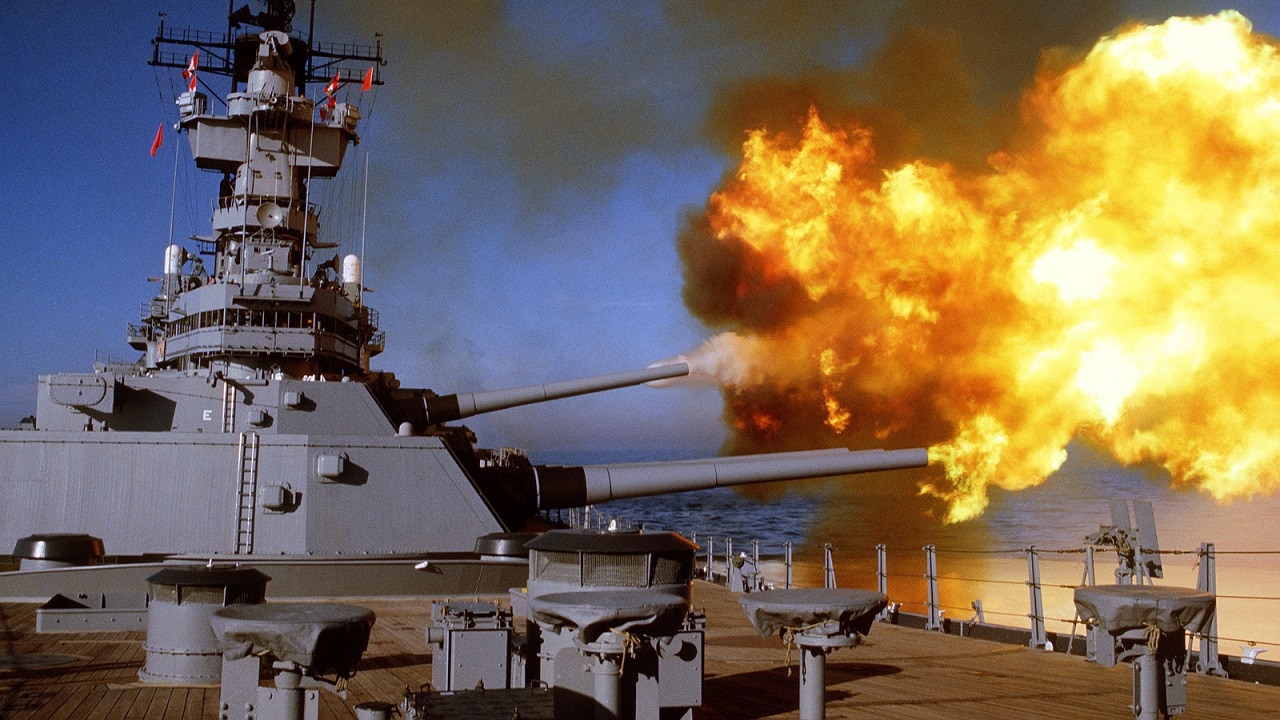
The Nos. 1 and 2 Mark 7 16-inch/50-caliber guns are fired to starboard during a main battery firing exercise aboard the battleship USS NEW JERSEY (BB-62).
The Battleship Fought Along the DMZ and North Vietnam’s Coast
On October 7, New Jersey engaged logistics craft near the Song Giang River and was credited with sinking 11. She later struck fortified caves near Vinh and fired on coastal artillery at Hon Matt Island. North Vietnamese guns answered, but their shells fell short.
President Lyndon Johnson halted attacks on North Vietnam on November 1, 1968. New Jersey shifted south of the DMZ, supporting the 1st and 3rd Marine Divisions, the 173rd Airborne Brigade, the Americal Division, the 101st Airborne Division, South Vietnamese forces, and South Korea’s 9th Infantry Division.
The largest reported mission came near Quang Ngai on November 25 and 26. Post-strike assessments credited the battleship with destroying 182 structures and 54 bunkers, heavily damaging another 93 structures, and breaking up tunnel positions. Those figures came from aerial and ground observation, not inspection by New Jersey’s crew.
New Jersey continued firing through the winter and into the Tet 69 Counteroffensive. She supported Marines near the DMZ, South Vietnamese units around Tuy Hoa, and South Korean troops near Cam Ranh Bay. Her final fire-support missions for the 3rd Marine Division ended on April 1, 1969.
USS New Jersey Fired 5,688 16-Inch Shells in 120 Days
During roughly 120 days on the firing line, New Jersey fired 5,688 rounds from her 16-inch guns and 14,891 rounds from her 5-inch battery. The combined total was 20,579 shells.
The ship received a Navy Unit Commendation and three campaign stars for the Vietnamese Counteroffensive Phase V, the Vietnamese Counteroffensive Phase VI, and the Tet 69 Counteroffensive. She never fought a traditional battleship action. Her targets were land positions, supply networks, coastal craft, and troops spread across a long shoreline.
The Navy Sent USS New Jersey Back to Reserve in 1969
New Jersey left the combat zone in April. After a North Korean MiG-21 shot down a Navy EC-121 reconnaissance aircraft over the Sea of Japan, the battleship was temporarily diverted toward Korea before reaching Long Beach on May 5. Her crew began preparing for another deployment to Vietnam.
That deployment never happened. Defense Secretary Melvin Laird placed New Jersey on the inactivation list in August as the Nixon administration reduced American forces. The Navy decommissioned her at Puget Sound Naval Shipyard on December 17, 1969, only 620 days after her recommissioning.
New Jersey stayed in the reserve fleet for the next 13 years. The Reagan administration selected her for another return during the push for a 600-ship Navy, adding Tomahawk cruise missiles, Harpoon antiship missiles, Phalanx close-in weapons, and modern electronics while retaining all nine 16-inch guns. She recommissioned at Long Beach on December 28, 1982.
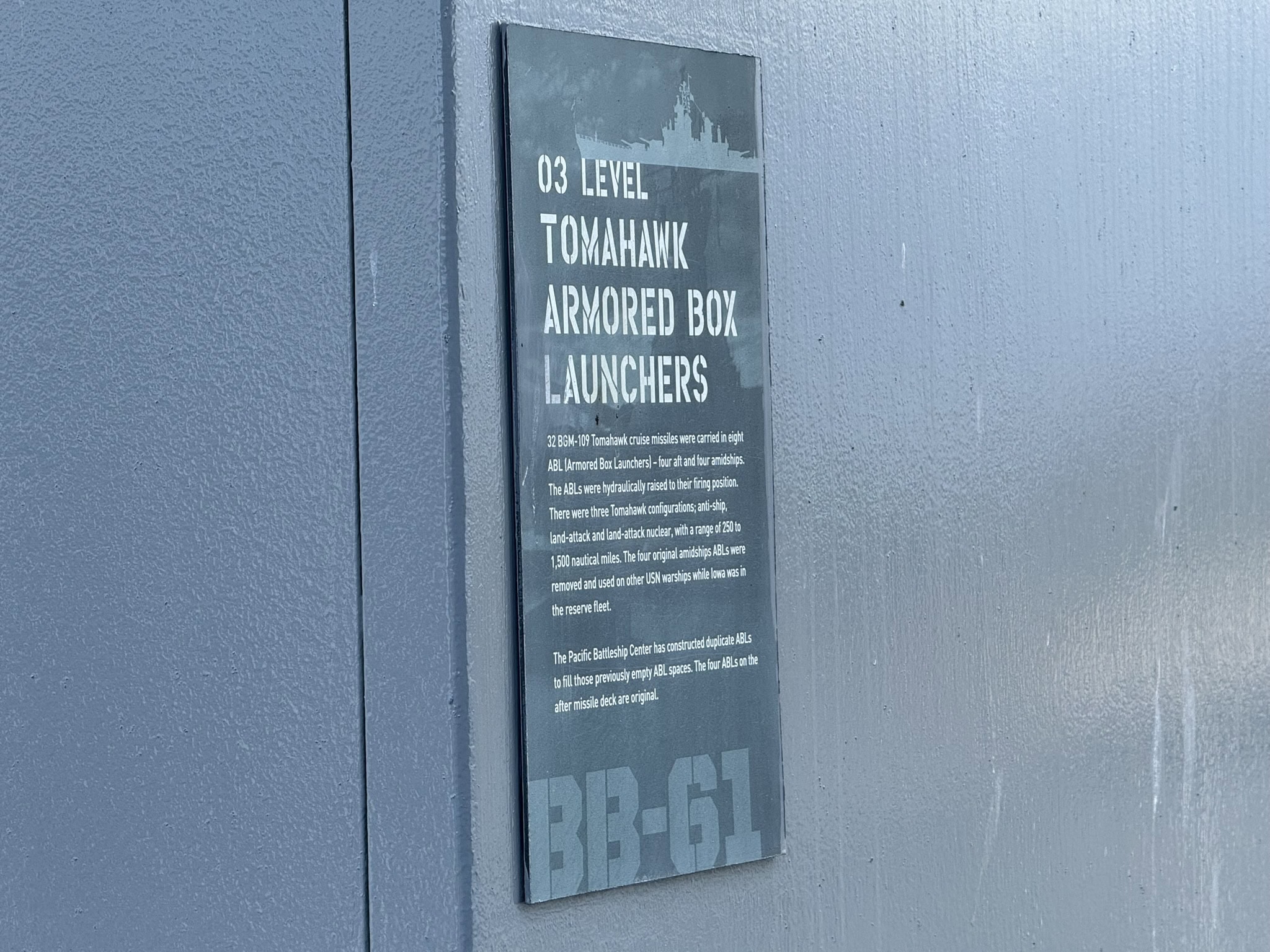
Tomahawk Box on USS Iowa. 19FortyFive.com Image from USS Iowa visit.
About the Author: Harry J. Kazianis
Harry J. Kazianis (@Grecianformula) was the former Senior Director of National Security Affairs at the Center for the National Interest, a foreign policy think tank founded by Richard Nixon and based in Washington, DC. Harry has over a decade of experience in think tanks and national security publishing. His ideas have been published in The New York Times, The Washington Post, The Wall Street Journal, CNN, and many other outlets worldwide. He has held positions at CSIS, the Heritage Foundation, the University of Nottingham, and several other institutions related to national security research and studies. He is the former Executive Editor of The National Interest and The Diplomat. He holds a master’s degree focusing on international affairs from Harvard University.

