What is the best use of a submarine in modern-day terms? You might think submarines are most useful for nuclear deterrence.
Or for conducting long-range precision strikes. Of course, multiple submarine classes around the world do those functions very well.
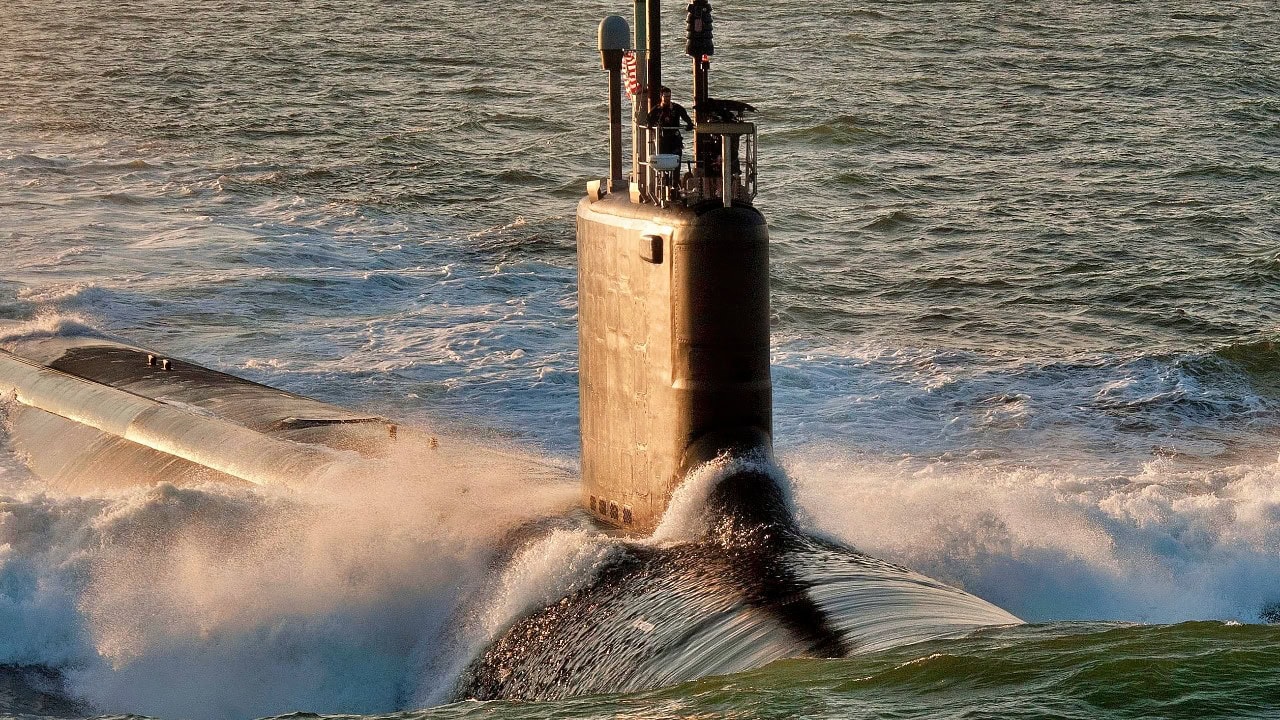
U.S. Navy Virginia-Class Submarine.
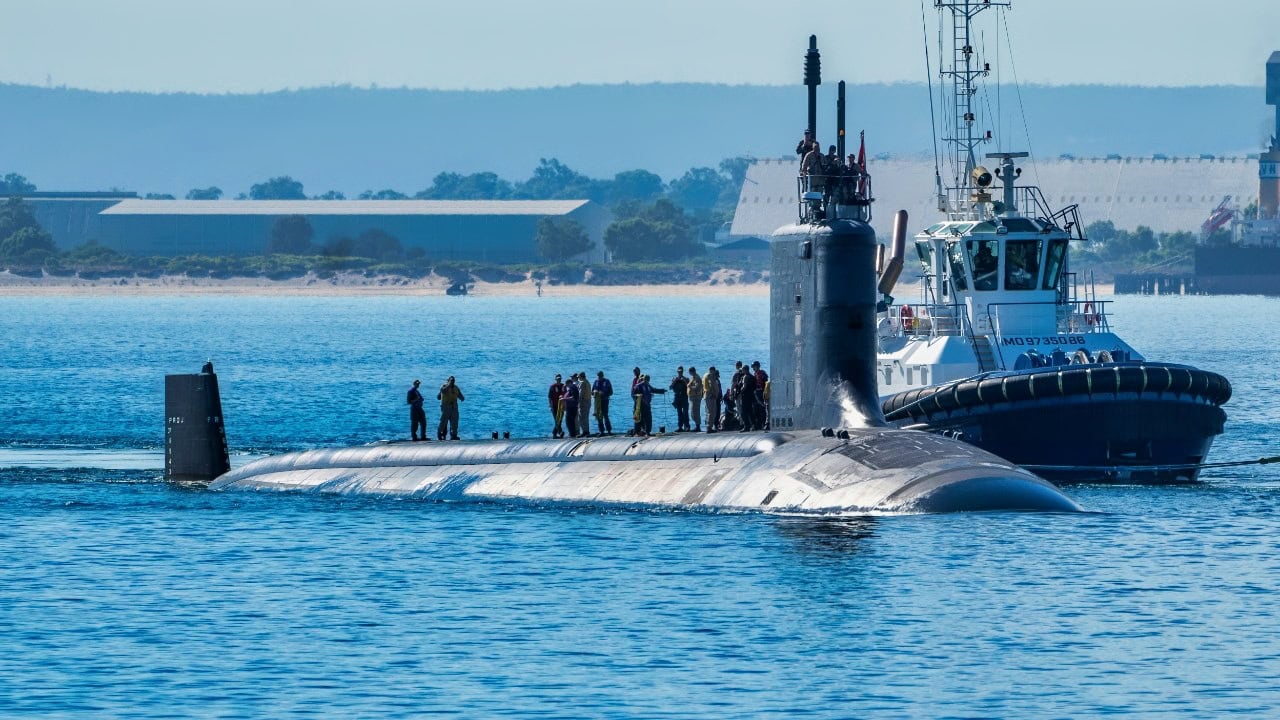
Western Australia, Australia (Feb. 25, 2025) The Virginia-class fast-attack submarine USS Minnesota (SSN 783) prepares to moor at HMAS Stirling, Western Australia, Australia, Feb. 25, 2025. Minnesota arrived in Western Australia kicking off the first of two planned U.S. fast-attack submarine visits to HMAS Stirling in 2025. Minnesota is currently on deployment supporting the U.S. 7th Fleet, the U.S. Navy’s largest forward-deployed numbered fleet, operating with allies and partners in preserving a free and open Indo-Pacific region. (U.S. Navy photo by Lt. James Caliva)
Understanding Undersea Espionage
But one of the most underappreciated–likely most important–functions of submarines is their ability to conduct seabed espionage.
Many wonderful New York Times bestselling books have been written in recent decades about the decisive role submarines played at the height of the Cold War in seabed espionage.
Today, such missions are even more important, as modern telecommunications technologies have advanced significantly since the Cold War.
While many people think of satellites when they think of global communications, they forget that undersea cables perform vital functions for the global internet and overall communications.
These systems undoubtedly provide modern efficiency and utility for the world’s interconnectedness. Yet they also form a significant strategic vulnerability that the world’s submarine forces can— and do— exploit.
As America’s submarine force transitions toward the Virginia-class attack submarine, the Navy is building a one-of-a-kind Virginia-class sub specifically designed for these highly classified seabed espionage missions (and other covert operations).
Known as a “Modified Virginia-Class Subsea and Seabed Warfare Submarine” (Mod VA SSW), this submarine will be part of the Block V Virginia-class program.
The Navy has confirmed that one Block V submarine will receive the specialized configuration, although it has not publicly identified which hull will become the seabed warfare boat.
General Dynamics Electric Boat President Kevin Graney told the press in 2022 that the company was developing a variant specifically designed to “interact with the sea floor.” Graney explained that some of the space associated with missile tubes in the Virginia Payload Module (VPM), an extension the Navy is adding to its Block V Virginia-class submarines to expand their cruise missile capacities, is being repurposed for these specialized seabed operations.
The details of the equipment the Navy intends to employ in this additional space remain classified. That mission set, however, follows a capability the Navy has maintained for decades using specially modified submarines.
An Important Legacy
Consider the most recently built Seawolf-class submarine, the USS Jimmy Carter (SSN-23). That submarine differs wildly from its sister boats because it incorporates a 100-foot Multi-Mission Platform that was inserted into the hull during construction.
This Multi-Mission Platform provides space for specialized gear, remotely operated vehicles, divers, and command-and-control capabilities that are necessary for sophisticated (and secretive) underwater operations.
The new Virginia-class variant is expected to serve as a successor to that capability. Potential missions include inspecting or manipulating objects on the seabed.
This new submarine will likely deploy unmanned underwater vehicles (UUVs). Divers will inevitably sojourn toward classified targets from the submarine.
It will essentially be an undersea intelligence collection system used to target undersea communications and other critical infrastructure for exploitation.
Thus, the Navy is being given a purpose-built platform for missions that attack submarines are not optimized to conduct.
The Navy has disclosed little about the boat’s final design, its construction schedule, or the eventual commissioning date. Even its identity remains classified.
What is known about the Mod VA SSW being built is that she will be unique in the Virginia-class fleet that’s being (slowly) built.
Rather than adding missile capacity, the Navy is using the Block V architecture to create its next dedicated platform for operations in one of the least visible areas of modern naval competition: the seabed.
Being Competitive Today
With the US and China struggling through deteriorating relations, as the competition with Russia intensifies, submarines like this specialized Virginia-class will represent a vital tool in America’s undersea toolkit for countering its foes and learning their secrets.
Of course, both Russia and China either have or are developing similar capabilities. And China certainly can build many more versions of such a submarine.
But the fact that America has kept this new submarine such a secret since its original announcement in 2022 indicates how important a system this is to the Pentagon.
The age of undersea espionage has reached a new stage. America must be competitive in this domain if it is to survive the coming geopolitical stage.
About the Author: Brandon J. Weichert
Brandon J. Weichert is the Senior National Security Editor at 19FortyFive.com. He also manages The Weichert Brief on Substack. Weichert also hosts “National Security Talk” on Rumble. He is the author of four bestselling national security books, the most recent of which is A Disaster of Our Own Making: How the West Lost Ukraine (Encounter Books). Follow him via Twitter/X @WeTheBrandon.