
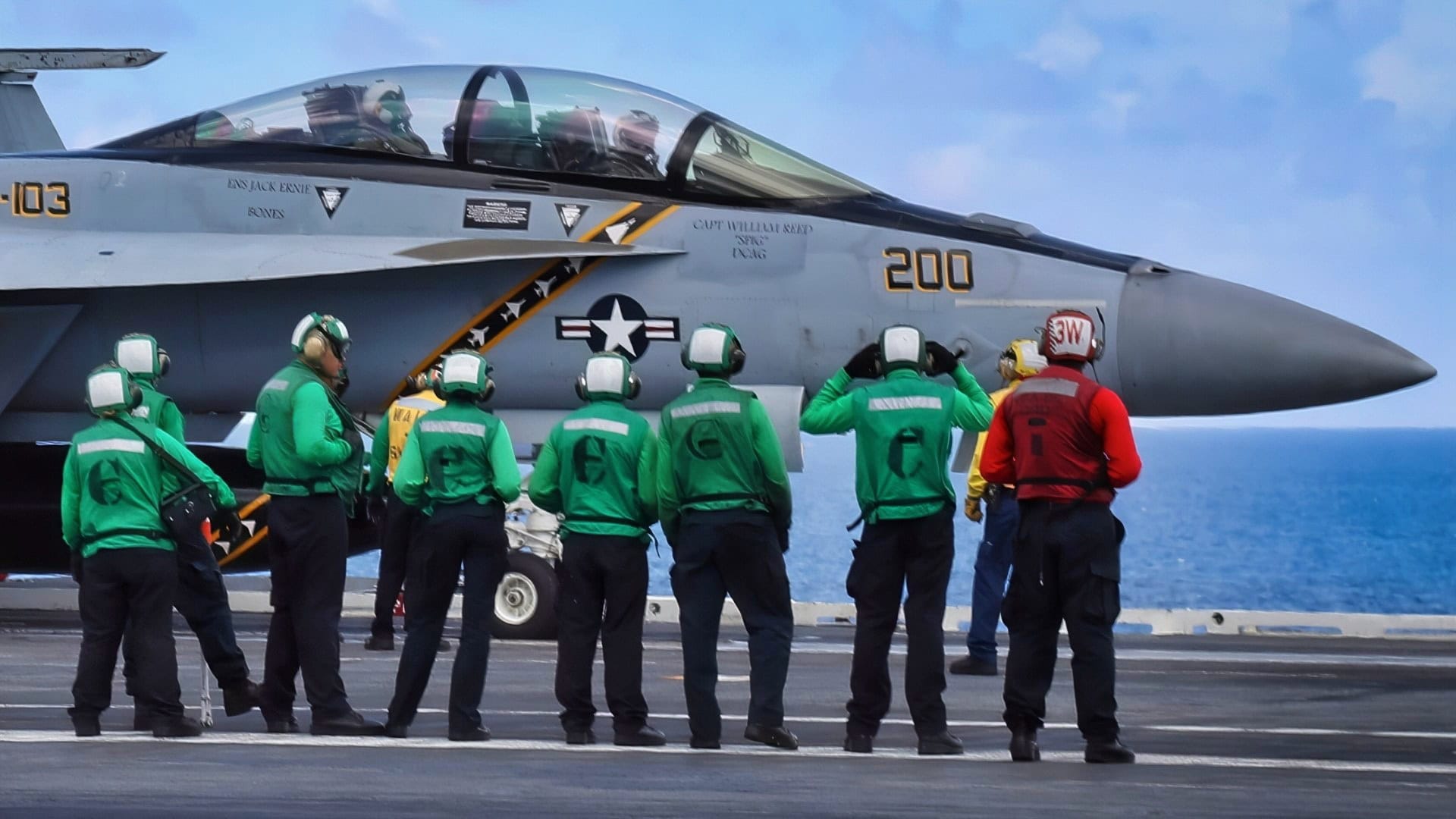
The F/A-18 Super Hornet served as a high-tempo, multirole workhorse during Operation Epic Fury, deploying from US aircraft carriers in and around the Arabian Sea and Gulf of Oman.
While the F/A-18 did not engage in conventional fighter-against-fighter engagements, the jet’s use illustrates what modern naval air warfare increasingly looks like.
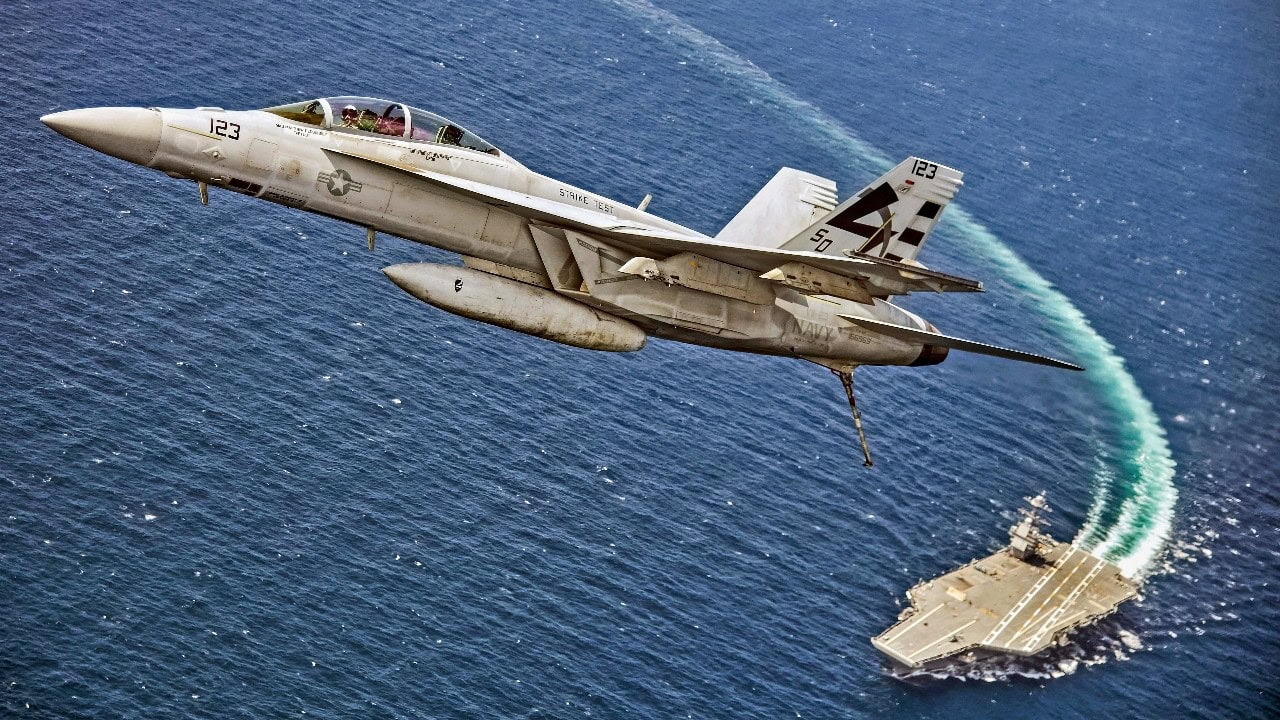
Super Hornet Navy Fighter. Image Credit: Creative Commons.
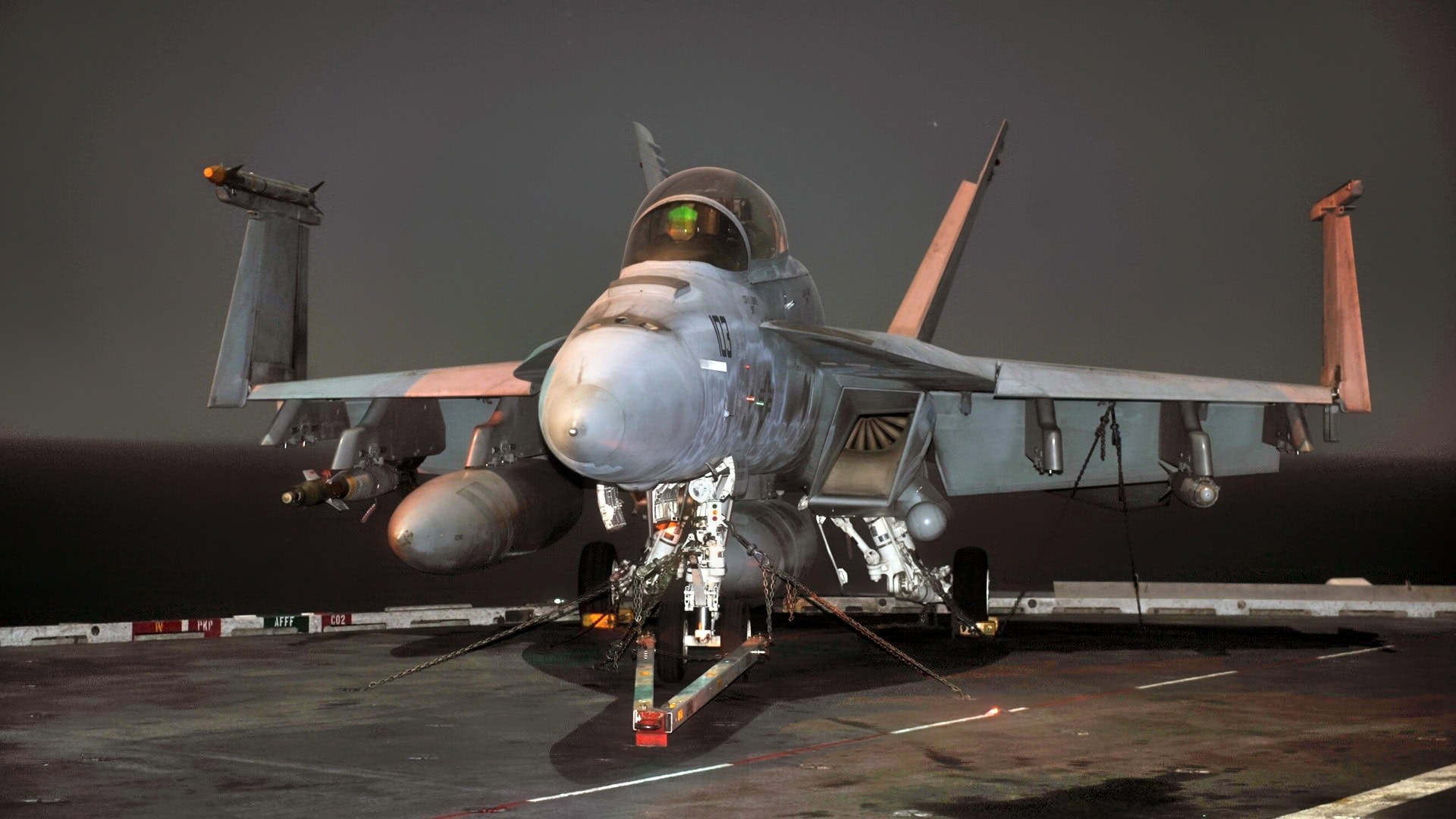
FA-18 Super Hornet. Image Credit: Creative Commons.
Namely, the F/A-18 was used to intercept inexpensive drones and cruise missiles, strike targets ashore, and protect the carrier force—all while maintaining an exhausting sortie rate.
This usage all plays into the F/A-18’s traditional strengths; it isn’t stealthy or flashy, but it boasts a powerful radar, varied weapons compatibility, and a sizable external payload.
Yet at the same time, Epic Fury exposed the jet’s shortcomings and how a naval aircraft’s ultimate effectiveness depends on the carrier, tankers, weapons, and the broader naval air ecosystem.
Drone Hunter
One of the F/A-18’s newer and more vital roles was defending naval forces against Iranian one-way attack drones and other airborne threats.
Relying on the AN/APG-79 AESA radar, designed to track multiple targets while resisting electronic interference, the F/A-18 offers the carrier strike group considerable utility as a defensive screen.
Naturally, the jet can intercept threats farther from the ships than destroyers or cruisers, giving the carrier strike group a far-reaching defensive layer.
The F/A-18 is effective in large part thanks to wide-ranging weapons compatibility; it can carry AIM-120 AMRAAM and AIM-9X Sidewinder air-to-air missiles, plus its internal 20mm M61A2 Vulcan cannon.
But Iran also highlighted an unfortunate economic problem: using a fourth-generation fighter jet to fire sophisticated air-to-air missiles at relatively cheap drones creates a cost asymmetry that eventually becomes unsustainable and harmful.
Of course, using guns at close range can conserve missiles, providing a cheaper intercept option, but that requires a proximity that isn’t always ideal.
Traditional Strike Role
While the F/A-18 was increasingly called upon to intercept modern drone threats, the jet was still used in its more traditional strike role.
F/A-18s were used during Epic Fury to attack Iranian military infrastructure using weapons including JDAM precision-guided bombs and AGM-154 Joint Standoff Weapons.
Here, the F/A-18 proved enduringly useful—a testament to the platform’s long-standing multirole versatility.
External carriage gives the F/A-18 considerably more flexibility than a stealth fighter, which is restricted to internal weapons when it needs to maintain its low observability.
The downside, naturally, is that against modern air defense systems, the F/A-18’s lack of stealth becomes a vulnerability.
Fortunately, standoff weapons and electronic warfare support mean the platform doesn’t have to penetrate dense air defenses on its own.
Carrier Vulnerabilities
The F/A-18’s biggest vulnerability, arguably, is the carrier itself. F/A-18s operating in theater ultimately have to return to a carrier, which makes the floating airfield itself an enormously valuable target.
For generations, the US aircraft carrier operated with impunity, beyond the reach of adversaries.
But today, threats from anti-ship ballistic and cruise missiles are pressuring carriers to operate farther offshore.
And these greater distances create a cascade of problems: longer fighter missions, which require greater fuel consumption, which requires more dependence on aerial refueling, which means less time available over target, and ultimately greater strain on crews and aircraft.
Iran didn’t necessarily need to shoot down F/A-18s or sink aircraft carriers to reduce the effectiveness of the entire squadron.
Simply forcing the carrier to operate from farther away can impose substantial operational costs on its own.
Sustained carrier combat also mechanically punishes aircraft.
Every carrier sortie involves stressful catapult launches, arrested landings, saltwater exposure, and substantial structural loads.
These events produce wear and tear over time that must be accounted for in the short term through maintenance cycles and in the long term through aircraft replacement.
As F/A-18 production slows and the Navy is increasingly forced to rely on existing F/A-18 airframes, this creates a potential vulnerability.
Overall, however, when the F/A-18 is evaluated in isolation, the jet performed admirably in Epic Fury, validating its reason for existing: to do everything well enough. The jet defended the fleet and conducted strike missions.
About the Author: Harrison Kass
Harrison Kass is a writer and attorney focused on national security, technology, and political culture. His work has appeared in Tablet, City Journal, The Hill, The Spectator, and The Cipher Brief. He holds a JD from the University of Oregon and a master’s in Global & Joint Program Studies from NYU. More at harrisonkass.com.