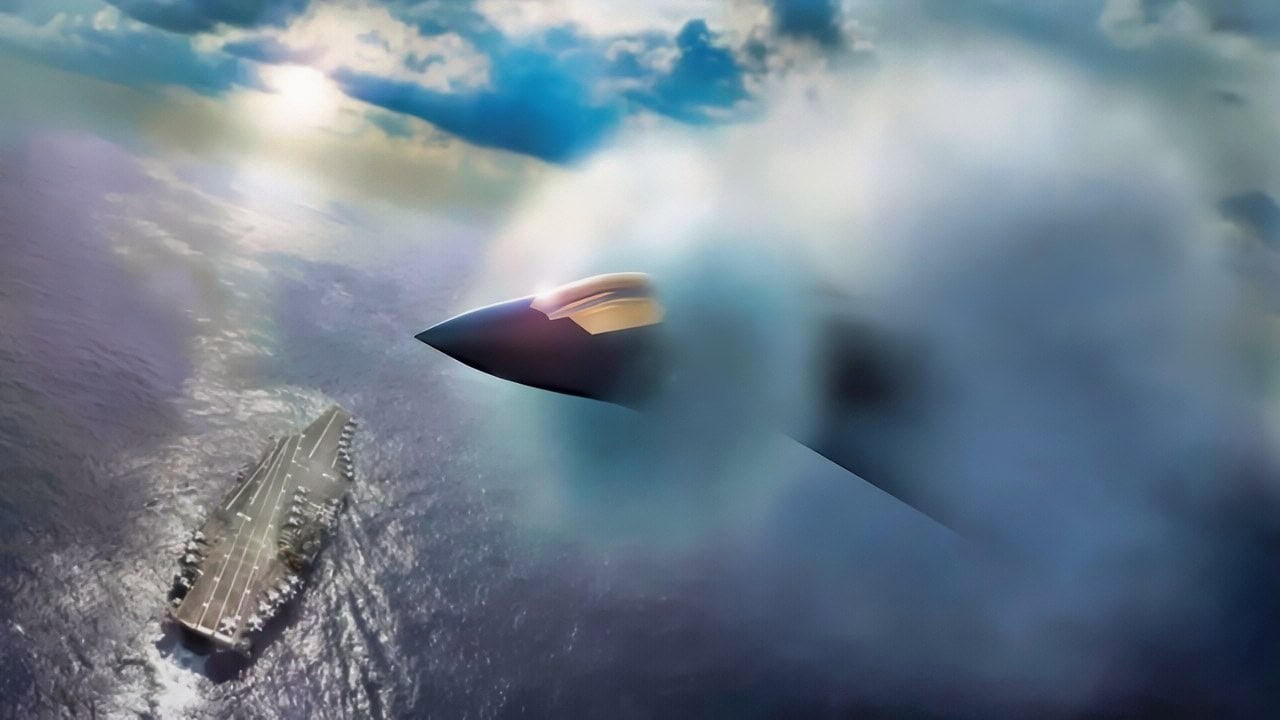
With the United States military requesting a nearly $1.5 trillion defense budget for the next fiscal year, as well as multiple requests for shorter-term supplemental funding, the Navy is now moving forward with its sixth-generation warplane, the F/A-XX.
Background on F/A-XX
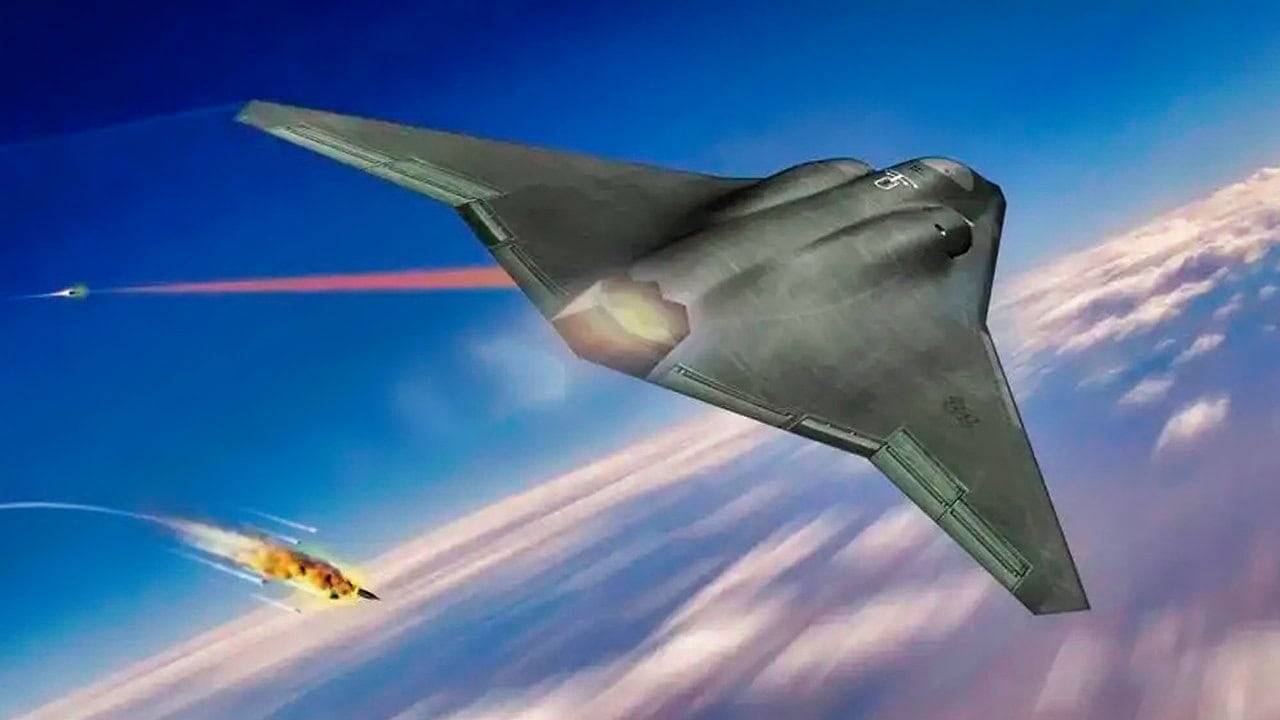
(ILLUSTRATION) — A Northrop Grumman illustration depicts a notional sixth-generation fighter in action.
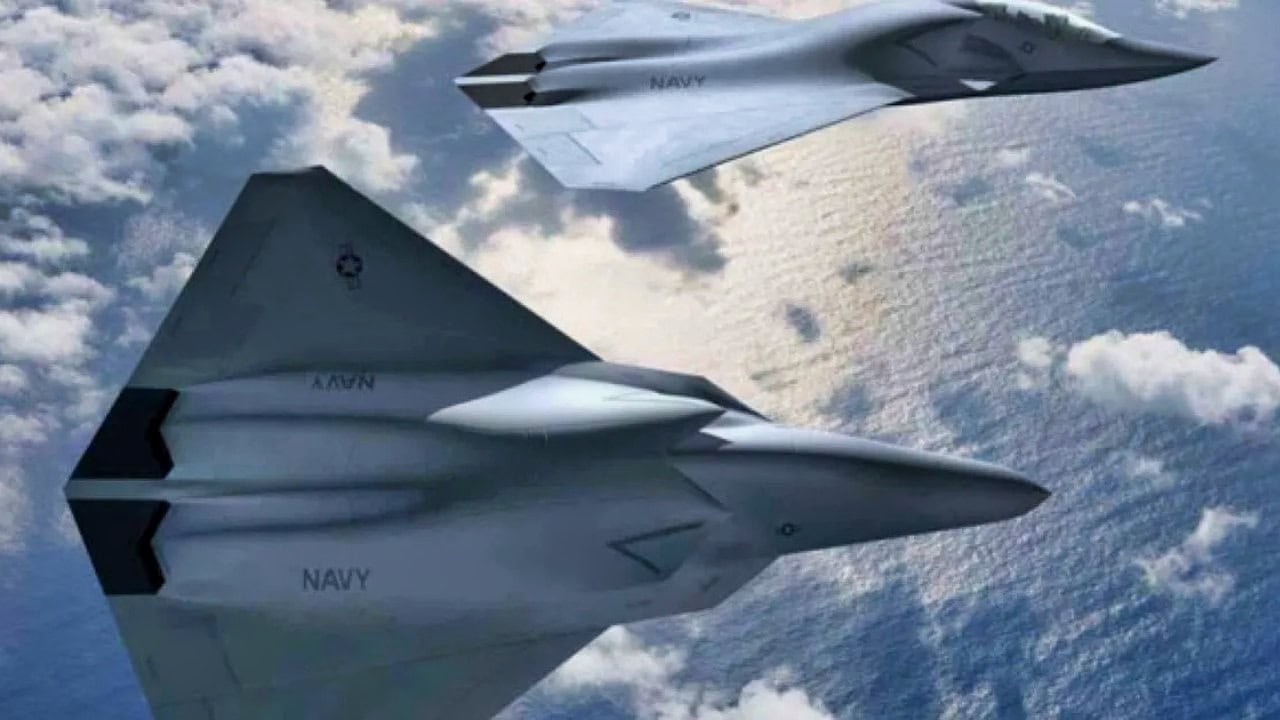
F/A-XX Fighter. Image Credit: Boeing.
The F/A-XX sixth-generation warplane program faces a pivotal inflection point, with both Boeing and Northrop Grumman competing for the contract to build the new warplane that will replace the iconic fourth-generation F/A-18E/F Super Hornet as the Navy’s primary carrier-based warplane (it will also replace the EA-18G Growlers).
The classified warplane is expected to provide greater range, stealth, and sensing capabilities than current fighters–including the vaunted F-35C Lightning II fifth-generation multirole stealth warplane.
In fact, the F/A-XX is slated to operate in mixed fleets, as these planes will manage swarms of unmanned aircraft that are part of the Navy’s larger Next Generation Air Dominance “system of systems.”
Earlier this year, in April, Chief of Naval Operations Adm. Daryl Caudle told reporters that the Navy anticipates making a final decision on which of the two aforementioned defense firms will build the F/A-XX in August.
After the maritime branch makes that decision, the F/A-XX would enter the engineering and manufacturing development phase (after roughly a year of delays and uncertainty over whether the Pentagon would continue the program due to budgetary constraints that have now effectively been lifted).
How the Selection Process Works
Lockheed Martin, which makes the F-35, was knocked out of the bidding war with Northrop and Boeing in 2025. That’s because, according to experts, the proposed Lockheed design failed to meet the Navy’s exacting standards.
On a related note, though, we know that the Trump administration ultimately went with Boeing to make the Air Force’s sixth-generation warplane because they feared that one of America’s major aerospace defense contractors was losing capacity after Lockheed had been selected to build America’s fifth-generation planes–the F-22 and F-35–decades ago.
In fact, Lockheed was selected to do those planes 30 years ago partly because Washington feared that Lockheed was losing capacity to build such planes to Boeing and the other aerospace defense contractors at that time.
So, the Navy may select Boeing’s model to ensure greater overlap with the Air Force (and the supply chain).
Then again, they may go with Northrop to maintain their capacity.
Interestingly, Northrop is clearly preparing for the competition’s next phase, as the firm has opened a new engineering facility for advanced sixth-generation aircraft development, adding classified laboratories and secure engineering capacity as the Navy’s decision approaches.
While Northrop hasn’t built a warplane in a while, it is known for its stealth bombers, such as the B-2 Spirit and the new B-21 Raider.
Northrop has released promotional imagery suggesting a tailless, low-observable F/A-XX concept (although actual design and most performance specifications remain highly classified).
How the Budget Is Influencing the F/A-XX Development
Speaking of the Air Force’s F-47, Navy officials worried that they might not get the F/A-XX because the Trump administration decided to go forward with the F-47 for the Air Force. Pentagon officials fretted over the strain on finite resources, especially with the Trump administration’s 2026 budget clearly prioritizing the F-47’s construction.
It was Congress, in fact, that demanded the development of the F/A-XX continue apace.
Whereas the Trump budget requested only $74 million for the proposed F/A-XX, Congress appropriated $972 million for the project’s research and development phase.
This year’s budget proposal for the F/A-XX is not as extravagant as what the Navy got last year, thanks to the program’s supporters in Congress.
Still, the program is farther along than it was last year, and there is far more support from both lawmakers and the White House this year than there was in the first year of Trump’s second non-consecutive term.
The F/A-XX is expected to enter service in the 2030s, although the earlier delays have increased pressure on that schedule.
Super Hornets are expected to remain in service well into the 2040s, meaning the F/A-XX would gradually replace them rather than trigger an immediate fleet-wide transition.
If the Navy keeps the schedule proposed by Caudle in April of this year, the service should pick its F/A-XX contractor this month, ending the prolonged funding and acquisition dispute and beginning full-scale development of the Navy’s first sixth-generation carrier fighter.
About the Author: Brandon J. Weichert
Brandon J. Weichert is the Senior National Security Editor at 19FortyFive.com. He also manages The Weichert Brief on Substack. Weichert also hosts “National Security Talk” on Rumble. He is the author of four bestselling national security books, the most recent of which is A Disaster of Our Own Making: How the West Lost Ukraine (Encounter Books). Follow him via Twitter/X @WeTheBrandon.