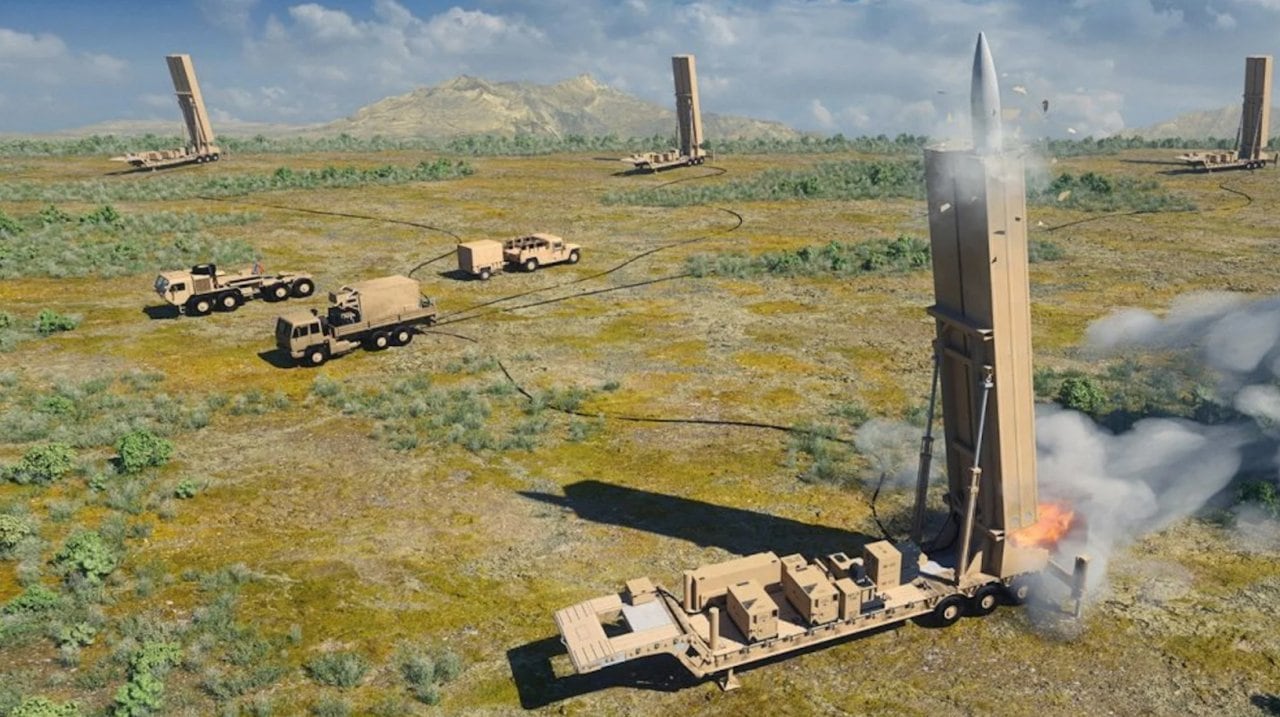
Meet the Hypersonic Dark Eagle: The Pentagon has long known it has fallen behind in the race for usable, reliable hypersonic weapons.
As the Ukraine War and the Iran War continue, and US rivals–such as Russia–demonstrate a real hypersonic weapons capability, Washington is racing to fill the gap.
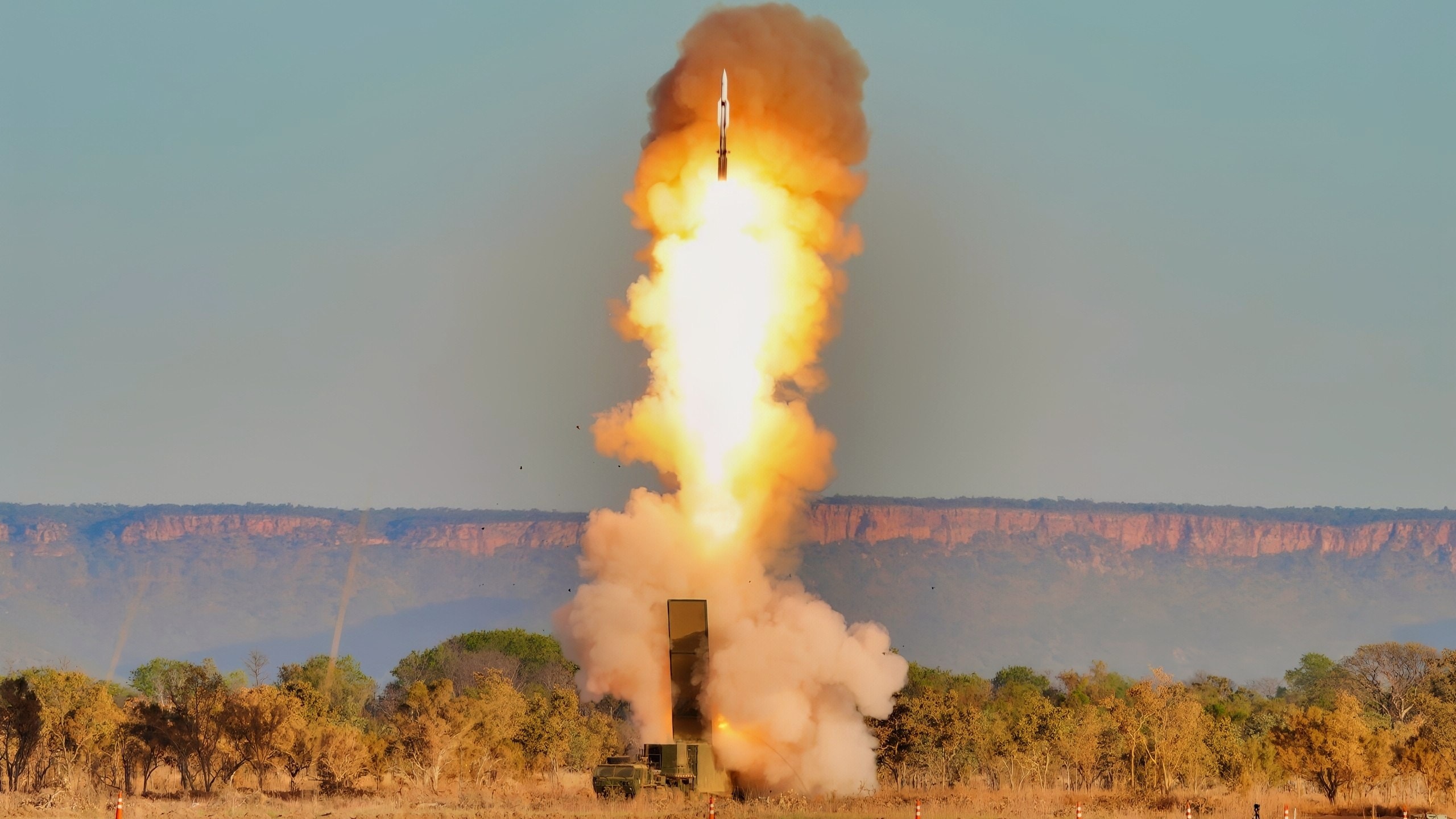
The Typhon Missile: Why the U.S. is Turning the Philippines into a launchpad. The successful strike validated combined joint targeting and command-and-control interoperability between 3MDTF and combined-joint forces, highlighting the strength of the Australia-U.S. Alliance and the ability to deploy advanced, land-based maritime strike capabilities in support of regional security. (U.S. Army photo by Sgt. Perla Alfaro)
DARPA is already trying to leapfrog American rivals with its proposed hypersonic cruise missile. But that’s years away.
The Air Force is currently testing a hypersonic weapon. The Navy is working on one, too. But the United States Army possesses the most promising system of the five branches of the United States Armed Forces thus far.
The Dark Eagle Flies
It’s known as Dark Eagle (or the Long-Range Hypersonic Weapon, LRHW), and it is moving from a long-delayed development program toward operational status as a long-range strike weapon.
If the system works as advertised, it will give ground forces a conventional missile capable of reaching targets more than 1,700 miles away at hypersonic speeds.
LRHW combines a road-mobile launcher with a two-stage rocket booster (and a maneuverable Common Hypersonic Glide Body).
Big Green envisions its new Dark Eagle striking high-value, time-sensitive (and heavily fortified) targets far away.
Those targets could include air-defense systems, command-and-control nodes, missile launchers, and other important nodes supporting an enemy’s war effort.
The idea would be to strike suddenly and from beyond the range of that enemy’s counterstrike capability.

US Army Tank. Image Credit: Creative Commons.
What makes the Dark Eagle such an important offensive system is that it does not operate like a conventional ballistic missile.
A two-stage booster accelerates the Common Hypersonic Glide Body to extreme speed and altitude. After separation from the booster, the glide body descends toward its target while maneuvering through the atmosphere at more than Mach 5.
And that maneuverability is really what makes Dark Eagle so key for the Army’s future warfare prospects.
By flying along unpredictable paths, conventional anti-missile defenses cannot effectively detect, target, and destroy the incoming Dark Eagle before the hypersonic weapon hits its intended target.
Plus, operating at hypersonic velocities means that the Dark Eagle can cover enormous distances in minutes rather than hours. That timing disfavors conventional defenses against a Dark Eagle strike.
Lockheed Martin is the lead integrator for the Dark Eagle, a program jointly developed by the Army and the Navy.
Northrop Grumman is helping develop the missile booster.
Dynetics, a subsidiary of Leidos, is producing the Common Hypersonic Glide Body–a design that can be traced back to Sandia National Laboratories.
The Navy is incorporating this design into the maritime branch’s Conventional Prompt Strike (CPS) program.
Back in March of this year, the Army awarded $2.7 billion covering the continued development and production of Dark Eagle.
The Army wants one missile per month, with plans to increase missile production to two per month.
That seems low, especially considering how advanced Russian, Chinese, and even Iranian production on similar systems is. But it is better than no production at all.
A New System With Entirely New Needs
Yet, the Army has struggled to develop this project. And cost remains a significant inhibitor.
Dark Eagle’s purpose is not to replace cheaper cruise missiles or shorter-range Army weapons.
It is meant to hit a smaller number of important targets where range, speed, and penetration matter more than anything else.
This system represents a break with previous Army systems because its range is so great.
In fact, operational control for this system is unusual: the United States Strategic Command will manage the weapon — and that’s expressly because of the reach of the Dark Eagle.
So, the Americans are far behind their adversaries in deploying hypersonic weapons. It is better than nothing, though.
And the Army, with the help of the Navy, has a working system that is slowly coming online in ways that might allow the United States to maintain some combat capability in the hypersonic domain, which it otherwise lacks. Whether it can be scaled is another matter entirely.
About the Author: Brandon J. Weichert
Brandon J. Weichert is the Senior National Security Editor at 19FortyFive.com. He also manages The Weichert Brief on Substack. Weichert also hosts “National Security Talk” on Rumble. He is the author of four bestselling national security books, the most recent of which is A Disaster of Our Own Making: How the West Lost Ukraine (Encounter Books). Follow him via Twitter/X @WeTheBrandon.