Earlier this week, the U.S. Navy retired the USS San Juan, one of the Navy’s Los Angeles-class submarines. The submarine had been in service for nearly forty years.
“From the day I assumed command, the mission I set forth before this crew was clear: to remain ready, willing and able in every task and challenge we were called upon to meet,” said Captain Justin Hoff, the USS San Juan’s last commanding officer. “Through steadfast dedication, professionalism, sacrifice and pride, the crew of San Juan have fulfilled that mission with distinction.”

Los Angeles-Class Submarine. Image Credit: Creative Commons.
The United States Navy is retiring its Los Angeles-class attack submarines because they are reaching the end of their useful service lives, generally after about 35 to 40 years, and keeping the oldest boats operational increasingly competes for scarce shipyard capacity, funding, and the skilled workers needed to build newer submarines.
The U.S. Navy’s 2026 decision to inactivate the USS Boise, for example, explicitly cited redirecting personnel and resources toward Virginia- and Columbia-class construction and fleet readiness.
The Los Angeles-class
The Los Angeles-class was the mainstay of the Cold War American Navy. 62 boats were built between 1970 and 1990, with the first, the USS Los Angeles, entering service in 1976 and the final boat entering service in 1996, and built by America’s two submarine builders: General Dynamics Electric Boat and Newport News.
The primary threat they were to counter was the Soviet Navy’s submarine fleet, particularly its ballistic-missile submarines and increasingly capable attack submarines.
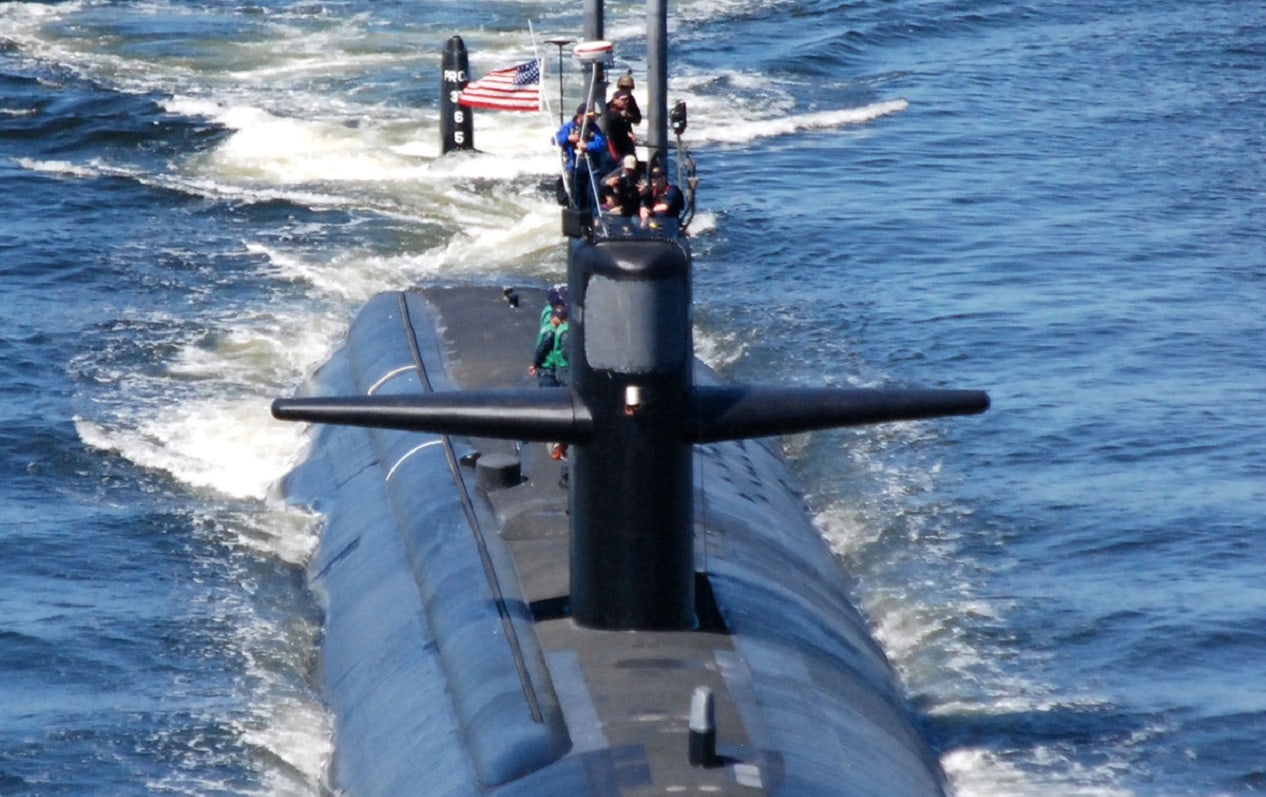
Los Angeles-Class Attack Submarine. Image Credit: Creative Commons.
The basic concept was fairly straightforward: use a very quiet, fast nuclear-powered submarine to hunt enemy submarines, protect U.S. Navy carrier groups, conduct surveillance, and operate for extended periods of time under the Arctic ice and in other contested waters.
Compared to the preceding Sturgeon-class, this was a hugely significant upgrade in speed and acoustics.
What makes the Los Angeles-class particularly noteworthy is the class’s ability to bridge the post-Cold War divide.
Though the class began life primarily as a hunter of Soviet submarines, it ended up becoming one of the United States’ most versatile platforms for conventional precision strike, intelligence collection, and special operations — all reasons why the class has stuck around for so long. But despite the class’s notable achievements, it is on the way out toward retirement and is gradually giving way to a newer, more capable class of submarines.
The Long Road to Retirement
The direct replacement for the Los Angeles-class is the Virginia-class. That newer submarine provides broadly the same core SSN missions — anti-submarine warfare, intelligence and surveillance, strike, and special operations — but with significantly newer sensors, quieter operations, improved capability in the littorals, and a design intended to accept upgrades more readily.
The Navy explains that the Virginia-class will replace the Los Angeles-class as those hulls retire.
An SSN is a particularly difficult platform to substitute. Unmanned undersea vehicles, P-8 aircraft, surface ships, and other allied submarines can cover parts of the mission set, but they cannot fully replicate the combination of stealth, endurance, mobility, and weapons capacity that an American SSN provides.
There is, however, a risk to readiness created by the retirement of the Los Angeles-class. The problem is that Virginia-class production and maintenance have not kept pace with the rate at which older SSNs are aging and retiring. Submarine construction faces workforce, supplier, infrastructure, and schedule problems, and the Navy is not investing tens of billions of dollars to expand production and the submarine defense industrial base.
The transition from the Los Angeles-class to the Virginia-class is not a clean, one-to-one exchange. The U.S. Navy can gain capability per submarine while still temporarily losing numbers and available deployed boats.
That is especially important because the SSN fleet is already heavily tasked, and China is expanding its own undersea forces. The U.S. Navy is essentially accepting near-term capacity risk to avoid a potentially larger future problem: keeping the aging Los Angeles-class submarines afloat at the expense of building and maintaining the fleet of newer, more capable Virginia-class submarines.
America’s submarine builders currently produce about 1.1 to 1.2 submarines per year, a number that will have to increase to around 2.33 submarines per year if commitments to the United States Navy, as well as the British Royal Navy and the Royal Australian Navy, are to be met. Under the auspices of the AUKUS submarine technology-sharing agreement among the three, many more submarines will need to be built per annum in the future, and maintaining the Los Angeles-class risks those production timelines.
About the Author: Caleb Larson
Caleb Larson is an American multiformat journalist based in Berlin, Germany. His work covers the intersection of conflict and society, focusing on American foreign policy and European security. He has reported from Germany, Russia, and the United States. Most recently, he covered the war in Ukraine, reporting extensively on the war’s shifting battle lines from Donbas and writing on the war’s civilian and humanitarian toll. Previously, he worked as a Defense Reporter for POLITICO Europe. You can follow his latest work on X.