Someone on social media quipped recently that Donald Trump has always fancied himself as not just a builder, but a designer, too.
The punchline to that, of course, is that much of Trump’s style and taste are horrendous (I mean, how much fake gold can one really have in their lives and on their walls?)
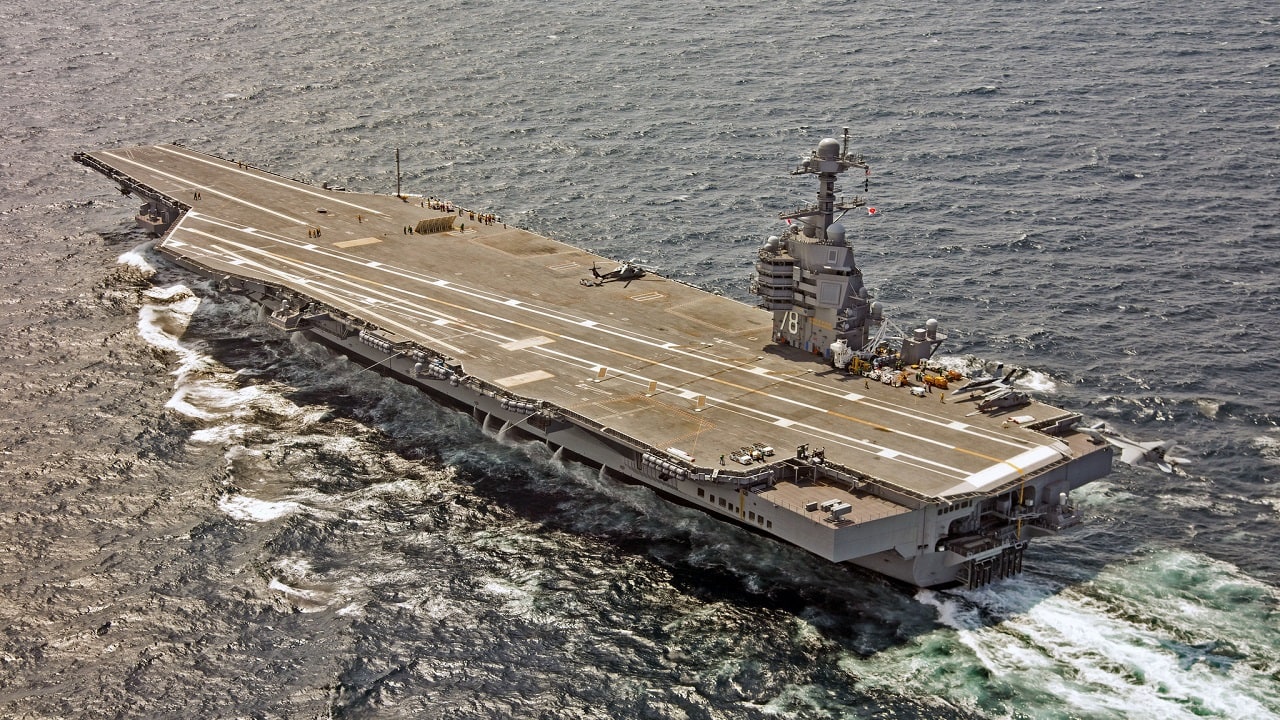
Ford-Class Aircraft Carrier Artist Rendering. Image Credit: Creative Commons.
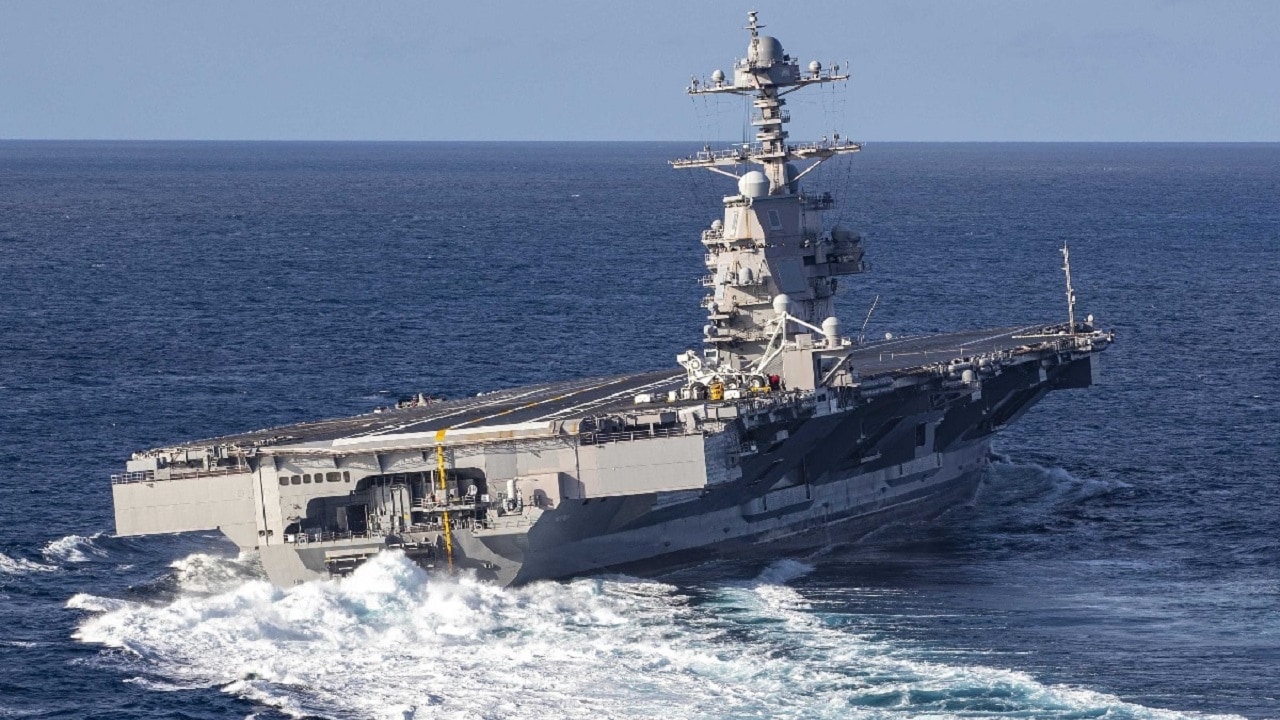
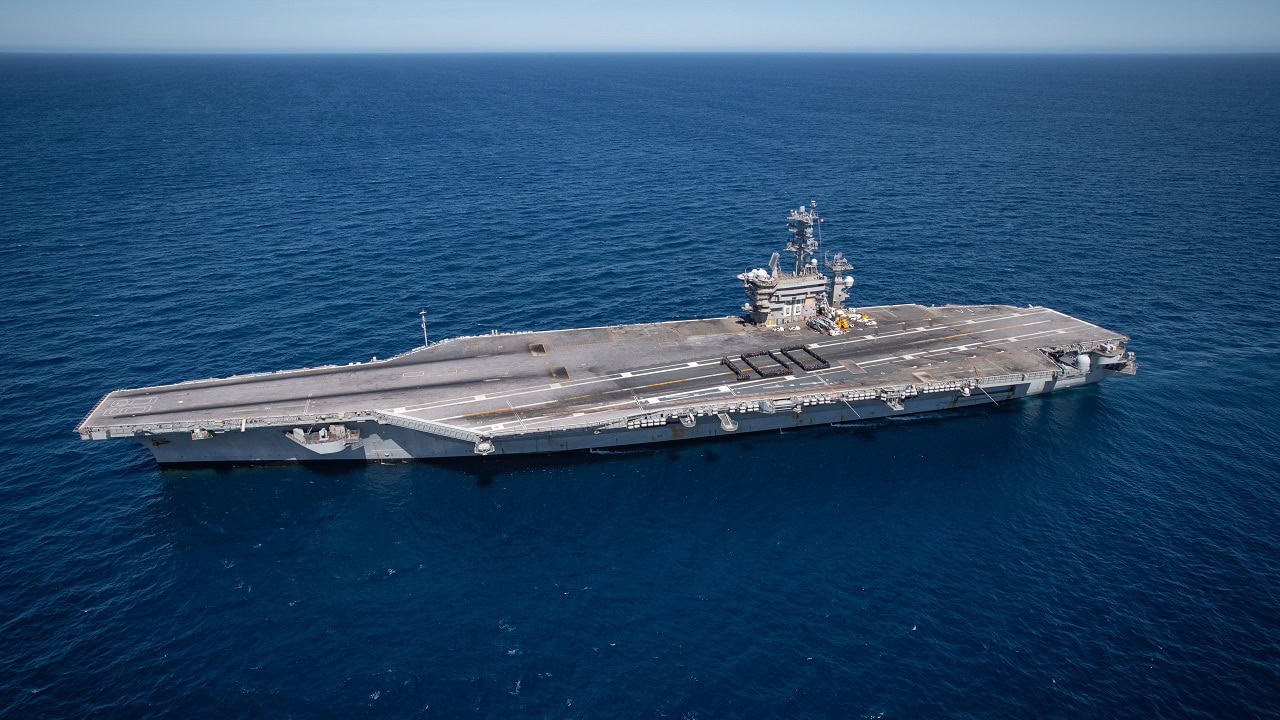
Ford-class Aircraft Carrier. Image Credit: US Navy.
Now, Trump is wading into the design of warships, demanding that the United States Navy essentially go retro with their aircraft carrier designs and make them look more like something from the Second World War.
He’s gone beyond merely recommending design concepts. Trump has ordered the Navy to dump its new, expensive electromagnetic aircraft launch system (EMALS) in favor of older steam catapults.
Major Complications
That has significant implications for the Navy, not only in terms of cost (it will be very expensive) but also for its effort to standardize the systems on the Navy’s newest Ford-class carriers.
Specifically, Trump’s August 13 order to the Navy demands that the Pentagon produce a plan within the next 60 days to replace the EMALS, starting with the USS Doris Miller (CVN-81), the fourth Ford-class carrier under construction.
The first three ships will retain their EMALS.
EMALS was supposed to be a game-changer for the Navy.
The system was supposed to provide smoother acceleration, better launch control, and less maintenance.
The EMALS also required fewer sailors on launch, and the system could launch a variety of aircraft from the carrier at faster SORTIE rates than steam catapults.
That system, however, never quite worked as intended.
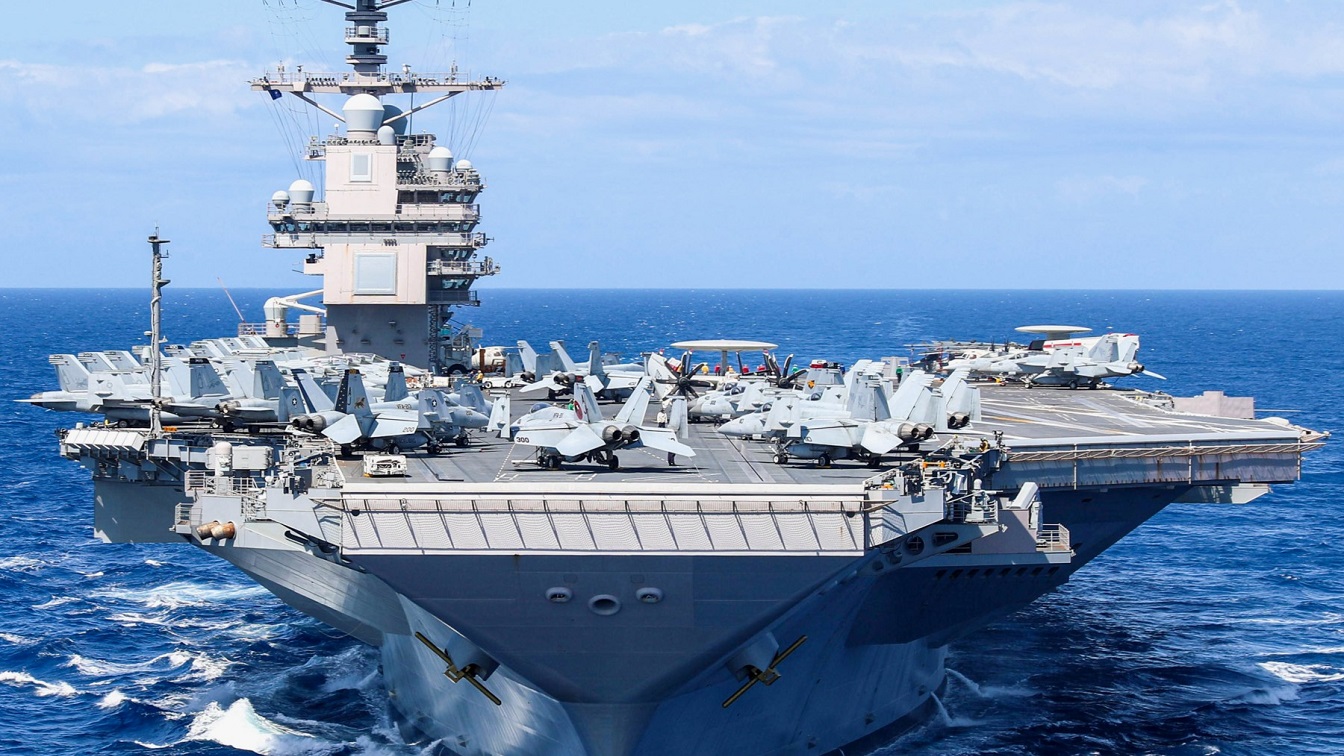
Ford-Class. Ford-Class Aircraft Carrier USS Ford.
(Mar. 12, 2022) Sailors aboard USS Nimitz (CVN 68) assemble on the flight deck and form a human ‘100’ to commemorate the centennial of the aircraft carrier. On March 20, 1922 the former USS Jupiter (Collier #3) recommissioned as the USS Langley (CV 1), the U. S. Navy’s first aircraft carrier. One hundred years later, Nimitz and Ford-class aircraft carriers are the cornerstone of the Navy’s ability to maintain sea control and project power ashore. Nimitz is the first in its class and the oldest commissioned aircraft carrier afloat., carrying with it a legacy of innovation, evolution and dominance. Nimitz is underway in the 3rd Fleet Area of Operations. (U.S. Navy photo by Mass Communication Specialist 3rd Class Elliot Schaudt)
During the development of the USS Gerald R. Ford, for instance, the system suffered major reliability issues.
A decade ago, the Government Accountability Office (GAO) found that the EMALS averaged 240 launches between critical failures during Navy test trials.
The Navy expected to have thousands of launches with the EMALS.
Around that time, the ship’s Advanced Arresting Gear (AAG) and electromagnetic weapons elevators encountered major technical difficulties, adding many years of delays to that carrier.
A Real Bee In Trump’s Bonnet
During his first administration, Trump rightly complained about the various technical glitches that arose in the development of the USS Gerald R. Ford.
He has never abandoned his skepticism toward electromagnetic systems.
To be fair to the president, he’s not wrong about steam catapults being far more reliable and even easier to repair while underway.
But the Navy insists that today’s EMALS is not the same system as a decade ago. They’ve worked out the kinks since then.
What’s more, the Ford-class was designed around electrical power rather than the extensive steam infrastructure used aboard the Nimitz-class carriers.
Installing steam catapults on the newest Ford-class, the Doris Miller, would require a major redesign of the ship’s engineering spaces, piping, flight deck, and internal compartments.
Construction of the Doris Miller is well underway, too, meaning such a change could add high costs and further delays for a carrier meant to be delivered to the Navy by 2034.
Plus, China is moving in the opposite direction.
Does China’s EMALS Actually Work?
China’s newest aircraft carrier, the Fujian, is the first non-American carrier equipped with electromagnetic catapults.
Unlike China’s earlier Liaoning and Shandong carriers, which launch aircraft from ski-jump ramps, Fujian employs three EMALS.
And China’s system apparently works. In fact, Beijing has publicly demonstrated catapult launches utilizing its EMALS involving the J-15T fighter, the J-35 stealth warplane, and the KJ-600 airborne early-warning plane.
China has not, however, released detailed reliability statistics comparable to American testing reports, making it impossible to determine whether its system is more reliable than the US EMALS or how it would perform during sustained combat operations at sea. Successful launches do, of course, demonstrate functionality.
They don’t determine long-term reliability.
At the same time, major concerns remain that the EMALS won’t live up to its promise.
The USS Gerald R. Ford has improved its EMALS operations since 2015.
Yet, Trump remains skeptical. At the same time, the Pentagon spent billions of US tax dollars developing the EMALS.
The maritime branch then endured a very complicated developmental period for the carriers before finally deploying the technology operationally.
China is following a similar technological development path.
It makes little sense for Trump to demand that the Navy abandon this system just as it appears to be reaching full operational capability.
About the Author: Brandon J. Weichert
Brandon J. Weichert is the Senior National Security Editor at 19FortyFive.com. He also manages The Weichert Brief on Substack. Weichert also hosts “National Security Talk” on Rumble. He is the author of four bestselling national security books, the most recent of which is A Disaster of Our Own Making: How the West Lost Ukraine (Encounter Books). Follow him via Twitter/X @WeTheBrandon.