
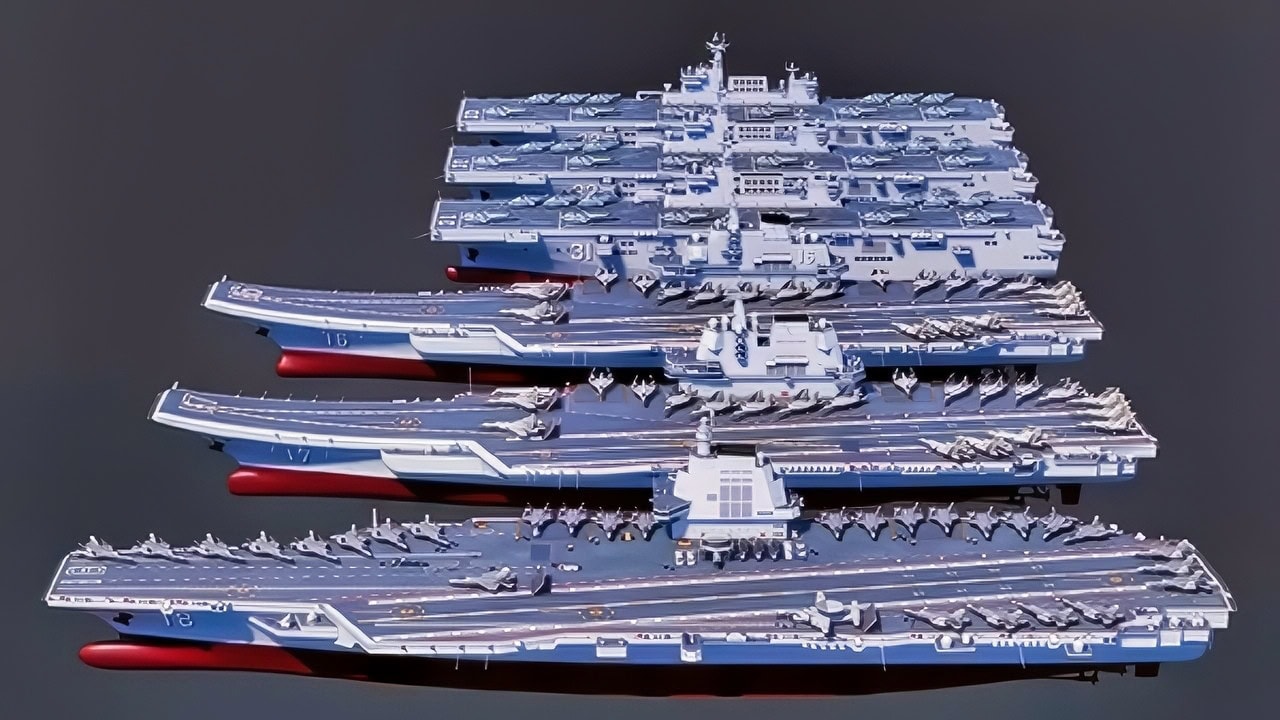
China is well underway with what is clearly one of the most ambitious naval expansions in human history. Long-term projections envision a Chinese fleet with 6 to 9 aircraft carriers.
At the same time, Beijing has built an extraordinary land-based missile arsenal intended to make American access into the western Pacific increasingly dangerous.
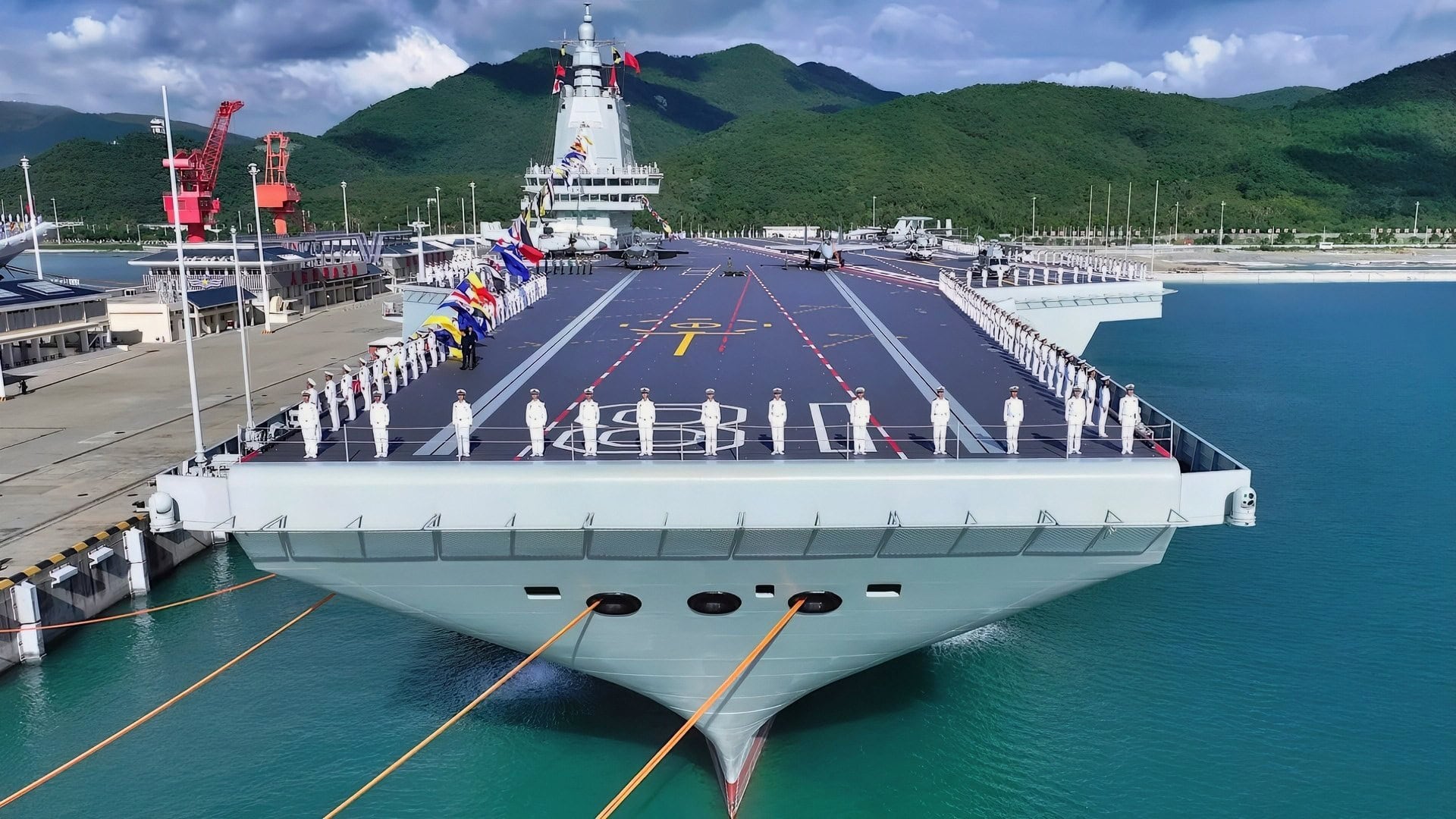
China Aircraft Carrier PLAN Image
Specifically, the DF-21D threatens ships around the First Island Chain, while the DF-26 extends that threat out toward Guam and the Second Island Chain.
Newer weapons, such as the DF-27, could even extend that strike radius further into the Pacific.
Then PLAN carriers could operate beneath this land-based protective umbrella, meaning the two capabilities could complement each other. But this is all in theory—on a map.
Yes, this is starting to look like a Chinese fortress that deters access throughout thousands of miles of the Pacific Ocean.
And while China possesses increasingly impressive individual technologies, it has not demonstrated the ability to integrate carriers, missiles, satellites, aircraft, submarines, and networks in a way that reliably translates into a combat system capable of categorically keeping America—the most sophisticated military on earth—out of the Pacific Ocean.
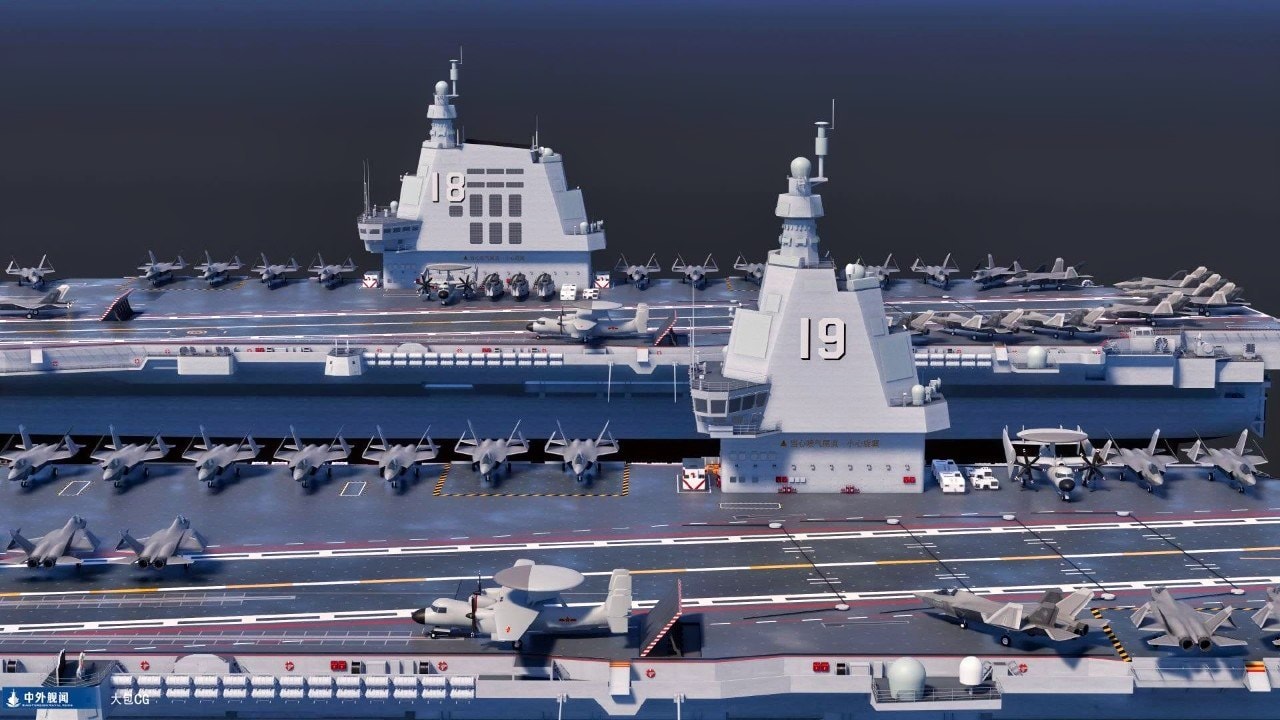
China Aircraft Carrier Models. Image Credit: Creative Commons.
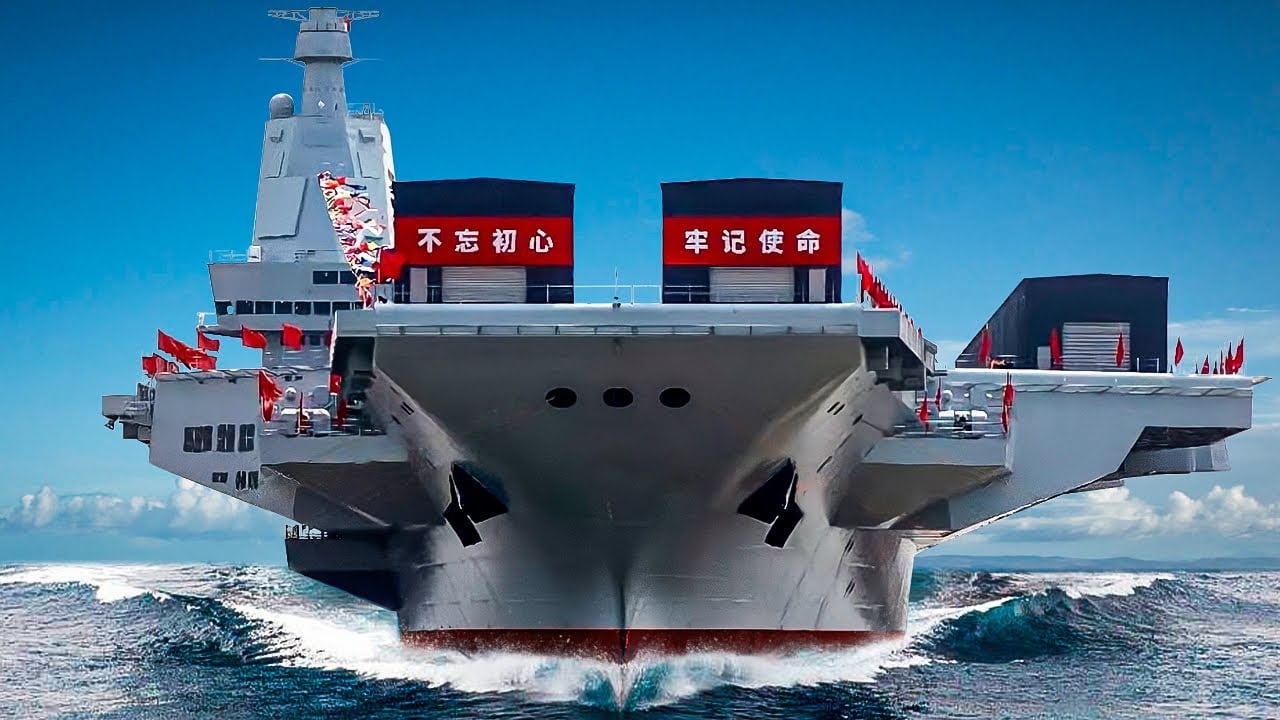
China Aircraft Carrier. Image Credit: YouTube Screenshot.
The Missile Shield is Real for China’s Aircraft Carriers
China is owed a measure of credit.
The PLA Rocket Force presents a problem that the US Navy did not face during its post-Cold War period, when it could operate throughout the maritime regions of the world largely uncontested.
The DF-21D is commonly believed to possess a 930-mile range and is specifically associated with the anti-ship ballistic missile mission.
The DF-26 has a 2,500-mile range, which brings Guam and enormous portions of the western Pacific into the PLA conventional strike envelope.
Little is known about the DF-27, a newer missile, but reports suggest a substantially greater range—potentially as much as 5,000 miles, depending on the configuration.
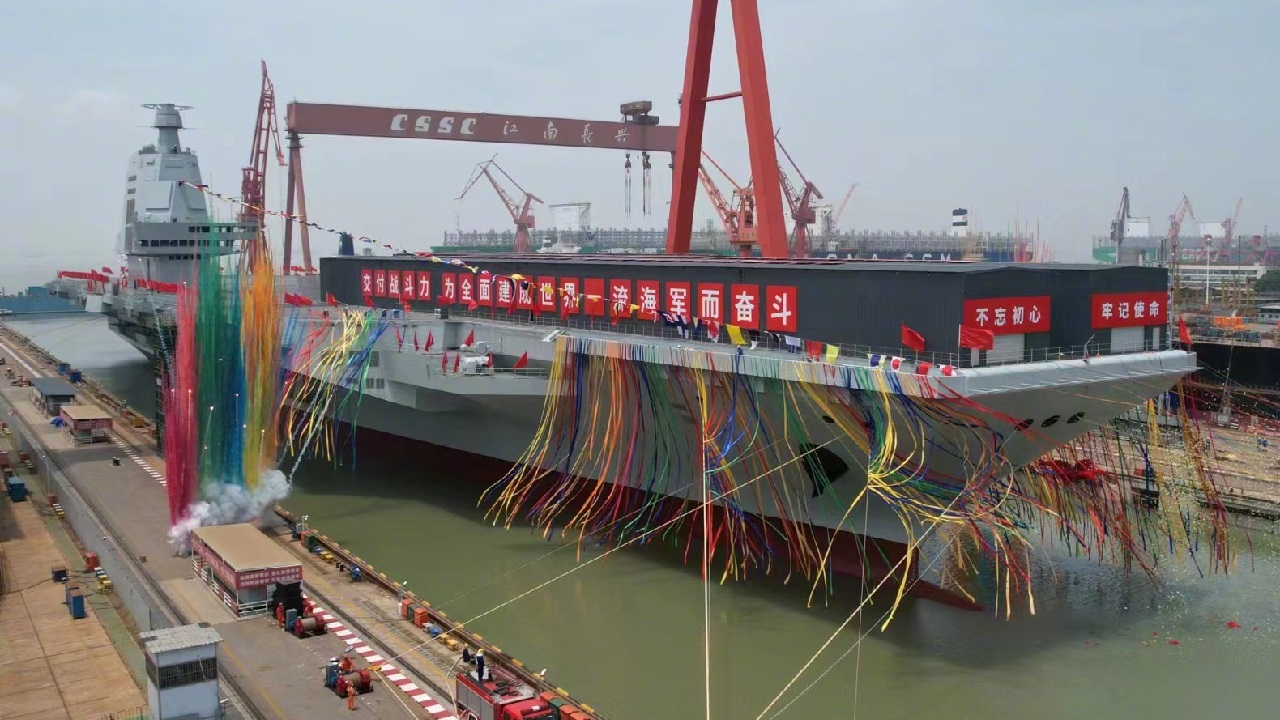
Fujian, China’s New Aircraft Carrier. Image Credit: Chinese Internet.
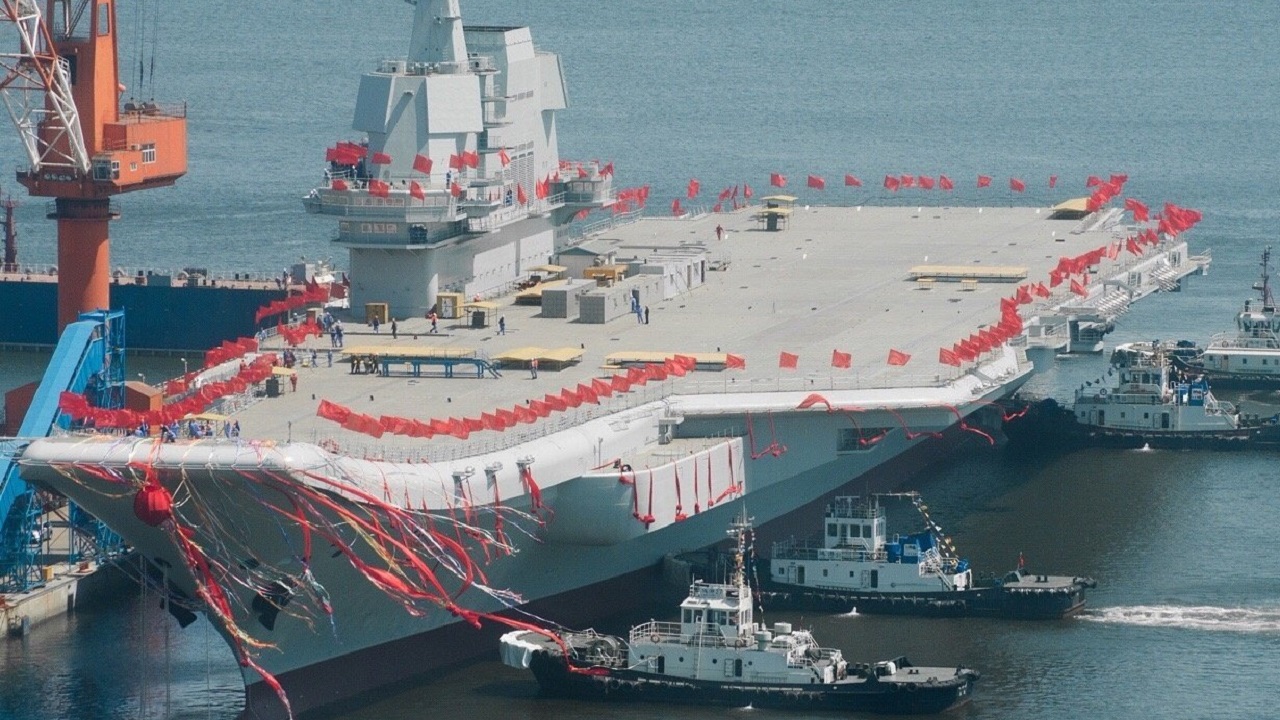
Fujian, China’s new aircraft carrier. Image Credit: Chinese Internet.
Even if these missiles are never used to target American warships, their strategic effect remains significant because American commanders must assume they work, forcing the Navy to operate more cautiously.
This complicates America’s ability to deploy forces around Taiwan and similarly forces America to invest heavily in missile defense, dispersion, electronic warfare, and longer-range weapons.
Easier Said Than Done
But these carrier-killer missiles still have to find the carriers first. Yes, a ballistic missile can strike a known, fixed coordinate.
But a carrier strike group can travel at 30 knots or more and maneuver across an enormous area of ocean. China has to find the American carriers first.
Therefore, China needs an entire kill chain that detects the carrier, correctly identifies it, maintains custody of it, transmits targeting information, launches the weapon, updates targeting as necessary, and successfully discriminates and strikes the ship during the terminal phase.
Completing all of this sequentially and successfully involves recon satellites, over-the-horizon radar, aircraft, drones, ships, and communications networks.
And obviously, the United States isn’t going to make things easier for China; rather, US forces would attempt to jam communications, deceive sensors, attack recon platforms, destroy launchers, and generally break links in the kill chain.
This doesn’t mean the Chinese missiles can’t hit moving ships or that the Americans will operate with naval impunity as they did in the 1990s.
But it does mean that China’s ability to sink warships is largely unproven in actual combat, and that China’s missile arsenal should therefore be understood as a threat—yes—but not necessarily the end of American influence in the Pacific.
No Carriers?
It’s also worth pointing out that China currently possesses three carriers, not nine.
The Liaoning is a converted Soviet hull. The Shandong is domestically built but relies on basic STOBAR architecture.
The Fujian represents a technological leap, but that’s one sophisticated carrier. And there’s a big difference between fielding a carrier and successfully performing naval aviation operations—one of the most complicated military enterprises ever devised.
So even if the PLAN could field nine carriers in a few decades, that still doesn’t automatically equate to nine American carriers, since China lacks the combat experience America has spent decades accumulating.
Concerning Trajectory
China’s trajectory shouldn’t be dismissed.
Their capabilities are real, and their ambitions seem expansive. A nine-carrier Chinese navy would likely alter the balance of power in the Pacific to some extent.
But that reality is still a long way off. China still needs to build the hardware—and learn to use that hardware in combat conditions.
About the Author: Harrison Kass
Harrison Kass is a writer and attorney focused on national security, technology, and political culture. His work has appeared in Tablet, City Journal, The Hill, The Spectator, and The Cipher Brief. He holds a JD from the University of Oregon and a master’s in Global & Joint Program Studies from NYU. More at harrisonkass.com.