
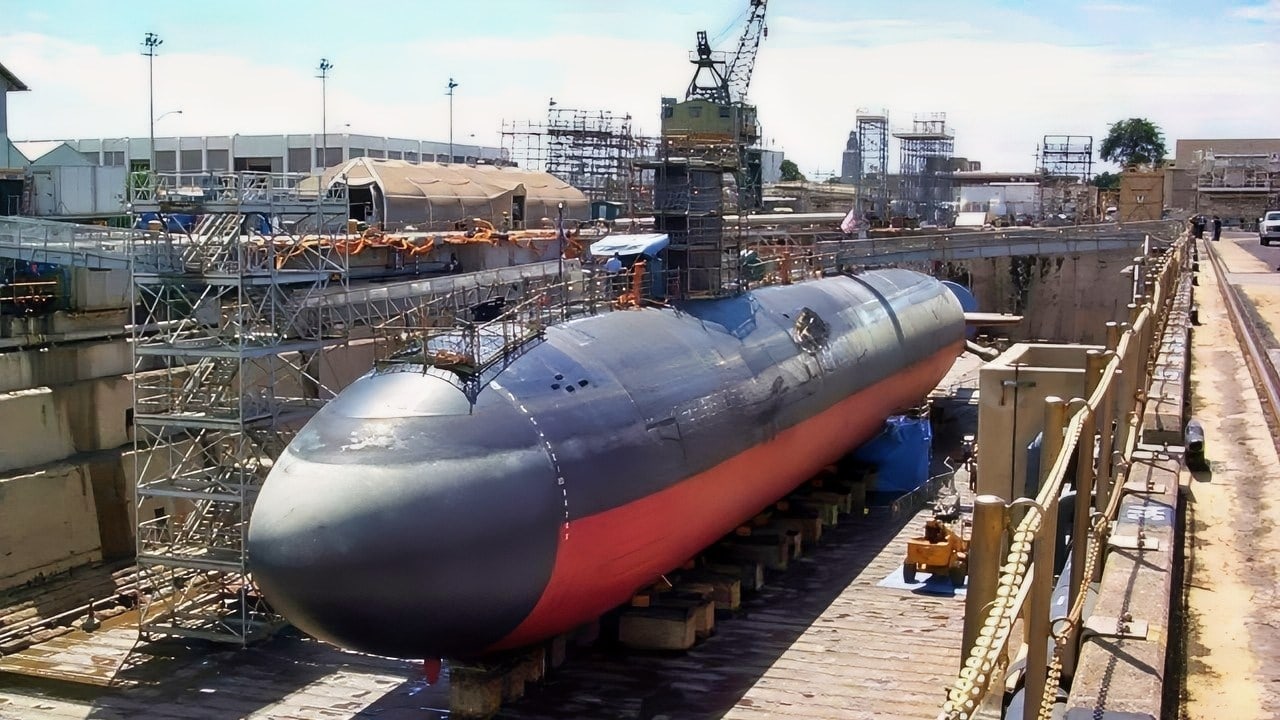
The SSN(X) is the Navy’s next-generation attack submarine, which is eventually intended to replace the Virginia- and Seawolf-class submarines.
With the program still in its earliest stages of development, little information is known about the next attack Submarine.
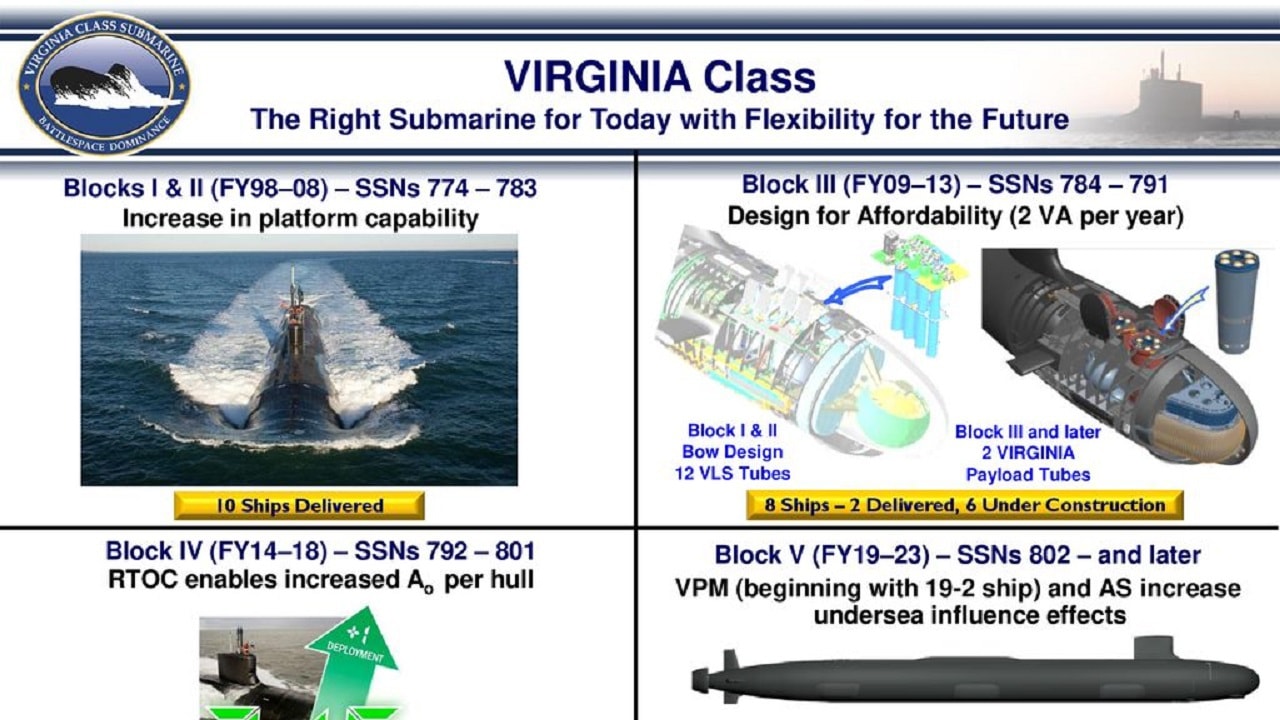
(FY98–08) – SSNs 774 – 783. Block III (FY09–13) – SSNs 784 – 791. Increase in platform capability. Design for Affordability (2 VA per year) Block I & II Bow Design. 12 VLS Tubes. Block III and later 2 VIRGINIA Payload Tubes. 10 Ships Delivered. 8 Ships – 2 Delivered, 6 Under Construction. Block IV (FY14–18) – SSNs 792 – 801. Block V (FY19–23) – SSNs 802 – and later. RTOC enables increased Ao per hull. VPM (beginning with 19-2 ship) and AS increase undersea influence effects. 10 Ships – 5 Under Construction, 5 Under Contract. In Design Phase, FY19 Construction Start. 16.
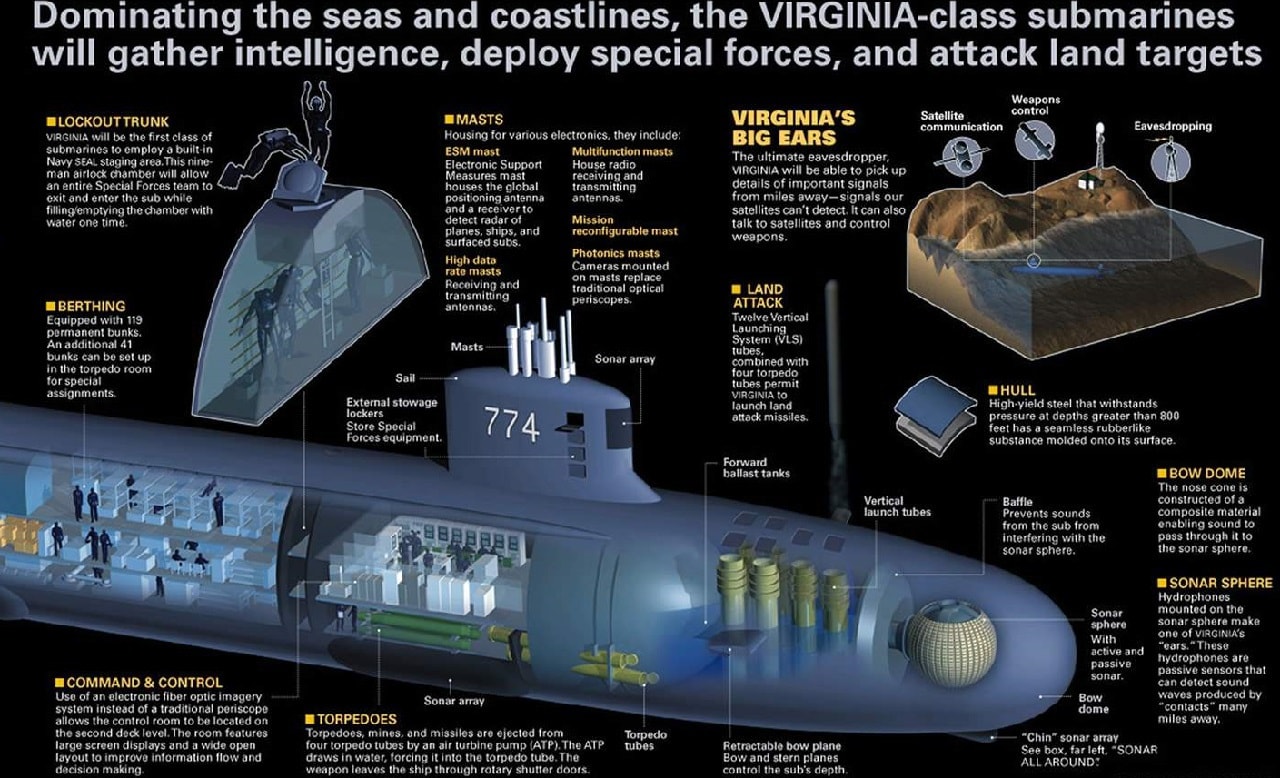
Image of Virginia-class Submarine features. Image Credit: Creative Commons.
The new submarine is expected to incorporate the latest stealth and low-acoustic technologies and support multiple missions, including anti-submarine warfare, intelligence gathering, and special operations support.
Currently, the U.S. Navy is focused on expanding and improving its Virginia-class fleet, which is currently poised to become the backbone of the U.S. Submarine fleet. The SSN(X) is expected to enter service sometime in the 2040s.
Designing the Navy’s Next Attack Submarine
The SSN(X) was first publicly discussed in 2014. The original plan was to complete the new submarine’s conceptual design by 2024 and begin construction in 2034, with operational capability by 2043.
The timeline has since been revised to begin construction in the 2040s. “The delay of SSN(X) construction start from the mid-2030s to the early 2040s presents a significant challenge to the submarine design industrial base associated with the extended gap between the Columbia class and SSN(X) design programs, which the Navy will manage,” the Navy wrote in its FY2025 budget submission. We will return to this later.
By all accounts, the SSN(X) is designed to counter the advancements in submarine technology from China and Russia.
According to the U.S. Navy, the new Submarine will retain the multi-mission capabilities of the Virginia-class but with a greater emphasis on speed, increased depth, and ASW missions against technologically sophisticated adversaries.
Another focus of the program is increasing overall fleet availability. Rear Adm. Jon Rucker noted in 2022 that across the entirety of the U.S. Submarine fleet, 18 out of 50 ships were constantly unavailable due to maintenance. The goal of the SSN(X), therefore, is to simplify and reform the maintenance process overall and increase spare-parts procurement.
What is Known About the SSN(X)?
Unfortunately, no information is available on the SSN(X)’s exact specifications.
All that we really know is that the Navy wants a submarine with “the speed and payload of the Navy’s fast and heavily armed Seawolf (SSN-21) class SSN design, the acoustic quietness and sensors of the Virginia-class design, and the operational availability and service life of the Columbia-class design.” According to the Congressional Budget Office (CBO), the ship will be about 11% larger than the Seawolf class, with some estimates putting its displacement at around 10,100 tons.
The Seawolf class measures at around 353 feet in length with a submerged displacement of around 9,138 tons. Like its predecessors, the SSN(X) will utilize a nuclear reactor for propulsion, though its intended speed is likewise unknown.
The new submarine’s primary mission will be to counter future threats from China and Russia.
Expected to enter operation in the 2040s/50s, the design and capabilities must be future-proof.
As far back as 2016, the Navy also identified the need for the SSN(X) to control unmanned underwater vehicles as a key component of future naval warfare.
Other studies have explored more advanced propulsion systems, with some proposals even suggesting unconventional biometric designs to reduce the sub’s acoustic signature.
According to other reports, the new submarine will carry a larger torpedo payload compared to its predecessors, along with “improved acoustic superiority.
Trouble on the Horizon
Currently, the Navy has made no statements on the number of SSN(X)s that it plans to procure.
Some documents, however, suggest the Navy has developed several procurement plans over the next several decades. In these plans, SSN(X) acquisitions range from 17 to 33 units.
All plans envision construction on the new submarines beginning in the 2030s.
The vessels’ cost is also unknown, with initial Navy estimates around $5.8 billion per unit.
CBO is a bit more pessimistic about the cost of the ships, with its 2025 estimate ranging from $7 billion to $8 billion.
Acquisition of the SSN(X) was delayed from 2030 to 2040 in order to fund other more urgent programs within the Navy. The Navy’s F/A-XX next-generation fighter program was also hit by delays.
The reason for the delays simply a lack of funds.
The Navy is currently managing several large programs, including the Virginia-class and Columbia-class programs, as well as various life-extension programs.
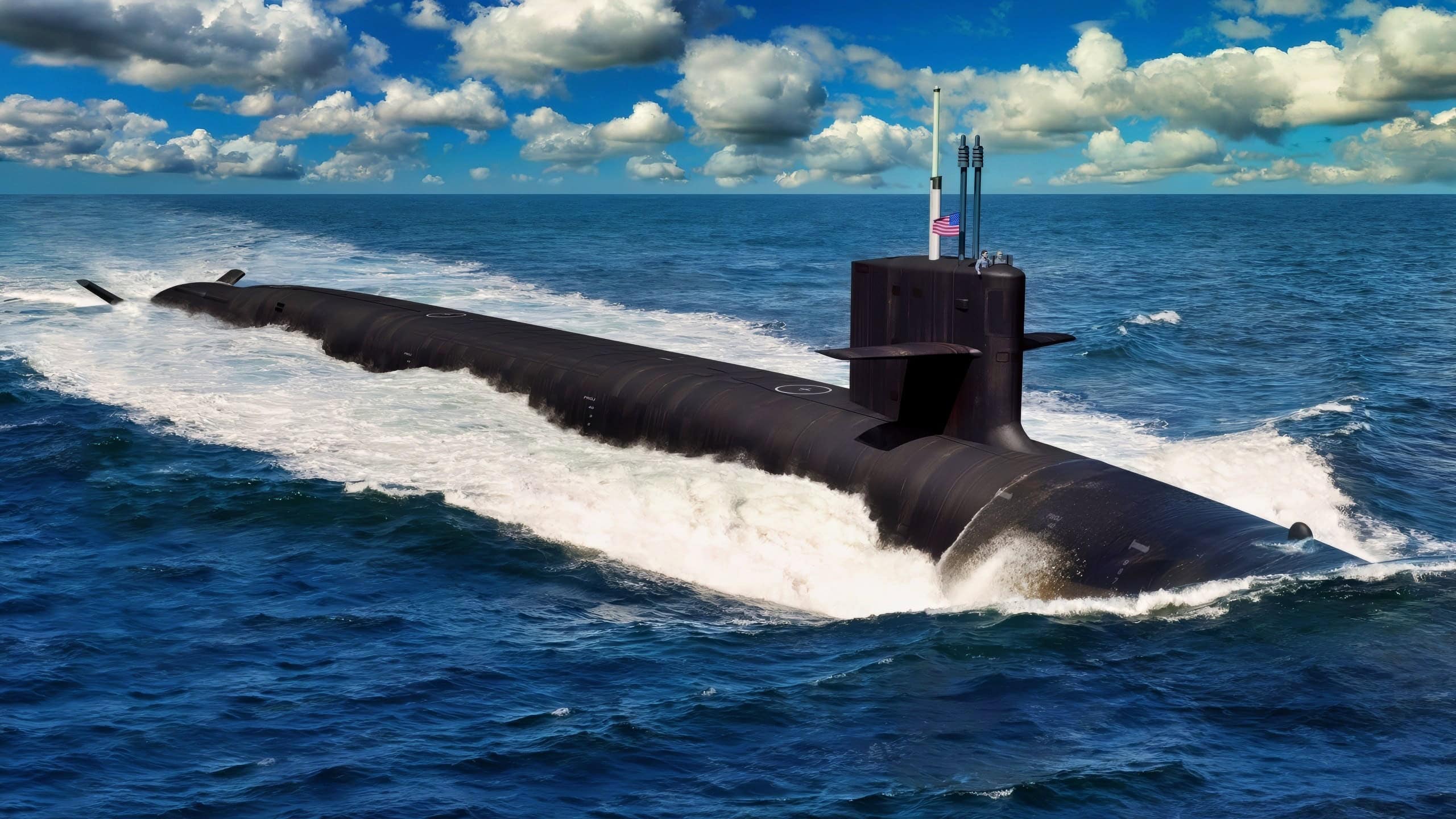
Columbia-Class Submarine SSBN Rendering U.S. Navy Photo
Against this backdrop, there is no choice but to delay procurement on the SSN(X).
However, delaying construction on these new subs now risks stagnation within the submarine industrial base. Consequently, this would create a 14-year gap with no submarine production, resulting in the loss of experienced personnel and the degradation of critical shipbuilding infrastructure.
This is obviously cause for serious concern for many experts, especially as China continues to expand its shipbuilding capabilities.
Recently, the U.S. shipbuilding industry has struggled to produce and maintain the Navy’s submarines on time.
About the Author: Isaac Seitz
Isaac Seitz, a Defense Columnist, graduated from Patrick Henry College’s Strategic Intelligence and National Security program. He has also studied Russian at Middlebury Language Schools and has worked as an intelligence Analyst in the private sector.