
A recent multi-day electrical failure aboard a major naval destroyer starkly reminds us of how dependent modern warships have become on electricity. For 96 hours, the USS Benfold went without power in the South China Sea.
This is a problem. A modern guided missile destroyer is essentially a floating electrical network. Electricity powers or supports virtually everything on the vessel, including radars, combat computers, communications, navigation equipment, pumps, ventilation, refrigeration, lighting, weapons, support systems, and so on. For that reason, and because of that dependency on electricity, a serious electrical outage is acutely dangerous.
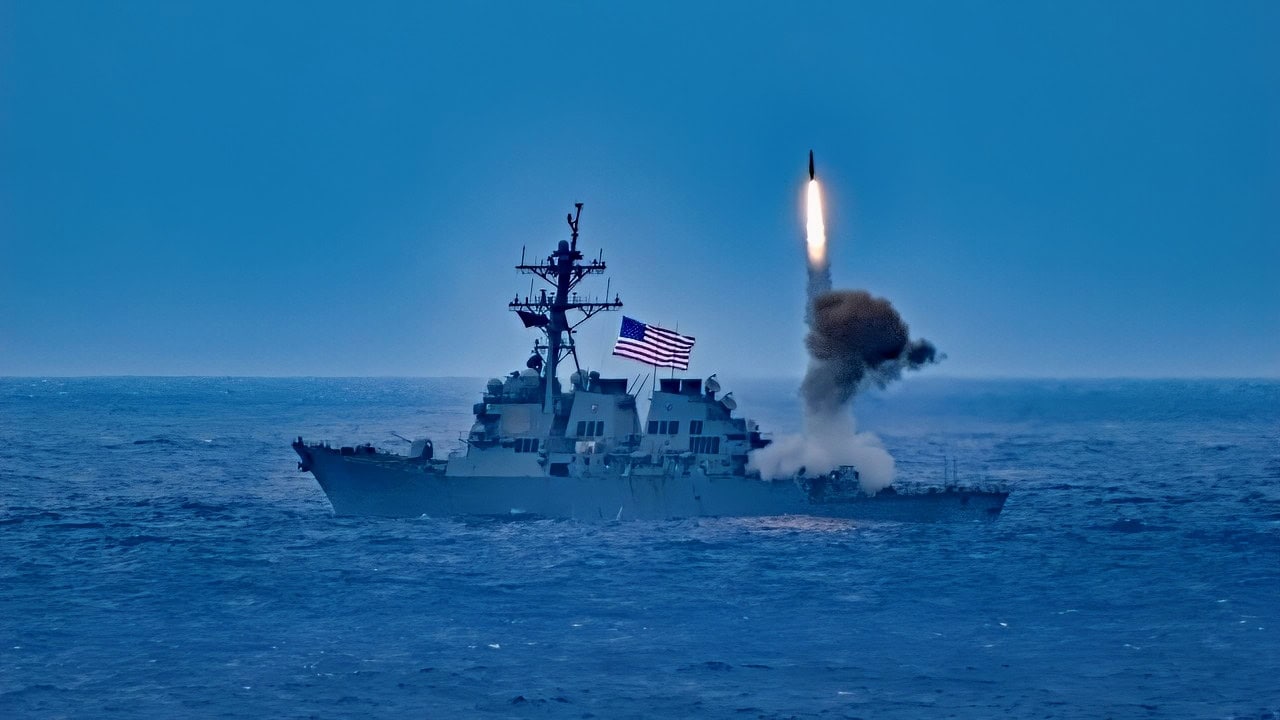
(March 24, 2022) – The Arleigh Burke-class guided-missile destroyer USS Milius (DDG 69) launches a Standard Missile (SM) 2 during Surface Warfare Advanced Tactical Training while operating in the Philippine Sea, March 24, 2022. Milius is assigned to Commander, Task Force 71/Destroyer Squadron (DESRON) 15, the Navy’s largest forward-deployed DESRON and the U.S. 7th Fleet’s principal surface force. (Courtesy photo)
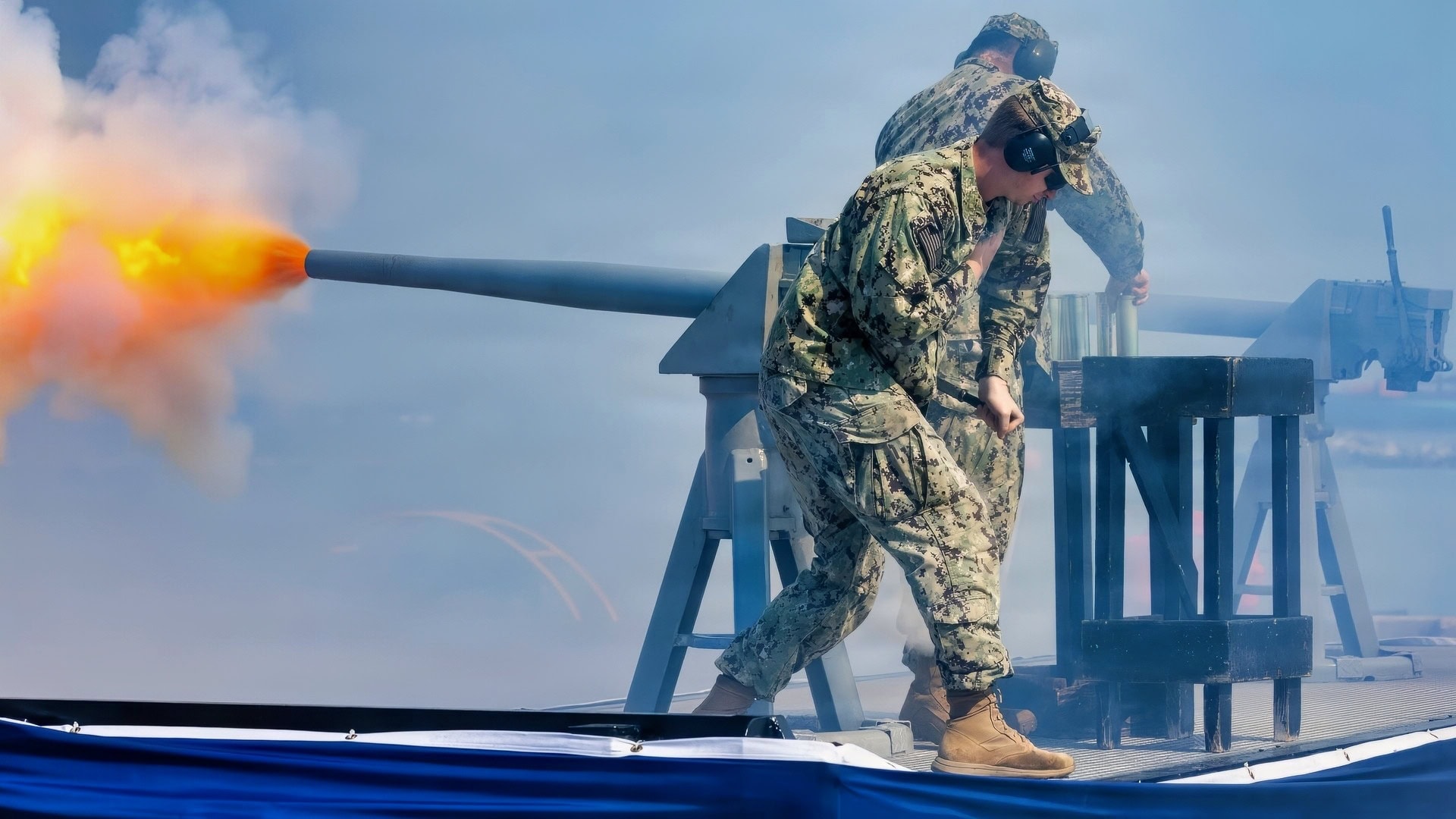
NORFOLK, Va. (April 11, 2026) – Gunner’s Mate 2nd Class Charles Sullivan and Gunner’s Mate 2nd Class Adams Correa, assigned to Naval Station Norfolk Security Department’s Weapons Division, fire a 40 mm cannon during the commissioning ceremony of the Navy’s newest Arleigh Burke-class guided-missile destroyer USS Harvey C. Barnum Jr. (DDG 124) in Norfolk, Virginia, April 11, 2026. The warship bears the name of a living Medal of Honor recipient, retired Col. Harvey C. “Barney” Barnum Jr. (U.S. Navy photo by Mass Communication Specialist 1st Class Theoplis Stewart)
Losing Power?
Modern destroyers generate multiple megawatts of electricity through dedicated generator sets.
For example, a US Navy Arleigh Burke-class destroyer uses LM2500 gas turbines for propulsion and separate gas-turbine generators for shipboard electricity.
Power then travels to switchboards, buses, and distribution equipment scattered throughout the vessel. Several potential failure points exist, including generator casualties, electrical shorts, switchboard failures, fires or flooding, and cooling system problems.
Protection systems may even automatically disconnect equipment after detecting dangerous faults.
Regardless of what caused the power outage on the USS Benfold, the outage lasted long enough that the crew wasn’t dealing with a simple momentary trip that could be reset immediately.
96 Hours of Darkness
When a warship loses power at sea, the consequences can be mundane, at least initially. Lighting becomes limited.
Ventilation and air conditioning can degrade quickly, making compartments uncomfortable—especially in warm climates.
Refrigeration becomes an issue, and as a result, feeding sailors becomes an issue. Galleys can lose cooking capability, which can exacerbate hunger and strain nerves.
Freshwater production and distribution, and associated sanitation, can become constrained.
Pumps and other auxiliary machinery may be unavailable depending on which portions of the electrical plant remain energized.
Meanwhile, hundreds of sailors attempt to repair the casualty while continuing to operate the ship. But over the course of four days, fatigue, hunger, and stress will inevitably become a part of the problem.
Losing the Fight
A powerless destroyer loses its ability to wage war. That’s what makes the recent USS Benfold outage strategically significant.
Modern destroyers are fundamentally sensor-and-computer platforms with weaponry attached.
Aegis-equipped destroyers depend upon powerful SPY-family radars, combat-system computers, electronic warfare equipment, datalinks, and communications.
All require electricity to function. If the ship’s ability to generate electricity is restricted, the crew may have to engage in load shedding or prioritize the most essential systems to keep the ship safe.

Ecuadorian navy Esmeralda-class missile corvettes BAE Manabi (CM 12) and BAE Loja (CM 16) conduct formation maneuvering alongside Nimitz-class aircraft carrier USS Nimitz (CVN 68) and Arleigh Burke-class guided-missile destroyer USS Gridley (DDG 101), part of Nimitz Carrier Strike Group (NIMCSG), in the Pacific Ocean, April 8, 2026. Nimitz is deployed as part of Southern Seas 2026, which seeks to enhance capability, improve interoperability, and strengthen maritime partnerships with countries throughout the region through joint, multinational and interagency exchanges and cooperation. (U.S. Navy photo by Mass Communication Specialist 3rd Class Gina Gallia)
Whether combat systems were affected during the recent incident isn’t clear, but any sort of severe electrical failure can compromise a destroyer’s capabilities, such as detecting threats, sharing targeting information, and employing weapons.
What About Propulsion?
A loss in shipboard electrical power doesn’t necessarily mean the destroyer is dead in the water.
On an Arleigh Burke, the main LM2500 propulsion turbines are mechanically connected to the shafts and don’t depend on electricity to run.
But propulsion depends on numerous supporting systems, and steering relies on machinery that can suffer during an electrical failure.
So if an electrical failure were sufficient, it could leave a destroyer without the ability to maneuver. Obviously, this would be a problem in combat.
A destroyer that can’t maneuver normally becomes less useful to its own formation—and becomes a much easier target.
Strategic Hazard
Machines fail. That’s nothing new—especially a machine as complex as a US Navy destroyer.
But what’s significant here is that normal operations couldn’t be restored for days, despite the vessel’s redundancy features.
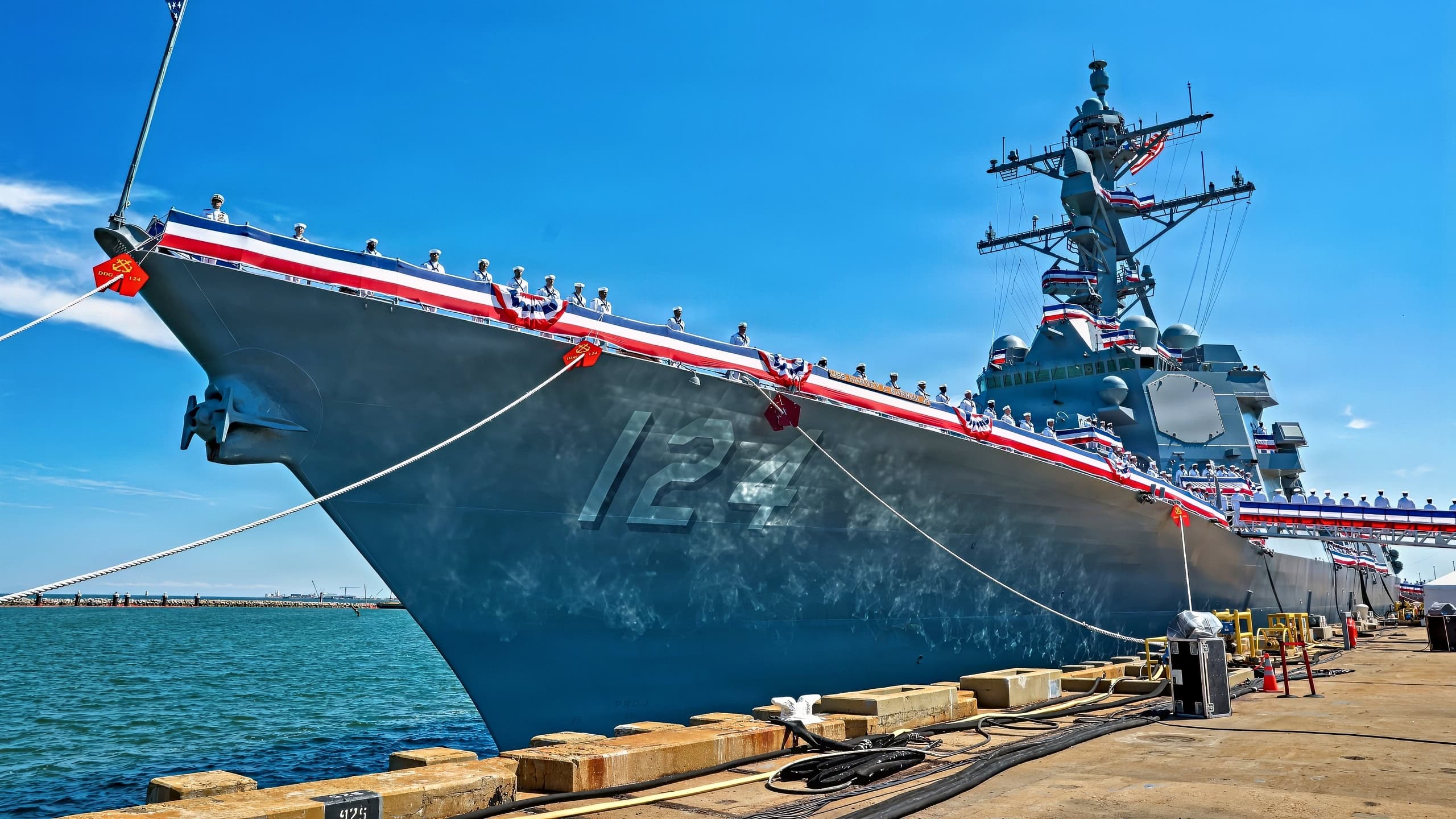
(April 11, 2026) – Sailors man the rails aboard the Navy’s newest Arleigh Burke-class guided-missile destroyer USS Harvey C. Barnum Jr. (DDG 124) during the commissioning ceremony in Norfolk, Virginia, April 11, 2026. The warship bears the name of a living Medal of Honor recipient, retired Col. Harvey C. “Barney” Barnum Jr. (U.S. Navy photo by Mass Communication Specialist 1st Class Theoplis Stewart)
This raises questions about whether warships are becoming vulnerable to electrical failures as modern vessels grow increasingly complex electrically.
New SPY-6 radars, electronic warfare equipment, powerful computing systems, and eventually, directed-energy weapons all demand enormous amounts of electricity.
These power sources must hold up under combat conditions, far from friendly shores.
Otherwise, electrical failures will translate into significant strategic failures.
The recent four-day outage reminds us that modern warships are beholden to electrical demands. Without electricity, the US Navy loses its ability to wage war.
About the Author: Harrison Kass
Harrison Kass is a writer and attorney focused on national security, technology, and political culture. His work has appeared in Tablet, City Journal, The Hill, The Spectator, and The Cipher Brief. He holds a JD from the University of Oregon and a master’s in Global & Joint Program Studies from NYU. More at harrisonkass.com.