
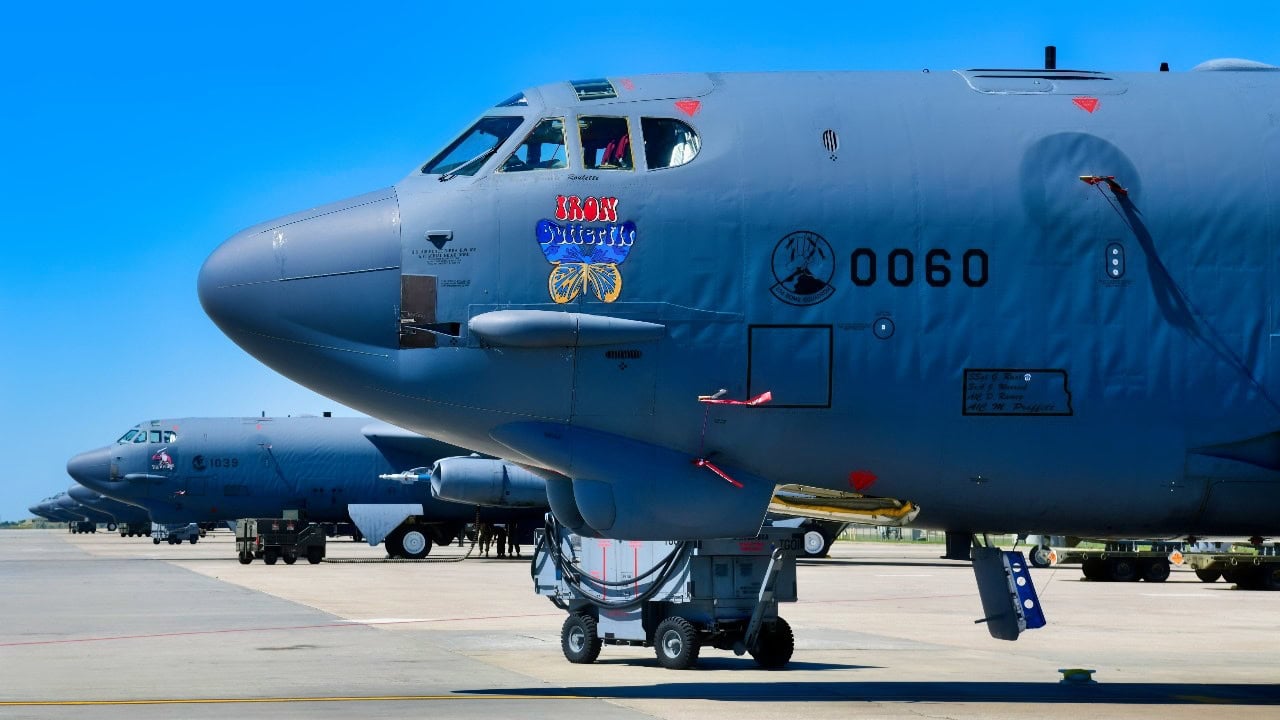
Following the end of WWII, Boeing was assigned a contract to develop the U.S.’ next intercontinental strategic bomber.
With advances in jet engines and manufacturing techniques, the result was the B-52 Stratofortress: a bomber so robust and reliable that the Air Force cannot replace it. In fact, we saw the B-52 at the National Museum of the US Air Force last year, and we took the photos below. It is hard to take in the size of this massive bomber.
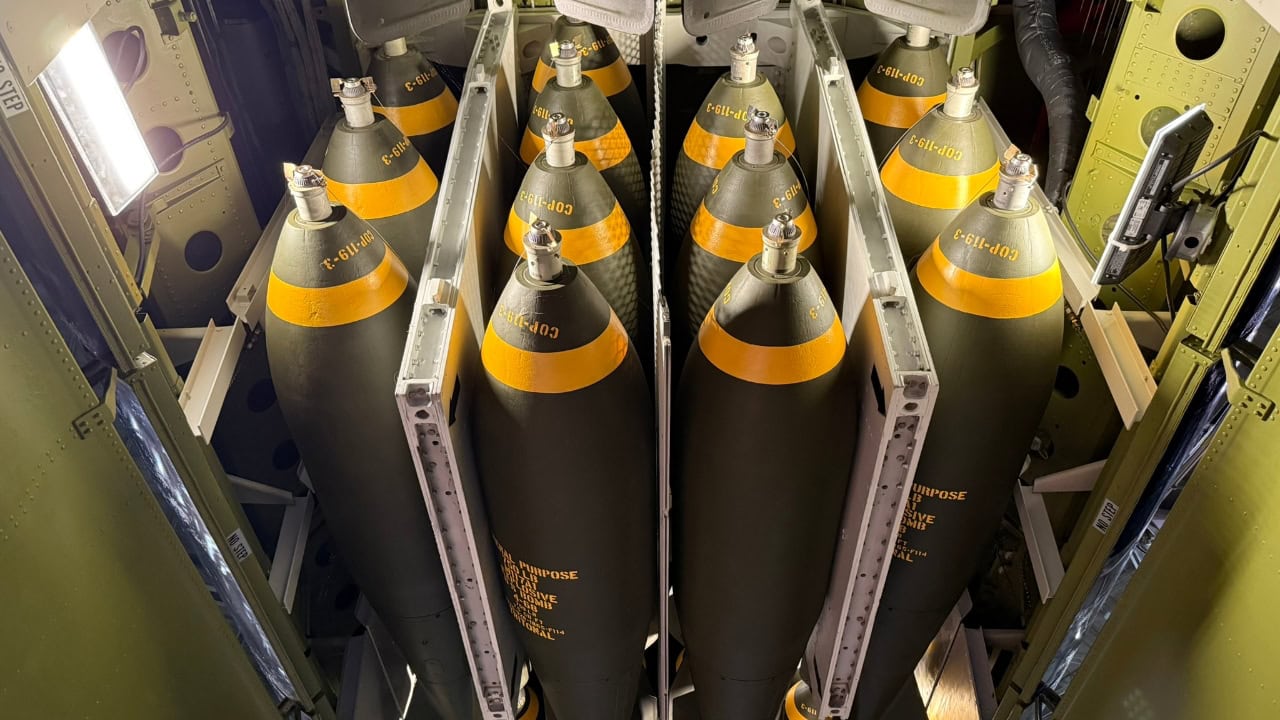
B-52 Bomber. Image Credit: 19FortyFive.com Taken at the National Museum of the Air Force.
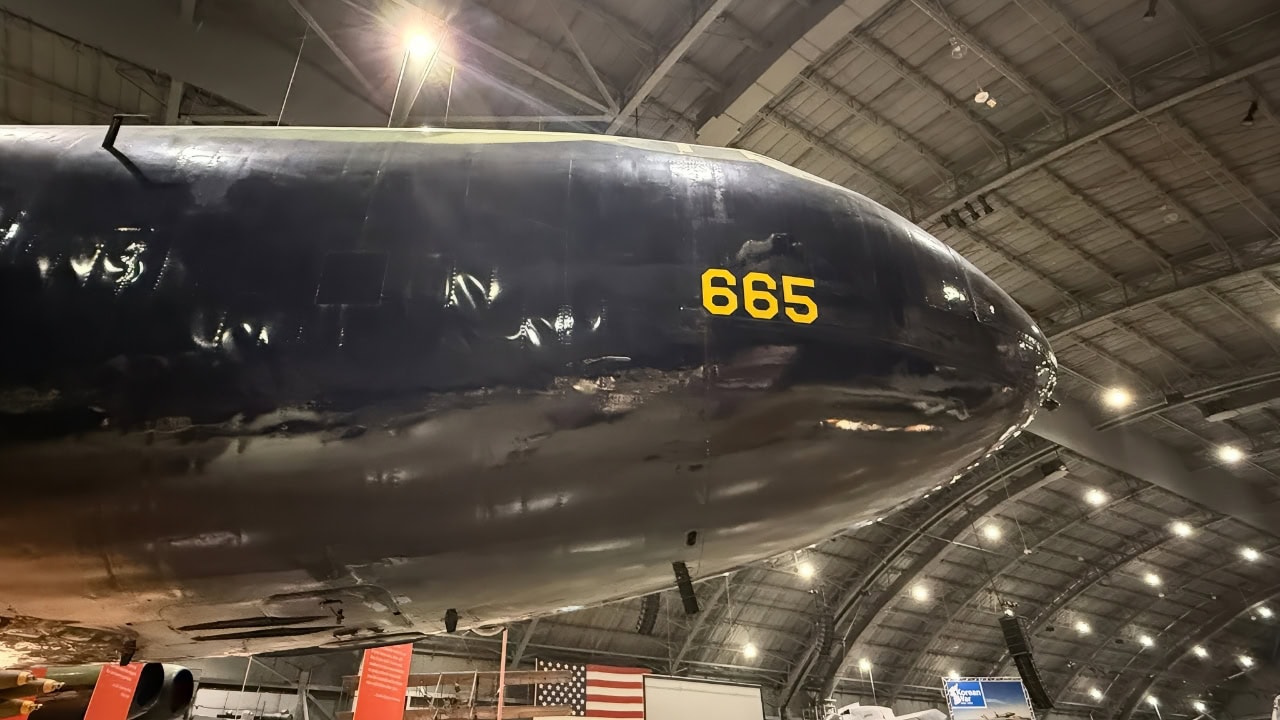
B-52. 19FortyFive Image.
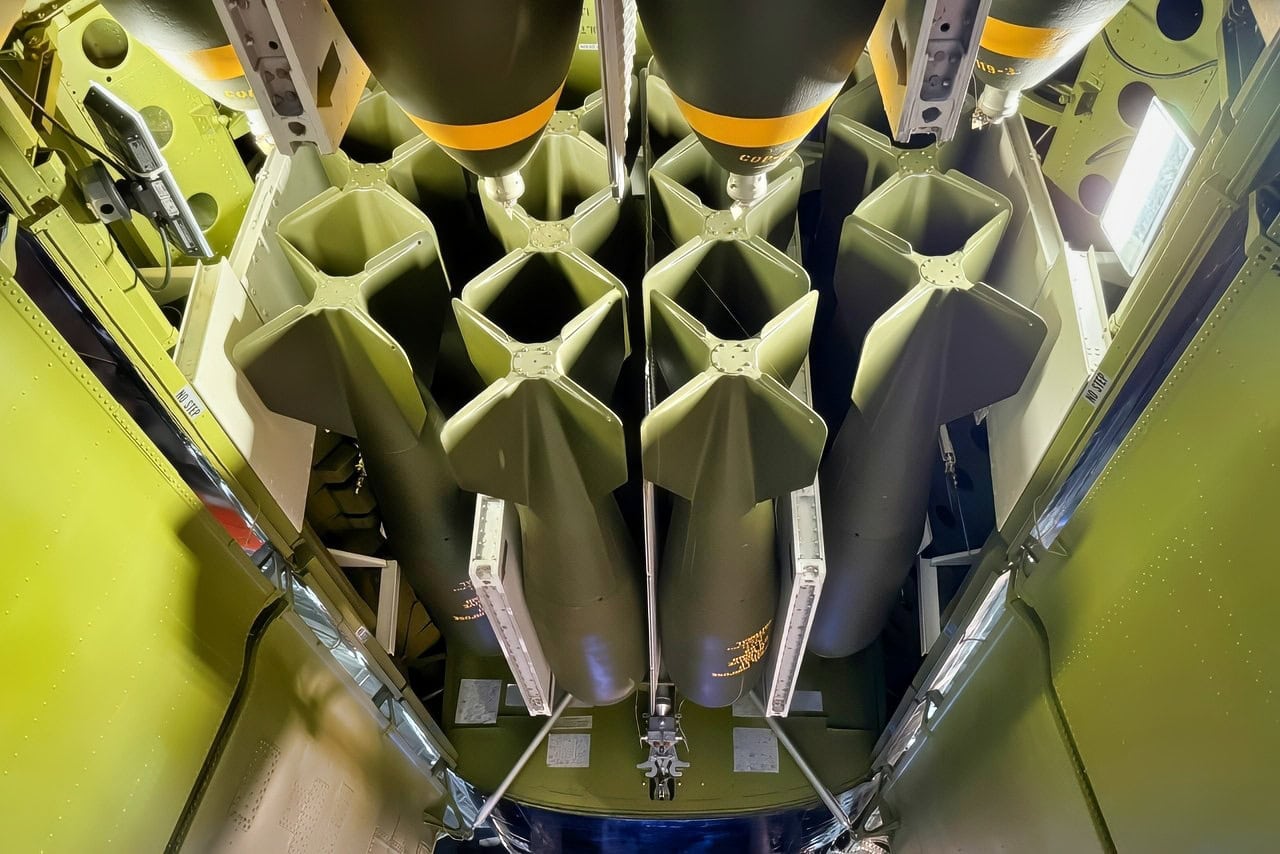
B-52 bombs. Image Credit: 19FortyFive.com Taken at the National Museum of the Air Force.
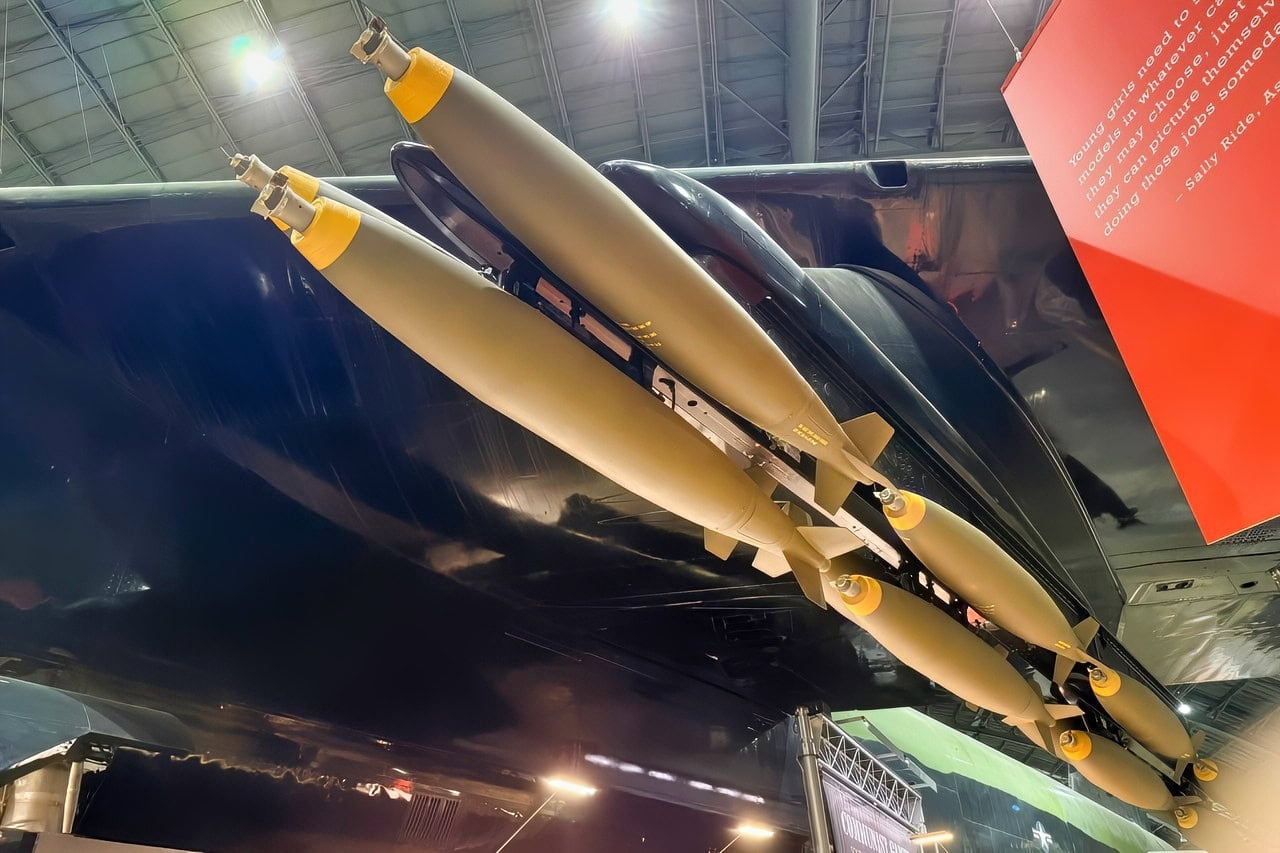
B-52 bombs. Image Credit: 19FortyFive.com Taken at the National Museum of the Air Force.
Over its service life, the B-52 has received a number of upgrades to its engines and avionics to improve its performance and efficiency.
The B-52H, the most recent variant of the bomber to enter service, was introduced in 1961 and has since become an irreplaceable asset for the USAF.
But what exactly makes the Buff, as some call it, so special? Why has a relic from the 50s remained in service for so long?
If It Ain’t Broke, Don’t Fix It
The simplest reason why the Air Force keeps the B-52 around is that there really isn’t anything wrong with it. It was designed to fly long missions and carry a lot of bombs/missiles.
Its design allows it to perform these missions exceptionally well.
The B-52 can carry more than 70,000 lbs of ordnance in its internal bay and external hardpoints.
Its eight Pratt & Whitney TF33-P-3/103 turbofans give it a range of 7,600 nautical miles (over 8,000 when ferried by aerial refuelers), allowing it to fly missions around the world, limited only by the crew’s endurance.
The B-52 doesn’t rely on forward bases, allowing it to operate away from enemy activity.
While the B-52 was originally designed to drop unguided bombs, upgrading the aircraft to accommodate newer weapon systems has proven surprisingly easy.
In the 70s, the B-52G was updated to launch AGM-86 air-launched cruise missiles (ALCMs) and AGM-84 Harpoon anti-ship missiles.
The B-52H was later modified to carry and drop guided bombs, such as the JDAM series, as well as the AGM-158 Joint Air-to-Surface Standoff Missile (JASSM).
These upgrades have allowed the B-52 to operate from standoff distances, without putting the aircraft in harm’s way.
Once air dominance is achieved, the bomber can leverage its immense payload to deliver devastating bombing runs against enemy positions.
Cheaper and More Versatile
The B-52 does not possess the stealth of the B-2 Spirit, nor does it have the supersonic capabilities of the B-1B Lancer. Its main advantage is its lower cost.
Because the B-52 is a simpler design, its operating and maintenance costs are relatively lower than those of its peers.
The B-2, for example, requires special climate-controlled hangars and constant maintenance of its RAM to maintain its stealth profile.
The B-1B sports a more complex design with its variable-sweep wing geometry, which requires specialized maintenance.
By contrast, the B-52 is a giant tube with wings and is therefore much easier and cheaper to maintain.
According to some estimates, the Stratofortress costs around $70,000 per flight hour, mainly due to fuel consumption.
Meanwhile, the B-1B costs $85,000 to $90,000 per flight hour, and the B-2 costs upwards of $150,000 per flight hour.
Although it was designed primarily for dropping bombs, the B-52 is a surprisingly versatile platform that can perform a number of roles.
The bomber is fitted with a sophisticated avionics suite and multiple targeting pods, enabling it to conduct reconnaissance and intelligence-gathering missions.
In the Pacific, B-52Hs frequently patrol near the South China Sea, equipped with anti-ship missiles to deter Chinese naval activity.
As an intercontinental strategic bomber, the B-52H is a vital component of the U.S.’ air-based nuclear deterrence strategy.
Recently, however, the U.S. has been using the bomber as a test bed for new air-launched hypersonic weapons like the AGM-183A ARRW and the Long-Range Standoff (LRSO) nuclear-armed cruise missile.
Keeping the B-52 in Service Until the 2050s
The U.S. is currently working to upgrade the B-52 again to keep it in service well into the 2050s.
The B-52J program seeks to replace the aircraft’s engines with newer, more efficient Rolls-Royce F130 engines and its current radar with the AN/APQ-188 AESA radar.
It is also expected to replace its communication and navigation equipment, bringing the B-52 more in line with modern standards.
The first B-52J is expected to enter service before the 2030s, keeping the venerable bomber in service for the foreseeable future.
This would make it the first bomber to remain in service for a full century.
There is, of course, an inherent risk in keeping any aircraft in service for decades on end.
Since the last B-52 was delivered in the 1960s, spare parts for these bombers are becoming harder to find, and as their flight hours accumulate, more stress is placed on the airframes.
Over time, the B-52’s readiness rate has declined as more airframe problems have been discovered, requiring more maintenance time.
Even the B-52J program, which seeks to address some of these issues, has come under fire for delays and cost overruns.
Now, the first modernized aircraft is not set to be operational until the 2030s, assuming the program survives congressional scrutiny.
About the Author: Isaac Seitz
Isaac Seitz, a Defense Columnist, graduated from Patrick Henry College’s Strategic Intelligence and National Security program. He has also studied Russian at Middlebury Language Schools and has worked as an intelligence Analyst in the private sector.