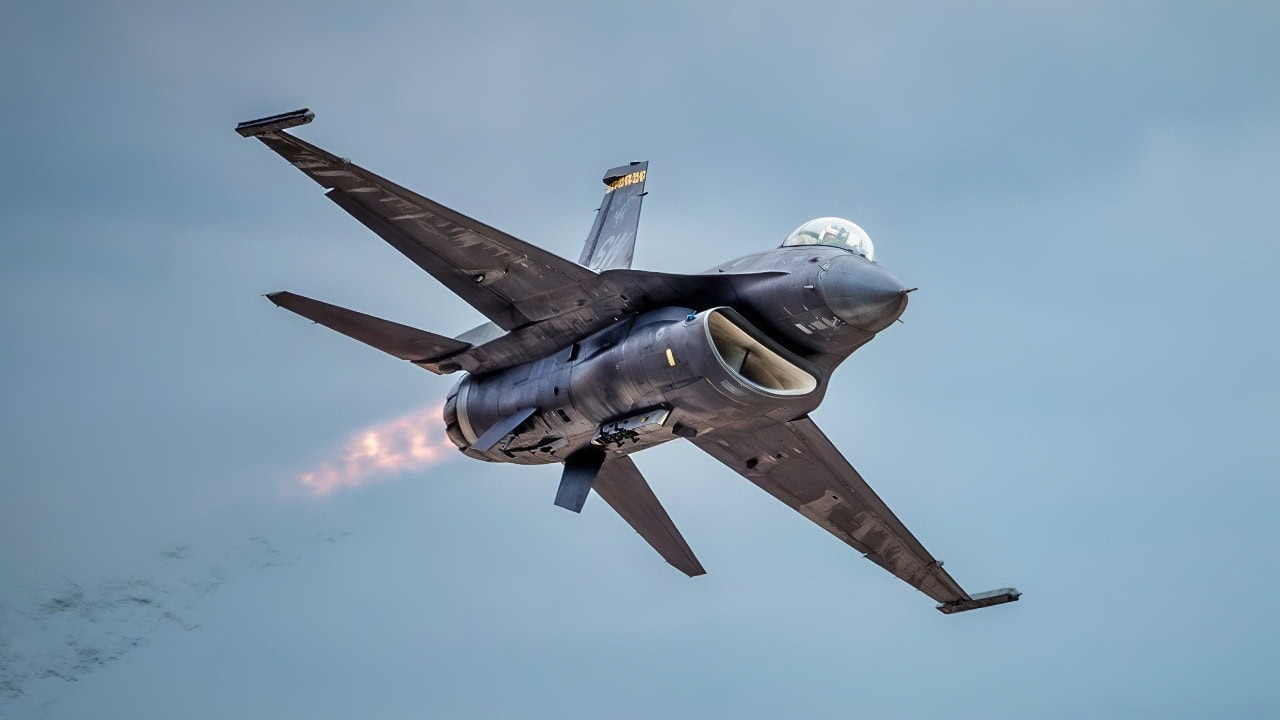
Summary and Key Points: Ukraine has taken delivery of somewhere between 34 and 39 used F-16s. Ukrainian industry representatives at Poland’s MSPO defense exhibition told 19FortyFive that the number of aircraft actually flight-worthy on any given day is “usually only in the single digits” due to a lack of spare parts. Belgium’s contribution this year illustrates the problem precisely: seven aircraft, of which only three are essentially battle-worthy. Those three will go to the air defense role, intercepting Russian cruise missiles and drones. And this is part of even bigger problems for US defense contractors across Europe.
The F-16 In Ukraine: Not Flying So High…
At last week’s MSPO annual Polish defense exhibition, a story that began to sound like a warning to US weapons makers more than a year ago is rising in volume.
It comes as renewed attacks on Ukraine by Russian President Vladimir Putin’s military coincide with the plans for Kyiv to take delivery of western-made fighter aircraft.
The story is that “western-made” in the case of Ukraine now increasingly means European rather than US-designed aircraft.
Next year, most of the aircraft arriving in Ukraine will be European-built models, including a contingent of 16 used Saab JAS-39C/D aircraft from Sweden.
For this year, Belgium is set to supply Ukraine with a small donation of seven F-16s. However, only three of these jets are essentially battle-worthy.
Those three will be used by Ukraine’s Air Force (PSU) primarily in the air defense role to intercept Russian cruise missiles and drones.
So, it’s not a giant plus for the existing fighter force.
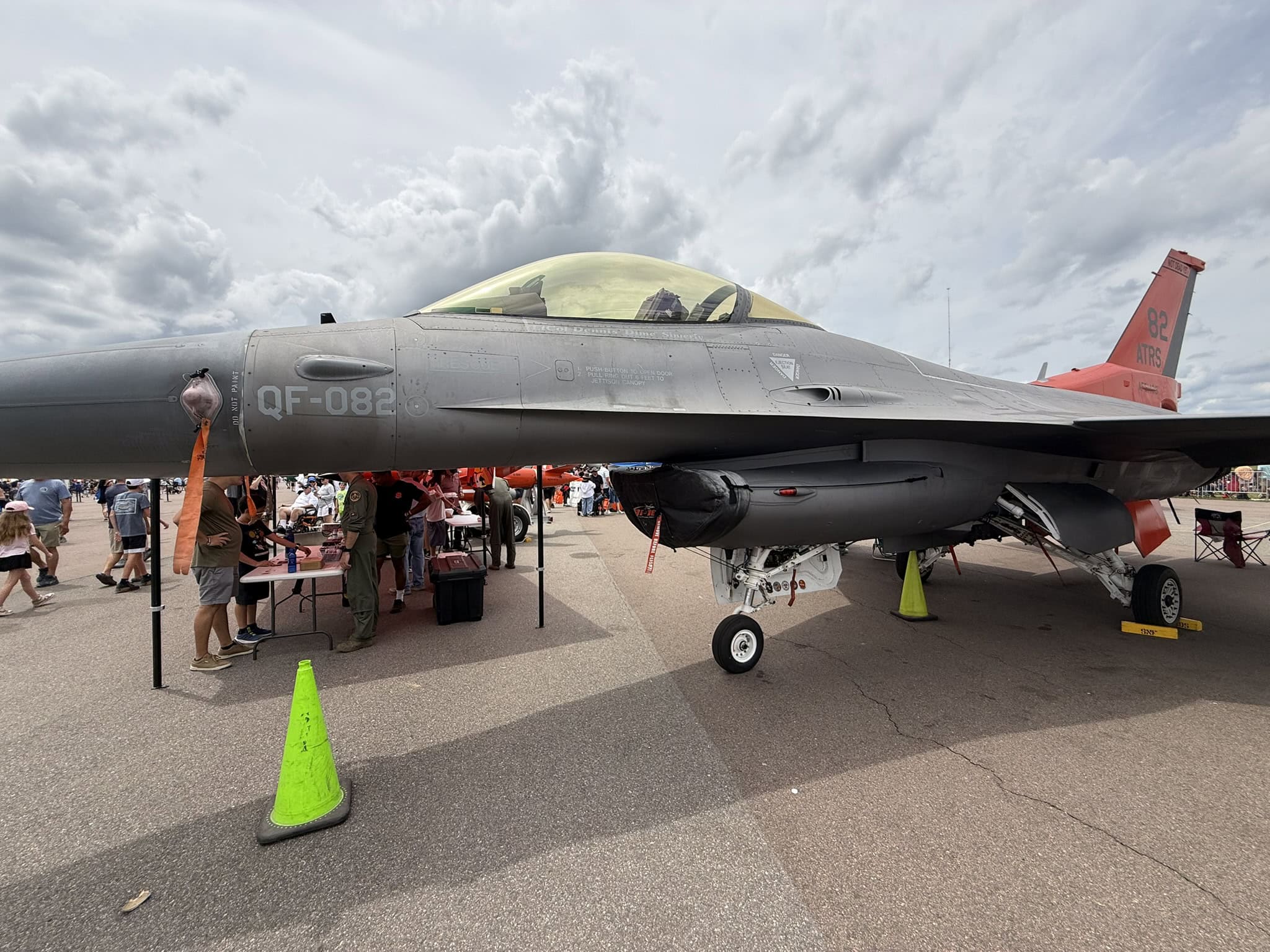
F-16. Image Credit: 19FortyFive.com Taken 4/19/2026.
The other four non-airworthy aircraft are set to be cannibalized for spare parts and used to train engineers and maintenance crews.
Spares are a major issue, according to Ukrainian industry officials at MSPO who spoke to 19FortyFive.
Despite the 34-39 estimated used F-16s provided to date, Ukraine industry representatives say the number that are flight-worthy on any given day “are usually only in the single digits due to problems with spares.”
Between 79 and 85 used models have been pledged to Ukraine so far, but the breakdown between those that can actually be flown in combat and those that will be used for parts or become ground-based training platforms is unknown.
Looking ahead, new-build aircraft to be delivered to Ukraine are, as of today, only European models.
The first of these will be 20 of the next-generation JAS-39E/F models.
In theory, these could be the first of more than 100 of the latest iteration of the Swedish aircraft, per a previous letter of intent between the two nations.
A Long Arm to Reach Enemy Targets
As important as the aircraft, if not more so, on 1 July at a press conference in Kyiv, Sweden’s Defence Minister Pål Jonson confirmed that along with the Gripen C/Ds, the PSU will also receive the MBDA Meteor.
This European weapon is the longest-range air-to-air missile (AAM) in service worldwide and, so far, the only one powered by a ramjet motor.
This will be a game-changer for Ukraine’s ability to intercept and down Russian bomber aircraft before they have a chance to launch the cruise missiles that have been hitting Ukrainian cities night after night.
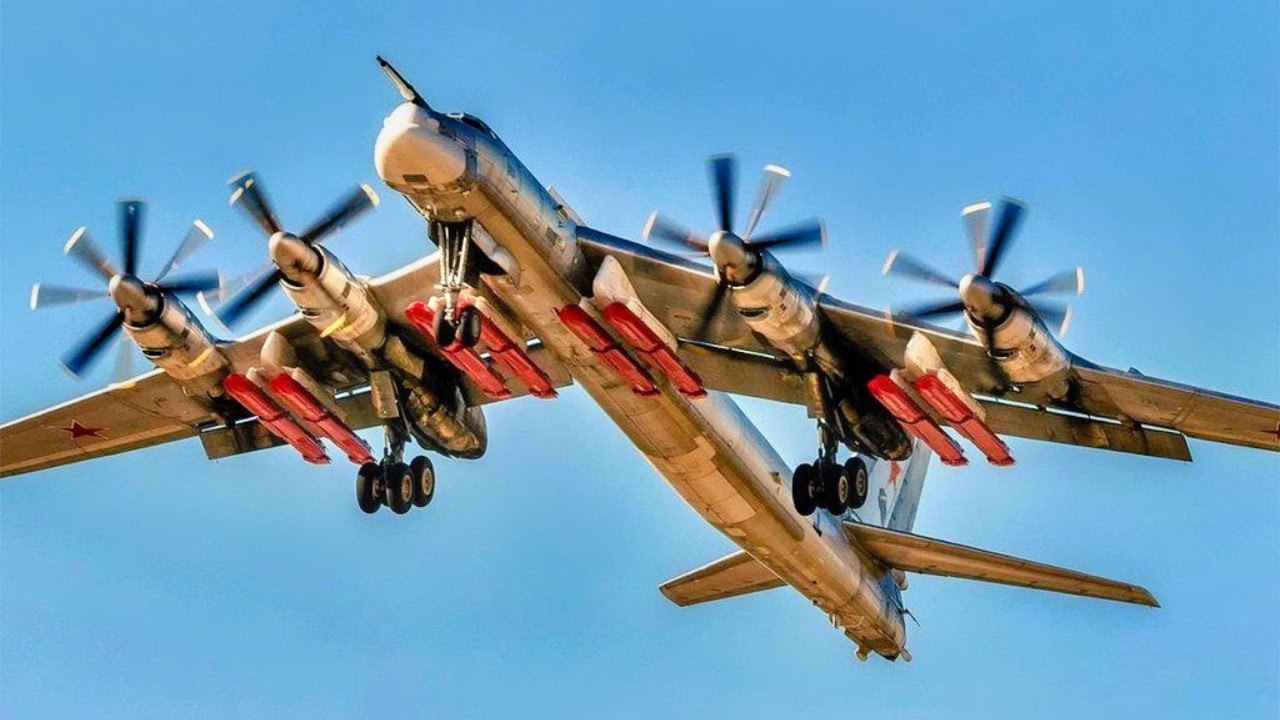
Tu-95 Bomber from Russia. Image Credit: Creative Commons.
The manufacturer states this AAM provides the largest “no-escape zone” of any air-to-air missile in its class.
The missile’s performance provides a reach that is three to six times that of other existing active radar-homing medium-range missiles.
The key to the Meteor is the ramjet propulsion system, which gives a much higher probability of a kill against Russian aircraft.
Specifically, the PSU needs the weapon to down the high-flying and fast-moving Sukhoi Su-34 fighter-bombers and the Su-30SM and Su-35 fighters.
Currently, Meteor is also not integrated on the F-16 nor the Mirage 2000-5s that Ukraine is operating. The JAS-39C/D will therefore provide a unique opportunity for the PSU to finally threaten Russia’s bomber force.
Numbers Matter
Representatives from major European fighter producers like Saab, Leonardo, and BAE Systems told 19FortyFive that last year’s decision by the US Trump Administration to deliver US weapons to Ukraine only after Europeans had first bought and paid for them was a serious strategic blunder.
That decision hurts sales for the US F-35 Joint Strike Fighter as it raises more questions about the reliability of the US as an ally against Putin’s Russia.
Speaking last year to Politico, Gesine Weber of the German Marshall Fund explained that “selling the F-35, or [any] American systems for that matter, will certainly become more complicated for American companies.”
“An important factor in the purchase of the F-35 by European governments was the idea that European defense would be built on a transatlantic basis in terms of strategy, institutions and capabilities. The Trump administration is in the process of dissolving the transatlantic link, and the purchase of American systems will therefore no longer have any added value for Europeans.”
The European firms represented here at the Polish expo say this thinking is even stronger than it was last year, when Weber was interviewed. This has ominous implications for US firms.
“Everything is about numbers,” said one company exec. “If you make less sales, your production runs are smaller. If production drops, per-unit costs go up.
When your price goes up, the customers will, in turn, buy less, which means production drops even more and then the dominoes start falling again. It is a vicious cycle.”
The per-unit price increase of the F-35 has now caused Switzerland to announce in December 2025 that it would reduce its initial planned buy of F-35s from 36 to 30. “The latest we hear is that this figure could drop lower – to now only 28 aircraft,” said the same European company exec. And the picture quite possibly gets worse from here on in.”
About the Author: Reuben F.Johnson
Reuben F. Johnson has thirty-six years of experience analyzing and reporting on foreign weapons systems, defense technologies, and international arms export policy. Johnson is the Korea Fellow at the Casimir Pulaski Foundation. He is also a survivor of the Russian invasion of Ukraine in February 2022. He worked for years in the American defense industry as a foreign technology analyst and later as a consultant for the U.S. Department of Defense, the Departments of the Navy and Air Force, and the governments of the United Kingdom and Australia. In 2022-2023, he won two awards in a row for his defense reporting. He holds a bachelor’s degree from DePauw University and a master’s degree from Miami University in Ohio, specializing in Soviet and Russian studies. He lives in Warsaw.