Stephen Fuhr once used the call sign “Picasso” as a Royal Canadian Air Force pilot. Why? Because his colleagues reportedly mocked his untidy attack maps. He is now helping to draw up something much more consequential: the shape of Canada’s fighter fleet for decades to come. Fuhr, who served as a CF-18 pilot for more than two decades, is now Canada’s Secretary of State for Defence Procurement. He spent years slamming the F-35 jet, telling CBC’s Power & Politics show in 2011 that while it was “a great airplane, it’s not the right plane for Canada.”
However, he may find himself under pressure to carry out plans to buy scores of them.
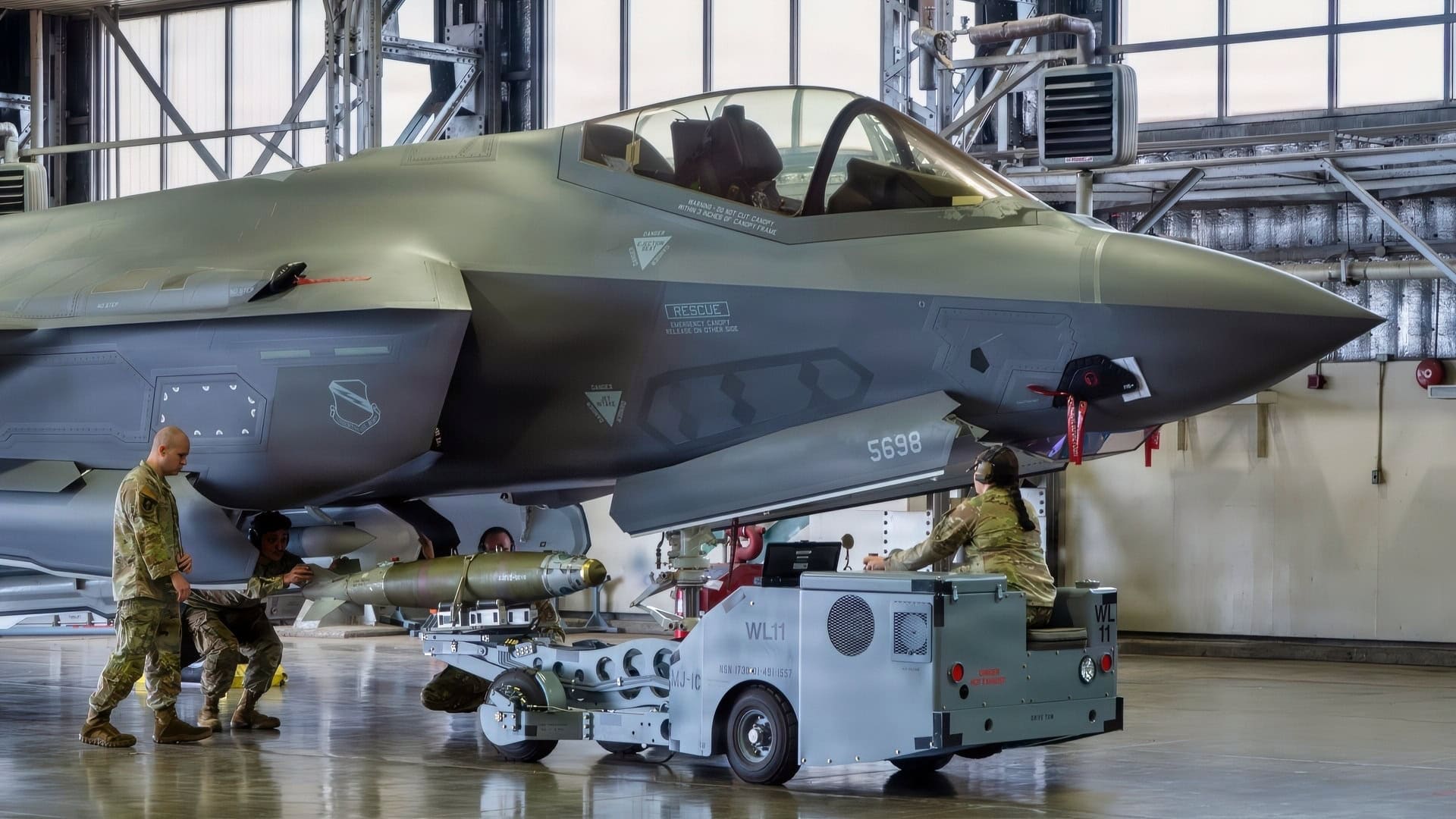
In 2022, Ottawa pledged to buy 88 Lockheed Martin F-35As. Eight of them are due to arrive at Luke Air Force Base in Arizona by 2027, where Canadian pilots will use them for training.
But last March, Canadian Prime Minister Mark Carney instructed that the huge purchase be reviewed amid soaring tensions with Washington, and that review remains inconclusive.
Lockheed Martin F-35 and Saab Gripen: A Mixed Fleet?
Canadian government briefing material now available online states that officials are weighing “all options, including a mix of fighter aircraft.”
Plainly, this could mean using F-35s alongside other jet models, namely the Saab Gripen E. While Fuhr is no longer telling journalists that Canada should totally reject the F-35, he has been clear that the RCAF could operate different fighters simultaneously.
Speaking to CBC News earlier this month, he highlighted the fact that many Canadian allies “run a mixed fleet with fighters.”
NORAD: We Need Modernization
Gen. Gregory Guillot, commander of NORAD and U.S. Northern Command, told the Senate Armed Services Committee in March that he was aiming of modernize existing fourth-generation fighters.
Guillot said that they “don’t need fifth-gen to defend our borders,” and that stealthier fifth-generation aircraft were more valuable for overseas missions requiring penetration of hostile air defenses.
Fuhr chuckled over Guillot’s comments when quizzed on them by CBC and stated that he took the NORAD commander “at his word.”
It does seem, however, that on purely technical matters the F-35 remains vastly superior.

U.S. Air Force Maj. Melanie “Mach” Kluesner, pilot for the F-35A Demonstration Team, preforms high-speed aerial maneuvers during a practice demonstration at Hill Air Force Base, Utah, Jan. 6, 2026. The team practices during their off-season to ensure that they are always sharp and ready to demonstrate the capabilities of the F-35A and the U.S. Air Force. (U.S. Air Force photo by Staff Sgt. Nicholas Rupiper)
Radio-Canada cited Defence Department figures which evidenced the F-35 receiving 57.1 of 60 points, or 95 percent, for military capability in the 2021 competition.
Gripen E received 19.8 points, or 33 percent.
In the heavily weighted “mission performance” category, the difference was 97 percent to 22 percent.
The F-35 also outranked the Gripen in scores for upgradability, technical criteria, capability delivery, and sustainment.
The Contest Is Not Closed, Yet
The Auditor General of Canada reported last year that the estimated acquisition cost of the fighter project had jumped from C$19 billion in 2022 to C$27.7 billion in 2024.
That figure still excluded at least C$5.5 billion for additional infrastructure, advanced weapons and other requirements for full operational capability.
The U.S. Government Accountability Office said in September 2025 that the F-35’s Block 4 modernization was more than $6 billion over previous estimates and of least five years behind schedule.
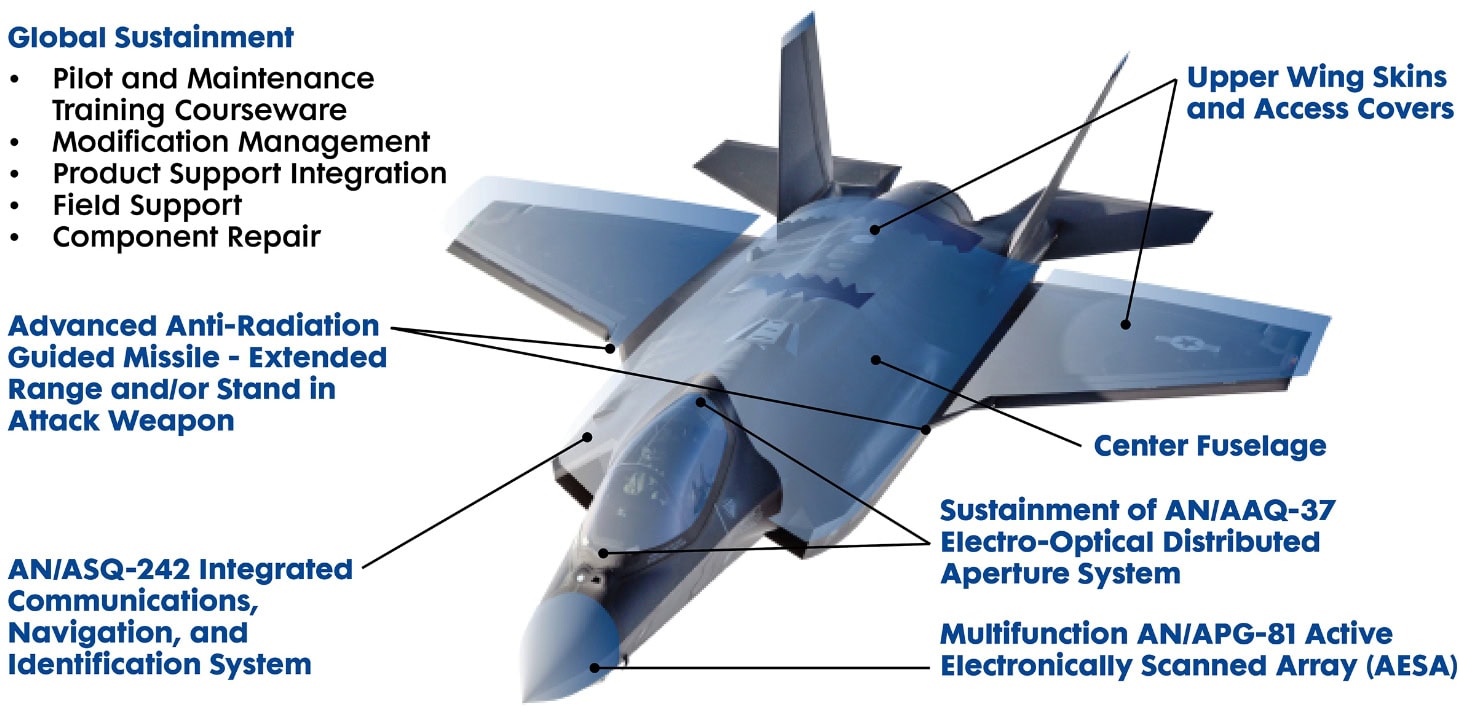
F-35 Fighter. Image Credit: Industry Handout.
All 110 F-35s Lockheed Martin delivered in 2024 arrived late, by an average of 238 days.
Saab Makes Its Case
Over the summer, Saab has spent time publicly stressing its own selling points.
CEO Micael Johansson told reporters in August that he does not expect Canada to abandon the F-35 altogether.
He prefers a combination of the two aircraft, which he called a “perfect match.” Aviation Week reported that Saab remains prepared to establish a Canadian aerospace hub capable of producing Gripen E/Fs if Ottawa splits the fighter purchase.
In July, Saab signed an agreement with Canadian firm CAE covering Gripen pilot and technician training, simulators, mission-systems engineering and sustainment if Canada selects the aircraft.
The companies are explicitly pitching the arrangement as a way to bring more fighter-related work, software expertise, and support capability into Canada.
Indeed, Canada is already hosting pilots preparing for a multi-aircraft future.
Ukrainian President Volodymyr Zelenskyy visited 21 Ukrainian military personnel training at the International Test Pilots School in North Bay, Ontario, on September 12.
They currently fly L-39 trainers, but the school has been preparing Ukrainian pilots since April 2025 to transition to F-16s and Gripens.
“We already have not only F-16s; we’ll also have Gripens this year,” Zelenskyy told them.
Ukraine, currently battling against Russia’s full-scale invasion, does not have the same needs as Canada.
A mixed RCAF fleet wouldn’t be cheap or simple either. Two fighters mean different training pipelines, maintenance requirements, spare parts, and support systems.
But Fuhr’s point is narrower than the old argument over which jet is “better,” which the F-35 wins almost every single time.
About the Author: Georgia Gilholy
Georgia Gilholy is a journalist based in the United Kingdom who has been published in Newsweek, The Times of Israel, and the Spectator. Gilholy writes about international politics, culture, and education.