
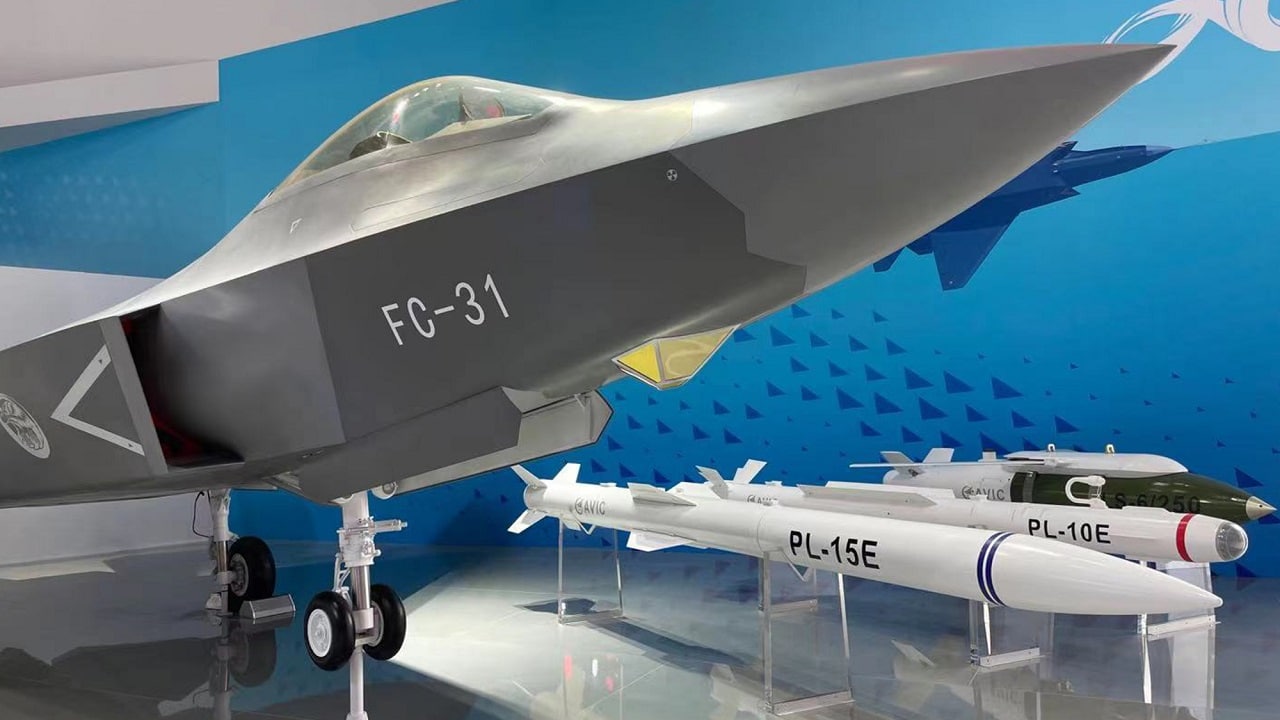
Synopsis: China is moving from a domestic fighter producer to a global exporter with a three-tier portfolio: the FC-31/J-35 export variant aimed at the stealth market, the J-10C as a mid-tier multirole fighter with modern sensors and long-range missiles, and the low-cost JF-17 built for affordability and accessible logistics.
-Beijing’s appeal is less political restriction, flexible financing, and the ability to bundle aircraft with missiles, drones, training, and sustainment—turning fighter sales into foreign-policy leverage.
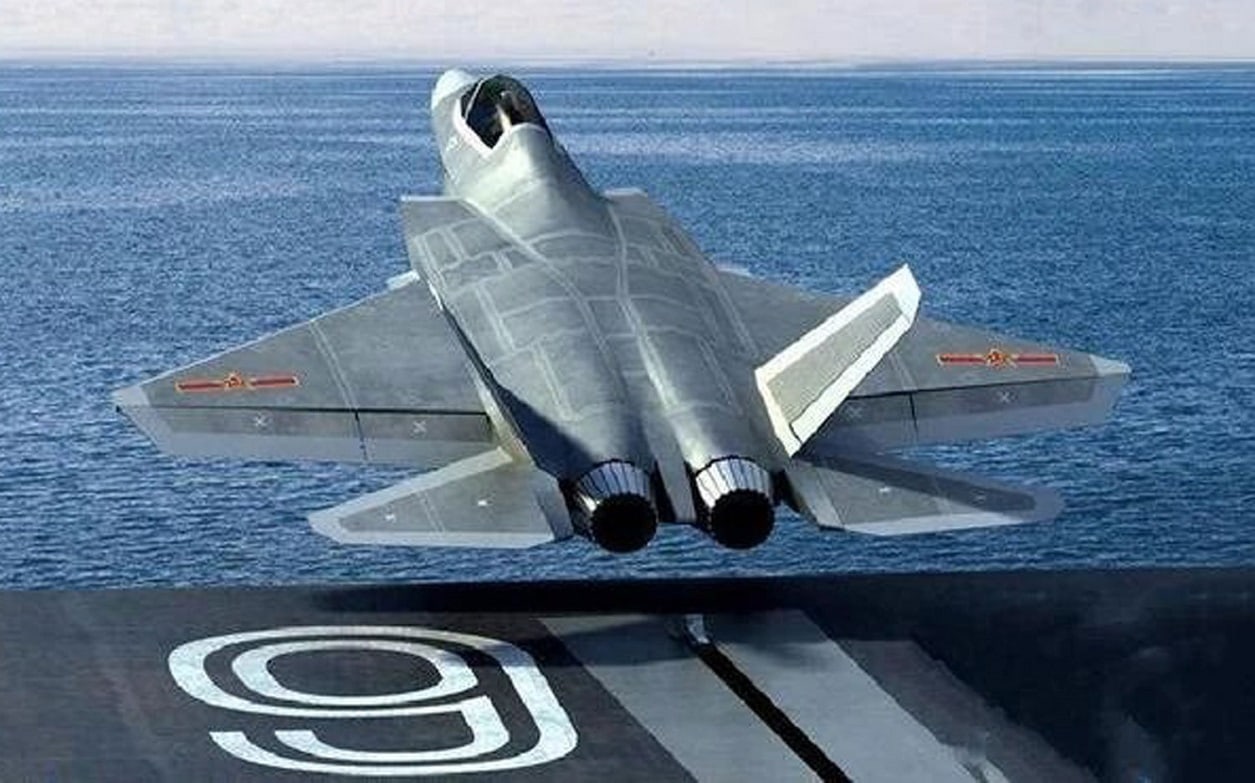
FC-31 Artist Rendering. Image Credit: Creative Commons.
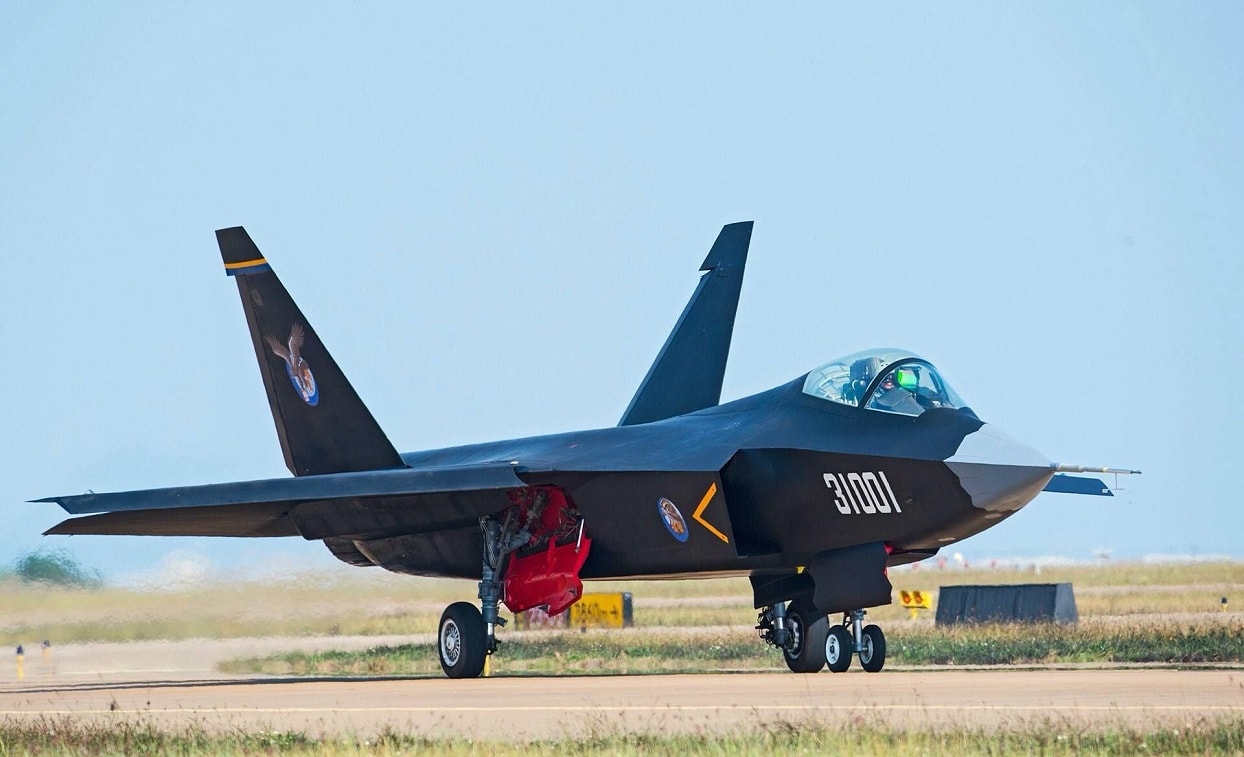
Image: Creative Commons.
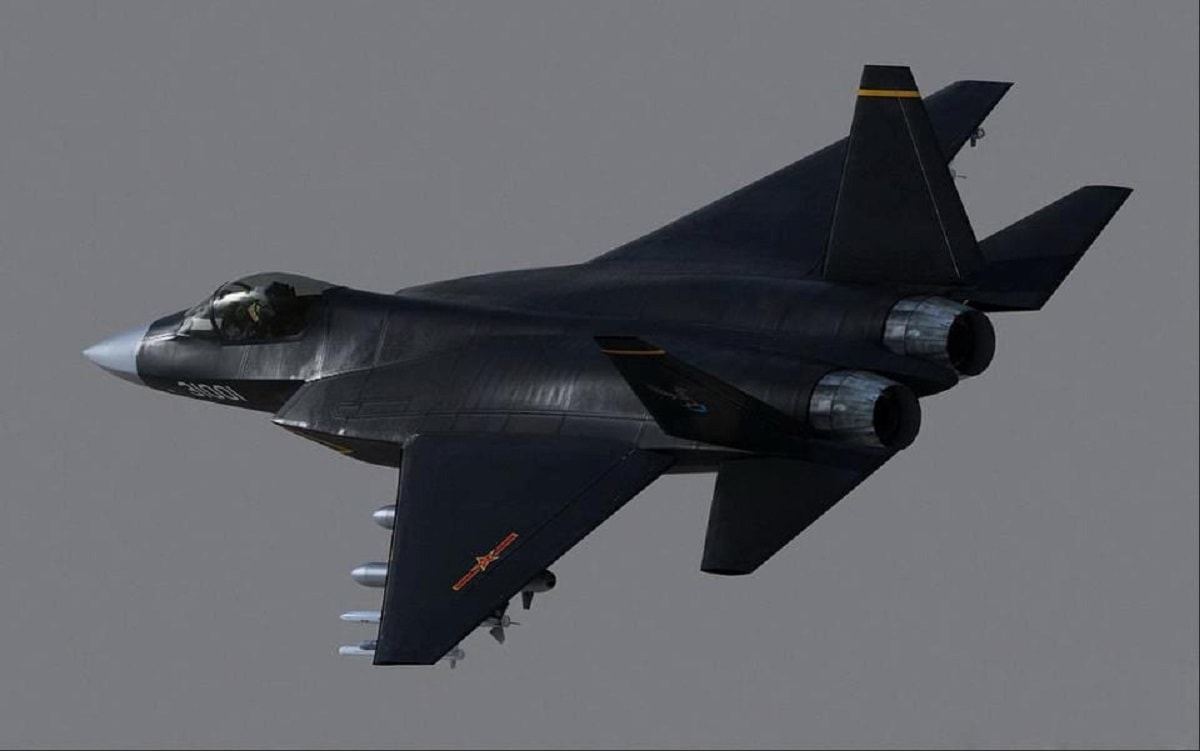
Image of possible FC-31 stealth fighter that is under consideration for service in the PLAN. Image Credit: Chinese Internet.
-If the FC-31 lands its first export customer, it would signal China’s arrival as a long-term competitor in the high-end market.
-China is no longer just producing fighters for domestic use—it is intentionally positioning itself as a significant global exporter of fighters.
Why the U.S. Should Watch China’s Fighter Jet Sales More Closely
While America remains the world’s leading fighter jet exporter, Washington is tracking China’s market assertions.
The Pentagon’s latest report reinforces China’s upward trajectory, highlighting three export-ready platforms: the FC-31 (J-35 export variant), the J-10C, and the JF-17.
Together, these three aircraft comprise a tiered fighter export portfolio, allowing China to compete across multiple price and capability bands traditionally dominated by the US, Europe, and Russia.
Why This Matters
China’s aerospace sector has matured rapidly, in recent years introducing stealth airframes, AESA radars, and long-range missiles.
The result has been a potential new player in the global aerospace market, a nation with enormous economic capacity, now with a mature aerospace sector.
Export success will depend on market fit — i.e., affordability, availability, and political flexibility—since fighter exports aren’t just a commercial transaction but a tool of foreign policy.
FC-31 Overview
China is attempting to elbow its way into the stealth export market with the FC-31.
The program later evolved into the J-35 (carrier variant for PLA Navy) and the J-35A (land-based variant), but despite PLA adoption, the FC-31 export variant remains a priority.
No sales have been confirmed yet, but serious interest has been reported from Egypt, Saudi Arabia, and the United Arab Emirates. China’s market logic positions the FC-31 as an alternative to the F-35 for countries iced out by US export rules.
The FC-31 will compete with the South Korean KF-21, Turkish TF Kaan, and the American F-35.
Strategically, the FC-31 export gives China its first entry into the high-end stealth export market; if sold, the transaction would mark a psychological and geopolitical breakthrough for Beijing.
Middle Eastern buyers present a unique opportunity for the FC-31.
Egypt is blocked from acquiring the Su-35, thanks to CAATSA, but a potential Chinese stealth fighter circumvents Western sanctions. Saudi Arabia and the UAE are considering the Rafale, Typhoon, F-15EX, and F-35.
An offer from China provides leverage in negotiations with Washington. China has positioned the FC-31 as less politically restrictive and less intrusive on national sovereignty. Export success here in the Middle East would reshape regional air power dynamics.
J-10C Fighter Overview
The J-10C represents China’s most combat-tested export-capable fighter.
The only confirmed export customer so far is Pakistan, which has ordered 36 units and accepted delivery of 20.
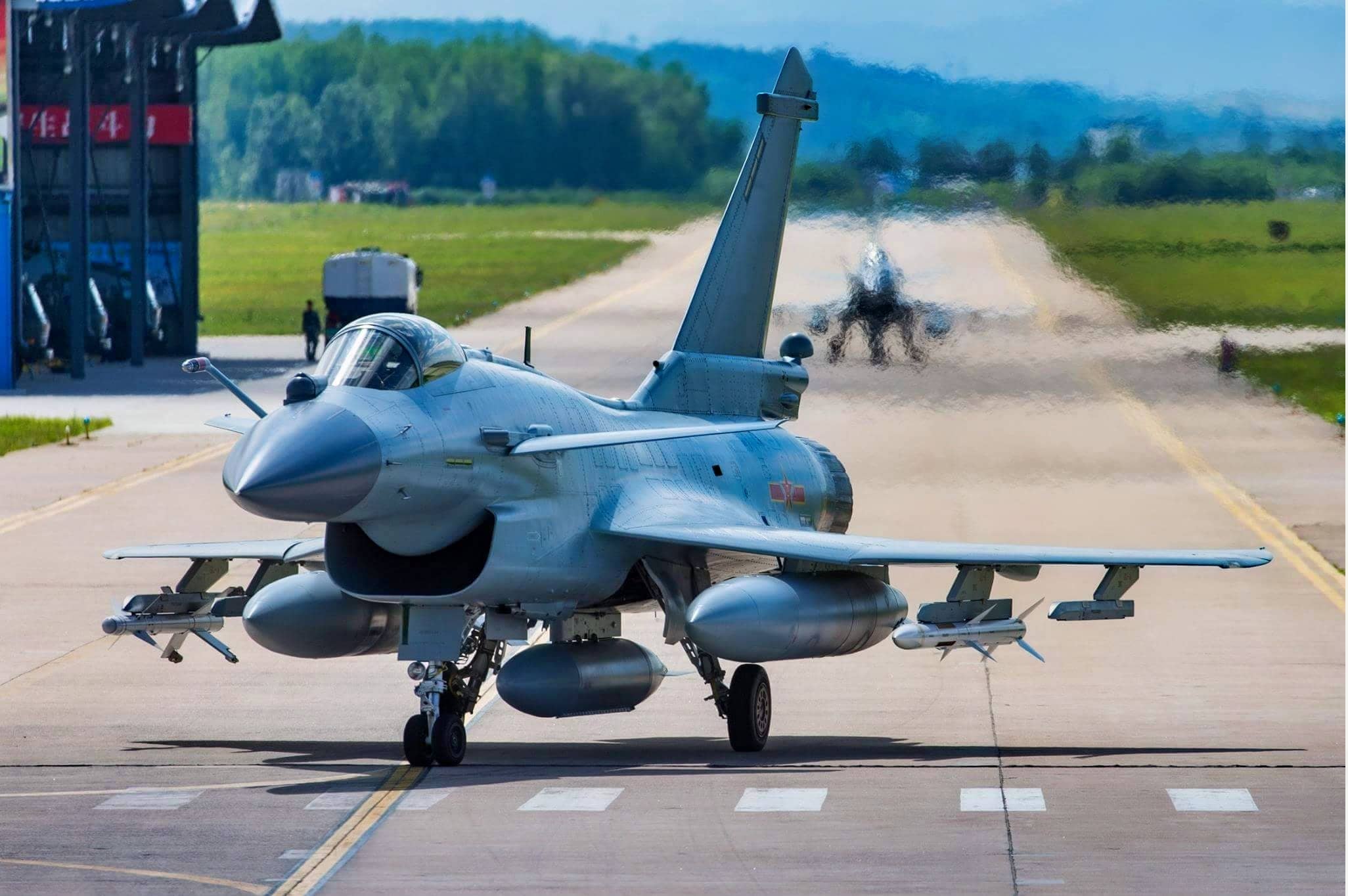
J-10C Fighter from China. Image Credit: Creative Commons.
The platform’s combat debut in India-Pakistani clashes boosted China’s marketing push.
The J-10C boasts AESA radar, PL-15 long-range AAM, and modern avionics at lower costs than Western equivalents. Reportedly, interested nations include Egypt, Iran, Indonesia, Bangladesh, and Uzbekistan.
The J-10C fills the gap between legacy fighters and fifth-generation stealth platforms for countries that can’t afford the latter.
JF-17 Overview
The JF-17 stems from a collaboration between China and Pakistan. This is the cheapest and most export-successful Chinese fighter. Current customers include Pakistan, Nigeria, Myanmar, and Azerbaijan. A potential sale to Iraq highlights the appeal to states in need of affordable fleet expansion and independence from the Western logistics chain.
And later variants are increasingly capable, with AESA radar and modern weaponry. The JF-17 shows China can compete on quantity and accessibility.
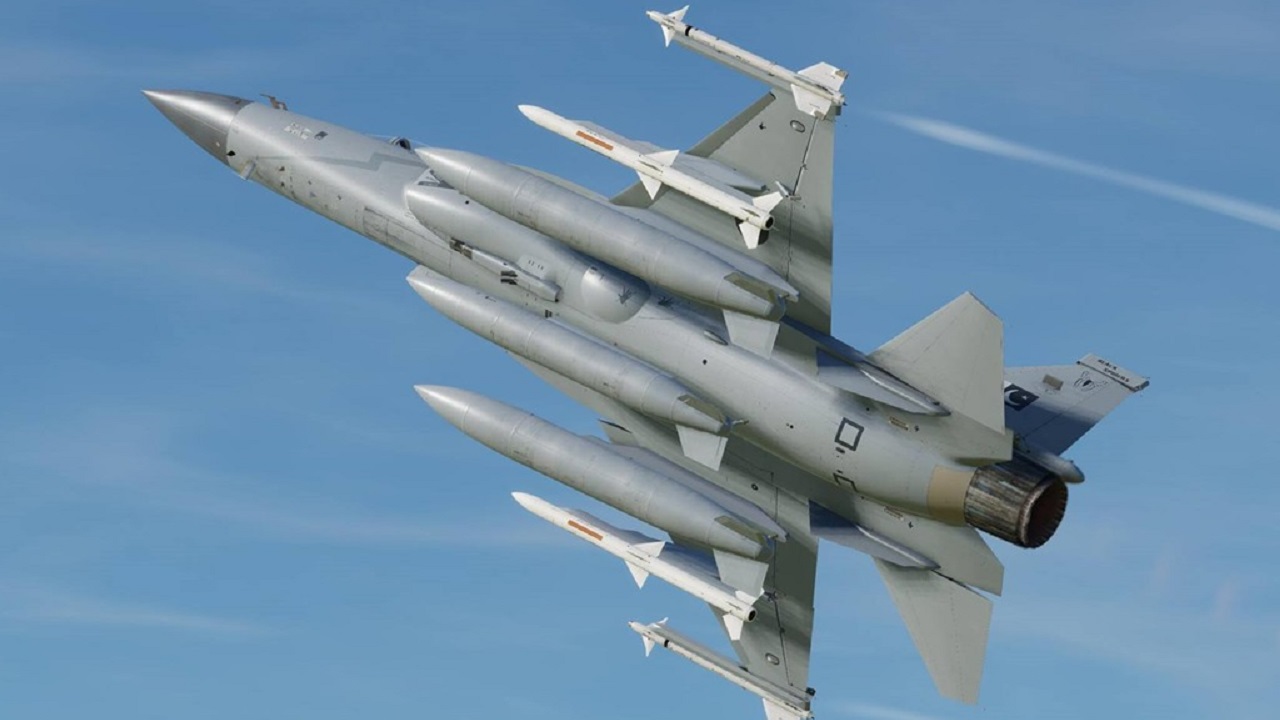
JF-17 fighter. Image Credit: Creative Commons.
Strategic Implications
China offers potential clients some unique advantages, namely, fewer political restrictions than Western suppliers. China has immunity from ITAR and CAATSA, plus a willingness to provide flexible financing, barter arrangements, and Belt & Road initiatives.
China can also bundle fighters, missiles, and drones with training—this positions China as a one-stop air power supplier for customers looking to streamline their procurement strategy.
China is no longer just displacing Russia in low-end markets; China is climbing the value chain, beginning to challenge Western dominance at higher price points. And as fighter exports deepen, China will develop enhanced relationships with reassurance ties and influence over doctrine and training, which can be integrated with China’s own.
With three fighters now covering three tiers, China now offers stealth, mid-term multirole, and budget combat aircraft. If the FC-31 secures its first export customer, it will mark a new phase in global fighter competition. And regardless, the fighter market is no longer bipolar—it has become multipolar, with China’s emergence, which appears intent on becoming a permanent player.
About the Author: Harrison Kass
Harrison Kass is an attorney and journalist covering national security, technology, and politics. Previously, he was a political staffer and candidate, and a US Air Force pilot selectee. He holds a JD from the University of Oregon and a master’s in global journalism and international relations from NYU.