
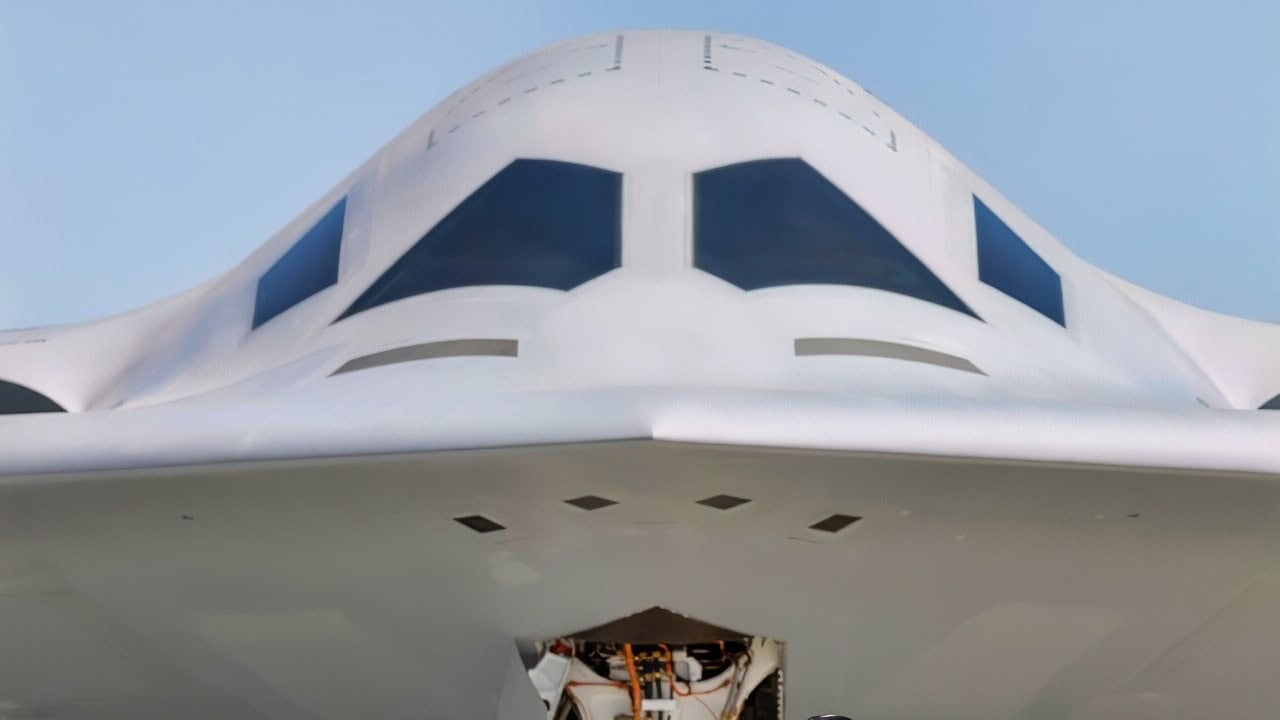
Key Points and Summary – China’s A2/AD bubble is forcing the Air Force to bet on the B-21 Raider as the only bomber built to penetrate dense air defenses, strike inland C2 nodes, missile brigades, airfields, and ports, and still provide a survivable nuclear option.
-The problem is mass.
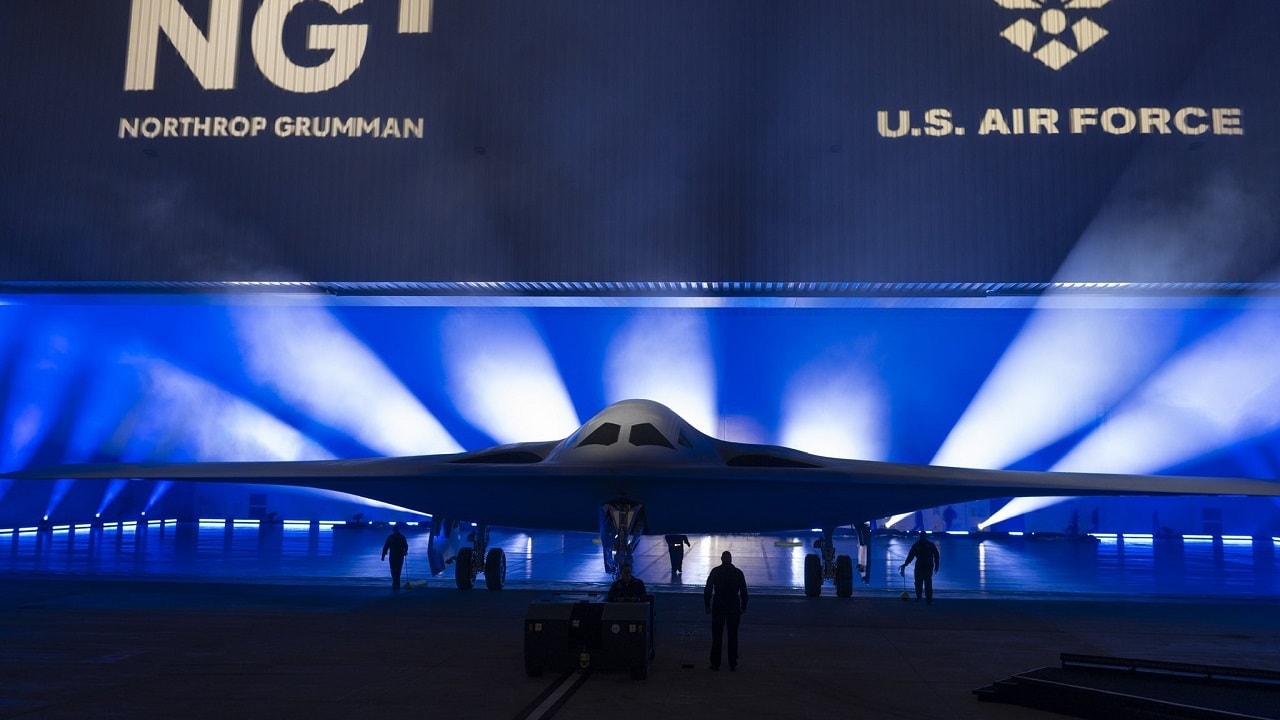
B-21 Raider. Image Credit: U.S. Air Force.
-A buy of 100 aircraft may merely replace aging B-1B/B-2 capacity, and real-world mission-capable rates could leave only half available in a high-end fight.
-Mobile targets, vast geography, and attrition argue for 150–200 Raiders, but production and budget limits make that a long climb.
-That gap drives calls to accelerate production, harden bases, and stock weapons.
The B-21 Bomber Debate Can Be Summed Up in 3 Words: Not Enough Jets
The forthcoming B-21 Raider will be the first new US strategic bomber in a generation.
Pentagon plans call for at least 100 aircraft—but that number may change on account of China’s rapidly expanding military.
As China’s A2/AD network becomes increasingly layered and sophisticated—complete with massive missile arsenals, hardened command centers, and a bona fide nuclear triad—the question becomes: is 100 B-21s sufficient to deter or defeat China?
Tech Overview of the B-21 Raider
The B-21 is a stealthy, long-range penetrating bomber designed to bypass China’s layered air defenses.
Subsonic but with a remarkably low observability, the B-21 is optimized for survivability, not speed, much in the tradition of the B-2 Spirit.
With advanced, modular avionics and an open-systems architecture, the B-21 has been designed for upgrades, suggesting a multi-decade service life ahead.
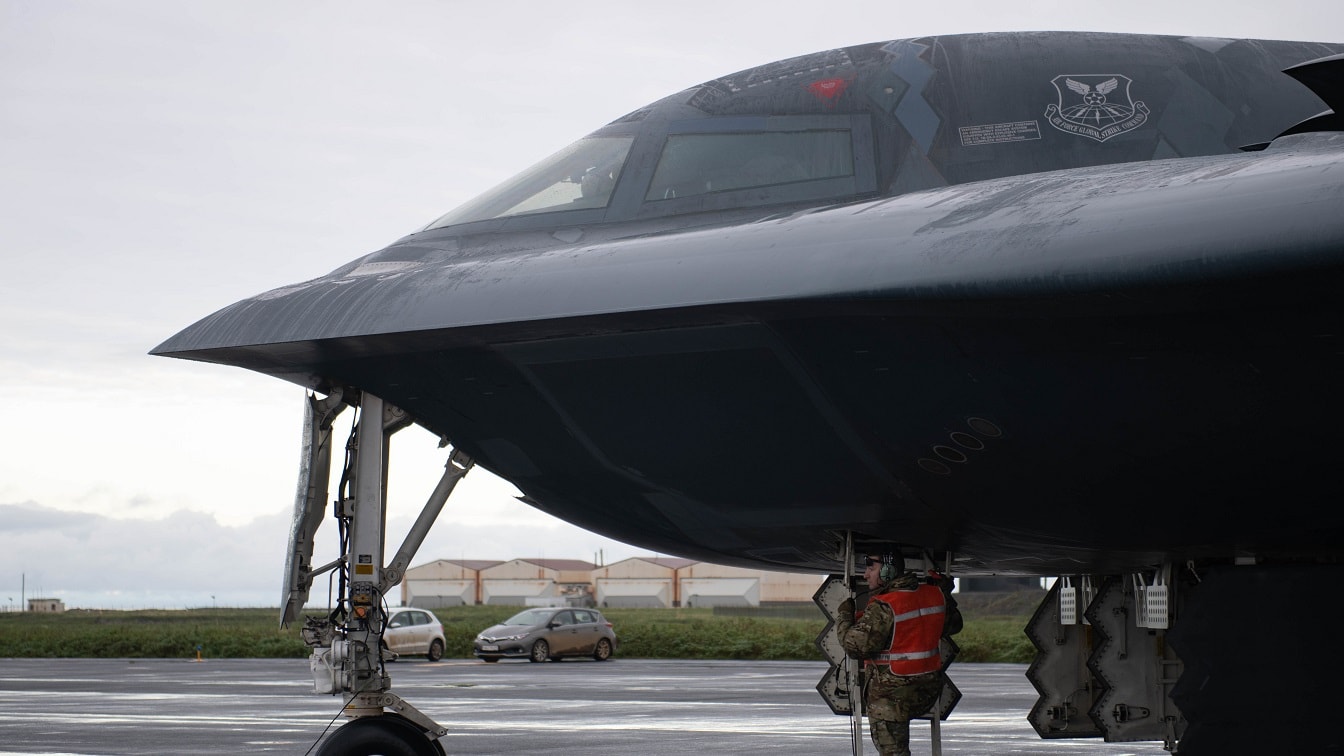
A crew chief assigned to the 110th Expeditionary Bomb Squadron, prepares a B-2 Spirit for departure from Keflavik Air Base, Iceland, Sept. 11, 2021. The stealth bomber provides unique capabilities to combatant commanders with their ability to strike targets without being detected. Operating out of Iceland allows Airmen and the B-2 to assure allies by contributing to security in the European theater. (U.S. Air Force photo by Airman 1st Class Victoria Hommel)
The ultimate purpose of the B-21 is to deliver ordnance, so expect a large, varied payload that likely includes JASSM-family ordnance, LRSO (nuclear cruise missile), conventional JDAM/SDMs, and next-generation hypersonic or stand-off weapons.
The B-21 will be capable of conducting both nuclear and conventional strikes, fulfilling both deterrence and war-fighting roles.
Once operational, the B-21 will replace the B-2 and the B-1B outright, as well as parts of the B-52’s mission.
The B-21 will be essential in a conflict against China, which has created a formidable A2/AD bubble, featuring thousands of long-range missiles, SAM systems, and a dense network of radar coverage.
Accordingly, only stealth bombers will have both the low observability and the range to penetrate China’s A2/AD network.
Non-stealth platforms would be detected and destroyed rapidly, while fighters (dependent upon non-stealth tankers to extend range) lack the range to penetrate meaningfully.
Non-stealth bombers can deliver stand-off weapons from outside of the A2/AD bubble—but that solution offers limited firepower.
The B-21 is the proposed answer—capable of deliver concentrated payloads of ordnance deep within the A2/AD network, striking Beijing, inland C2 nodes, bases and airfields—all without relying upon tankers or forward bases.
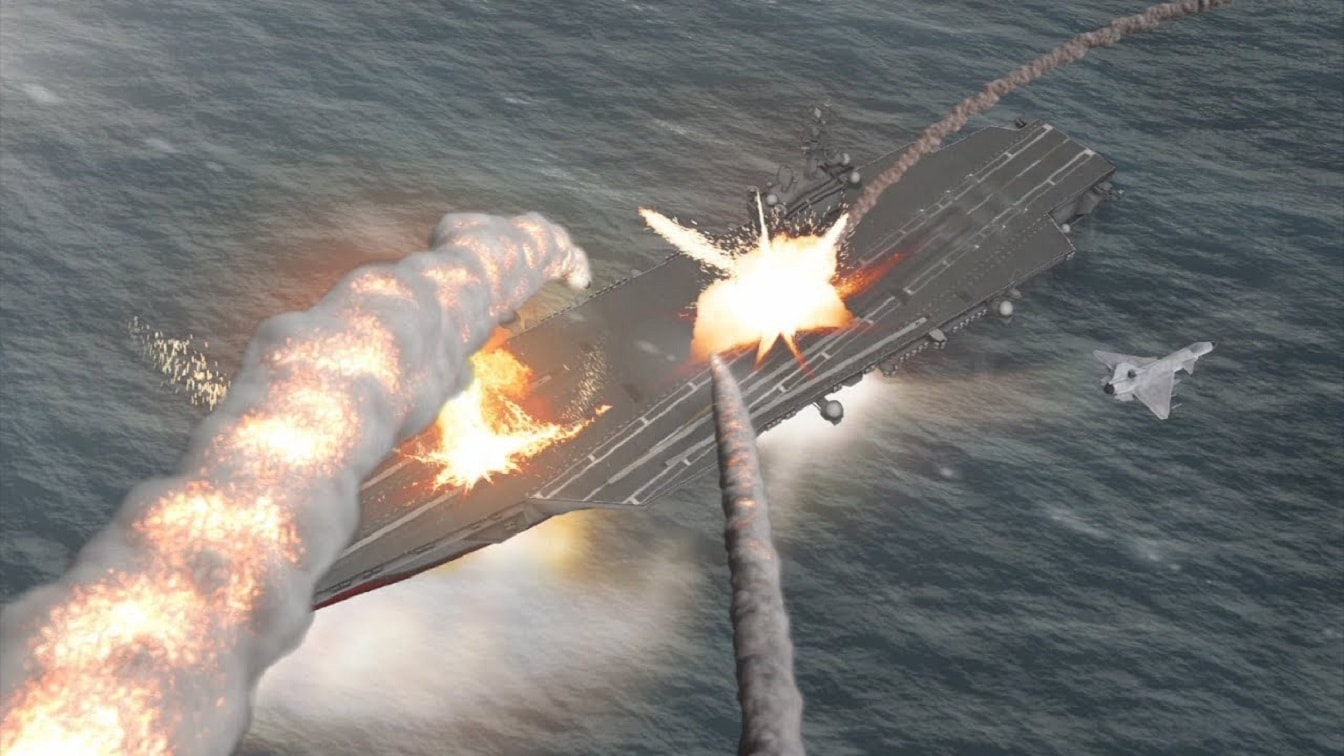
YouTube Screenshot of a Simulation of China Firing a DF-21 ASBM.
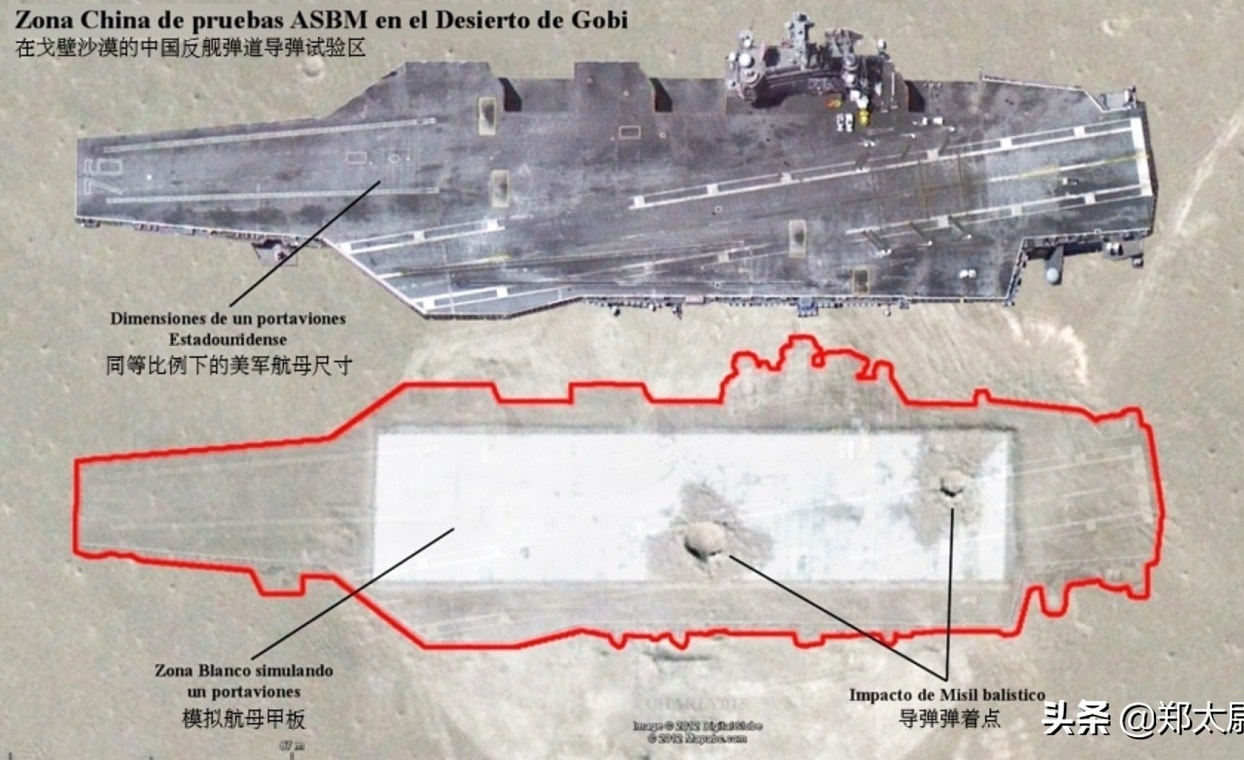
Image from the now closed WantChinaTimes. This shows a mock attack on a U.S. Navy aircraft carrier.
The B-21 will likely be used to neutralize Chinese integrated air defense systems to open corridors for follow-on forces.
Specifically, the B-21 will be tasked with destroying missile launchers, i.e., DF-21D, DF-26, DF-17, before they can be used to strike US carriers or bases in Guam, Okinawa, etc. Other high-priority B-21 targets include hardened C-2 nodes, air bases that support J-20, J-16, and eventually J-35 operations.
The B-21 will also be used to perform long-range maritime strikes against PLAN ports, dry-docks, and amphibious fleets.
And, the B-21 will give the US enhanced nuclear deterrence in the form of second-strike survivability.
Is 100 B-21 Raider Bombers for the Air Force Too Low?
Were the US Air Force to procure 100 B-21s, as initially projected, it would likely replace, but not expand, current capacities.
During the Cold War, the US possessed 400-500 strategic bombers.
Today, the strategic bomber fleet is around 140 strong, but much of it is aging and in poor readiness.
In a war with China, attrition levels could be significant; a force of 100 bombers could degrade quickly, especially if China successfully targets the airfields and logistics necessary to keep the B-21 in the fight.
And given a typical bomber fleet’s mission-capable rate of around 50 to 60 percent, that means only about half of the B-21 fleet will be available, under the best of circumstances, for high-intensity operations.
To be effective, the B-21 fleet will need to be large.
Targets in mainland China are vast and redundant.
Missile brigades are mobile; airfields are numerous; industrial targets are spread across thousands of miles. To hit enough of China’s targets quickly enough to have an intended impact, the US will need volume.
And in the Indo-Pacific, a geography of vast distances, within which China now fields the world’s largest (by quantity) navy, the US will need quantity of its own.
Independent analysts argue that at least 150-180 B-21s are required to deter China. Ideal wartime requirements may call for 200 or more B-21s.
But the industrial reality is that Northrop Grumman can likely produce only a dozen or so ultra-complex B-21s per year, meaning reaching 200 or more aircraft would take almost two decades.
And any increased investment in a strategic bomber fleet will also need to consider the fiscal cost, as the US defense budget threatens to exceed one trillion dollars per year, far higher than any other nation on Earth.
About the Author: Harrison Kass
Harrison Kass is an attorney and journalist covering national security, technology, and politics. Previously, he was a political staffer, candidate, and a US Air Force pilot select. He holds a JD from the University of Oregon and a master’s in global journalism and international relations from NYU.