
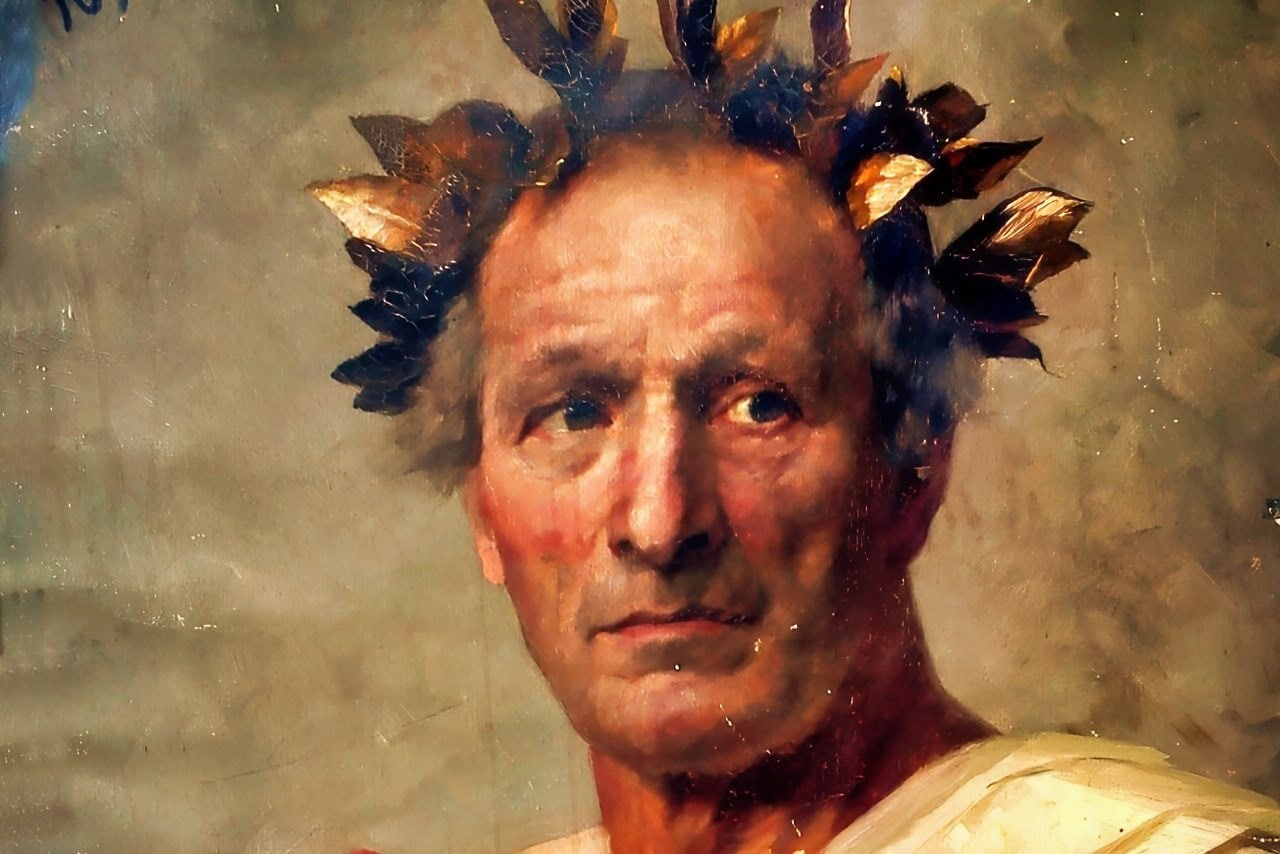
Summary and Key Points – This analysis unpacks Julius Caesar’s famous quote connecting training to victory: “For lack of training, They lacked knowledge. For lack of knowledge, They lacked confidence. For lack of confidence, They lacked victory.”
-The piece explores how Caesar believed realistic, intense training forged the “muscle memory” and knowledge necessary to enter a combat “flow state,” thereby eliminating fear.
-It traces this philosophy through his legendary military campaigns, from the Gallic Wars to the Civil War, illustrating how his emphasis on preparation turned his soldiers into a force capable of superhuman feats.
Unpacking Julius Caesar’s Famous Quote on the Path to Military Victory
“For lack of training, They lacked knowledge. For lack of knowledge, They lacked confidence. For lack of confidence, They lacked victory” – Julius Caesar
Julius Caesar likely made this quote around 70 to 50 BC after one of his many combat victories.
This has to do with the necessity of difficult and realistic training to prepare for the demands of warfare. Think about how Delta Force and other Tier One special mission units train today.
No effort is wasted. Everything in training is done for a reason to prepare for combat. Training is varied and imaginative, which pushes humans beyond their normal red lines.
These are all traits that Caesar would have liked in his fighters.
Let’s Break Down This Quote
Lack of knowledge refers to inexperience in combat, and how day after day of aggressive training can build muscle memory and the ability to push on through adversity.
Experience also gives the warrior the foundation to fight on in battle under extreme conditions with superhuman effort. Knowledge leads to survival and dominance.
This also reduces fear in the brain. There is no flight – only fight.
How Does Knowledge Relate to a State of Flow?
Knowledge can also contribute to a flow state.
This is your brain and body going on autopilot to render an adversary’s effort in battle futile. Constant training and knowledge become second nature.
Soldiers do not even know how they survive a confrontation.
Individual effort is transformed into where the mind and body take over consciousness to defeat a foe.
Caesar knew that his men had to achieve a flow state where they believed they could defeat anyone.
When Confidence Is Forged
Confidence can result from realistic training. Commanders must put the fear of God into their warriors. Fear and anxiety should be the normal brain activity at all times for warriors.
Fear and anxiety stemming from prior knowledge of the battlefield are a force multiplier.
Individual training events should bring about confidence that any hurdle is possible to eclipse.
Fighters should not fear giving up an “ounce of blood” during training, as that type of intensity creates knowledge about the ways of a warrior and confidence in their ability to adapt and overcome.
Can Fear and Anxiety Actually Help Win a Fight?
Fear and anxiety also lead to better situational awareness and planning. No plan can survive first contact with the enemy, but if commanders can instill confidence and knowledge into a soldier’s ethos, that is half the battle in successful planning.
Victory is thus assured. Warriors should be superhuman, and that is what intimidates the enemy. Commanders want to make adversaries fear for their lives and retreat during combat for a decisive win.
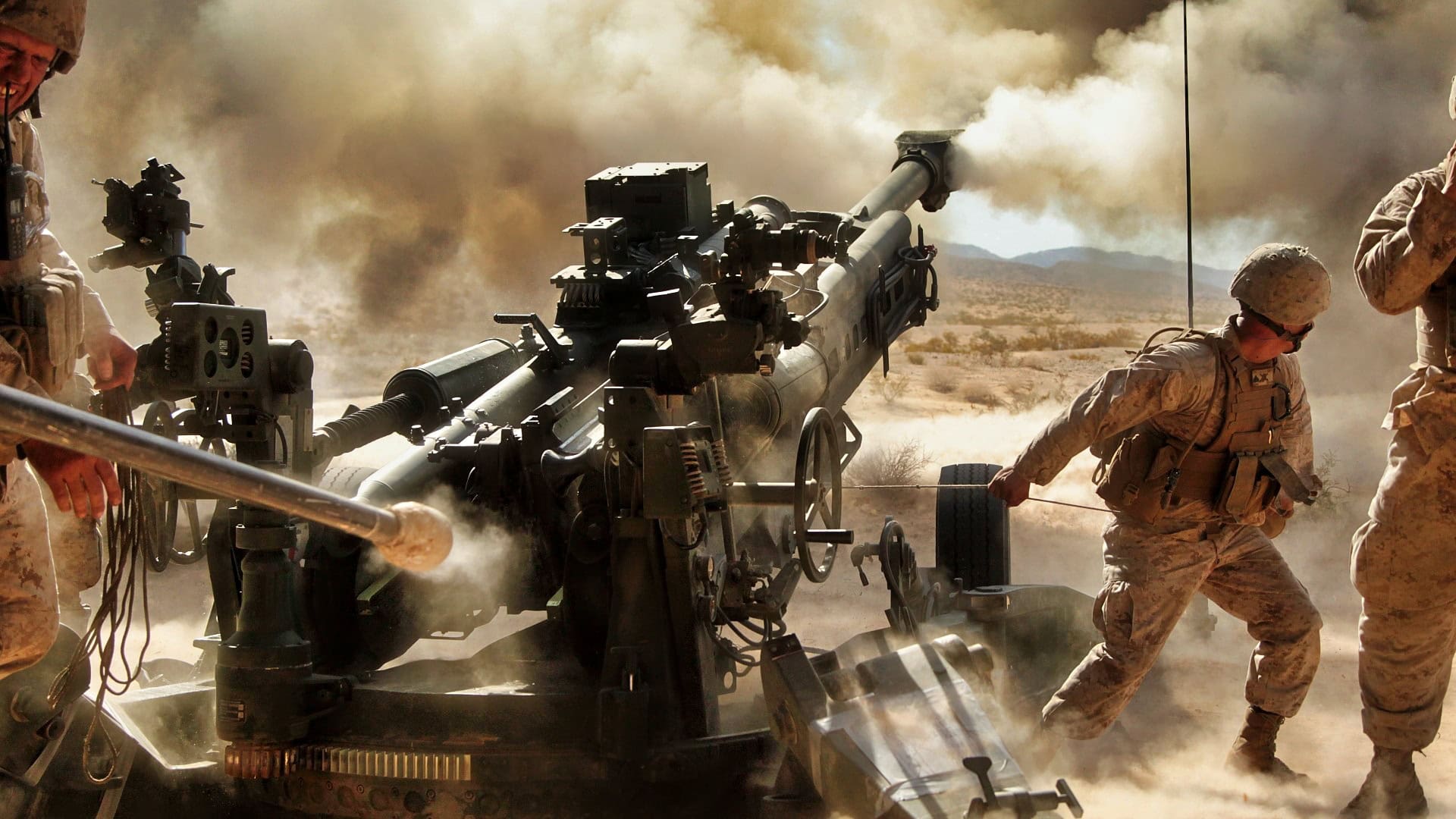
Marines with Battery N, 5th Battalion, 14th Marine Regiment, fire an M777 A2 howitzer during a series of integrated firing exercises at the Combat Center’s Quakenbush Training Area April 26, 2013. (Official USMC photo by Cpl. William J. Jackson/Released)
There is strength in the numbers of friendly forces with knowledge and confidence, and there is no fear from all the prior combat and realistic training. Caesar became used to winning, and his warriors expected victory at all times.
Caesar’s First Big Win
As a result, Caesar excelled during the Gallic Wars.
The conflict began when the Haedui tribe sent a message that they were in dire straits and needed a relieving force. The tribe had taken root in the northern part of the city of Lugudunum (in Lyon, France) in 58 BC.
Caesar wanted to make a name for himself and receive accolades, prestige, and tribute for his warriors. He answered the call, and he took it out on the Haedui’s mortal enemy – the Helvetti force.
“Caesar and his army marched north, where he won his first major victory at the Battle of Bibracte, defeating the Helvetti and forcing them and their allies to retreat,” according to the Collector.com.
This gave Caesar and his men knowledge and confidence that they could win decisive battles. They found out they could take casualties and fight on, knowing victory was always in reach.
This set the stage for more success. Caesar ended up winning all of Gaul.
Confidence Building Achievement
After this war, Caesar received the recognition and accolades that he desperately wanted in Rome. Soon, civil war erupted in the Roman Empire, though.
This was to last five years. Caesar got to work with alacrity. His forces crossed the Rubicon River. In just two months, he won land throughout Italy and took Spanish territory from Pompey. This culminated in his major victory at the Battle of Pharsalus in 48 BC.
String of Victories Cements His Reputation
Caesar was not finished. As the Collector.com wrote, “After securing his alliance with Egypt, Caesar obtained three more significant victories. He defeats Pharnakes, the king of Bosporus and an ally of Pompey, at the Battle of Zela in 47 BC. The following year, he defeats Cato and Sextus Pompeius at the Battle of Thapsus in Africa. His final victory was against Pompey’s children at the Battle of Munda in 45 BC.”
Caesar had no fear during his military reign.
Each win built more knowledge and confidence during warfare. Soldiers were in an ambitious flow state, allowing them to fight the enemy with surges of violence and deadly force.
He trained them realistically and garnered wins that pushed his men to superhuman feats of endurance and success.
This was a lethal force, and his men considered Caesar a god on the battlefield. This type of immense confidence made this leader one of the most fearsome generals in history and paved the way for his legendary status.
About the Author: Brent M. Eastwood
Author of now over 3,000 articles on defense issues, Brent M. Eastwood, PhD is the author of Don’t Turn Your Back On the World: a Conservative Foreign Policy and Humans, Machines, and Data: Future Trends in Warfare plus two other books. Brent was the founder and CEO of a tech firm that predicted world events using artificial intelligence. He served as a legislative fellow for US Senator Tim Scott and advised the senator on defense and foreign policy issues. He has taught at American University, George Washington University, and George Mason University. Brent is a former US Army Infantry officer. He can be followed on X @BMEastwood.