
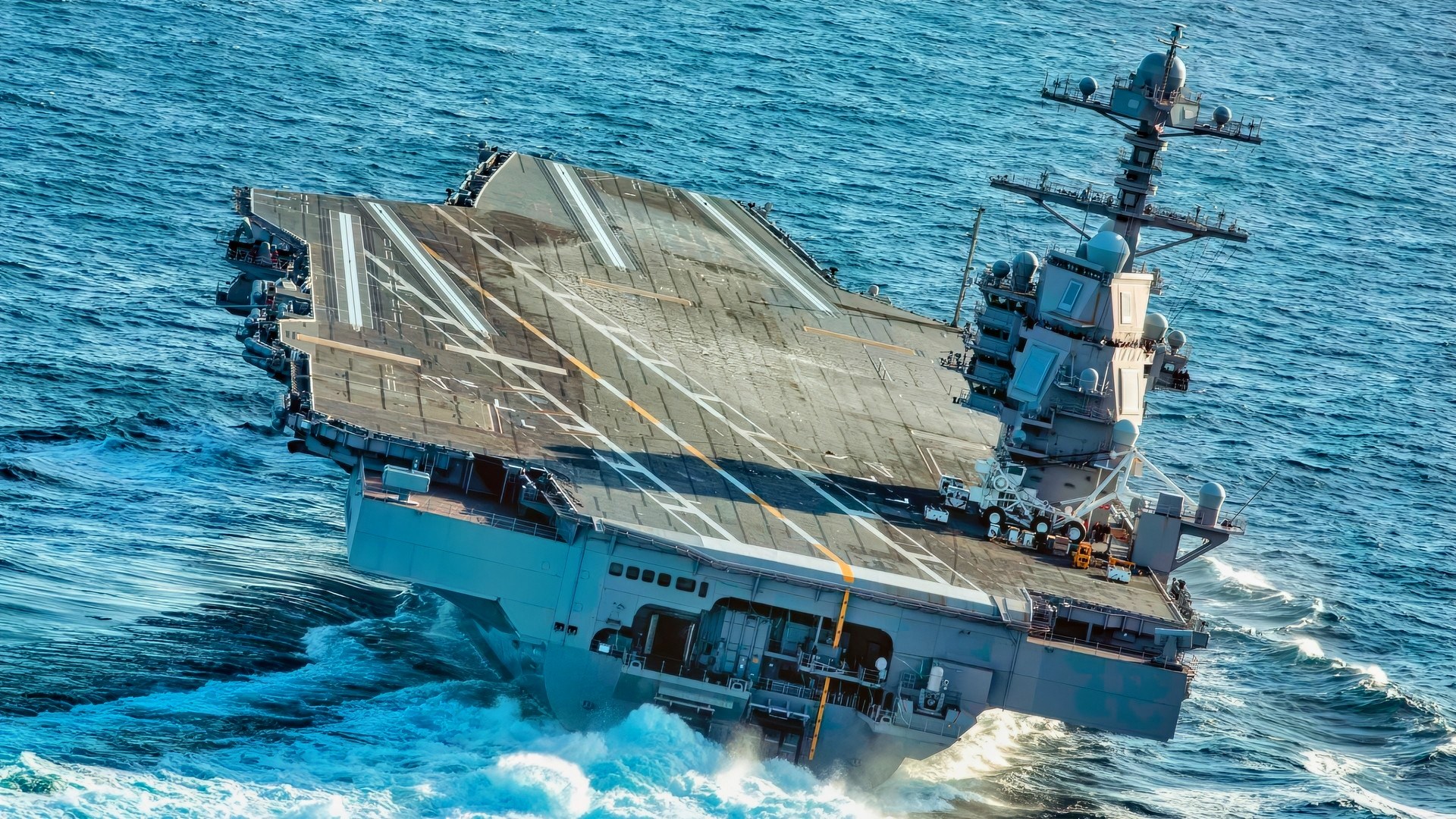
Synopsis and Key Points: China’s DF-27 is presented as an operational, conventionally armed intercontinental-range missile with an anti-ship variant designed to threaten U.S. aircraft carriers and complicate American freedom of maneuver in the Indo-Pacific.
-The concept is framed as a clash of “bubbles,” in which carrier strike groups rely on layered defenses while China expands the arc of anti-access/area-denial coverage through long-range precision strike.
-The DF-27 is also described as part of an “Assassin’s Mace” strategy meant to offset U.S. advantages, potentially including a maneuvering hypersonic glide vehicle.
-Aegis defenses will face a far more demanding challenge as risks extend to U.S. territories and regional allies.
China’s DF-27: The Conventional ICBM That Could Threaten U.S. Aircraft Carriers
You’ve heard of nuclear-tipped intercontinental ballistic missiles (ICBMs), but you may not know that China also has a conventionally armed ICBM that could take out American aircraft carriers. This anti-ship missile is called the DF-27, and a land-attack version might also be able hit the continental United States. The U.S. Department of Defense recently released a report about the military strength of China and determined that the DF-27 is operational.
The DF-27 could menace Alaska and Hawaii. The missile is bad news for the U.S. Navy, which has struggled to find ways to pierce the anti-access/ area denial shield China has constructed around the first and second island chains.
The Clash of ‘Bubbles’
Picture a U.S. Navy carrier strike group as a bubble. This bubble can now be pierced by the DF-27, and Chinese carriers also have defenses to keep their own bubbles from being popped. The U.S. Navy just cannot operate its bubbles where it wants to. The days of the United States being able to deploy two carrier strike groups in the Taiwan Strait, like it did under President Bill Clinton in 1996, are over. Keep in mind that China has three operational aircraft carriers, or three of its own bubbles, that deny U.S. access to the waters around China and Taiwan.
‘Assassin’s Mace’ Could Decapitate American Assets
The DF-27 is also a part of what China calls its “Assassin’s Mace” set of weapons, an asymmetric setup designed to allow the “weak” to take on the “strong” in a David-versus-Goliath manner. China has been working on carrier-killing missiles for more than 20 years.
They used to feature the less effective Sunburn group of Soviet-made anti-ship missiles to protect the Taiwan Strait. The Assassin’s Mace concept has become extremely strong with the DF-27.
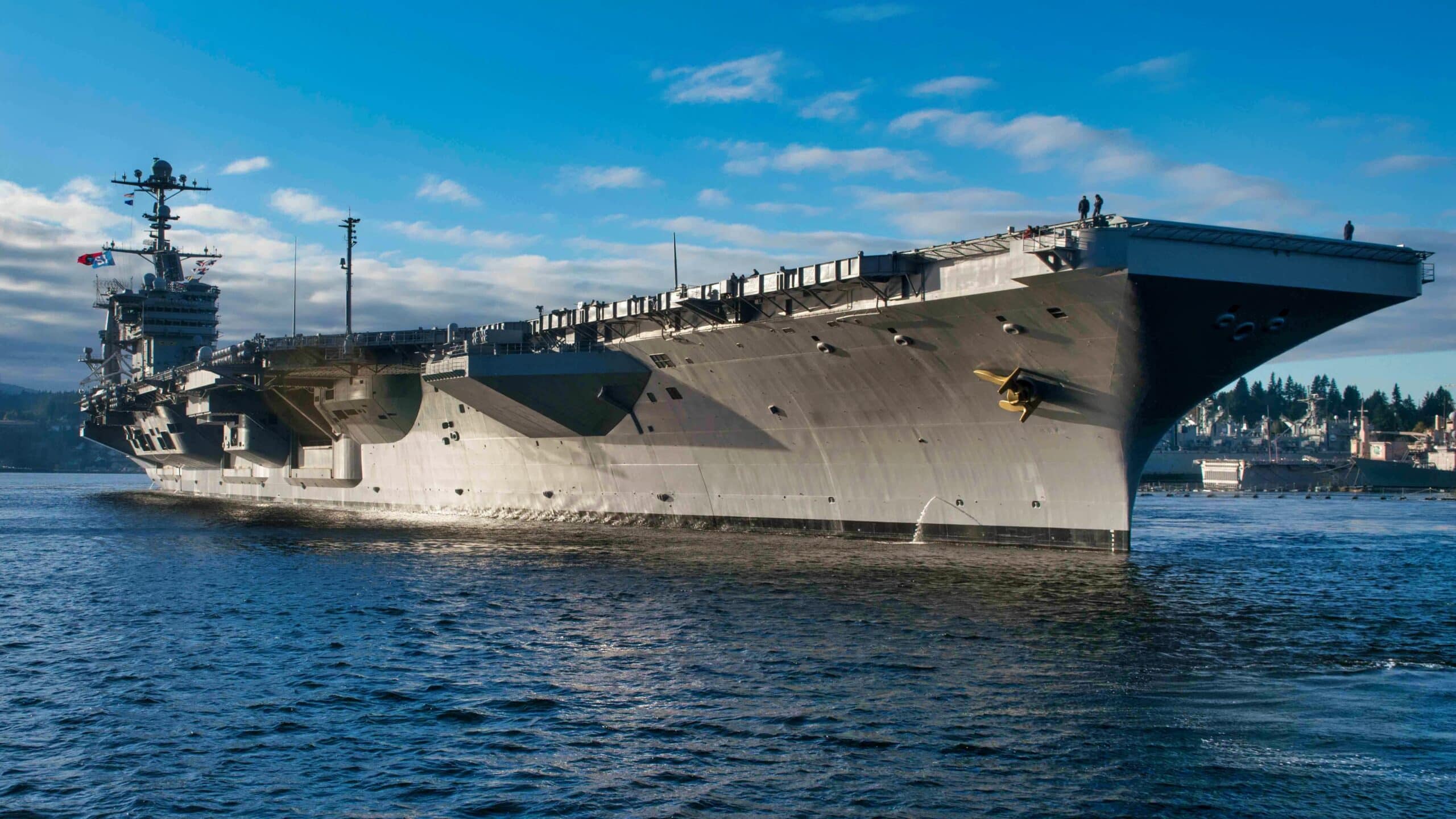
USS John C. Stennis Aircraft Carrier. Image Credit: Creative Commons.
This May Be a Hypersonic Weapon
The DF-27 was first mentioned in a Pentagon report in 2023, and the Chinese have worked to extend its range since then. In 2025, the Americans deemed that the DF-27 was indeed an ICBM that could be nuclear- or conventionally armed. The DF-27 might also have a hypersonic glide vehicle that would be difficult to counter, traveling faster than Mach 5, and maneuverable in flight.
With the new DF-27 ICBM, “China became the first to field an analogous capability: a conventional ICBM—with an ASBM variant—that can conduct rapid, long-range precision strikes out to intercontinental distances, including against its ‘strong enemy’s’ homeland and its naval forces at sea,” wrote Andrew Erickson, a professor at the U.S. Naval War College’s China Maritime Studies Institute.
Flexible and Varied Missile Strike
China now has a new long-range ballistic missile dimension to add to its rocket forces, increasing the flexibility and variety of its strike options. The People’s Republic has many choices to improve its anti-access/area denial and Assassin’s Mace strategies.
Chinese President Xi Jinping’s forces can create a protective arc around the homeland and place U.S. aircraft carriers in danger—not to mention other surface ships.
Aegis Weapon System Must Work Overtime
The United States must defend against the DF-27. To do so, it needs to improve its already effective Aegis Weapon System, which is responsible for creating a protective arc around carrier strike groups. The Aegis system is good, but is it great?
Aegis did a thorough job in 2025 making sure no enemy missiles or drones launched at carrier strike group ships from Iranian-backed Houthi terrorists in Yemen hit American vessels.
Chinese missiles are much better. However, the People’s Republic has no military experience, and the United States is already on a war footing. The match-up continues to favor the Americans, thanks to its combat record in the Red Sea and the Gulf of Aden. Individual U.S. Navy sailors are extremely qualified and capable at their jobs, but U.S. carrier strike groups are easy to track and could now be overcome by the DF-27.
Can U.S. Allies Survive?
U.S. allies are also threatened. Japan and South Korea are easily within range of these Chinese missiles, as are targets in Australia. I call this the “Great Basin” of U.S. allies in Northeast Asia, Southeast Asia, and Oceania.
Will U.S. allies still answer the call if Taiwan is attacked, or if China tries to sink U.S. ships? They may be too casualty-averse to answer Chinese aggression. Plus, the allies may have no answer for a hypersonic glide vehicle.
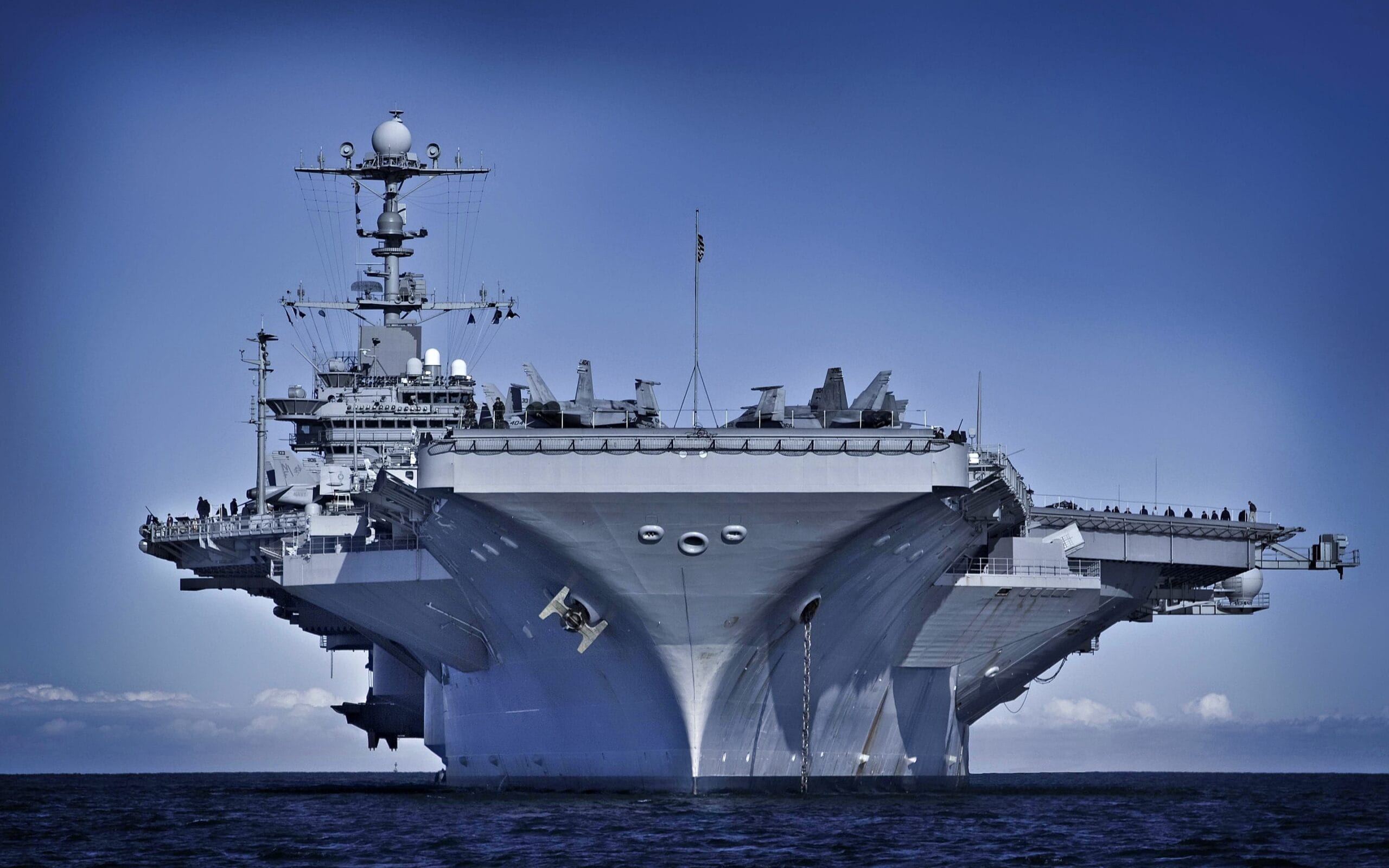
NRL is currently working with Naval Sea Systems Command, Naval Systems Engineering Directorate, Ship Integrity & Performance Engineering (SEA 05P) to transition the new pigment combination into a military specification. The most recent vessel to receive it was USS George Washington (CVN 73).

PHILIPPINE SEA (Feb. 24, 2024) A U.S. Air Force B-52 Stratofortress, attached to the 5th Bomb Wing, and aircraft attached to Carrier Air Wing (CVW) 11, fly in formation over the Nimitz-class aircraft carrier USS Theodore Roosevelt (CVN 71), Feb. 24, 2024. Theodore Roosevelt, flagship of Carrier Strike Group Nine, is underway conducting routine operations in the U.S. 7th Fleet area of operations. U.S. 7th Fleet is the U.S. Navy’s largest forward-deployed numbered fleet, and routinely interacts and operates with allies and partners in preserving a free and open Indo-Pacific region. (U.S. Navy photo by Mass Communication Specialist 1st Class Thomas Gooley)
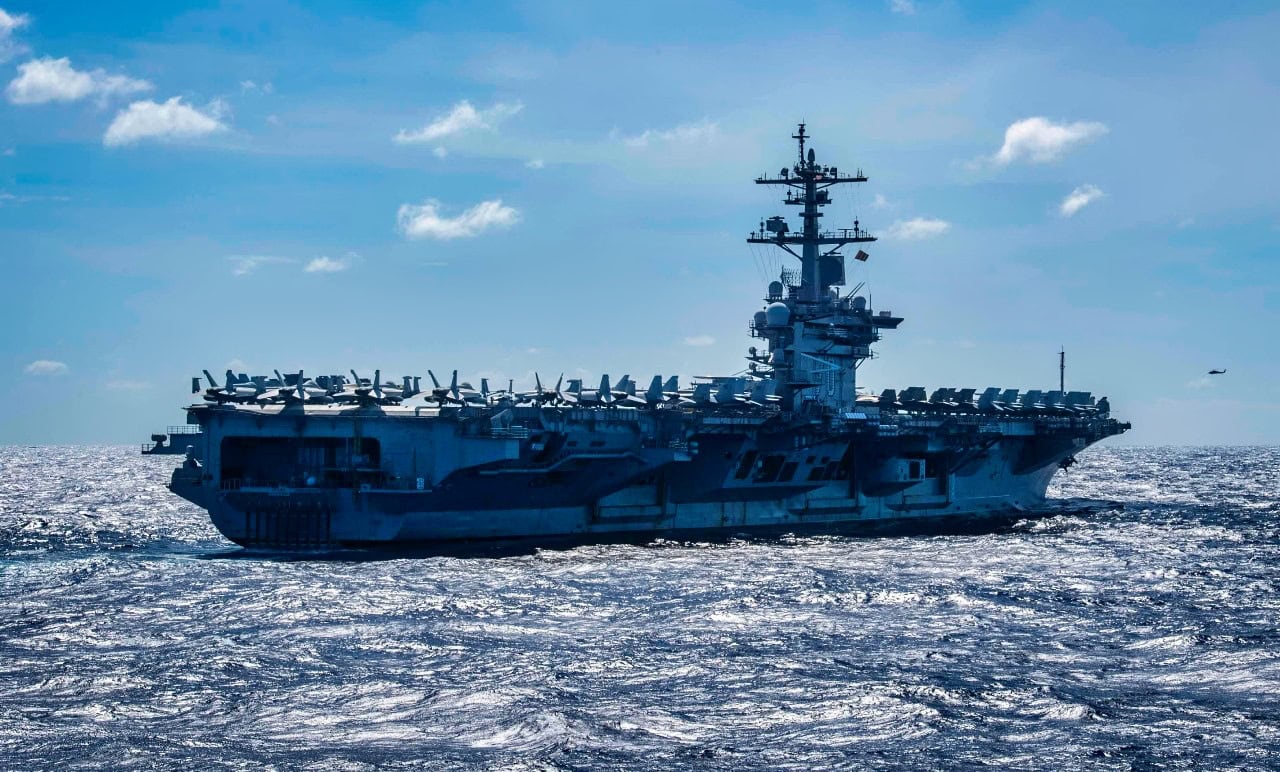
The Nimitz-class aircraft carrier USS Carl Vinson (CVN 70) transits the South China Sea during a Maritime Cooperative Activity with the Philippine Navy, Jan. 17, 2025. The U.S. and Philippines work together as allies, enhancing the interoperability of maritime forces and supporting their shared goal of a free and open Indo-Pacific. Carrier Strike Group ONE, is underway conducting routine operations in the U.S. 7th Fleet area of operations. (U.S. Navy photo by Mass Communication Specialist 3rd Class Brianna Walker)
DF-27 Makes the Americans Brace for the Worst
The DF-27 is a concern for the United States and its strategy in the Indo-Pacific. China continues to improve its rocket forces. Assassin’s Mace and anti-access/area denial are more effective than ever, and U.S. carrier strike group “bubbles” can be popped now. U.S. battle planners will have more headaches as a result of the rejuvenated DF-27 program.
In the future battle of missile ranges, can the U.S. Navy to stay out of the way of ship-killing missiles?
Can the United States maintain freedom of maneuver in East Asia? Can U.S. allies help if war sparks? Would China attack Guam with a DF-27 and crimp a U.S. response to an invasion of Taiwan?
These are questions that must be answered in the coming year.
About the Author: Brent M. Eastwood
Author of now over 3,000 articles on defense issues, Brent M. Eastwood, PhD is the author of Don’t Turn Your Back On the World: a Conservative Foreign Policy and Humans, Machines, and Data: Future Trends in Warfare plus two other books. Brent was the founder and CEO of a tech firm that predicted world events using artificial intelligence. He served as a legislative fellow for US Senator Tim Scott and advised the senator on defense and foreign policy issues. He has taught at American University, George Washington University, and George Mason University. Brent is a former US Army Infantry officer. He can be followed on X @BMEastwood.