
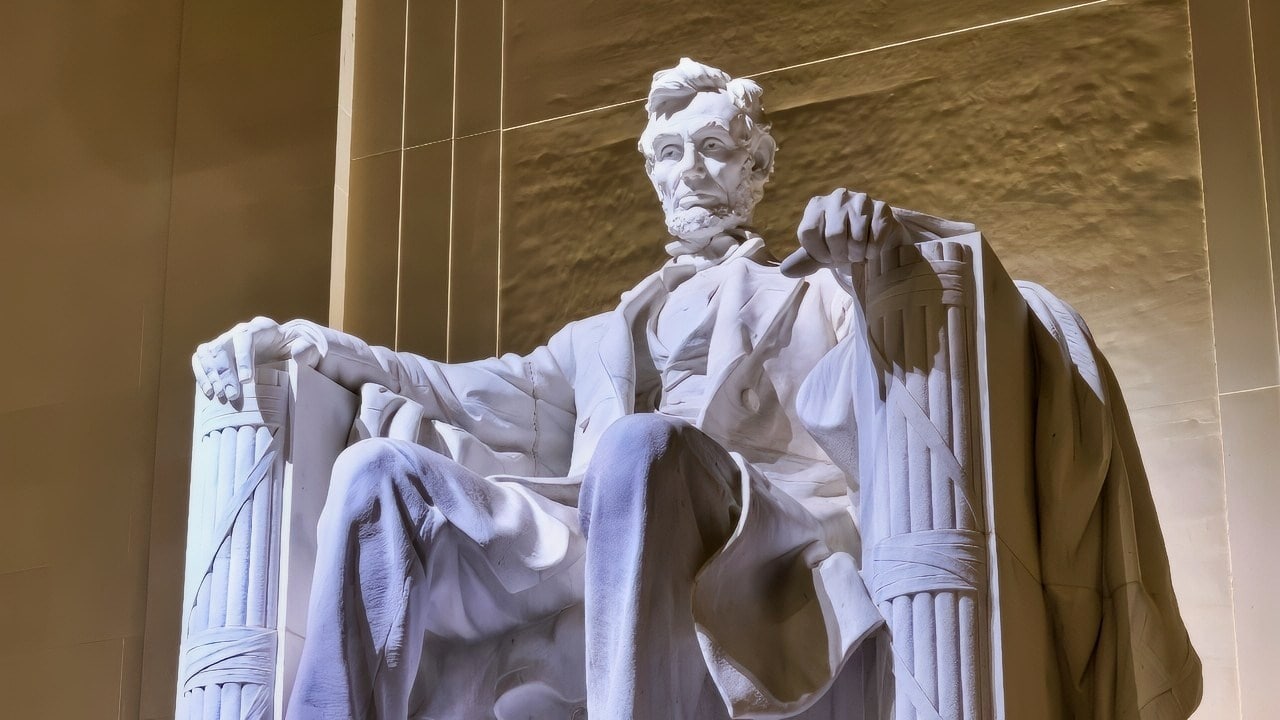
“Malice Toward None”: How Lincoln Reframed the War—and Won the Peace
“There’s no honorable way to kill, no gentle way to destroy. There is nothing good in war. Except its ending,” is a quote that is often misattributed to Abraham Lincoln, although he did express similar sentiments in some of his writings and speeches.
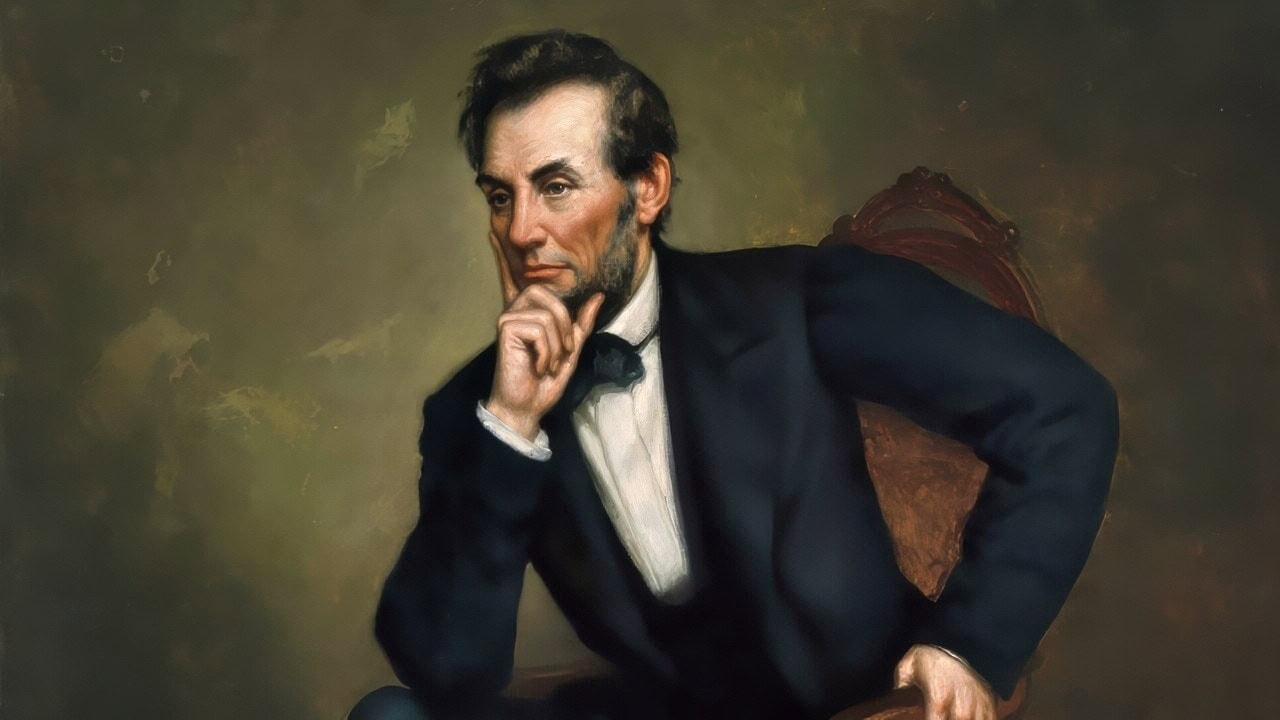
President Abraham Lincoln Painting. Image Credit: Creative Commons.
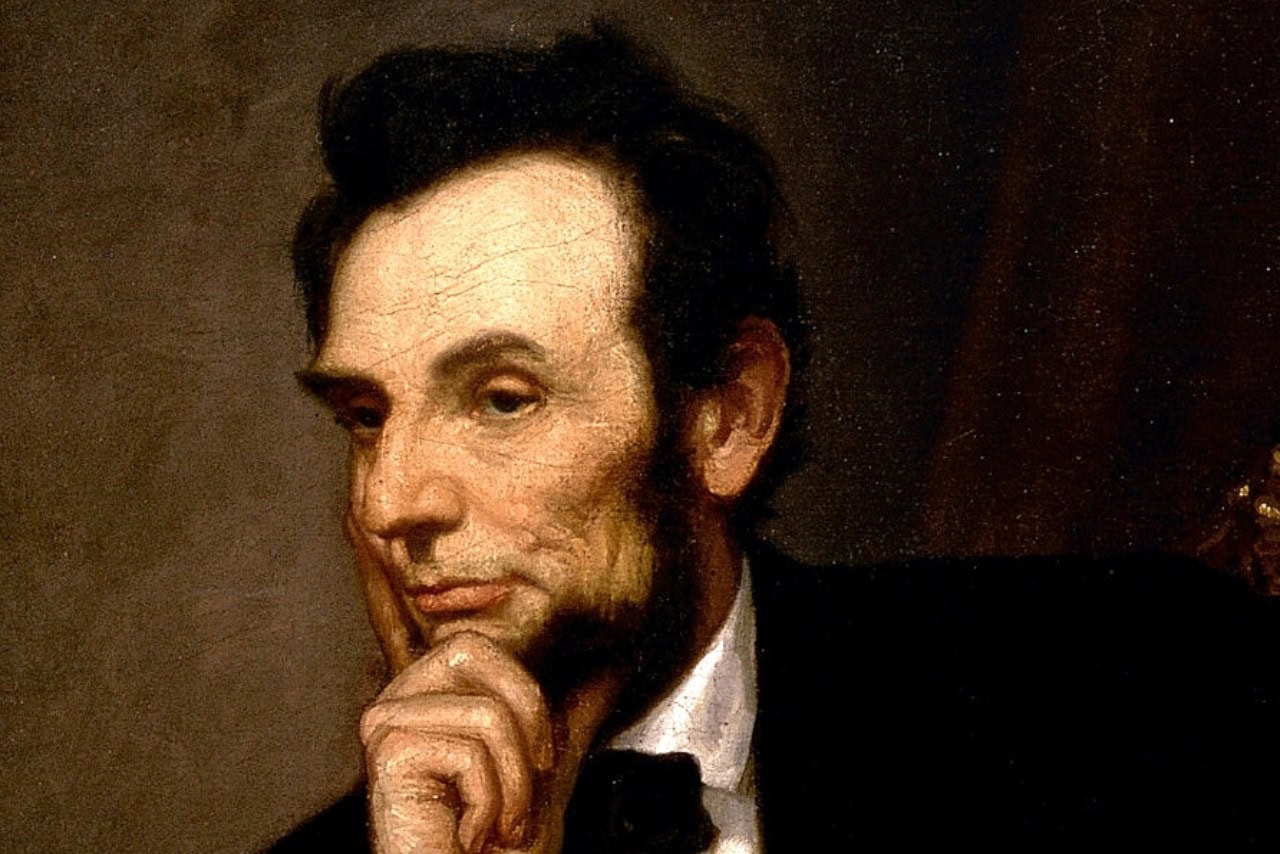
Abraham Lincoln. Image Credit: Creative Commons.
Lincoln was the only President to preside over a national Civil War, which nearly tore the United States in half. However, thanks to his leadership, the Union persevered, defeated the Confederacy, and remained a broken but unified country.
While Lincoln initially fought to keep the country together, he later expanded the Union’s war effort to include the abolition of slavery, which would only be accomplished after a great amount of blood was spilt.
Lincoln’s Rise to Power
As a young man, Lincoln worked various jobs, including as a rail splitter, store clerk, and surveyor, before studying law on his own and becoming a successful attorney in Springfield, Illinois.
His political career began in the Illinois state legislature as a member of the Whig Party, and later he served a single term in the U.S. House of Representatives from 1847 to 1849. Lincoln gained national attention during the 1850s for his debates with Stephen A. Douglas over the expansion of slavery, particularly during the Lincoln-Douglas debates of 1858. Although he lost the Senate race, these debates positioned him as a leading voice against the spread of slavery.
Lincoln’s election as the 16th President of the United States in November 1860 was a turning point in American history. Running as a Republican on a platform opposing the expansion of slavery into the western territories, Lincoln won without any support from Southern states.
His victory triggered a secession crisis: by the time he took office on March 4, 1861, seven Southern states had already seceded from the Union, forming the Confederate States of America under Jefferson Davis.
Lincoln faced an unprecedented challenge: preserving the Union while navigating the explosive issue of slavery. His inaugural address struck a conciliatory tone, assuring the South that he had no intention to abolish slavery where it already existed, but he firmly rejected the legality of secession. Despite his efforts, the Confederate attack on Fort Sumter in April 1861 marked the beginning of the American Civil War.
A Country at War with Itself
Lincoln’s presidency was defined by his role as a wartime leader.
The Civil War lasted from 1861 to 1865, and Lincoln’s primary goal was to preserve the Union. His leadership style combined pragmatism, moral conviction, and political skill. At the outset, Lincoln faced skepticism from military leaders and political opponents. The Union suffered early defeats, such as the First Battle of Bull Run in July 1861, which shattered hopes of a quick war. Lincoln responded by reorganizing military leadership, eventually appointing Ulysses S. Grant as general-in-chief in 1864.
Lincoln also had to manage deep divisions within the North. Radical Republicans pushed for the immediate abolition of slavery, while others prioritized reconciliation with the South. Lincoln’s ability to balance these factions while maintaining focus on Union victory was a hallmark of his presidency.
One of Lincoln’s most significant actions was issuing the Emancipation Proclamation on January 1, 1863. Initially, Lincoln framed the war as a fight to preserve the Union, not to end slavery. However, as the conflict dragged on, he recognized that emancipation was both a moral imperative and a strategic necessity.
By freeing slaves in Confederate-held territories, the proclamation weakened the Southern economy and added moral weight to the Union cause. While the Emancipation Proclamation did not immediately free all enslaved people, it transformed the war into a struggle for human freedom and paved the way for the 13th Amendment, which abolished slavery nationwide in 1865.
Malice Toward None, Charity for All
Lincoln’s political acumen was evident in his ability to maintain support during a time of national crisis. In 1864, with the war still raging, Lincoln faced reelection against Democratic candidate George B. McClellan, a former Union general who favored negotiating peace with the Confederacy.
Lincoln’s prospects initially seemed bleak, but the Union scored a vital victory with the seizing of Atlanta, which struck a great blow to an already reeling Confederacy. Lincoln won reelection decisively, securing his mandate to finish the war and abolish slavery.
Lincoln’s vision of the Union was uncompromising. He believed that the United States was a single, indivisible nation, and he rejected any notion of permanent secession. His speeches, including the Gettysburg Address delivered on November 19, 1863, articulated this vision with profound clarity. In just a few sentences, Lincoln reframed the war as a test of whether a nation “conceived in liberty and dedicated to the proposition that all men are created equal” could endure.
By early 1865, the Confederacy was collapsing. Lincoln delivered his Second Inaugural Address on March 4, 1865, calling for “malice toward none, with charity for all” and urging reconciliation. On April 9, 1865, General Robert E. Lee surrendered to Grant at Appomattox Court House, effectively ending the Civil War.
Tragically, Lincoln did not live to see the full fruits of peace. On April 14, 1865, just days after the war’s end, Lincoln was assassinated by John Wilkes Booth at Ford’s Theatre in Washington, D.C. He died the following morning, plunging the nation into mourning.
About the Author: Isaac Seitz
Isaac Seitz, a Defense Columnist, graduated from Patrick Henry College’s Strategic Intelligence and National Security program. He has also studied Russian at Middlebury Language Schools and has worked as an intelligence Analyst in the private sector.