
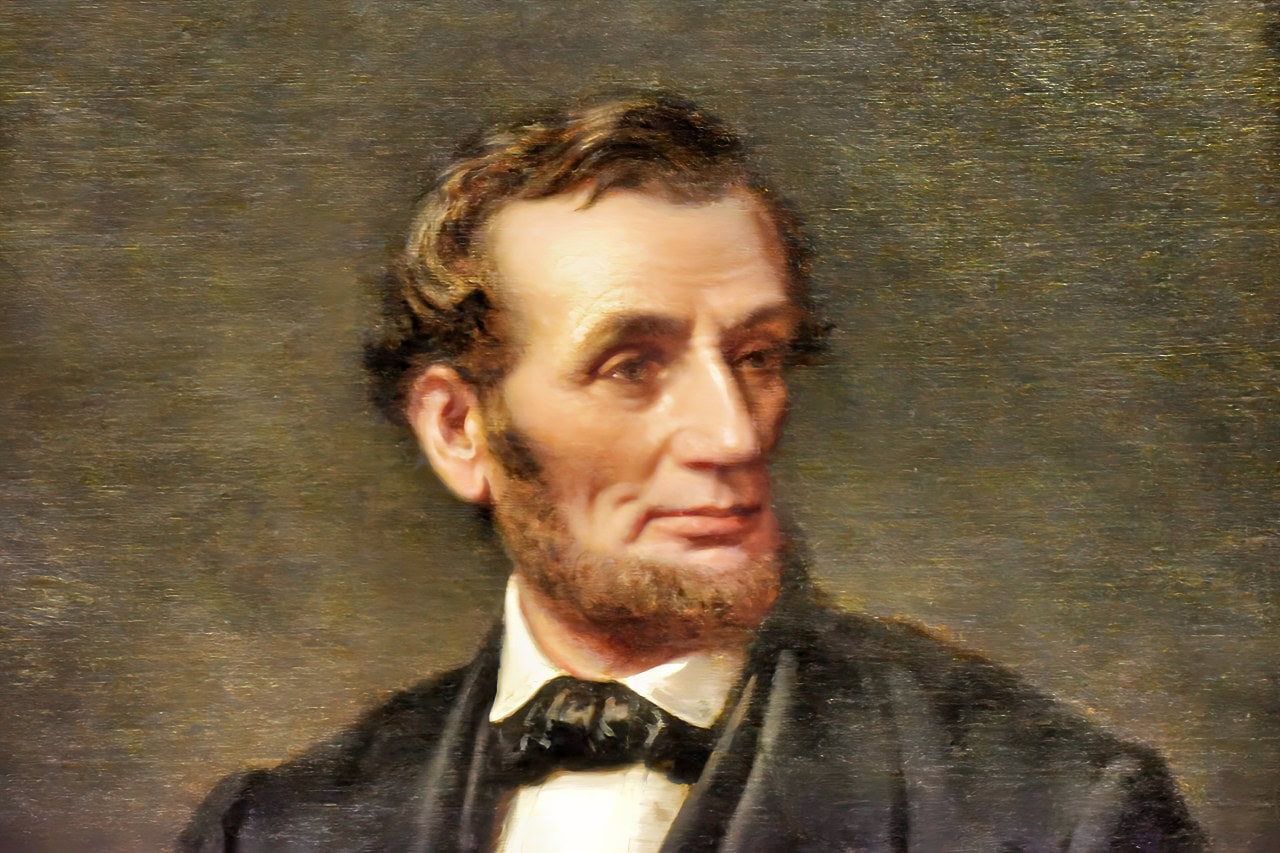
Abraham Lincoln And The Crisis That Nearly Broke America
“There’s no honorable way to kill, no gentle way to destroy. There is nothing good in war. Except its ending.” – Abraham Lincoln…or not?
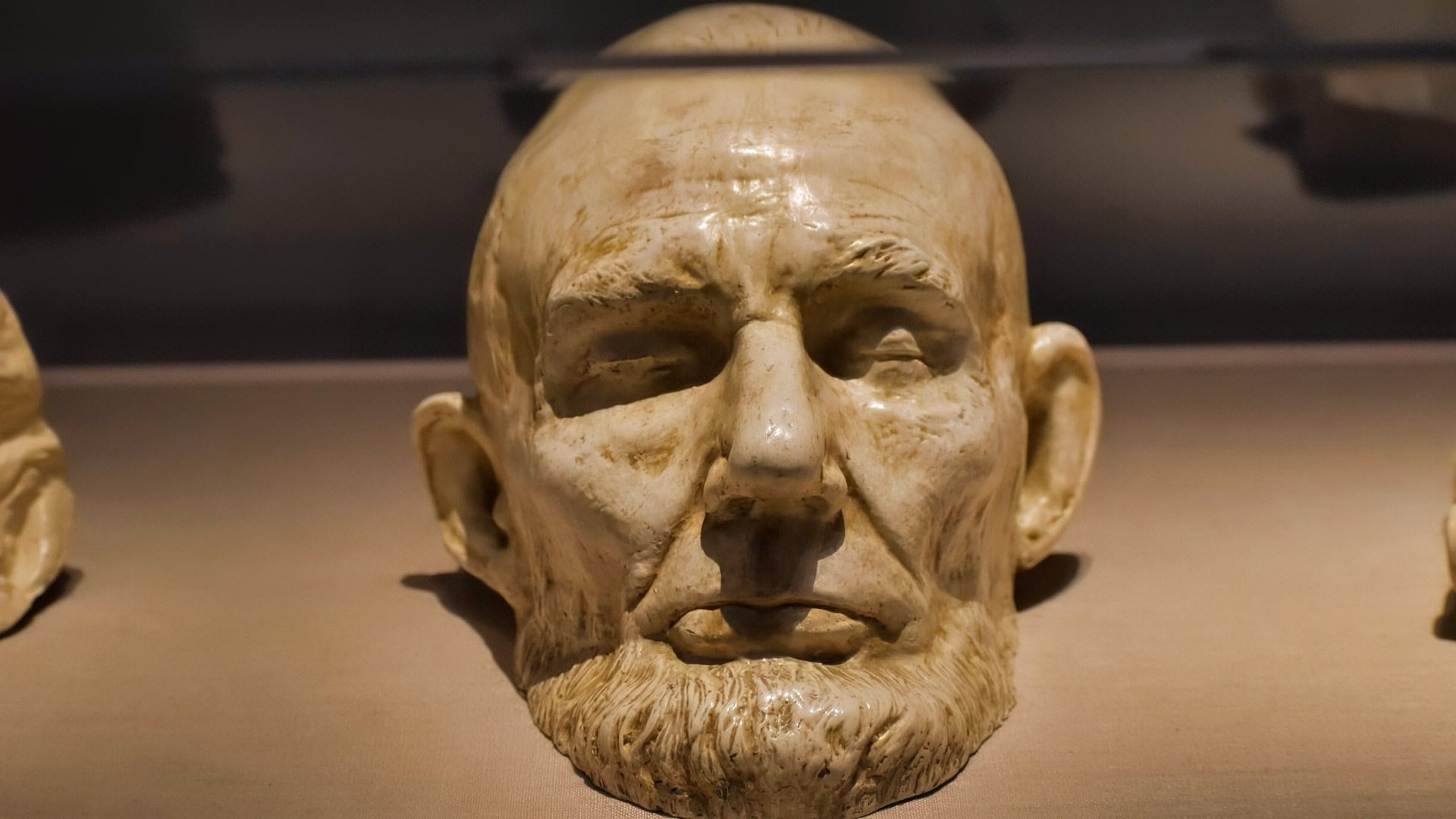
Abraham Lincoln Mask from National Portrait Gallery. Image Credit: 19FortyFive.com/Dr. Brent M. Eastwood.
Although often misattributed to Abraham Lincoln, this quote still reflects Lincoln’s personal attitude toward the American Civil War.
From the beginning of Lincoln’s presidency, he was thrust into a crisis that almost ended the United States.
Originally, his motivation was solely the preservation of the Union, but it later expanded to include the abolition of slavery across all U.S. states and territories.
The Civil War was one of the greatest trials the U.S. had ever faced, and it was thanks to President Lincoln’s leadership that the country survived.
The Succession Crisis
Immediately after Lincoln’s election as president, the United States was plunged into a crisis. Following the 1860 election, South Carolina led a movement of Deep South states that withdrew from the Union in protest of his victory. In February 1861, these states formed the Confederate States of America.
Lincoln, bound by constitutional limitations until his inauguration, could do little more than observe as the nation unraveled. In his inaugural address, he attempted to ease tensions by affirming that he had no legal authority or inclination to abolish slavery where it already existed. At the same time, he insisted that secession was unlawful and that the Union must remain intact.
The first major challenge of Lincoln’s presidency was the situation at Fort Sumter, a federal fort in Charleston Harbor. With supplies dwindling and Confederate forces demanding surrender, Lincoln faced a dilemma: abandon the fort and legitimize secession or attempt to resupply it and risk war.
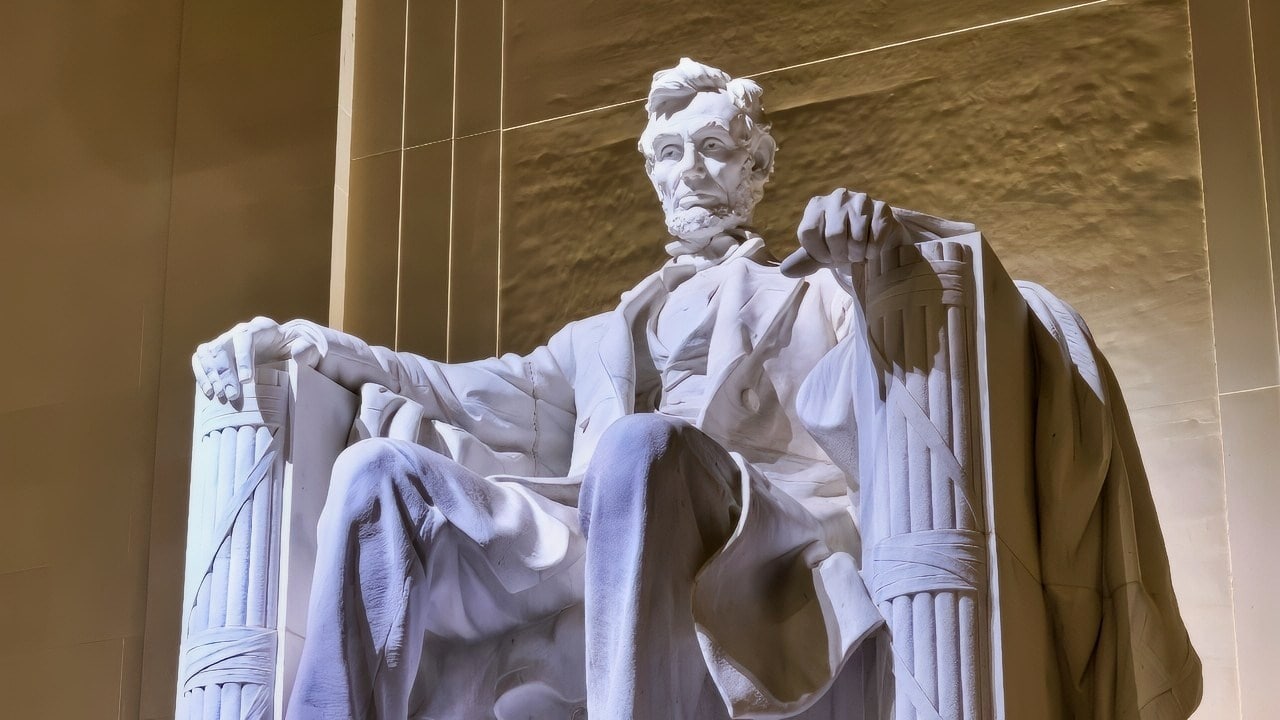
Statue of Abraham Lincoln at the Lincoln Memorial in Washington D.C. on June 12, 2024. The 170-ton statue, sculpted by Daniel Chester French (1850–1931) is located in the Lincoln Memorial on the National Mall. It was carved by the Piccirilli Brothers, assembled in 1920 and unveiled on May 30, 1922.
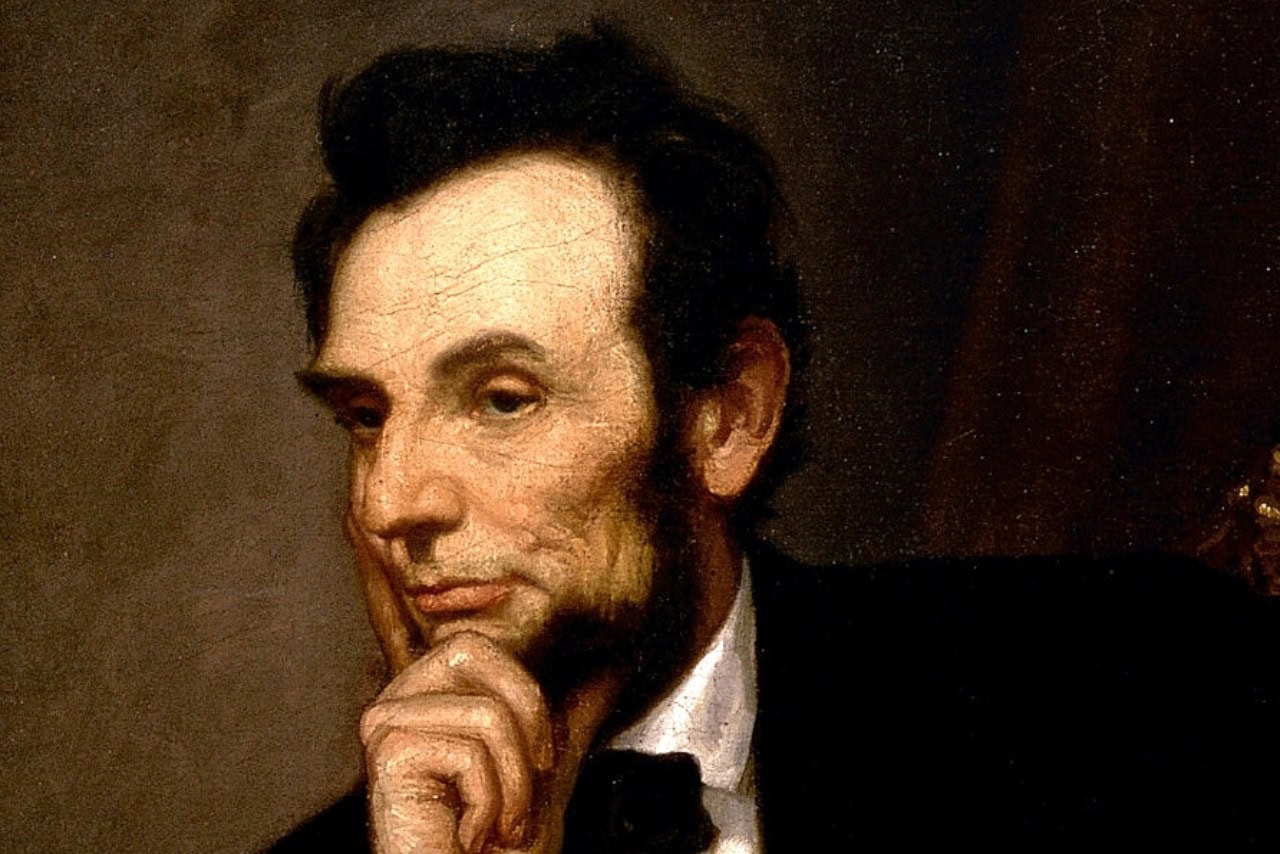
Abraham Lincoln. Image Credit: Creative Commons.
He chose to send provisions, clarifying that the mission was humanitarian rather than military. The Confederacy responded by opening fire on April 12, 1861. The bombardment lasted more than thirty hours and culminated in the fort’s surrender. Though not a single Union soldier was killed in the engagement, the attack marked the beginning of the Civil War and unified Northern public opinion behind Lincoln’s call to preserve the Union.
The Civil War and the Crusade Against Slavery
In response, Lincoln called for 75,000 volunteers to suppress what he termed a rebellion. This act prompted Virginia, Arkansas, Tennessee, and North Carolina to secede and join the Confederacy. The president quickly realized that the conflict would be neither brief nor limited in scope.
He took decisive steps to mobilize the nation for war, expanding the army and navy, summoning Congress into special session, and supporting new financial measures such as the first federal income tax and the issuance of paper currency. Lincoln authorized a naval blockade of Southern ports, a strategic move designed to restrict the Confederacy’s access to international trade. This blockade formed a central part of the Union’s long-term military strategy by gradually undermining the South’s economy.
In the summer of 1862, Lincoln drafted the Preliminary Emancipation Proclamation. He waited to issue it until after a military success, concerned that announcing it following a defeat would weaken its credibility. The Battle of Antietam, though not a decisive tactical victory, provided the necessary opportunity. On September 22, 1862, he declared that enslaved people in Confederate-controlled territory would be freed on January 1, 1863.
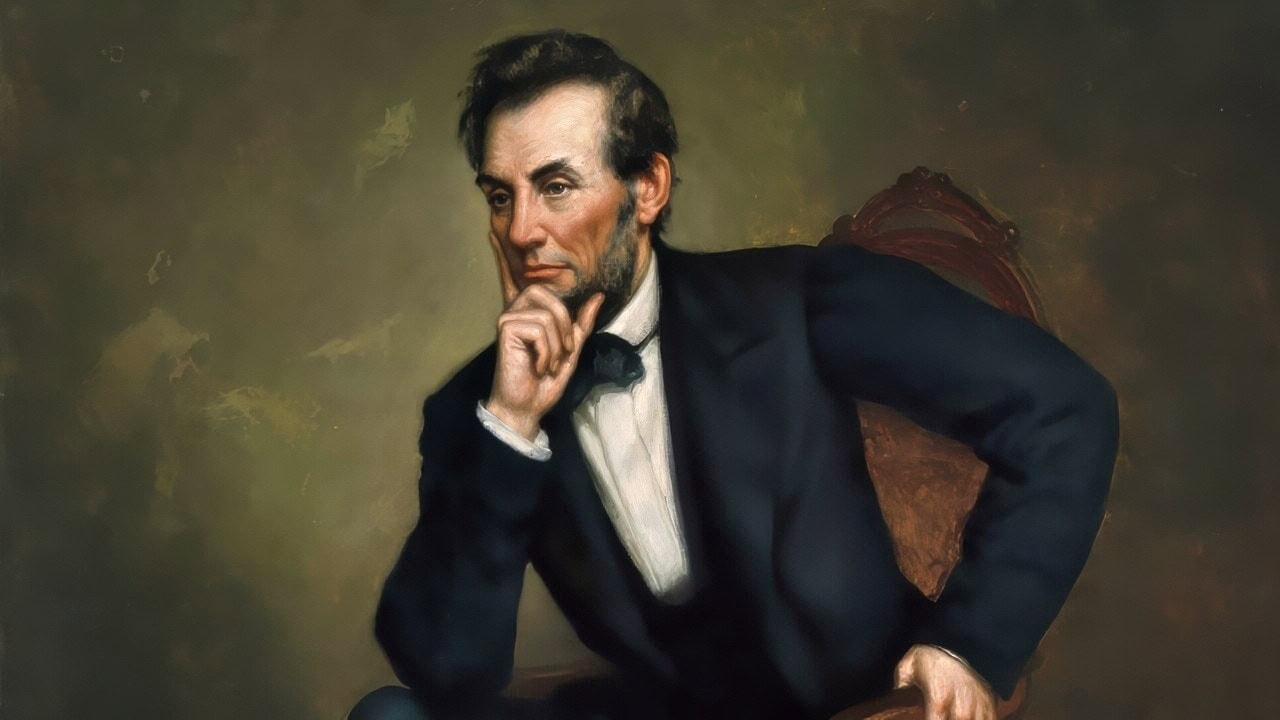
President Abraham Lincoln Painting. Image Credit: Creative Commons.
The final Emancipation Proclamation, issued on that date, fundamentally transformed the nature of the war. It prevented potential European recognition of the Confederacy, authorized the enlistment of Black soldiers, and reshaped the conflict into a fight not just for national unity but for human freedom. Close to 200,000 African American soldiers and sailors ultimately served the Union. Lincoln repeatedly acknowledged their indispensable role in Union victory.
Presidency in Wartime
Finding effective military leadership remained one of Lincoln’s most persistent challenges. After years of frustration, he found in General Ulysses S. Grant a commander who shared his determination to pursue victory decisively. Grant’s victories at Vicksburg and Chattanooga convinced Lincoln that he had the resolve to lead all Union armies.
In March 1864, Lincoln promoted him to general-in-chief. Grant implemented a strategy of simultaneous offensives across multiple theaters, seeking to apply constant pressure to Confederate forces.
His Overland Campaign in Virginia, though costly, steadily weakened Robert E. Lee’s Army of Northern Virginia. Meanwhile, General William Tecumseh Sherman led a campaign through Georgia and the Carolinas, culminating in the March to the Sea. This campaign aimed to destroy Confederate infrastructure and undermine Southern morale, hastening the collapse of the Confederacy.
Lincoln’s political challenges did not end on the battlefield. The presidential election of 1864 occurred amid intense national exhaustion. Many doubted Lincoln’s chances for reelection, and the Democratic platform, led by his former general George B. McClellan, called for negotiations to end the war. Lincoln believed such negotiations would lead to permanent disunion and the survival of slavery.
The tide turned with major Union military victories, especially Sherman’s capture of Atlanta, which revitalized Northern morale. Lincoln won reelection decisively, interpreting the victory as a mandate to continue the war until the Union was fully restored and slavery eradicated.
Wars End and Assassination
By early 1865, Confederate resistance was faltering. Sherman advanced northward, Grant tightened his grip on Lee’s forces, and the Confederacy faced severe shortages of food, manpower, and supplies.
Richmond fell in April, and on April 9, 1865, Lee surrendered to Grant at Appomattox Court House. Lincoln, visiting Richmond shortly after its capture, was greeted by newly freed African Americans as a liberator. His administration had also secured passage of the Thirteenth Amendment in Congress earlier that year, ensuring the abolition of slavery throughout the United States.
Lincoln did not live to oversee Reconstruction. On April 14, 1865, he was assassinated at Ford’s Theatre, dying the next morning. His death deprived the nation of a leader uniquely equipped to guide the country through reconciliation and the transition to peace. Yet his presidency left an enduring legacy. He preserved the Union, ended slavery across the United States, strengthened the power of the federal government, and fundamentally redefined the social fabric of America.
About the Author: Isaac Seitz
Isaac Seitz, a Defense Columnist, graduated from Patrick Henry College’s Strategic Intelligence and National Security program. He has also studied Russian at Middlebury Language Schools and has worked as an intelligence Analyst in the private sector.