
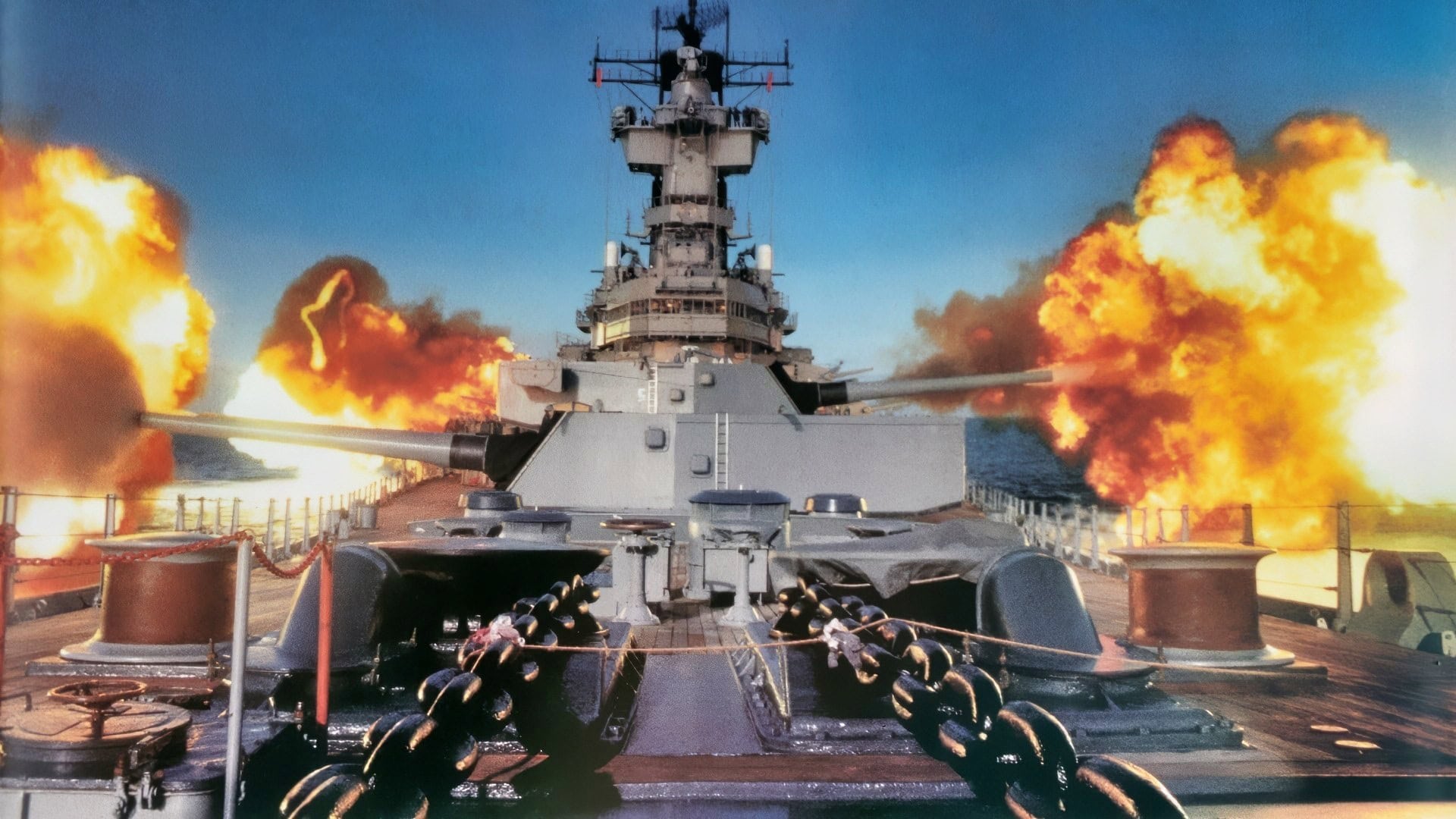
Summary and Key Points: The battleship-to-carrier comparison is emotionally satisfying but strategically wrong. Battleships became obsolete because their core mission—surface gunnery and line-of-sight combat—was replaced by aircraft that outranged and outperformed naval guns.
-Aircraft carriers, by contrast, are mobile air bases whose combat power lives in the air wing, not the hull.
-That makes carriers adaptable: they evolve by changing aircraft, updating sensors and networks, and shifting tactics toward standoff operations, distributed maritime operations, and longer-range unmanned systems.
-New threats like hypersonics and drone swarms raise risk, but risk is not the same as irrelevance.
Aircraft Carriers Aren’t the New Battleship—And History Explains Why
Critics increasingly argue that aircraft carriers are becoming obsolete, much like battleships before them.
The comparison is emotionally appealing but strategically misguided.
Battleships and carriers served fundamentally different military purposes; the former were designed to become obsolete; the latter remain relevant despite the rise of asymmetric threats.
Using the Battleship
Battleships were built to engage other surface combatants, project naval gunfire, and control sea lanes through direct combat.
The vessel’s power was fixed to the ship and line-of-sight limited, dependent upon caliber, armor, and range.
But aircraft fundamentally out-ranged naval guns. Precision air-delivered weapons replaced massed gunfire.
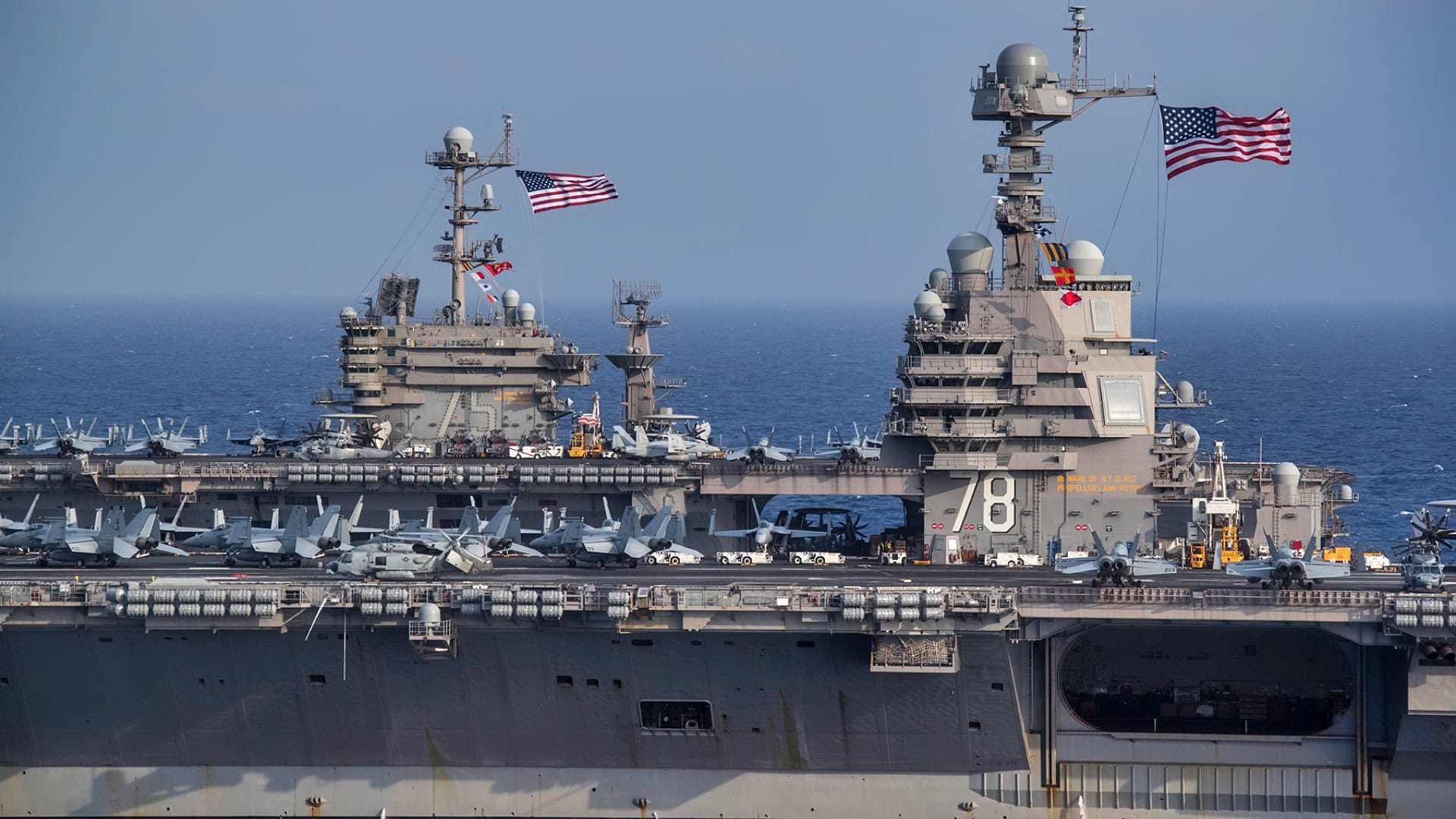
The Ford-class aircraft carrier USS Gerald R. Ford (CVN 78) and the Nimitz-class aircraft carrier USS Harry S. Truman (CVN 75) transit the Atlantic Ocean June 4, 2020, marking the first time a Ford-class and a Nimitz-class aircraft carrier have operated together underway. Ford is underway conducting integrated air wing operations, and the Harry S. Truman Carrier Strike Group remains at sea in the Atlantic as a certified carrier strike group force ready for tasking in order to protect the crew from the risks posed by COVID-19, following their successful deployment to the U.S. 5th and 6th Fleet areas of operation. (U.S. Navy photo by Mass Communication Specialist 2nd Class Ruben Reed)
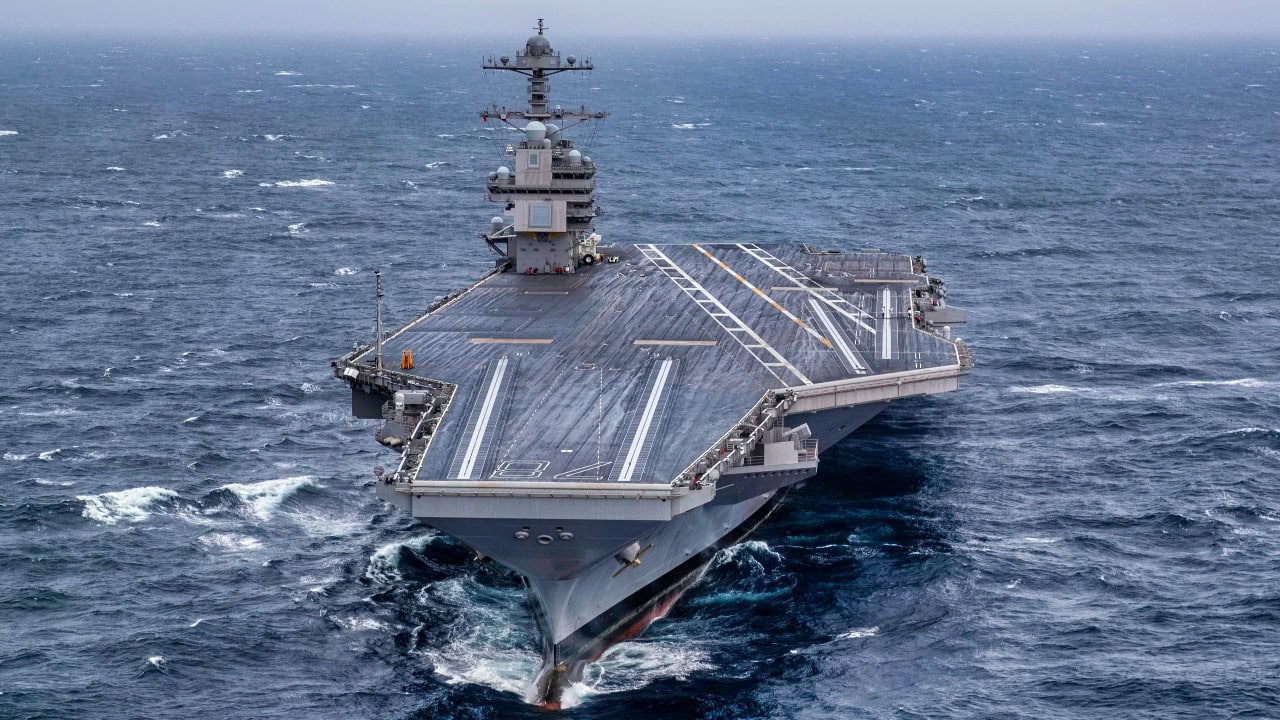
ATLANTIC OCEAN (Oct. 27, 2019) USS Gerald R. Ford (CVN 78) steams in the Atlantic Ocean for the first time since July 2018. Ford is conducting sea trials following its 15 month post-shakedown availability. (U.S. Navy photo by Mass Communication Specialist 3rd Class Connor Loessin)
Battleships, meanwhile, had no way to strike beyond the horizon independently, offering only limited flexibility once deployed.
By the end of World War II, battleships were outperformed by carriers, submarines, and air power; they rapidly became obsolete.
Using the Aircraft Carrier
Carriers are not surface combatants—they are mobile air bases. Their power is delegated to the aircraft, flexible across missions, and reconfigurable over time. Carriers project air superiority, strike, ISR, and deterrence. They remain highly relevant and effective today.
Asymmetrical risks, such as drone swarms and hypersonic missiles, have increased the carrier’s vulnerability but have not rendered it ineffective.
Because carriers are adaptable, carriers evolve by changing aircraft, updating sensors and networks, and modifying tactics.
A carrier’s lethality is decoupled from the vessel itself and is offset to the aircraft it carries. Battleships, meanwhile, could not fundamentally change their role against the rise of new threats without rebuilding the ship.
Historical Proof, Modern Concerns
World War II demonstrated that carriers could replace battleships in decisive roles. Since then, carriers have assumed nuclear strike missions, conventional power projection, and networked, precision warfare.
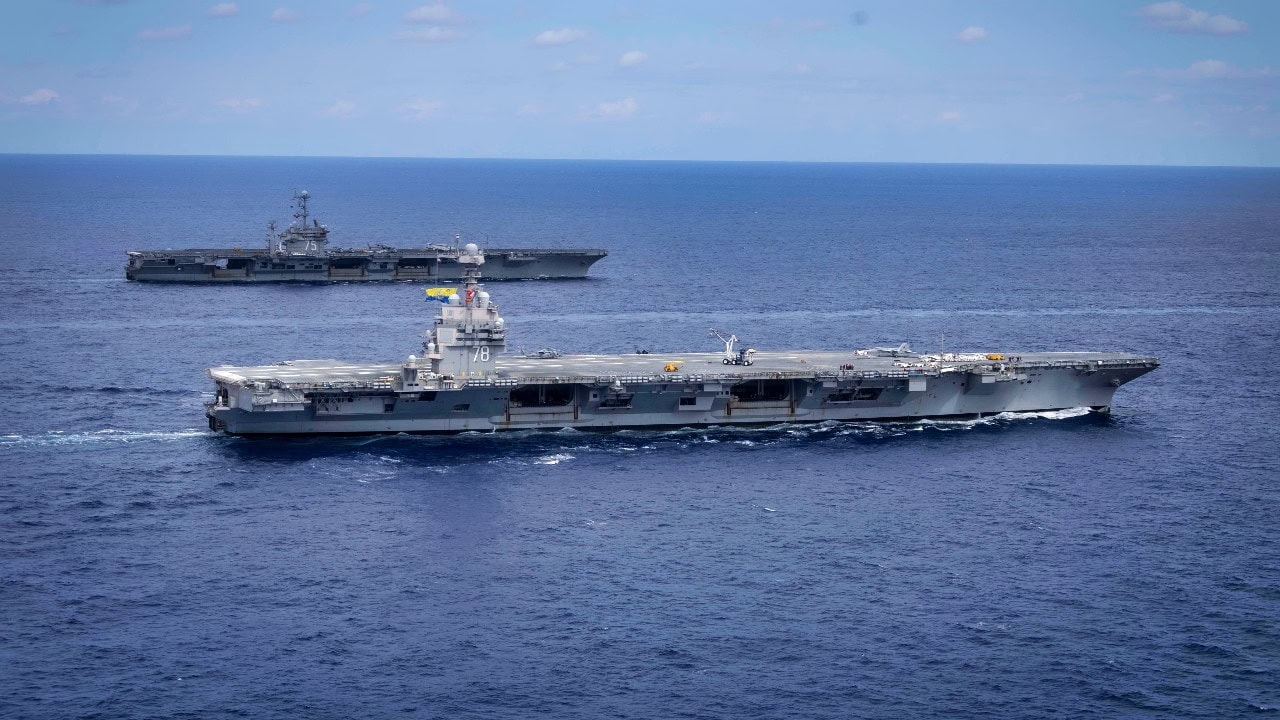
ATLANTIC OCEAN. (Aug. 24, 2024) The Nimitz-class aircraft carriers USS Harry S. Truman (CVN 75), back, and the world’s largest aircraft carrier, USS Gerald R. Ford (CVN 78), sail in formation in the Atlantic Ocean, Aug. 24, 2024. USS Gerald R. Ford is the flagship of the Gerald R. Ford Carrier Strike Group. The aircraft carrier is underway in the Atlantic Ocean to further develop core unit capabilities and skills such as fuels certification and ammunition on-load during its basic phase of the optimized fleet response plan. (U.S. Navy photo by Mass Communication Specialist 2nd Class Maxwell Orlosky).
There is no equivalent reinvention of the battleship; it provides fixed surface firepower, a once-powerful tool that has long since been relegated.
Still, the carrier faces legitimate concerns in the modern context from the rise of long-range anti-ship missiles, swarming drones, and hypersonic glide vehicles.
These threats increase operational risk—but do not invalidate carriers. The key distinction here is that vulnerability does not equal obsolescence.
Aircraft Carrier Adaptions
Carriers are adapting to emergent threats. Carrier survivability rests on distance (through standoff operations), escorts, and layered defenses, submarines, and ISR.
Air wings are also evolving to enhance carrier survivability, incorporating longer-range aircraft, standoff weapons, and unmanned systems.
Carriers will also need to modify their tactics near peer adversaries. Close-in presence will be more difficult against an adversary like China, with a sophisticated A2/AD bubble, than against Iran, which lacks such a modern defensive network.
To adapt, carriers will need to place greater emphasis on distributed maritime operations and the integration of long-range strike capabilities. These changes do not necessarily represent a decline in the platform’s viability; rather, they reflect a change in approach.
Limits of the Battleship Comparison
The battleship comparison fails because the battleship was eclipsed when its mission was replaced. Carriers remain relevant because their mission is still central. Air power remains decisive in modern war—there is no alternative platform that replicates what carriers do at scale.
Carriers also provide strategic value beyond combat. Specifically, carriers provide crisis response without basing rights, escalation control, and political signaling. Battleships lacked this flexibility, of course.
Carriers do have limited, of course. They are expensive, high-value assets; they are not invaluable. When a carrier is at sea, it represents billions of dollars and thousands of sailors, all concentrated in one vessel, making it one of the most attractive military targets ever fielded. Regardless, the carrier is well protected—and not functionally replaceable.
Not the New Battleship
The aircraft carrier is not the new battleship, which has become obsolete because technology has rendered its core functions irrelevant. Aircraft carriers remain relevant because they enable air power, which remains decisive. The carrier’s future depends on adaptation, not denial.
To write off the aircraft carrier as the new battleship misunderstands both the history of the two platforms and the specifics of modern warfare.
Aircraft carriers will remain relevant for the foreseeable future, even if they must make tactical or technological adjustments to enhance survivability against ever-improving defensive systems.
About the Author: Harrison Kass
Harrison Kass is an attorney and journalist covering national security, technology, and politics. Previously, he was a political staffer and candidate, and a US Air Force pilot selectee. He holds a JD from the University of Oregon and a master’s in global journalism and international relations from NYU.


J. Breck Cathey
January 31, 2026 at 7:19 pm
Hello,I just finished your BRILLIANT work about the US Navy and the Chinese Navy. Do Submarines have a future in this hi-tech conflict?
Thank you….